

P0018 on 2008-2017 Buick Enclave 3.6L: Stretched Timing Chain Causes and Fixes
On a 2008-2017 Buick Enclave, P0018 almost always means the timing chains have stretched. This is a major, labor-intensive repair and a well-documented design flaw. Do not replace sensors first. Expect a professional repair cost of $2,700 to $3,700. Using updated parts and adhering to 5,000-mile synthetic oil changes is critical.
- P0018 on a 3.6L Buick Enclave almost always means the timing chains have stretched. This is a known, widespread issue.
- Do not waste money replacing sensors; they are correctly reporting a mechanical failure.
- The repair is complex and expensive, typically costing $2,700-$3,700. It is not a DIY job for novices.
- Ignoring the code can lead to the chain breaking, which will cause catastrophic engine failure.
- GM acknowledged this defect with TSBs and a special warranty program (#11340C) which has since expired.
- Strict adherence to 5,000-mile oil change intervals with full synthetic 5W-30 oil is the best preventative measure.
What's Unique About the 2008-2017 Buick Enclave
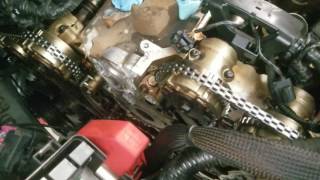
The GM 3.6L V6 engine family (including the LLT and later LFX) used in the Enclave and its platform mates is notorious for premature timing chain stretching. This isn't a random part failure but a well-documented design weakness, often made worse by the original Oil Life Monitor (OLM) system which allowed for excessively long oil change intervals, leading to oil degradation. 🎬 Watch: Why these GM V6 timing chains fail so often GM acknowledged this widespread issue by issuing multiple Technical Service Bulletins (e.g., #12-06-01-009F) and a Special Coverage Adjustment (#11340C) that extended the warranty to 10 years/120,000 miles for this specific failure on certain model years, including the 2009 Enclave. As a result, when a P0018 code appears on this vehicle, it is almost certainly a mechanical timing issue and not a simple sensor fault.
Symptoms You May Notice
- Check Engine Light is on
- Reduced engine power and poor, sluggish acceleration
- Rough or unstable idle
- Rattling, clanking, or chain-slap noise from the engine, especially on a cold startup
- Engine stalling
- Decreased fuel economy
- Engine misfires
- Metal shavings found in engine oil during an oil change
- Replacing the camshaft position sensor
- Replacing the crankshaft position sensor
- Replacing only the VVT solenoids when the timing chains are already stretched.
Most Likely Causes
- Stretched Timing Chains 🔴 High Probability → Shop Engine Timing Chain A combination of the original timing chain design and long oil change intervals recommended by the factory Oil Life Monitor (OLM) leads to oil breakdown and accelerated wear, causing the chains to elongate ('stretch'). This was acknowledged by GM through TSBs and a special warranty extension.
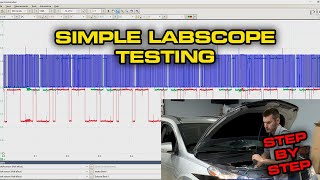
How to confirm: A technician can use a scan tool to view live data for desired vs. actual camshaft position angles. A significant and consistent deviation on Bank 2 (e.g., over 6-9 degrees) confirms the timing is off mechanically. An oscilloscope can also be used to compare cam and crank sensor waveforms to visualize the timing shift. 🎬 See how to use a labscope to confirm timing issues Physical inspection for chain slack is the ultimate confirmation but requires significant labor.
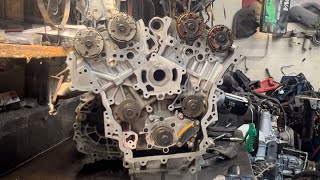
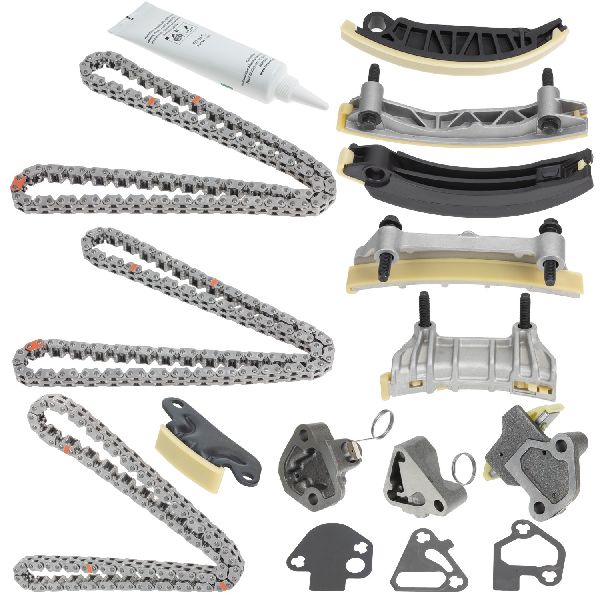
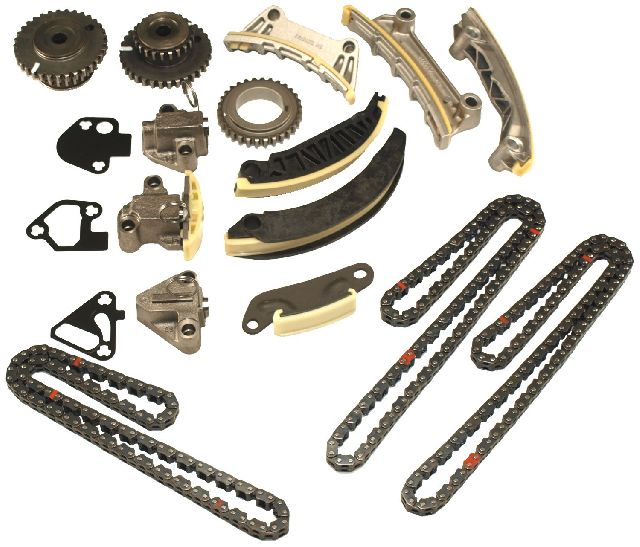
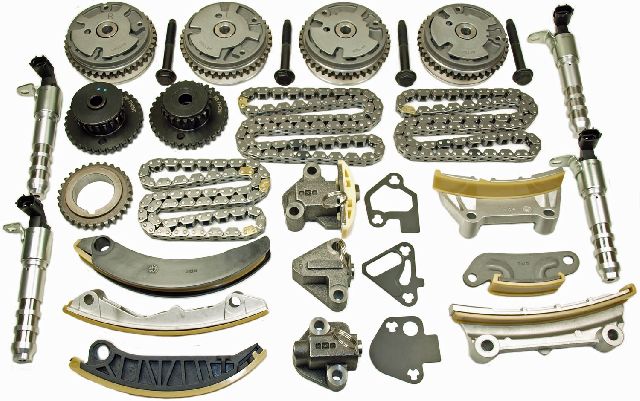
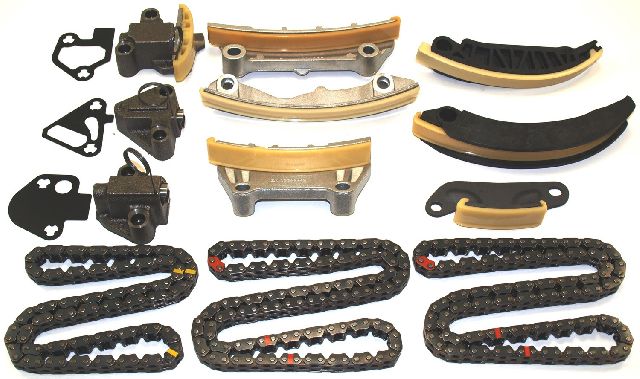
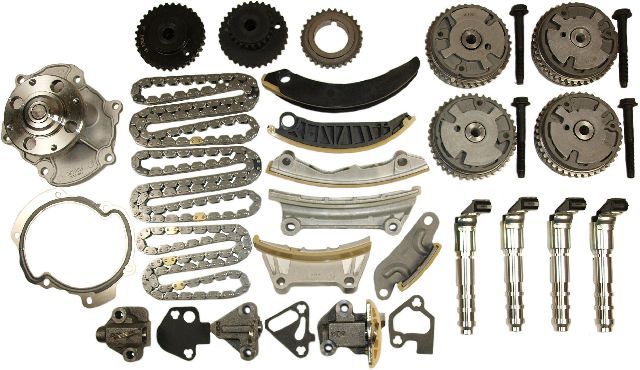
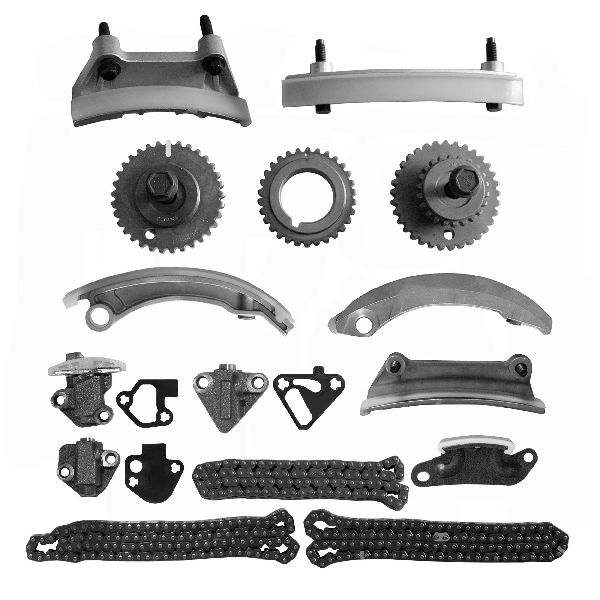
Typical fix: Replace all three timing chains, all tensioners, and all guides using an updated timing chain kit. It is critical to use the revised parts to prevent a recurrence.
Est. part cost: $400-$1000 - Low Engine Oil Level or Incorrect Oil Viscosity 🟡 Medium Probability The timing system's phasers and tensioners are hydraulically operated. Low or incorrect oil (non-synthetic or wrong viscosity) can cause them to function improperly, leading to correlation codes. This is also a primary contributor to the timing chain stretching itself.
How to confirm: Check the oil level on the dipstick and verify the oil's condition. Confirm the correct oil viscosity (5W-30 full synthetic meeting dexos1 specification) is being used.
Typical fix: Perform an oil and filter change with the correct specification oil. Clear codes and see if the problem returns. This is a good first step but rarely the final solution if the chain is already stretched.
Est. part cost: $50-$100 - Faulty Camshaft Actuator Solenoid (VVT Solenoid) ⚪ Low Probability → Shop Engine Camshaft
How to confirm: A technician can command the solenoid on and off with a scan tool while monitoring camshaft timing. A common diagnostic trick is to swap the Bank 2 intake solenoid with the Bank 2 exhaust solenoid. If the code changes from P0018 to P0019, the solenoid is confirmed to be faulty.
Typical fix: Replace the Bank 2 intake camshaft actuator solenoid. This is often attempted as a cheaper fix but is not the root cause if the chains are stretched.
Est. part cost: $30-$80
Rare But Worth Checking
- Slipped Crankshaft Reluctor Wheel: → Shop Engine Crankshaft GM issued a Technical Service Bulletin (PIP3423L and its revisions) noting that the reluctor wheel pressed onto the crankshaft can move, causing a host of cam/crank correlation codes, including P0018. This is a rare but possible cause if timing chains are found to be in good condition. The fix requires crankshaft replacement.
- Failed Camshaft Phaser: → Shop Engine Camshaft The mechanical phaser/actuator on the end of the camshaft can become stuck or fail internally, preventing it from changing the cam timing as commanded by the solenoid. This is less common than a solenoid failure but can cause the code. It is typically replaced as part of a full timing chain job.
Diagnosis Steps
- Verify the engine oil level is correct and the oil is clean and of the proper viscosity (5W-30 full synthetic, dexos approved). An empty dipstick is a major red flag.
- Use a professional scan tool to check for other related DTCs like P0008, P0016, P0017, or P0019, as they often appear together and reinforce the diagnosis of a stretched chain.
- Monitor live data, comparing the 'Desired Camshaft Position' to the 'Actual Camshaft Position' for Bank 2 Intake. A significant, lagging deviation (e.g., more than 9 degrees) points to a mechanical timing issue.
- As a diagnostic test, swap the Bank 2 intake VVT solenoid with the adjacent exhaust solenoid. Clear codes and run the engine. If the code changes to P0019, the solenoid is faulty.
- If the solenoid responds but the timing is still incorrect, the issue is almost certainly the timing chains, guides, or tensioners.
- As a final, rare check per TSB PIP3423L, inspect the crankshaft reluctor wheel for any movement or slippage, which may be possible with a borescope through the crank sensor hole.
Parts You'll Likely Need
- Timing Chain Kit (Updated Design)
(OEM #12651450 (for LLT engine, often superseded) or 12650230 (for earlier LY7). Always verify with VIN.)— This is the most common cause of P0018 on this engine. A complete kit ensures all wearable components (chains, guides, tensioners) are replaced at once with improved parts per TSB #12-06-01-009F.
Trusted brands: ACDelco, Cloyes
OEM price range: $500-$800
Aftermarket price range: $350-$600 - Camshaft Position Actuator Solenoid (Bank 2 Intake)
(OEM #12655420 (may be superseded by 12679099))— A much less common but possible cause. It can get clogged with sludge or fail electrically, preventing proper camshaft phasing. Often replaced as a 'might as well' part during a timing job.
Trusted brands: ACDelco, Delphi, Dorman
OEM price range: $45-$70
Aftermarket price range: $25-$50
Related Codes That Often Appear With This One
- P0008 — This is a general engine position system performance code that often appears as the first sign of timing chain stretch before more specific bank-related codes are set.
- P0016 — This is the same correlation error but for Bank 1 (firewall side). If the primary timing chain is very loose, it can affect both banks, causing P0016 and P0018 to appear together.
- P0017 — This indicates a correlation error on the exhaust camshaft of Bank 1. Its presence with P0018 suggests a widespread timing chain issue affecting multiple chains.
- P0019 — This is a correlation error for the exhaust camshaft on the same bank (Bank 2). It often appears with P0018, indicating the timing for the entire bank is off, pointing strongly to the secondary chain for Bank 2 or the primary chain.
Technical Service Bulletins (TSBs) & Recalls
- PIP3423L: Addresses DTCs P0016, P0017, P0018, P0019, P0008, P0009. Suggests checking for loose timing chains or a slipped crankshaft reluctor wheel.
- Bulletin #PIP3423P: This manufacturer communication provides information to the technician that codes P0016, P0017, P0018, P0019, P0008 or P0009 may be set, requiring an inspection for loose timing chains or tensioners.
- 12-06-01-009F (and revisions): Announces the availability of updated, comprehensive timing chain kits specifically to repair stretched chains that cause these codes.
- 11340C (Special Coverage Adjustment)
Platform-Specific Known Issues
- The early GM Oil Life Monitor (OLM) system was calibrated to allow for very long oil change intervals, which contributed to oil breakdown and accelerated timing chain wear. GM later issued a software update to shorten these intervals.
- The 3.6L V6 is an interference engine, meaning a broken timing chain will cause the pistons and valves to collide, resulting in catastrophic engine damage.
- GM issued Special Coverage Adjustment #11340C for certain 2009 Enclaves (and other models), extending the timing chain warranty to 10 years/120,000 miles. This program has now expired for all vehicles due to age but serves as an official acknowledgment of the defect.
Mechanic-Grade Diagnostic Values
- Camshaft Position Actuator (VVT) Solenoid Resistance — expected: 6 to 12 Ohms at 68°F (20°C).. Failure: A reading of 0 Ohms (short), infinite/O.L. (open), or outside the specified range indicates a failed solenoid.
- Camshaft Position Sensor Low Reference Circuit Resistance — expected: Less than 5.0 Ohms between the sensor connector's low reference circuit terminal and ground.. Failure: Resistance greater than 5.0 Ohms indicates high resistance in the ground circuit that needs repair.
- Scan Tool Live Data: Camshaft Position Variance — expected: Close to 0 degrees at idle.. Failure: A consistent deviation greater than 6-9 degrees on Bank 2 Intake at idle or steady RPM is a primary indicator of a stretched timing chain.
- Slipped Crankshaft Reluctor Wheel Check (TSB PIP3423N) — expected: 25mm to 26mm from the machined surface of the crankshaft throw to the edge of the open space in the reluctor.. Failure: Any measurement outside this range, viewed with a borescope or by physical inspection, indicates the reluctor wheel has slipped and the crankshaft must be replaced.
Scan Tool Commands That Help
- GDS2 (GM Global Diagnostic System 2): Camshaft Position Actuator Solenoid Control — This bidirectional control allows a technician to command the Bank 2 intake solenoid ON and OFF while monitoring engine RPM and cam angle data. A lack of change in RPM or angle when the solenoid is commanded indicates a faulty solenoid, clogged oil passage, or a wiring issue.
- GDS2 (GM Global Diagnostic System 2): Camshaft Position Relearn / Crankshaft Position Variation Learn — This function is required after replacing a camshaft, crankshaft, ECM, or timing components. It resets the learned values in the ECM to account for minor variations in the new components. Failure to perform this can sometimes lead to false correlation codes after a repair.
Wiring & Ground Locations
- G110 — Right front of the engine, mounted to the cylinder head (Bank 2 head).. This is a primary ground for components on the Bank 2 cylinder head. A poor connection here could potentially affect the performance of the Bank 2 camshaft position sensor or actuator solenoid, which are located on this head.
- G113 — Left side of the engine, at an engine-to-transmission stud.. This is a major engine block ground. A loose or corroded connection here can cause a variety of unpredictable electrical issues, including problems with the ECM and its sensor inputs.
- G103 — Left side of the engine compartment, on the left inner fender panel.. This ground point serves the Engine Control Module (ECM). A compromised ground here can lead to erratic ECM behavior, potentially causing incorrect fault codes or misinterpretation of sensor data.
- ECM Connector X2 — At the Engine Control Module (ECM).. The Bank 2 intake camshaft position sensor signals are transmitted through this connector to the ECM. A diagnostic test for the sensor circuit involves checking for less than 2 ohms of resistance end-to-end from the sensor connector to the pins at this ECM connector.
Real Owner Repair Stories
- NHTSA ODI #11317317 — An owner reported a worn out timing chain and gears causing engine codes P0017, P0018, and P0019.
- Toyota Tundra Forum user (Toyota Tundra (different vehicle, but same code principle)) — Check Engine Light with code P0018 immediately after replacing timing chain tensioners.
❌ Tried (didn't work) Clearing the code (it returned within minutes)., Swapping Bank 1 and Bank 2 cam sensors to see if the code would move to the other bank (it did not).
✅ What actually fixed it The owner had to tear the engine down again and found the timing was off by one tooth on the Bank 2 camshaft. After re-timing the engine correctly, the code was resolved. - 2CarPros forum user question (2009 Audi Q5 3.2L V6) — P0018 and P0019 codes appeared after a timing chain replacement job.
❌ Tried (didn't work) The user confirmed with a leak-down test that the engine was mechanically sound and timed correctly with locking tools.
✅ What actually fixed it The issue was unresolved in the thread, but a professional technician advised that on some engines, it's possible to cross-connect sensor connectors. They also suggested cleaning the screens on the camshaft oil control valves, as they can get clogged and prevent proper VVT operation even with new chains.
OEM Part Supersession History
12655420 (and others like 12636175)→12679099 (and others)— Internal design improvements for reliability and performance.
Heads up: While many solenoids are physically interchangeable, using the wrong part number can lead to incorrect operation. Always verify the correct part number for the specific position (intake/exhaust) and bank for your vehicle's VIN. For example, on some LFX engines, the intake and exhaust solenoids are different parts.
Model Year Variations Within This Range
- 2008-2011 (LLT) vs 2012-2017 (LFX): The engine was updated from the LLT to the LFX around the 2012 model year. The LFX features lighter components, integrated exhaust manifolds into the cylinder heads (eliminating the need for separate exhaust manifolds/headers), a composite intake manifold instead of aluminum, and different ECU. While GM claimed improvements to the timing chain system with a 'silent chain' design, and later LLT engines received better chains, the LFX is still known to suffer from timing chain issues, though perhaps less frequently than early LLT engines.
Diagnostic Flowchart
Real Owner Stories
Aggregated from forums and TSBs cited above. Mileages and costs reflect what owners reported in those sources.
2015 Buick Enclave — 118687 miles
Symptoms: Check engine light on, codes P0018, P0021, P0024. Vehicle was bucking, runs rough, and has a dead misfire under load. Also had service stability track and service traction control lights.
What fixed it: Diagnosed as stretched timing chains based on the combination of codes and symptoms.
Source hint: YouTube channel 'Phillip Bailey'
2009 Buick Enclave
Symptoms: Codes P0008, P0016, and P0017 present. Tried replacing sensors without success.
What fixed it: A full timing chain replacement resolved all codes, confirming the common failure pattern.
Source hint: enclaveforum.net
Buick Enclave 3.6L V6
Symptoms: Experienced P0018 after discovering the engine was completely out of oil.
What fixed it: An oil change provided a temporary fix, but the light returned, and the ultimate repair was a timing chain replacement.
Cost: $3900-$4000
Source hint: Reddit user 'kappakingtut2'
Related OBD-II Codes
Frequently Asked Questions
Is the timing chain issue on my 2008-2017 Buick Enclave covered by a recall or warranty?
Why does the 3.6L V6 in my Enclave stretch its timing chains so often?
Can I just replace the VVT solenoid to fix code P0018 on my Enclave?
What happens if the timing chain breaks on my 3.6L V6 Enclave?
What parts do I need to fix the P0018 timing chain issue permanently?
What kind of oil should I use in my Enclave to prevent P0018?
Helpful Videos
We Have This Part in Stock

The information in this article is provided for general reference and educational purposes only. Vehicle specifications, procedures, and part compatibility can vary by production date, trim level, and region. Always consult your vehicle's factory service manual and verify part numbers before purchasing or performing repairs. Safety-critical components such as airbags, seat belts, and braking systems should be installed by a qualified professional.
- Buick Enclave:
- 🧭 Diagnostic Flowchart
- 🎬 Helpful Videos
- 🛍️ Shop This Part
- What's Unique About the 2008-2017 Buick Enclave
- Symptoms You May Notice
- Most Likely Causes
- Rare But Worth Checking
- Diagnosis Steps
- Parts You'll Likely Need
- Related Codes That Often Appear With This One
- Technical Service Bulletins (TSBs) & Recalls
- Platform-Specific Known Issues
- Mechanic-Grade Diagnostic Values
- Scan Tool Commands That Help
- Wiring & Ground Locations
- Real Owner Repair Stories
- OEM Part Supersession History
- Model Year Variations Within This Range
- Real Owner Stories
- 2015 Buick Enclave — 118687 miles
- 2009 Buick Enclave
- Buick Enclave 3.6L V6
- Related OBD-II Codes
- Frequently Asked Questions
- 🎟️ Get 5% Off