

P0018 on 2005-2012 Buick LaCrosse: Crankshaft-Camshaft Correlation Causes and Fixes
On a 2005-2012 Buick LaCrosse with the 3.6L V6, code P0018 almost always means the timing chains have stretched. This is a known issue with the GM High Feature V6 engines (LY7 and LLT) of this era. Do not simply replace the sensors; they are accurately reporting a serious mechanical fault. The repair is labor-intensive, costing between $2,000 and $2,600, and involves replacing all timing chains, tensioners, and guides.
- P0018 on a 3.6L LaCrosse strongly indicates a stretched timing chain, a known issue with this engine.
- Do not waste money replacing the camshaft or crankshaft sensors; they are functioning correctly by detecting the mechanical fault.
- This is a serious issue. Driving the vehicle risks the chain breaking, which would destroy the engine.
- The repair is expensive and complex, requiring a complete timing chain kit and significant labor. Professional service is highly recommended.
- Using the correct specification engine oil and adhering to regular change intervals is critical to prolonging the life of the timing components.
What's Unique About the 2005-2012 Buick LACROSSE
The 2005-2012 Buick LaCrosse, particularly models equipped with the 3.6L High Feature V6 (HFV6) engine (codes LY7 and LLT), are well-documented to suffer from premature timing chain stretching. This issue is so prevalent that GM issued multiple Technical Service Bulletins (TSBs) and even extended warranty coverage for some models. The primary cause is often attributed to a combination of early timing chain designs, overly optimistic oil life monitor (OLM) calibrations that led to extended oil change intervals, and the hydraulic tensioners' sensitivity to oil degradation. Direct injection in the LLT engine can also contaminate oil more quickly, accelerating wear. Therefore, P0018 on this specific platform is a strong indicator of a systemic timing system failure rather than an isolated sensor fault.
Diagnostic Flowchart
Tap your situation to follow the diagnostic path that matches what you're seeing on this vehicle.
Generation note: This range covers the first generation (2005-2009) and the beginning of the second generation (2010-2012) LaCrosse. Both generations used versions of the 3.6L V6 engine (LY7 and the direct-injected LLT) that are known for the timing chain issues that cause code P0018. GM made design improvements to the timing chains around the 2012 model year, but vehicles produced before this are particularly susceptible.
Symptoms You May Notice
- Check Engine Light is on
- Rough or unstable idle
- Engine rattling noise, especially a brief rattle on cold startup that may quiet down as oil pressure builds
- Reduced engine power and poor acceleration
- Engine stalling, particularly when coming to a stop
- Decreased fuel economy
- A fast crank but no-start condition if the chain has broken completely
- Replacing the Camshaft Position Sensor
- Replacing the Crankshaft Position Sensor
- Replacing only the VVT Solenoid (Oil Control Valve)
Most Likely Causes
- Stretched Timing Chains 🔴 High Probability → Shop Engine Timing Chain The GM 3.6L V6 engines from this era have a well-documented history of premature timing chain wear and stretching. This was exacerbated by long oil change intervals recommended by the factory Oil Life Monitor (OLM) and potential oil breakdown in direct injection models. GM acknowledged this by issuing TSBs and updated parts.
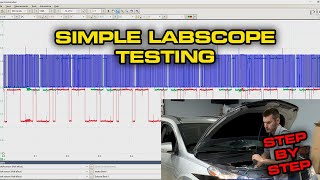
How to confirm: The definitive test is to remove the engine timing cover and physically inspect the chains and check the tensioner extension. A technician can also use a lab scope to analyze the cam and crank sensor signals to confirm a timing deviation without major disassembly. 🎬 Watch: How to use a lab scope to diagnose timing issues. A visual inspection through the valve cover may also reveal excessive slack.
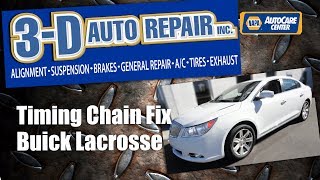
Typical fix: Replace all three timing chains (primary and both secondary), all tensioners, and all guides with an updated kit. It is highly recommended to replace the water pump, camshaft phasers (actuators), and oil pump at the same time.
Est. part cost: $400-$850 - Failed Timing Chain Tensioners or Guides 🔴 High Probability → Shop Engine Timing Chain The hydraulic tensioners can lose pressure due to oil sludge or internal failure, and the plastic guides can wear down or break, leading to chain slack. This is part of the same common timing system failure.
How to confirm: Visual inspection after removing the timing cover will reveal broken guide pieces, scoring on the inside of the timing cover, or fully extended tensioners.
Typical fix: Replace as part of a complete timing chain kit service. Do not replace in isolation.
Est. part cost: $0 (Included in timing kit) - Low or Dirty Engine Oil 🟡 Medium Probability The timing chain tensioners and camshaft phasers are hydraulically operated by engine oil pressure. GM's Oil Life Monitor (OLM) in this era was often calibrated too optimistically, suggesting oil changes at intervals as high as 10,000-12,000 miles. This led to oil breakdown and sludging, which blocks oil passages, starves the tensioners of pressure, and accelerates chain wear.
How to confirm: Check the oil level and condition. If it is very dark, thick, or below the minimum level, this is a likely contributing factor. This should be the very first check performed.
Typical fix: Perform an immediate oil and filter change with a full synthetic oil meeting GM's dexos1 specification. However, if the chain is already stretched and the code is set, an oil change alone will not fix the mechanical problem but is critical for the health of the new parts after repair.
Est. part cost: $40-$80
Rare But Worth Checking
- Failed Camshaft Phaser / VVT Actuator: → Shop Engine Camshaft The phaser can get stuck, fail to respond to commands from the VVT solenoid, or leak oil pressure. While less common than chain stretch, it can cause the same code. It's often replaced during a timing chain job as a preventative measure.
- Damaged Crankshaft Reluctor Wheel: → Shop Engine Crankshaft The reluctor wheel (or tone ring) that the crankshaft position sensor reads can physically shift its position on the crankshaft. TSB PIP3423P specifically calls out this possibility. Diagnosis can sometimes be done with a borescope through the crank sensor hole to check its alignment relative to the crankshaft counterweight. If it has moved, the entire crankshaft must be replaced.
Diagnosis Steps
- Confirm the code P0018 (and any others) with a quality OBD-II scanner.
- Check the engine oil level and condition. If low or dirty, correct this first, clear the codes, and see if the code returns. This is the most critical first step.
- Use a scan tool with live data capability to monitor the camshaft position commanded vs. actual angles for Bank 2. A significant and persistent deviation points to a mechanical issue.
- Listen for a rattling noise from the front of the engine (timing cover area), especially on a cold start. This is a strong audible indicator of a loose timing chain.
- Inspect the wiring and connectors for the Bank 2 intake camshaft position sensor and the crankshaft position sensor for any damage or corrosion.
- For advanced diagnosis, use a lab scope to compare the crankshaft sensor waveform with the Bank 2 camshaft sensor waveforms. A stretched chain will cause a visible time delay (retardation) in the cam signal relative to the crank signal.
- If a shifted reluctor wheel is suspected per TSB PIP3423P, use a borescope to inspect its position through the crankshaft position sensor mounting hole.
- If all signs point to a timing issue, the final step is removing the engine's front timing cover to physically inspect the timing chains, guides, and tensioners for slack, wear, or damage.
Parts You'll Likely Need
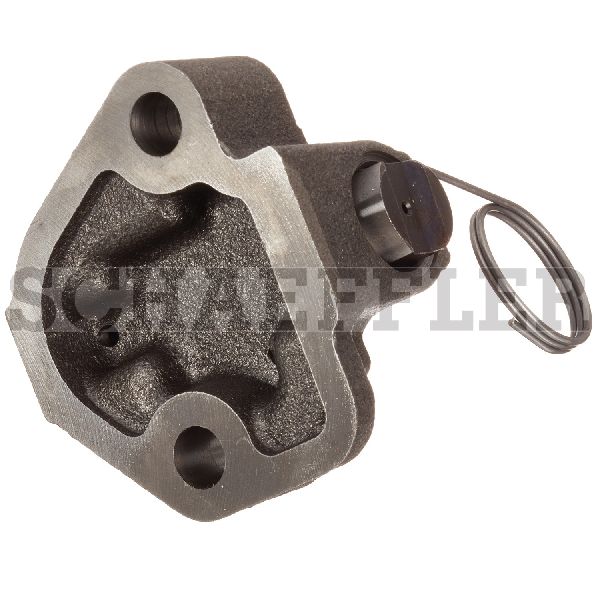
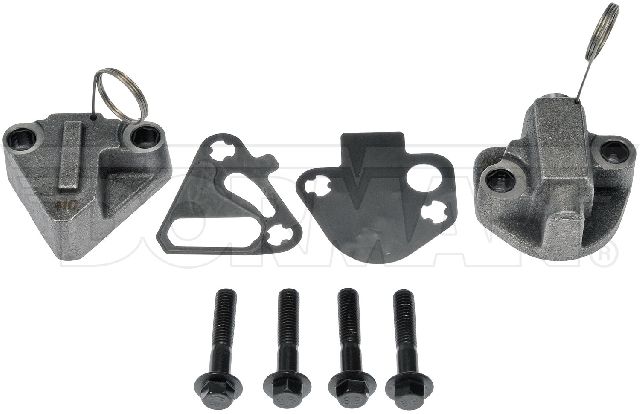
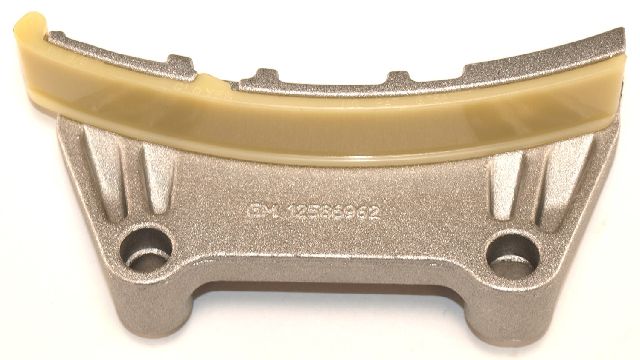
- Engine Timing Chain Kit
(OEM #12650230 (2007-2008 models), 12651450 (2009+ models), check TSB 12-06-01-009F for specifics)— This is the primary failure point. A complete kit ensures all worn components (chains, guides, tensioners) are replaced with updated parts.
Trusted brands: ACDelco (OEM), Cloyes
OEM price range: $450-$600
Aftermarket price range: $250-$450 - Engine Oil and Filter — Fresh, correct-spec full synthetic oil (dexos1) is critical for the proper function of the new hydraulic tensioners and VVT system and to prevent a repeat failure.
Trusted brands: ACDelco, Mobil 1, Pennzoil
OEM price range: $50-$90
Aftermarket price range: $40-$80 - RTV Sealant — Required to re-seal the timing cover and oil pan upon reassembly. TSB 12-06-01-009F notes that sealant is not included in the kits.
Trusted brands: Permatex Ultra Black, ACDelco RTV
OEM price range: $20-$30
Aftermarket price range: $15-$25
Related Codes That Often Appear With This One
- P0008 — Indicates a general engine position system performance error for Bank 1, often the first code to appear in a timing chain failure.
- P0016 — Indicates a Crank/Cam correlation error on Bank 1 Intake, suggesting the timing issue affects the other bank as well.
- P0017 — Indicates a Crank/Cam correlation error on Bank 1 Exhaust, pointing to a widespread timing problem.
- P0019 — Indicates a Crank/Cam correlation error on Bank 2 Exhaust, often set along with P0018 as the entire bank is out of time.
Technical Service Bulletins (TSBs) & Recalls
- PIP3423P: Advises technicians that codes P0016, P0017, P0018, P0019, P0008, or P0009 may require inspection for loose timing chains. It also introduces the rare possibility of a shifted crankshaft reluctor wheel, which would require crankshaft replacement.
- 12-06-01-009F: Discusses the availability of updated, comprehensive timing chain kits for repairing stretched timing chains that cause codes like P0018. It explicitly states that guides, sprockets, and phasers should not be replaced for a simple stretched chain issue under warranty, though many shops recommend it.
- 11340C: This is a Special Policy, not a standard TSB, that extended the warranty on the timing chains to 10 years/120,000 miles for many affected vehicles due to the high failure rate.
Platform-Specific Known Issues
- The GM High Feature 3.6L V6 engines (LY7 and LLT) used in this vehicle are known for premature timing chain stretching, as acknowledged by GM through multiple Technical Service Bulletins (TSBs).
Mechanic-Grade Diagnostic Values
- Camshaft Position (CMP) Actuator Solenoid Resistance — expected: 8 to 12 Ohms. Failure: A reading significantly outside this range (open circuit or shorted) indicates a failed solenoid.
- Scan Tool: Camshaft Position Variance — expected: Less than +/- 2 degrees at idle. Failure: A consistent deviation greater than 4-6 degrees between the 'Desired' and 'Actual' camshaft position angles for Bank 2 Intake strongly suggests a mechanical timing issue (stretched chain or faulty phaser).
- Camshaft Position (CMP) Sensor Connector Voltage — expected: Pin C: 12V Ignition Supply, Pin B: Low Reference (near 0V), Pin A: Signal (square wave when running). Failure: Missing voltage or ground indicates a wiring issue, not a sensor or timing chain fault.
Scan Tool Commands That Help
- GDS2 / Tech2: Camshaft Position Actuator Solenoid Test — Use this bidirectional control to command the Bank 2 intake VVT solenoid ON and OFF while monitoring the 'Camshaft Position Angle' PID. If the angle does not change as commanded, it confirms a fault in the solenoid, oil passages, or the camshaft phaser itself, helping to isolate the problem before engine disassembly.
- GDS2 / Tech2: Crankshaft Position Variation Learn — This procedure should be performed after any major engine work, including timing chain or crankshaft sensor replacement. Failure to perform the 'CASE learn' can sometimes lead to false misfire detection or other running issues, though it is not a direct cause of P0018.
Wiring & Ground Locations
- G103 & G107 — On the left (Bank 2) side of the engine block, near the transmission bellhousing bolts.. These are primary engine block grounds for the Engine Control Module (ECM) and its sensors. A loose or corroded connection at these points can cause erratic sensor readings, including from the cam and crank sensors, potentially leading to false correlation codes.
- Bank 2 Camshaft Position Sensor Connector — On the front (radiator side) of the engine, on the valve cover for the cylinder bank closer to the radiator.. The wiring harness to this sensor can become brittle from heat cycles. Technicians should carefully inspect the connector and the first few inches of wiring for cracks, oil contamination, or loose pins before condemning the sensor or timing components.
Real Owner Repair Stories
- traverseforum.com user post (2011 Chevrolet Traverse 3.6L (shared engine)) — Check Engine Light with codes P0017 and P0018.
❌ Tried (didn't work) A full timing chain replacement service was performed, including all chains, guides, and tensioners.
✅ What actually fixed it The codes returned shortly after the timing chain replacement. The root cause was found to be faulty camshaft actuators (phasers) that were sticking. Replacing the Bank 2 intake and exhaust phasers finally resolved the codes. - GM technician forum discussion (2010 Cadillac CTS 3.6L (shared engine)) — P0018 immediately after timing chain replacement.
❌ Tried (didn't work) Re-checking timing marks, verifying tensioner operation.
✅ What actually fixed it The technician swapped the new Bank 2 intake VVT solenoid with the old one, and the code disappeared. The brand new aftermarket solenoid was defective out of the box. This emphasizes the importance of using high-quality OEM or reputable aftermarket parts for critical components like VVT solenoids.
When the Usual Fixes Don't Work
- While stretched timing chains are the overwhelming cause of P0018 on these engines, there are documented cases where a full timing service does not fix the issue. In these instances, the root cause is often a faulty or sticking camshaft phaser (actuator) that was not replaced along with the chains. The phaser can become clogged with debris from the old chains or fail internally, preventing it from adjusting cam timing correctly even with new chains and solenoids. This is why many expert technicians strongly recommend replacing all four camshaft phasers as part of a complete timing chain job, despite the added cost.
OEM Part Supersession History
Various older timing chain designs prior to ~2009.→ACDelco Kit #12651450 (for 2009+ 3.6L LLT/LY7) or #12650230 (for 2007-2008 3.6L LY7)— The original primary timing chain design was susceptible to premature stretching. The updated kits feature more robust chains with improved link plate designs to prevent wear.
Heads up: Using the wrong year kit can lead to immediate timing issues. The 2007-2008 kit is different from the 2009+ kit. Always verify the correct part number for the specific VIN and engine code (LY7 vs LLT).
Model Year Variations Within This Range
- 2005-2008 vs 2009-2012: The primary engine was the port-injected 3.6L LY7 from 2005-2009. In 2009, the direct-injected 3.6L LLT was introduced and became more common. While both suffer from timing chain issues, the LLT can experience faster oil degradation due to fuel dilution, potentially accelerating the wear. Furthermore, as noted in the part history, the timing chain kits themselves are different for pre-2009 models.
Helpful Videos
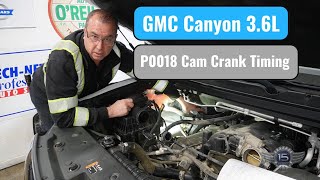
We Have This Part in Stock

The information in this article is provided for general reference and educational purposes only. Vehicle specifications, procedures, and part compatibility can vary by production date, trim level, and region. Always consult your vehicle's factory service manual and verify part numbers before purchasing or performing repairs. Safety-critical components such as airbags, seat belts, and braking systems should be installed by a qualified professional.
- Buick LACROSSE:
- 🧭 Diagnostic Flowchart
- 🎬 Helpful Videos
- 🛍️ Shop This Part
- What's Unique About the 2005-2012 Buick LACROSSE
- Symptoms You May Notice
- Most Likely Causes
- Rare But Worth Checking
- Diagnosis Steps
- Parts You'll Likely Need
- Related Codes That Often Appear With This One
- Technical Service Bulletins (TSBs) & Recalls
- Platform-Specific Known Issues
- Mechanic-Grade Diagnostic Values
- Scan Tool Commands That Help
- Wiring & Ground Locations
- Real Owner Repair Stories
- When the Usual Fixes Don't Work
- OEM Part Supersession History
- Model Year Variations Within This Range
- 🎟️ Get 5% Off