

P0018 on 2018-2019 Buick Regal GS: Crank/Cam Correlation Causes & Fixes
On a 2018-2019 Buick Regal GS with the 3.6L V6 engine, code P0018 indicates a timing correlation error. The most common causes are a stretched timing chain or a faulty camshaft actuator solenoid on Bank 2. This is a serious issue that requires prompt diagnosis to prevent potential engine damage. While the LGX engine has an improved timing system over its predecessors, it is not immune to these faults.
- P0018 on a 2018-2019 Buick Regal GS 3.6L is a serious code that points to a mechanical timing issue and should be addressed immediately.
- The most likely culprit is a stretched timing chain, a known issue in the history of this GM engine family.
- Always check the engine oil level and condition first, as low or dirty oil can cause the VVT system to malfunction.
- Do not simply replace the camshaft sensor; it is most likely doing its job correctly by reporting a real timing problem.
- Due to the complexity and risk of severe engine damage, professional diagnosis and repair are strongly recommended.
What's Unique About the 2018-2019 Buick REGAL
The 2018-2019 Regal GS uses the LGX version of the GM 3.6L V6. While this is a more modern 'clean sheet' redesign with a quieter timing drive system compared to the older LFX/LLT engines, the broader GM High Feature V6 engine family has a well-documented history of premature timing chain stretch. As a result, any timing correlation code like P0018 on this platform immediately raises suspicion of a mechanical timing issue. Furthermore, GM has issued TSB PIP5730B specifically for the LGX engine, pointing to sticking 'Intake Camshaft Position Actuator Park Lock Solenoid Valves' as another potential cause for this code, which may not trigger other drivability concerns.
Diagnostic Flowchart
Tap your situation to follow the diagnostic path that matches what you're seeing on this vehicle.
Symptoms You May Notice
- Check Engine Light is on
- Rough or unstable idle
- Reduced engine power and poor acceleration
- Engine may hesitate or stall, especially under load
- Rattling noise from the front of the engine (timing cover area), especially on a cold startup
- Decreased fuel economy
- In some cases, particularly if caused by a faulty park lock solenoid as per TSB PIP5730B, there may be no noticeable symptoms other than the Check Engine Light.
- Replacing the camshaft or crankshaft position sensors without verifying the mechanical timing. The sensors are often correctly reporting a mechanical problem like a stretched chain 🎬 Watch: A mechanic explains the common causes of the P0018 code. or faulty solenoid.
Most Likely Causes
- Stretched Timing Chain 🔴 High Probability → Shop Engine Timing Chain The GM 3.6L V6 engine family has a known history of timing chain issues. While the LGX engine is improved, wear can still occur, especially with extended oil change intervals or use of incorrect oil viscosity.
How to confirm: A mechanic can use a scan tool to observe camshaft deviation angles; a persistent deviation over 8-9 degrees is a strong indicator. Definitive confirmation can be done electronically with a lab scope comparing cam/crank waveforms to a known-good pattern, or physically by removing the engine front cover to inspect for chain slack.
Typical fix: Replace all timing chains, tensioners, and guides with an updated kit. This is a major, labor-intensive repair.
Est. part cost: $400-$800 - Faulty Camshaft Position Actuator Solenoid (VVT Solenoid) 🟡 Medium Probability → Shop Engine Camshaft These solenoids control oil flow to the cam phasers and can get clogged with sludge or fail electronically. TSB PIP5730B specifically identifies the 'Intake Camshaft Position Actuator Park Lock Solenoid Valves' as a potential cause for P0018 on the LGX engine, noting they can stick or come apart.
How to confirm: A mechanic can command the solenoid with a scan tool. A common diagnostic step is to swap the Bank 2 intake solenoid with the exhaust solenoid (or one from Bank 1); if the code changes (e.g., to P0019 or P0016), the solenoid is bad. Per TSB PIP5730B, the park lock solenoids should be removed and inspected for damage or sticking.
Typical fix: Replace the faulty camshaft position actuator solenoid. If the park lock solenoid is at fault, it should be replaced.
Est. part cost: $40-$90 - Low or Dirty Engine Oil 🟡 Medium Probability The entire variable valve timing (VVT) system, including cam phasers and hydraulic tensioners, is operated by oil pressure. Low, degraded, or incorrect viscosity oil can't operate these components correctly, accelerating wear on timing chains.
How to confirm: Check the oil level on the dipstick and inspect its condition. If it's low, overdue for a change, or appears like sludge, this is a likely contributor. Some owners report the code appearing after an oil change at a non-dealer shop, suspecting an incorrect aftermarket filter was used.
Typical fix: Perform an oil and filter change using the manufacturer-specified grade of oil (e.g., full synthetic 5W-30) and a quality OEM or equivalent filter. If sludge is present, an engine flush may be recommended, but should be done with caution.
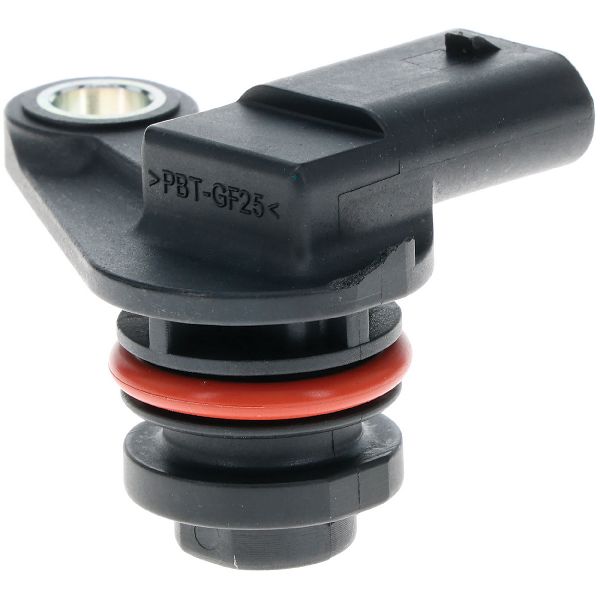
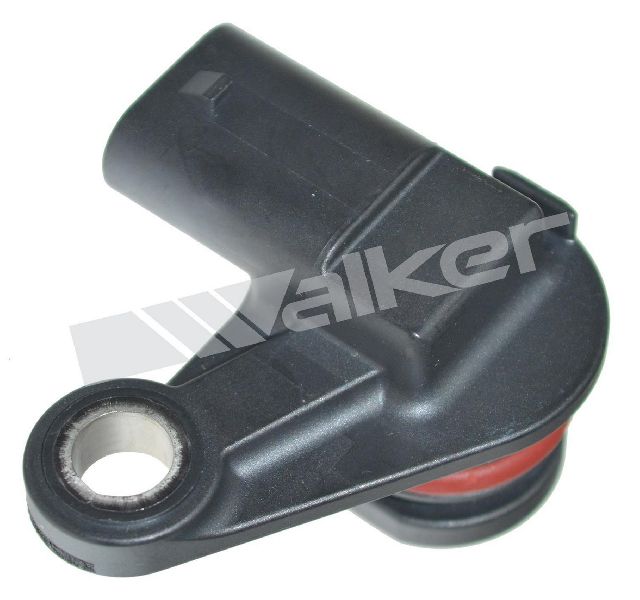
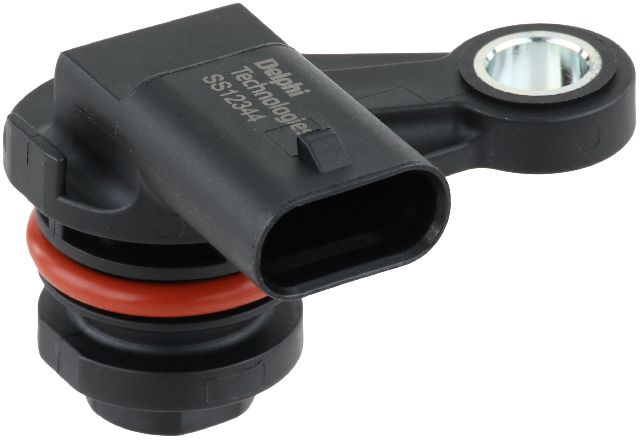
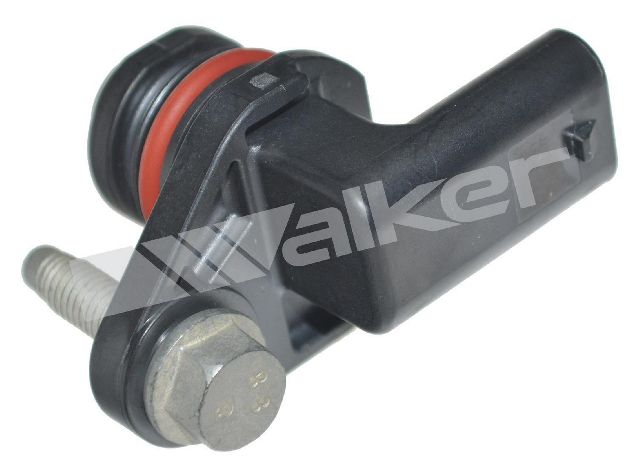
Est. part cost: $50-$100 - Faulty Camshaft Position Sensor ⚪ Low Probability → Shop Engine Camshaft Position Sensor
How to confirm: The sensor's signal can be monitored with an oscilloscope. However, the sensor is usually not the root cause, as it's accurately reporting the timing error. It's rare for the sensor itself to fail in a way that produces this specific correlation code.
Typical fix: Replace the Bank 2 intake camshaft position sensor.
Est. part cost: $30-$70
Rare But Worth Checking
- Worn Camshaft Phaser (Actuator): → Shop Engine Camshaft The mechanical gear on the camshaft that actually adjusts the timing can fail, get stuck, or be damaged by a sticking park lock solenoid. This is often replaced during a full timing chain service.
- Broken or Mis-machined Crank Sprocket: A very serious but documented issue. TSB #17NA272 (and others) for related platforms with the LGX engine warns that for some 2016-2017 models, the crank sprocket could be improperly machined and break, causing a no-start and multiple timing codes. The prescribed fix is a complete engine replacement.
- Swapped Electrical Connectors: Specifically after engine service, TSB 23-NA-091 warns that the connectors for the Bank 1 intake cam actuator solenoid and the Bank 1 intake actuator park lock solenoid are identical and can be swapped. This can cause P0016 and/or P0018 to set immediately with a rough idle. While this TSB refers to Bank 1, it highlights a potential pitfall for any work done on the front of the engine.
- Faulty Powertrain Control Module (PCM): → Shop Engine Control Module (ECM) In very rare cases, the engine computer itself can be the source of the fault. This should only be considered after all other possibilities, including wiring harness checks, have been exhausted.
Diagnosis Steps
- Verify the engine oil level and condition. Ensure the correct viscosity oil and a quality filter are in use. Correct as needed.
- Use a professional scan tool to read the freeze frame data and check for other related trouble codes, such as P0016, P0019, P0008, or P0009.
- Monitor live data from the crankshaft and camshaft position sensors. Check the camshaft angle variance PIDs; a consistent deviation greater than 8-9 degrees at idle points to a mechanical fault.
- Follow the diagnostic procedure outlined in TSB PIP5730B. Remove and inspect the Intake Camshaft Position Actuator Park Lock Solenoid Valves for sticking or physical damage.
- Command the Bank 2 intake VVT solenoid on and off with the scan tool to verify its operation.
- Swap the Bank 2 intake VVT solenoid with the nearby exhaust solenoid. Clear codes and drive the vehicle to see if the fault code changes to P0019. If it does, the solenoid is faulty.
- Inspect the wiring and connectors for the camshaft sensor and VVT solenoids for any damage, corrosion, or being swapped after recent repairs.
- If a lab scope is available, perform a cam/crank correlation test to electronically verify the mechanical timing without engine disassembly. A stretched chain will show a retarded cam signal relative to the crank signal.
- If all other diagnostics fail, perform a physical inspection of the timing chain system for slack, wear, or damage. This is a labor-intensive step that requires partial engine disassembly.
Parts You'll Likely Need
- Timing Chain Kit — This is the most probable cause of a persistent P0018 code on this engine family, addressing stretched chains, worn guides, and failing tensioners. Even the improved LGX is susceptible.
Trusted brands: ACDelco, Cloyes
OEM price range: $500-$800
Aftermarket price range: $350-$600 - Camshaft Position Actuator Solenoid
(OEM #12687114 (ACDelco))— A common and relatively easy part to replace that can become clogged or fail electronically, causing timing correlation faults.
Related Codes That Often Appear With This One
- P0016 — This is the same correlation error but for Bank 1 (radiator side). If both appear, it strongly suggests a problem with the primary timing chain affecting both banks, or potentially swapped connectors per TSB 23-NA-091.
- P0019 — This is a correlation error for the exhaust camshaft on Bank 2. It can appear with P0018 if the entire bank is out of time, pointing towards a secondary chain or phaser issue on that bank.
- P0008 — A general engine position system performance code for Bank 1. It often appears as one of the first codes when timing chains begin to stretch, indicating a problem affecting the entire system.
- P0009 — The general engine position system performance code for Bank 2. It often appears with P0018 and P0019, reinforcing the diagnosis of a significant timing issue on that bank.
Technical Service Bulletins (TSBs) & Recalls
- PIP5730B: This Preliminary Information bulletin from GM provides critical diagnostic advice for P0016 and P0018 on the LGX engine. It points to sticking or broken 'Intake Camshaft Position Actuator Park Lock Solenoid Valves' as a primary cause, which may not be identified by normal diagnostics.
- 23-NA-091 (replaces 19-NA-150): Warns that after engine service, P0016/P0018 can be set by swapping the identical connectors for the Bank 1 intake cam actuator solenoid and the park lock solenoid.
- 17-NA-272: For some 2016-2017 LGX/LGW engines, this TSB notes that a broken engine crank sprocket due to incomplete machining can cause codes P0016, P0017, P0018, or P0019, and requires engine replacement.
Mechanic-Grade Diagnostic Values
- Camshaft Position Actuator Solenoid (VVT Solenoid) resistance — expected: 6.9 to 7.9 ohms at 68°F (20°C). Failure: A reading outside this range, or an open/short circuit, indicates a faulty solenoid.
- Camshaft Position Sensor reference voltage — expected: 4.9V. Failure: Significantly lower or no voltage could indicate a wiring or ECM issue.
Scan Tool Commands That Help
- GDS2 (GM Dealer Scan Tool): Cam/Crank Relearn (Crankshaft Position Variation Learn) — This procedure should be performed after replacing a crankshaft sensor, camshaft sensor, timing chain, or ECM to allow the computer to learn the precise relationship between the components for accurate timing control. Failure to perform this may cause the code to persist even after a correct mechanical repair.
- GDS2 (or equivalent professional scan tool): Intake Camshaft Position Actuator Control — This bidirectional test allows a technician to command the VVT solenoid to a specific angle (e.g., 50 degrees) and observe the 'actual' vs 'desired' cam angle PIDs to verify if the solenoid and phaser are responding correctly. This helps isolate a sticky solenoid/phaser from a chain issue.
Wiring & Ground Locations
- Engine Control Module (ECM) — In the engine compartment on the driver's side (LH side), often near the battery or air filter box.. The ECM is the central computer that receives signals from the cam/crank sensors and controls the VVT solenoids. All related wiring terminates here, making it a central point for electrical diagnosis.
- Main Engine Ground — A primary ground strap typically runs from the negative battery cable to the engine block on the passenger side, with a smaller pigtail to the fender. Another strap often connects the firewall to a top transmission bolt on the driver's side.. A poor ground connection for the engine block can create a floating ground, causing erratic voltage readings from sensors like the camshaft and crankshaft position sensors, leading to false correlation codes.
- Bank 2 Camshaft Position Sensor Connector — Bank 2 is the cylinder head closer to the firewall. The sensor and its connector are located on the cylinder head, but access is tight and may require removing other components to reach.. This is the direct electrical connection for the sensor providing the signal for P0018. Damage, corrosion, or oil contamination at this specific connector can cause the code.
Real Owner Repair Stories
- Reddit user spr1980 (2012 Buick Regal (similar engine family, different generation)) — Rough idle, stalling after a few seconds, difficulty starting.
❌ Tried (didn't work) Initially diagnosed as a timing chain issue.
✅ What actually fixed it The issue was resolved by replacing both the intake and exhaust VVT solenoids. The timing chain failed much later at 250,000 miles with more severe symptoms.
OEM Part Supersession History
12608424 (ACDelco)→12646782 (ACDelco / GM Genuine Parts)— Part has been updated or superseded by GM for improved reliability or manufacturing changes.
Helpful Videos
We Have This Part in Stock


The information in this article is provided for general reference and educational purposes only. Vehicle specifications, procedures, and part compatibility can vary by production date, trim level, and region. Always consult your vehicle's factory service manual and verify part numbers before purchasing or performing repairs. Safety-critical components such as airbags, seat belts, and braking systems should be installed by a qualified professional.
- Buick REGAL:
- 🧭 Diagnostic Flowchart
- 🎬 Helpful Videos
- 🛍️ Shop This Part
- What's Unique About the 2018-2019 Buick REGAL
- Symptoms You May Notice
- Most Likely Causes
- Rare But Worth Checking
- Diagnosis Steps
- Parts You'll Likely Need
- Related Codes That Often Appear With This One
- Technical Service Bulletins (TSBs) & Recalls
- Mechanic-Grade Diagnostic Values
- Scan Tool Commands That Help
- Wiring & Ground Locations
- Real Owner Repair Stories
- OEM Part Supersession History
- 🎟️ Get 5% Off