

P0018 on 2013-2018 Cadillac ATS 3.6L: Crankshaft/Camshaft Correlation Causes and Fixes
On a 2013-2018 Cadillac ATS with the 3.6L V6 engine, P0018 almost always indicates stretched timing chains or failed tensioners. This is a well-documented, serious mechanical issue on the GM High Feature V6 engine family, often stemming from lubrication issues. The repair is labor-intensive and requires replacing the chains, guides, and tensioners. Expect a professional repair cost of $1,800-$3,000+.
- P0018 on a 3.6L V6 Cadillac ATS is a serious code that strongly suggests a mechanical timing chain problem.
- Do not simply replace the sensors; the underlying cause is almost always mechanical wear of the chains or tensioners.
- This is an expensive repair due to the high labor cost. Get a quote from a trusted independent shop that has experience with GM V6 timing chains.
- Using high-quality full synthetic oil and changing it on schedule is critical to maximizing the life of the timing components.
- Driving with this code is risky and could lead to catastrophic engine failure.
What's Unique About the 2013-2018 Cadillac ATS
The GM 3.6L V6 (engine code LFX) used in the Cadillac ATS has a well-documented history of premature timing chain wear. This issue is not unique to the ATS but affects a wide range of GM vehicles using this engine. The primary cause is believed to be inadequate lubrication, exacerbated by factors like extended oil change intervals (encouraged by early oil life monitor calibrations), oil consumption, and potential PCV system issues that lead to faster oil degradation. Unlike many engines where P0018 might point to a simple sensor failure, on the LFX, the root cause is very frequently the timing chains themselves, a fact supported by numerous Technical Service Bulletins (TSBs).
Diagnostic Flowchart
Tap your situation to follow the diagnostic path that matches what you're seeing on this vehicle.
Symptoms You May Notice
- Check Engine Light is on
- Rough, unstable, or vibrating idle.
- Engine rattling noise, especially on a cold start, that may last for a few seconds.
- Noticeable loss of power and poor acceleration.
- Engine may hesitate or stall.
- Engine misfires, which may be felt as a shudder.
- Increased fuel consumption.
- Replacing only the camshaft and crankshaft position sensors without verifying the mechanical timing. This rarely fixes the issue on the 3.6L V6.
- Replacing only one VVT solenoid without checking for the more common underlying timing chain slack.
- Replacing components unnecessarily during a timing chain job. TSB 12-06-01-009 states that idler sprockets and camshaft actuator gears are not considered wear items and should not be replaced for a simple stretched chain condition.
Most Likely Causes
- Stretched Timing Chains 🔴 High Probability → Shop Engine Timing Chain The 3.6L LFX engine family is notorious for premature timing chain stretching. The primary cause is widely considered to be inadequate lubrication from degraded oil, often a result of extended oil change intervals, oil consumption, or PCV system issues. This is the most common failure leading to P0018.
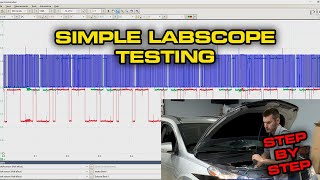
How to confirm: A technician can use a scan tool to view camshaft deviation angles. Physical inspection by removing the engine front cover is the definitive confirmation. An advanced method involves using a lab scope to compare cam and crank sensor waveforms; a stretched chain will show a retarded cam signal.
Typical fix: Replace all three timing chains, all guides, and all tensioners with an updated kit. It is critical to follow the precise timing procedure. 🎬 See this walkthrough of a 3.6L timing chain replacement.
Est. part cost: $300-$600 - Failed Timing Chain Tensioner(s) 🔴 High Probability → Shop Engine Timing Chain The tensioners are hydraulic and rely on clean oil pressure. They can fail or weaken, allowing slack in the chain that causes the timing correlation error. A rattling noise on startup is a classic symptom of a failing tensioner.
How to confirm: A rattling noise on startup is a strong indicator. Confirmed during physical inspection when replacing the timing chains.
Typical fix: Tensioners are always replaced as part of a complete timing chain service.
Est. part cost: $100-$200 (part of kit) - Low or Dirty Engine Oil 🟡 Medium Probability The camshaft phasers (actuators) and chain tensioners are hydraulically operated by engine oil. Low oil levels or dirty, sludged oil can impede their function and trigger this code, and is a major contributor to the primary chain-stretch issue.
How to confirm: Check the oil level and condition on the dipstick. If it's low or very dirty, this is a critical finding. An oil change is a good first step, but if the chains are already stretched, it will not resolve the code.
Typical fix: Perform an oil and filter change using a high-quality full synthetic oil meeting GM's specifications (typically dexos1 5W-30). If the code returns, mechanical wear has already occurred.
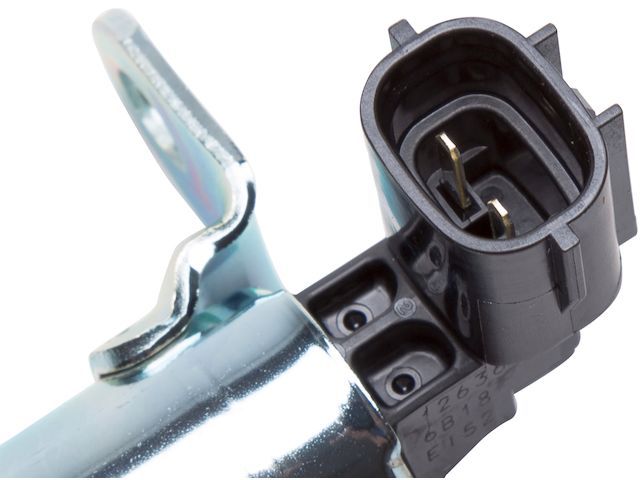
Est. part cost: $50-$120 - Faulty Camshaft Phaser / VVT Solenoid ⚪ Low Probability → Shop Engine Camshaft The solenoid (also called an oil control valve) can get clogged with sludge or fail electronically, preventing proper camshaft adjustment. While possible, it's far less common than the chains themselves being the issue.
How to confirm: A technician can command the solenoid with a scan tool and monitor the camshaft angle response. The solenoid can also be removed, cleaned, and tested for resistance.
Typical fix: Replace the faulty VVT solenoid for Bank 2 Intake. Many technicians recommend replacing both intake and exhaust solenoids on the affected bank at the same time.
Est. part cost: $40-$90
Rare But Worth Checking
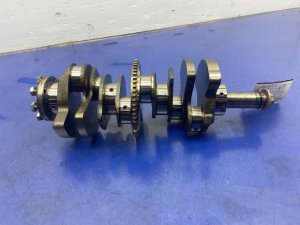
- Slipped Crankshaft Reluctor Wheel: → Shop Engine Crankshaft A GM Preliminary Information bulletin (PIP3423P) notes that the reluctor wheel pressed onto the crankshaft can move, throwing off the crank sensor's reading and causing this code. This is a major internal engine failure requiring significant labor, potentially crankshaft replacement, to correct.
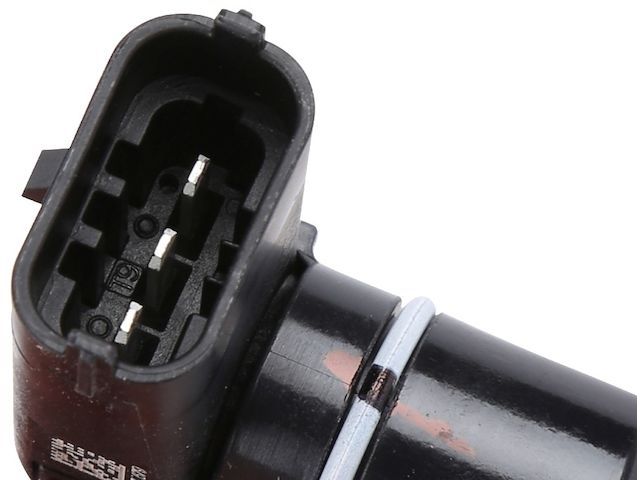
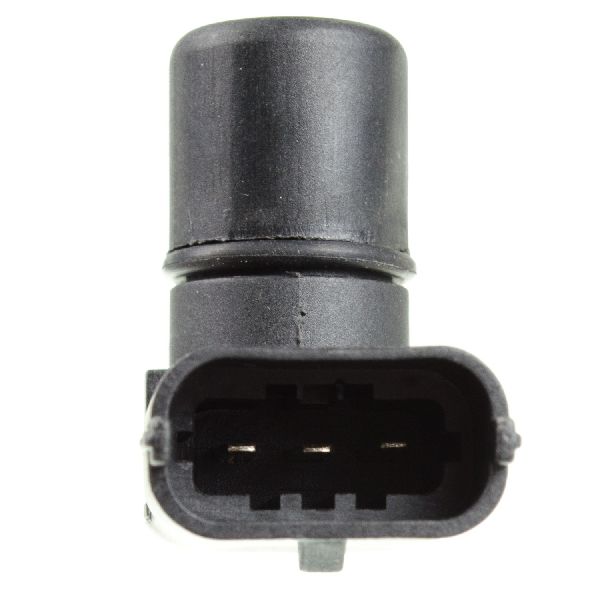
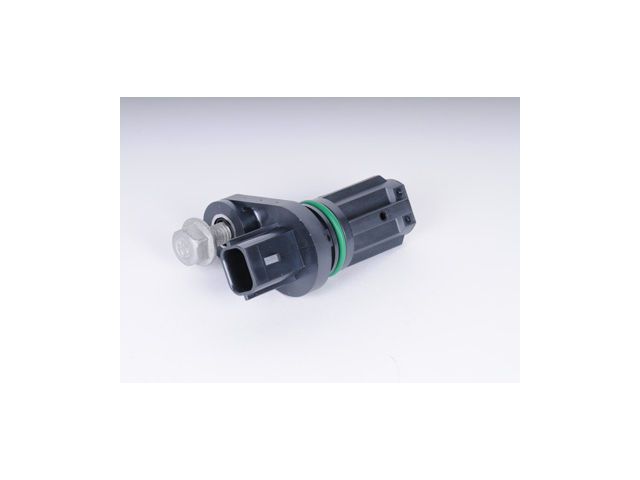
- Faulty Crankshaft or Camshaft Position Sensor: → Shop Engine Camshaft Position Sensor While these sensors can fail, it's far less common than the mechanical timing components on this engine. They are often replaced unnecessarily when the real problem is a stretched chain. If a sensor fails, it typically sets a specific circuit code in addition to or instead of a correlation code.
Diagnosis Steps
- Check engine oil level and condition. An oil level that is low or oil that is very dirty/sludgy is a major red flag. Perform an oil and filter change with the correct specification oil (GM dexos1 5W-30 Full Synthetic) and clear the codes. If the code returns, proceed with further diagnosis.
- Use a professional scan tool to check for other related DTCs (P0008, P0009, P0016, P0017, P0019). The presence of multiple correlation codes strongly suggests a base timing issue.
- Monitor live data for Camshaft Position and Crankshaft Position sensors. Observe the 'Camshaft Angle Deviation' parameter if available. Significant and persistent deviation points to a mechanical timing issue.
- Inspect wiring and connectors for the Bank 2 intake camshaft position sensor and VVT solenoid for any damage, oil contamination, or loose connections.
- Command the Bank 2 intake VVT solenoid with the scan tool to check for response. If it doesn't respond, test the solenoid and its circuit. 🎬 Watch: How to replace the VVT solenoids yourself. Consider swapping the Bank 2 intake and exhaust solenoids to see if the code changes to P0019, which would indicate a bad solenoid.
- If all electrical tests pass, a mechanical fault is highly probable. The next step is to remove the engine front cover to physically inspect the timing chains for slack, and check the tensioners and guides for wear or damage. This is an advanced, labor-intensive step.
- As an advanced diagnostic step, a lab scope can be used to graph the crankshaft sensor signal against the Bank 2 camshaft sensor signal. A known-good waveform can be compared to the vehicle's waveform to definitively prove a timing shift. 🎬 Watch: How to use a lab scope to diagnose timing.
- Per TSB #PIP3423P, if timing chains appear intact, a slipped crankshaft reluctor wheel should be considered, which may require inspection via the crank sensor hole with a borescope.
Parts You'll Likely Need
- Timing Chain Kit
(OEM #12700437)— This is the most common fix. A complete kit includes all three chains, tensioners, and guides needed for the job.
Trusted brands: ACDelco (OEM), Cloyes
OEM price range: $350-$500
Aftermarket price range: $250-$450 - Camshaft Position Actuator Solenoid (VVT Solenoid)
(OEM #12655420 (Intake))— A potential, though less common, cause. It controls oil flow to the cam phaser and can get stuck or fail, especially with dirty oil.
Trusted brands: ACDelco, Delphi
OEM price range: $60-$100
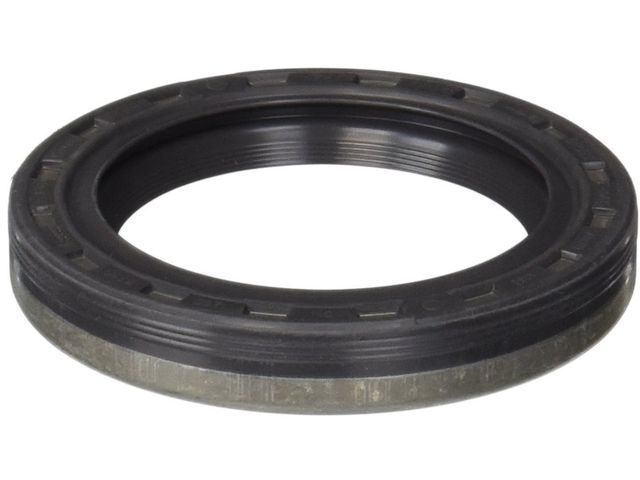
Aftermarket price range: $30-$70 - Front Cover Gasket & Crankshaft Seal — These are required for reassembly after accessing the timing chains and should always be replaced.
Trusted brands: ACDelco, Fel-Pro
Related Codes That Often Appear With This One
- P0016 — Correlation error on Bank 1 Intake Camshaft. Often appears with P0018 if the primary timing chain is stretched, affecting both banks.
- P0017 — Correlation error on Bank 1 Exhaust Camshaft.
- P0019 — Correlation error on Bank 2 Exhaust Camshaft. Often appears with P0018 on the same bank.
- P0008 — A more general code indicating an engine timing performance issue on Bank 1, often a precursor to the more specific codes.
- P0009 — A more general code indicating an engine timing performance issue on Bank 2, often set alongside P0018/P0019.
Technical Service Bulletins (TSBs) & Recalls
- PIP3423P: Instructs technicians to check for loose timing chains, tensioners, or a slipped crankshaft reluctor wheel for codes P0008, P0009, P0016, P0017, P0018, or P0019.
- 12-06-01-009 (revisions A-G): Provides information on new, comprehensive timing chain service kits and clarifies that for a stretched chain issue, only the chains, guides, and tensioners typically need replacement, not sprockets or actuators.
- 23-NA-091: Addresses rough idle and MIL illumination with codes P0016 and/or P0018 after engine repairs, suggesting potential for incorrect timing setup during reassembly.
- PIP5730B: Provides additional diagnostic information for DTCs P0016 and P0018.
Platform-Specific Known Issues
- GM has issued multiple service bulletins regarding this code on the 3.6L engine. Bulletin #PIP3423P directly advises technicians to inspect for loose timing chains or tensioners when codes P0016, P0017, P0018, or P0019 are present.
- TSB 12-06-01-009 (and its revisions) announced updated timing chain kits and advised technicians NOT to replace parts like idler sprockets or camshaft actuators for a stretched chain concern, as they are not wear items in this scenario.
Mechanic-Grade Diagnostic Values
- Camshaft Position Actuator (VVT) Solenoid Resistance — expected: 6 to 12 Ohms. Some sources indicate a new part may be around 11 Ohms.. Failure: A reading of 0 Ohms indicates a short, while a very high or infinite (O.L.) reading indicates an open circuit. Readings in the kilo-ohms (kOhms) are a definitive failure.
- Camshaft Position Sensor Signal (Lab Scope) — expected: A digital square wave pattern. For the GM 3.6L LFX, the reluctor wheel has two wide teeth and two narrow teeth, which should produce a corresponding pattern of wide and narrow square waves on the scope.. Failure: A distorted, missing, or inconsistent pattern. A new, but faulty, sensor can produce a pattern that is completely incorrect, leading to misdiagnosis.
Scan Tool Commands That Help
- GDS2 (GM Global Diagnostic System 2): Camshaft Position Actuator Test — This bidirectional control allows a technician to command the VVT solenoid on and off (or to a specific percentage) while the engine is running to verify its mechanical operation. The scan tool will display the desired vs. actual camshaft angle, confirming if the phaser is responding to the solenoid's commands.
- GDS2 (GM Global Diagnostic System 2): Camshaft Position Solenoid Test — This is a simpler on/off test of the solenoid's electrical circuit. It can be used to quickly verify if the ECM can control the solenoid and if the solenoid clicks, without needing to analyze cam angle data.
- GDS2 (or high-end aftermarket scanner): Crankshaft Position Variation Learn — This procedure should be performed after replacing a crankshaft, crankshaft sensor, or ECM. It allows the ECM to learn the minor variations in the crankshaft reluctor wheel to ensure accurate misfire detection. While not a direct fix for P0018, it's a critical step if major engine work is performed.
Wiring & Ground Locations
- G107 — On the front of the right cylinder head (Bank 1) for the 3.6L LFX engine.. This is a primary engine ground. While P0018 is for Bank 2, poor grounding on one bank can sometimes cause erratic behavior in shared sensor circuits or the ECM, making it a valid location to check for cleanliness and torque.
- G110 — On the left rear of the engine, above the exhaust manifold for the 3.6L LFX engine.. This ground is located on Bank 2, the same bank as the fault code. A loose or corroded G110 could directly impact the reference voltage or signal integrity for the Bank 2 camshaft sensor and VVT solenoid.
- ECM (Engine Control Module) — Located on the right front of the engine compartment.. All sensor signals and actuator commands route through the ECM. The connectors (C1 and C2) are the central hub for testing circuits. For example, the Bank 2 Intake Cam Actuator Solenoid Control is on Pin 12 of the C1 connector.
Real Owner Repair Stories
- L1 Automotive Training YouTube Channel (GM 3.6L (in a different chassis, but identical LFX engine principles and parts)) — Check Engine Light with a cam/crank correlation code (P0366, exhaust side, but diagnosis revealed intake sensor issue).
❌ Tried (didn't work) Initial diagnosis pointed to a bad intake camshaft position sensor based on a lab scope pattern., A brand new, genuine AC Delco sensor was installed, but it produced the exact same faulty waveform as the original failed sensor., The technician verified powers, grounds, and even the physical reluctor wheel inside the engine, all of which were correct.
✅ What actually fixed it After receiving multiple faulty new sensors, a used sensor with the correct part number was sourced from eBay. This used sensor produced the correct waveform on the lab scope and fixed the problem. The issue was a batch of bad, new OEM parts that were electrically faulty out of the box.
OEM Part Supersession History
12655420 (Intake VVT Solenoid)→19419980— Part number consolidation and potential minor design revisions by GM over the production run.12667236 (Camshaft Position Sensor)→12684186— Updated part from GM. It is critical to ensure the correct part number is used, as even new OEM parts have been found to be faulty or incorrect for the application, causing persistent codes.
Heads up: A documented case showed a brand new, correct-part-number AC Delco sensor was faulty from the factory, highlighting the importance of verifying the signal with a lab scope if problems persist after replacement.
Model Year Variations Within This Range
- 2013: A GM service bulletin specifically calls out checking engine ground G104 for 2013 model year vehicles for being clean and properly torqued, as issues with excess shrink wrap or adhesive under the terminal were identified.
Helpful Videos
Used OEM Parts in Stock
New Aftermarket Parts Available

The information in this article is provided for general reference and educational purposes only. Vehicle specifications, procedures, and part compatibility can vary by production date, trim level, and region. Always consult your vehicle's factory service manual and verify part numbers before purchasing or performing repairs. Safety-critical components such as airbags, seat belts, and braking systems should be installed by a qualified professional.
- Cadillac ATS:
- 🧭 Diagnostic Flowchart
- 🎬 Helpful Videos
- 🛍️ Shop This Part
- What's Unique About the 2013-2018 Cadillac ATS
- Symptoms You May Notice
- Most Likely Causes
- Rare But Worth Checking
- Diagnosis Steps
- Parts You'll Likely Need
- Related Codes That Often Appear With This One
- Technical Service Bulletins (TSBs) & Recalls
- Platform-Specific Known Issues
- Mechanic-Grade Diagnostic Values
- Scan Tool Commands That Help
- Wiring & Ground Locations
- Real Owner Repair Stories
- OEM Part Supersession History
- Model Year Variations Within This Range
- 🎟️ Get 5% Off