

P0018 on 2016-2020 Cadillac CT6: Crank/Cam Correlation Causes and Fixes
P0018 on a Cadillac CT6 almost always indicates a serious mechanical timing issue, not just a bad sensor. The most common causes are a stretched timing chain or failed tensioner, a known issue on GM's HFV6 engines. In severe cases on 2016 models, a broken crank sprocket can occur, requiring engine replacement per a GM TSB. This is a critical code that requires immediate attention to prevent catastrophic engine failure.
- P0018 is a critical code on a CT6; stop driving immediately to prevent catastrophic engine failure.
- The root cause is almost always a mechanical timing chain issue (stretched chain, bad tensioner), not a simple sensor failure.
- Check your engine oil level and condition first, as low or dirty oil is a major contributing factor to timing system wear.
- Be aware of TSB #17NA272, which points to a potential broken crank sprocket, a failure that could require engine replacement.
- This repair is complex and expensive, requiring a skilled technician. Do not attempt as a DIY project unless you are an expert with the proper tools.
What's Unique About the 2016-2020 Cadillac CT6
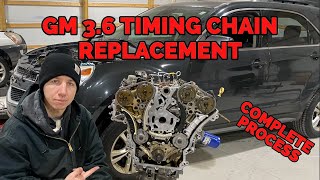
The V6 engines in the Cadillac CT6, particularly the 3.6L LGX and related designs, have a documented history of premature timing chain stretching. 🎬 Watch: Why these GM V6 timing chains fail so often This issue is often linked to oil maintenance, but can occur even on well-maintained vehicles. More critically, a specific GM Technical Service Bulletin (TSB #17NA272) for this platform warns that code P0018 on 2016 models can be caused by a broken engine crank sprocket, a catastrophic failure that may require complete engine replacement. Additionally, TSB #PIP5730B points to a less severe but common cause: sticking Intake Camshaft Position Actuator Park Lock Solenoid Valves, which can set this code without any other drivability issues.
🎬 See a breakdown of P0018 causes and common fixesDiagnostic Flowchart
Tap your situation to follow the diagnostic path that matches what you're seeing on this vehicle.
Symptoms You May Notice
- Check Engine Light is on.
- Rattling or clattering noise from the engine, especially on a cold startup, that may subside as oil pressure builds.
- Rough or unstable idle.
- Reduced engine power and poor acceleration.
- Engine may hesitate or stall, sometimes while driving.
- Decreased fuel economy.
- Engine misfires, potentially setting a P0300 code alongside P0018.
- Replacing only the camshaft position sensor or crankshaft position sensor. The code is triggered by a real timing misalignment, which is almost always a mechanical issue (chain, tensioner, phaser) rather than a faulty sensor.
- Replacing VVT solenoids (oil control valves) without first checking for sludge or performing the diagnostic steps in TSB #PIP5730B for the park lock solenoids.
Most Likely Causes
- Stretched Timing Chain 🔴 High Probability → Shop Engine Timing Chain GM's High Feature V6 (HFV6) engines use a complex system of three long timing chains. Over time, especially with extended oil change intervals or low oil levels, these chains can heat up and stretch, causing the cam/crank correlation to fall out of spec.
How to confirm: A technician will use a scan tool to check camshaft deviation angles; a deviation of over 6-9 degrees is a strong indicator. Physical confirmation requires removing the engine's front cover to measure chain slack, a labor-intensive process. A lab scope can also be used to compare cam and crank sensor waveforms against a known-good pattern.
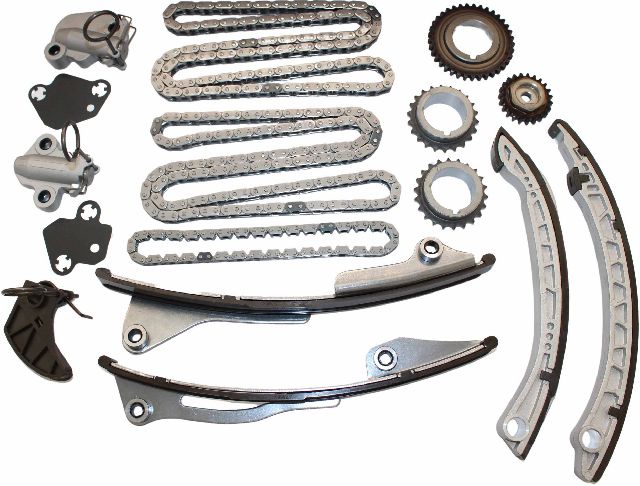
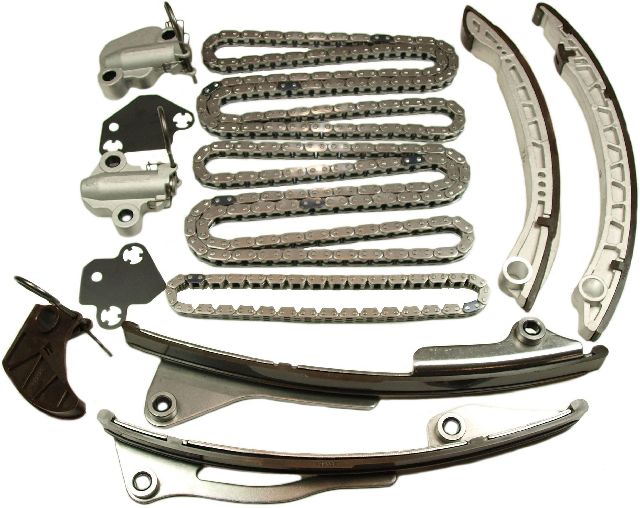
Typical fix: Replace all three timing chains, all tensioners, and all plastic guides. This is a major repair often requiring engine removal.
Est. part cost: $300-$600 for a complete timing kit. - Failed Timing Chain Tensioner(s) 🔴 High Probability → Shop Engine Timing Chain The hydraulic tensioners rely on clean oil and proper pressure. If they fail, get clogged with sludge, or if their seals degrade, they can't keep the chain tight. This leads to slack, chain rattle (especially at startup), and timing correlation codes.
How to confirm: Usually diagnosed during a timing chain inspection. A rattling noise that subsides after startup is a classic symptom of a tensioner that is slow to build oil pressure.
Typical fix: Tensioners are always replaced as part of a complete timing chain service. It is considered poor practice to replace only the tensioners without the chains.
Est. part cost: $50-$150 for tensioners, but they are included in most quality kits. - Broken Engine Crank Sprocket ⚪ Low Probability TSB #17NA272 specifically calls out this failure on 2016 models, leading to a no-start or loud noise with code P0018. This points to a potential materials or design issue with the sprocket for that specific model year.
How to confirm: Requires physical inspection of the timing drive system, often after ruling out other causes. The engine may not start at all or make a loud grinding/banging noise.
Typical fix: Per TSB #17NA272, the recommended fix is complete engine replacement, as the failure is considered catastrophic.
Est. part cost: $5000+ for a replacement engine. - Failed Camshaft Phaser / VVT Actuator ⚪ Low Probability → Shop Engine Camshaft These components can get stuck or fail internally, often due to oil sludge or low pressure, preventing the camshaft from adjusting its timing as commanded by the ECM. Sometimes the internal locking pin can fail, causing a rattle on startup.
How to confirm: A technician can command the phaser position with a high-end scan tool and watch the live data response. A lazy or non-responsive phaser is faulty. A startup rattle can also point to a failed phaser lock.
Typical fix: Replace the faulty camshaft phaser. It's often recommended to replace them during a timing chain job as a preventative measure.
Est. part cost: $80-$200 per phaser.
Rare But Worth Checking
- Low or Dirty Engine Oil: Always the first thing to check. The entire variable valve timing (VVT) system, including phasers and tensioners, is hydraulic. Low or contaminated oil can cause timing correlation codes before permanent damage occurs.
- Faulty Camshaft or Crankshaft Position Sensor: → Shop Engine Crankshaft Position Sensor While possible, it's uncommon for the sensor itself to be the root cause of P0018 on this platform. The code indicates a correlation *error*, which is usually a real mechanical problem, not a sensor reporting error. Swapping sensors is a quick but often ineffective diagnostic step.
- Sticking Intake Camshaft Position Actuator Park Lock Solenoid Valve: → Shop Engine Camshaft TSB #PIP5730B identifies this specific solenoid as a cause for P0016 and P0018, often without any other symptoms. The solenoid can stick or come apart. Technicians are advised to inspect and, if necessary, swap them between banks to see if the code follows before attempting a timing chain job.
- Missing Timing Chain Guide Insert (2019-2020 models): → Shop Engine Timing Chain TSB #20-NA-085 notes that some engines built between Jan 2019 and Mar 2020 may be missing an insert on a primary timing chain guide. This allows the chain to wear through the aluminum guide support, causing excessive slack and setting P0018/P0019.
Diagnosis Steps
- Verify engine oil level and condition. If low, dirty, or the wrong viscosity, perform an oil change with a full synthetic oil meeting GM's dexos specification and a quality filter. Clear the code and see if it returns.
- Use a professional scan tool to read all fault codes and view live data. Pay attention to the camshaft position desired vs. actual angles for Bank 2. A significant, persistent deviation points to a mechanical fault.
- Follow the diagnostic procedure in TSB #PIP5730B. Inspect the Intake Camshaft Position Actuator Park Lock Solenoid Valves for sticking or damage before proceeding to more invasive repairs.
- Inspect the wiring and connectors for the Bank 2 intake camshaft position sensor, crankshaft position sensor, and the VVT solenoids. Check for damage, oil contamination, or swapped connectors (per TSB #23-NA-091).
- If wiring and solenoids are good, a mechanical inspection is required. This is an advanced procedure.
- Remove the engine front cover to visually inspect the timing chains for slack, check the tensioners for proper operation, and verify all timing marks align.
- Specifically inspect the crankshaft sprocket for any signs of damage, cracking, or shearing, as noted in TSB #17NA272, especially on 2016 models.
- For 2019-2020 models, inspect the primary timing chain guide on the left side for a missing insert and wear, per TSB #20-NA-085.
Parts You'll Likely Need
- Timing Chain Kit
(OEM #12680750)— This is the most common fix. A complete kit ensures all wearable components (chains, guides, tensioners) are replaced at once to prevent a repeat failure.
Trusted brands: ACDelco
Related Codes That Often Appear With This One
- P0016 — This is the equivalent correlation code for Bank 1. If both P0016 and P0018 are present, it strongly suggests a problem with the primary timing chain that affects both banks, such as a stretched primary chain or a slipped crank sprocket.
- P0008 — A general Engine Positions System Performance code for Bank 1. It often appears with P0016/P0018 and points towards a significant timing chain issue.
- P0017 — This is the correlation code for the exhaust camshaft on Bank 1. Seeing it with P0018 could indicate a widespread timing problem affecting multiple components.
- P0019 — This is the correlation code for the exhaust camshaft on Bank 2. If seen with P0018, it points to a timing issue affecting the entire bank (both intake and exhaust cams), likely a secondary timing chain for Bank 2 or its alignment.
- P0300 — Random/Multiple Cylinder Misfire Detected. A significant timing deviation can cause poor combustion, leading to misfires across one or both banks. TSB #20-NA-085 specifically mentions P0300 appearing with P0018/P0019.
Technical Service Bulletins (TSBs) & Recalls
- 23-NA-091: Rough Idle, Malfunction Indicator Lamp (MIL) Illuminated After Engine Repairs with DTCs P0016 and/or P0018 Set.
- PIP5730B: Additional diagnostic information for DTC's P0016 and P0018.
- 17NA272: Loud Noise, Malfunction Indicator Lamp Illuminated, and/or No Start with DTC P0016, P0017, P0018, or P0019 Set, due to a broken engine crank sprocket.
- 20-NA-085: Malfunction Indicator Lamp (MIL) Illuminated - DTCs P0018, P0019 and/or P0300 Set.
Platform-Specific Known Issues
- TSB #17NA272: Warns that for 2016 models, P0018 can be caused by a broken engine crank sprocket, which may necessitate engine replacement.
- TSB #23-NA-091: Addresses rough idle and MIL illumination with P0018 (and P0016) after engine repairs. The cause is identified as two identical electrical connectors for the Bank 1 intake actuator and park lock solenoid being swapped during reassembly.
- TSB #PIP5730B: Provides additional diagnostic information for P0016 and P0018, highlighting that sticking Intake Camshaft Position Actuator Park Lock Solenoid Valves can cause the code, often with no other drivability concerns.
- TSB #20-NA-085: Details a condition on some 2019-2020 models where a missing insert on a timing chain guide leads to chain wear, slack, and codes P0018, P0019, and P0300.
Mechanic-Grade Diagnostic Values
- Camshaft Position Actuator Solenoid (VVT Solenoid) resistance — expected: 5 to 9 Ohms. Failure: A reading outside this range, or one that fluctuates wildly when tapped, indicates a faulty solenoid.
- Camshaft Position Sensor (CMP) circuit voltage check — expected: Pin 1 (Yellow): 8V reference from ECM. Pin 2 (Black/White): Low Reference/Ground. Pin 3 (Tan/White): Square wave signal when engine is cranking/running (requires lab scope).. Failure: Missing reference voltage or ground, or an absent/malformed signal wave on Pin 3, points to a sensor or wiring issue.
Scan Tool Commands That Help
- GDS2 (GM Global Diagnostic System 2): Camshaft Position Actuator Solenoid Valve Test — This bidirectional control allows a technician to command the Bank 2 intake VVT solenoid on and off to verify it is mechanically responding. A change in engine idle or sound should be noted. This helps isolate a stuck solenoid from other mechanical issues.
- GDS2 (GM Global Diagnostic System 2): Camshaft Position Variance (Live Data PID) — This is the primary data value to monitor. It shows the live difference in degrees between the ECM's commanded camshaft position and the actual position reported by the sensor. A value consistently greater than 6-9 degrees at idle or during operation confirms the correlation error that sets P0018.
- GDS2 (GM Global Diagnostic System 2): Reset Functions > Camshaft Position Variation Learn — After replacing timing chains, phasers, or the ECM, this function should be performed to clear any stored adaptive values and allow the system to relearn the new components' baseline positions.
Wiring & Ground Locations
- B21B Camshaft Position Sensor Connector — On the front of the Bank 2 (left side, closer to the radiator) cylinder head cover.. This is the specific connector for the sensor that triggers P0018. Per TSB #23-NA-091, it is identical to the Bank 1 sensor connector and they are often swapped by mistake during reassembly, causing an immediate code.
- G105 / G106 Engine Grounds — Typically located on the front of the cylinder heads or on the engine block itself.. A loose or corroded engine ground can cause erratic voltage and signal issues for all engine sensors, including the cam and crank sensors, potentially leading to false correlation codes.
- K20 Engine Control Module (ECM) — Located in the engine bay.. All sensor signals are processed here. The pinout for the B21B sensor includes Pin 1 (8V Reference), Pin 2 (Low Reference/Ground), and Pin 3 (Signal). These circuits can be tested for continuity and voltage directly at the ECM connector to rule out wiring harness breaks.
Real Owner Repair Stories
- Camaro6 Forums (2017 Chevrolet Camaro 3.6L LGX, ~70,000 miles) — Rough idle, engine stalling, Check Engine Light with codes P0016 and P0018.
❌ Tried (didn't work) The owner suspected sensors but took it to a dealer based on forum advice.
✅ What actually fixed it Dealer diagnosed stretched timing chains. Replacement of all three timing chains, guides, and tensioners resolved both codes and all symptoms. - Technical forum discussion (GM vehicle with 3.6L V6 (LGX/LLT family)) — P0018 immediately returned after a complete timing chain and phaser replacement job.
❌ Tried (didn't work) Verifying mechanical timing marks (they were perfect)., Checking sensor wiring and connectors.
✅ What actually fixed it The technician discovered the reluctor wheel on the brand-new replacement camshaft for Bank 2 was not clocked correctly from the factory. Replacing the faulty new camshaft with another one that had a correctly positioned reluctor wheel fixed the code.
When the Usual Fixes Don't Work
- While the most common cause of P0018 is a major mechanical timing chain issue, it should not be the immediate assumption. TSB #PIP5730B highlights a much simpler failure of the 'Intake Camshaft Position Actuator Park Lock Solenoid Valve'. A diagnostic-minded technician will follow this TSB first, which advises inspecting and swapping the solenoids between engine banks. If the code changes from P0018 (Bank 2) to P0016 (Bank 1), the problem is confirmed to be the solenoid, a sub-$100 part, saving thousands of dollars and days of labor by avoiding an unnecessary timing chain replacement.
OEM Part Supersession History
12680750→12690388, which was later superseded by 12709595— GM often updates timing components to improve the durability of chain guides and tensioner designs to combat premature stretching and wear.
Heads up: It is critical to use the latest available OEM part number when performing a timing chain replacement to benefit from the most recent design improvements.
Model Year Variations Within This Range
- 2016: TSB #17NA272 identifies a potential for a broken engine crank sprocket, a catastrophic failure specific to this model year that can cause P0018.
- 2019-2020: Per TSB #20-NA-085, engines built between January 2019 and March 2020 may be missing an insert on a primary timing chain guide, leading to accelerated wear, chain slack, and codes P0018/P0019.
- All: The ECM software logic for detecting correlation faults may be updated over time. Before performing major mechanical repairs, a dealer will typically check for and apply any available software updates, as this can sometimes change the code's sensitivity or fix logic errors.
Helpful Videos
We Have This Part in Stock

The information in this article is provided for general reference and educational purposes only. Vehicle specifications, procedures, and part compatibility can vary by production date, trim level, and region. Always consult your vehicle's factory service manual and verify part numbers before purchasing or performing repairs. Safety-critical components such as airbags, seat belts, and braking systems should be installed by a qualified professional.
- Cadillac CT6:
- 🧭 Diagnostic Flowchart
- 🎬 Helpful Videos
- 🛍️ Shop This Part
- What's Unique About the 2016-2020 Cadillac CT6
- Symptoms You May Notice
- Most Likely Causes
- Rare But Worth Checking
- Diagnosis Steps
- Parts You'll Likely Need
- Related Codes That Often Appear With This One
- Technical Service Bulletins (TSBs) & Recalls
- Platform-Specific Known Issues
- Mechanic-Grade Diagnostic Values
- Scan Tool Commands That Help
- Wiring & Ground Locations
- Real Owner Repair Stories
- When the Usual Fixes Don't Work
- OEM Part Supersession History
- Model Year Variations Within This Range
- 🎟️ Get 5% Off