

P0018 on 2005-2011 Cadillac STS 3.6L: Stretched Timing Chain Causes and Fixes
On a 2005-2011 Cadillac STS with the 3.6L V6 engine, code P0018 almost always means the timing chains have stretched. This is a very common and serious issue with this engine, often caused by extended oil change intervals and the design of the original chains. The only reliable fix is to replace the complete timing chain kit (chains, guides, and tensioners) with updated parts, which is a costly repair, typically $2,600-$3,400.
- P0018 on a 2005-2011 Cadillac STS 3.6L is a serious code that almost always means the timing chains have stretched.
- Do not waste money replacing the camshaft or crankshaft sensors; they are very likely working correctly and reporting a real mechanical problem.
- This is not a DIY repair for most people. It is a complex and expensive job that requires engine disassembly and special tools.
- Continued driving is not recommended as a timing chain failure can lead to catastrophic engine damage.
- The only correct fix is to replace the complete timing chain kit (chains, guides, tensioners) with updated parts from a quality brand like ACDelco.
What's Unique About the 2005-2011 Cadillac STS
The 3.6L V6 (RPO code LY7) used in the 2005-2011 Cadillac STS is notorious for premature timing chain stretching. This is a widely documented pattern failure, not a random occurrence. The problem was so prevalent that GM issued multiple Technical Service Bulletins (TSBs) and a Special Coverage Adjustment (No. 11340C) extending the warranty for this specific issue on certain model years to 10 years or 120,000 miles. The primary causes are believed to be the design of the original 'silent chain' type timing chains which were less durable, and an overly optimistic Oil Life Monitor (OLM) calibration that allowed for excessively long oil change intervals (up to 10,000-12,000 miles), leading to oil degradation and accelerated wear.
Symptoms You May Notice
- Check Engine Light is on
- Engine running rough or idling poorly
- Rattling noise from the engine, especially on a cold start, that may last for 2-3 seconds and sound like marbles in a can
- Reduced engine power and poor acceleration
- Engine stalling
- Decreased fuel economy
- Replacing the camshaft position sensor
- Replacing the crankshaft position sensor
- Replacing only the camshaft actuator (VVT) solenoids
Most Likely Causes
- Stretched Timing Chains 🔴 High Probability → Shop Engine Timing Chain The original timing chains used in the LY7 engine were of a 'silent chain' design that was susceptible to premature stretching. This was exacerbated by long oil change intervals recommended by the factory Oil Life Monitor (OLM), which led to oil breakdown and accelerated wear on the chains and hydraulic tensioners.
How to confirm: A professional technician will use a scan tool to monitor the cam/crank correlation data. A persistent deviation beyond +/- 4 degrees is a strong indicator of a problem. A rattling noise on startup is also a strong indicator. The ultimate confirmation is a physical inspection of the chains for slack, which requires removing the front engine cover.
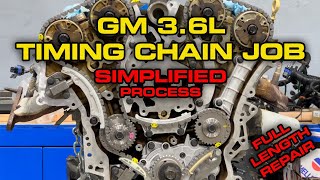
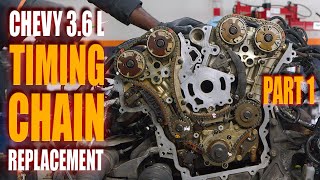
Typical fix: Replace all three timing chains, all tensioners, and all guides with an updated kit. 🎬 See this step-by-step guide for replacing the timing chain. It is critical to use the revised parts designed by GM to prevent a recurrence. TSB 12-06-01-009F specifically advises against replacing sprockets or actuators unless they are found to be worn.
Est. part cost: $300-$600 - Failed Timing Chain Tensioners or Guides 🟡 Medium Probability → Shop Engine Timing Chain The hydraulic tensioners rely on clean engine oil and proper pressure. Degraded oil can cause them to fail or not provide adequate tension, allowing the chain to become slack. The plastic guides can also become brittle and break over time.
How to confirm: This is diagnosed during a physical inspection when checking the timing chains. A failed tensioner will not provide firm pressure against the chain guide. Broken guide pieces may be found in the oil pan.
Typical fix: Although a single tensioner can fail, it is considered a symptom of a worn system. The standard and recommended repair is to replace the complete timing chain kit, not just the failed component.
Est. part cost: $300-$600 (for the full kit) - Low or Dirty Engine Oil ⚪ Low Probability The entire variable valve timing (VVT) system and the chain tensioners are operated by hydraulic pressure from engine oil. The original OLM calibration often led to oil being used for too long, leading to sludge and oil breakdown. GM recommends a minimum of 30 PSI of oil pressure at 2,000 RPM for proper tensioner and VVT operation.
How to confirm: Check the oil level on the dipstick and inspect its condition. If the oil is very low or appears like dark sludge, this could be a contributing factor.
Typical fix: Change the engine oil and filter using a high-quality full synthetic oil that meets GM's dexos specifications. This is a good first step, but it will not fix chains that are already permanently stretched.
Est. part cost: $50-$100
Rare But Worth Checking
- Slipped Crankshaft Reluctor Wheel: → Shop Engine Crankshaft GM TSB PIP3423P (and later revisions like PIP3423K) notes that if the timing chains are found to be tight and in good condition, the reluctor wheel (which the crankshaft position sensor reads) may have slipped on the crankshaft. This is rare but can happen, and the fix requires crankshaft replacement. A technician can sometimes inspect this with a borescope through the crank sensor hole.
- Faulty Camshaft or Crankshaft Position Sensor: → Shop Engine Crankshaft Position Sensor While a sensor can fail, it is extremely unlikely to be the cause of P0018 on this specific engine. The code almost always indicates a true mechanical timing problem that the sensors are correctly reporting. Do not replace sensors without first verifying the mechanical timing.
- Faulty Camshaft Actuator Solenoid (VVT Solenoid): → Shop Engine Camshaft A solenoid can get stuck or fail, causing timing correlation issues. However, this is much less common than chain stretch on the LY7 engine. A failed solenoid will typically set its own specific fault code (e.g., P0010, P0020) and can be tested with a scan tool by commanding it to move and observing the response.
Diagnosis Steps
- Verify the engine oil level and condition. If low or dirty, perform an oil and filter change with full synthetic oil meeting GM dexos specs.
- Use a professional scan tool to check for P0018 and any other related timing codes (P0008, P0016, P0017, P0019).
- Monitor the live data for camshaft/crankshaft correlation or variance PIDs. On this engine, a persistent deviation beyond +/- 4 degrees is a strong indicator of a problem.
- Listen for a rattling or scraping noise from the front of the engine, especially during cold starts, which indicates a loose timing chain.
- If a timing issue is suspected, the next step is labor-intensive: remove the front timing cover for a physical inspection of the timing chains, guides, and tensioners. Manufacturer Bulletin #PIP3423P notes that technicians should specifically inspect for loose timing chains or tensioners when codes P0016, P0017, P0018, or P0019 are set.
- Check for excessive slack in the chains and look for broken plastic guide pieces in the oil pan.
- If chains are loose or components are damaged, the entire timing kit must be replaced with an updated version.
- If chains are tight, investigate rare causes like a slipped crankshaft reluctor wheel per TSB PIP3423P.
Parts You'll Likely Need
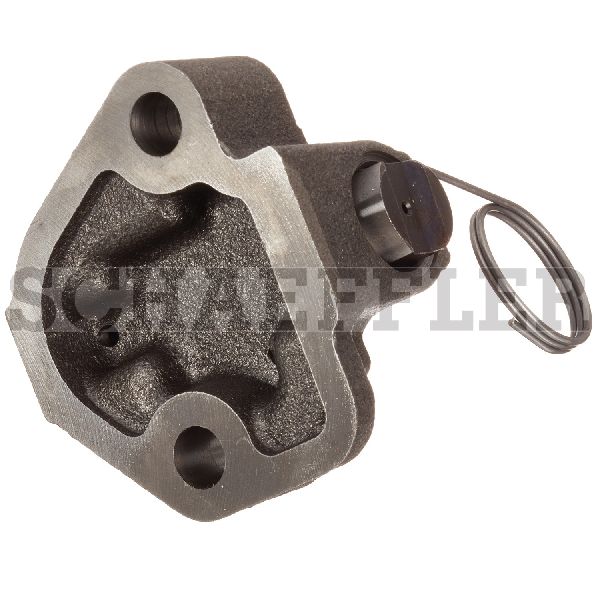
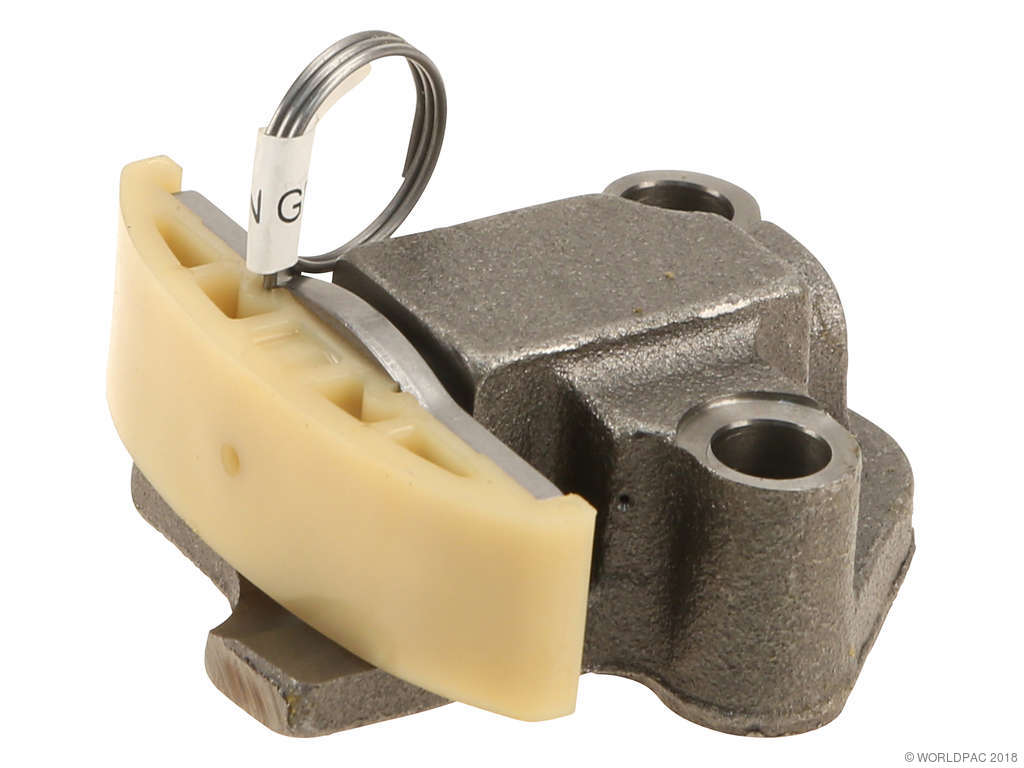
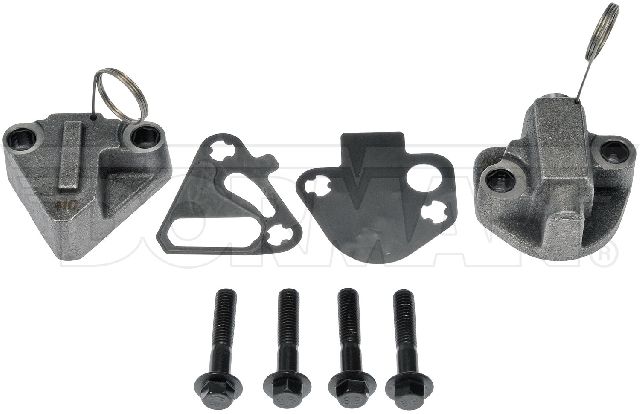
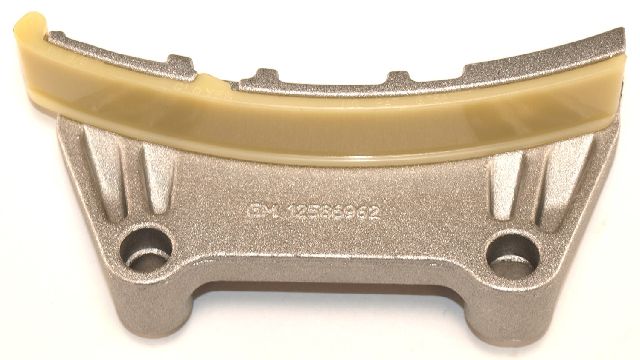
- Timing Chain Kit
(OEM #12650230 (For 2007 LY7 models, verify by VIN))— This is the definitive fix for the known stretched timing chain issue that causes code P0018 on the 3.6L LY7 engine. A complete kit ensures all wear items are replaced with updated components. The updated chains are of an inverted tooth design, which is more durable than the original 'silent chain' type.
Trusted brands: ACDelco, Cloyes
OEM price range: $400-$600
Aftermarket price range: $250-$450
Related Codes That Often Appear With This One
- P0008 — This is a general engine position system performance code for Bank 1. It is often the first code to appear when the primary timing chain begins to stretch, affecting both banks.
- P0016 — This is the same correlation error as P0018, but for Bank 1 (passenger side). Seeing both codes together strongly points to an issue with the primary timing chain that connects the crankshaft to both cylinder banks.
- P0017 — This is a correlation error for the exhaust camshaft on Bank 1. Seeing P0016, P0017, P0018, and P0019 together strongly indicates a problem with the primary timing chain affecting all four camshafts.
- P0019 — This code indicates a correlation error for the exhaust camshaft on Bank 2. Seeing it with P0018 points to a timing issue affecting the entire bank, almost certainly caused by a stretched secondary timing chain on Bank 2.
Technical Service Bulletins (TSBs) & Recalls
- 11340C: Special Coverage Adjustment for premature timing chain wear on 2007-2009 models. Extended warranty to 10 years/120,000 miles and included an ECM reprogram to shorten OLM intervals.
- 12-06-01-009F: Announces the availability of comprehensive timing chain kits and chain guide replacements for repairing stretched timing chains that set DTCs P0008, P0016, P0017, P0018, and P0019.
- PIP3423P: Details the diagnostic procedure for investigating a slipped crankshaft reluctor wheel as a rare cause for timing codes when the chains are found to be in good condition. This bulletin confirms that codes P0016, P0017, P0018, P0019, P0008, or P0009 may be set due to these mechanical timing issues.
Platform-Specific Known Issues
- The 3.6L LY7 V6 engine is widely known for premature timing chain stretching, addressed by GM in TSBs like #12-06-01-009F and Special Coverage Adjustment #11340C.
- The original Oil Life Monitor (OLM) calibration contributed to the problem by allowing excessively long oil change intervals, which GM later addressed with a software update (recalibration) to shorten the intervals, often performed as part of the Special Coverage.
Mechanic-Grade Diagnostic Values
- Camshaft Position Actuator (VVT Solenoid) Resistance — expected: 6.9 to 13 Ohms. Failure: A reading outside this range, or an open/short circuit, indicates a faulty solenoid.
- Scan Tool Cam/Crank Correlation Deviation — expected: Near 0 degrees at idle.. Failure: A consistent deviation greater than +/- 4 degrees at idle is a strong indicator of a mechanical timing issue like a stretched chain.
- Slipped Crankshaft Reluctor Wheel Measurement — expected: 25 to 26 mm. Failure: This measurement is from the end of the machined surface of the crankshaft throw to the edge of the open space in the reluctor. A different measurement indicates the wheel has slipped.
- Camshaft Position Sensor (CMP) Signal Voltage — expected: Digital square wave signal toggling between ~5V and 0V.. Failure: A constant 0V or 5V, or a distorted waveform, indicates a sensor or wiring fault.
Scan Tool Commands That Help
- GDS2 / Tech2: Camshaft Position Actuator Control — This bidirectional command allows a technician to manually command the VVT solenoid to change the camshaft's angle. Observing the live data for a response helps determine if the solenoid, phaser, and oil passages are working, or if the problem is elsewhere (like a stretched chain).
- GDS2 / Tech2: Crankshaft Position Variation Relearn — This procedure is required after replacing the crankshaft position sensor or disturbing the crankshaft reluctor wheel. It allows the ECM to learn the minor variations in the reluctor wheel for accurate timing and misfire detection.
Wiring & Ground Locations
- Engine Control Module (ECM) — On the passenger side valve cover for the 3.6L LY7 engine.. The ECM is the central computer that receives and interprets signals from the cam and crank sensors. All diagnostic wiring tests for these sensors terminate at the ECM connectors.
- G103 — Top right side of the engine, fastened to the ECM case.. This is a critical ground for the ECM. A poor connection here can cause erratic sensor readings and false timing codes.
- G113 — Front center of the right front (Bank 1) cylinder head.. An important engine ground point. A loose or corroded connection can affect sensor signals and contribute to electrical noise that disrupts timing calculations.
- Crankshaft Position (CKP) Sensor — On the left (driver's) side of the engine block.. This sensor provides the primary reference signal for engine timing. Its wiring harness runs near hot engine components and can be a point of failure.
- Bank 2 Camshaft Position (CMP) Sensors — On the front of the driver's side (Bank 2) cylinder head.. These sensors provide the Bank 2 camshaft position data to the ECM. P0018 specifically relates to the intake sensor ('Sensor A') on this bank.
Real Owner Repair Stories
- Fluid MotorUnion blog post (2009 Cadillac CTS4 3.6L V6 with nearly 100,000 miles) — Check Engine Light with codes P0008 and P0018.
❌ Tried (didn't work) The article focuses directly on the known timing chain issue, so no other failed attempts were mentioned.
✅ What actually fixed it A complete timing chain replacement was performed as the definitive fix for the P0008 and P0018 codes, which are stated to be the most common codes for this failure on the LY7 engine.
OEM Part Supersession History
12650230 (Example for 2007 LY7)→Multiple revisions, including 12651450, 12693218, and 12700436.— GM updated the kits multiple times to include more durable, inverted-tooth design timing chains to replace the original 'silent chain' design that was prone to stretching.
Heads up: It is critical to use the latest available part number for the specific engine (LY7 vs LLT) to ensure the most durable components are installed and prevent a repeat failure. Older stock kits will fit but will fail prematurely.12586722, 12588943, 12615613 (VVT Solenoids)→12636175— Revisions for improved reliability and performance.
Model Year Variations Within This Range
- 2005-2007: These years exclusively used the port-injected 3.6L LY7 engine, which is the primary subject of the widespread timing chain issues due to the original chain design and OLM calibration.
- 2008-2011: Starting in 2008, the STS received the direct-injection 3.6L LLT V6. While based on the same architecture and still known to have timing chain problems, the LLT has a different fuel system, higher compression, and may use different timing chain kit part numbers than the LY7.
Diagnostic Flowchart
Real Owner Stories
Aggregated from forums and TSBs cited above. Mileages and costs reflect what owners reported in those sources.
2008 Cadillac STS 3.6L
Symptoms: Owner reported multiple codes including P0008 and P0017, suspecting 'timing chain doom'.
What fixed it: Research into the service manual pointed directly to a primary timing chain issue or a slipped reluctor wheel.
Source hint: Reddit r/MechanicAdvice: '08 Cadillac sts multiple codes.. timing chain doom?'
2008 Cadillac STS 3.6L
Symptoms: Owner experienced code P0018 and was unsure of the exact cause or how to access the components.
What fixed it: A responding mechanic provided the full text of TSB PIP3423K, detailing the diagnostic procedure to check for a slipped reluctor wheel with specific measurements.
Source hint: 2CarPros Forum: 'Code P0018: I Am Not Sure Which One It Is and How to Get to It?'
2008 Buick Enclave 3.6L
Symptoms: Owner of a platform-mate vehicle had a P0018 code and asked if it was a failed sensor or the timing chain.
What fixed it: Mechanic advised that while a sensor can be tested, the timing chain is the highly probable cause for this engine family.
Source hint: YourMechanic Q&A: 'On a 2008 enclave there is a p0018 code. How do you know if it's a failed sensor or timing chain?'
Related OBD-II Codes
Frequently Asked Questions
Is the timing chain issue on my 2007-2009 Cadillac STS covered by a recall or warranty extension?
I have code P0018 and hear a rattling noise on cold starts. What does this mean for my 3.6L V6?
Can I just replace the failed timing chain tensioner instead of the whole kit?
My mechanic says my timing chains are tight, but I still have P0018. What else could it be?
Will changing my oil fix the P0018 code on my STS?
How does a mechanic confirm the timing chain is stretched before tearing down the engine?
Helpful Videos
We Have This Part in Stock


The information in this article is provided for general reference and educational purposes only. Vehicle specifications, procedures, and part compatibility can vary by production date, trim level, and region. Always consult your vehicle's factory service manual and verify part numbers before purchasing or performing repairs. Safety-critical components such as airbags, seat belts, and braking systems should be installed by a qualified professional.
- Cadillac STS:
- 🧭 Diagnostic Flowchart
- 🎬 Helpful Videos
- 🛍️ Shop This Part
- What's Unique About the 2005-2011 Cadillac STS
- Symptoms You May Notice
- Most Likely Causes
- Rare But Worth Checking
- Diagnosis Steps
- Parts You'll Likely Need
- Related Codes That Often Appear With This One
- Technical Service Bulletins (TSBs) & Recalls
- Platform-Specific Known Issues
- Mechanic-Grade Diagnostic Values
- Scan Tool Commands That Help
- Wiring & Ground Locations
- Real Owner Repair Stories
- OEM Part Supersession History
- Model Year Variations Within This Range
- Real Owner Stories
- 2008 Cadillac STS 3.6L
- 2008 Cadillac STS 3.6L
- 2008 Buick Enclave 3.6L
- Related OBD-II Codes
- Frequently Asked Questions
- 🎟️ Get 5% Off