

P0018 on 2019-2021 Chevrolet Blazer 3.6L V6: Crankshaft Position Correlation Causes and Fixes
P0018 on a 2019-2021 Blazer 3.6L V6 indicates a timing mismatch. Before suspecting a costly timing chain replacement, check for a faulty Intake Camshaft Position Actuator Park Lock Solenoid, as highlighted in GM TSB #PIP5730B. This is a much cheaper fix than a full timing chain service, which can cost over $2,000. This specific solenoid can stick or break apart internally, causing the code often without any other symptoms.
- P0018 on the 3.6L Blazer means the engine's timing is out of sync on Bank 2 (passenger side).
- **Crucially, check the VVT solenoids first.** GM issued a TSB (#PIP5730B) pointing to faulty Intake Camshaft Position Actuator Park Lock Solenoids as a likely cause. This is a much cheaper fix than a timing chain.
- Always check your engine oil level and condition first, as low or dirty oil can cause this code.
- Do not immediately assume the camshaft or crankshaft sensors are bad; this code usually points to a mechanical or hydraulic issue.
- This is a serious code that should be addressed promptly to avoid poor performance and the risk of severe engine damage. Professional diagnosis is strongly recommended.
What's Unique About the 2019-2021 Chevrolet BLAZER
While GM's 3.6L V6 family has a history of stretched timing chains, the 2019-2021 Blazer with the LGX version of this engine has specific issues identified by General Motors. A Technical Service Bulletin (TSB #PIP5730B) points directly to the Intake Camshaft Position Actuator Park Lock Solenoids as a potential cause for this code, often without any other drivability symptoms. The bulletin notes these solenoids can stick or come apart internally. Furthermore, TSB #23-NA-091 warns that after a repair, the electrical connectors for the VVT solenoid and the park lock solenoid can be accidentally swapped because they are identical, which will immediately trigger a P0018 code. These bulletins provide critical, cost-effective diagnostic steps before assuming a more expensive timing chain failure.
Diagnostic Flowchart
Tap your situation to follow the diagnostic path that matches what you're seeing on this vehicle.
Symptoms You May Notice
- Check Engine Light is on
- Rough or unstable idle
- Reduced engine power and poor acceleration
- Engine may hesitate or stall
- Decreased fuel economy
- Rattling noise from the engine, especially on cold starts (classic sign of a loose timing chain)
- Immediately replacing the camshaft and crankshaft position sensors. Correlation codes like P0018 usually indicate a mechanical problem (chains, phasers) or a control issue (solenoids), not a complete sensor failure.
- Assuming a stretched timing chain without first checking the Intake Camshaft Position Actuator Park Lock Solenoids as per TSB #PIP5730B, leading to a much more expensive and unnecessary repair.
Most Likely Causes
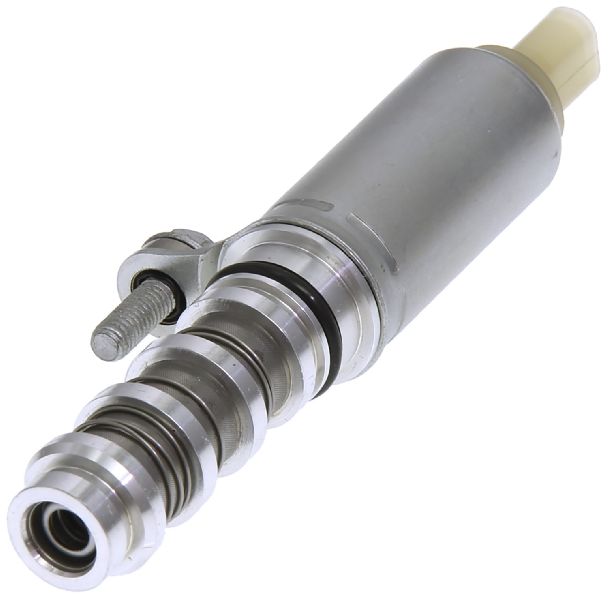
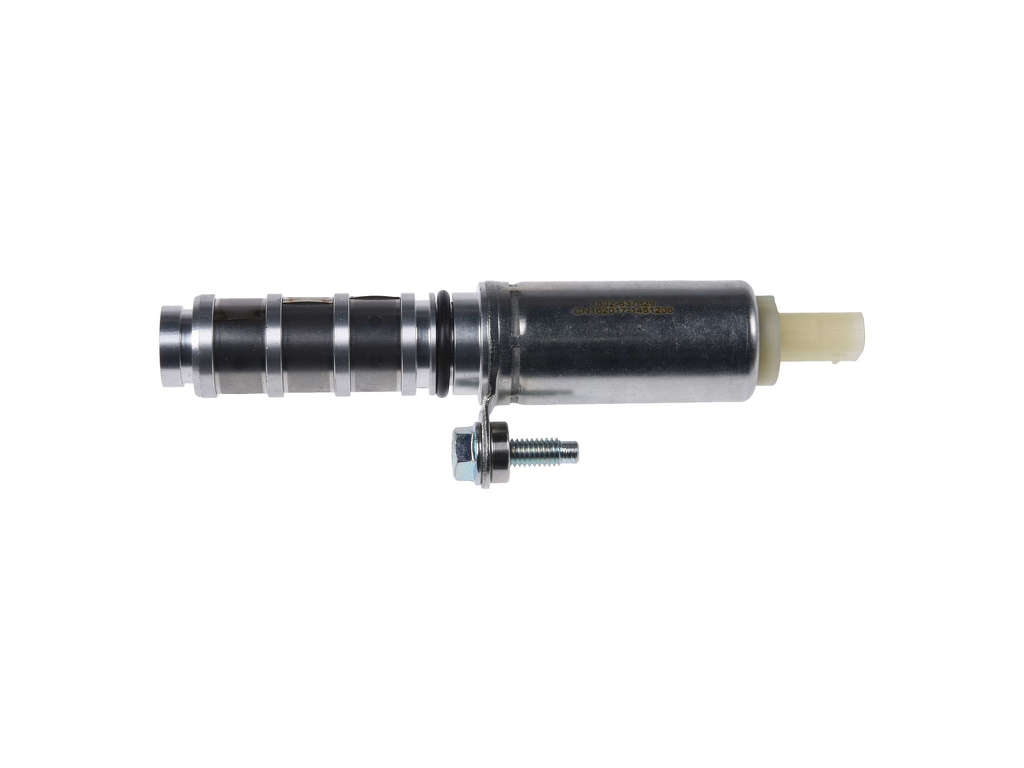
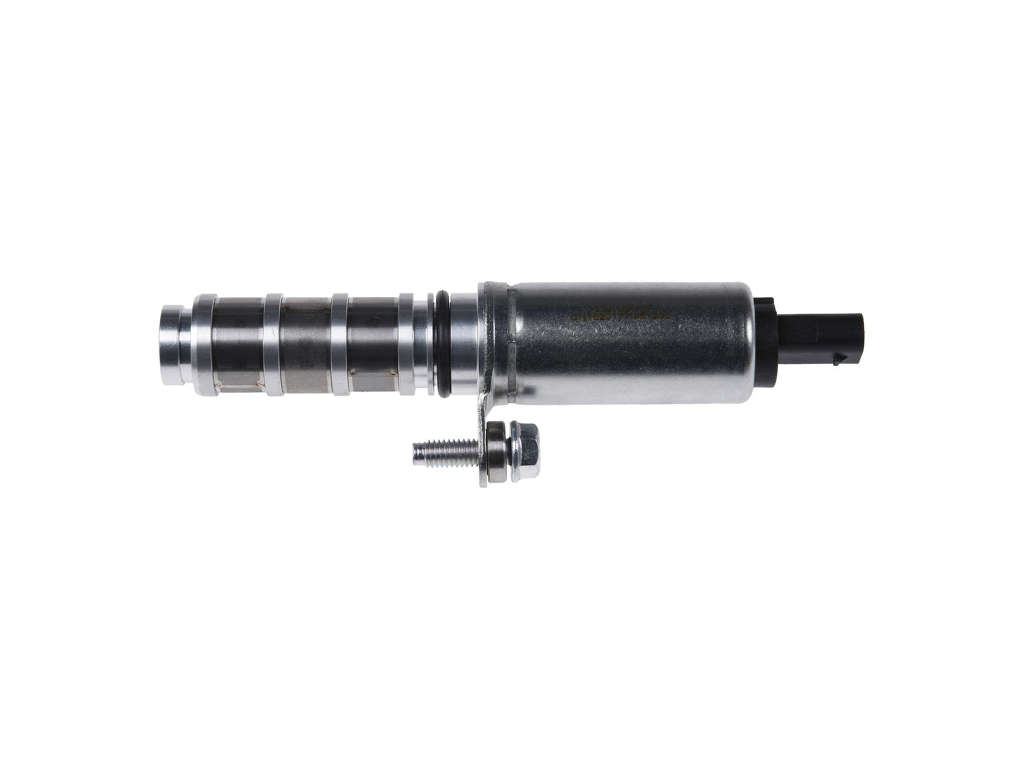
- Faulty Intake Camshaft Position Actuator Park Lock Solenoid 🔴 High Probability → Shop Engine Camshaft This is a known issue documented by GM in TSB #PIP5730B for the 3.6L LGX engine. The bulletin states the solenoid can stick or come apart internally, causing P0018 often with no other symptoms.
How to confirm: Follow the procedure in TSB #PIP5730B: Remove the solenoids for Bank 1 and Bank 2. Inspect them for physical damage or sticking. Swap the solenoids between the banks, reinstall, and clear codes. If the trouble code changes to P0016 (Bank 1), the solenoid is confirmed as the faulty part.
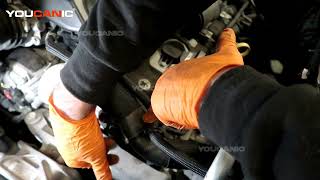
Typical fix: Replace the faulty solenoid. It is often recommended to replace them as a pair. The OEM part number is 12697027. 🎬 See this walkthrough on replacing the camshaft actuator solenoid valves.
Est. part cost: $40-$90 per solenoid - Stretched Timing Chain(s) 🟡 Medium Probability → Shop Engine Timing Chain GM's 3.6L V6 engines have a well-documented history of premature timing chain wear, often exacerbated by extended oil change intervals. Though the LGX design was improved, it remains a significant possibility, especially if oil maintenance has been neglected.
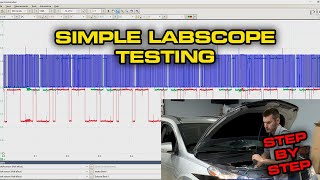
How to confirm: This is a labor-intensive diagnosis. A technician must remove the engine's front cover to physically inspect the chains, guides, and tensioners for slack and wear. This is typically done after ruling out simpler causes like solenoids and sensors. A scan tool showing cam deviation angles greater than 4-6 degrees is a strong indicator. 🎬 Watch: How to use a labscope to test for timing chain stretch.
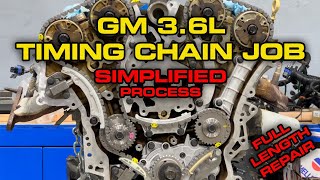
Typical fix: Replace all three timing chains, along with the tensioners and guides. This is a major repair.
Est. part cost: $250-$500 for a full kit - Low or Dirty Engine Oil 🟡 Medium Probability The camshaft phasing system (VVT) is hydraulically operated by engine oil. Oil that is low, dirty, or of the incorrect viscosity can impede the function of the phasers and control solenoids, causing a timing correlation error.
How to confirm: Check the oil level on the dipstick and inspect its condition. If it's dark, gritty, or below the minimum level, this could be the cause.
Typical fix: Perform an oil and filter change using the manufacturer-specified grade of oil (typically full synthetic SAE 5W-30 dexos1 approved).
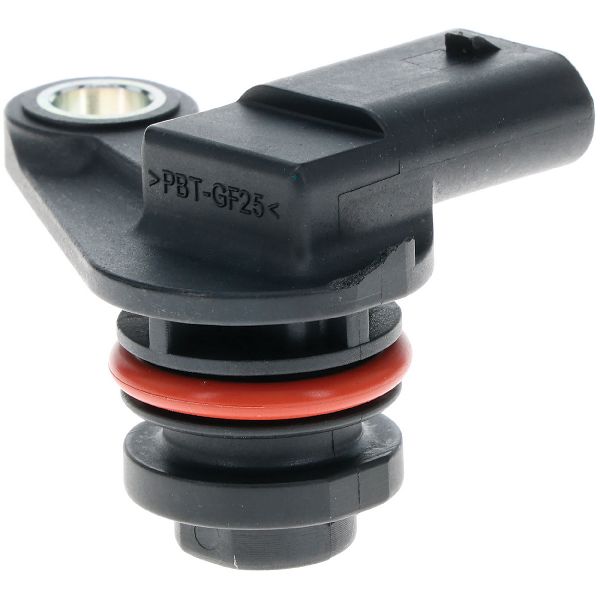
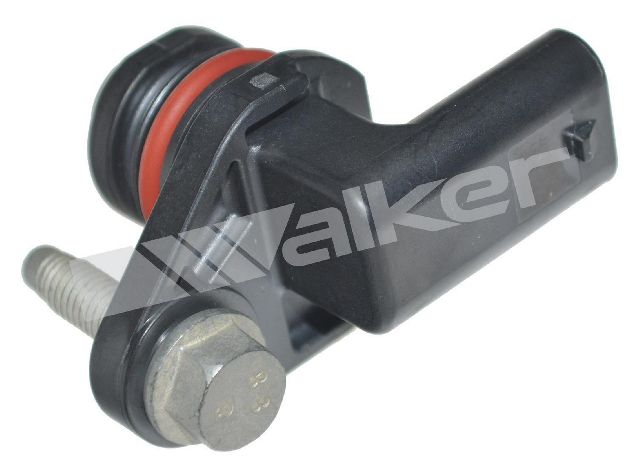
Est. part cost: $50-$100 - Faulty Camshaft Position Sensor (Bank 2, Intake) ⚪ Low Probability → Shop Engine Camshaft Position Sensor
How to confirm: Use a scan tool to monitor the sensor's output. A technician can also test the sensor's resistance with a multimeter. Swapping the sensor with the one from the exhaust or the other bank can also help diagnose, but this is less definitive than with solenoids.
Typical fix: Replace the camshaft position sensor.
Est. part cost: $30-$70
Rare But Worth Checking
- Damaged Crankshaft Reluctor Wheel: → Shop Engine Crankshaft The reluctor wheel on the crankshaft, which the sensor reads, can become damaged or shift its position, leading to correlation codes. This is documented in TSB #PIP3423P for the GM 3.6L engine family and requires significant disassembly to inspect.
- Faulty Camshaft Phaser (Actuator): → Shop Engine Camshaft The mechanical gear (phaser) on the end of the camshaft can fail, getting stuck in one position. In a documented case on a similar engine, a P0018 code was caused after a timing job because the incorrect phaser (e.g., an exhaust phaser installed on an intake cam) was used.
- Swapped Electrical Connectors: TSB #23-NA-091 warns that the connectors for the VVT solenoid and the park lock solenoid are identical. If they are swapped during reassembly after a repair, a P0018 code will set immediately. Verifying wire colors is necessary to confirm they are connected correctly.
Diagnosis Steps
- Verify the engine oil level and condition. Top up or change the oil and filter if necessary, using the correct specification oil (full synthetic 5W-30 dexos1).
- Use an OBD-II scanner to check for any other accompanying trouble codes, such as P0016, P0019, or P0009.
- Follow TSB #PIP5730B: Locate the Intake Camshaft Position Actuator Park Lock Solenoids for both banks. They are distinct from the larger VVT solenoids. Remove and inspect them for any signs of damage or sticking.
- If no damage is found, swap the Bank 2 solenoid with the Bank 1 solenoid. Clear the codes and test drive the vehicle.
- If the code returns as P0016 (Bank 1), the solenoid is faulty and should be replaced. If P0018 returns, the solenoid is likely not the issue.
- If any recent repairs were performed, inspect the connectors for the VVT solenoid and the park lock solenoid on Bank 2. Per TSB #23-NA-091, they are identical and can be swapped. Verify correct connection.
- Inspect the wiring and connectors for the camshaft and crankshaft position sensors for any damage, corrosion, or loose connections.
- Using an advanced scan tool, monitor the live data for the commanded vs. actual camshaft positions for Bank 2. This can help determine if the phaser is responding to commands.
- If all else fails, a physical inspection of the timing chains, guides, and tensioners is required. This is a labor-intensive step and should be performed by a qualified technician.
Parts You'll Likely Need
- Intake Camshaft Position Actuator Park Lock Solenoid
(OEM #12697027)— This is a primary suspect according to GM's own service bulletin (PIP5730B) for this specific engine and code.
Trusted brands: ACDelco
OEM price range: $60-$100
Aftermarket price range: $40-$80 - Engine Timing Chain Kit
(OEM #12713649 (example kit number, verify for specific vehicle))— If the solenoids and sensors are confirmed to be working, a stretched timing chain is the next most likely cause, a known issue on this engine family.
Trusted brands: ACDelco, Cloyes, INA
OEM price range: $400-$600
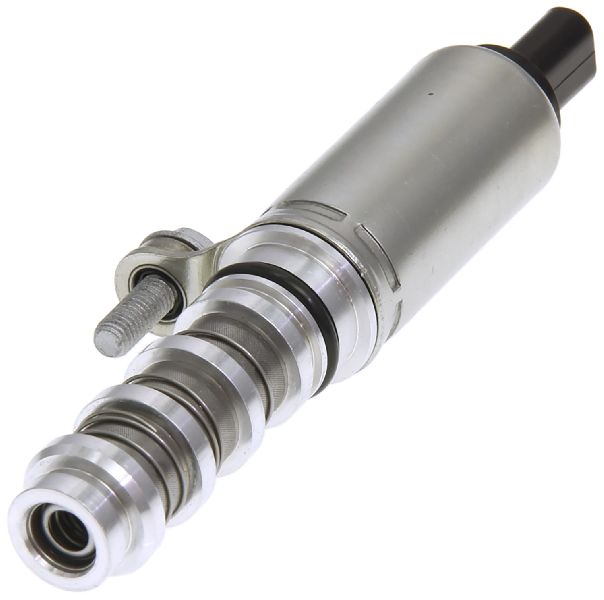
Aftermarket price range: $250-$450 - Camshaft Position Actuator Solenoid (VVT Solenoid)
(OEM #12679529 (Intake))— While less common than the park lock solenoid for this code, the main VVT solenoid can also fail due to sludge or electrical issues. Often replaced as a preventative measure during a larger timing job.
Trusted brands: ACDelco, Dorman
OEM price range: $50-$90
Aftermarket price range: $40-$80
Related Codes That Often Appear With This One
- P0016 — This is the identical correlation code but for Bank 1. If P0018 and P0016 appear together, it strongly suggests a problem affecting the entire engine's timing, such as a stretched primary timing chain or an issue with the crankshaft reluctor wheel.
- P0019 — This is the correlation code for the exhaust camshaft on Bank 2. If seen with P0018, it points to a more general timing issue on Bank 2, such as a problem with the secondary timing chain for that bank or a failed phaser.
- P0008 / P0009 — These are general engine position performance codes for Bank 1 and Bank 2, respectively. Their presence alongside P0018 reinforces the diagnosis of a significant timing chain system problem.
Technical Service Bulletins (TSBs) & Recalls
- PIP5730B: Diagnostic Assistance For P0016 And P0018 On The Gen 2 HFV6 Engine. This bulletin advises checking the Intake Camshaft Position Actuator Park Lock Solenoids for sticking or damage before proceeding with more complex timing chain diagnostics.
Platform-Specific Known Issues
- GM Technical Service Bulletin #PIP5730B: Specifically calls out the 'Intake Camshaft Position Actuator Park Lock Solenoid Valves' as a cause for P0018 on the 3.6L LGX engine. It notes they can stick or come apart, and recommends inspection and swapping between banks for diagnosis.
- GM Technical Service Bulletin #23-NA-091: Warns technicians that P0018 can appear immediately after engine repairs because the electrical connectors for the camshaft actuator solenoid and the park lock solenoid are identical and easily swapped by mistake.
Mechanic-Grade Diagnostic Values
- VVT (Camshaft Actuator) Solenoid Resistance — expected: 7 to 12 Ohms. Some sources cite a range of 6.9 to 13 Ohms.. Failure: A reading of infinite resistance (Open Loop), near 0 Ohms (short), or a value significantly outside the expected range.
- Camshaft Position Sensor (CMP) Resistance — expected: Approximately 1.2 kΩ.. Failure: A significant deviation from the expected resistance value, or an open/short circuit reading on a multimeter.
- Engine Oil Pressure at Idle (Warm) — expected: At least 25 PSI.. Failure: Pressure significantly below 25 PSI can starve VVT components and trigger timing codes.
- Scan Tool Camshaft Position Variance — expected: The 'Actual' position should closely track the 'Desired' position.. Failure: A consistent deviation greater than 4-6 degrees between the desired and actual camshaft position angles at idle or 2500 RPM points to a mechanical timing problem like a stretched chain.
Scan Tool Commands That Help
- GDS2 (or equivalent professional scan tool): Camshaft Position Actuator Control — This bidirectional control allows a technician to command the VVT solenoid ON and OFF or to a specific angle while the engine is running. By observing the 'Actual Camshaft Position' PID, the technician can verify if the solenoid, oil passages, and mechanical phaser are all working correctly. A lack of response indicates a fault in that system.
Wiring & Ground Locations
- G113 — On the right (passenger) side of the engine.. A GM Service Update (N192208640) for the 2019 Blazer identified a potential issue with this ground terminal being installed incorrectly, which could cause the engine to run rough, hesitate, or stall. While not directly linked to P0018, poor grounding can cause erratic sensor behavior and is a valid check during diagnosis.
- Bank 2 Camshaft Sensor/Solenoid Connectors — Bank 2 is the cylinder bank closer to the radiator. The sensors are on the back of the cylinder heads near the firewall, while the solenoids are on the front of the cylinder heads.. Correctly identifying Bank 2 is the first step. TSB #23-NA-091 warns that the VVT solenoid and park lock solenoid connectors are identical and can be swapped, causing this code. The camshaft position sensors for the LGX engine are located near the firewall.
Real Owner Repair Stories
- YouTube channel 'L1 Automotive Training' (GM vehicle with 3.6L engine (similar VVT system)) — Check Engine Light with a camshaft position sensor performance code (P0366, which can be related to correlation issues).
❌ Tried (didn't work) Replacing the sensor with a new ACDelco part from the dealer., Replacing the sensor with a second new ACDelco part from the dealer., Replacing the sensor with an aftermarket CarQuest part.
✅ What actually fixed it After multiple new sensors (both OEM and aftermarket) produced a bad waveform on an oscilloscope, they finally obtained a tenth sensor which produced the correct waveform and fixed the code. This highlights that even new-in-box parts, including from the dealer, can be faulty and cause extensive misdiagnosis.
Model Year Variations Within This Range
- 2019-2021: The 3.6L LGX engine in the 2019-2021 Blazer is a second-generation design that replaced the older LFX engine. The LGX features improvements like Active Fuel Management (cylinder deactivation), improved variable valve timing, and a different timing chain configuration (two chains instead of three), which was intended to improve durability over the previous generation known for chain stretch.
Helpful Videos
We Have This Part in Stock

The information in this article is provided for general reference and educational purposes only. Vehicle specifications, procedures, and part compatibility can vary by production date, trim level, and region. Always consult your vehicle's factory service manual and verify part numbers before purchasing or performing repairs. Safety-critical components such as airbags, seat belts, and braking systems should be installed by a qualified professional.
- Chevrolet BLAZER:
- 🧭 Diagnostic Flowchart
- 🎬 Helpful Videos
- 🛍️ Shop This Part
- What's Unique About the 2019-2021 Chevrolet BLAZER
- Symptoms You May Notice
- Most Likely Causes
- Rare But Worth Checking
- Diagnosis Steps
- Parts You'll Likely Need
- Related Codes That Often Appear With This One
- Technical Service Bulletins (TSBs) & Recalls
- Platform-Specific Known Issues
- Mechanic-Grade Diagnostic Values
- Scan Tool Commands That Help
- Wiring & Ground Locations
- Real Owner Repair Stories
- Model Year Variations Within This Range
- 🎟️ Get 5% Off