

P0018 on 2015-2021 Chevrolet Colorado 3.6L: Crank-Cam Correlation Causes and Fixes
On a 2015-2021 Chevrolet Colorado with the 3.6L V6 engine, code P0018 almost always points to a stretched timing chain. This is a well-documented issue for this engine family (LFX/LGZ) and is a significant repair, often costing between $1,600 and $2,800+ at a shop. While other causes like faulty sensors or solenoids are possible, they are far less common for this specific correlation code on this platform.
- P0018 on a 2015-2021 Colorado with the 3.6L V6 is a serious code that strongly indicates a stretched timing chain.
- Do not ignore this code. A rattling noise from the engine is a critical warning sign.
- While you can check the oil and replace the Bank 2 intake VVT solenoid as preliminary steps, the most likely fix is a full timing chain replacement.
- This is not a beginner-friendly DIY repair. It requires significant disassembly of the engine and is best left to a professional mechanic.
- Using the correct GM-specified dexos1 engine oil and adhering to regular change intervals is critical for the longevity of the timing system.
What's Unique About the 2015-2021 Chevrolet COLORADO
The GM High Feature V6 engine family, including the LFX (2015-2016) and LGZ (2017-2021) variants in the Colorado, has a widely documented history of premature timing chain stretching. This isn't a random part failure; it's a pattern observed across many GM vehicles using this engine, leading to numerous Technical Service Bulletins (TSBs). TSB PIP3423P, for example, directly instructs technicians to inspect for loose timing chains when codes like P0018 appear. Another potential, though less common, issue noted in TSBs for this engine family is the crankshaft position sensor reluctor wheel slipping on the crankshaft, which also causes correlation codes. This makes a mechanical timing problem the primary suspect, far more so than on other vehicles where sensor failures might be more common. A specific TSB (20-NA-085) notes that some engines built between Jan 2019 and March 2020 may be missing a timing chain guide insert, leading to rapid chain wear and setting codes like P0018.
Diagnostic Flowchart
Tap your situation to follow the diagnostic path that matches what you're seeing on this vehicle.
Symptoms You May Notice
- Check Engine Light is illuminated
- Engine runs rough, especially at idle
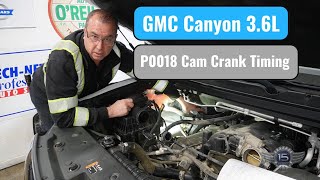
- Rattling, scraping, or chain-slap noise from the front of the engine, particularly on cold starts 🎬 Hear the 3.6 VVT clattering noise and learn the fix.
- Noticeable loss of engine power and poor acceleration
- Engine may hesitate or stall
- Reduced fuel economy
- Difficulty starting the engine
- Replacing only the camshaft or crankshaft position sensors. While these sensors provide the data, they are rarely the root cause of a P0018 code on this engine. The problem is almost always the mechanical relationship (timing chain) between the components they are monitoring.
- Replacing only one VVT solenoid. While a solenoid can be the cause, on a high-mileage engine it is often just the first symptom of a larger oil contamination or timing chain wear problem.
Most Likely Causes
- Stretched Timing Chain(s) 🔴 High Probability → Shop Engine Timing Chain The GM 3.6L V6 engine family has a known history of premature timing chain wear, often linked to extended oil change intervals and the demands of the direct injection and VVT systems. The 'stretch' is actually elongation from wear in the chain's pins and links. This is corroborated by multiple TSBs issued by GM for this problem across numerous models.
How to confirm: A mechanic can use a professional scan tool to monitor camshaft position variance PIDs; a deviation consistently greater than 9 degrees under load indicates a mechanical timing issue. Advanced diagnosis involves using an oscilloscope to compare the crankshaft and camshaft sensor waveforms to a known-good pattern, which can confirm a stretch without major disassembly. Physical confirmation requires removing the timing cover to measure chain slack.
Typical fix: Replace all three timing chains, along with all tensioners, guides, and sprockets. It is also highly recommended to replace the water pump (which is driven by the timing chain) and VVT solenoids at the same time.
Est. part cost: $300-$600 - Failed Timing Chain Tensioner(s) 🟡 Medium Probability → Shop Engine Timing Chain The hydraulic tensioners can weaken or fail, allowing excessive slack in the chain which causes the correlation error. This is often a contributing factor to the overall timing system failure and is always replaced as part of a complete timing chain service.
How to confirm: A rattling noise is a strong indicator of a failed tensioner allowing chain slap. During disassembly for a timing chain inspection, a technician can check if the tensioner is fully extended, which indicates a stretched chain, or if the tensioner itself is weak.
Typical fix: Replace the faulty tensioner(s). It is highly recommended to replace the chains, guides, and sprockets at the same time as a complete kit.
Est. part cost: $50-$150 - Low, Dirty, or Incorrect Engine Oil ⚪ Low Probability The camshaft phasers and timing chain tensioners are hydraulic and rely on clean oil at the correct pressure. Using oil that doesn't meet GM's dexos1 specification or extending oil change intervals beyond 5,000 miles can lead to sludge, clogged passages, and VVT system malfunction, accelerating timing chain wear.
How to confirm: Check the oil level and condition on the dipstick. If it's very low, overdue for a change, or looks like sludge, this is a likely contributing factor. Review vehicle service history for consistent oil changes.
Typical fix: Perform an oil and filter change using the manufacturer-specified full synthetic oil (e.g., ACDelco dexos1) and a quality filter. If the code returns, the damage from poor lubrication (stretched chain) has likely already occurred.
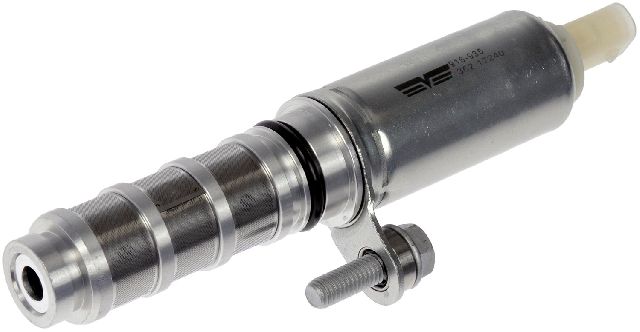
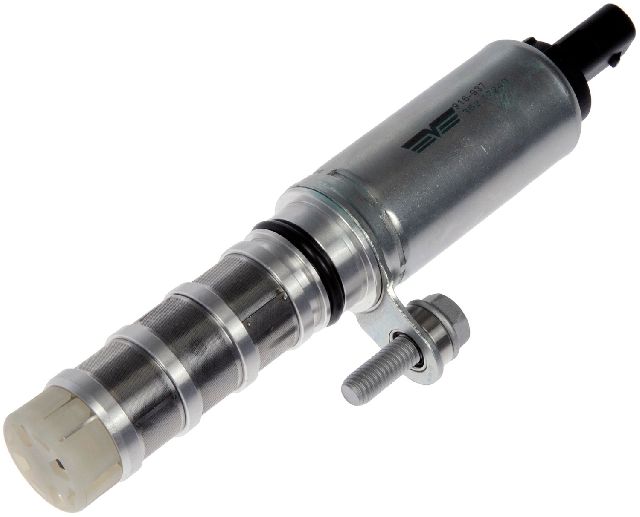
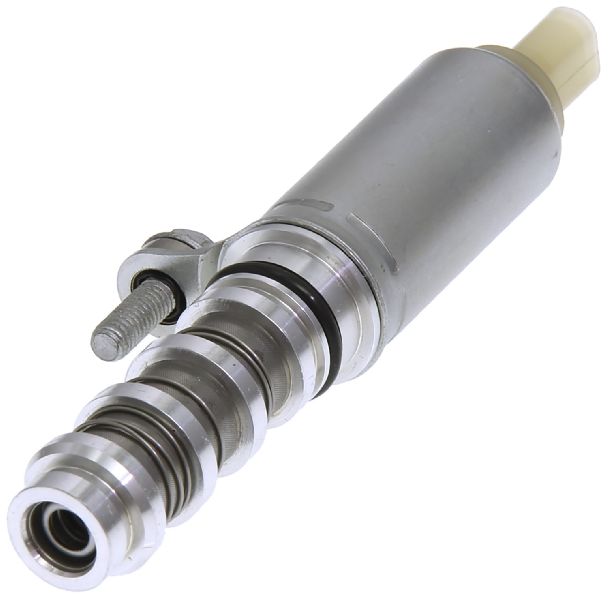
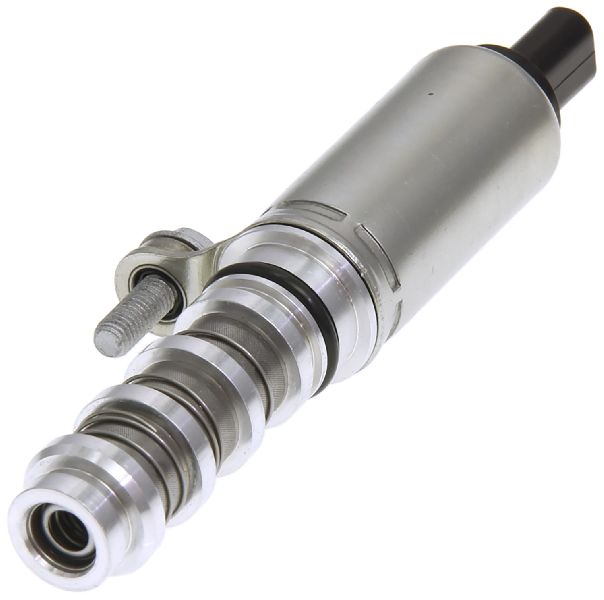
Est. part cost: $50-$100 - Faulty VVT Solenoid (Camshaft Position Actuator Solenoid) ⚪ Low Probability These solenoids control oil flow to the cam phasers. They can get clogged with sludge or fail electronically, causing them to stick and not properly adjust cam timing.
How to confirm: A mechanic can command the solenoid with a scan tool and watch for a change in camshaft timing. They can also be removed, inspected for debris on the screens, and tested for resistance (a good solenoid should read between 5 and 15 ohms). Swapping the suspect solenoid with a known good one (e.g., from the other bank) and seeing if the code follows is a common diagnostic trick.
Typical fix: Replace the faulty VVT solenoid for Bank 2 Intake.
Est. part cost: $30-$80
Rare But Worth Checking
- Slipped Crankshaft Reluctor Wheel: → Shop Engine Crankshaft TSB PIP3423P specifically mentions that the reluctor wheel for the crankshaft sensor can move on the crankshaft, causing correlation codes even with a good timing chain. This requires crankshaft replacement and is a major repair.
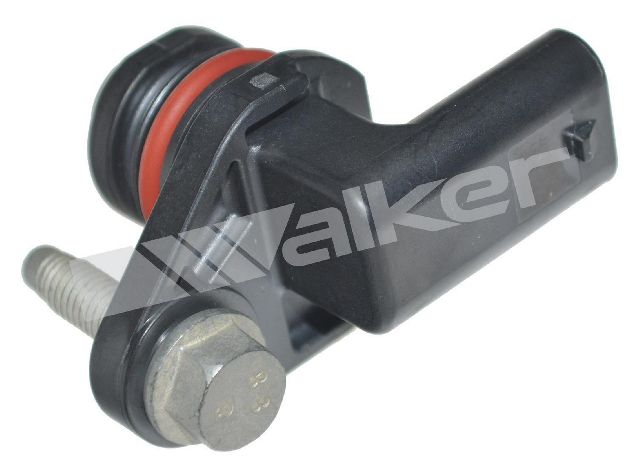
- Failed Camshaft Position Sensor: → Shop Engine Camshaft Position Sensor While possible, it's much less common than a mechanical timing issue on this engine. The ECM is usually good at detecting a failed sensor with a specific sensor circuit code (e.g., P0365-P0369), rather than a correlation code like P0018.
- Failed Crankshaft Position Sensor: → Shop Engine Crankshaft Position Sensor Very unlikely to cause a Bank 2-specific code without also causing other, more severe running issues, stalling, or no-start conditions.
- Failed Cam Phaser (VVT Actuator): → Shop Engine Timing Gear The phaser itself can fail mechanically (e.g., get stuck), but this is less common than chain stretch or solenoid issues. It is typically replaced as part of a full timing chain job.
Diagnosis Steps
- Verify engine oil level and condition. Ensure the correct full synthetic dexos1 specification oil is being used.
- Scan the ECM for any other stored trouble codes. Note any other correlation codes (P0008, P0009, P0016, P0017, P0019), as multiple codes strongly point to a base timing issue.
- Using a professional scan tool, monitor the 'Camshaft Position Variance' for Bank 2 Intake. Observe the value under different engine loads and RPMs. A consistent deviation, especially one that exceeds +/- 9 degrees, points towards a mechanical timing issue.
- Listen for any rattling or scraping noises from the front of the engine, which would indicate a loose timing chain slapping against the guides.
- As a preliminary step, consider swapping the Bank 2 intake VVT solenoid with the Bank 1 intake solenoid. Clear codes and drive the vehicle. If the code changes to P0016, the solenoid is faulty. If P0018 returns, the problem is mechanical. 🎬 Watch: Diagnosing P0018 cam and crank timing on a 3.6L.
- For definitive diagnosis, perform a cam/crank correlation test with an oscilloscope. This compares the sensor signals to a known-good waveform to visually confirm if the timing has retarded due to chain stretch.
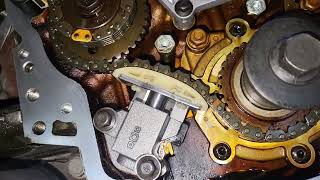
- If all other tests are inconclusive, proceed with mechanical inspection. This involves removing the engine timing cover to physically inspect the timing chains for slack, check for broken guides, and verify the timing marks on the chains, phasers, and crankshaft.
- Consult GM Technical Service Bulletin PIP3423P, which specifically advises inspecting for loose timing chains, tensioners, or a slipped crankshaft reluctor for this code. Also check for TSB 20-NA-085, which applies to some 2019-2020 models with a missing timing chain guide insert.
Parts You'll Likely Need
- Timing Chain Kit
(OEM #ACDelco 12713649 (example for 2017+ LGZ))— This is the most common failure point for the P0018 code on the 3.6L V6 engine. A complete kit ensures all wearable components (chains, guides, tensioners, sprockets) are replaced to prevent a repeat failure.
Trusted brands: ACDelco (OEM), Cloyes
OEM price range: $350-$500
Aftermarket price range: $200-$350 - VVT Solenoid (Camshaft Position Actuator)
(OEM #12679099)— This is a common secondary cause, often due to oil contamination. It's a much easier and cheaper part to replace first if you want to rule it out before committing to a timing chain job.
Trusted brands: ACDelco, Delphi
OEM price range: $40-$70
Aftermarket price range: $25-$50
Related Codes That Often Appear With This One
- P0016 — This is the same correlation error but for Bank 1 (passenger side). If both P0016 and P0018 appear, it strongly suggests a widespread timing chain issue affecting the entire engine.
- P0008 — This is a more general Engine Position System Performance code for Bank 1. It often indicates a timing chain issue and is frequently seen with P0018.
- P0009 — Similar to P0008, but for Bank 2. Its presence reinforces the diagnosis of a Bank 2 timing problem.
- P0017, P0019 — These are correlation codes for the exhaust camshafts on Bank 1 and Bank 2, respectively. Seeing them with P0018 points to a severe timing chain problem affecting multiple camshafts.
Technical Service Bulletins (TSBs) & Recalls
- PIP3423P
- 23-NA-091
- PIP5730B
Platform-Specific Known Issues
- TSB #PIP3423P: Directly links DTCs P0018, P0019, P0008, P0009, P0016, and P0017 to potentially loose timing chains or tensioners. Crucially, it also mentions the possibility of a slipped crankshaft reluctor wheel as a cause, which requires crankshaft replacement.
- TSB #23-NA-091: Addresses a specific situation where a rough idle and codes P0016/P0018 can appear immediately after engine repairs. It points out that two connectors (the intake cam actuator solenoid and the intake actuator park lock solenoid) are identical and can be easily swapped, causing a hard fault. This highlights the sensitivity of the system.
- TSB #PIP5730B: Communicates additional diagnostic information for DTCs P0016 and P0018, highlighting that GM is aware of diagnostic complexities with these codes and is providing ongoing support to technicians.
Mechanic-Grade Diagnostic Values
- VVT Solenoid (Camshaft Position Actuator Solenoid) Resistance — expected: 5.0 to 15.0 Ohms. Failure: A reading outside this range, especially an open circuit (infinite resistance) or short (near zero ohms), indicates a failed solenoid.
- Camshaft Position Sensor Low Reference Circuit to Ground — expected: Less than 5.0 Ohms. Failure: A reading greater than 5.0 Ohms indicates high resistance or an open in the ground circuit for the sensor.
- Camshaft Position Sensor Signal Circuit Voltage (Key On, Engine Off) — expected: 4.8 to 5.2 Volts. Failure: Voltage higher than 5.2V suggests a short to voltage; voltage lower than 4.8V suggests a short to ground or an open/high resistance in the signal wire.
Scan Tool Commands That Help
- GDS2 (GM Dealer Scan Tool): Camshaft Position Actuator Solenoid Control — This bidirectional command allows a technician to manually command the VVT solenoid on and off to verify its mechanical operation and see the corresponding change in camshaft angle PIDs. This helps isolate a faulty solenoid from a mechanical phaser or oil pressure issue.
- GDS2 (GM Dealer Scan Tool): Crankshaft Position Variation Learn — This procedure should be performed after replacing a crankshaft, crankshaft position sensor, or ECM. It allows the ECM to learn the minor variations in the crankshaft reluctor wheel to prevent false misfire detection, though it is not directly for fixing a P0018 correlation code.
Wiring & Ground Locations
- G105 / SP105 (Driver Side) — On the driver's side inner fender, near the battery and underhood fuse block.. This is a major ground splice pack for numerous critical components on the driver's side, including the fuel pump, run/crank relay, and potentially circuits related to the ECM. A poor connection here due to corrosion can cause a host of intermittent electrical issues that could mimic sensor failures.
- G106 / SP106 (Passenger Side) — On the passenger's side inner fender, typically behind the engine airbox.. This ground splice pack serves the Electronic Brake Control Module (EBCM) and the Data Link Connector (DLC). While less likely to directly cause P0018, a fault here can interfere with proper network communication and diagnostics.
- ECM Engine Block Ground — A primary ground wire runs from the negative battery terminal to a bolt on the engine block.. This is a critical ground path for the entire engine management system. Corrosion or a loose connection at the block can create voltage drops and unstable sensor readings, potentially leading to erroneous correlation codes.
Real Owner Repair Stories
- ColoradoFans.com Forum User (2018 Chevrolet Colorado Z71 3.6L V6, ~60,000 miles) — Check Engine Light with code P0018. No noticeable driveability issues initially.
❌ Tried (didn't work) Initial diagnosis by dealer pointed to timing chains., Owner continued driving while monitoring the issue.
✅ What actually fixed it The owner had the dealership replace the timing chains, guides, and tensioners under warranty. The repair resolved the P0018 code.
OEM Part Supersession History
GM6094M, GM4718M→dexos1™— GM introduced the dexos1™ specification starting with the 2011 model year to meet higher performance and environmental standards, including better protection for timing chains and VVT systems.
Heads up: While older spec oils are not recommended, dexos1™ is fully backward compatible and is the preferred oil for all previous model years.
Model Year Variations Within This Range
- 2015-2016: These model years use the 3.6L LFX engine. This engine has a well-documented history of timing chain stretch issues, often attributed to the chain design and oil life monitor calibration.
- 2017-2021: These model years use the updated 3.6L LGZ engine. The LGZ was a clean-sheet redesign with a different timing system, improved VVT, and other changes aimed at increasing durability. While considered more robust than the LFX, it is still a complex DOHC engine where neglecting oil changes can lead to timing system problems.
- 2019-2020 (specific build dates): A subset of engines built between January 2, 2019, and March 1, 2020, may be missing a timing chain guide insert on Bank 2, as detailed in TSB 20-NA-085. This manufacturing defect causes premature and rapid timing chain failure.
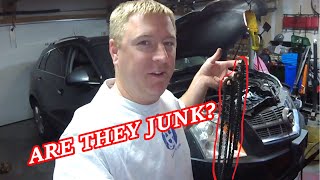
Helpful Videos

We Have This Part in Stock


The information in this article is provided for general reference and educational purposes only. Vehicle specifications, procedures, and part compatibility can vary by production date, trim level, and region. Always consult your vehicle's factory service manual and verify part numbers before purchasing or performing repairs. Safety-critical components such as airbags, seat belts, and braking systems should be installed by a qualified professional.
- Chevrolet COLORADO:
- 🧭 Diagnostic Flowchart
- 🎬 Helpful Videos
- 🛍️ Shop This Part
- What's Unique About the 2015-2021 Chevrolet COLORADO
- Symptoms You May Notice
- Most Likely Causes
- Rare But Worth Checking
- Diagnosis Steps
- Parts You'll Likely Need
- Related Codes That Often Appear With This One
- Technical Service Bulletins (TSBs) & Recalls
- Platform-Specific Known Issues
- Mechanic-Grade Diagnostic Values
- Scan Tool Commands That Help
- Wiring & Ground Locations
- Real Owner Repair Stories
- OEM Part Supersession History
- Model Year Variations Within This Range
- 🎟️ Get 5% Off