

P0018 on 2008-2015 Chevrolet Equinox: Crank-Cam Correlation Causes and Fixes
On 2008-2015 Equinox models with the 3.0L or 3.6L V6 engine, code P0018 almost always points to a stretched timing chain. This is a well-documented, major repair often costing $1,500-$3,000+. GM acknowledged this issue with Special Coverage Adjustment #11340, though it has since expired. Less common causes include faulty VVT solenoids, sensors, or low/dirty oil.
- On a V6 Equinox from this era, P0018 is most likely caused by stretched timing chains.
- Always check engine oil level and condition first, as low or dirty oil can cause timing issues.
- The appearance of other codes like P0008, P0016, or P0017 alongside P0018 makes a mechanical timing chain problem almost certain.
- Replacing timing chains is a very large and expensive job that should be left to a professional mechanic.
- Do not simply replace sensors without performing diagnostic tests, as this is unlikely to fix the root cause.
What's Unique About the 2008-2015 Chevrolet EQUINOX
The Chevrolet Equinox from this period, particularly models equipped with the GM 'High Feature' 3.0L (LF1/LFW) and 3.6L (LLT) V6 engines, is widely known for premature timing chain stretching. This is not a random component failure but a well-documented pattern attributed to a combination of timing chain design and overly long oil change intervals recommended by the original Oil Life Monitor (OLM) calibration. Direct injection engines like these contaminate oil more quickly, and degraded oil fails to properly lubricate the chains, accelerating wear. GM acknowledged this through multiple Technical Service Bulletins (TSBs) and a Special Coverage Adjustment (#11340) that extended the warranty for this specific issue to 10 years/120,000 miles, though this program is now expired for all affected vehicles. While other causes are possible, a P0018 code on these specific V6 engines has a very high probability of being related to the primary timing chains.
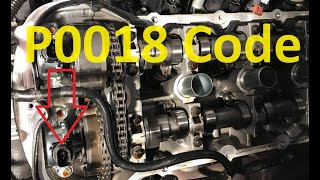
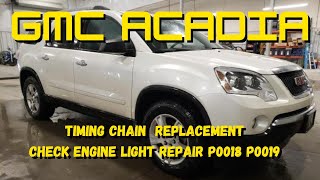
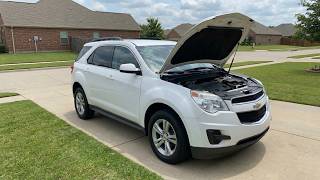
🎬 Watch: Understanding the causes and fixes for the P0018 code.Diagnostic Flowchart
Tap your situation to follow the diagnostic path that matches what you're seeing on this vehicle.
Generation note: This range covers the end of the first generation (2008-2009) and the beginning of the second generation (2010-2015). The 3.6L V6 (LY7) in the first-gen Sport and the 3.0L (LF1/LFW) and 3.6L (LLT) V6 engines in the second-gen are most affected by the timing chain issues that cause this code. The 3.6L LFX engine, introduced in 2012, featured some key updates. While the 2.4L 4-cylinder can also experience timing chain problems, P0018 is most famously associated with the V6 engines in this vehicle.
Symptoms You May Notice
- Check Engine Light is on
- Rough or unstable idle
- Engine rattling noise, especially on startup, that may sound like 'marbles in a can'
- Reduced engine power and poor acceleration
- Difficulty starting the engine
- Stalling, especially when coming to a stop
- Decreased fuel efficiency
- Engine surging or hesitation
- Replacing only the camshaft or crankshaft sensors without performing diagnostic swaps. While sensors can fail, they are often not the root cause on this platform, leading to wasted money and time.
- Replacing a single VVT solenoid without testing. The issue is more often mechanical (chains) than electrical/hydraulic (solenoid).
- Performing an oil change and assuming the problem is fixed permanently. While an oil change is a valid first step and can sometimes extinguish the light temporarily, it usually cannot reverse mechanical wear/stretching that has already occurred.
Most Likely Causes
- Stretched Timing Chains 🔴 High Probability → Shop Engine Timing Chain The 3.0L and 3.6L V6 engines in this era have a documented history of premature timing chain wear. This is confirmed by manufacturer TSBs #PIP3423P and #12-06-01-009F. The primary cause is often cited as inadequate lubrication due to degraded oil from extended oil change intervals, a known issue with the early Oil Life Monitor programming.
How to confirm: A mechanic can use a scan tool to observe the desired vs. actual camshaft position angles (camshaft position variance). A significant deviation that cannot be corrected points to a mechanical timing issue. Physical inspection for chain slack by removing the timing cover is the definitive confirmation. A rattling noise on startup is a strong indicator.
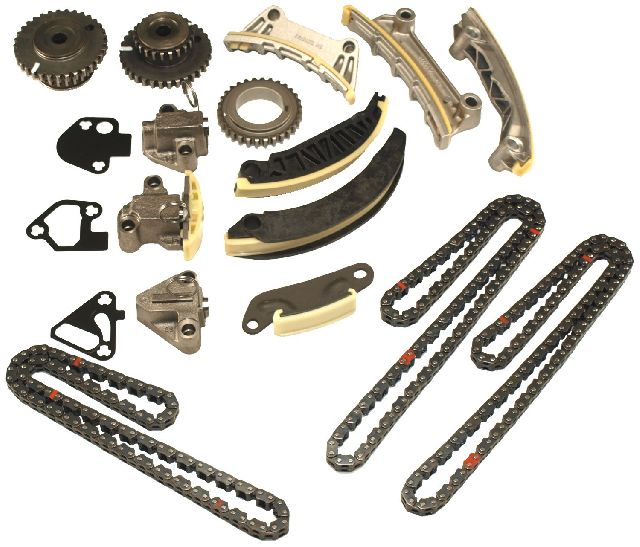
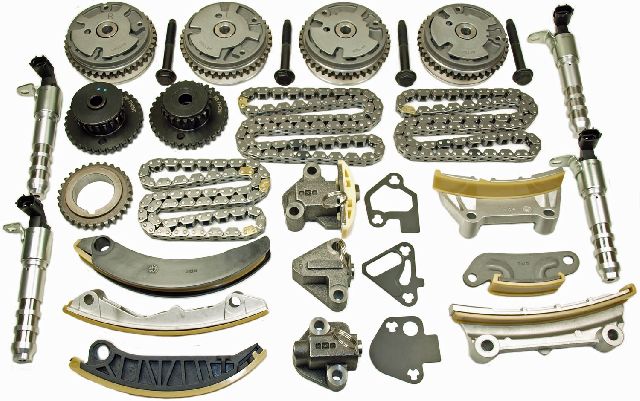
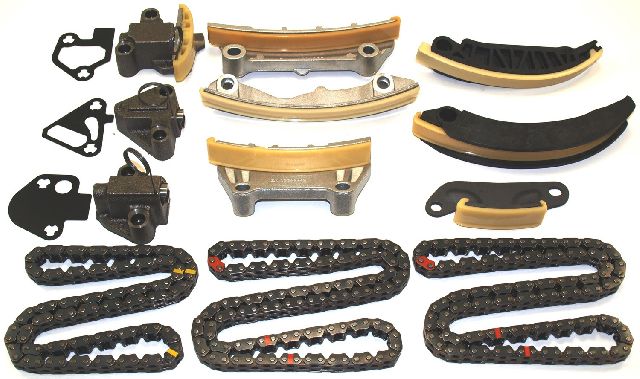
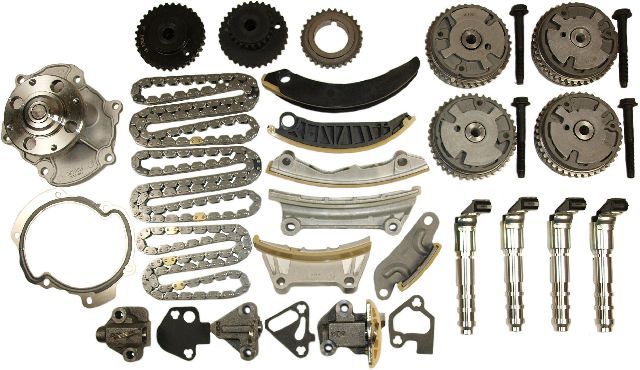
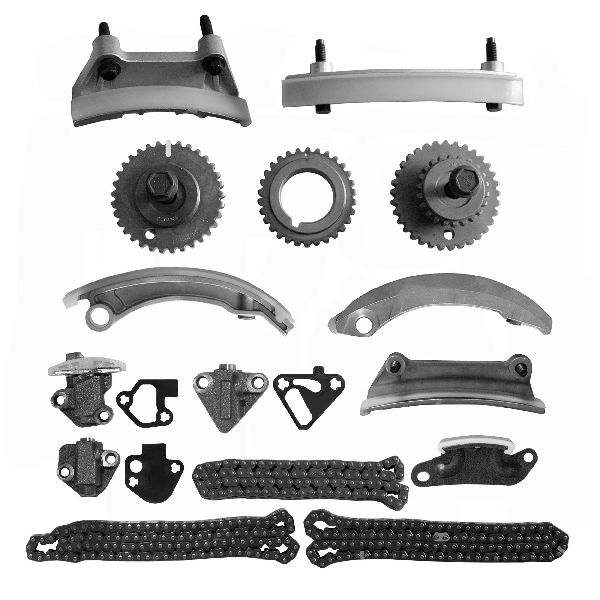
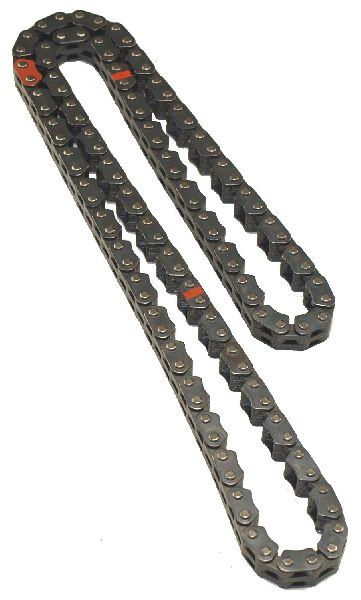
Typical fix: Replace all three timing chains, all tensioners, and all guides. It is also highly recommended to replace the water pump and VVT solenoids at the same time, as they are accessible during this labor-intensive job. Using an updated timing chain kit is crucial.
Est. part cost: $250-$600 for a complete aftermarket kit (e.g., Cloyes 9-0753S) or OEM kit. - Worn Timing Chain Tensioners or Guides 🔴 High Probability → Shop Engine Timing Chain The hydraulic tensioners can fail or weaken, and the plastic guides can wear or break, especially with age and exposure to dirty oil. A failing tensioner can cause chain slack even if the chain itself isn't severely stretched.
How to confirm: Physical inspection after removing the timing cover. Broken pieces of plastic guides may be found in the oil pan. A rattling noise is a strong indicator.
Typical fix: Replaced as part of a complete timing chain kit. It is not recommended to replace only the tensioners or guides; the entire system should be replaced as a set.
Est. part cost: $250-$600 (part of kit) - Low or Dirty Engine Oil 🟡 Medium Probability The camshaft phasers (VVT system) are hydraulically operated by engine oil pressure. Low levels, the wrong viscosity, or oil that has broken down (often due to extended drain intervals) can cause the phasers to respond slowly or not at all, triggering a correlation code. Using oil that meets GM's Dexos specification is critical.
How to confirm: Check the oil level on the dipstick and inspect its condition. If the oil is very dark, gritty, or below the 'add' line, this could be the cause or a major contributing factor.
Typical fix: Perform an oil and filter change using a full synthetic 5W-30 oil that meets the GM Dexos1 specification. Clear codes and see if they return. This is a good first step but rarely a permanent fix if chain stretch has already begun.
Est. part cost: $50-$100 - Faulty Camshaft Actuator Solenoid (VVT Solenoid) ⚪ Low Probability → Shop Engine Camshaft
How to confirm: Swap the Bank 2 intake solenoid with the Bank 2 exhaust solenoid. Clear the codes and run the engine. If the code changes to P0019 (Bank 2, Exhaust), the solenoid is faulty. The solenoids can also be tested with a multimeter for correct resistance, which should be between 7 and 12 ohms.
Typical fix: Replace the faulty solenoid. They are typically accessible on the front of the valve covers. It's often recommended to replace all four as a preventative measure if one has failed. The OEM part number for the intake solenoid is 12651420 and for the exhaust is 12651421.
Est. part cost: $30-$70 per solenoid - Faulty Camshaft Position Sensor ⚪ Low Probability → Shop Engine Camshaft Position Sensor
How to confirm: Swap the Bank 2 intake sensor with the Bank 1 intake sensor. Clear codes and run the engine. If the code changes to P0016 (Bank 1, Intake), the sensor is faulty. A technician can also verify the sensor is receiving 5V from the ECM with the ignition on.
Typical fix: Replace the faulty sensor. The OEM part number is typically 12591720.
Est. part cost: $25-$60
Rare But Worth Checking
- Slipped Crankshaft Reluctor Wheel: → Shop Engine Crankshaft A GM TSB (#PIP3423P) notes that the reluctor wheel (tone ring) pressed onto the crankshaft can move, causing timing correlation codes even with good chains. This is a rare but severe issue that requires either crankshaft replacement or specialized repair to secure the wheel. A visual inspection can sometimes be done with a borescope through the crank sensor hole.
- Faulty Camshaft Phaser/Actuator: → Shop Engine Camshaft The mechanical gear on the end of the camshaft can fail, get stuck, or become clogged with sludge. This is less common than chain stretch but can produce the same code. They are typically not included in timing chain kits and are an additional expense. A faulty brand-new phaser has been documented as a cause of P0018 immediately after a timing chain replacement job.
Diagnosis Steps
- Check the engine oil level and condition. Ensure it is full and clean. If low or dirty, perform an oil and filter change using 5W-30 full synthetic oil meeting GM's Dexos1 specification, clear the code, and see if it returns.
- Use a professional scan tool to check for other timing-related codes (P0008, P0016, P0017, P0019). The presence of multiple codes, especially P0008, strongly indicates a base timing/chain issue.
- Use the scan tool to monitor live data for 'Camshaft Position Variance' for Bank 2 Intake. If the value is consistently off by more than 9 degrees from the desired position, it confirms a timing correlation error.
- Inspect the wiring and connectors for the Bank 2 intake camshaft position sensor and the corresponding VVT solenoid for any damage or corrosion.
- Perform a diagnostic swap. Exchange the Bank 2 intake VVT solenoid with the exhaust solenoid on the same bank. Clear codes. If the code changes to P0019, the solenoid is bad.
- If the solenoid swap doesn't isolate the issue, swap the Bank 2 intake camshaft position sensor with the Bank 1 intake sensor. Clear codes. If the code changes to P0016, the sensor is bad.
- If sensors, solenoids, and oil level are good, the cause is almost certainly a mechanical timing issue (stretched chains, failed guides/tensioners). This requires removing the timing cover for physical inspection, a labor-intensive job.
- During inspection, a mechanic should verify the timing marks and check for excessive slack in all three chains. If slack is not obvious, the crankshaft reluctor wheel position should be inspected, possibly with a borescope.
Parts You'll Likely Need
- Engine Timing Chain Kit
(OEM #12650230 (Superseded by newer kits, verify by VIN))— This is the most common cause of P0018 on the V6 Equinox. A complete kit ensures all worn components (chains, guides, tensioners) are replaced.
Trusted brands: ACDelco (OEM), Cloyes (High-quality aftermarket, e.g., 9-0753S)
OEM price range: $350-$500
Aftermarket price range: $200-$350 - Camshaft Position Actuator Solenoid (Intake)
(OEM #12651420)— A possible, though less common, cause. It can get clogged with sludge or fail electrically, preventing proper cam phasing. Often replaced preventatively during a timing job.
Trusted brands: ACDelco, Delphi
OEM price range: $50-$80
Aftermarket price range: $30-$60 - Camshaft Position Sensor
(OEM #12591720)— The sensor itself can fail, sending incorrect data to the ECM. It's a low-probability cause but worth testing via the swap method.
Trusted brands: ACDelco, NTK
OEM price range: $40-$70
Aftermarket price range: $25-$50
Related Codes That Often Appear With This One
- P0008 — Indicates a general engine timing issue between the crank and both cams, often a precursor to more specific codes like P0018. Seeing P0008 is a very strong indicator of a stretched primary chain.
- P0016 — Correlation error on Bank 1, Intake Cam. Seeing P0016 and P0018 together strongly suggests a problem affecting both banks, like stretched primary timing chains.
- P0017 — Correlation error on Bank 1, Exhaust Cam. Its presence with P0018 points to a widespread timing issue.
- P0019 — Correlation error on Bank 2, Exhaust Cam. If you have both P0018 (Bank 2 Intake) and P0019 (Bank 2 Exhaust), it points to a timing problem isolated to Bank 2 or a larger primary chain issue.
Technical Service Bulletins (TSBs) & Recalls
- TSB #12-06-01-009F: Information on High Feature V6 Timing Chain Kits and Chain Guide Replacement. Confirms the widespread nature of the issue across many GM models and lists official kit part numbers.
- TSB #PIP3423P: A diagnostic bulletin for codes P0008, P0009, and P0016-P0019, pointing technicians first to timing chains and second to the rare possibility of a slipped crankshaft reluctor wheel.
- Special Coverage Adjustment #11340C: GM's program that extended warranty coverage for premature timing chain wear to 10 years/120,000 miles. It also included an ECM reprogram to adjust the oil life monitor. This program has expired for all eligible vehicles.
Platform-Specific Known Issues
- Stretched Timing Chains: As noted in TSB #12-06-01-009F, the 3.0L and 3.6L V6 engines are prone to stretched timing chains, which is the primary cause for codes P0018, P0008, and related faults.
- Loose Timing Chains/Tensioners: TSB #PIP3423P specifically calls for technicians to inspect for loose timing chains or tensioners when diagnosing P0018 and other correlation codes.
Mechanic-Grade Diagnostic Values
- Camshaft Actuator Solenoid (VVT Solenoid) Resistance — expected: 7 to 12 Ohms. Failure: A reading outside of this range, or an open/short circuit, indicates a faulty solenoid.
- Camshaft Position Sensor Supply Voltage — expected: Approximately 5 Volts DC. Failure: Significantly lower voltage or no voltage suggests a wiring or ECM issue, not a sensor failure.
- Scan Tool Live Data: Camshaft Position Variance — expected: Less than +/- 9 degrees from commanded position. Failure: A deviation greater than 9 degrees indicates the ECM has detected a correlation error sufficient to set the code. Technicians have observed values of 10-12 degrees on vehicles with this fault.
Scan Tool Commands That Help
- GDS2 / Professional Scan Tool: Camshaft Position Actuator Solenoid Test — This is a bidirectional control that commands the VVT solenoid to activate. The technician can then observe the 'Camshaft Position Variance' on live data to see if the phaser responds. If the solenoid clicks but the cam angle doesn't change, it points to a mechanical issue like a stuck phaser or oil flow problem.
Wiring & Ground Locations
- G103 — Left front of the engine compartment, under the battery tray.. This is a primary engine compartment ground. Poor connection here can cause a variety of erratic sensor readings and ECM behavior.
- G105 / G109 — On the rear of the engine block/cylinder head.. These are critical engine block grounds for the ECM and sensor network. A loose or corroded ground here can directly impact sensor signals, potentially causing false correlation codes.
- ECM Connectors — Typically mounted on the driver's side of the engine bay, near the firewall or fuse block.. Technicians can probe the pins for the Bank 2 Camshaft Position Sensor and VVT Actuator Solenoid at the ECM connector to verify signal integrity and check for breaks in the wiring harness between the component and the ECM.
Real Owner Repair Stories
- Pine Hollow Auto Diagnostics on YouTube (2009 Chevrolet Traverse with 3.6L LLT V6 (same engine family)) — Check engine light with code P0018 returned immediately after a complete timing chain replacement job.
❌ Tried (didn't work) Complete timing chain, guide, and tensioner replacement., Replacement of camshaft position sensors.
✅ What actually fixed it The brand-new Bank 2 intake camshaft phaser (actuator) was defective out of the box. Despite being a new part, it was not functioning correctly, causing the timing correlation error. The final fix was to replace the new, faulty phaser with another new one.
OEM Part Supersession History
Original timing chain design for 3.6L LLT engine→Updated timing chain design for 3.6L LFX engine— The original chain design was prone to premature stretching. The updated design is more robust and less susceptible to wear.
Heads up: The 2012 model year LFX engine still used the older, less reliable timing chain from the LLT. When sourcing parts, it is critical to get a kit for 2013+ models or an aftermarket kit with the updated design, as these are more durable.
Model Year Variations Within This Range
- 2012-2015: Starting in 2012, the 3.6L LFX engine began replacing the 3.0L LF1 and 3.6L LLT engines. The LFX features a lighter composite intake manifold and cylinder heads with integrated exhaust manifolds.
- 2012 vs 2013+: The 2012 LFX V6 used the same timing chain design as the earlier LLT, which was prone to stretching. For the 2013 model year, the LFX received an updated, more durable timing chain design, making 2013-2015 models less susceptible to this specific failure, provided oil maintenance is performed correctly.
- LLT vs LFX engines: The Engine Control Module (ECM) is different. LLT engines used a Bosch ECM, while LFX engines use a Delphi ECM, affecting diagnostic software and potentially some electrical characteristics.
Helpful Videos
We Have This Part in Stock

The information in this article is provided for general reference and educational purposes only. Vehicle specifications, procedures, and part compatibility can vary by production date, trim level, and region. Always consult your vehicle's factory service manual and verify part numbers before purchasing or performing repairs. Safety-critical components such as airbags, seat belts, and braking systems should be installed by a qualified professional.
- Chevrolet EQUINOX:
- 🧭 Diagnostic Flowchart
- 🎬 Helpful Videos
- 🛍️ Shop This Part
- What's Unique About the 2008-2015 Chevrolet EQUINOX
- Symptoms You May Notice
- Most Likely Causes
- Rare But Worth Checking
- Diagnosis Steps
- Parts You'll Likely Need
- Related Codes That Often Appear With This One
- Technical Service Bulletins (TSBs) & Recalls
- Platform-Specific Known Issues
- Mechanic-Grade Diagnostic Values
- Scan Tool Commands That Help
- Wiring & Ground Locations
- Real Owner Repair Stories
- OEM Part Supersession History
- Model Year Variations Within This Range
- 🎟️ Get 5% Off