

P0018 on 2012-2019 Chevrolet Impala: Timing Chain & Sensor Guide
On a 2012-2019 Impala with the 3.6L V6, P0018 almost always points to a stretched timing chain. This is a major, labor-intensive repair costing $1,800-$3,000+. Less common causes include a faulty VVT solenoid or low/dirty engine oil. Strict 5,000-mile oil changes with full synthetic oil are critical for prevention.
- P0018 on a 2012-2019 Impala with the 3.6L V6 strongly suggests a stretched timing chain.
- Do not immediately replace the camshaft or crankshaft sensors; they are likely reporting a real mechanical problem.
- Always check engine oil level and condition first, as low or dirty oil can cause timing issues.
- Repairing a stretched timing chain is a major, expensive job that should be performed by a professional.
- When replacing timing chains, always use a complete kit that includes chains, guides, and tensioners.
What's Unique About the 2012-2019 Chevrolet IMPALA
The 3.6L V6 engine (RPO code LFX) used in this generation of Impala is well-documented for having issues with premature timing chain stretching. This isn't a random part failure; it's a known pattern for this specific engine family, which also includes the earlier LY7 and LLT versions. The primary cause is often linked to inadequate lubrication from extended oil change intervals, with many owners and technicians noting that following the factory Oil Life Monitor (OLM) can allow oil to degrade, leading to accelerated chain wear. Manufacturer bulletins confirm that stretched timing chains are a primary cause for this code. Because of this, a P0018 code on this vehicle carries a much higher probability of being a major mechanical issue (the chains) rather than a simple sensor failure.
Diagnostic Flowchart
Tap your situation to follow the diagnostic path that matches what you're seeing on this vehicle.
Generation note: The 2012-2019 range covers two Impala generations. The 9th generation (2012-2013, and 'Limited' models from 2014-2016) and the 10th generation (2014-2019) both heavily utilized the 3.6L LFX V6 engine, which is the primary engine affected by the timing chain issues that cause code P0018. The issue is consistent across both generations when equipped with this engine.
Symptoms You May Notice
- Check Engine Light is on
- Engine running rough or idling erratically
- Reduced engine power and poor acceleration
- Rattling or scraping noise from the front of the engine, especially on a cold start
- Engine may hesitate or stall
- Decreased fuel economy
- Popping noise on cold startup
- Replacing the camshaft position sensor or crankshaft position sensor without first verifying the mechanical timing. The sensors are usually doing their job correctly by reporting the sync error.
- Replacing only the VVT solenoids when the timing chains are actually stretched. This may seem like a cheap fix but the code will return.
Most Likely Causes
- Stretched Timing Chains 🔴 High Probability → Shop Engine Timing Chain The GM 3.6L High Feature V6 engine family has a known history of premature timing chain wear due to a combination of chain design and lubrication issues. Following the factory Oil Life Monitor (OLM) can lead to oil change intervals that are too long, causing oil breakdown and accelerated wear on the chains, guides, and tensioners. This is confirmed by multiple Technical Service Bulletins (TSBs) issued by GM.
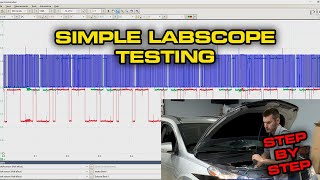
How to confirm: A technician will use a scan tool to monitor camshaft/crankshaft correlation data PIDs. A lab scope can also be used to compare the crank and cam sensor waveforms against a known good pattern 🎬 Watch: How to use a lab scope to diagnose timing. to confirm a timing shift electronically. Definitive proof requires removing the engine timing cover to physically check chain slack, tensioner extension, and alignment marks.
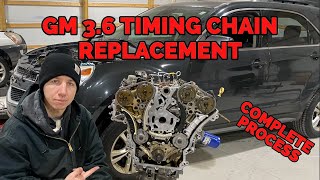
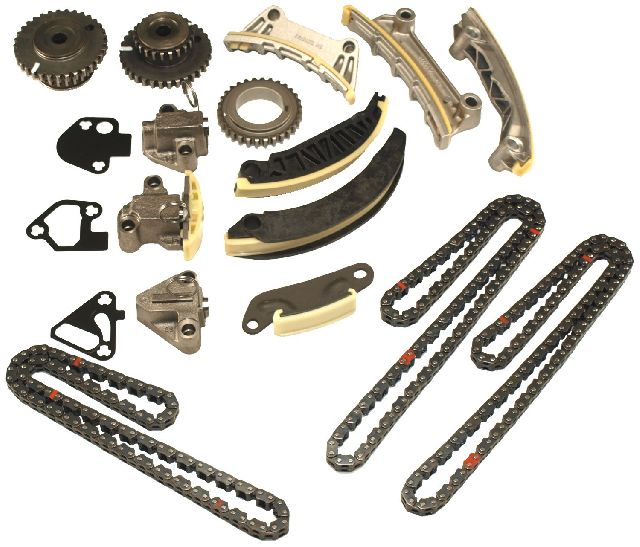
Typical fix: Replace all three timing chains, all tensioners, and all guides as a complete kit. The water pump is often replaced at the same time due to its location. It is critical to use high-quality, OEM-spec parts, as some aftermarket chains have been reported to stretch prematurely.
Est. part cost: $250-$600 for a quality timing chain kit. - Low or Dirty Engine Oil 🟡 Medium Probability The camshaft phasers (actuators) that adjust timing are hydraulic and rely on clean oil at the correct pressure. Old, sludgy, or low oil can cause them to respond slowly or get stuck, creating a correlation error. An engine flush may be a worthwhile first step before committing to a timing chain replacement, as it can sometimes free up sticky VVT components.
How to confirm: Check the oil level and condition on the dipstick. If the oil is very low, black, or sludgy, this is a likely contributor. An oil change should be the first step.
Typical fix: Perform an oil and filter change using a full synthetic oil that meets GM's dexos specification (typically 5W-30 for the 3.6L LFX). Consider performing an engine flush.
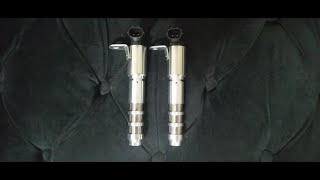
Est. part cost: $50-$100 - Faulty Camshaft Position Actuator Solenoid (VVT Solenoid) ⚪ Low Probability → Shop Engine Camshaft These solenoids can get clogged with debris from dirty oil or fail electrically. While less common than chain stretch for this specific code on this engine, it's a possible and much simpler fix. 🎬 Watch: How to find and access the VVT solenoids.
How to confirm: A technician can command the solenoid on and off with a bi-directional scan tool while monitoring the camshaft angle. If the angle doesn't change as commanded, the solenoid is likely faulty. Resistance can also be checked with a multimeter.
Typical fix: Replace the Bank 2 intake camshaft position actuator solenoid. The part number 12655420 is often cited, but has been superseded by 12679099. Always verify the part number with the vehicle's VIN.
Est. part cost: $30-$80
Rare But Worth Checking
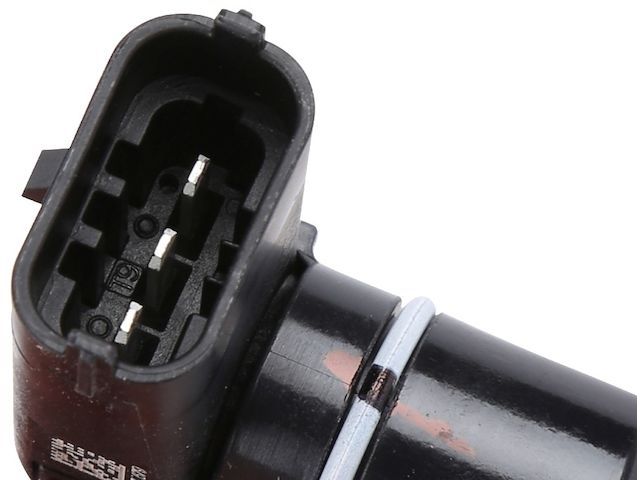
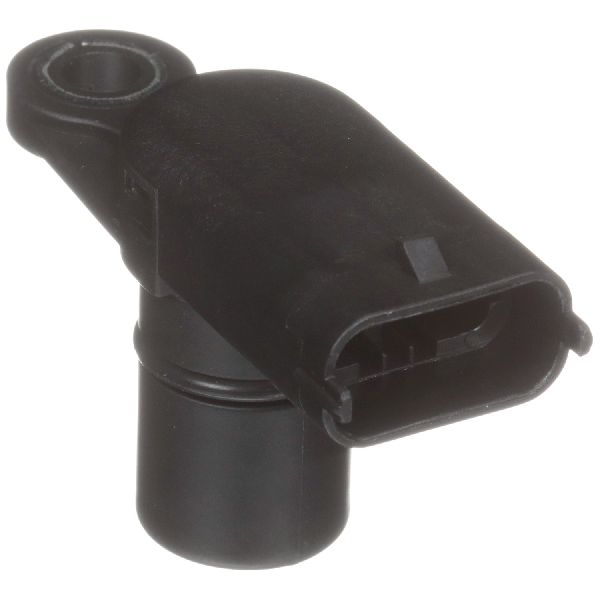
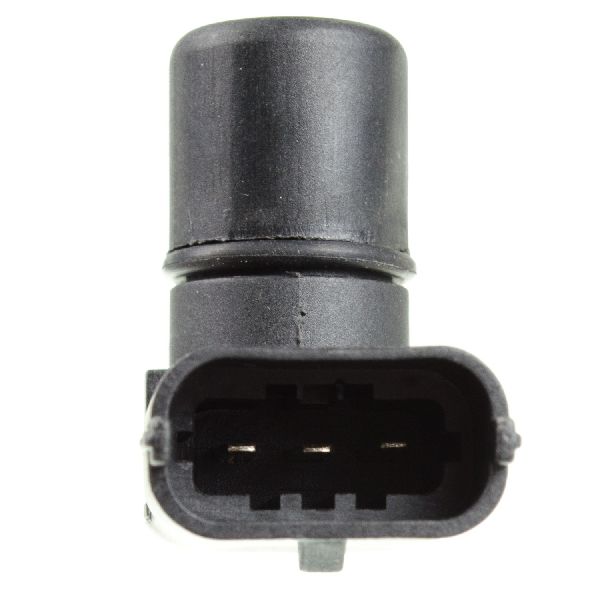
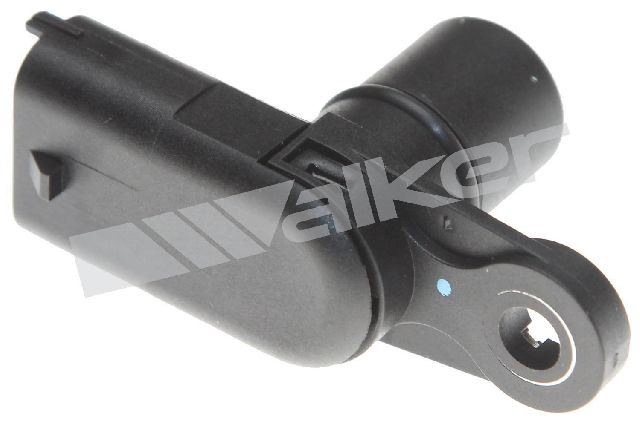
- Faulty Camshaft or Crankshaft Position Sensor: → Shop Engine Crankshaft Position Sensor While possible, it's much more likely the sensors are accurately reporting a mechanical problem. Replacing sensors without confirming the mechanical timing is correct is a common misdiagnosis.
- Failed Camshaft Phaser (Actuator): → Shop Engine Camshaft The phaser gear itself can fail mechanically, getting stuck in one position or having clogged oil passages. This is less common than a solenoid or chain issue but is a possibility.
- Slipped Crankshaft Reluctor Wheel: → Shop Engine Crankshaft TSB PIP3423P mentions a rare scenario where the reluctor wheel, which the crankshaft position sensor reads, can physically move on the crankshaft, causing correlation codes even with perfect timing chains. This requires crankshaft replacement.
Diagnosis Steps
- Check the engine oil level and condition. If low or dirty, perform an oil and filter change using high-quality full synthetic oil, clear the codes, and see if the code returns. Consider an engine flush.
- Use a professional scan tool to view live data for the commanded vs. actual camshaft positions for Bank 2. This can help determine if the issue is constant or intermittent and how large the deviation is.
- Command the Bank 2 intake VVT solenoid on and off with the scan tool to see if the camshaft angle changes. If it doesn't, suspect a faulty solenoid or clogged oil passage.
- Inspect the wiring and connectors for the Bank 2 camshaft position sensor and the crankshaft position sensor for any damage or corrosion.
- If scan tool data points towards a timing issue, use a lab scope to capture and compare the crankshaft (CKP) and camshaft (CMP) sensor signals against a known-good waveform. A stretched chain will show a retarded (shifted to the right) camshaft signal relative to the crankshaft signal.
- If the above steps confirm a mechanical timing fault, the final step is physical inspection. This involves removing the timing cover to physically inspect the timing chains for slack, check the tensioner piston extension, and verify the timing marks on the sprockets, chains, and engine block are all correctly aligned.
Parts You'll Likely Need
- Engine Timing Chain Kit
(OEM #12650230 (This is a common kit number, but always verify with VIN. Another OEM number is 12700436))— This is the most common cause of P0018 on the 3.6L V6. A complete kit ensures all worn components (chains, guides, tensioners) are replaced at once.
Trusted brands: ACDelco, Cloyes
OEM price range: $400-$600
Aftermarket price range: $250-$450 - Camshaft Position Actuator Solenoid
(OEM #12655420 (Superseded by 12679099))— A much cheaper and easier potential fix. If the solenoid is stuck, it can cause the timing correlation error. It's often diagnosed using a scan tool.
Trusted brands: ACDelco, Delphi, Dorman
OEM price range: $40-$70
Aftermarket price range: $25-$50
Related Codes That Often Appear With This One
- P0008 — This is a more general engine timing code ('Engine Positions System Performance Bank 1'). It often appears alongside more specific codes like P0018 when the primary timing chain is stretched, affecting both banks.
- P0016 — This is the same correlation error but for Bank 1 ('Crankshaft Position - Camshaft Position Correlation Bank 1 Sensor A'). If multiple chains are stretched, codes for both banks can appear.
- P0017 — This is a correlation error for the exhaust camshaft on Bank 1. It can appear with P0018 if the timing issue is severe and involves multiple chains.
- P0019 — This is the correlation error for the exhaust camshaft on Bank 2. It points to a timing issue on the same bank as P0018, strengthening the diagnosis of a stretched secondary chain on Bank 2.
Technical Service Bulletins (TSBs) & Recalls
- PIP3423P: Mentions that codes P0016, P0017, P0018, P0019, P0008, or P0009 may require inspection for loose timing chains or tensioners. Also introduces the rare possibility of a slipped crankshaft reluctor wheel.
- 12-06-01-009F: Discusses the availability of timing chain kits for repairing stretched timing chains that cause DTCs P0008, P0009, P0016, P0017, P0018 and/or P0019. It advises against unnecessarily replacing sprockets or guides for a simple stretched chain issue.
Platform-Specific Known Issues
- The 3.6L LFX V6 engine has a well-documented history of premature timing chain stretch, which is the subject of multiple GM Technical Service Bulletins (TSBs).
- Failure to use high-quality full synthetic oil and adhere to strict oil change intervals (e.g., 5,000 miles or less) can accelerate timing chain wear on this engine.
Mechanic-Grade Diagnostic Values
- Camshaft Position Actuator Solenoid Resistance — expected: 8 to 13 Ohms. Failure: A reading outside this range, or a reading that fluctuates wildly when wiggling the connector, indicates a faulty solenoid. An open circuit (infinite resistance) or short circuit (near zero resistance) is also a definitive failure.
- Engine Oil Pressure (at operating temperature) — expected: ~30 PSI at idle, ~50-55 PSI at 1700-2000 RPM. Failure: Significantly lower oil pressure can starve the VVT phasers and hydraulic tensioners, leading to timing correlation codes. GM has issued bulletins regarding low oil pressure from sticking oil pump relief valves.
- Camshaft Position Sensor Signal Voltage — expected: A clean square wave pattern on an oscilloscope. The ECM supplies a 5V reference, and the sensor pulls it to ground to create the signal.. Failure: A missing, erratic, or distorted waveform indicates a bad sensor, wiring issue, or a problem with the reluctor wheel. Some aftermarket sensors have been known to produce incorrect patterns, causing codes even when new.
Scan Tool Commands That Help
- GDS2 (GM Techline Connect): Camshaft Position Actuator Test — This bidirectional command allows a technician to manually command the VVT solenoids on and off while observing the 'Camshaft Position Variance' PID. If the variance does not change when the solenoid is commanded, it points to a faulty solenoid, clogged oil passage, or a stuck phaser. This is a critical step to isolate a solenoid issue from a mechanical timing issue.
- GDS2 (GM Techline Connect): Crankshaft Position Variation Learn — This procedure must be performed after replacing the crankshaft, crankshaft position sensor, or the ECM. It compensates for minor variations in the crankshaft reluctor wheel. While not typically required for a P0018 timing chain job, it's a necessary step if the crankshaft itself is replaced due to a slipped reluctor wheel, which is a rare cause of this code.
Wiring & Ground Locations
- ECM Connector X2 — The Engine Control Module (ECM) is located in the engine bay. X2 is one of the main harness connectors plugging into it.. Pin 53 (Yellow wire, Circuit 2764) is the signal from the Bank 2 Intake Camshaft Position Sensor. Pin 54 (Pink/Black wire, Circuit 2703) is the 5-volt reference supplied to this sensor. Testing for signal and reference voltage at these pins can confirm if the wiring between the sensor and ECM is intact.
- ECM Connector X3 — The third main harness connector on the Engine Control Module (ECM).. Pin 47 (Dark Blue/Dark Green wire, Circuit 5296) is the control circuit for the Bank 2 Intake Camshaft Position Actuator Solenoid. The ECM sends a pulse-width modulated signal on this wire to control the solenoid. Probing this wire with a lab scope during an actuator test can verify the ECM is sending the command.
Real Owner Repair Stories
- YouTube channel 'Maybe we diagnosed it wrong! GM 3.6 cam sensor faults.' (GM vehicle with 3.6L V6 (similar LFX family)) — Check Engine Light with camshaft position sensor performance codes (P0366, P0346).
❌ Tried (didn't work) Replacing the camshaft position sensor with a new ACDelco part from the dealer., Replacing the sensor again with another new ACDelco part., Replacing the sensor with a CarQuest aftermarket part.
✅ What actually fixed it The technician discovered that multiple new sensors, including from the OEM supplier, were producing a faulty waveform when viewed on an oscilloscope. The original sensor was also bad. They finally sourced a used, original sensor from a salvage vehicle (eBay) which produced the correct waveform and fixed the problem. This highlights a rare but frustrating quality control issue with replacement parts. - YouTube channel 'Kevin Nadeau' (Cadillac CTS with 3.6L V6 (LFX family)) — Check Engine Light with codes P0008 and P0017.
❌ Tried (didn't work) Initially suspected a major timing chain issue.
✅ What actually fixed it Before committing to a timing chain replacement, the owner checked the simple things first. He found one of the VVT solenoid connectors was not fully seated. After cleaning the VVT solenoids (which were found to be clean) and ensuring all sensor and solenoid connectors were secure, the codes were cleared and did not return after a test drive. This emphasizes the importance of checking basic connections before assuming the worst-case scenario.
OEM Part Supersession History
12655420→12679099— Standard part evolution, likely for improved reliability or manufacturing process.
Heads up: The new part number (12679099) is the correct service replacement for the original. Using old stock or cross-referencing to the old number may still work but the latest revision is recommended.
Helpful Videos
We Have This Part in Stock


The information in this article is provided for general reference and educational purposes only. Vehicle specifications, procedures, and part compatibility can vary by production date, trim level, and region. Always consult your vehicle's factory service manual and verify part numbers before purchasing or performing repairs. Safety-critical components such as airbags, seat belts, and braking systems should be installed by a qualified professional.
- Chevrolet IMPALA:
- 🧭 Diagnostic Flowchart
- 🎬 Helpful Videos
- 🛍️ Shop This Part
- What's Unique About the 2012-2019 Chevrolet IMPALA
- Symptoms You May Notice
- Most Likely Causes
- Rare But Worth Checking
- Diagnosis Steps
- Parts You'll Likely Need
- Related Codes That Often Appear With This One
- Technical Service Bulletins (TSBs) & Recalls
- Platform-Specific Known Issues
- Mechanic-Grade Diagnostic Values
- Scan Tool Commands That Help
- Wiring & Ground Locations
- Real Owner Repair Stories
- OEM Part Supersession History
- 🎟️ Get 5% Off