

P0018 on 2008-2012 Chevrolet Malibu 3.6L V6: Stretched Timing Chain Causes and Fixes
On a 2008-2012 Malibu with the 3.6L V6, code P0018 almost always means the timing chains have stretched. This is a serious, labor-intensive repair costing $1,500-$3,000+. Do not replace sensors first; the problem is almost certainly mechanical. The failure is well-documented by GM and was subject to a special warranty extension (#11340C) that has since expired.
- P0018 on a 2008-2012 Malibu 3.6L almost certainly means the timing chains have stretched.
- This is a serious and expensive repair; do not ignore it, as it can lead to complete engine failure.
- Do not waste money replacing camshaft or crankshaft sensors first. The problem is mechanical.
- The repair involves replacing the timing chains, guides, and tensioners with an updated kit, and should be performed by a professional.
- Using high-quality full synthetic oil and changing it every 5,000 miles can help prolong the life of the new timing components.
What's Unique About the 2008-2012 Chevrolet Malibu
The 3.6L V6 engine (RPO code LY7) used in this generation of Malibu is notorious for premature timing chain stretching. This issue was so common that it's the first and most probable cause for P0018. The problem was directly linked to the original Oil Life Monitor (OLM) system programming, which allowed excessively long oil change intervals. This led to oil breakdown and accelerated wear on the original-design timing chains. GM acknowledged this flaw by issuing updated timing chain kits, reprogramming the OLM in affected vehicles, and offering a Special Coverage Adjustment (#11340C) which extended the warranty to 10 years or 120,000 miles.
🎬 Watch: Learn more about the GM extended warranty coverage.Symptoms You May Notice
- Check Engine Light is on
- Rough or uneven idle
- Engine rattling noise, especially on startup, often described as coming from the passenger side of the engine bay
- Loss of power and poor acceleration
- Engine stalling or difficulty starting
- Reduced fuel economy
- A general 'whining' noise from the engine as the chain guides wear
- Replacing the camshaft position sensor without confirming the timing chains are in good condition.
- Replacing the crankshaft position sensor.
- Replacing the VVT solenoids before checking for mechanical timing slack.
- Performing only an oil change and assuming the problem is fixed when the light stays off temporarily.
Most Likely Causes
- Stretched Timing Chains 🔴 High Probability → Shop Engine Timing Chain The original timing chains on the LY7 3.6L V6 were made of a material susceptible to premature wear and stretching, a well-documented factory issue exacerbated by long oil change intervals.
How to confirm: A technician can use a scan tool to view live data and check camshaft deviation angles. A deviation of more than +/- 4 degrees at idle strongly indicates a stretched chain. A definitive diagnosis requires physically inspecting the chains for slack, which is labor-intensive.
Typical fix: Replace all three timing chains, along with the tensioners, guides, and sprockets, using an updated-design timing chain kit. TSB 12-06-01-009F provides the official procedure.
Est. part cost: $250-$500 - Worn Timing Chain Tensioners or Guides 🔴 High Probability → Shop Engine Timing Chain The hydraulic tensioners and plastic guides wear out along with the chains. A failing tensioner can't keep the chain properly taut, and broken guide pieces can fall into the oil pan, potentially clogging the oil pickup tube. Manufacturer Bulletin #PIP3423P notes that technicians should specifically inspect for loose timing chains or tensioners when P0018 is set.
How to confirm: Diagnosed during the physical inspection for a stretched timing chain. A rattling noise from the engine is a strong indicator.
Typical fix: These parts are always replaced as part of a complete timing chain service. They are included in most quality timing chain kits.
Est. part cost: $0 (Included in kit) - Low or Degraded Engine Oil 🟡 Medium Probability The camshaft phasers and timing chain tensioners are hydraulically operated by engine oil pressure. Low, dirty, or incorrect viscosity oil impairs their function and can cause timing correlation codes. This is a primary contributing factor to the chain stretch issue itself.
How to confirm: Check the oil level on the dipstick and inspect its condition. If it's low or very dirty, this is a critical finding.
Typical fix: Perform an oil and filter change using the correct viscosity full synthetic oil (5W-30 Dexos1). This is a good first step, but if the chains are already stretched, it will not solve the P0018 code permanently.
Est. part cost: $40-$80
Rare But Worth Checking
- Faulty Camshaft or Crankshaft Position Sensor: → Shop Engine Crankshaft Position Sensor While possible, this is an extremely uncommon cause for P0018 on this engine. Many owners and even some shops waste money replacing sensors when the root cause is the timing chains. Diagnose before replacing.
- Faulty VVT Solenoid (Camshaft Position Actuator Solenoid): A solenoid stuck open or closed due to sludge or electrical failure can cause a correlation error. These can be tested and are easier to replace than the chains, but are still a much less frequent cause than chain stretch. Swapping the intake and exhaust solenoids on Bank 2 can help diagnose; if the code changes to P0019, the solenoid is faulty.
- Slipped Crankshaft Reluctor Wheel: → Shop Engine Crankshaft A GM TSB (PIP3423K) notes that the reluctor wheel pressed onto the crankshaft can move, causing multiple correlation codes (P0016-P0019). An owner report in NHTSA ODI #10630584 also highlights this issue, noting that the reluctor for the crankshaft sensor pressed on the crankshaft can be the source of these DTCs. This is a major failure requiring crankshaft replacement and is very rare.
Diagnosis Steps
- Verify the engine oil level and condition. If low or dirty, perform an oil and filter change with 5W-30 full synthetic oil and clear codes. This is a necessary first step but unlikely to be a permanent fix.
- Use an OBD-II scanner to confirm P0018 and check for any other related codes (like P0008, P0016, P0017, P0019). The presence of multiple codes makes a sensor failure less likely.
- With an advanced scan tool, monitor the live data for Bank 2 Camshaft Phase Angle Variance. At a steady idle, if the value exceeds +/- 4 degrees, this confirms excessive timing chain slack.
- Listen for rattling or scraping noises from the engine, particularly on the passenger side where the timing components are located. A startup rattle is a classic symptom.
- If cam deviation is confirmed, the next step is to schedule a timing chain replacement. Do not waste money replacing sensors or solenoids.
- For a 100% definitive diagnosis, perform a physical inspection of the timing chains, tensioners, and guides for slack and wear. This is a labor-intensive process that requires significant engine disassembly and is usually only done as the first step of the replacement job itself.
Parts You'll Likely Need
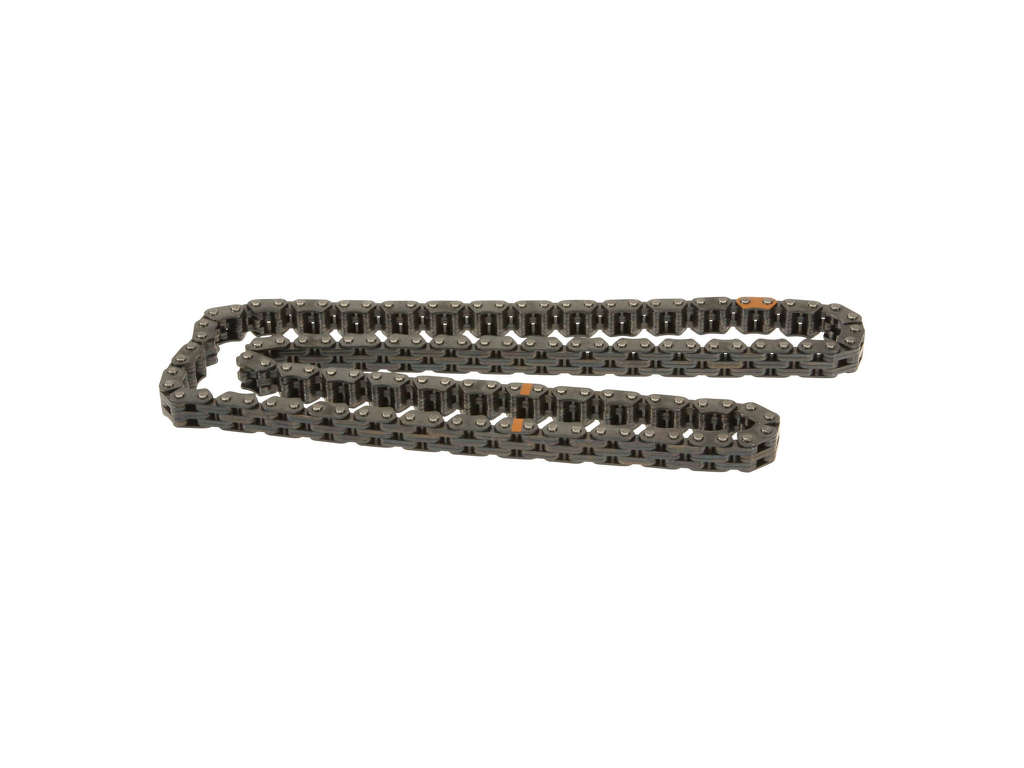
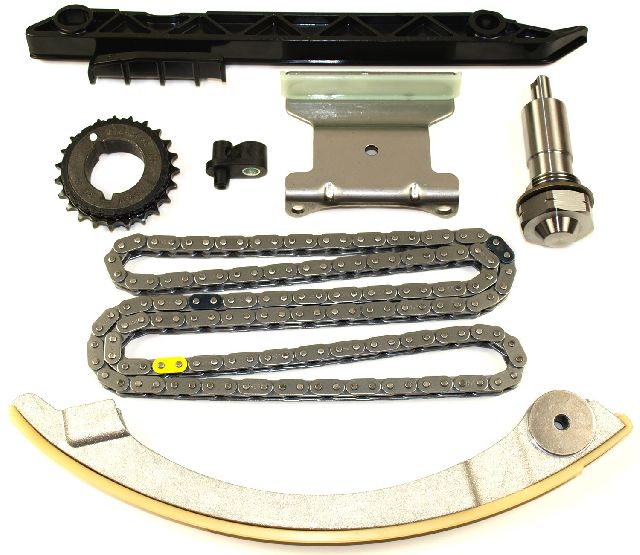
- Timing Chain Kit
(OEM #12651450 (superseded by 12693218, 12700436))— This is the definitive fix for the most common cause of P0018 on this engine. A complete kit ensures all worn components (chains, guides, tensioners) are replaced with updated parts designed to prevent recurrence.
Trusted brands: ACDelco (GM Original Equipment), Cloyes (e.g., 9-0753S)
OEM price range: $400-$600
Aftermarket price range: $250-$450
Related Codes That Often Appear With This One
- P0008 — This is a general engine position system performance code for Bank 1, often the first to appear as the primary timing chain begins to stretch. Its presence strongly points to a timing chain issue.
- P0016 — This is the same correlation error (Crank/Cam) but for Bank 1, Intake. If P0016 and P0018 are present, it strongly suggests the primary timing chain is stretched, affecting both banks.
- P0017 — This is a correlation error for the exhaust camshaft on Bank 1. Its presence with P0018 points to a widespread timing issue affecting multiple chains.
- P0019 — This is the companion code for the exhaust camshaft on Bank 2. Seeing it with P0018 confirms a timing issue on the entire Bank 2 secondary chain and is very common.
Technical Service Bulletins (TSBs) & Recalls
- 12-06-01-009F: The primary TSB detailing the updated timing chain kits and replacement procedure for codes P0008, P0009, and P0016-P0019 on the High Feature V6. It advises against replacing sprockets unless they are damaged.
- 11340C: Special Coverage Adjustment that extended the warranty for timing chain wear. It also mandated an ECM reprogram to shorten oil change intervals.
- PIP3423K: Mentions DTCs P0016, P0017, P0018, P0019, P0008, P0009 and suggests checking for a loose timing chains or a rare slipped crankshaft reluctor wheel as the final diagnostic step if chains are good.
- Bulletin #PIP3423P: Provides information to technicians that codes P0016, P0017, P0018, P0019, P0008, or P0009 may be set and requires an inspection for loose timing chains or tensioners.
Platform-Specific Known Issues
- The LY7 3.6L V6 engine is widely known for premature timing chain failure, which is the primary cause of code P0018.
- GM issued Special Coverage Adjustment #11340C which extended the warranty for timing chain wear to 10 years or 120,000 miles, acknowledging the widespread nature of the problem. This coverage is now expired for all 2008-2012 models due to age.
- The original oil life monitor (OLM) calibration often recommended oil change intervals that were too long, contributing to oil breakdown and accelerated timing chain wear. The special coverage included reprogramming the ECM for shorter intervals.
Mechanic-Grade Diagnostic Values
- VVT Solenoid (Camshaft Position Actuator Solenoid) Resistance — expected: 4.6 to 7.5 Ohms for the LY7 engine (2008). Later models may differ.. Failure: A reading of 0 Ohms (short), infinite/OL (open), or a value outside the specified range indicates a faulty solenoid.
- Scan Tool 'Camshaft Position Variance' PID — expected: < 4 degrees at idle.. Failure: A consistent deviation greater than 4-6 degrees indicates a mechanical timing problem, such as a stretched chain. The ECM will typically set the code when deviation exceeds 9 degrees.
- Engine Oil Pressure — expected: Minimum of 30 PSI at 2,000 RPM.. Failure: Pressure below this threshold can cause improper operation of the hydraulic chain tensioners and VVT phasers, leading to timing correlation codes.
Scan Tool Commands That Help
- GDS2/Tech2: Camshaft Position Actuator Control / Solenoid Test — This bidirectional control allows a technician to command the VVT solenoid on and off while the engine is running. By observing the 'Desired vs. Actual' cam position PIDs, you can confirm if the solenoid is electrically functional and if the mechanical phaser is responding to the change in oil pressure. No change in the actual angle when commanded points to a bad solenoid, clogged oil passage, or a stuck phaser.
Wiring & Ground Locations
- G107 — Center rear of the engine for the 3.6L V6.. This is a primary engine ground. A poor connection here can cause unstable reference voltage for the ECM and its sensors, including the camshaft and crankshaft position sensors, potentially leading to erroneous correlation codes.
- Bank 2 Camshaft Position Sensor Connector — On the Bank 2 (front/radiator side) cylinder head. It is a 2-terminal female connector.. This is the direct connection to the sensor that reports Bank 2 camshaft timing. Damage, corrosion, or poor terminal fit at this connector can interrupt the signal to the ECM, causing a P0018 code.
- Bank 2 VVT Solenoid Connector — On the front of the Bank 2 (radiator side) cylinder head. The intake solenoid ('Sensor A') is the upper of the two solenoids. It is a 2-terminal connector.. This connector provides power and control signals to the solenoid that adjusts the intake camshaft timing. A fault here will prevent the ECM from controlling the cam phaser, leading to a correlation error.
Real Owner Repair Stories
- YouTube channel 'Gears and Gaskets' (2012 GMC Acadia (same LY7/LLT family engine)) — Running rough, Check Engine Light on with codes P0018 and P0019, audible rattling noise from engine.
❌ Tried (didn't work) The diagnosis immediately pointed to a timing issue, so no other parts were tried first.
✅ What actually fixed it The valve cover was removed, revealing a very loose timing chain on Bank 2. A complete timing chain kit was installed, including all chains, guides, and tensioners. This resolved the codes and the rough running condition. - YouTube channel 'Pine Hollow Auto Diagnostics' (2009 Chevrolet Traverse, 3.6L V6, 145k miles) — P0018 code appeared a few months AFTER the owner had already replaced the timing chains as preventative maintenance.
❌ Tried (didn't work) The timing chains had already been replaced with new parts.
✅ What actually fixed it The video is a diagnostic mystery. The scan tool data for cam variance appeared normal at idle, yet the code would set, suggesting an intermittent issue possibly related to a lazy oil control solenoid when cold, or an oil pressure problem. The final fix was not documented in Part 1, highlighting the complexity of post-repair timing codes.
OEM Part Supersession History
12651450→12693218, which was then superseded by 12700436.— The original timing chains were prone to stretching. The updated kits contain chains made from improved materials to increase longevity.
Heads up: The kits are generally interchangeable as a complete set. However, it is critical to use all components from a single, updated kit rather than mixing old and new design parts. The new kits often include updated gaskets and seals.
Diagnostic Flowchart
Other Known Issues on This Vehicle
Issues unrelated to this code that are worth knowing about as an owner of this generation:
- 6T70/6T75 Transmission 3-5-R Wave Plate Failure 🔴 High — Common failure, often occurring between 70,000 and 120,000 miles. Can lead to sudden loss of 3rd, 5th, and Reverse gears, requiring transmission rebuild. (Ref: Special Coverage Adjustment #14404A (now expired) covered this issue. TSB GCUS-9-2635 also applies.)
- Steering Column Clunking Noise 🟠 Medium — A common issue where a clunking noise is heard and felt in the steering wheel, especially at low speeds or when turning. Often caused by a faulty intermediate steering shaft or torque sensor within the column. (Ref: Special Coverage Adjustment #15356 extended the warranty for this concern to 10 years/150,000 miles.)
- Catalytic Converter Failure 🟠 Medium — Premature failure of the catalytic converters (often triggering code P0420 or P0430) can occur, sometimes as a consequence of other issues like neglected tune-ups causing unburnt fuel to enter the exhaust.
- Faulty PCV System 🟠 Medium — The PCV orifice in the camshaft cover can clog, leading to increased crankcase pressure, oil consumption, and oil leaks. This can contribute to the oil degradation that accelerates timing chain wear. (Ref: TSB 12-06-01-009F includes instructions for cleaning the PCV orifice during timing chain service.)
- Power Steering Fluid Leaks 🟡 Low — Leaks from the power steering pump or rack and pinion assembly are a frequent complaint. (Ref: TSB #SB-07-02-32-002N addresses inspection and repair of power steering leaks.)
Used vs. New Parts: Buying Guide for This Vehicle
When a used part is the smart pick: For this specific repair, using used parts is STRONGLY DISCOURAGED. The primary failure is wear and stretching of the timing chains, guides, and tensioners. A used set from a donor vehicle will have unknown wear and is highly likely to fail again in a short time, forcing you to repeat this extremely labor-intensive job.
What to inspect on the donor part:
- Not applicable. Do not use used timing components for this repair.
OEM-only on this vehicle (don't cheap out):
- Timing Chain Kit: While some aftermarket brands are well-regarded, using the genuine GM/ACDelco kit (latest part number) is the safest option to ensure you get the most updated chain and guide design to prevent a repeat failure.
Aftermarket brands forum-validated for this vehicle:
- Cloyes: A widely respected name in timing components, often considered an OEM-equivalent or better. Their kits (e.g., 9-0753S) are a common choice for this repair.
- Melling: Another reputable brand for engine components, including timing kits and oil pumps. Some mechanics prefer Melling over other aftermarket options.
Brands owners have reported issues with on this vehicle:
- Unbranded/white-box kits: Avoid no-name, exceptionally cheap timing kits found on sites like eBay or Amazon. These often use inferior materials and have high failure rates, sometimes within a few thousand miles, which is a catastrophic outcome for a 12+ hour job.
Real Owner Stories
Aggregated from forums and TSBs cited above. Mileages and costs reflect what owners reported in those sources.
2008 Chevrolet Malibu 3.6L V6
Symptoms: Owner reported P0017 and P0018 codes; a mechanic confirmed the timing chain needed replacement rather than just a sensor swap.
What fixed it: Timing chain replacement.
Source hint: CarKiller.com ('Ask Scotty' Community)
2008-2012 Chevrolet Malibu 3.6L V6
Symptoms: Owners on forums discussed receiving P0008, P0017, and P0018 codes accompanied by high repair quotes.
What fixed it: Timing chain replacement was identified as the only permanent fix.
Cost: $2,000-$4,000
Source hint: chevymalibuforum.com
Related OBD-II Codes
Frequently Asked Questions
Is my 2008-2012 Chevrolet Malibu still covered under the Special Coverage Adjustment #11340C for timing chain wear?
What is the official GM repair procedure for a P0018 code on the LY7 3.6L V6 engine?
Can I just replace the camshaft sensors to fix the P0018 code on my Malibu?
Why did the timing chain on my 3.6L V6 stretch so early?
What oil should I use to prevent further timing chain issues in my Malibu?
Is there a way to confirm the timing chain is stretched without taking the engine apart?
Helpful Videos
We Have This Part in Stock


The information in this article is provided for general reference and educational purposes only. Vehicle specifications, procedures, and part compatibility can vary by production date, trim level, and region. Always consult your vehicle's factory service manual and verify part numbers before purchasing or performing repairs. Safety-critical components such as airbags, seat belts, and braking systems should be installed by a qualified professional.
- Chevrolet Malibu:
- 🧭 Diagnostic Flowchart
- 🎬 Helpful Videos
- 🛍️ Shop This Part
- What's Unique About the 2008-2012 Chevrolet Malibu
- Symptoms You May Notice
- Most Likely Causes
- Rare But Worth Checking
- Diagnosis Steps
- Parts You'll Likely Need
- Related Codes That Often Appear With This One
- Technical Service Bulletins (TSBs) & Recalls
- Platform-Specific Known Issues
- Mechanic-Grade Diagnostic Values
- Scan Tool Commands That Help
- Wiring & Ground Locations
- Real Owner Repair Stories
- OEM Part Supersession History
- Other Known Issues on This Vehicle
- Used vs. New Parts: Buying Guide for This Vehicle
- Real Owner Stories
- 2008 Chevrolet Malibu 3.6L V6
- 2008-2012 Chevrolet Malibu 3.6L V6
- Related OBD-II Codes
- Frequently Asked Questions
- 🎟️ Get 5% Off