

P0018 on 2017-2018 Chevrolet Traverse: Timing Chain and Sensor Guide
On a 2017-2018 Traverse, P0018 almost always points to a stretched timing chain, a well-documented and serious issue with the 3.6L V6 engine. This is a complex and expensive repair costing $2,500-$4,000+, as sensors are rarely the root cause. Ignoring the code can lead to catastrophic engine failure if the chain breaks.
- P0018 on a 2017-2018 Traverse is a serious code that almost always indicates a stretched timing chain.
- Do not simply replace the sensors; the problem is very likely mechanical and internal to the engine.
- This is not a DIY-friendly repair. It is expensive and requires a professional mechanic with the correct tools and experience.
- Regular 5,000-mile oil changes with full synthetic 5W-30 oil are critical to prolonging the life of the timing components on this engine.
- Ignoring this code can lead to catastrophic engine failure, turning a costly repair into a complete engine replacement.
What's Unique About the 2017-2018 Chevrolet TRAVERSE
The 2017-2018 Traverse model years straddle two different vehicle generations but share the 3.6L V6 engine family (LFX/LFY), which is notorious for premature timing chain stretch. This issue is so common that multiple TSBs have been issued and it's the first suspicion for any timing-related code on this platform. Unlike many other vehicles where a P0018 code might point to a simple sensor or solenoid fix, on the Traverse it is overwhelmingly likely to be the timing chains themselves, making it a much more serious and expensive repair. The problem is often attributed to the original chain design and extended oil change intervals encouraged by the Oil Life Monitor (OLM).
Diagnostic Flowchart
Tap your situation to follow the diagnostic path that matches what you're seeing on this vehicle.
Generation note: The 2017 model is the last year of the first generation Traverse, while the 2018 model is the first year of the second generation. Both primarily use a 3.6L V6 engine (2017 LFX, 2018 LFY) which share a common architecture and are both susceptible to the timing chain issues that cause code P0018. The 2018 Traverse also offered a 2.0L Turbo I4 in the RS trim, which is a different engine family and not subject to this specific widespread issue.
Symptoms You May Notice
- Check Engine Light is on
- Reduced engine power or sluggish acceleration
- Rough or erratic idle
- Engine may stall or hesitate
- Decreased fuel economy
- Rattling or scraping noise from the engine, especially on cold starts, that may last a few seconds
- Replacing only the camshaft position sensor
- Replacing only the crankshaft position sensor
- Replacing only the VVT solenoid without checking the timing chains
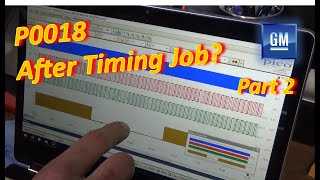
- Performing a timing chain replacement without first checking for a slipped crankshaft reluctor wheel, leading to the code returning immediately. 🎬 Watch: Why codes might return after a timing chain replacement.
Most Likely Causes
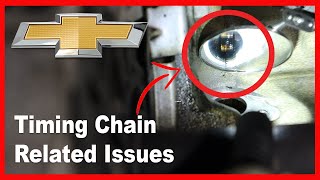
- Stretched Timing Chain(s) 🔴 High Probability → Shop Engine Timing Chain The GM 3.6L V6 engine family has a well-documented history of premature timing chain wear, often attributed to the original chain design and extended oil change intervals. TSBs like #PIP3423P and #12-06-01-009 series directly point to this as a primary cause for P0018 and related codes.
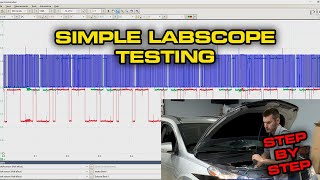
How to confirm: A mechanic can use an advanced scan tool to view the 'Camshaft Position Variance' data. A consistent deviation greater than 4-6 degrees between the desired and actual cam position strongly indicates a stretched chain. Definitive confirmation requires removing the front engine cover for a physical inspection of chain slack, 🎬 See how a labscope can diagnose timing issues without teardown. which is very labor-intensive.
Typical fix: Replace all three timing chains, all tensioners, and all guides using an updated OEM or high-quality aftermarket kit. This is a major engine repair often requiring 12-18 hours of labor.
Est. part cost: $300-$800 - Failed Timing Chain Tensioner(s) 🔴 High Probability → Shop Engine Timing Chain The hydraulic tensioners keep the chains tight. They can fail due to wear, internal seal failure, or sludge from low/dirty oil, leading to chain slack. They are considered an integral part of the timing chain system and are always replaced with the chains.
How to confirm: Confirmed during physical inspection when replacing the timing chains. A rattling noise on startup is a strong indicator of a tensioner failing to hold pressure.
Typical fix: Replace all timing chain tensioners as part of a complete timing chain service. Using individual parts is possible, but a full kit like ACDelco #12690388 is recommended.
Est. part cost: $100-$200 (part of kit) - Low or Dirty Engine Oil 🟡 Medium Probability The camshaft phasers and timing chain tensioners are hydraulically operated by engine oil. Low oil levels or dirty, sludgy oil can impede their function and cause timing correlation codes. Neglecting oil changes or following the sometimes overly optimistic Oil Life Monitor is a primary contributor to accelerated timing chain wear.
How to confirm: Check the oil level on the dipstick and inspect its condition. If it's low or very dark/sludgy, this is a likely contributor.
Typical fix: Perform an oil and filter change using the correct viscosity full synthetic oil (5W-30) that meets GM's Dexos1 specification. If the code returns, the mechanical damage to the chains is likely already done and an oil change will not fix it.
Est. part cost: $50-$100 - Faulty Camshaft Position Actuator Solenoid (VVT Solenoid) ⚪ Low Probability → Shop Engine Camshaft These solenoids control oil flow to the cam phasers. They can get clogged with sludge or fail electrically. While a possible cause, it's far less common than chain stretch on this engine and is often replaced unnecessarily.
How to confirm: Can be tested by swapping the Bank 2 intake solenoid with another one (e.g., Bank 2 exhaust or Bank 1 intake). Clear codes and see if the code changes (e.g., to P0019 or P0016). They can also be tested for resistance, which should be between 5 and 15 ohms.
Typical fix: Replace the Bank 2 intake VVT solenoid. It is a relatively accessible part for diagnostic purposes.
Est. part cost: $30-$80
Rare But Worth Checking
- Slipped Crankshaft Reluctor Wheel: → Shop Engine Crankshaft TSB #PIP3423P mentions that if timing chains are found to be okay, the reluctor wheel pressed onto the crankshaft may have moved. This is a rare but severe issue that causes persistent timing codes even after a chain replacement. The fix requires crankshaft replacement or, in some aftermarket applications, pinning the wheel in place.
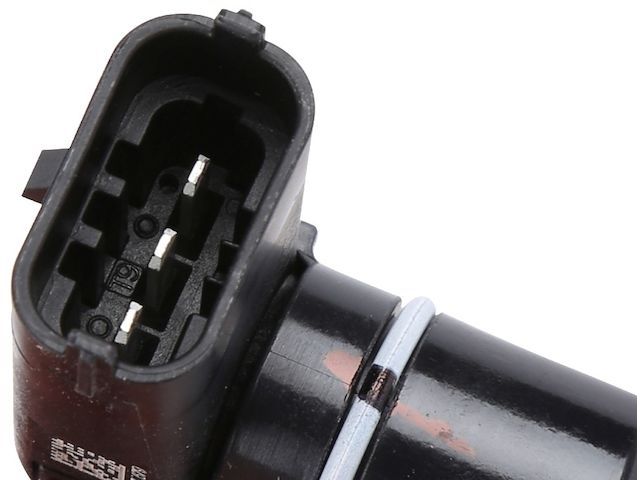
- Faulty Camshaft or Crankshaft Position Sensor: → Shop Engine Crankshaft Position Sensor While sensors can fail, they are an uncommon cause for P0018 on this specific vehicle compared to the mechanical timing components. They are often mistakenly replaced first. A diagnostic swap with a sensor from another position can confirm failure if the code follows the sensor.
- Failed Camshaft Phaser: → Shop Engine Camshaft The camshaft phaser itself can fail mechanically, getting stuck in one position. This is less common than chain stretch but can be diagnosed with a scan tool by commanding the phaser to move and observing if the actual position changes. In some cases, the incorrect phaser (e.g., for the wrong bank) may have been installed during a previous repair.
Diagnosis Steps
- Scan for all DTCs to see if other timing codes are present (P0008, P0009, P0016, P0017, P0019), which would strengthen the timing chain diagnosis.
- Check engine oil level and condition. Ensure it is full, clean, and of the correct 5W-30 Dexos1 full synthetic specification. If not, perform an oil change, clear codes, and re-test.
- Use a professional scan tool to monitor the 'Camshaft Position Variance' for Bank 2 Intake. A value that is consistently off by more than 6-9 degrees at idle or 2500 RPM strongly indicates a stretched chain or other mechanical fault.
- If the variance is erratic or if diagnostics are inconclusive, test the Bank 2 intake VVT solenoid. You can check its resistance (should be 5-15 ohms) or swap it with an adjacent solenoid (like the Bank 2 exhaust) to see if the code follows (changes to P0019).
- If the above steps do not resolve the issue, the next step is a physical inspection of the timing chains, tensioners, and guides. This is a labor-intensive process that requires removing the engine front cover.
- During physical inspection, verify the timing marks and check for excessive slack in the chains.
- In the rare event the chains are tight and in time, inspect the crankshaft reluctor wheel for movement, as per TSB #PIP3423P. A measurement from the crankshaft throw to the reluctor opening should be 25-26mm.
Parts You'll Likely Need
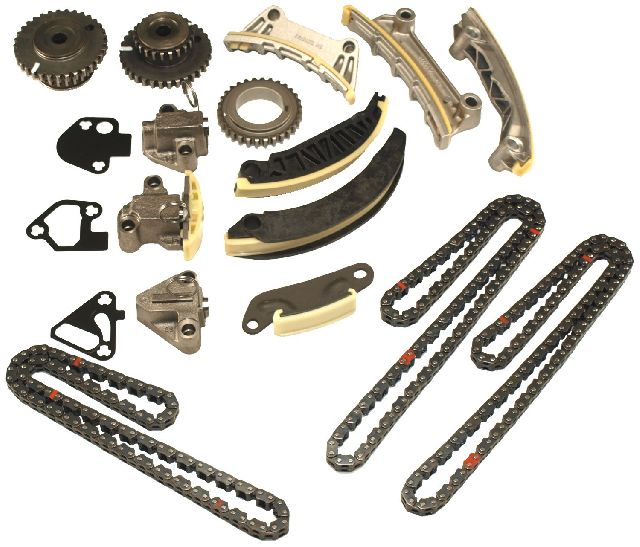
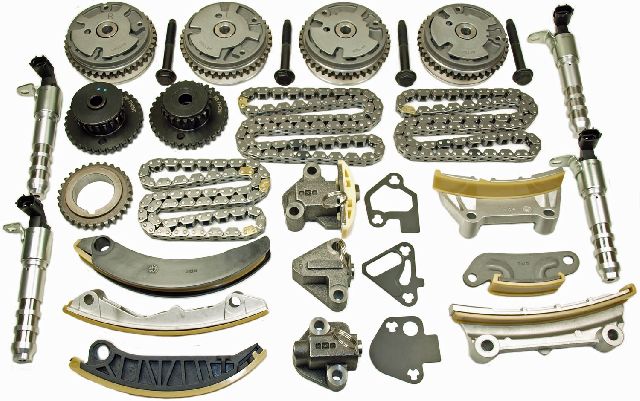
- Timing Chain Kit
(OEM #12650230 (check application, often for earlier models))— This is the most common failure. A complete kit should be used, including all three chains, all tensioners, guides, and new gaskets. Using updated GM parts is critical for a lasting repair.
Trusted brands: ACDelco, Cloyes
OEM price range: $400-$700
Aftermarket price range: $250-$500 - Camshaft Position Actuator Solenoid
(OEM #12655420 (Intake))— A less common but possible cause. It can get clogged or fail, causing timing issues. It's a relatively inexpensive part to replace for diagnosis.
Trusted brands: ACDelco, Delphi
OEM price range: $40-$90
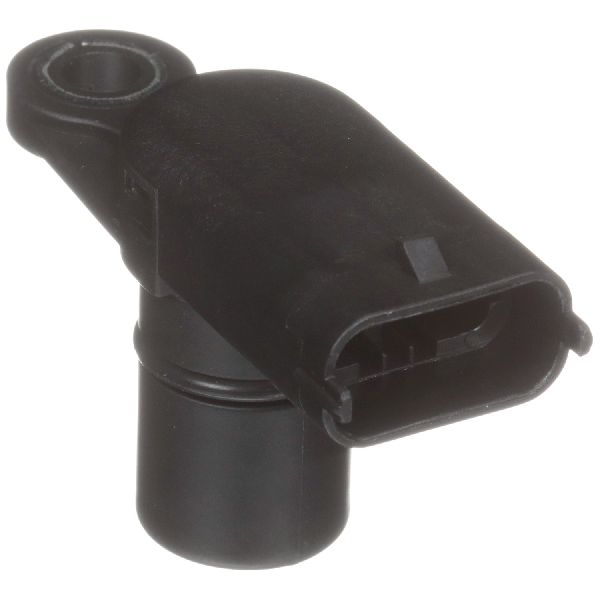
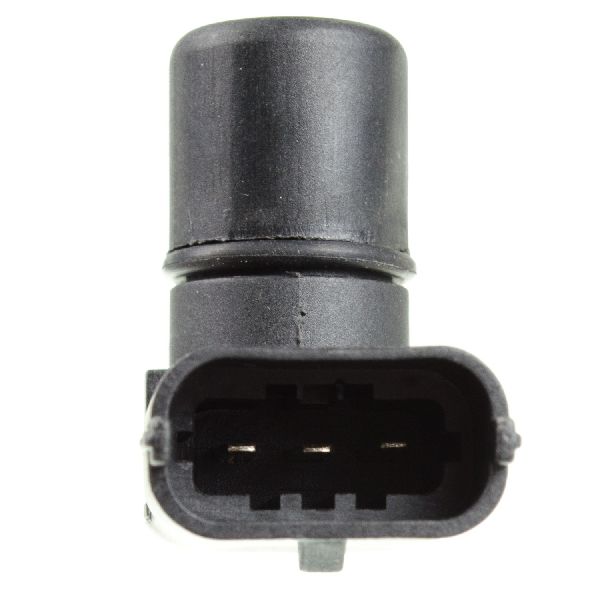
Aftermarket price range: $25-$60 - Camshaft Position Sensor
(OEM #12591720 (check application))— Rarely the cause, but may be replaced if diagnostic tests (like a sensor swap) prove it is faulty.
Trusted brands: ACDelco, Bosch
OEM price range: $30-$60
Aftermarket price range: $20-$40
Related Codes That Often Appear With This One
- P0008 — A general engine position performance code for Bank 1. When seen with P0018, it strongly suggests a primary timing chain issue affecting both banks, and is often the first code to appear as chains begin to stretch.
- P0009 — A general engine position performance code for Bank 2. It reinforces the diagnosis of a timing issue on Bank 2 and often appears with P0018.
- P0016 — The same correlation code, but for Bank 1 (radiator side). If P0016 and P0018 are present together, it points to a problem affecting both banks, like a stretched primary timing chain or a slipped crank reluctor.
- P0017 — Correlation code for the exhaust camshaft on Bank 1. Seeing multiple timing codes at once is a classic sign of a significant timing chain problem on these engines.
- P0019 — Correlation code for the exhaust camshaft on Bank 2. If seen with P0018, it indicates a timing problem across the entire Bank 2 cylinder head, pointing strongly to a stretched secondary chain for that bank.
Technical Service Bulletins (TSBs) & Recalls
- TSB #PIP3423P: A key bulletin for the GM 3.6L V6 family. It instructs technicians to check for loose timing chains or a slipped crankshaft reluctor wheel when codes like P0018, P0016, P0008, etc., are present.
- TSB #12-06-01-009 (series): A well-known bulletin providing updated part numbers for timing chain kits and service procedures to address premature wear.
- TSB #20-NA-085: Notes a specific batch of 2019-2020 3.6L engines may be missing a guide insert, leading to rapid chain wear and P0018/P0019 codes.
Platform-Specific Known Issues
- Oil Life Monitor (OLM) Contribution: Many technicians and owners believe the early calibration of GM's Oil Life Monitor system contributed to premature timing chain failure. The system could recommend oil change intervals of 10,000 miles or more, which was too long to prevent oil breakdown and sludging, starving the hydraulic tensioners and accelerating chain wear. More frequent changes (e.g., every 5,000 miles) with full synthetic oil are now recommended.
- Engine Removal for Repair: Due to the transverse mounting of the 3.6L V6 in the Traverse, accessing the timing cover to perform the chain replacement is extremely labor-intensive. Many shops will remove or partially drop the entire engine/subframe assembly to gain sufficient access, which significantly adds to the labor cost compared to the same engine in a RWD vehicle like a Camaro.
Mechanic-Grade Diagnostic Values
- Camshaft Position Actuator Solenoid (VVT Solenoid) Resistance — expected: 5.0 to 15.0 Ohms. Failure: A reading outside this range, especially an open circuit (infinite resistance) or a short (near zero ohms), indicates a failed solenoid.
- Cam/Crank Correlation Threshold — expected: Less than 9 degrees of deviation. Failure: When the ECM detects a deviation greater than 9 degrees between the crankshaft and the Bank 2 intake camshaft, it will set DTC P0018.
- Camshaft Position Sensor Signal Circuit Voltage (Key On, Engine Off) — expected: 4.8 to 5.2 Volts. Failure: A reading outside this range indicates a wiring or ECM issue.
- Crankshaft Reluctor Wheel Position Measurement — expected: 25mm to 26mm. Failure: Any measurement outside this range indicates the reluctor wheel has slipped on the crankshaft, requiring crankshaft replacement.
Hidden / Shadow Codes Worth Checking
- P0018 with Symptom Byte (e.g., P0018 00): While specific symptom byte definitions for P0018 were not found in the search, GM uses these two-digit hexadecimal codes to provide more granular detail about the failure. For example, TSB 20-NA-085 lists P0018 and P0019 in relation to a specific mechanical failure (missing timing chain guide insert), which would likely have a unique symptom byte visible on a dealer scan tool. (see via GM GDS2 or other professional-grade scan tool.)
Scan Tool Commands That Help
- GDS2 (GM Dealer Tool): Camshaft Position Actuator Solenoid Control — This bidirectional test allows a technician to command the Bank 2 intake VVT solenoid to a specific duty cycle or angle. By observing the 'Actual Camshaft Position' PID, a technician can confirm if the solenoid, oil passages, and phaser are responding mechanically. No change in angle when commanded points to a failure in that hydraulic circuit, rather than a stretched chain.
- GDS2 / Tech II: Crankshaft Position Variation Learn — This is a mandatory reset procedure that must be performed after replacing the crankshaft, crankshaft position sensor, or the ECM to synchronize the components with the engine computer.
Wiring & Ground Locations
- G110 — Located on the right rear of the engine, mounted to the back of the cylinder head, sometimes on a bracket above the power steering pressure hose.. This is a shared ground point for the ECM and other critical components. A loose or corroded G110 ground can cause erratic behavior, communication DTCs, and intermittent no-start conditions that could be confused with other failures.
- ECM Connector X2 — One of the main connectors at the Engine Control Module (ECM).. The ground circuit for the ECM itself runs through pins 1, 2, and 4 of this connector on some models. Checking for voltage drop on these ground pins is a key step in diagnosing potential ECM or wiring issues.
Real Owner Repair Stories
- Pine Hollow Auto Diagnostics (YouTube) (2009 Chevrolet Traverse 3.6L V6 with 145k miles) — P0018 code appeared months after the owner proactively replaced the timing chains, phasers, and sensors.
❌ Tried (didn't work) Complete timing chain job with new chains, guides, and tensioners., Replaced all four VVT solenoids with new ACDelco parts., Replaced camshaft position sensors.
✅ What actually fixed it Diagnosis revealed the incorrect intake camshaft phaser had been installed on Bank 2. The owner had ordered two intake and two exhaust phasers, but the parts supplier (RockAuto) only listed one type of intake phaser, which was for the right bank (Bank 1). The left bank (Bank 2) requires a different part number. The incorrect phaser caused a 10-degree timing retard, triggering the P0018 code.
OEM Part Supersession History
e.g., 12651450→12693218, then 12700436— GM released multiple updated timing chain kits to improve the durability of the chains and address the premature stretching issue.
Heads up: It is critical to use a complete, updated kit (e.g., ACDelco 12690388 for LFX/LFY) and not mix and match old and new design components. Ensure the correct kit is used for the specific LFX or LFY engine.
Model Year Variations Within This Range
- 2017 (Gen 1): Uses the 3.6L LFX V6 engine paired with a 6-speed automatic transmission. The timing chain issue is extremely well-documented for this engine.
- 2018 (Gen 2): Uses the updated 3.6L LFY V6 engine with a 9-speed automatic transmission and Stop/Start technology. While the LFY was intended to be more durable, it can still suffer from timing chain issues. TSB 20-NA-085 noted that some 2019-2020 LFY engines were built with a missing timing chain guide insert, causing rapid wear and P0018/P0019 codes, which could potentially affect very late production 2018 models.
Helpful Videos

We Have This Part in Stock


The information in this article is provided for general reference and educational purposes only. Vehicle specifications, procedures, and part compatibility can vary by production date, trim level, and region. Always consult your vehicle's factory service manual and verify part numbers before purchasing or performing repairs. Safety-critical components such as airbags, seat belts, and braking systems should be installed by a qualified professional.
- Chevrolet TRAVERSE:
- 🧭 Diagnostic Flowchart
- 🎬 Helpful Videos
- 🛍️ Shop This Part
- What's Unique About the 2017-2018 Chevrolet TRAVERSE
- Symptoms You May Notice
- Most Likely Causes
- Rare But Worth Checking
- Diagnosis Steps
- Parts You'll Likely Need
- Related Codes That Often Appear With This One
- Technical Service Bulletins (TSBs) & Recalls
- Platform-Specific Known Issues
- Mechanic-Grade Diagnostic Values
- Hidden / Shadow Codes Worth Checking
- Scan Tool Commands That Help
- Wiring & Ground Locations
- Real Owner Repair Stories
- OEM Part Supersession History
- Model Year Variations Within This Range
- 🎟️ Get 5% Off