

P0018 on 2015-2018 Ford C-MAX: Crankshaft Position Correlation Causes and Fixes
On a 2015-2018 Ford C-MAX, code P0018 is almost always caused by low/dirty engine oil leading to a sticking Variable Camshaft Timing (VCT) solenoid. An oil change and a new VCT solenoid (around $40-$90 for the part) is the most common fix, though labor requires removing the valve cover. The specific part is the intake VCT solenoid, OEM part number CJ5Z-6M280-A.
- Start by checking your engine oil. Low or dirty oil is the #1 cause of P0018 on this vehicle.
- The most likely failed part is the Variable Camshaft Timing (VCT) solenoid, which gets clogged by oil debris.
- The code says 'Bank 2', but your engine only has one bank. This is normal for Ford's diagnostic strategy.
- Replacing the VCT solenoid requires removing the valve cover, making it a moderately difficult DIY job.
- Do not immediately replace the camshaft or crankshaft sensors; they are less likely to be the cause than oil quality or the VCT solenoid.
What's Unique About the 2015-2018 Ford C-MAX
The Ford C-MAX uses a 2.0L inline-four-cylinder (I4) engine, which only has one cylinder bank. The 'Bank 2' designation in the code definition can be confusing, as there is no physical Bank 2. Ford's software uses this designation to refer to one of the two camshafts (intake or exhaust). 'Sensor A' universally refers to the intake camshaft. Therefore, P0018 on this engine points specifically to a correlation issue with the intake camshaft. Ford has issued multiple Technical Service Bulletins (TSBs) for this engine family, noting that P0018 and related codes are often caused by small debris contaminating the oil and causing the Variable Camshaft Timing (VCT) solenoid to stick. TSB SSM 48423 specifically recommends cycling the solenoid with a scan tool 10 times to attempt to clear debris before replacement.
🎬 Watch: This simple trick might clear the solenoid debris.Diagnostic Flowchart
Tap your situation to follow the diagnostic path that matches what you're seeing on this vehicle.
Symptoms You May Notice
- Check Engine Light is on
- Rough or erratic idle
- Reduced engine power and poor acceleration
- Decreased fuel economy
- Engine may hesitate or stall
- Rattling noise from the engine, especially near the timing cover area
- Replacing the camshaft position sensor when the actual problem is a sticking VCT solenoid or dirty oil.
- Replacing the crankshaft position sensor when it is rarely the cause for this specific correlation code.
- Proceeding to a timing chain replacement without first properly diagnosing the VCT solenoids and phasers.
Most Likely Causes
- Low, Old, or Dirty Engine Oil 🔴 High Probability The VCT system is hydraulic and highly dependent on clean oil of the correct viscosity to function. Old oil breaks down and creates sludge and debris that can clog the small passages in the VCT solenoids.
How to confirm: Check the oil level and condition on the dipstick. If it's low, black, or gritty, it needs to be changed. This should always be the first step.
Typical fix: Perform a complete oil and filter change using the manufacturer-specified oil weight (e.g., SAE 5W-20 Synthetic Blend).
Est. part cost: $30-$70 - Sticking or Failed VCT Solenoid (Oil Control Valve) 🔴 High Probability → Shop Engine Variable Valve Timing (VVT) Solenoid Multiple Ford TSBs (SSM 48423, SSM 50067, SSM 47170) state this code is often caused by small debris making the VCT solenoid stick. This is the most common point of failure for this code.
How to confirm: A mechanic can command the solenoid on and off with a bidirectional scan tool while observing camshaft timing data. It can also be removed and tested for resistance, which should be between 7 and 14 Ohms. TSB SSM 48423 advises cycling the solenoid 10 times with the scan tool to try and clear debris before replacement.
Typical fix: Replace the faulty intake VCT solenoid. It is located under the valve cover. The OEM part number is CJ5Z-6M280-A.
Est. part cost: $40-$90 - Worn or Stretched Timing Chain 🟡 Medium Probability → Shop Engine Timing Chain Over time, especially with a poor oil change history, the timing chain can stretch. This causes a permanent timing correlation error that a new solenoid or oil change cannot fix.
How to confirm: This is a mechanical check that requires removing the valve cover and possibly the engine front cover to inspect the chain for slack and check timing marks. A persistent rattle on startup is a common symptom.
Typical fix: Replace the timing chain, tensioners, and guides. This is a labor-intensive and expensive repair, often costing $2,200 to $4,000 at a shop.
Est. part cost: $200-$500 - Faulty Camshaft Phaser ⚪ Low Probability → Shop Engine Camshaft The phaser is the mechanical gear that adjusts cam timing. It can fail by getting stuck or having broken internal components, but the solenoid that controls it is a much more common failure point.
How to confirm: Diagnosed after confirming the VCT solenoid is working correctly and the timing chain is not stretched. A scan tool may show the commanded vs. actual cam angle being persistently off.
Typical fix: Replace the camshaft phaser assembly.
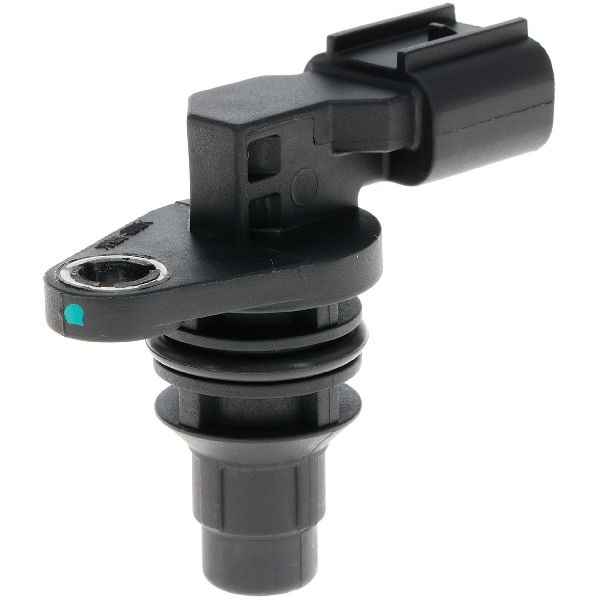
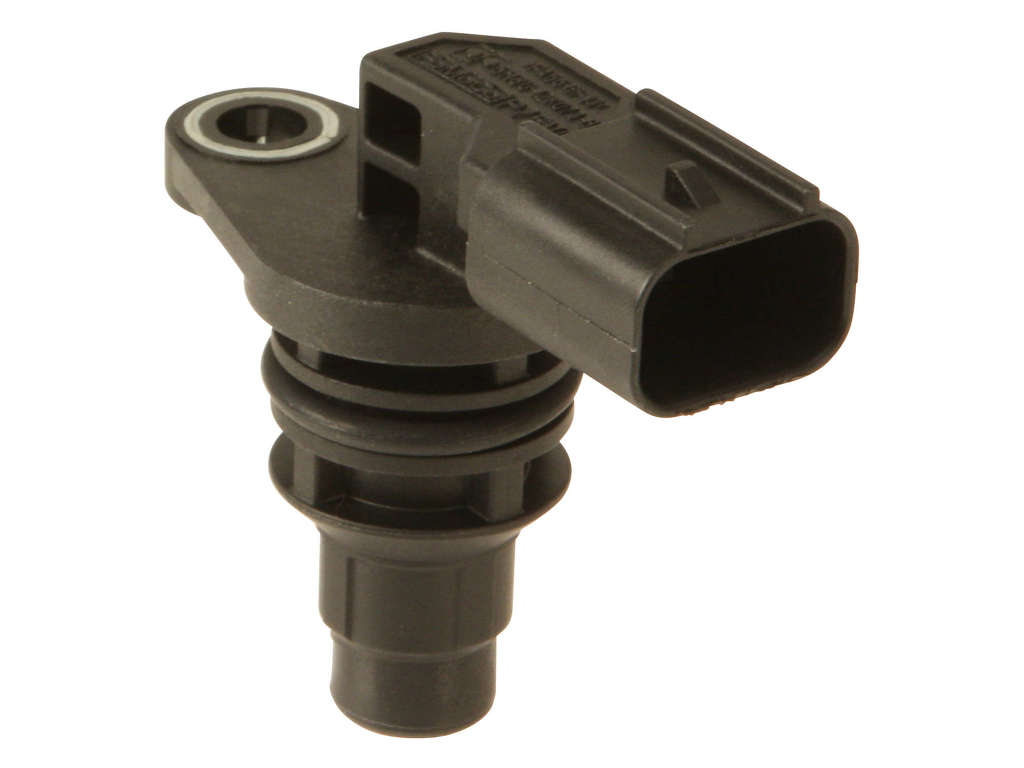
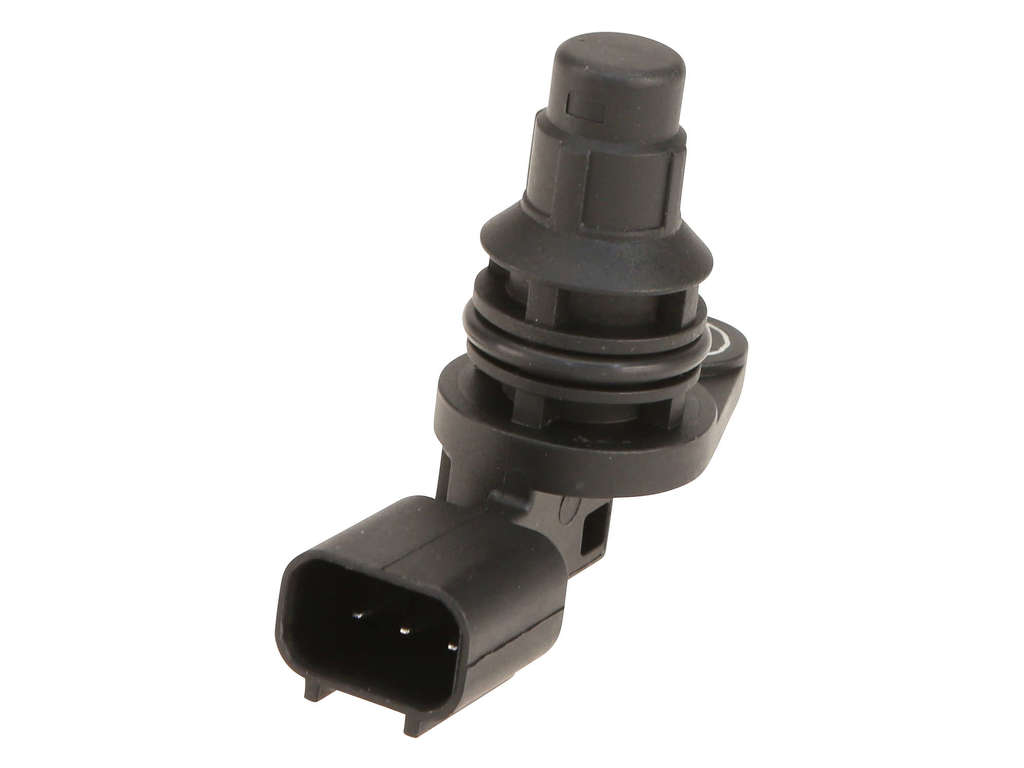
Est. part cost: $100-$250 - Faulty Camshaft or Crankshaft Position Sensor ⚪ Low Probability → Shop Engine Crankshaft Position Sensor
How to confirm: Check the sensor's signal with an oscilloscope or use a multimeter to test resistance against specifications. This is an uncommon cause for a correlation code unless the sensor has completely failed or its wiring is damaged.
Typical fix: Replace the failed sensor. The camshaft position sensor is relatively accessible on top of the engine.
Est. part cost: $30-$80
Rare But Worth Checking
- Damaged wiring to sensors or solenoids: Always visually inspect the wiring harness for chafing, melting, or rodent damage before replacing parts. A loose connector can also cause this issue.
- Damaged Tone Ring: The tone ring (or reluctor wheel) on the crankshaft or camshaft, which the sensors read, can become damaged or slip, causing incorrect readings. This is a rare, advanced mechanical failure.
- Faulty Powertrain Control Module (PCM): → Shop Engine Control Module (ECM) This is extremely rare and should only be considered after all other possibilities have been exhaustively ruled out.
Diagnosis Steps
- Check Engine Oil: Verify the oil level is correct and the oil is clean. If low or dirty, perform an oil and filter change with SAE 5W-20 oil before proceeding. This alone may solve the issue.
- Scan for Codes: Use an OBD-II scanner to confirm P0018 and check for any other related codes. Note any other timing-related codes.
- Inspect Wiring: Visually inspect the wiring and connectors for the camshaft position sensors and VCT solenoids for any damage, oil contamination, or loose connections.
- Test the VCT Solenoid: Using a bidirectional scan tool, access the PCM and command the Bank 2 Intake VCT solenoid on and off. Per TSB SSM 48423, cycle the solenoid 10 times to attempt to clear debris. Monitor the camshaft angle PID to see if it changes as commanded. If it doesn't, the solenoid is likely sticking or has failed.
- Check Solenoid Resistance: If a bidirectional scanner is not available, unplug the solenoid and measure the resistance between its two pins with a multimeter. A good solenoid should read between 7 and 14 Ohms. A reading of OL (open) or near 0 (short) indicates a failed solenoid.
- Test the Sensors: If the solenoid tests good, you can test the camshaft and crankshaft position sensors using a multimeter or oscilloscope to ensure they are sending a correct signal, though this is a less likely cause.
- Perform a Mechanical Timing Check: If all electronic components and wiring are good, the final step is to perform a mechanical inspection. This involves removing the valve cover to check the timing chain for slack and verifying the timing marks on the camshafts and crankshaft are aligned. This step is best left to a professional.
Parts You'll Likely Need
- Variable Camshaft Timing (VCT) Solenoid
(OEM #CJ5Z-6M280-A)— This is the most common failure part for this code on this engine, as documented in multiple Ford TSBs. It controls oil flow to the cam phaser and is prone to sticking from debris.
Trusted brands: Motorcraft, Dorman (p/n 917-196), Standard Motor Products (p/n VVT204)
OEM price range: $60-$90
Aftermarket price range: $40-$70 - Engine Oil and Filter
(OEM #Motorcraft FL-910-S (Filter))— Dirty or incorrect oil is a primary cause of VCT system faults. An oil change is a critical first step in diagnosis and repair.
Trusted brands: Motorcraft 5W-20 Synthetic Blend, Mobil 1, Castrol
OEM price range: $50-$80
Aftermarket price range: $30-$60
Related Codes That Often Appear With This One
- P0016 — This is the correlation code for Bank 1 (which on this engine, refers to the exhaust camshaft). Seeing both may indicate a more severe timing chain issue or a problem with the crankshaft sensor signal.
- P0017 — This is the correlation code for the exhaust camshaft on Bank 2. Seeing it with P0018 points to a problem affecting the entire timing system for that camshaft group, like a stretched chain or phaser issue.
- P0011, P0012, P0014, P0015 — These codes indicate over-advanced or over-retarded camshaft timing. They are often caused by the same VCT solenoid and oil-related issues as P0018 and are listed together in Ford's TSBs.
Technical Service Bulletins (TSBs) & Recalls
- SSM 54366: Mentions P0018 among a list of VCT-related DTCs for 2015-2021 Ford vehicles.
- SSM 48423: States that
Platform-Specific Known Issues
- Ford has issued multiple Technical Service Bulletins (TSBs) including SSM 48423, SSM 50067, and SSM 47170, which state that codes like P0018 may be caused by small debris from old oil causing the VCT solenoid to stick. The recommended procedure before component diagnosis is often to change the oil and filter.
- TSB SSM 48423 provides a specific diagnostic step: use a scan tool to cycle the affected VCT solenoid 10 times to attempt to clear debris before resorting to replacement.
Mechanic-Grade Diagnostic Values
- VCT Solenoid Internal Resistance — expected: 7 to 14 Ohms. Failure: A reading of OL (Open Loop/infinite) indicates a broken internal coil. A reading near zero indicates a short circuit.
- VCT Solenoid Connector Voltage — expected: Approximately 12V (Battery Voltage) on one pin with Key On, Engine Off (KOEO).. Failure: Low or no voltage points to a problem in the power supply wiring, fuse, or PCM power relay, not the solenoid itself.
- Scan Tool VCT Advanced Error PID (VCT_ADV_ERR) — expected: Close to 0 degrees (+/- 5 degrees) at idle and steady-state driving.. Failure: A consistent, large deviation from 0 degrees indicates the PCM cannot achieve the desired cam timing, pointing to a stuck solenoid, phaser, or mechanical timing issue.
- Camshaft Position Sensor (CMP) Signal Voltage — expected: A fluctuating voltage signal (typically between 0V and 5V) when the engine is cranking or running.. Failure: A flat line (no signal) or a constant voltage indicates a failed sensor or wiring issue. An oscilloscope is the best tool for viewing this waveform.
Hidden / Shadow Codes Worth Checking
- Mode 6 Data (e.g., MID $39, TID $01): Mode 6 is not a 'code' but a diagnostic mode that shows the results of the PCM's self-tests before a full-blown DTC is set. For Ford's VCT system, specific Monitor IDs (MIDs) and Test IDs (TIDs) track camshaft angle deviation. A technician can view this data to see if the timing is consistently near the failure threshold, indicating a developing problem with a solenoid or phaser even if the Check Engine Light isn't on yet. (see via A professional-grade scan tool with Mode 6 capability, such as the Ford IDS or FORScan.)
Scan Tool Commands That Help
- Ford IDS (Integrated Diagnostic System): VCT Solenoid Bidirectional Control / Output State Control — This is a primary diagnostic step. It allows a technician to command the VCT solenoid on and off to verify its mechanical operation. While commanding the solenoid, the technician should monitor the VCT error PIDs (e.g., VCT_ADV_ERR) to see if the camshaft angle changes as expected.
- Ford IDS (Integrated Diagnostic System): Datalogger with VCT PIDs — Used to record VCT-related Parameter IDs (PIDs) during a test drive. Key PIDs include commanded vs. actual cam angle, and VCT error. This helps diagnose intermittent issues that only occur under specific driving conditions.
Wiring & Ground Locations
- VCT Solenoid Connector — On top of the VCT solenoid, accessible after removing the valve cover.. This 2-pin connector is where voltage and resistance tests are performed. Pin 1 is typically the 12V power supply, and Pin 2 is the ground-side control wire from the PCM. Corrosion or a loose connection here can mimic a failed solenoid.
- Engine Block Grounds (e.g., G108, G109) — Bolted to the engine block or cylinder head, connecting the main wiring harness to the engine. Specific locations for the C-Max require a wiring diagram, but they are typically found on the rear or side of the engine block.. The PCM, sensors, and solenoids all rely on a clean, solid ground connection to the engine block. A loose or corroded ground strap can cause stray voltage and erratic signals, leading to incorrect readings and false correlation codes.
- Battery to Chassis/Frame Ground — The main negative battery cable connection to the vehicle's body, typically near the battery in the engine bay.. This is the master ground for the entire electrical system. While less likely to cause a single specific code, a poor connection here can cause widespread, difficult-to-diagnose electronic issues.
OEM Part Supersession History
CJ5Z-6M280-A→No common supersession found.— N/A
Heads up: This part number is widely used across many Ford 2.0L, 2.3L, and 2.5L engines from roughly 2012-2025. No significant compatibility issues or revisions were noted for the 2015-2018 C-Max.
Model Year Variations Within This Range
- 2015-2018: No significant mechanical changes were made to the 2.0L Atkinson-Cycle engine or its VCT system within this model year range. Diagnostic procedures and common failures are consistent across these years for the Ford C-MAX.
Helpful Videos


We Have This Part in Stock


The information in this article is provided for general reference and educational purposes only. Vehicle specifications, procedures, and part compatibility can vary by production date, trim level, and region. Always consult your vehicle's factory service manual and verify part numbers before purchasing or performing repairs. Safety-critical components such as airbags, seat belts, and braking systems should be installed by a qualified professional.
- Ford C-MAX:
- 🧭 Diagnostic Flowchart
- 🎬 Helpful Videos
- 🛍️ Shop This Part
- What's Unique About the 2015-2018 Ford C-MAX
- Symptoms You May Notice
- Most Likely Causes
- Rare But Worth Checking
- Diagnosis Steps
- Parts You'll Likely Need
- Related Codes That Often Appear With This One
- Technical Service Bulletins (TSBs) & Recalls
- Platform-Specific Known Issues
- Mechanic-Grade Diagnostic Values
- Hidden / Shadow Codes Worth Checking
- Scan Tool Commands That Help
- Wiring & Ground Locations
- OEM Part Supersession History
- Model Year Variations Within This Range
- 🎟️ Get 5% Off