

P0018 on 2015-2020 Ford Explorer: Crankshaft-Camshaft Correlation Causes and Fixes
On 2015-2020 Ford Explorers, particularly those with the 3.5L V6, code P0018 is most often caused by a failing Variable Camshaft Timing (VCT) solenoid or a stretched timing chain. A VCT solenoid is a relatively inexpensive part, but a timing chain replacement is a major repair that can cost over $2,000. Ignoring the issue can lead to severe engine damage.
- P0018 on a 2015-2020 Ford Explorer indicates a timing correlation problem on Bank 2, the engine bank closer to the front of the vehicle.
- The most likely causes are a faulty VCT solenoid or a stretched timing chain, especially on the 3.5L V6 engine.
- Always check your engine oil level and condition first, as low or dirty oil can cause this code.
- Due to the potential for serious engine damage, it is critical to diagnose and repair this issue promptly.
- While a VCT solenoid replacement is manageable, a timing chain replacement is a major repair that should be left to a professional.
What's Unique About the 2015-2020 Ford EXPLORER

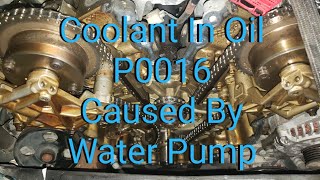
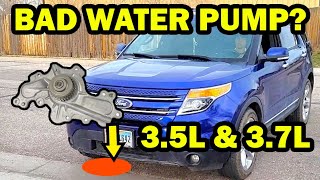
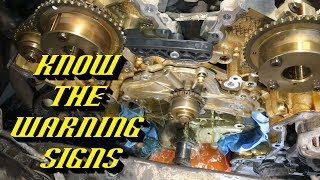
The 3.5L V6 'Cyclone' engine, common in the fifth-generation (2011-2019) Explorer, is known for timing chain and VCT system issues. The timing chain-driven internal water pump is a critical failure point; when its seals fail, coolant can leak into the engine oil, compromising lubrication and accelerating wear on the timing chain 🎬 Watch: How internal water pump failure destroys these engines. and VCT components. Ford has issued multiple Technical Service Bulletins (TSBs) acknowledging that codes like P0018 can be triggered by something as simple as small debris causing a VCT solenoid to stick. This makes a VCT solenoid issue a very high-probability cause on this platform, often preceding a more catastrophic timing chain failure.
Diagnostic Flowchart

Tap your situation to follow the diagnostic path that matches what you're seeing on this vehicle.
Generation note: The 2015-2020 range covers the fifth generation (2015-2019) and the first year of the sixth generation (2020). The 3.5L V6 engine, most associated with this issue, was primarily used in the fifth generation. The 2020 model uses different engines, but the 2.3L EcoBoost carried over and can also experience VCT-related issues. The provided TSBs cover vehicles up to 2021, indicating the underlying VCT system design may share similar vulnerabilities. [SSM 54366, SSM 50067, 18]
Symptoms You May Notice
- Check Engine Light is on
- Rough or uneven idle
- Engine rattling noise, especially on a cold start
- Reduced engine power and poor acceleration
- Hesitation or stalling
- Decreased fuel economy
- Engine misfires, potentially with codes like P0300, P0304, P0305, P0306
- Replacing only the camshaft or crankshaft position sensors without diagnosing the underlying mechanical timing or VCT solenoid issue. The sensors are often reporting the problem correctly, they are not the cause of it.
- Replacing VCT solenoids when the root cause is a stretched timing chain. The code may disappear temporarily but will return as the mechanical slack is still present.
- Performing a timing chain replacement but not replacing the internal water pump on the 3.5L V6. A subsequent water pump failure will contaminate the oil and ruin the new timing components, requiring the entire job to be done again.
Most Likely Causes

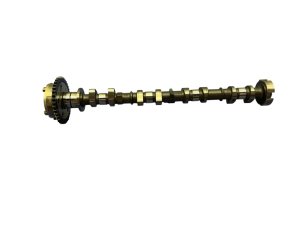
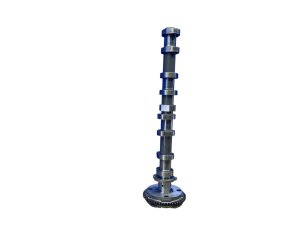
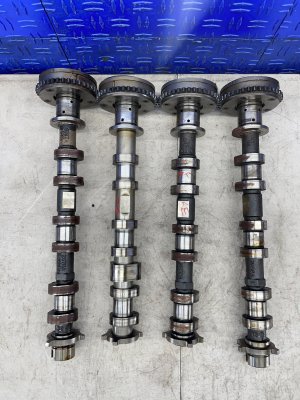
- Faulty Variable Camshaft Timing (VCT) Solenoid 🔴 High Probability → Shop Engine Camshaft Ford TSBs SSM 50067 and SSM 48423 directly state that small debris can cause the VCT solenoid to stick, triggering this code. This is a well-documented issue on these engines. TSB 16-0093 also points to replacing solenoids on low-mileage 2016 models.
How to confirm: A mechanic can command the solenoid on and off with a scan tool while monitoring camshaft position data. Per TSB SSM 50067, a technician may first try cycling the solenoid 10 times with a scan tool (Pinpoint Test HK12) to clear debris before replacing it. The solenoid can also be removed and bench-tested or inspected for debris.
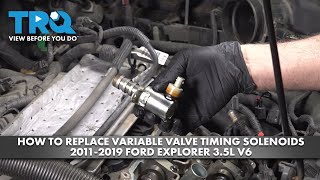
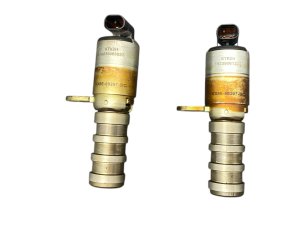
Typical fix: Replace the VCT solenoid for Bank 2 Intake. It's often recommended to replace both the intake and exhaust solenoids for that bank at the same time, and some mechanics advise replacing all four on the 3.5L V6. On the 3.5L, this requires removing the valve cover.
Est. part cost: $30-$100 per solenoid - Stretched Timing Chain 🔴 High Probability → Shop Engine Timing Chain The 3.5L V6 engine in the Explorer is known for premature timing chain stretching and guide/tensioner wear. This can be accelerated by extended oil change intervals or a failing internal water pump contaminating the oil with coolant. A stretched chain causes a misalignment between the crank and cam sensors, triggering the code.
How to confirm: This is a mechanical issue that requires physical inspection. A mechanic will need to remove the valve cover and/or timing cover to measure chain slack and check the timing marks. A significant deviation in cam/crank correlation data on a scan tool (e.g., using Ford's Power Balance test) is also a strong indicator.
Typical fix: Replace the timing chain, tensioners, guides, and phasers. Crucially, the water pump, which is driven by the timing chain on the 3.5L V6, should always be replaced at the same time to prevent a future failure from destroying the new timing components.
Est. part cost: $400-$900 for a full kit - Low or Dirty Engine Oil 🟡 Medium Probability The VCT system is entirely dependent on pressurized engine oil to adjust camshaft timing. If the oil is low, dirty, the wrong viscosity, or contaminated with coolant from a failing water pump, the system cannot function correctly and may stick the solenoids or phasers.
How to confirm: Check the oil level and condition on the dipstick. Review vehicle service records for the last oil change date and the type of oil used. An oil analysis from a lab like Blackstone can detect coolant in the oil, a tell-tale sign of impending water pump failure.
Typical fix: Perform an oil and filter change using the manufacturer-specified grade of oil (typically 5W-20 or 5W-30 for these engines). Using a high-quality OEM filter is also recommended, as some aftermarket filters have been linked to oil pressure issues.
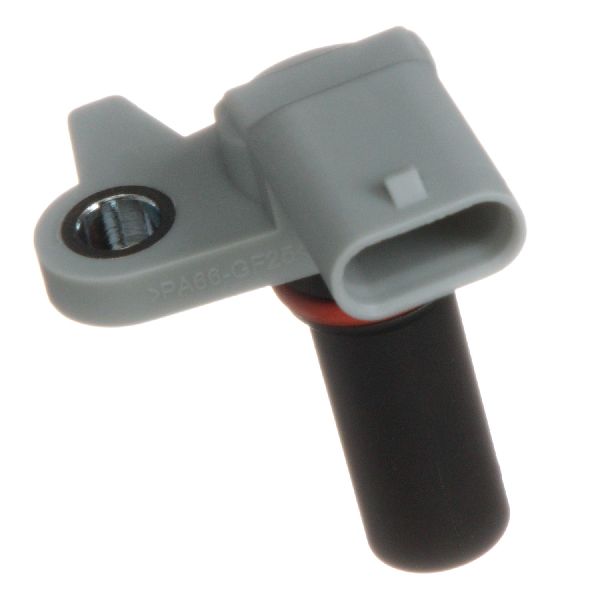
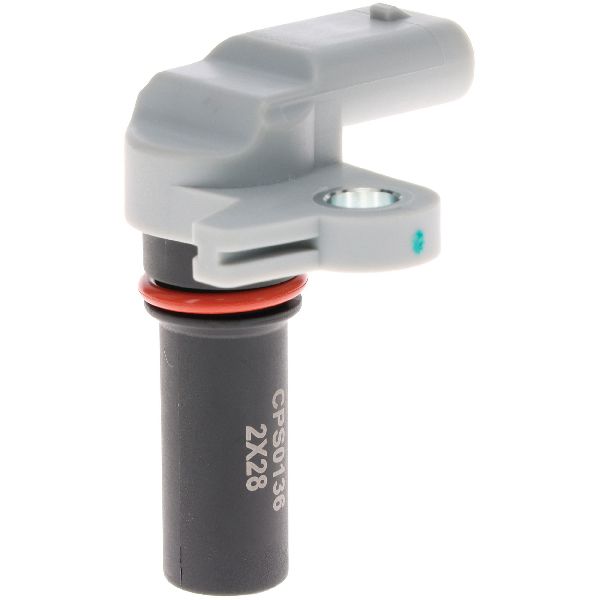
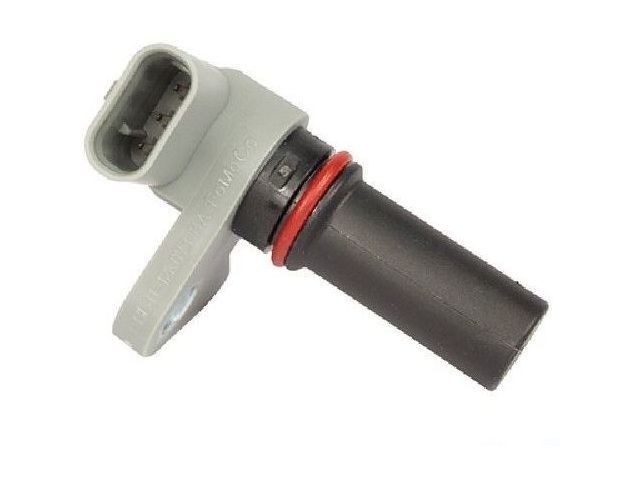
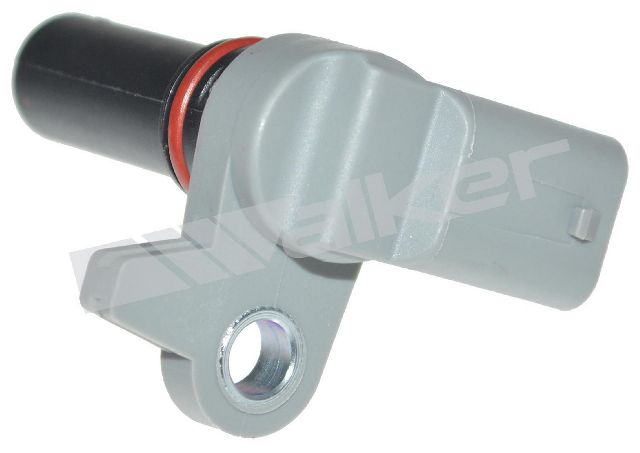
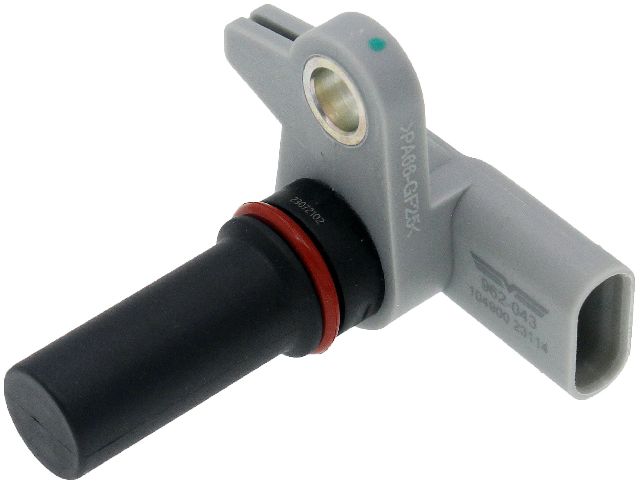
Est. part cost: $50-$100 - Failed Camshaft Position Sensor ⚪ Low Probability → Shop Engine Camshaft Position Sensor
How to confirm: The sensor's signal can be monitored with an oscilloscope or a high-end scan tool. Resistance can be checked with a multimeter. Swapping the suspect sensor with a known good one from another position can see if the code follows the sensor.
Typical fix: Replace the Bank 2 intake camshaft position sensor (Sensor A).
Est. part cost: $25-$70
Rare But Worth Checking
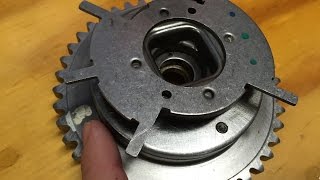
- Damaged VCT Phaser/Actuator: The phaser is the gear on the end of the camshaft that the VCT system controls. It can fail mechanically, getting stuck, breaking, or losing its locking pin, causing a rattle on startup. This is less common than a solenoid or chain issue but is often the result of poor oil quality or pressure. It is typically replaced during a timing chain job.
- Damaged Crankshaft Reluctor Wheel: → Shop Engine Crankshaft The reluctor wheel (or tone ring) is what the crankshaft position sensor reads. If it's damaged, cracked, or has shifted, it will send an incorrect signal, causing correlation codes. This is rare but can happen.
- Faulty Powertrain Control Module (PCM): → Shop Engine Control Module (ECM) In very rare cases, the engine computer itself can be the source of the problem, misinterpreting sensor data. This should only be considered after all other mechanical and electrical possibilities have been exhausted.
Diagnosis Steps
- Check engine oil level and condition. Ensure it is full, clean, and of the correct viscosity. If in doubt, change the oil and filter.
- Use an OBD-II scanner to confirm the P0018 code and check for any other related codes.
- Inspect the wiring and connectors for the camshaft position sensor, crankshaft position sensor, and VCT solenoid on Bank 2 for any damage or corrosion.
- Using a capable scan tool, monitor live data for the camshaft and crankshaft positions. Observe the commanded vs. actual cam angle for Bank 2. A large, persistent deviation points to a mechanical issue.
- Per TSB SSM 50067, use the scan tool to command the Bank 2 intake VCT solenoid on and off (Pinpoint Test HK12). A lack of change in cam angle indicates a problem with the solenoid or oil flow.
- If solenoids and wiring are good, the next step is to perform a mechanical inspection. This involves removing the valve cover to inspect for obvious issues and, if necessary, the timing cover to check the timing chain for slack and proper alignment.
- On 3.5L V6 models, check for signs of coolant leak from the water pump weep hole, which is located just above and behind the alternator. Coolant crusties in this area indicate an internal water pump leak that is contaminating the oil.
Parts You'll Likely Need
- Variable Camshaft Timing (VCT) Solenoid
(OEM #BL3Z-6M280-B (Intake, common for 3.5L))— This is a primary cause of P0018 according to multiple Ford TSBs and a common failure point due to oil debris.
Related Codes That Often Appear With This One
- P0016 — This is the same correlation fault but for Bank 1. Seeing both P0016 and P0018 strongly suggests a systemic problem like a stretched timing chain affecting the entire engine.
- P0017 — This is a correlation fault for the exhaust camshaft on Bank 2. It often appears with P0018 if the timing is off on that entire bank.
- P0021 — This code indicates 'Intake Camshaft Position Timing - Over-Advanced (Bank 2)'. It points to a problem with the VCT system's ability to control the cam, often caused by the same faulty solenoid or phaser that triggers P0018.
- P0019, P0022, P0024, P0025 — These are all part of the same family of VCT and camshaft timing codes mentioned in Ford's TSBs. [SSM 54366, 9] Their presence alongside P0018 helps pinpoint whether the issue is isolated or more widespread.
Technical Service Bulletins (TSBs) & Recalls
- SSM 54366
- SSM 50067
- SSM 48423
- TSB 16-0093
- SSM 47170
Platform-Specific Known Issues
- An owner of a 2015 Explorer reported an intermittent check engine light that showed code P0018 at one shop and P0017 at a dealership, highlighting how these correlation codes can appear together. [ODI #11725963]
- Multiple TSBs (SSM 54366, SSM 50067, SSM 48423) have been issued for 2015-2020 Explorers regarding a wide range of VCT-related DTCs, including P0018. The common cause cited is 'small debris causing the VCT solenoid to stick'.
- TSB-16-0093 specifically addresses P0018 and other timing codes on low-mileage 2016 vehicles, indicating that these problems can appear early in the vehicle's life.
Mechanic-Grade Diagnostic Values
- VCT Solenoid (Oil Control Valve) Resistance — expected: 6.9 to 7.9 ohms at 68°F (20°C). Failure: A reading outside this range, or an open/infinite reading, indicates a faulty solenoid coil.
- Camshaft Position Sensor Resistance — expected: Typically between 200 to 900 ohms, but varies by manufacturer.. Failure: A reading outside the specified range for the vehicle suggests the sensor is faulty.
- VCT Solenoid Power Supply Voltage — expected: Battery voltage (approx. 12.3-12.6V) with ignition on, engine off.. Failure: No voltage indicates a wiring issue, blown fuse, or PCM problem.
Scan Tool Commands That Help
- Ford IDS (or equivalent high-end scanner): VCT Solenoid On/Off Command (part of Pinpoint Test HK) — This bidirectional control is used to manually cycle the VCT solenoid. A technician can observe live data for camshaft angle to see if the solenoid is physically responding to the command. A lack of change in cam angle points to a stuck solenoid, clogged oil passage, or wiring issue.
- Ford IDS (or equivalent high-end scanner): Power Balance Test — While primarily for identifying misfiring cylinders, the data from this test can also show erratic timing on a specific bank, which can be an indicator of a mechanical timing issue (stretched chain) before disassembly.
Wiring & Ground Locations
- Engine to Firewall Ground Strap — Typically located on the back of the driver's side cylinder head, connecting to the firewall.. A loose or corroded main engine ground can cause a host of electrical issues, including erratic sensor readings and PCM problems. While not a direct cause of P0018, it can create phantom electrical gremlins that complicate diagnosis.
- Battery to Frame/Engine Ground — The main ground cable from the negative battery terminal connects to the vehicle's frame and/or the engine block itself.. This is the primary ground for the entire electrical system. Corrosion or a loose connection here can affect the operation of all electronic modules, including the PCM and its ability to get accurate readings from the cam and crank sensors.
- VCT Solenoid Connector — On the 3.5L V6, the connectors are on the front of the valve covers for each respective bank. Bank 2 (the front bank) has two connectors for the intake and exhaust solenoids.. This is the direct electrical connection to the solenoid. Inspecting for oil intrusion, corrosion, or pushed-out pins is a critical first step in diagnosing a solenoid-related fault.
Real Owner Repair Stories
- Reddit user in r/AskMechanics (2014 Ford Explorer 3.5L AWD) — Stalling, loss of power, rough running, shaking, and multiple codes including P0018, P0365, P0369, P0300, P0301, P0302, P0303.
❌ Tried (didn't work) Replacing the camshaft position (CMP) sensor, Checking fuses and relays, Testing sensor and connector with a multimeter, Swapping sensor B with sensor A
✅ What actually fixed it After removing the intake manifold and valve covers, the owner discovered the secondary timing chain on Bank 1 had failed completely ('deleted itself'). The root cause was a catastrophic mechanical failure of the timing system, requiring a full timing job. - YouTube video comment (Ford F-150 King Ranch with over 100k miles (engine not specified but likely 3.5L or 5.0L with VCT)) — P0018 code present.
❌ Tried (didn't work) Was preparing for expensive repairs.
✅ What actually fixed it The owner's mechanic recommended switching to a full synthetic oil before attempting any repairs. After the oil change, the P0018 code went away and did not return.
OEM Part Supersession History
3L3Z-6M280-EA→8L3Z-6M280-A, then 8L3Z-6M280-B— Part revision and improvement by the manufacturer. This is a common VCT solenoid for Ford's 3-valve V8 engines but illustrates the pattern of supersession.ML3Z-6M280-A→ML3Z-6M280-B— Part revision for VCT solenoids used in newer 5.0L and potentially other engines.
Heads up: Part ML3Z-6M280-B is listed for intake or exhaust on the 5.0L, highlighting the importance of verifying the exact part number for the specific engine, bank, and cam position (intake/exhaust).
Model Year Variations Within This Range
- 2015-2017: The 3.5L EcoBoost in these models is the first generation (Gen1). While powerful, it is known for direct-injection-only fuel system leading to carbon buildup on intake valves, and specific timing chain component designs.
- 2018-2019 (Explorer Sport/Platinum): The second generation (Gen2) 3.5L EcoBoost was introduced, featuring a dual-injection system (port and direct injection) to combat carbon buildup, along with a redesigned timing system and new 10-speed transmission. While the fundamental VCT system exists, the components and software may differ from Gen1.
- 2011-Present (3.5L Naturally Aspirated): The base 3.5L 'Cyclone' V6 is a naturally aspirated engine. While it shares architecture with the EcoBoost, its timing components and VCT system are specific to its non-turbo application. The internal water pump is a known issue across this engine family.
Helpful Videos

Used OEM Parts in Stock
New Aftermarket Parts Available


The information in this article is provided for general reference and educational purposes only. Vehicle specifications, procedures, and part compatibility can vary by production date, trim level, and region. Always consult your vehicle's factory service manual and verify part numbers before purchasing or performing repairs. Safety-critical components such as airbags, seat belts, and braking systems should be installed by a qualified professional.
- Ford EXPLORER:
- 🧭 Diagnostic Flowchart
- 🎬 Helpful Videos
- 🛍️ Shop This Part
- What's Unique About the 2015-2020 Ford EXPLORER
- Symptoms You May Notice
- Most Likely Causes
- Rare But Worth Checking
- Diagnosis Steps
- Parts You'll Likely Need
- Related Codes That Often Appear With This One
- Technical Service Bulletins (TSBs) & Recalls
- Platform-Specific Known Issues
- Mechanic-Grade Diagnostic Values
- Scan Tool Commands That Help
- Wiring & Ground Locations
- Real Owner Repair Stories
- OEM Part Supersession History
- Model Year Variations Within This Range
- 🎟️ Get 5% Off