

P0018 on 2015-2019 Ford Explorer Police Interceptor: Cam/Crank Correlation Causes and Fixes
P0018 on a Ford Explorer Police Interceptor most often points to a sticking Bank 2 intake VCT solenoid, usually due to dirty oil or small debris. An oil change and solenoid replacement (~$60-$90 for the OEM part) is the most common fix. However, this code can also signal a stretched timing chain, a much more expensive repair often linked to a failing internal water pump that contaminates the oil with coolant. A full timing job can cost over $2,000.
- Always check your engine oil level and condition first. A simple oil change can sometimes resolve this code.
- The most likely failed part is the Bank 2 (radiator side) intake VCT solenoid. Swapping it with the Bank 1 solenoid is a reliable DIY diagnostic trick.
- A rattling noise on cold starts is a major red flag for a stretched timing chain, a serious and expensive repair.
- If a timing chain replacement is needed, the internal water pump MUST be replaced at the same time to prevent a catastrophic repeat failure from coolant contamination.
- This code indicates a serious issue that will affect drivability and can lead to severe engine damage if not addressed promptly.
What's Unique About the 2015-2019 Ford EXPLORER POLICE INTERCEPT
The Explorer Police Interceptor, with its transverse-mounted 3.7L or 3.5L V6, has a critical design characteristic: an internal, timing-chain-driven water pump. When this pump's seals fail, it can leak coolant directly into the engine oil. This contamination quickly degrades the oil, causing VCT solenoids to stick and accelerating wear on the timing chain, both of which are primary causes of a P0018 code. The high idle hours and demanding use common in police service can degrade oil faster and put more stress on timing components, making this issue more prevalent than in civilian models.
Diagnostic Flowchart
Tap your situation to follow the diagnostic path that matches what you're seeing on this vehicle.
Symptoms You May Notice
- Check Engine Light is on
- Rough or erratic idle
- Reduced engine power and poor acceleration
- Engine stalling, especially when coming to a stop
- Decreased fuel efficiency
- Rattling or slapping noise from the engine on cold starts (indicates timing chain issue).
- Engine is hard to start or will not start.
- Replacing the camshaft or crankshaft position sensors first without checking the oil or VCT solenoids.
- Replacing only the timing chain without replacing the internal water pump, leading to a repeat failure when the old pump eventually leaks and ruins the new chain.
- Assuming a major mechanical failure before performing the VCT solenoid swap test, which is a simple and effective diagnostic step.
Most Likely Causes
- Low or Dirty Engine Oil 🔴 High Probability The Ti-VCT system is hydraulic and highly sensitive to oil pressure and cleanliness. High idle hours in police service can degrade oil faster, and coolant contamination from a failing water pump is a known issue.
How to confirm: Check the oil level on the dipstick and inspect its color and consistency. If it's low, black, or appears milky/creamy (indicating coolant contamination), it needs to be changed immediately.
Typical fix: Perform an oil and filter change using the correct viscosity oil (typically 5W-20 or 5W-30, check owner's manual) and a quality filter. If oil was contaminated, the root cause (likely water pump) must be addressed.
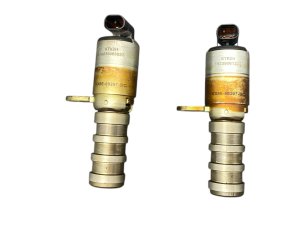
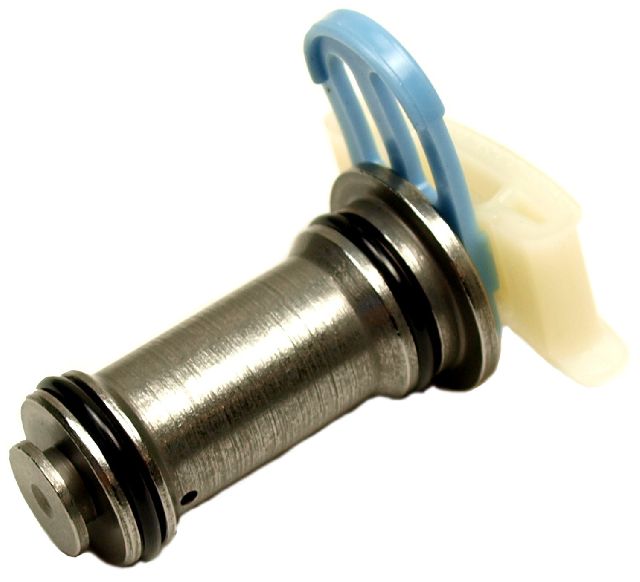
Est. part cost: $40-$80 - Faulty Bank 2 Intake VCT Solenoid 🔴 High Probability → Shop Engine Variable Valve Timing (VVT) Solenoid Debris in the oil can cause the solenoid's internal passages to clog or stick, a known issue acknowledged by Ford in TSB SSM 50067. This is the most common failure point besides oil issues.
How to confirm: A DIY method is to swap the Bank 2 intake solenoid (radiator side) with the Bank 1 intake solenoid (firewall side). If the code changes to P0016 (Bank 1 equivalent), the solenoid is bad. A professional can use a scan tool to command the solenoid on and off to check for response, as recommended in TSB SSM 50067's pinpoint test HK12.
Typical fix: Replace the Bank 2 intake VCT solenoid. 🎬 Watch: See how a failed VCT solenoid behaves and causes issues. This requires removing the valve cover. Many mechanics recommend replacing all four VCT solenoids (intake and exhaust for both banks) at the same time.
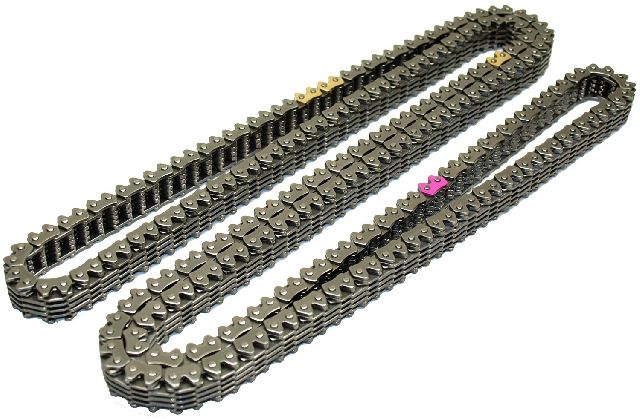
Est. part cost: $40-$90 - Stretched Timing Chain 🟡 Medium Probability → Shop Engine Timing Chain Often a secondary failure caused by a leaking internal water pump contaminating the oil, which compromises lubrication and accelerates chain wear. High idle hours and stop-and-go driving also contribute to chain wear.
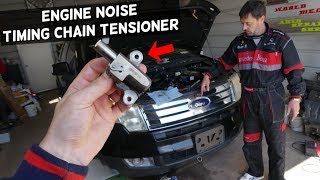
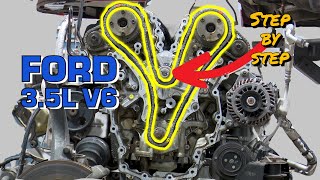
How to confirm: A key symptom is a rattling noise from the front of the engine for 2-3 seconds on a cold start. 🎬 Listen: Hear the specific rattle of a failing timing chain tensioner. Diagnosis requires checking camshaft deviation with a scan tool (a YouTuber demonstrated seeing deviations of +/- 50 degrees on a bad engine versus near zero on a good one) or physically inspecting the chain and tensioners, which is labor-intensive.
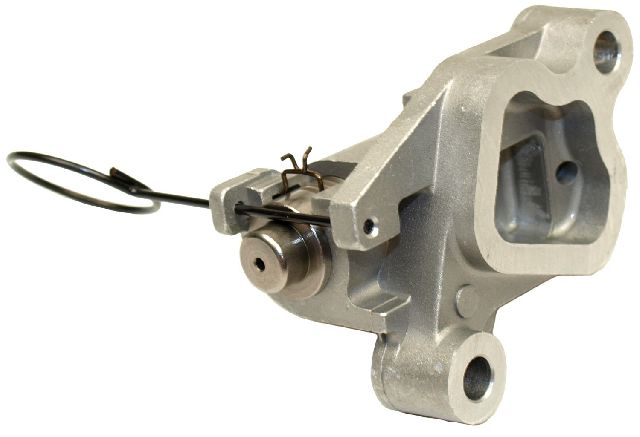
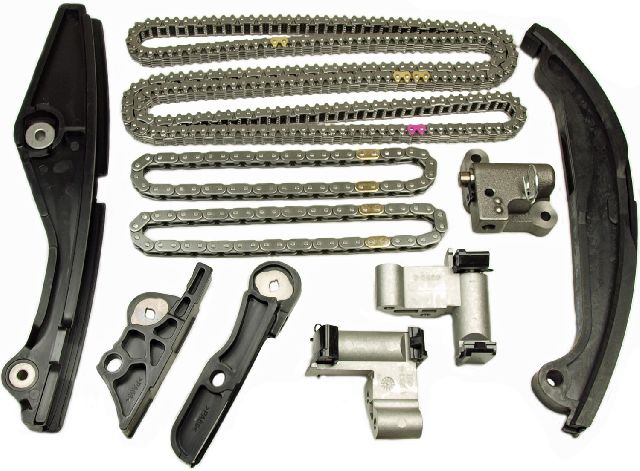
Typical fix: Replace the primary and secondary timing chains, all guides, and tensioners. The internal water pump and cam phasers should always be replaced at the same time to prevent repeat failures.
Est. part cost: $400-$800
Rare But Worth Checking
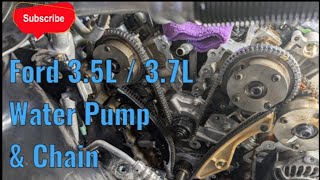
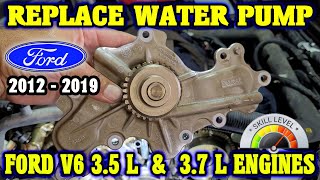
- Failing Internal Water Pump: → Shop Engine Water Pump While the pump failure itself doesn't directly cause the code, it's the root cause of oil contamination that leads to VCT and timing chain failures. If changing oil and solenoids doesn't fix the code, and the oil appears milky, suspect the water pump is leaking coolant into the oil. This is a critical failure point for the Ford 3.5L/3.7L Cyclone engine family.
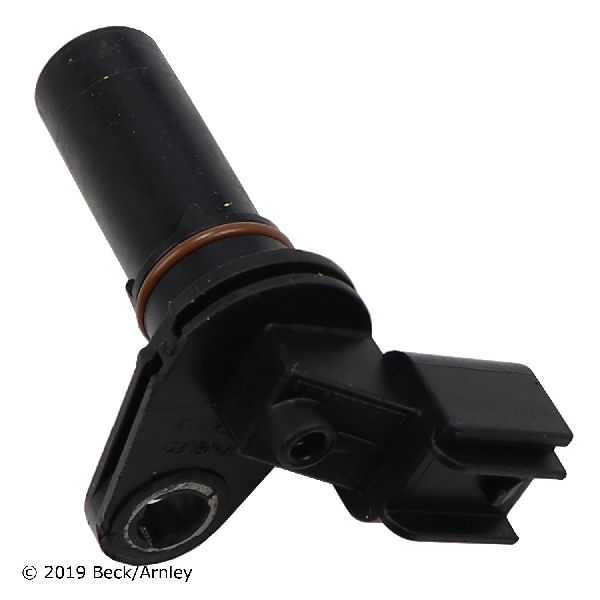
- Faulty Camshaft Position Sensor: → Shop Engine Camshaft Position Sensor The sensor that reads the camshaft's position can fail, but it's much less common than a VCT solenoid or timing chain issue. It's usually diagnosed after other causes are ruled out. A swap with the sensor from the other bank can help confirm failure.
- Failed Camshaft Phaser: → Shop Engine Camshaft The mechanical gear that the VCT solenoid controls can fail internally, getting stuck in one position or rattling on startup. This is a significant mechanical repair similar in scope to a timing chain replacement, and phasers are typically replaced during a full timing job.
Diagnosis Steps
- Check the engine oil level and condition. If low, dirty, or milky, perform an oil and filter change, clear the codes, and see if the problem returns. This is the first and most important step.
- Scan for other DTCs. If codes for both banks (P0016 & P0018) are present, suspect a base timing issue like a stretched chain.
- Listen for a brief rattling noise on cold startup. If present, this strongly suggests a timing chain/tensioner issue.
- Using a capable scan tool, monitor the camshaft and crankshaft position data. Observe the desired vs. actual cam angle for Bank 2. Large, erratic deviations point to a mechanical timing problem.
- Perform a VCT solenoid swap test. Exchange the Bank 2 (radiator side) intake solenoid with the Bank 1 (firewall side) intake solenoid. Clear the codes and drive the vehicle. If the code returns as P0016, the solenoid you moved is faulty and needs replacement.
- If the code remains P0018 after the swap, the issue is not the solenoid. Per TSB SSM 50067, a technician may first try cycling the solenoid 10 times with a scan tool to attempt to clear debris before replacement.
- Inspect the wiring and connectors for the Bank 2 intake VCT solenoid and camshaft position sensor for damage or corrosion.
- If all electrical components and wiring are good, the next step is mechanical inspection of the timing chain, guides, tensioners, and phasers. This is an advanced job and often confirms a stretched chain or failed guide.
Parts You'll Likely Need
- Engine Variable Valve Timing (VVT) Solenoid (Bank 2 Intake)
(OEM #AT4Z-6M280-B)— This is the most common point of failure, per Ford TSB SSM 50067. It gets stuck due to oil debris, preventing correct camshaft timing adjustment. According to TSB 16-0038, this specific part number is for the Bank 2 (left side) intake solenoid.
Trusted brands: Motorcraft, Dorman, SKP
OEM price range: $60-$90
Aftermarket price range: $25-$50 - Timing Chain Kit
(OEM #AT4Z-6268-A (Primary Chain for 2013-19))— A stretched timing chain is the most common major mechanical cause of this code on the 3.7L engine. Replacement should include the chain, guides, and tensioners.
Trusted brands: Motorcraft, Cloyes
OEM price range: $300-$500
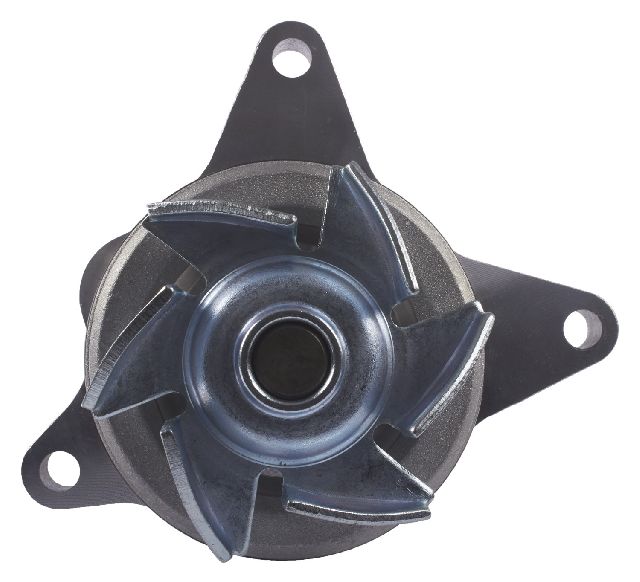
Aftermarket price range: $150-$300 - Engine Water Pump
(OEM #AT4Z-8501-B (Example, verify by VIN))— Because the water pump is internal and driven by the timing chain, it is critical to replace it during any timing chain service to prevent coolant contamination and repeat failure.
Trusted brands: Motorcraft, GMB, Aisin
OEM price range: $150-$250
Aftermarket price range: $70-$150 - Camshaft Position Sensor
(OEM #DU-90)— A less common failure, but possible. This sensor provides the camshaft position reading to the PCM. If it sends an incorrect signal, it can trigger a correlation code.
Related Codes That Often Appear With This One
- P0016 — If P0016 (Bank 1 correlation error) appears with P0018, it strongly points to a base timing issue affecting the entire engine, such as a stretched timing chain, low oil pressure from a failing pump, or incorrect timing procedure during a previous repair.
- P0017 — This is the exhaust camshaft correlation error for Bank 2. Seeing it with P0018 suggests a problem affecting the entire bank, like a broken timing chain guide on that side or a phaser issue.
- P0021 — This code for 'Intake Camshaft Position Timing - Over-Advanced (Bank 2)' often appears with P0018 because the root cause, like a stuck VCT solenoid or phaser, can cause the cam to be both misaligned (P0018) and stuck in an advanced position (P0021).
- P0019 — This is the exhaust camshaft correlation error for Bank 1. Seeing P0016, P0017, P0018, and P0019 all together is a very strong indicator of a major timing chain failure or incorrect installation.
Technical Service Bulletins (TSBs) & Recalls
- SSM 50067: Notes that various VCT codes, including P0018, may be caused by small debris causing the VCT solenoid to stick, and diagnosis should be performed before component replacement.
Platform-Specific Known Issues
- TSB SSM 50067: The Sticking Solenoid Fix: Ford issued TSB SSM 50067 for a wide range of 2015-2021 vehicles, including the Explorer, that may exhibit P0018 and other VCT codes. The bulletin states the cause may be small debris causing the VCT solenoid to stick. Before replacement, Ford advises technicians to use a scan tool to cycle the affected solenoid 10 times to attempt to clear the debris.
- The Internal Water Pump: A Ticking Time Bomb: → Shop Engine Water Pump A well-known fatal flaw of the 3.5L/3.7L Cyclone engine family is the internal, timing-chain-driven water pump. When its bearing or seal fails, it leaks coolant directly into the crankcase. This contaminates the oil, destroying its lubricating properties and quickly leading to stretched timing chains and failed VCT components, which directly trigger code P0018. Any timing chain job on this engine MUST include a water pump replacement.
Mechanic-Grade Diagnostic Values
- VCT Solenoid Resistance — expected: 5 - 14 Ohms. Failure: A reading outside this range, or an open/short circuit, indicates a failed solenoid coil.
- Camshaft Position (CMP) Sensor Resistance (2-wire VR type) — expected: 586 - 2,033 Ohms. Failure: Resistance outside this range suggests the sensor's internal coil is faulty.
- VCT Solenoid Connector Voltage (Key On, Engine Off) — expected: Greater than 10.5 Volts on the power feed pin. Failure: Low voltage points to a problem in the power supply circuit to the solenoid, not the solenoid itself.
- Scan Tool PID: VCT_ADV_ERR (VCT Advance Error) — expected: Should hover around 0° at idle with the engine in closed loop.. Failure: Excessive variation or a consistent deviation of more than +/- 5 degrees while the fault is occurring points to a VCT system problem.
Hidden / Shadow Codes Worth Checking
- Mode 6, Test ID $82: This is Ford's on-board diagnostic monitor for VCT position. It tracks statistical data and can reveal cam timing performance errors before a full-blown DTC like P0018 is triggered. (see via A scan tool capable of reading Mode 6 data, such as the Ford IDS (Integrated Diagnostic System) or advanced consumer tools like FORScan.)
Scan Tool Commands That Help
- Ford IDS or FORScan: VCT Solenoid Duty Cycle Command / On-Off Test — As per TSB SSM 50067, this command cycles the solenoid rapidly (e.g., 10 times) to dislodge small debris that may be causing it to stick. It's a diagnostic step to try before replacing the solenoid.
- Ford IDS or FORScan: Datalogger with VCT PIDs (VCT_ADV_ERR, VCT_DUTY_CYCLE) — Use this during a test drive to capture what the VCT system is doing when the symptom (like rough idle or hesitation) occurs. Comparing desired vs. actual cam angle and the duty cycle percentage can pinpoint whether the issue is hydraulic, mechanical, or electrical.
Wiring & Ground Locations
- G103 / G104 — Typically located on the cowl or fender aprons in the engine compartment. G103 is often near the brake booster, while G104 may be near the battery.. These are critical chassis and module grounds. Corrosion or looseness here can affect the Powertrain Control Module (PCM) and its reference voltage, potentially causing incorrect sensor readings and false codes.
- G105 — Located at the front of the engine compartment, often near the radiator or cooling fans.. This ground serves components at the front of the engine. A poor connection could introduce electrical noise into the circuits for the nearby Bank 2 VCT solenoid and cam sensor.
- VCT Solenoid Connector — On the front of the Bank 2 (radiator side) valve cover, connecting to the top of the VCT solenoid.. This 2-pin connector is where voltage and the control signal are delivered. It should be checked for corrosion, damage, or a loose fit. One pin is for 12V power, the other is the ground-side control from the PCM.
Real Owner Repair Stories
- Ford F150 Forum user (2013 Ford F-150 (3.5L EcoBoost, same engine family)) — Engine rattle on startup and when coming to a stop.
❌ Tried (didn't work) A full timing chain and water pump replacement was performed by a Ford dealer. The rattle persisted and new codes appeared.
✅ What actually fixed it The P0018 code appeared *after* the major timing job. The user was advised to return to the dealer immediately, as this strongly indicates an error in the installation of the new timing components, not a failure of the new parts themselves. - Reddit user on r/AskMechanics (2013 Ford Edge (3.5L V6, same engine family)) — Subtle lack of power and a check engine light immediately after a major repair.
❌ Tried (didn't work) N/A - diagnosis in progress.
✅ What actually fixed it The user performed a DIY water pump and timing chain replacement and immediately received a P0018 code. Even after re-checking with cam lock tools which seated correctly, the code persisted. This highlights that the timing procedure is extremely sensitive and can be set incorrectly even when it appears correct, leading directly to this code.
When the Usual Fixes Don't Work
- While a faulty VCT solenoid or stretched timing chain are the most common causes, multiple owner reports exist where a P0018 code appeared for the first time immediately following a complete timing chain and water pump replacement. This indicates that an error during the complex timing alignment procedure can itself be the direct cause of the fault, even with all new parts. This possibility should be considered before suspecting the new components are defective.
OEM Part Supersession History
AT4Z-6M280-A→AT4Z-6M280-B (for Bank 2 Intake)— Ford uses different solenoids for different positions. TSB 16-0038 specifies that for a P0018 code (Bank 2 Intake), part AT4Z-6M280-B should be used.
Heads up: The solenoids for intake/exhaust and bank 1/bank 2 may be physically identical but have different internal calibration. Using the wrong part can prevent the code from being resolved. Part 8L3Z-6M280-B is for V8 engines and should not be used.
Model Year Variations Within This Range
- 2015-2019: Throughout the life of the 3.5L/3.7L Cyclone engine family, Ford used different timing components, including variations in primary chain style (roller vs. inverted-tooth) and cam phaser designs. It is critical to use the vehicle's VIN to source the correct timing parts for a specific engine build date.
Helpful Videos
Used OEM Parts in Stock
New Aftermarket Parts Available

The information in this article is provided for general reference and educational purposes only. Vehicle specifications, procedures, and part compatibility can vary by production date, trim level, and region. Always consult your vehicle's factory service manual and verify part numbers before purchasing or performing repairs. Safety-critical components such as airbags, seat belts, and braking systems should be installed by a qualified professional.
- Ford EXPLORER POLICE INTERCEPT:
- 🧭 Diagnostic Flowchart
- 🎬 Helpful Videos
- 🛍️ Shop This Part
- What's Unique About the 2015-2019 Ford EXPLORER POLICE INTERCEPT
- Symptoms You May Notice
- Most Likely Causes
- Rare But Worth Checking
- Diagnosis Steps
- Parts You'll Likely Need
- Related Codes That Often Appear With This One
- Technical Service Bulletins (TSBs) & Recalls
- Platform-Specific Known Issues
- Mechanic-Grade Diagnostic Values
- Hidden / Shadow Codes Worth Checking
- Scan Tool Commands That Help
- Wiring & Ground Locations
- Real Owner Repair Stories
- When the Usual Fixes Don't Work
- OEM Part Supersession History
- Model Year Variations Within This Range
- 🎟️ Get 5% Off