

P0018 on 2015-2019 Ford Flex: Crank/Cam Correlation Causes and Fixes
P0018 on a 2015-2019 Ford Flex indicates a timing mismatch between the crankshaft and the Bank 2 intake camshaft. This is often caused by a faulty VCT (Variable Camshaft Timing) solenoid or a stretched timing chain. Replacing a solenoid is affordable, but a full timing chain service can exceed $2,000.
- P0018 means the intake camshaft on Bank 2 (firewall side) is out of time with the crankshaft.
- The most likely causes are a bad VCT solenoid or a stretched timing chain.
- Always check your engine oil level and condition first; low or dirty oil is a common contributor.
- Replacing a VCT solenoid is a manageable DIY job for some, but a timing chain replacement is a complex repair best left to professionals.
- Ignoring this code can lead to severe engine damage, so prompt diagnosis is crucial.
What's Unique About the 2015-2019 Ford FLEX
The 3.5L engine family used in the Ford Flex is known for specific issues that lead to timing correlation codes like P0018. Multiple Ford Technical Service Bulletins (TSBs) point to the Variable Camshaft Timing (VCT) solenoids sticking due to small debris in the engine oil. [SSM 47170, SSM 48423, SSM 50067] TSB SSM 47170 specifically advises technicians to cycle the affected VCT solenoid 10 times with a scan tool to try and clear debris before replacing it. Additionally, these engines, particularly the EcoBoost variant, are known for timing chain stretch over time, which directly causes a correlation fault. Factors like infrequent oil changes, oil contamination from the internal water pump, and extended stop-and-go driving can accelerate this wear.
Diagnostic Flowchart
Tap your situation to follow the diagnostic path that matches what you're seeing on this vehicle.
Symptoms You May Notice
- Check Engine Light is on
- Rough or erratic idle
- Reduced engine power and poor acceleration
- Engine stalling, especially when coming to a stop
- Increased fuel consumption
- Rattling noise from the engine, particularly on a cold start, sometimes described as 'marbles in a can' for EcoBoost models with phaser issues.
- Replacing the crankshaft position sensor. While possible, a failure of this sensor is less common than VCT solenoid or timing chain issues and would likely present with other codes or a no-start condition.
- Replacing only the camshaft position sensor without checking the VCT solenoid or timing chain. The sensor is often just reporting the problem, not the cause of it.
Most Likely Causes
- Sticking or Failed VCT Solenoid (Bank 2 Intake) 🔴 High Probability → Shop Engine Variable Valve Timing (VVT) Solenoid Multiple Ford TSBs (SSM 47170, SSM 48423, SSM 50067) identify sticking VCT solenoids due to oil debris as a common cause. The solenoids control oil flow to the cam phasers, and even small particles can cause them to jam.
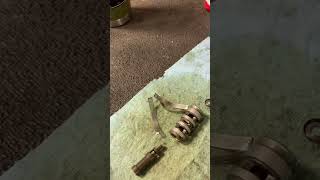
How to confirm: A technician can command the solenoid on and off with a diagnostic scan tool (like Ford's IDS or FORScan) while monitoring camshaft timing data. A lack of response or slow response indicates a faulty solenoid. 🎬 Watch: See how a failed VCT solenoid behaves on the 3.5L engine. Another method is to apply 12V directly to the solenoid to listen for a click. Swapping the suspect solenoid with an adjacent one (e.g., the exhaust solenoid on the same bank) and seeing if the code changes (e.g., to P0019) is also a valid diagnostic step.
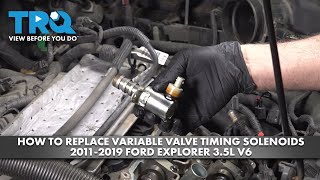
Typical fix: Replace the Bank 2 intake VCT solenoid. Since accessing the rear bank (Bank 2) requires removing the upper intake manifold, it is highly recommended to replace all four VCT solenoids at the same time to avoid future repeat labor. 🎬 Watch: Step-by-step guide to replacing your VVT solenoids.
Est. part cost: $25-$60 per solenoid - Stretched Timing Chain 🔴 High Probability → Shop Engine Timing Chain The 3.5L engine platform is known for timing chain stretch, especially with extended oil change intervals or oil contamination. This creates slack, which alters the physical timing relationship between the crank and cams, directly triggering a correlation code.
How to confirm: This is a labor-intensive diagnosis. A key indicator is a brief rattle on cold starts. Confirmation requires removing the timing cover to physically inspect the chain for slack and check the tensioner extension. A mechanic may also use an oscilloscope to compare cam and crank sensor patterns.
Typical fix: Replace the timing chain, tensioners, guides, and often the water pump and cam phasers as a complete kit. This is a major repair with labor costs often exceeding $2000.
Est. part cost: $400-$800 for a full kit - Low or Dirty Engine Oil 🟡 Medium Probability The VCT system is entirely dependent on hydraulic pressure from engine oil. Low or contaminated oil can starve the VCT phasers and solenoids, preventing them from adjusting cam timing correctly and causing them to stick.
How to confirm: Check the oil level on the dipstick and inspect its condition. If the oil is low, overdue for a change, or appears sludgy, this is a likely contributor. An oil change has been reported by some owners to temporarily resolve the issue, confirming oil quality as a factor.
Typical fix: Perform an oil and filter change using the correct viscosity oil specified by Ford (typically 5W-20 or 5W-30) and a high-quality filter like Motorcraft.
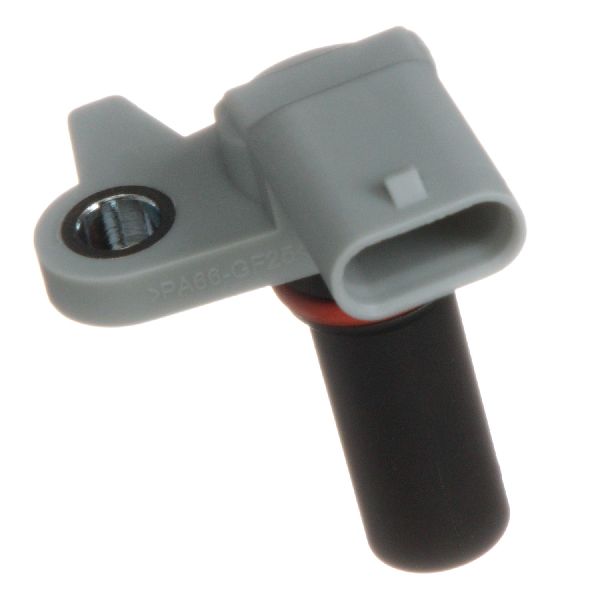
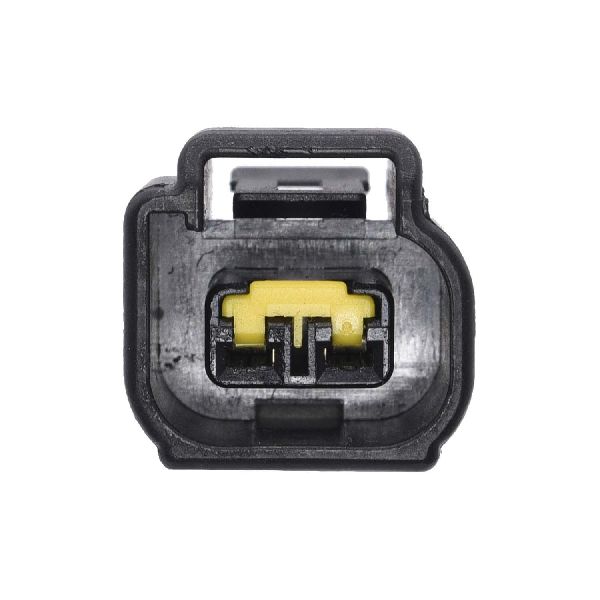
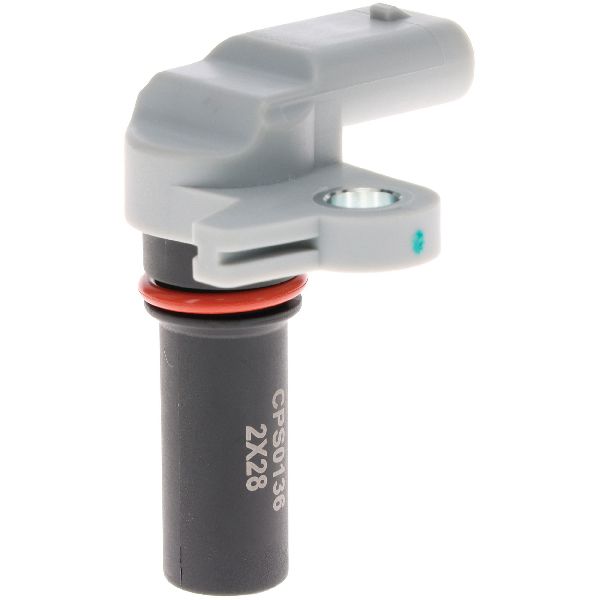
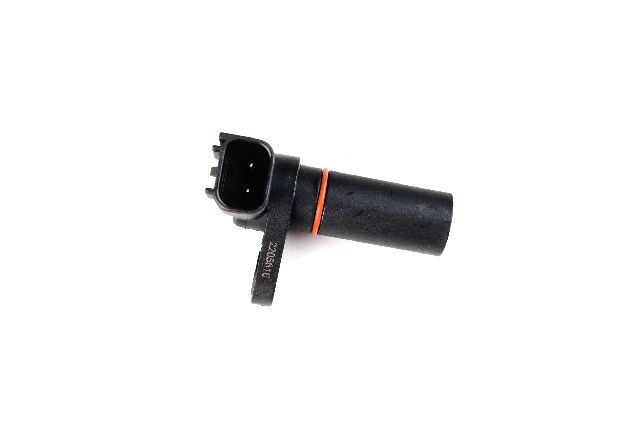
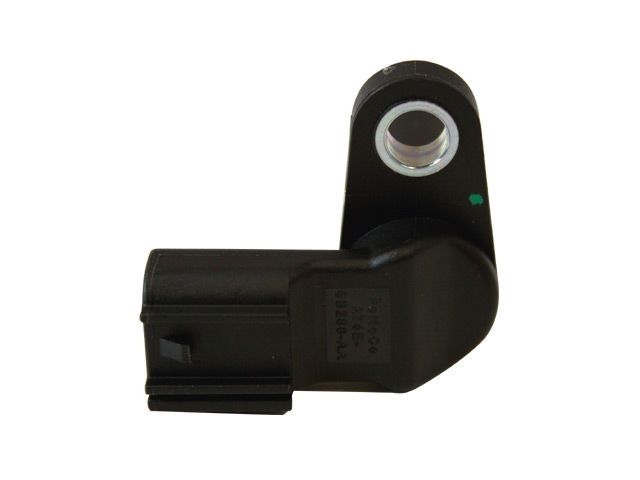
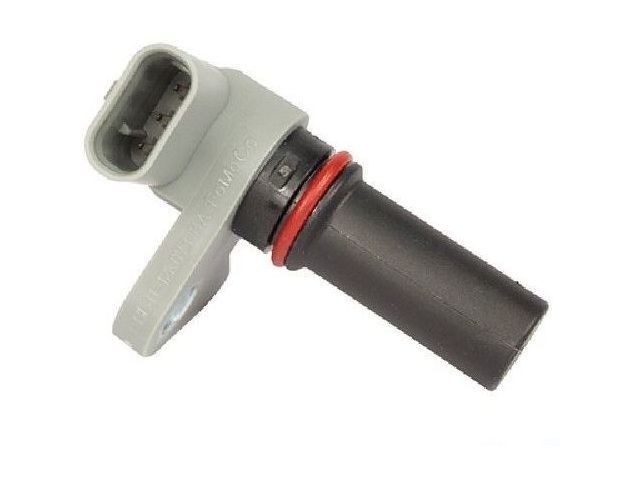
Est. part cost: $50-$100 - Failed Camshaft Position Sensor (Bank 2 Intake) ⚪ Low Probability → Shop Engine Camshaft Position Sensor
How to confirm: The sensor's signal can be monitored with an oscilloscope. A simple diagnostic step is to swap the sensor with the one from the exhaust cam or the other bank and see if the code changes (e.g., to P0019 or P0016). If the code follows the sensor, the sensor is bad.
Typical fix: Replace the Bank 2 intake camshaft position sensor. This is often misdiagnosed as the primary fault when it is simply reporting the timing error.
Est. part cost: $20-$50
Rare But Worth Checking
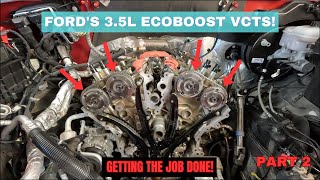
- Failed Camshaft Phaser: → Shop Engine Camshaft The phaser is the actuator at the end of the camshaft. While often replaced during a timing chain job, a phaser can fail on its own, getting stuck in one position or having its internal locking pin fail, which is common on the 3.5L EcoBoost. 🎬 Watch: A detailed look at replacing VCT units and phasers.
- Damaged Crankshaft Reluctor Wheel: → Shop Engine Crankshaft The reluctor wheel (or tone ring) is what the crankshaft position sensor reads. If it's damaged, has shifted, or has debris on it, it will send an incorrect signal, causing correlation codes. This is rare but possible.
- Failing Internal Water Pump: → Shop Engine Water Pump The 3.5L Duratec/Cyclone engine features a timing-chain-driven water pump located inside the engine. When the pump's seals fail, it leaks coolant directly into the engine oil. This contamination degrades the oil's lubricating properties, leading to accelerated wear on the timing chain and VCT components, which can manifest as a P0018 code.
Diagnosis Steps
- Check Engine Oil Level and Condition: Ensure the oil is full and clean. If it's low or dirty, an oil change with the manufacturer-specified oil (e.g., Motorcraft 5W-30) and a Motorcraft filter is the first and cheapest step.
- Scan for Other Codes: Use an OBD-II scanner to check for any other related codes that could provide more clues (e.g., P0016, P0017, P0021).
- Inspect Sensor Wiring: Visually inspect the wiring and connectors for the camshaft position sensor and VCT solenoid on Bank 2 for any damage, corrosion, or loose connections.
- Monitor Live Data: Use an advanced scan tool to monitor PIDs for desired vs. actual camshaft position for the Bank 2 intake cam (VCT_INT_ADV2 vs VCT_INT_CMD2) and the error (VCT_INT_ERR2). A large, persistent error value at idle points to a mechanical or hydraulic issue.
- Test the VCT Solenoid: Per TSB SSM 47170, use a scan tool to command the Bank 2 intake VCT solenoid on and off 10 times to attempt to clear debris. If the issue persists, listen for a click and watch for a change in engine idle and cam timing data. If it doesn't respond, it's likely faulty.
- Test the Camshaft Position Sensor: If the solenoid tests good, the sensor itself can be tested by swapping it with an adjacent one (like the exhaust sensor on Bank 2) to see if the code follows the sensor.
- Mechanical Timing Inspection: If all electronic components check out, the final step is to perform a physical inspection of the timing chain, guides, and tensioners. This requires significant engine disassembly and is best left to a professional.
Parts You'll Likely Need
- Variable Camshaft Timing (VCT) Solenoid
(OEM #AT4Z-6M280-B)— This is the most common point of failure according to Ford TSBs, often getting stuck due to oil contamination. This part is used on a wide variety of Ford/Lincoln vehicles with the 3.5L/3.7L engine.
Trusted brands: Motorcraft, Dorman
OEM price range: $40-$70
Aftermarket price range: $25-$50 - Timing Chain Kit
(OEM #BL3Z-6D256-C (Common EcoBoost Kit), AT4Z-6268-A (Primary Chain))— A stretched timing chain is the second most common cause, requiring a full replacement of the chain, guides, and tensioners to resolve the correlation fault.
Related Codes That Often Appear With This One
- P0016 — This is the same correlation error but for Bank 1. Seeing both P0016 and P0018 together strongly suggests a base timing issue affecting the whole engine, like a stretched timing chain, low oil pressure, or a jumped tooth.
- P0017 — This code is for the Bank 2 exhaust camshaft ('Sensor B'). Seeing it with P0018 points to a problem affecting all of Bank 2, such as a timing chain guide failure on that side or an oil delivery issue to that cylinder head.
- P0021 — This code indicates 'Intake Camshaft Position Timing - Over-Advanced (Bank 2)'. It can appear alongside P0018 when the cam phaser is stuck in an advanced position or the VCT solenoid has failed in a way that causes over-advancement.
Technical Service Bulletins (TSBs) & Recalls
- SSM 47170: Advises that DTCs like P0018 may be due to debris causing a VCT solenoid to stick. Recommends using a scan tool to cycle the solenoid 10 times to attempt to clear it before replacing the part.
- SSM 48423: Similar to 47170, points to sticking VCT solenoids from debris as a potential cause for a range of camshaft correlation DTCs.
- SSM 50067: A later TSB that reiterates the advice from 47170 and 48423, indicating this is a persistent issue across multiple model years.
- TSB-16-0093: Notes that low-mileage vehicles can exhibit these codes, suggesting potential manufacturing debris or early component issues.
- SSM 54366: A very recent TSB that continues to group P0018 with other VCT-related codes, directing technicians to standard diagnostic procedures.
Platform-Specific Known Issues
- Ford has issued multiple Technical Service Bulletins (TSBs) related to this code and its counterparts (P0016, P0017, etc.) on the 3.5L engine. TSBs SSM 47170, SSM 48423, and SSM 50067 specifically mention that sticking VCT solenoids can cause these codes and recommend a diagnostic procedure (Pinpoint Test HK11) to cycle the solenoid to clear debris before replacement.
- For the 3.5L EcoBoost variant, Customer Satisfaction Program 21B10 was issued for some F-150s to reprogram the PCM to help mitigate noise from cam phasers, a related timing component. While not directly for the Flex, it highlights the sensitivity of the VCT system on this engine family.
Mechanic-Grade Diagnostic Values
- VCT Solenoid Resistance — expected: 5 to 15 Ohms. Failure: A reading outside of this range indicates a faulty solenoid.
- Camshaft Position Sensor Resistance (3-pin Hall-effect type) — expected: Greater than 10k Ohms between signal and ground pins.. Failure: Resistance significantly lower than 10k Ohms may indicate a short.
- VCT Advance Error PID (e.g., VCT_INT_ERR2) — expected: Should hover around 0° at idle and during steady-state driving.. Failure: A persistent deviation of more than +/- 5° for an excessive amount of time indicates a VCT system problem.
Hidden / Shadow Codes Worth Checking
- P052C: 'Cold Start Intake Camshaft Position Timing Over-Advanced (Bank 2)'. This code can accompany P0018 and specifically points to a mechanical timing issue that is present immediately on startup, before the VCT system is commanded by the PCM. It strongly suggests a base timing problem (e.g., jumped tooth, incorrect installation) rather than a hydraulic/solenoid issue. (see via Advanced scan tools like Ford's IDS or high-end aftermarket scanners.)
Scan Tool Commands That Help
- Ford IDS (Integrated Diagnostic System): VCT Solenoid Duty Cycle Command (e.g., VCT_INT_CMD2) — This bidirectional control allows a technician to manually command the VCT solenoid to advance or retard cam timing while watching the actual position PID (VCT_INT_ADV2). A lack of response confirms a stuck solenoid, clogged oil passage, or failed phaser. The TSBs recommend cycling the solenoid to dislodge debris.
- Ford IDS (Integrated Diagnostic System): Datalogger with Histogram Mode — When diagnosing intermittent VCT issues, a technician can record the VCT error PIDs while driving. The histogram function within IDS can then be used to visually analyze the data and spot anomalies or excessive deviations that might not be obvious in real-time.
- Ford IDS (Integrated Diagnostic System): Mode 6, Test ID $81 — Accessing Mode 6 data can provide statistical information on VCT system performance over time, which can help in diagnosing intermittent issues that don't set a hard fault immediately.
Wiring & Ground Locations
- PCM Connector C1551B (3.5L Naturally Aspirated) — The Powertrain Control Module (PCM) is typically located in the engine bay, near the firewall or battery.. The Bank 2 Intake Camshaft Position Sensor (CMP21) signals are sent to specific pins on this connector. For a 2016 Explorer with the 3.5L (similar wiring), the CMP21 signal is on Pin 68 (White/Red wire) and the signal return is on Pin 69 (White/Blue wire). Testing for continuity and voltage at these pins can rule out wiring issues between the sensor and the PCM.
- G104 (or similar engine block ground) — There are multiple ground points on the engine block and chassis. A common engine ground point (G104) is located on the left side of the engine compartment.. A poor engine ground can cause erratic behavior from various sensors, including the camshaft and crankshaft position sensors, leading to false correlation codes. Verifying that main engine grounds are clean and tight is a crucial step in diagnosing electrical faults.
Real Owner Repair Stories
- Ford F150 Forum (2018 Ford F-150 3.5L EcoBoost, 48k miles) — Cold start rattle, tapping at idle. After phaser replacement, rough idle and codes P0018 and P052C.
❌ Tried (didn't work) Replaced all 4 cam phasers to fix a rattle (the code appeared AFTER this repair).
✅ What actually fixed it The user reported that the timing marks were perfectly aligned, but the camshaft alignment tool for Bank 1 did not fit perfectly while the Bank 2 tool was locked in. This strongly implies a base mechanical timing error was made during the cam phaser installation, causing the P0018 and P052C codes immediately after the repair. The final fix would be to re-time the engine correctly. - Reddit r/AskMechanics (Ford Taurus 3.5L V6 (Year not specified, but same engine family)) — Code P0018 appeared after a major repair.
❌ Tried (didn't work) Replaced water pump and timing chains., Changed oil twice since the repair.
✅ What actually fixed it The issue was unresolved in the thread, but the user was advised by a Ford technician to take the vehicle to a dealer to have the codes scanned, deleted, and have the system reset with a dealer-level tool. This suggests that after a major timing job, a PCM reset or relearn procedure may be necessary, which might not be possible with standard OBD-II scanners.
OEM Part Supersession History
AT4E-6B297-JD (Engineering Number)→AT4Z-6M280-B (Service Part Number)— This is a common engineering-to-service part number transition. The AT4Z-6M280-B is the official replacement part for a wide range of Ford/Lincoln vehicles with the 3.3L, 3.5L, and 3.7L Cyclone engines from roughly 2011 through 2019 and beyond.
Model Year Variations Within This Range
- 2018-2019: For the 2018 model year, the base 3.5L naturally aspirated V6 in some Ford platforms (like the F-150) was replaced by a second-generation 3.3L V6, which featured both port and direct injection. While the Flex retained the 3.5L, it's important to verify the specific engine, as parts and diagnostic procedures for the newer 3.3L could differ slightly.
Helpful Videos
We Have This Part in Stock

The information in this article is provided for general reference and educational purposes only. Vehicle specifications, procedures, and part compatibility can vary by production date, trim level, and region. Always consult your vehicle's factory service manual and verify part numbers before purchasing or performing repairs. Safety-critical components such as airbags, seat belts, and braking systems should be installed by a qualified professional.
- Ford FLEX:
- 🧭 Diagnostic Flowchart
- 🎬 Helpful Videos
- 🛍️ Shop This Part
- What's Unique About the 2015-2019 Ford FLEX
- Symptoms You May Notice
- Most Likely Causes
- Rare But Worth Checking
- Diagnosis Steps
- Parts You'll Likely Need
- Related Codes That Often Appear With This One
- Technical Service Bulletins (TSBs) & Recalls
- Platform-Specific Known Issues
- Mechanic-Grade Diagnostic Values
- Hidden / Shadow Codes Worth Checking
- Scan Tool Commands That Help
- Wiring & Ground Locations
- Real Owner Repair Stories
- OEM Part Supersession History
- Model Year Variations Within This Range
- 🎟️ Get 5% Off