

P0018 on 2015-2018 Ford Focus: Why It's The Wrong Code & How to Fix The Real Problem
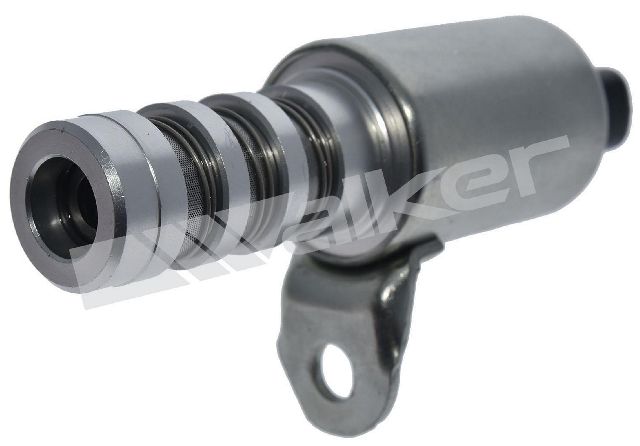
P0018 is a 'Bank 2' code, but your Ford Focus has an inline engine with only one bank. Your scanner is likely misinterpreting the fault; the actual code is probably P0016 or P0017. This is almost always caused by a sticking Variable Camshaft Timing (VCT) solenoid due to dirty or low oil. An oil change and two new VCT solenoids (Part No. CM5Z-6M280-C or the updated CM5Z-6M280-G) usually fixes the issue for $50-$120.
- Your Ford Focus does not have a 'Bank 2', so P0018 is the wrong code. The real code is likely P0016 or P0017.
- The most probable cause is a sticking VCT solenoid, a known issue on this vehicle.
- Always start diagnosis with the simplest and cheapest step: an oil and filter change using Ford-specified 5W-20 oil.
- Replacing both VCT solenoids is a common, relatively easy, and affordable DIY repair that often solves the problem.
- Do not replace the cam/crank sensors or timing chain unless the VCT solenoids have been ruled out as the cause.
What's Unique About the 2015-2018 Ford FOCUS
The confusion arises because Ford issues Technical Service Bulletins (TSBs) that cover many vehicles, including those with V6 and V8 engines that have a Bank 2. The TSBs you see for P0018 also list the Bank 1 codes (P0016, P0017) which *do* apply to the Focus. The core issue on this platform, as noted in multiple Ford TSBs, is that the VCT solenoids are prone to sticking from small debris in the engine oil, leading to these timing correlation faults. TSB SSM 48423 even suggests a diagnostic step where a technician should cycle the affected VCT solenoid 10 times with a scan tool to try and clear the debris before replacing it.
Diagnostic Flowchart
Tap your situation to follow the diagnostic path that matches what you're seeing on this vehicle.
Symptoms You May Notice
- Check Engine Light is on
- Rough or unstable idle
- Engine hesitates or lacks power during acceleration
- Engine may stall when coming to a stop
- Decreased fuel economy
- Rattling noise from the engine bay 🎬 Watch: Common symptoms of a failing VCT solenoid
- Difficulty starting the engine
- Replacing the camshaft or crankshaft position sensors before testing the VCT solenoids. The solenoids are a far more common failure point for this issue.
- Performing a full timing chain replacement before confirming the VCT solenoids are functioning correctly.
- Assuming the P0018 code is legitimate and searching for a 'Bank 2' that doesn't exist on this engine.
Most Likely Causes
- Sticking or Failed VCT Solenoids 🔴 High Probability → Shop Engine Variable Valve Timing (VVT) Solenoid Multiple Ford TSBs (SSM 48423, SSM 50067, SSM 47170) state this is a common issue caused by small debris in the oil clogging the solenoid's internal passages. Forum users on Reddit and dedicated Ford forums frequently confirm that replacing the VCT solenoids is the definitive fix for P0016/P0017 codes after an oil change fails to resolve the issue.
How to confirm: After confirming the actual code is P0016 or P0017, swap the intake and exhaust VCT solenoids. They are identical and interchangeable. Clear the codes and drive. If the code changes from P0016 to P0017 (or vice-versa), you have confirmed a bad solenoid. This is a widely accepted diagnostic technique in owner forums.
Typical fix: Replace both the intake and exhaust VCT solenoids. It is recommended to replace them as a pair. An oil and filter change should be performed at the same time.
Est. part cost: $50-$120 - Low, Dirty, or Incorrect Viscosity Engine Oil 🔴 High Probability The VCT system is hydraulic and highly sensitive to oil pressure and cleanliness. Delayed oil changes lead to sludge and debris that directly cause VCT solenoid failure. Many owner experiences on forums begin with 'I was due for an oil change' or 'the oil level was low'.
How to confirm: Check the oil level and condition on the dipstick. If it's low, black, or thick, it needs to be changed. Check service records for the last oil change date and the type of oil used. The 2.0L GDI engine requires 5W-20.
Typical fix: Perform a complete engine oil and filter change using the Ford-specified synthetic blend or full synthetic 5W-20 oil and a quality filter (e.g., Motorcraft).
Est. part cost: $30-$60 - Stretched Timing Chain or Worn Timing Components ⚪ Low Probability → Shop Engine Timing Chain While designed to last the life of the engine, high mileage and/or poor maintenance (infrequent oil changes) can cause the timing chain to stretch or the plastic guides to wear out, creating slack and altering the mechanical timing.
How to confirm: This is a complex diagnosis. If new VCT solenoids and fresh oil do not resolve the code, a physical inspection of the timing components is required. This involves removing the valve cover and possibly the engine side cover. This is typically only suspected at higher mileage (over 100k miles) or with a known history of poor maintenance.
Typical fix: Replace the timing chain, tensioners, and guides. This is a labor-intensive job.
Est. part cost: $200-$400 - Faulty Camshaft or Crankshaft Position Sensor ⚪ Low Probability → Shop Engine Crankshaft Position Sensor
How to confirm: Sensors can be tested with a multimeter for resistance or by observing their signal on an oscilloscope. Sensor failure is much less common than VCT solenoid failure for this specific code. Many forum users report replacing these sensors with no success, only to find the issue was the solenoids.
Typical fix: Replace the specific sensor indicated by the fault code (e.g., the Bank 1 intake camshaft position sensor for P0016).
Est. part cost: $25-$70
Rare But Worth Checking
- Failed Camshaft Phaser: → Shop Engine Camshaft The phaser is the gear that the solenoid controls. It can fail mechanically, getting stuck in one position. This is more complex to replace than the solenoid and is usually the last resort after solenoids and timing components are checked.
- Damaged Reluctor Ring: The tone or reluctor ring on the camshaft or crankshaft that the sensor reads can slip or break, sending an incorrect signal. This is very rare.
- PCM Software Issue: In some cases on other Ford models, a PCM software update has been required to correct overly sensitive VCT diagnostic parameters. TSB 22-2219 for the 2020 Transit mentions this as a fix for a range of VCT codes. While not specific to the Focus, it's a possibility.
Diagnosis Steps
- Confirm the actual trouble code. Use a quality OBD-II scanner like FORScan to re-scan the vehicle. Look for P0016 or P0017, as P0018 is incorrect for this engine.
- Check the engine oil level and condition. If low or dirty, perform an oil and filter change with Ford-spec 5W-20 oil. Clear the codes and see if the problem returns. Many owners report this alone solves the problem.
- If the code returns, locate the two VCT solenoids on the top of the engine, on the valve cover, one for intake and one for exhaust. They are held in by a single 10mm (or sometimes 8mm) bolt each.
- Mark the solenoids and their electrical connectors (e.g., 'I' for intake, 'E' for exhaust). Unplug the connectors and remove the bolts. Gently twist and pull the solenoids out. 🎬 Watch: Step-by-step guide to replacing your Focus VVT solenoids A small amount of oil may spill.
- Swap their positions (install the intake solenoid in the exhaust spot and vice-versa). Reinstall the bolts and reconnect the electrical plugs.
- Clear the codes and drive the vehicle. If the code changes (e.g., from P0016 to P0017), the solenoid you moved is confirmed to be faulty.
- If the code does not change after swapping solenoids, inspect the wiring and connectors to both solenoids and the cam/crank sensors for any damage, corrosion, or oil contamination.
- If all of the above checks out, the issue may be mechanical with the timing chain or phasers, which requires more advanced diagnostics and is best left to a professional.
Parts You'll Likely Need
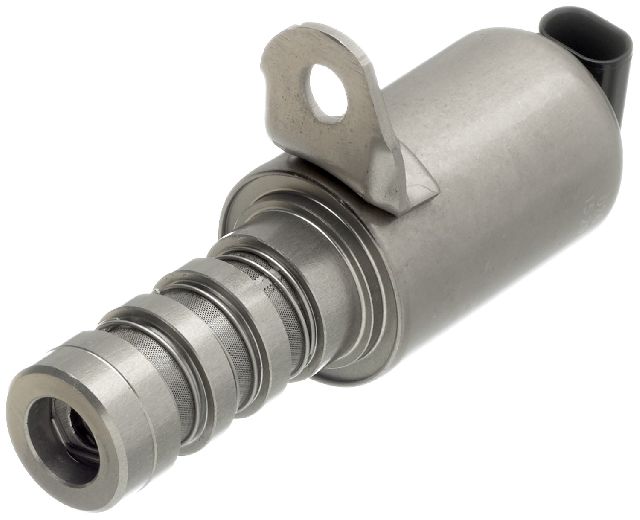
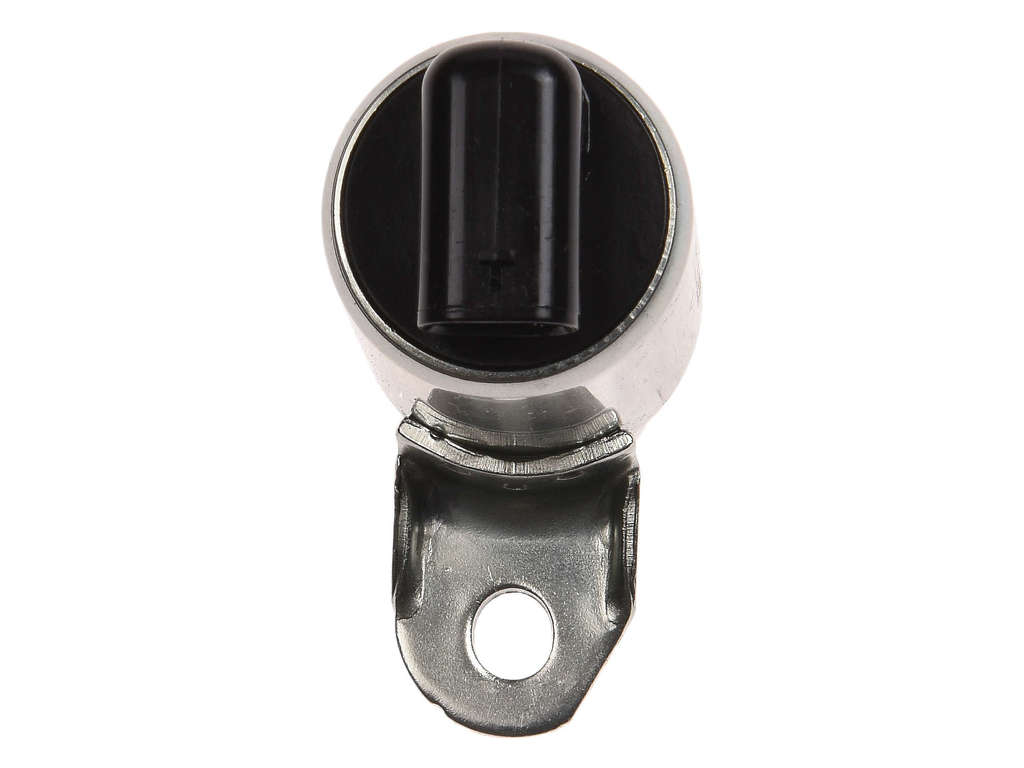
- Engine Variable Valve Timing (VVT) Solenoid
(OEM #CM5Z-6M280-C (Replaces CM5Z-6M280-A), CM5Z-6M280-D, CM5Z-6M280-G (Updated))— This is the most common point of failure for timing correlation codes on this platform, as documented by Ford TSBs. It's best to replace both at the same time.
Trusted brands: Motorcraft (OEM), Dorman, Delphi, Standard Motor Products (SMP)
OEM price range: $40-$70 each
Aftermarket price range: $25-$50 each - Engine Oil and Filter — Clean oil of the correct viscosity (5W-20) is essential for the VCT system to function and is the first step in any repair attempt.
Trusted brands: Motorcraft (Oil: XO-5W20-QFS, Filter: FL-910S), Mobil 1, Castrol, Pennzoil
OEM price range: $35-$60
Aftermarket price range: $30-$50
Related Codes That Often Appear With This One
- P0016 — This is the correct code for a Crank/Intake Cam correlation error on Bank 1, which is likely the actual fault your Focus is experiencing.
- P0017 — This is the correct code for a Crank/Exhaust Cam correlation error on Bank 1. You may have this code instead of, or in addition to, P0016.
- P0011, P0012, P0014, P0015 — These are other VCT-related codes for over-advanced or over-retarded timing that are mentioned in the same TSBs and can be caused by the same sticking solenoid issue.
Technical Service Bulletins (TSBs) & Recalls
- SSM 54366: Mentions DTCs P0011 through P0025 in relation to pinpoint tests for 2015-2021 Ford/Lincoln vehicles.
- SSM 48423: States that DTCs including P0018 may be due to small debris causing the VCT solenoid to stick on 2015-2020 models. Recommends cycling the solenoid 10 times with a scan tool before replacement.
- SSM 50067: Repeats the guidance from SSM 48423 for 2015-2021 vehicles.
- SSM 47170: An earlier bulletin also pointing to debris causing VCT solenoids to stick for this family of codes.
Platform-Specific Known Issues
- The primary issue is the widespread confusion caused by scan
Mechanic-Grade Diagnostic Values
- VCT Solenoid Internal Resistance — expected: 7 to 14 Ohms (specifically 7.8 Ohms was measured on a good unit for a similar Ford engine).. Failure: A reading outside the 7-14 Ohm range, or an open/short circuit, indicates a faulty solenoid coil.
- Camshaft Position (CMP) Sensor Resistance (Inductive Type) — expected: Approximately 453-482 Ohms for a similar Ford engine.. Failure: A reading significantly outside this range, or open/short, suggests a bad sensor coil.
- Crankshaft Position (CKP) Sensor Resistance (Inductive Type) — expected: Typically between 200 to 1000 Ohms.. Failure: A reading of zero suggests a short circuit, while an infinite reading indicates an open circuit.
- VCT Advance Error PID (using Ford IDS or FORScan) — expected: Should hover around 0° (±5° is allowable for short periods) when the engine is warm and in closed-loop.. Failure: A consistent, large deviation from 0° (e.g., more than 6° at idle as per a related TSB) can indicate a stretched timing chain or faulty phaser.
- VCT Solenoid Duty Cycle PID (using Ford IDS or FORScan) — expected: Pulse width modulation should be similar for both intake and exhaust solenoids under the same conditions.. Failure: If the PCM commands a significantly higher duty cycle for one bank with little response, it points to a sticking solenoid or restriction on that bank.
Scan Tool Commands That Help
- Ford IDS (or high-end scan tool): VCT Solenoid Active Command / Bidirectional Control — When the engine is idling, a technician can command the VCT solenoid on. If the solenoid is working, the engine idle will become rough or the engine may stall. This directly tests the solenoid's mechanical function.
- Ford IDS / FORScan: Clear Adaptive Tables — After replacing VCT solenoids or performing other timing-related repairs, clearing the PCM's learned adaptive values is recommended to allow the system to relearn with the new components.
Wiring & Ground Locations
- G104 (or G102) — Located on the left front of the motor compartment.. This is a primary engine bay ground point. A poor connection here can cause erratic behavior in sensors and modules, including the PCM which controls the VCT system.
- G100 / G105 — Located on the left side of the motor compartment, near the battery junction box.. Another critical chassis ground. Corrosion or looseness can lead to intermittent electrical faults that are difficult to trace and may affect sensor readings.
- VCT Solenoid Connector Pins — At the VCT solenoid electrical connector on the valve cover.. Pin 1 is the 12V power supply from the PCM power relay (via fuse F16 in the battery junction box on a similar model), and Pin 2 is the ground-side control wire from the PCM. Testing for power at Pin 1 and checking continuity to the PCM from Pin 2 can diagnose wiring issues.
- PCM Connector C175B (example) — At the Powertrain Control Module (PCM).. On a 2.0L GTDI engine harness, VCT power (VPWR) is supplied to pin 24. While pinouts vary by exact engine and year, checking for solid connections at the PCM is a key step if wiring is suspected.
Real Owner Repair Stories
- Ford Owners Club, user 'aliislekzade' (2006 Ford Focus 1.6L Ti-VCT (Mk2)) — Check Engine Light with code P0016, irregular idle when cold.
❌ Tried (didn't work) Clearing the code (it returned in 2 days)., Replacing the camshaft position sensors (light returned after 1 week).
✅ What actually fixed it The timing belt was replaced. After the replacement, the check engine light went out on its own, the engine noise was gone, and the car ran 'like new'. - Ecoboost Performance Forum, user 'Pinball-Mark' (2014 Ford Taurus SHO (3.5L EcoBoost), 78,000 miles) — Intermittent P0016 code, especially on cold starts. Cam timing would occasionally be off by over 10 degrees but would correct itself after an ignition cycle.
❌ Tried (didn't work) Monitoring PIDs which showed cam angle was below the TSB limit for chain replacement, causing diagnostic confusion.
✅ What actually fixed it The user suspected a VCT solenoid or wiring issue over a stretched chain due to the intermittent nature. The final fix was not posted, but the diagnostic path points away from an immediate chain replacement, highlighting the importance of checking for intermittent electrical or solenoid issues even when a timing code is present.
OEM Part Supersession History
CM5Z-6M280-A→CM5Z-6M280-C— Standard part revision and improvement.CM5Z-6M280-D→CM5Z-6M280-G— Standard part revision and improvement. The -G part is listed for the 1.0L EcoBoost but is often cross-referenced.
Heads up: While often used interchangeably, always confirm the correct part number for your specific 2.0L engine with a VIN, as internal calibration may differ between revisions intended for different engines.
Helpful Videos
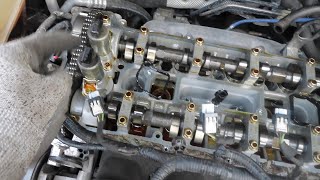
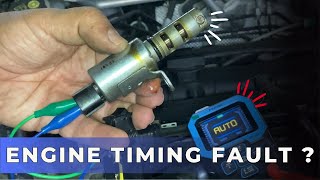
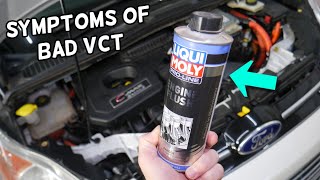

We Have This Part in Stock


The information in this article is provided for general reference and educational purposes only. Vehicle specifications, procedures, and part compatibility can vary by production date, trim level, and region. Always consult your vehicle's factory service manual and verify part numbers before purchasing or performing repairs. Safety-critical components such as airbags, seat belts, and braking systems should be installed by a qualified professional.
- Ford FOCUS:
- 🧭 Diagnostic Flowchart
- 🎬 Helpful Videos
- 🛍️ Shop This Part
- What's Unique About the 2015-2018 Ford FOCUS
- Symptoms You May Notice
- Most Likely Causes
- Rare But Worth Checking
- Diagnosis Steps
- Parts You'll Likely Need
- Related Codes That Often Appear With This One
- Technical Service Bulletins (TSBs) & Recalls
- Platform-Specific Known Issues
- Mechanic-Grade Diagnostic Values
- Scan Tool Commands That Help
- Wiring & Ground Locations
- Real Owner Repair Stories
- OEM Part Supersession History
- 🎟️ Get 5% Off