

P0018 on 2015-2021 Ford Mustang: Crankshaft/Camshaft Correlation Causes and Fixes
On a 2015-2021 Ford Mustang, code P0018 usually points to a sticking Variable Camshaft Timing (VCT) solenoid on the driver's side (Bank 2), often caused by dirty, low, or incorrect viscosity engine oil. Replacing the VCT solenoid is a common DIY fix costing between $40 and $120. An oil change should be the first step.
- P0018 on a 2015-2021 Mustang means the driver's side intake camshaft is out of sync with the crankshaft.
- Before buying any parts, check your engine oil. Low or dirty oil is a very common cause of this code.
- The most likely part to fail is the driver's side intake VCT solenoid, often due to oil debris as noted in Ford TSBs.
- Replacing a VCT solenoid is a manageable DIY job for many owners and is much cheaper than a timing chain service.
- If a new solenoid and fresh oil don't fix the code, the issue could be a bad sensor or a more serious mechanical timing problem.
What's Unique About the 2015-2021 Ford MUSTANG
The 2015-2021 Mustang, particularly with the 5.0L Coyote V8, uses a sophisticated Twin Independent Variable Camshaft Timing (Ti-VCT) system. While effective, this system is hydraulic and extremely sensitive to oil pressure and cleanliness. Ford has issued multiple Technical Service Bulletins (TSBs) for this vehicle generation (including SSM 54366, SSM 50067, SSM 48423, and SSM 47170) indicating that small debris in the engine oil can cause the VCT solenoids to stick, which is a primary cause for this code. This makes regular, high-quality oil changes using the manufacturer-specified oil viscosity especially critical on these engines to prevent timing-related issues. Some owners on forums report the code appearing after high-RPM events like drag racing, suggesting that oil pressure fluctuations can trigger the fault. The Gen 3 Coyote (2018+) introduced further changes including direct injection and revised camshafts, making the system even more complex.
Diagnostic Flowchart
Tap your situation to follow the diagnostic path that matches what you're seeing on this vehicle.
Generation note: This range covers the S550 generation of the Ford Mustang. A significant facelift occurred in 2018, which included updates to the 5.0L V8 engine (Gen 3 Coyote) and changes to the VCT solenoids. While the causes are similar, part numbers for VCT solenoids differ between 2015-2017 and 2018-2021 models. For example, some forum users note that the four VCT solenoids on 2018+ models may not all be the same part number, unlike earlier years. The 2018+ models feature different camshafts, direct injection, and an increased compression ratio.
Symptoms You May Notice
- Check Engine Light is on
- Rough or uneven idle, sometimes causing the engine to shudder or stall at red lights.
- Reduced engine power and poor acceleration.
- Engine hesitation or stalling, especially when decelerating to a stop.
- Decreased fuel economy.
- Rattling or unusual noises from the engine, particularly a brief rattle on a cold start that disappears as oil pressure builds.
- Replacing the crankshaft position sensor. This sensor is rarely the cause of a single-bank correlation code, as it provides the reference signal for all banks. 🎬 Watch: Understanding camshaft and crankshaft correlation sensor faults
- Replacing the camshaft position sensor when the actual fault is a sticking VCT solenoid or low/dirty oil.
- Immediately replacing VCT solenoids without first performing an oil change and using a scan tool to cycle the solenoids, as recommended by Ford TSBs.
Most Likely Causes
- Low, incorrect, or dirty engine oil 🔴 High Probability The VCT system is hydraulic and relies on clean oil at the correct pressure to function. Ford's own TSBs point to debris in oil as a primary cause of VCT solenoid issues. The passages in the solenoids are very small and can easily become clogged.
How to confirm: Check the oil dipstick for proper level and inspect the oil's condition. If it's dark, gritty, or past its service interval, it needs to be changed. This should always be the first step before replacing parts.
Typical fix: Perform an engine oil and filter change using the manufacturer-specified grade (e.g., 5W-20 or 5W-30 for the 5.0L, depending on the year and manual specifications).
Est. part cost: $50-$100 - Failed VCT Solenoid (Oil Control Valve) 🔴 High Probability → Shop Engine Variable Valve Timing (VVT) Solenoid As noted in multiple Ford TSBs (SSM 54366, SSM 50067, SSM 48423, SSM 47170), these solenoids are prone to sticking due to small debris in the oil. Forum discussions frequently cite this as the fix. Weakening of an internal spring over many heat cycles can also cause the solenoid's internal valve to fail to return to its home position, causing timing errors even when disconnected.
How to confirm: Use a bidirectional scan tool to command the Bank 2 intake VCT solenoid on and off while monitoring cam angle data; the engine should hesitate or stall if the solenoid is working. A common DIY method is to swap the suspect solenoid with an adjacent one (e.g., the exhaust solenoid on the same bank, if the parts are identical) and see if the trouble code follows the part (e.g., changes to P0019). The internal resistance of the solenoid should be between 7 and 14 ohms.
Typical fix: Replace the Bank 2 (driver's side) intake VCT solenoid. This requires removing the valve cover. One owner on Mustang6G.com confirmed a dealer fixed their P0018 code by replacing the solenoid with part number BR3Z-6M280-D on a 2016 GT.
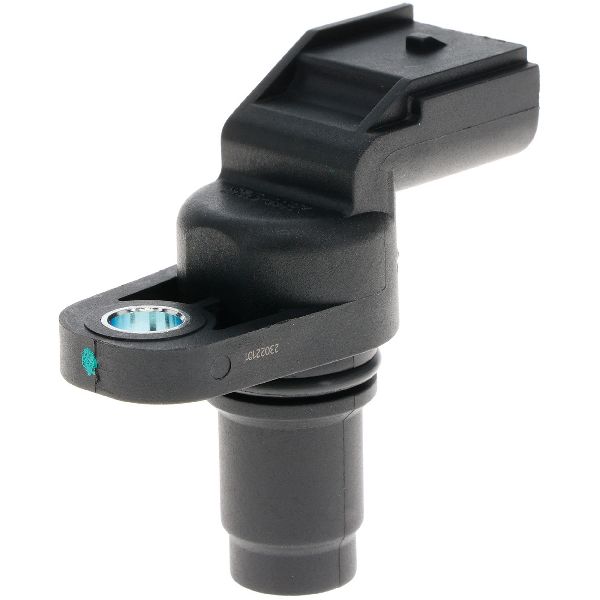
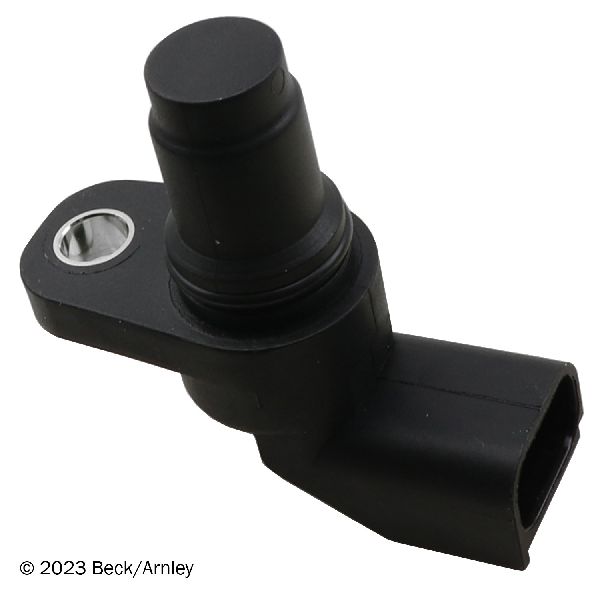
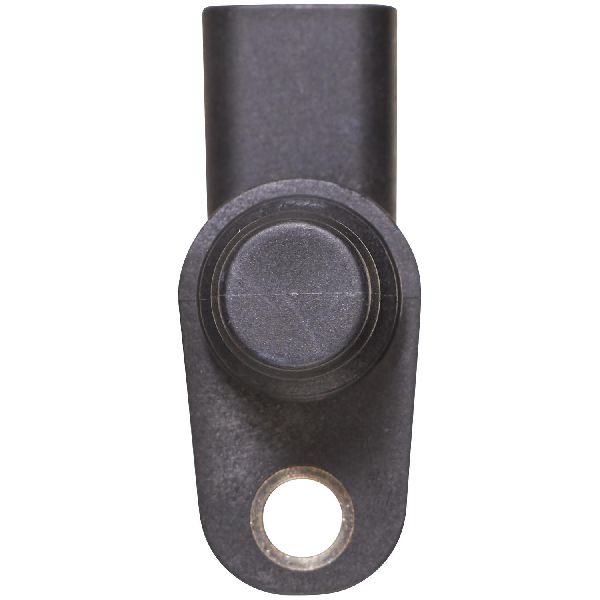
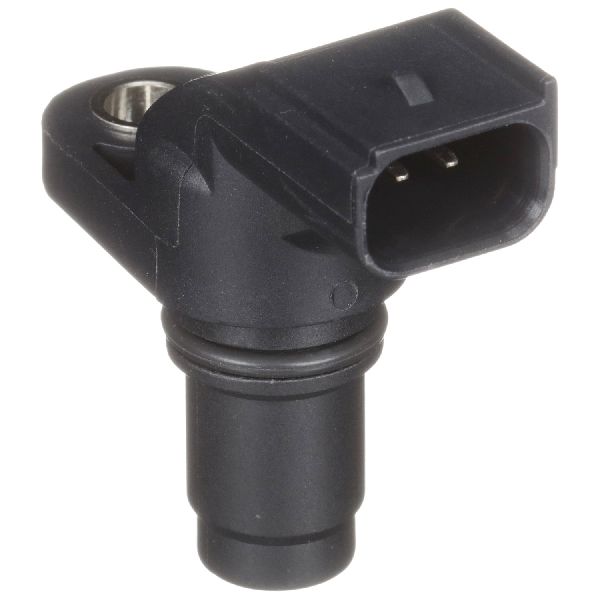
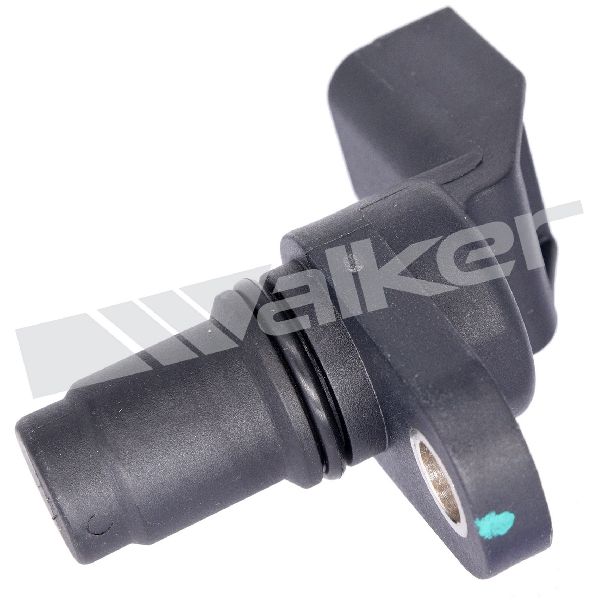
Est. part cost: $40-$120 - Faulty Camshaft Position Sensor 🟡 Medium Probability → Shop Engine Camshaft Position Sensor Sensors can fail over time due to heat cycles and vibration, sending incorrect data to the PCM. However, this is less common than VCT solenoid issues.
How to confirm: After confirming the VCT solenoid is working, test the sensor's signal. With the key on, the power and signal wires should both show approximately 5 volts DC, and the ground wire should have continuity to the battery negative. Passing a piece of metal over the sensor tip should cause the signal voltage to drop to zero. Swapping the sensor with the one from Bank 1 is also a valid diagnostic step. One user on a forum tried this first, but the code returned, indicating the issue was elsewhere.
Typical fix: Replace the Bank 2 intake camshaft position sensor.
Est. part cost: $30-$80 - Stretched Timing Chain or Failed Tensioner ⚪ Low Probability → Shop Engine Timing Chain While less common than electronic failures, timing chains can stretch over many miles, causing a permanent correlation error that VCT adjustments cannot overcome. A Reddit user with a V6 Mustang found their P0018 code was ultimately caused by a stretched timing chain that was a half-inch longer than the replacement part.
How to confirm: This requires physical inspection by removing the valve cover and possibly the timing cover to check for chain slack and guide wear. A Ford TSB for rattling noises suggests checking the tensioner extension; if seven or more splines are visible, the chain must be replaced. This is an advanced diagnostic step.
Typical fix: Replace the timing chain, guides, and tensioners. This is a labor-intensive job. 🎬 See this walkthrough of Coyote timing chain and phaser replacement
Est. part cost: $400-$800
Rare But Worth Checking
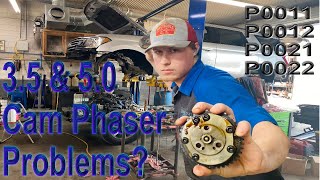
- Failed Camshaft Phaser: → Shop Engine Camshaft The phaser itself can fail mechanically, 🎬 Watch: Expert explanation of Ford VCT phaser failure symptoms getting stuck in one position or having a sheared pin. This is more likely on high-mileage or heavily modified engines and can be difficult to diagnose without ruling out all other possibilities first.
- Damaged Wiring or Connectors: Check the wiring harness for the VCT solenoid and camshaft position sensor for any signs of damage, corrosion, or loose connections. This can include the connectors at the PCM. A poor ground connection can also cause erratic sensor readings.
- Clogged Oil Passages: In cases of severe engine sludge from neglected oil changes, the small oil passages that feed the VCT phasers can become blocked, starving them of oil pressure.
- PCM Tuning Issue: In rare cases, particularly on modified vehicles, an issue within the PCM tune can cause a false P0018 code. One owner on Mustang6G.com reported that a tune revision from Lund Racing fixed their persistent code after all mechanical and electrical checks passed.
Diagnosis Steps
- Verify Oil Level and Condition: Check the engine oil. If it is low, dirty, or the wrong viscosity, perform an oil and filter change before proceeding. This is the most common and cheapest fix.
- Scan Tool Analysis: Use an OBD-II scanner to check for other related codes. Monitor live data for the desired vs. actual camshaft angle for Bank 2 Intake. TSB SSM 50067 specifically advises using the scan tool's 'pinpoint test HK12' to cycle the affected VCT solenoid 10 times to try and clear debris before replacement. The Ford IDS tool can be used to monitor VCT error PIDs and view Mode $06 data for deeper analysis.
- Test the VCT Solenoid: Use a bidirectional scanner to command the solenoid on and off. Listen for a click and watch for a change in cam angle or a stumble in the idle. Check for battery voltage (~12V) at the power supply pin on the connector with the key on. Test the solenoid's internal resistance; it should be between 7-14 Ohms.
- Swap Components: A common DIY diagnostic trick is to swap the Bank 2 intake VCT solenoid with the Bank 2 exhaust solenoid (if they are identical parts). Clear the codes and drive the vehicle. If the code changes to P0019 (Bank 2 Exhaust), the solenoid is confirmed to be faulty.
- Inspect the Camshaft Position Sensor: If the solenoid is good, inspect the wiring and connector for the cam position sensor. Test for 5V on the power and signal wires and check for a good ground. If the wiring is intact, consider swapping the sensor with the one from Bank 1 to see if the code follows.
- Mechanical Timing Check: If all electronic components test good, the problem is likely mechanical. This involves inspecting the timing chain, tensioners, and phasers for wear or damage, which typically requires removing the valve and timing covers.
Parts You'll Likely Need
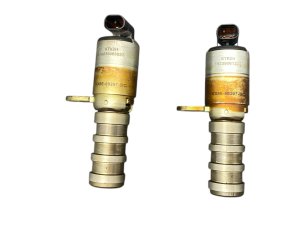
- Variable Camshaft Timing (VCT) Solenoid
(OEM #BR3Z-6M280-D (Replaced by BR3Z-6M280-F, fits 2015-2017 GT). HL3Z-6M280-A (2018+ GT Exhaust). BR3Z-6M280-F (2018+ GT Intake).)— This is the most frequent point of failure for this code, as identified in numerous Ford TSBs and owner forums.
Trusted brands: Motorcraft, Dorman
Related Codes That Often Appear With This One
- P0016 — This is the same correlation error but for Bank 1 (passenger side). Seeing both may indicate a systemic issue like low oil pressure, a stretched primary timing chain, or a faulty crankshaft position sensor.
- P0017 — This indicates a correlation error on the Bank 1 exhaust camshaft. It can appear with P0018 if there are widespread oiling issues or a problem with the base timing.
- P0021/P0022 — These codes indicate that the Bank 2 intake camshaft is over-advanced (P0021) or over-retarded (P0022), which are specific faults related to the VCT system that can accompany the general correlation error of P0018. A Ford TSB notes that seeing P0018 and P0021 together points specifically to replacing the Bank 2 intake VCT solenoid. An F-150 owner with a 5.0L engine reported getting P0018 and P0021 together, pointing to a cam phaser issue.
Technical Service Bulletins (TSBs) & Recalls
- SSM 54366: MIL with various VCT DTCs
- SSM 50067: MIL with various VCT DTCs due to debris
- SSM 48423: MIL with various VCT DTCs due to debris
- SSM 47170: MIL with various VCT DTCs due to debris
Platform-Specific Known Issues
- TSB SSM 50067 / SSM 48423 / SSM 47170 - VCT Solenoid Debris: → Shop Engine Variable Valve Timing (VVT) Solenoid These bulletins specifically state that for a range of Ford vehicles including the 2015-2021 Mustang, DTCs like P0018 may be caused by small debris causing the VCT solenoid to stick. It advises against component replacement before running pinpoint test HK12, which uses a scan tool to cycle the solenoid 10 times to attempt to clear the debris.
- TSB SSM 54366 - VCT DTC Diagnostic Guidance: This later TSB reiterates the same potential cause and directs technicians to specific pinpoint tests (like HK) in the Powertrain Control and Emissions Diagnosis (PC/ED) manual for a wide array of VCT-related codes, including P0018.
- Owner Experience: Intermittent Fault: A user on Mustang6G.com reported the P0018 code appeared after the car sat for a week. The light later went off on its own. The dealer ultimately replaced the VCT solenoid (part BR3Z-6M280-D) to resolve the issue, indicating the problem can be intermittent at first.
Mechanic-Grade Diagnostic Values
- VCT Solenoid Internal Resistance — expected: 7 to 14 Ohms. Failure: A reading outside this range, or an open/short circuit, indicates a failed solenoid coil.
- VCT Solenoid Connector Voltage (Key On, Engine Off) — expected: ~12V (Battery Voltage). Failure: No voltage or low voltage indicates a problem with the power supply circuit from the PCM power relay or fuse.
- Camshaft Position Sensor Voltage (Key On, Engine Off) — expected: Power Wire: ~5V; Signal Wire: ~5V; Ground Wire: ~12V when tested against battery positive.. Failure: Incorrect voltage on any wire points to a circuit fault or a bad sensor. The signal wire voltage should drop to 0V when a metal object is passed over the sensor tip.
Scan Tool Commands That Help
- Ford IDS (Integrated Diagnostic System): VCT Solenoid On/Off Command (Output State Control) — This bidirectional control is used to manually activate and deactivate a specific VCT solenoid while the engine is idling. A working solenoid will cause a noticeable change in engine idle or may cause it to stall, confirming the solenoid is mechanically functional.
- Ford IDS (Integrated Diagnostic System): Monitor VCT PIDs (VCTADV, VCTADVERR) — Use during a road test to monitor the desired camshaft angle (VCTADV) versus the actual angle and the error between them (VCTADVERR). Excessive variation in the error PID while symptoms are present points to a VCT system fault.
- Ford IDS (Integrated Diagnostic System): Mode $06 Test Results — After a drive cycle, check the Mode $06 data for VCT statistical information. This can reveal intermittent faults or timing deviations that haven't yet set a hard code, helping to confirm a borderline component.
Wiring & Ground Locations
- VCT Solenoid Connector — On the top of the valve cover, plugging into the VCT solenoid.. This connector provides power and the control signal from the PCM. A wiring diagram shows it has two pins: one for 12V power from a fuse in the battery junction box, and one for the ground-side control from the PCM. A bad connection here will prevent the solenoid from operating.
- Camshaft Position Sensor Connector — On the front of the valve cover, near the camshaft phaser.. This 3-wire connector provides the sensor with power (~5V), ground, and carries the signal back to the PCM. Damage or corrosion here will cause an incorrect signal, leading to a correlation code.
- Secondary Power Ground — Typically a strap between the back of the intake manifold and the driver's side firewall.. This ground is critical for various engine accessories and sensors. A loose or missing ground can introduce electrical noise and cause erratic sensor readings, potentially leading to false correlation codes.
Real Owner Repair Stories
- Mustang6G.com forum user (2016 Mustang GT w/ Paxton Supercharger) — Check engine light with code P0018.
❌ Tried (didn't work) The user did not report trying other fixes first.
✅ What actually fixed it The user replaced the Bank 2 (driver's side) VCT solenoids. The code did not return after the replacement. - Ford F-150 Forum user (with same 5.0L Coyote engine) (2011 Ford F-150 5.0L) — Check engine light with codes P0010 (VCT circuit open) and P0012 (over-retarded timing).
❌ Tried (didn't work) Initially ordered new VCT solenoids but discovered the electrical connectors were a different size and did not fit.
✅ What actually fixed it After testing and confirming the intake VCT solenoid on Bank 1 was dead (via an ohms test), the user replaced both VCT solenoids on that bank and also had to purchase and solder in new, larger electrical connectors (part # WPT-1214) because the VCT solenoid design was updated mid-production.
OEM Part Supersession History
BR3Z-6M280-D→BR3Z-6M280-F— Part revision/update by Ford.
Heads up: These parts are generally interchangeable for the specified years.Original 2011-style VCT Solenoid (tapered top)→Updated VCT Solenoid (e.g., BR3Z-6M280-E, non-tapered top)— Design update by Ford.
Heads up: The updated solenoids have a larger electrical connector. If replacing an original tapered-top solenoid with the newer style on an early engine, a new connector pigtail (Ford P/N WPT-1214) must be purchased and spliced into the engine harness.
Model Year Variations Within This Range
- 2018-2021: The Gen 3 Coyote engine introduced in 2018 features significant changes, including a dual-fuel system (direct and port injection), revised camshaft profiles, a higher 12.0:1 compression ratio, and different VCT solenoids compared to 2015-2017 models. Some forum users report that unlike earlier models where all four solenoids might be the same, the 2018+ intake and exhaust solenoids may be different parts.
Helpful Videos
Used OEM Parts in Stock
New Aftermarket Parts Available

The information in this article is provided for general reference and educational purposes only. Vehicle specifications, procedures, and part compatibility can vary by production date, trim level, and region. Always consult your vehicle's factory service manual and verify part numbers before purchasing or performing repairs. Safety-critical components such as airbags, seat belts, and braking systems should be installed by a qualified professional.
- Ford MUSTANG:
- 🧭 Diagnostic Flowchart
- 🎬 Helpful Videos
- 🛍️ Shop This Part
- What's Unique About the 2015-2021 Ford MUSTANG
- Symptoms You May Notice
- Most Likely Causes
- Rare But Worth Checking
- Diagnosis Steps
- Parts You'll Likely Need
- Related Codes That Often Appear With This One
- Technical Service Bulletins (TSBs) & Recalls
- Platform-Specific Known Issues
- Mechanic-Grade Diagnostic Values
- Scan Tool Commands That Help
- Wiring & Ground Locations
- Real Owner Repair Stories
- OEM Part Supersession History
- Model Year Variations Within This Range
- 🎟️ Get 5% Off