

P0018 on 2019-2021 Ford Ranger: Crankshaft Camshaft Correlation Causes and Fixes
On a 2019-2021 Ford Ranger, code P0018 is most often caused by a sticking Variable Camshaft Timing (VCT) solenoid due to dirty or low engine oil. The code refers to an exhaust camshaft timing issue. Before replacing parts, check your oil level and condition. Replacing a VCT solenoid is a common, affordable DIY fix, costing around $40-$80 for the part.
- P0018 on a Ranger's 2.3L engine refers to a timing mismatch, likely on the exhaust camshaft, despite the misleading 'Bank 2' in the code name.
- Always check your engine oil level and condition first. Low or dirty oil is a primary cause of this code.
- The most likely failed part is the VCT solenoid, which can get stuck from oil debris. This is a known issue acknowledged by Ford TSBs.
- Diagnose by swapping the VCT solenoids before buying new parts. If the code changes to P0016, you've found the bad part.
- Do not ignore this code, as a worst-case scenario involves a failing timing chain that can lead to severe engine damage.
What's Unique About the 2019-2021 Ford RANGER
A key point of confusion is the 'Bank 2' designation. The 2019-2021 Ranger uses the 2.3L EcoBoost, an inline-4-cylinder engine, which only has one cylinder bank (Bank 1). Ford's diagnostic software uses the P0018 code to identify a timing correlation error, which in this context, refers to the exhaust camshaft, even though there is no physical 'Bank 2'. Ford has issued Technical Service Bulletins (TSBs) for this engine family, noting that these timing codes are frequently caused by VCT solenoids sticking due to small debris in the engine oil.
Diagnostic Flowchart
Tap your situation to follow the diagnostic path that matches what you're seeing on this vehicle.
Symptoms You May Notice
- Check Engine Light is on
- Rough or unstable idle
- Engine hesitates or stumbles on acceleration
- Reduced engine power
- Engine may stall unexpectedly
- Decreased fuel economy
- Rattling noise from the engine, especially on startup.
- Replacing the camshaft position sensor when the actual problem is a sticking VCT solenoid or low oil pressure.
- Condemning the timing chain immediately without first checking the much more common and simpler failures of the VCT solenoids and oil quality.
- Replacing a VCT solenoid without first performing an oil change, as dirty oil can cause the new solenoid to stick as well.
Most Likely Causes
- Sticking or Failed Variable Camshaft Timing (VCT) Solenoid 🔴 High Probability → Shop Engine Camshaft Ford TSB SSM 50067 specifically identifies that small debris in the engine oil can cause VCT solenoids to stick on this vehicle range, triggering a host of timing codes including P0018. This is a widely acknowledged issue across many Ford engines.
How to confirm: Use a scan tool to command the solenoid on and off; if it doesn't respond, it's likely faulty. A common DIY method is to swap the intake and exhaust VCT solenoids (they are identical parts) and see if the trouble code changes to P0016 (Intake Cam Correlation). If it does, the solenoid you moved is the culprit.
Typical fix: Replace the faulty VCT solenoid. It is a relatively simple repair, located on the top of the valve cover, held by one bolt.
Est. part cost: $40-$80 - Low or Dirty Engine Oil 🔴 High Probability The VCT system is hydraulically operated by engine oil. Incorrect oil viscosity, low oil levels, or oil contaminated with fuel or sludge directly impairs the function of the VCT solenoids and phasers, causing them to stick or respond slowly.
How to confirm: Check the oil dipstick for level and inspect the oil's condition and smell. If it's low, dark, or smells of gasoline, it needs to be changed. An oil change is the cheapest and easiest first step.
Typical fix: Perform an oil and filter change using the correct OEM-specified grade of oil (e.g., Motorcraft SAE 5W-30 Full Synthetic) and a quality filter (e.g., Motorcraft FL-910S).
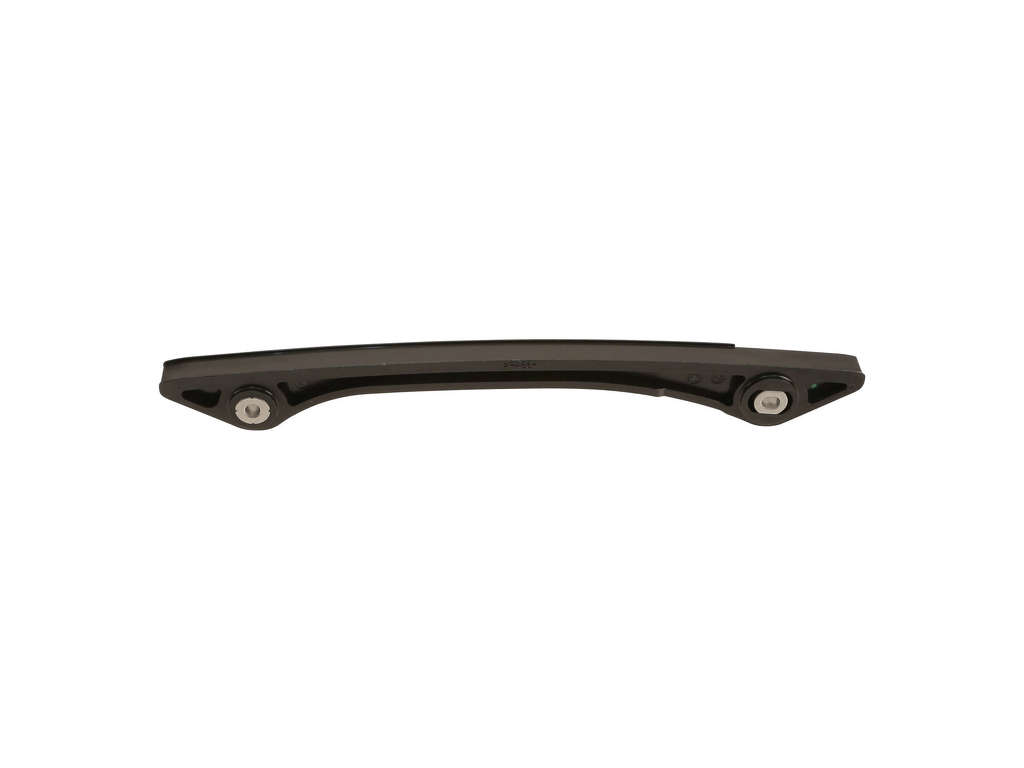
Est. part cost: $50-$90 - Worn Timing Chain, Guides, or Tensioner 🟡 Medium Probability → Shop Engine Timing Chain Over time, particularly with extended oil change intervals, timing chains can stretch and the hydraulic tensioner can weaken. This introduces slack into the system that leads to a correlation error between the cams and crank. While possible at any mileage, this is more common on engines over 100,000 miles. 🎬 See what happens to a Ranger engine with poor maintenance.
How to confirm: This is a mechanical issue that requires removing the valve cover and/or timing cover to physically inspect the chain for slack and check the timing marks. This is an advanced diagnostic step, often confirmed by a professional.
Typical fix: Replace the timing chain, tensioner, and guides as a kit. This is a labor-intensive job, often costing over $1,200.
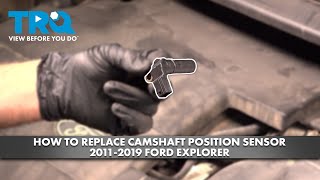
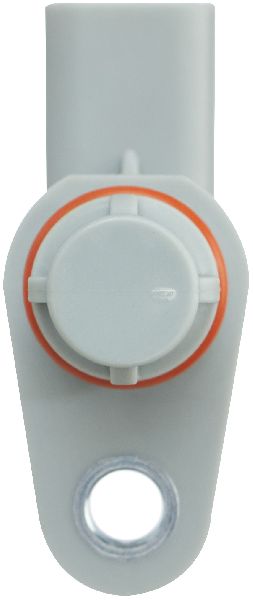
Est. part cost: $200-$400 - Faulty Camshaft Position Sensor ⚪ Low Probability → Shop Engine Camshaft Position Sensor
How to confirm: Test the sensor's output with a multimeter or oscilloscope to ensure it's sending a correct signal to the PCM. A simpler diagnostic is to swap the intake and exhaust camshaft position sensors (they are identical parts) and see if the code changes to P0016. If the code moves, the sensor is bad.
Typical fix: Replace the faulty sensor. It is located on the valve cover and held by a single 8mm bolt.
Est. part cost: $30-$60
Rare But Worth Checking
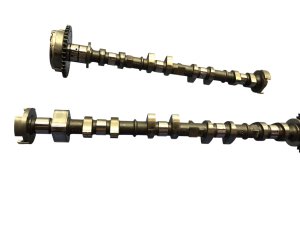
- Damaged Camshaft Phaser: → Shop Engine Camshaft The phaser is the gear at the end of the camshaft that actually adjusts the timing. It can fail mechanically or become clogged with debris, but this is less common than a solenoid failure. Phaser failure often produces a distinct rattling or knocking sound.
- Wiring Issue: A damaged wire or loose/corroded connector for the VCT solenoid or camshaft position sensor can mimic a component failure. Always inspect the harness for damage or oil contamination, especially around the connectors on the valve cover.
Diagnosis Steps
- Check Engine Oil: Verify the oil level is correct and the oil is clean. If low or dirty, perform an oil and filter change with the manufacturer-recommended oil type and clear the codes. This simple step resolves the issue in many cases.
- Scan for Codes: Use an OBD-II scanner to confirm P0018 and check for any other related codes. Note the freeze frame data to understand the conditions when the code was set.
- Inspect Wiring: Visually inspect the wiring harnesses and connectors for the camshaft position sensors and VCT solenoids on the top of the engine. Look for any signs of damage, corrosion, or oil saturation.
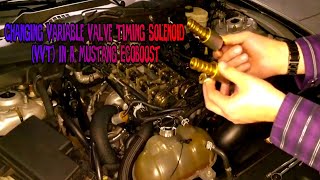
- Test the VCT Solenoid: The easiest method is to swap the intake and exhaust VCT solenoids. They are located on top of the valve cover, each held by one bolt. Clear the codes and drive the vehicle. If the code changes to P0016 (intake correlation error), the solenoid you moved is faulty and needs replacement. Per TSB 50067, a capable scan tool can also be used to command the VCT solenoid to cycle 10 times to attempt to clear debris.
- Test the Camshaft Position Sensor: If the solenoid swap doesn't change the code, perform a similar swap with the camshaft position sensors. They are also on the valve cover and interchangeable. If the fault follows the sensor (i.e., the code changes to P0016), replace the faulty sensor.
- Mechanical Timing Check: If all electronic components and oil are good, the issue is likely mechanical (stretched timing chain, failed tensioner, or phaser). This requires engine disassembly for inspection and is best left to a professional.
Parts You'll Likely Need
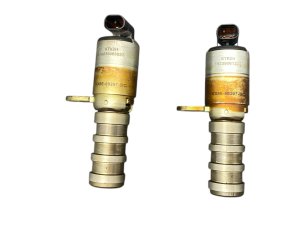
- Variable Camshaft Timing (VCT) Solenoid
(OEM #MB3Z6C880A)— This is the most common point of failure according to Ford's own service bulletins for this code. Both intake and exhaust solenoids are the same part.
Trusted brands: Motorcraft, Dorman
OEM price range: $60-$90
Aftermarket price range: $40-$70 - Camshaft Position Sensor
(OEM #P2GZ-6B288-C)— If the sensor itself fails, it will send incorrect data to the PCM, causing a correlation code. Both intake and exhaust sensors are the same part.
Trusted brands: Motorcraft, Bosch, NTK, A-Premium
OEM price range: $40-$70
Aftermarket price range: $25-$50 - Timing Chain Kit — If the cause is mechanical wear, the chain, guides, and tensioner must be replaced to restore correct timing. This is a major repair.
Trusted brands: Motorcraft, Cloyes
OEM price range: $250-$400
Aftermarket price range: $150-$250
Related Codes That Often Appear With This One
- P0016 — This is the equivalent correlation code for Bank 1, Sensor A (Intake). If you have issues with oil pressure or a severely stretched timing chain, it's possible for both camshafts to be out of time, triggering both codes. It will also appear if you swap a faulty exhaust VCT solenoid or CMP sensor to the intake side for diagnosis.
- P0017 — This is the correlation code for Bank 1, Sensor B (Exhaust). On an I4 engine like the Ranger's, P0017 and P0018 may be used somewhat interchangeably by the PCM logic to refer to the exhaust cam, depending on the specific fault condition.
Technical Service Bulletins (TSBs) & Recalls
- SSM 50067 - VCT DTCs may be caused by debris in VCT solenoid.
- SSM 54366 - Points to updated diagnostic procedures for a range of VCT codes including P0018.
Platform-Specific Known Issues
- TSB SSM 50067: Notes that for 2015-2021 Ford vehicles, including the Ranger, DTCs P0011, P0012, P0014, P0015, P0016, P0017, P0018, P0019, P0021, P0022, P0024 and/or P0025 may be caused by small debris causing the VCT solenoid to stick. The suggested procedure is to cycle the solenoid with a scan tool (Pinpoint Test HK12) before replacement.
- TSB SSM 54366: An updated TSB that mentions the same list of VCT codes and points technicians to an updated pinpoint test (HK) in the official workshop manual for diagnosis. This bulletin supersedes earlier versions.
Mechanic-Grade Diagnostic Values
- VCT Solenoid Internal Resistance — expected: 6 to 14 Ohms. Failure: A reading outside this range, or an open/short circuit, indicates a failed solenoid coil.
- VCT Solenoid Connector Voltage (Key On, Engine Off) — expected: ~12V (Battery Voltage). Failure: Low or no voltage points to a wiring issue between the PCM and the solenoid.
- Camshaft Position Sensor Resistance — expected: Refer to the specific vehicle service manual, as values can vary.. Failure: A reading of infinity (open) or zero (short) indicates a failed sensor.
Scan Tool Commands That Help
- Ford IDS / FORScan: VCT Solenoid On/Off Command (Output State Control) — This bidirectional control is used to manually activate and deactivate a VCT solenoid with the engine running at idle. A functional solenoid, when commanded on, should cause a noticeable change in engine sound (rough idle or stall). If there's no change, the solenoid is likely stuck or has failed electrically.
- Ford IDS / FORScan: Pinpoint Test HK12 — This is a specific diagnostic routine mentioned in Ford TSBs SSM 50067 and 48423. It commands the suspect VCT solenoid to cycle 10 times to dislodge small debris. This should be performed before replacing the solenoid, as it may fix the issue without new parts.
Wiring & Ground Locations
- Main Engine Ground — A large ground cable runs from the battery negative terminal to the engine block, often near a motor mount.. A poor main engine ground can cause erratic behavior in all engine sensors, including the camshaft and crankshaft position sensors, leading to false correlation codes.
- Cylinder Head to Firewall Ground Strap — Typically found on the back of the cylinder head (often the driver's side) connecting to the firewall/cowl.. This ground is critical for the PCM and the sensors mounted on the engine, including the CMP sensors and VCT solenoids. A loose or corroded strap can cause intermittent signal issues.
- VCT Solenoid Connector — Located on top of the valve cover, directly on each VCT solenoid.. The pins in this connector should be checked for corrosion or oil contamination. The pinout provides power from the PCM and a ground. A wiring diagram is needed to test for correct voltage and continuity.
Real Owner Repair Stories
- FT86CLUB Forum User (Subaru BRZ (similar boxer engine VVT system logic)) — Check Engine Light with code P0018.
❌ Tried (didn't work) Initial diagnosis was unclear.
✅ What actually fixed it The dealership determined the passenger side exhaust VVT data was sluggish to respond and would over-correct. They replaced the 'Oil Switching Valve' (the VVT/VCT solenoid) and performed an oil change, which resolved the code.
OEM Part Supersession History
DU-107, JX6Z-6B288-B, P2GZ-6B288-A→P2GZ-6B288-C— Standard part revision and consolidation across multiple vehicle lines.
Model Year Variations Within This Range
- 2019-2021: While the base 2.3L EcoBoost is used across several Ford models (Mustang, Explorer), the version in the Ranger has a unique rotating assembly (crankshaft, connecting rods, pistons) and tuning to produce more torque at lower RPMs suitable for a truck. This means that while VCT components may be shared, internal engine characteristics differ.
Helpful Videos
Used OEM Parts in Stock
New Aftermarket Parts Available


The information in this article is provided for general reference and educational purposes only. Vehicle specifications, procedures, and part compatibility can vary by production date, trim level, and region. Always consult your vehicle's factory service manual and verify part numbers before purchasing or performing repairs. Safety-critical components such as airbags, seat belts, and braking systems should be installed by a qualified professional.
- Ford RANGER:
- 🧭 Diagnostic Flowchart
- 🎬 Helpful Videos
- 🛍️ Shop This Part
- What's Unique About the 2019-2021 Ford RANGER
- Symptoms You May Notice
- Most Likely Causes
- Rare But Worth Checking
- Diagnosis Steps
- Parts You'll Likely Need
- Related Codes That Often Appear With This One
- Technical Service Bulletins (TSBs) & Recalls
- Platform-Specific Known Issues
- Mechanic-Grade Diagnostic Values
- Scan Tool Commands That Help
- Wiring & Ground Locations
- Real Owner Repair Stories
- OEM Part Supersession History
- Model Year Variations Within This Range
- 🎟️ Get 5% Off