

P0018 on 2008-2019 Ford Taurus 3.5L V6: Causes and Fixes
On the 3.5L V6 Taurus, P0018 is most often caused by a stretched timing chain or a faulty VCT solenoid. This code can be an early warning of a failing internal water pump leaking coolant into the oil, which requires immediate attention to prevent catastrophic engine damage. A VCT solenoid is an affordable fix, but a timing chain job is a major repair costing over $2,000.
- P0018 on a 3.5L Taurus indicates a timing correlation error on the front (radiator side) cylinder bank.
- Before any major repair, always check the engine oil level and condition. An oil change or replacing a VCT solenoid may be a simple fix.
- This code is a frequent symptom of a failing internal water pump leaking coolant into the oil. Check for milky oil on the dipstick or oil cap.
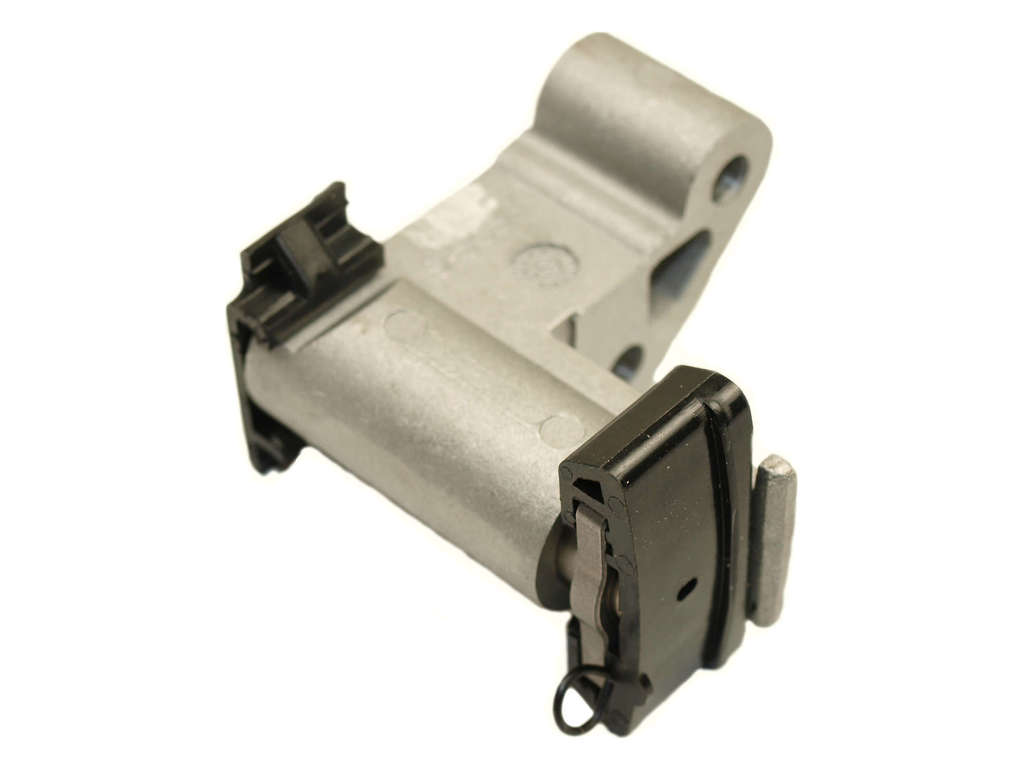
- If the timing chain is the cause, it is a major, expensive repair that should include replacing the water pump, guides, and tensioners at the same time.
- Do not ignore this code. What starts as a performance issue can quickly escalate to catastrophic engine failure.
What's Unique About the 2008-2019 Ford Taurus
The Ford 3.5L Cyclone V6 has a critical design feature that directly impacts this code: the water pump is located inside the engine and is driven by the timing chain. When the water pump's internal seals fail, coolant leaks directly into the engine oil. This contaminated oil turns into a sludge-like substance that compromises lubrication, accelerates the wear of timing chains, guides, and tensioners, and clogs the small passages of the Variable Camshaft Timing (VCT) solenoids. As a result, a P0018 code on this engine is often a symptom of a much larger problem that begins with the water pump, a well-documented and catastrophic failure mode for this platform.
Generation note: The 2008-2019 Ford Taurus spans the fifth (2008-2009) and sixth (2010-2019) generations. Both generations used the 3.5L Cyclone V6 engine (including naturally aspirated and EcoBoost variants). The primary causes of P0018, related to the timing chain, VCT system, and internal water pump, are consistent across this entire year range as the core engine design did not change.
Symptoms You May Notice
- Check Engine Light illuminated
- Rough idle
- Poor acceleration and reduced engine power
- Engine stalling or hesitation
- Rattling noise from the front of the engine, especially on startup
- Decreased fuel economy
- Engine shaking or misfiring
- Replacing the camshaft position sensor first. While easy to access, the sensor is rarely the root cause of a correlation code. The problem is usually mechanical (timing chain) or hydraulic (oil pressure/VCT solenoid).
- Replacing only the VCT solenoid when the timing chain is stretched. A new solenoid will not fix a mechanically out-of-time engine.
- Replacing the timing chain without replacing the water pump. Given the high failure rate of the internal water pump and the labor overlap, failing to replace it during a timing job is a major risk that will likely lead to a repeat, catastrophic failure.
Most Likely Causes
- Stretched Timing Chain / Worn Guides 🔴 High Probability → Shop Engine Timing Chain Timing chain stretch is a known issue on this engine, often accelerated by oil contamination from a failing water pump or extended oil change intervals. The contaminated oil degrades the plastic chain guides and causes the hydraulic tensioner to fail, leading to chain slack.
How to confirm: A physical inspection is required, which involves removing the engine's front timing cover to check for chain slack, broken plastic guides, and a fully extended tensioner. A primary timing tensioner with 5 or more teeth exposed indicates a stretched chain. A scan tool may also show a persistent, large deviation between desired and actual cam angles.
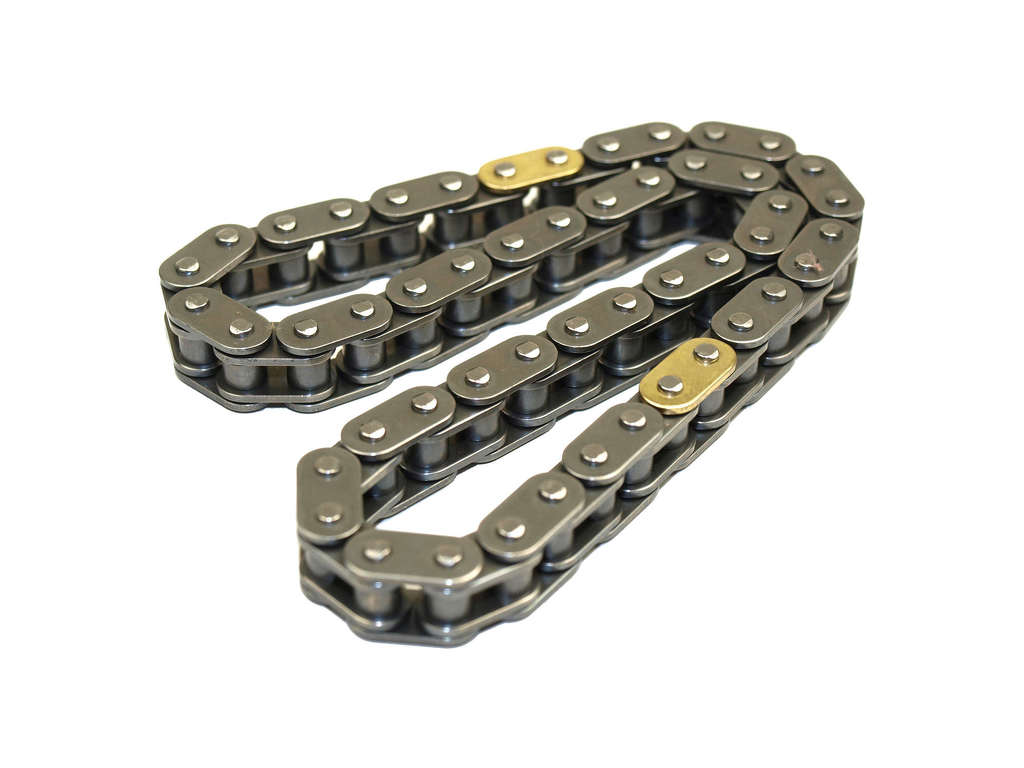
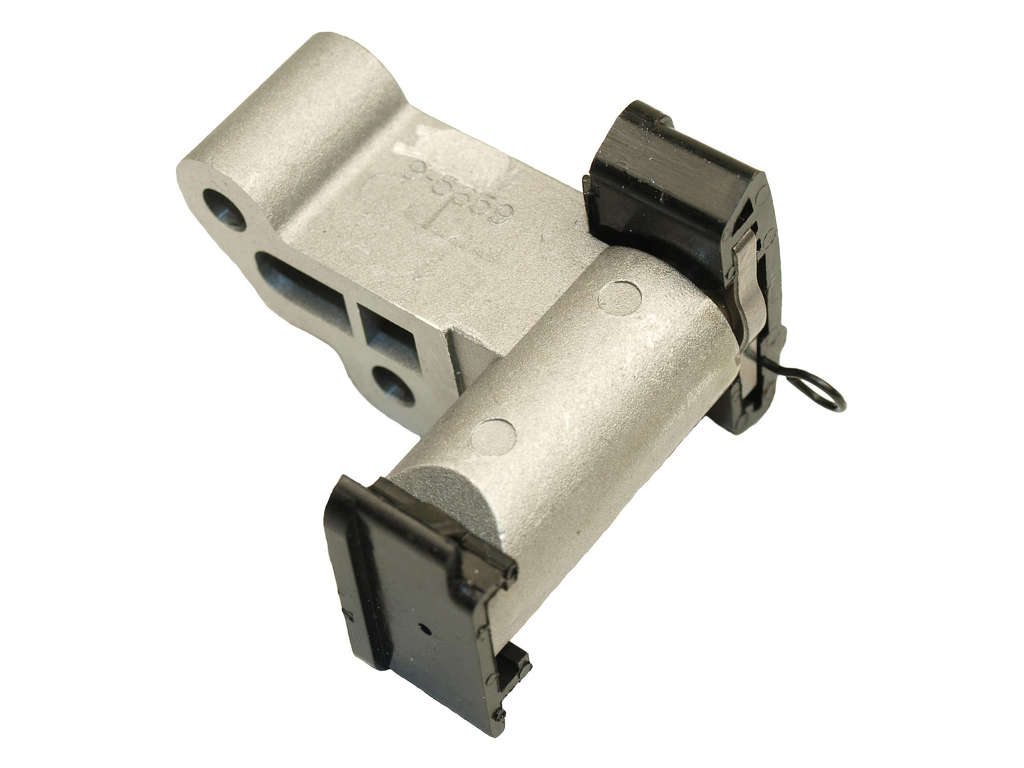
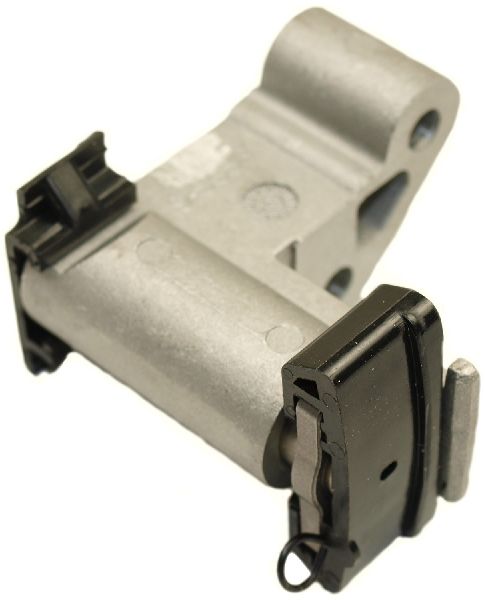
Typical fix: Replace the timing chain, tensioners, guides, and phasers as a complete kit. It is critical to also replace the internal water pump at the same time. Using high-quality, OEM or reputable aftermarket kits (e.g., Cloyes) is essential for durability.
Est. part cost: $300-$800 - Failing Internal Water Pump 🔴 High Probability → Shop Engine Water Pump The timing-chain-driven water pump has seals that can fail, leaking coolant directly into the oil pan. This is a well-documented, catastrophic failure point on the 3.5L Cyclone engine family.
How to confirm: Check the engine oil for a milky, 'milkshake' appearance. Check the oil dipstick and oil cap for this contamination. A special weep hole on the side of the engine block, near the alternator, may show signs of coolant leakage before the oil is heavily contaminated.
Typical fix: This requires a full timing chain service. The water pump, timing chain, tensioners, and guides must all be replaced. The engine oil system should be flushed to remove all contaminated oil. Due to the severity, some owners opt for a used engine replacement if internal damage is suspected.
Est. part cost: $100-$250 (for the pump itself, but it's part of a larger job) - Sticking or Failed VCT Solenoid 🟡 Medium Probability → Shop Engine Variable Valve Timing (VVT) Solenoid The VCT solenoids are very sensitive to oil quality. Debris from normal wear or from coolant contamination can clog the fine mesh screens and cause them to stick or fail. Multiple Ford TSBs (e.g., SSM 50067, SSM 47170, SSM 48423) address this issue.
How to confirm: Swap the Bank 2 intake VCT solenoid with the Bank 1 intake VCT solenoid. If the code changes to P0016 (the equivalent code for Bank 1), the solenoid is faulty. A scan tool can also be used to command the solenoid on and off to check for response, and a multimeter can check its resistance, which should be between 5 and 14 Ohms.
Typical fix: Replace the Bank 2 intake VCT solenoid and perform an engine oil and filter change. Given the labor to access them under the valve cover, many recommend replacing all four solenoids at once.
Est. part cost: $30-$80 - Low, Dirty, or Incorrect Viscosity Engine Oil 🟡 Medium Probability The entire VCT system is hydraulic and depends on clean oil at the correct pressure and viscosity to function. Delays in oil changes can lead to sludge that causes this code. Many experts recommend 5,000-mile oil change intervals to prevent sludge.
How to confirm: Check the engine oil level on the dipstick and inspect its condition. If the oil is low, black, or has a milky appearance, it needs to be changed.
Typical fix: Perform an engine oil and filter change using the manufacturer-specified oil viscosity (typically 5W-20).
Est. part cost: $40-$75
Rare But Worth Checking
- Failed Camshaft Position Sensor: → Shop Engine Camshaft Position Sensor While the sensor itself can fail, it is less common than the mechanical or oil-related issues. It's often replaced unnecessarily when the root cause is a timing chain or VCT solenoid.
- Damaged Camshaft Phaser (VCT Actuator): → Shop Engine Camshaft The phaser is the mechanical gear that actually adjusts the camshaft timing. It can fail mechanically or become clogged with debris, but this is usually diagnosed after ruling out the solenoid and oil issues. Worn phasers often contribute to cold start rattle.
- Wiring Issue to VCT Solenoid or Cam Sensor: → Shop Engine Variable Valve Timing (VVT) Solenoid Damage to the wiring harness or a corroded connector can cause an intermittent signal, triggering the code. This should be checked before replacing major components.
Diagnosis Steps
- Check Engine Oil: Verify the oil level is correct and the oil is clean. If it's low, dirty, or looks milky (coolant contamination), address this first. An oil and filter change is a good starting point. A milky appearance indicates a failed internal water pump, requiring a full timing job.
- Scan for Codes: Use an OBD-II scanner to confirm P0018 and look for any other related codes, such as P0016, P0021, or P0022. The presence of codes on both banks (P0016 & P0018) points strongly to a base timing issue.
- Inspect VCT Solenoid: Locate the Bank 2 (radiator side) intake VCT solenoid. Check its wiring and connector for damage. For a more definitive test, swap it with the Bank 1 intake solenoid, clear the codes, and drive the vehicle. If the code returns as P0016, the solenoid is bad.
- Monitor Live Data: Use a scan tool that can display live data to monitor the desired vs. actual camshaft position for Bank 2. A large and consistent deviation points towards a mechanical timing issue (stretched chain).
- Mechanical Inspection: If the above steps do not resolve the issue, a mechanical inspection is necessary. This is a labor-intensive process that involves removing the valve cover and timing cover to visually inspect the timing chain for slack, check the timing marks for alignment, and inspect the chain guides and tensioner for wear or damage.
Parts You'll Likely Need
- Timing Chain Kit (including chains, guides, tensioners)
(OEM #HL3Z6268A (Chain only, component of full kit))— This is the most probable mechanical failure. A stretched chain causes the correlation error. A kit ensures all wear components are replaced.
Trusted brands: Motorcraft, Cloyes
OEM price range: $400-$600
Aftermarket price range: $250-$400 - Engine Water Pump
(OEM #PW602 (Motorcraft))— Due to the internal design, it's critical to replace this part during any timing chain service to prevent coolant from contaminating the oil and destroying the new timing components.
Related Codes That Often Appear With This One
- P0016 — This is the same correlation error for Bank 1. If P0016 and P0018 appear together, it strongly points to a base timing issue affecting the whole engine, like a severely stretched primary timing chain or low oil pressure from contamination.
- P0021 — This code means 'Intake Camshaft Position Timing - Over-Advanced (Bank 2)'. It often appears with P0018 because a sticking VCT solenoid or phaser can cause both a correlation error and an over-advanced condition. TSB 16-0093 specifically notes this pairing and advises replacing the Bank 2 intake VCT solenoid.
Technical Service Bulletins (TSBs) & Recalls
- TSB 16-0038: For some 2016 3.5L GTDI engines with low mileage, this TSB advises that if P0018 and P0021 are found together, the Bank 2 intake VCT solenoid should be replaced.
- SSM 47170 / 48423 / 50067: A series of Special Service Messages from Ford that note VCT-related codes like P0018 can be caused by debris in the oil causing a solenoid to stick. They recommend attempting to cycle the solenoid with a scan tool to clear debris before replacement.
Platform-Specific Known Issues
- The internal, timing-chain-driven water pump is the most significant issue. Its failure introduces coolant into the oil, which destroys the timing components and VCT system, leading directly to codes like P0018.
Mechanic-Grade Diagnostic Values
- VCT Solenoid Internal Resistance — expected: 5 - 14 Ohms. Failure: A reading outside this range, or infinite resistance (open circuit), indicates a failed solenoid.
- Camshaft Position Sensor (3-wire Hall-effect) Voltage Check — expected: Key On, Engine Off: ~5V on reference wire, 0V on ground wire, ~5V on signal wire. Signal wire should switch between ~5V and 0V when cranking.. Failure: Signal voltage does not switch, is stuck at 0V, or stuck at 5V.
- VCT Solenoid Control Voltage (Key On, Engine Off) — expected: Greater than 10.5 V. Failure: Voltage below 10.5 V indicates an open circuit in the power feed to the solenoid.
- Scan Tool PID: VCT Advanced Error — expected: Should be near 0 degrees (+/- 5 degrees) at idle and during steady-state driving.. Failure: A large, persistent non-zero value indicates a problem with cam timing control.
Hidden / Shadow Codes Worth Checking
- Mode 6, Test ID for VVT Monitor: Mode 6 data can show the raw test results for the VVT system monitor. It can reveal if the cam/crank correlation value is approaching its failure threshold, even before a permanent DTC like P0018 is set. (see via A professional-level scan tool (like Ford IDS or FORScan) with Mode 6 capability is required.)
Scan Tool Commands That Help
- Ford IDS or FORScan: VCT Solenoid On/Off State Control (Bidirectional Test) — This is a primary diagnostic step to test the mechanical function of a VCT solenoid without removing it. The command manually energizes the solenoid; the technician should hear an audible click and observe a change in idle quality if the solenoid is working. If the engine idle doesn't stumble or change, the solenoid is likely stuck.
Wiring & Ground Locations
- G104 — On the left front of the engine compartment for the naturally aspirated 3.5L. On the right side of the engine for the 3.5L twin-turbo (SHO).. This is a primary engine ground. A poor connection here can cause erratic behavior from sensors and the PCM, potentially leading to false correlation codes.
- G105 — Located at the rear of the engine compartment.. Another critical ground point for the powertrain control system. Corrosion or a loose connection can affect sensor readings.
- VCT Solenoid Connector (e.g., C1590) — On the front of the valve covers, connecting to the VCT solenoids.. The connector itself or the wiring leading to it can be a point of failure due to engine heat and vibration. Water intrusion can also travel down the harness to this point, causing corrosion and intermittent signals.
Real Owner Repair Stories
- Reddit user in r/AskMechanics (2013 Ford Taurus 3.5L V6) — P0018 code returned immediately after a massive repair job including a new water pump and timing chains. Engine seemed to run perfectly with no idle issues or misfires.
❌ Tried (didn't work) Initial replacement of water pump and timing components.
✅ What actually fixed it A Ford master mechanic found two issues: the primary timing chain was off by one tooth (which was nearly impossible to detect as the car ran fine), and one of the brand new VCT solenoids that had just been installed was defective out of the box. Correcting the timing and replacing the faulty solenoid finally resolved the code. - Ford Edge Forum user (same engine family) (2015 Ford Edge SEL 3.5L V6) — Multiple cam/crank correlation codes (P0016, P0017, P0018, P0019) and sensor codes appeared after a water pump and timing chain replacement were done at separate times. The car was reported to be running fine.
❌ Tried (didn't work) Replacing Bank 1 and Bank 2 camshaft position sensors.
✅ What actually fixed it The consensus from technicians on the forum was that the engine was mechanically out of time due to a workmanship error during the timing chain replacement. The solution required disassembling the front of the engine again to correctly align the timing marks on the cams and crank.
OEM Part Supersession History
7T4Z-6M280-A, 7T4Z-6M280-AA, 7T4Z-6M280-B→7T4Z-6M280-C— Part revision by Ford for improved durability and performance, likely to address sticking issues.
Heads up: The newest part number (7T4Z-6M280-C) is generally recommended for reliability on applicable 3.5L/3.7L engines. Always verify the correct part for intake/exhaust and bank via VIN.
Model Year Variations Within This Range
- 2011-2019: For 2011, the 3.5L V6 received Twin Independent Variable Camshaft Timing (Ti-VCT), which allowed for more precise control over both intake and exhaust cams, boosting power. Earlier 2008-2010 models had VCT but not the twin-independent version. While the P0018 code applies to all, the diagnostic parameters and phaser/solenoid behavior may differ slightly.
- 2010-2019 (SHO models): The Taurus SHO model uses a twin-turbocharged (EcoBoost) version of the 3.5L engine. While the base timing components and VCT system are similar, these engines have a more complex history of timing chain stretch and cam phaser issues, often presenting with a distinct startup rattle.
Diagnostic Flowchart
Other Known Issues on This Vehicle
Issues unrelated to this code that are worth knowing about as an owner of this generation:
- Internal Water Pump Failure 🔴 High → Shop Engine Water Pump — Common after 80,000-120,000 miles. Failure can be sudden and leads to catastrophic engine damage if not caught immediately.
- Electronic Throttle Body (ETB) Failure 🟠 Medium — Widespread issue across many Ford models of this era. Often causes sudden 'limp mode' where the vehicle loses power. (Ref: Customer Satisfaction Program 13N03 (expired), TSB 10-21-6)
- Power Transfer Unit (PTU) Failure (AWD Models) 🔴 High — Common on AWD models. The PTU fluid overheats, breaks down, and leaks out, leading to gear failure. Often requires complete PTU replacement. Regular fluid changes are recommended for prevention.
- Cracked Flex Pipe / Exhaust Leaks 🟡 Low — The flexible joint in the exhaust pipe ahead of the catalytic converters is prone to cracking, causing a loud exhaust leak.
Used vs. New Parts: Buying Guide for This Vehicle
When a used part is the smart pick: For this repair, using used parts is generally not recommended due to the nature of the failures. The only exception might be a complete, low-mileage used engine from a reputable salvage yard if the original engine is suspected of having catastrophic damage from oil contamination. This can sometimes be more cost-effective than the labor for a full timing job.
Donor-vehicle mileage cap: roughly under 60000 miles for the part to have meaningful remaining life.
What to inspect on the donor part:
- Ask for video of the donor engine running before it was pulled.
- Check the oil on the dipstick of the donor engine for any signs of milkiness (coolant) or excessive sludge.
- Request maintenance records if available; frequent oil changes are a must for this engine family.
- Look for a donor vehicle that was a rear-end collision, indicating the engine was likely running well at the time of the accident.
OEM-only on this vehicle (don't cheap out):
- Timing Chain Kit
- Water Pump
- VCT Solenoids
- Cam Phasers
Aftermarket brands forum-validated for this vehicle:
- Cloyes (for Timing Chain Kits)
Brands owners have reported issues with on this vehicle:
- Unbranded or 'white-box' VCT solenoids and timing kits from online marketplaces. These have a high rate of out-of-box failure and premature wear, which can lead to repeating this very expensive job.
Real Owner Stories
Aggregated from forums and TSBs cited above. Mileages and costs reflect what owners reported in those sources.
2011 Ford Edge 3.5L V6
Symptoms: Rough idle and trouble codes P0018 and P0021.
What fixed it: The combination of codes and symptoms pointed toward a Bank 2 VCT solenoid or timing issue.
Source hint: Ford Edge Forum - 'Rough Idle and trouble codes P0018 and P0021'
2008 Ford Edge 3.5L V6
Symptoms: Code P0018 appeared but the vehicle had no initial drivability symptoms.
What fixed it: The report highlights that the code can appear as an early warning before significant performance degradation occurs.
Source hint: Ford Edge Forum - 'ford edge P0018...'
2016 Ford Taurus 3.5L GTDI — ~30000 miles
Symptoms: Diagnostic codes P0018 and P0021 found together on a low mileage engine.
What fixed it: Replacement of the Bank 2 intake VCT solenoid as per TSB 16-0038.
Source hint: TSB 16-0038
Related OBD-II Codes
Frequently Asked Questions
I have a 2016 Ford Taurus with the 3.5L engine and codes P0018 and P0021. Is there a specific TSB for this?
My mechanic says my P0018 code is caused by a 'milkshake' in my oil. What does that mean for my Taurus?
Can I just clean the VCT solenoid on my Taurus to fix P0018?
How can I tell if my P0018 code is a bad solenoid or a stretched timing chain without taking the engine apart?
Is there a way to check for the common water pump failure before it destroys my timing chain?
What is the recommended oil change interval to avoid P0018 issues on the 3.5L Cyclone engine?
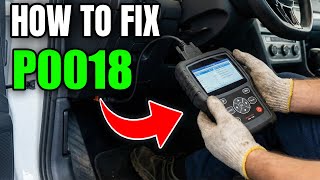
Helpful Videos
We Have This Part in Stock


The information in this article is provided for general reference and educational purposes only. Vehicle specifications, procedures, and part compatibility can vary by production date, trim level, and region. Always consult your vehicle's factory service manual and verify part numbers before purchasing or performing repairs. Safety-critical components such as airbags, seat belts, and braking systems should be installed by a qualified professional.
- Ford Taurus:
- 🧭 Diagnostic Flowchart
- 🎬 Helpful Videos
- 🛍️ Shop This Part
- What's Unique About the 2008-2019 Ford Taurus
- Symptoms You May Notice
- Most Likely Causes
- Rare But Worth Checking
- Diagnosis Steps
- Parts You'll Likely Need
- Related Codes That Often Appear With This One
- Technical Service Bulletins (TSBs) & Recalls
- Platform-Specific Known Issues
- Mechanic-Grade Diagnostic Values
- Hidden / Shadow Codes Worth Checking
- Scan Tool Commands That Help
- Wiring & Ground Locations
- Real Owner Repair Stories
- OEM Part Supersession History
- Model Year Variations Within This Range
- Other Known Issues on This Vehicle
- Used vs. New Parts: Buying Guide for This Vehicle
- Real Owner Stories
- 2011 Ford Edge 3.5L V6
- 2008 Ford Edge 3.5L V6
- 2016 Ford Taurus 3.5L GTDI — ~30000 miles
- Related OBD-II Codes
- Frequently Asked Questions
- 🎟️ Get 5% Off