

P0018 on 2020-2021 Ford Transit: Crank-Cam Correlation Causes and Fixes
On a 2020-2021 Ford Transit, P0018 is most often caused by a sticking VCT solenoid on the driver's side intake camshaft or a PCM software glitch. Before replacing parts, check if TSB 21-2224 applies, as a simple software update may be the fix. Always check engine oil level and condition first, as low or dirty oil is a frequent contributor.
- For a 2020-2021 Transit, P0018 could be a simple software bug. Check for TSB 21-2224 with a dealer before buying parts.
- The problem is on the driver's side ('Bank 2') intake camshaft.
- Always check your engine oil. Low or dirty oil is a very common cause for this code.
- If parts are needed, the most likely culprit is the driver's side intake VCT solenoid, which is a relatively affordable and accessible part to replace.
What's Unique About the 2020-2021 Ford TRANSIT
For this specific Transit, the P0018 code is directly addressed by Ford Technical Service Bulletins. TSB 21-2224 points to a software problem in the PCM that can falsely trigger this code, requiring a dealer-level reprogram rather than a mechanical part replacement. Additionally, other bulletins like SSM 50067 and SSM 54366 highlight a known tendency for the Variable Camshaft Timing (VCT) solenoids to stick due to small debris. Another TSB, SSM 48423, even advises technicians to use a scan tool to cycle the affected solenoid 10 times to try and dislodge debris before resorting to replacement.
Diagnostic Flowchart
Tap your situation to follow the diagnostic path that matches what you're seeing on this vehicle.
Symptoms You May Notice
- Check Engine Light is on
- Rough or uneven idle
- Hesitation or loss of power during acceleration
- Engine may stall, especially when coming to a stop or at low RPM
- Decreased fuel mileage
- Engine rattling noise, particularly on cold starts
- Immediately replacing the timing chain and phasers. This is an expensive repair ($2000+) that is often unnecessary, as the issue is frequently a much cheaper VCT solenoid, a software glitch, or simply old oil.
Most Likely Causes
- Powertrain Control Module (PCM) Software Issue 🔴 High Probability → Shop Engine Control Module (ECM) Ford issued TSB 21-2224 specifically for 2020-2021 Transits and other models, indicating that a software anomaly can cause this and other VCT codes.
How to confirm: A Ford dealership or a shop with Ford's diagnostic software (IDS) can check the vehicle's VIN against the TSB and determine if the PCM calibration is outdated. This should be a primary diagnostic step.
Typical fix: Perform a variable camshaft timing (VCT) cycling procedure and reprogram the PCM to the latest calibration level as per TSB 21-2224.
Est. part cost: $0 - Sticking or Failed Bank 2 Intake VCT Solenoid 🔴 High Probability → Shop Engine Variable Valve Timing (VVT) Solenoid Ford TSBs SSM 50067 and SSM 54366 state that small debris in the oil can cause VCT solenoids to stick, which is a common failure pattern on these engines. The solenoid's internal spool valve can get jammed by sludge or metal particles, preventing it from correctly regulating oil flow to the cam phaser.
How to confirm: Use a scan tool with bidirectional controls to command the Bank 2 intake VCT solenoid on and off at idle. A functional solenoid will cause a noticeable stumble or change in engine idle. No change suggests it's stuck. The Bank 2 intake solenoid is on the driver's side valve cover; it is typically the one closer to the front of the engine. Swapping it with the adjacent exhaust solenoid (if identical) and seeing the code change to P0019 is a definitive test.
Typical fix: Replace the Bank 2 (driver's side) intake VCT solenoid. It is highly recommended to change the engine oil and filter at the same time to remove the debris that likely caused the failure.
Est. part cost: $30-$80 - Low, Dirty, or Incorrect Viscosity Engine Oil 🟡 Medium Probability The entire VCT system is hydraulically operated by engine oil. The 3.5L engines are known to be sensitive to oil level and quality. Degraded oil or low levels cannot supply the necessary pressure and flow to operate the cam phasers correctly, leading to correlation faults.
How to confirm: Check the oil level on the dipstick and inspect the oil's condition and service history. If the oil is dark, sludgy, or below the minimum level, this is a likely contributor.
Typical fix: Perform an engine oil and filter change using the manufacturer-specified oil (Ford-spec SAE 5W-30 for the 3.5L EcoBoost) and a quality filter (e.g., Motorcraft FL-500S). Clear codes and re-evaluate.
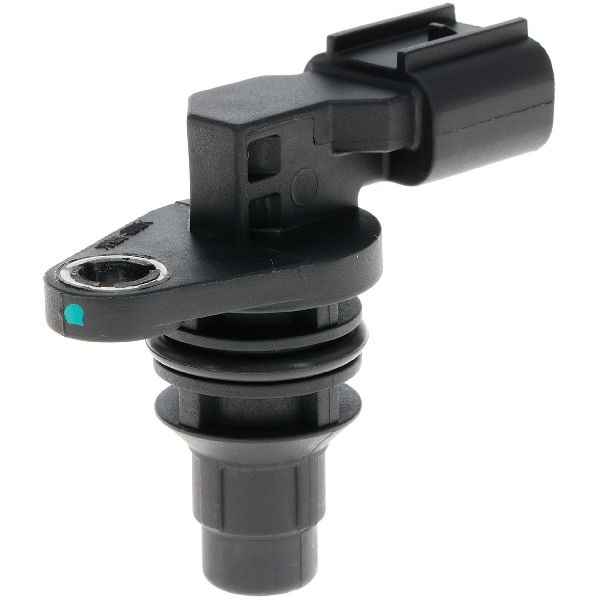
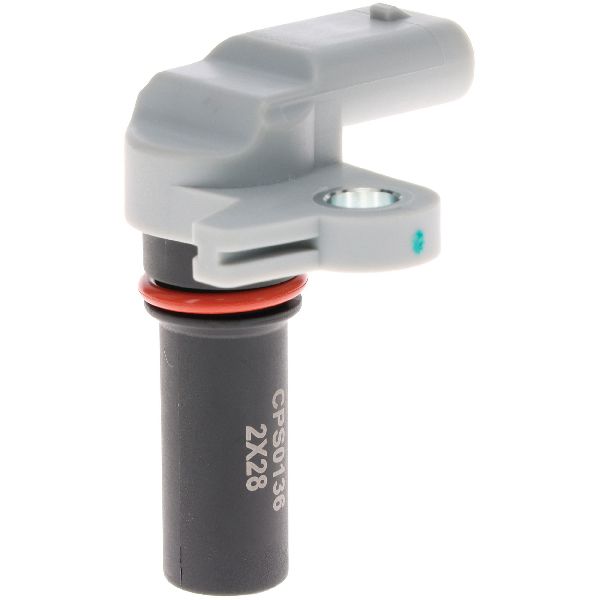
Est. part cost: $50-$100 - Faulty Bank 2 Camshaft Position Sensor ⚪ Low Probability → Shop Engine Camshaft Position Sensor
How to confirm: After ruling out the VCT solenoid, the sensor itself can be tested. A scan tool can monitor its live data for dropouts. An oscilloscope provides the most definitive test by analyzing the sensor's waveform. You can also test the sensor's internal resistance with a multimeter; a reading outside the manufacturer's specified range (often 200-900 ohms) indicates a fault.
Typical fix: Replace the Bank 2 (driver's side) intake camshaft position sensor.
Est. part cost: $25-$60
Rare But Worth Checking
- Stretched Timing Chain or Failed Timing Components: → Shop Engine Timing Chain While this is a major mechanical failure, it's less common than solenoid or oil issues on a newer vehicle. This should only be considered after all other causes have been ruled out. Symptoms often include a persistent rattling noise from the front of the engine, especially on startup.
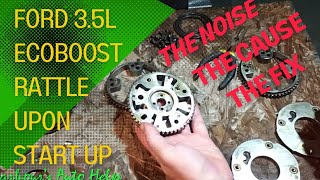
- Damaged Camshaft Phaser: → Shop Engine Camshaft The phaser is the gear on the end of the camshaft that actually adjusts the timing. It can fail mechanically or get clogged with debris, but this is much less frequent than the solenoid that controls it. A failing phaser is often associated with a loud cold-start rattle. 🎬 Watch: Identifying the cause of that engine rattle noise.
Diagnosis Steps
- Check for Technical Service Bulletins (TSBs). Immediately ask a dealer if TSB 21-2224 (PCM software update) applies to your vehicle's VIN. This is a known issue and the cheapest potential fix.
- Check the engine oil level and condition. If low, dirty, or overdue for a change, perform an oil and filter change with the correct Ford-spec oil. This is the easiest and most important first step.
- Using a capable OBD-II scanner, view the live data for VCTADV2 (desired angle) vs. VCT_A_ACT (actual angle) for Bank 2. A large, persistent discrepancy confirms the fault.
- Inspect the wiring and connectors for the Bank 2 (driver's side) intake VCT solenoid and camshaft position sensor for any visible damage, corrosion, or looseness. Ensure the intake and exhaust solenoid connectors are not swapped.
- Use the scanner's bidirectional controls to command the Bank 2 intake VCT solenoid. Listen for a click and watch for a change in engine performance (idle should become rough or stall). No response indicates a stuck or failed solenoid.
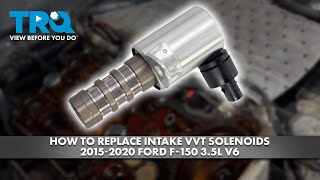
- If the solenoid is suspected, replace it. It is the most common mechanical point of failure for this code and is accessible on the top of the valve cover. 🎬 See this walkthrough on how to replace the intake solenoids.
- If a new solenoid does not resolve the issue, test the camshaft position sensor using a multimeter or oscilloscope.
- If all electronic components and software are confirmed good, the issue is likely mechanical (timing chain, tensioner, or phaser), which requires significant engine disassembly and should be handled by a professional.
Parts You'll Likely Need
- Variable Camshaft Timing (VCT) Solenoid (Bank 2 Intake)
(OEM #AT4Z-6M280-B)— This is the most common part to fail, often getting stuck due to oil debris, as noted in multiple Ford TSBs. It is used across a wide range of Ford/Lincoln 3.3L, 3.5L, and 3.7L V6 engines.
Trusted brands: Motorcraft, Dorman, NTK
OEM price range: $50-$90
Aftermarket price range: $30-$70 - Engine Oil and Filter
(OEM #FL-500S (Filter))— Clean, correct-viscosity oil is essential for the VCT system to function. An oil change is a critical first step and often a preventative fix. Neglecting oil changes is a primary cause of VCT system failure.
Trusted brands: Motorcraft, Mobil 1, Castrol
OEM price range: $50-$100
Aftermarket price range: $40-$80 - Camshaft Position Sensor (Bank 2 Intake)
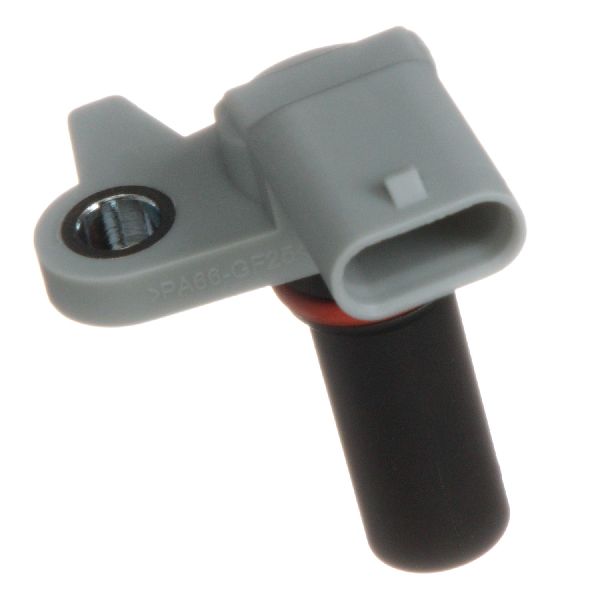
(OEM #BL3Z-6B288-C)— If the VCT solenoid and oil are good, a faulty sensor or its wiring could be the cause. This sensor provides the camshaft position signal that the PCM uses to detect the correlation fault.
Trusted brands: Motorcraft, Bosch, Standard Motor Products
OEM price range: $35-$55
Aftermarket price range: $25-$45
Related Codes That Often Appear With This One
- P0021 — This code is for 'Camshaft Position 'A' - Timing Over-Advanced (Bank 2)'. Seeing P0018 and P0021 together strongly points to a problem with the Bank 2 intake VCT system (solenoid or phaser), as the PCM is detecting both a correlation error and an over-advanced condition.
- P0345 — This code indicates a circuit malfunction for the Bank 2 camshaft position sensor. If seen with P0018, it suggests the root cause is more likely the sensor or its wiring, not the mechanical timing itself.
- P0019 — This is the same correlation fault but for the exhaust camshaft on Bank 2 ('Sensor B'). If P0018 and P0019 appear together, it points to a problem affecting the entire bank, such as an oil pressure/flow issue to that cylinder head or a timing chain that has jumped a tooth on that side.
Technical Service Bulletins (TSBs) & Recalls
- TSB 21-2224: Notes that a PCM software issue can cause P0018 and other VCT codes on 2020-2021 Transits, requiring a reprogram.
- SSM 54366: Lists P0018 as a potential VCT-related code and directs technicians to specific diagnostic tests.
- SSM 50067: Warns that P0018 may be caused by debris sticking in the VCT solenoid.
Platform-Specific Known Issues
- TSB 21-2224: Some 2020-2021 models may trigger P0018 due to a PCM software issue. The fix is a VCT cycling procedure and a PCM reprogram, not a part replacement. This should be the first item checked by a dealer.
- SSM 50067 & SSM 54366: These service messages from Ford note that this code may be due to small debris causing the VCT solenoid to stick and advise against immediate replacement of major timing components.
- Oil Sensitivity: The 3.5L V6 family of engines is well-documented to be sensitive to oil maintenance. Extending oil change intervals, especially under heavy use like in a commercial Transit, can lead to sludge that directly impacts the VCT solenoids and phasers, causing codes like P0018.
Mechanic-Grade Diagnostic Values
- VCT Solenoid Internal Resistance — expected: 6.9 to 12 Ohms. Some sources cite a tighter range of 6.9-7.9 Ohms, while others state a broader 8-12 Ohms.. Failure: A reading of 0 ohms (short circuit) or infinite/OL (open circuit) indicates a failed solenoid.
- Camshaft Position Sensor (CMP) Internal Resistance (2-pin sensor) — expected: Approximately 200 to 900 Ohms.. Failure: A reading significantly outside this range, or an open/short circuit, indicates a faulty sensor.
- CMP Sensor Power Supply Voltage (Hall-Effect Sensor, Key On Engine Off) — expected: 4.8 to 5.2 Volts DC.. Failure: Voltage outside this range points to a wiring or PCM issue, not necessarily a bad sensor.
- Ford IDS Scan Tool VCT Error PID (e.g., VCT_A_ERR2) — expected: Close to 0 degrees at hot idle.. Failure: A large, persistent error value in degrees indicates the phaser is not reaching its commanded position, pointing to a hydraulic or mechanical fault (solenoid, phaser, oil pressure).
Hidden / Shadow Codes Worth Checking
- Mode $06, TID $51 or $53: While primarily for misfire monitoring, Mode $06 on Ford vehicles also contains test results for other non-continuous monitors. Advanced scan tools can access VCT-related test IDs (TIDs) and component IDs (CIDs) which may show statistical data on VCT performance before a hard fault code is set. (see via A scan tool capable of displaying Mode $06 data. The specific TIDs for VCT can vary by year and software calibration.)
Scan Tool Commands That Help
- Ford IDS (Integrated Diagnostic System): DataLogger > VCT PIDs (VCT_ADV2, VCT_A_ACT2, VCT_A_ERR2) — To monitor the commanded (ADV) vs. actual (ACT) camshaft angle for Bank 2 Intake in real-time. The VCT Error (ERR) PID is crucial; it directly shows the difference between desired and actual positions, confirming the fault condition.
- Ford IDS (or capable bidirectional scanner): Active Commands > VCT Solenoid Control — To manually command the VCT solenoid on and off at idle. This directly tests the solenoid's electrical circuit and mechanical function. A working solenoid will cause a distinct change in idle quality or stall the engine. No change indicates a stuck solenoid or wiring issue. TSB SSM 48423 specifically advises cycling it 10 times to clear debris.
- Ford IDS: Toolbox > Powertrain > PCM Reprogramming — This is used to perform the software update specified in TSB 21-2224, which is a primary documented fix for this code on this vehicle.
Wiring & Ground Locations
- PCM Connector C175E — This is one of the main connectors at the Powertrain Control Module (PCM).. The control circuits for the Bank 2 VCT solenoids and the signal circuits for the Bank 2 camshaft position sensor terminate at this connector. Any corrosion or pin-fitment issues here can directly cause P0018.
- Engine Bay Ground Points (GP2, GP3, GP4, GP5) — Located on the driver's side (LHS) of the engine bay on the 2019+ Transit.. These are the primary ground points for the engine harness, which includes the VCT solenoids and camshaft sensors. A loose or corroded ground here can cause erratic sensor readings and trigger correlation faults.
Real Owner Repair Stories
- Ford F150 Forum thread (2011 Ford F-150 5.0L (similar VCT system)) — Loud ticking from driver's side, followed by codes P0018, P0302, and P0304 after replacing all timing components.
❌ Tried (didn't work) Visual inspection of timing marks seemed correct.
✅ What actually fixed it The secondary timing chain on the driver's side (Bank 2) was off by one tooth. Although the main chains were timed correctly, the intake cam was out of sync, which is exactly what P0018 indicated. The owner had to disassemble the front cover again to correctly align the secondary chain. - Ford F150 Forum thread (2018 Ford F-150 3.5L EcoBoost, 75k miles) — Loss of power while towing, codes P0018 and P0021 present but CEL not always on. Cam phasers had been replaced previously at 50k miles.
❌ Tried (didn't work) Clearing codes (they would return after ~400 miles), returning to stock tune, replacing spark plugs.
✅ What actually fixed it The user was still in the diagnostic process with the dealer, but the symptoms and combination of codes (correlation and over-advanced on the same cam) strongly pointed towards a recurring cam phaser issue or a stuck VCT solenoid, a common failure path on this engine. The story highlights the difficulty in diagnosing the issue when it only occurs under load.
OEM Part Supersession History
Not specified, but AT4Z-6M280-B is a long-standing number.→AT4Z-6M280-B remains the current OEM part number for the VCT solenoid.— N/A
Heads up: This part number is widely used across many Ford V6 engines (3.3L, 3.5L, 3.7L) from roughly 2011 to present, indicating broad compatibility within this family.BL3Z-6B288-A, DU-95→BL3Z-6B288-C (also sold as Motorcraft DU102).— Part revisions for improved performance or manufacturing changes.
Helpful Videos


We Have This Part in Stock


The information in this article is provided for general reference and educational purposes only. Vehicle specifications, procedures, and part compatibility can vary by production date, trim level, and region. Always consult your vehicle's factory service manual and verify part numbers before purchasing or performing repairs. Safety-critical components such as airbags, seat belts, and braking systems should be installed by a qualified professional.
- Ford TRANSIT:
- 🧭 Diagnostic Flowchart
- 🎬 Helpful Videos
- 🛍️ Shop This Part
- What's Unique About the 2020-2021 Ford TRANSIT
- Symptoms You May Notice
- Most Likely Causes
- Rare But Worth Checking
- Diagnosis Steps
- Parts You'll Likely Need
- Related Codes That Often Appear With This One
- Technical Service Bulletins (TSBs) & Recalls
- Platform-Specific Known Issues
- Mechanic-Grade Diagnostic Values
- Hidden / Shadow Codes Worth Checking
- Scan Tool Commands That Help
- Wiring & Ground Locations
- Real Owner Repair Stories
- OEM Part Supersession History
- 🎟️ Get 5% Off