

P0018 on 2007-2016 GMC Acadia 3.6L V6: Stretched Timing Chain Causes and Fixes
On a 2007-2016 GMC Acadia, code P0018 almost always means the timing chains have stretched. This is a very common, well-documented issue with the 3.6L V6 engine (LY7 and LLT). The repair is a major, labor-intensive job costing $1,800-$3,600+ and should be done by a professional. Ignoring it can lead to catastrophic engine failure.
- P0018 on a 2007-2016 Acadia almost always means you need a timing chain replacement, which is a very expensive repair.
- Do not waste money replacing sensors first; the problem is almost certainly mechanical. Have the timing system professionally diagnosed.
- This is not a DIY-friendly job. It requires extensive labor and special tools to perform correctly.
- Using high-quality full synthetic oil and adhering to shorter change intervals (e.g., every 5,000 miles) is critical to prolonging the life of the timing components on this engine.
- Driving with this code is risky and can lead to catastrophic engine failure if the chain breaks or jumps time.
What's Unique About the 2007-2016 GMC Acadia
The first-generation Acadia and its Lambda platform siblings with the 3.6L V6 (LY7 and LLT engines) are notorious for premature timing chain stretching. The issue was so widespread that General Motors issued a Special Coverage Adjustment (#11340C) that extended the warranty for this specific failure to 10 years or 120,000 miles for certain model years. This problem was made worse by the original Oil Life Monitor (OLM) system programming, which allowed for excessively long oil change intervals (up to 10,000+ miles), leading to oil breakdown that accelerated chain wear. As a result, P0018 on this vehicle is almost certainly a major mechanical failure, not a simple sensor issue.
Symptoms You May Notice
- Check Engine Light is on
- Engine rattling noise, especially on cold startup or from the front (radiator side) of the engine. 🎬 Watch: Diagnosing engine rattle and misfire symptoms
- Reduced engine power and poor acceleration.
- Rough, unstable, or surging idle.
- Engine may hesitate or stall, particularly when coming to a stop.
- Decreased fuel economy.
- Hard starting.
- Replacing only the camshaft position sensor. The sensor is almost always reporting the timing correlation issue correctly; the problem is mechanical (stretched chain).
- Replacing only the VVT solenoids. While a solenoid can fail, it is a much less common cause than stretched chains on this engine. This often fails to fix the code and just wastes money if the chains are the real issue.
Most Likely Causes
- Stretched Timing Chains 🔴 High Probability → Shop Engine Timing Chain The original timing chains used on the LY7 and LLT engines were susceptible to premature wear and stretching. This was exacerbated by long oil change intervals allowed by the factory Oil Life Monitor (OLM) calibration, leading to oil degradation and loss of lubrication. There are three chains in the engine: one primary and two secondary. Stretch in any of them can cause timing codes.
How to confirm: A professional scan tool can read the desired vs. actual camshaft position angles. A persistent deviation of more than 4-6 degrees at idle confirms a mechanical timing issue. A visual inspection during teardown will reveal excessive slack in the chains, as shown in many online repair videos.
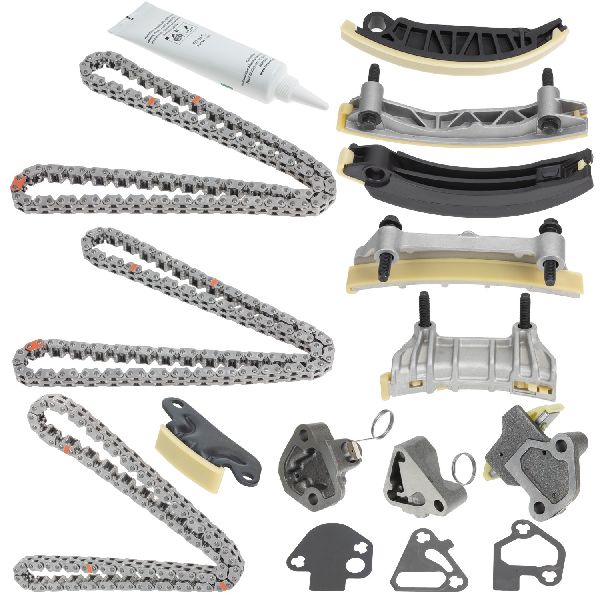
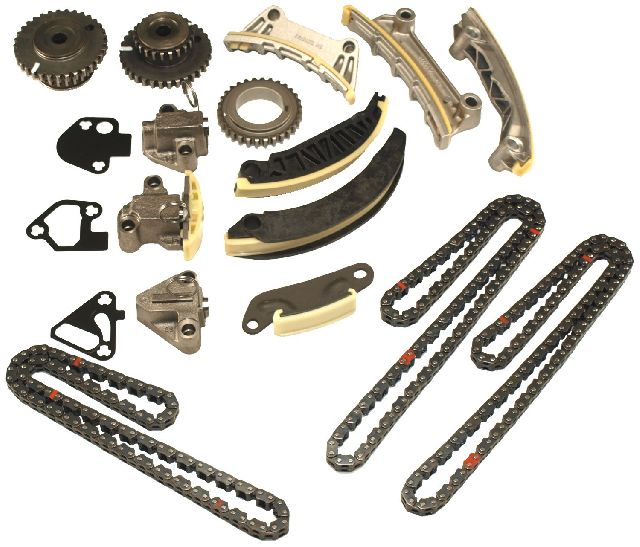
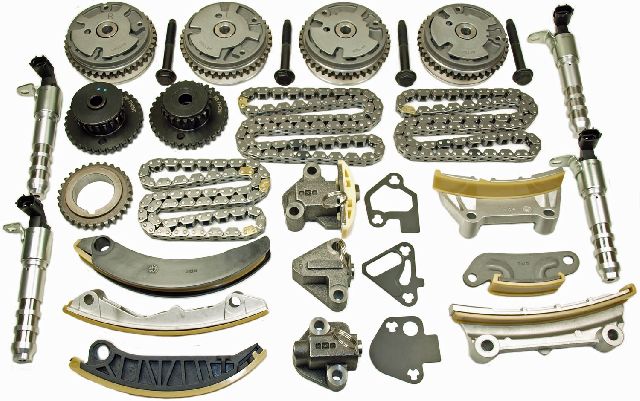
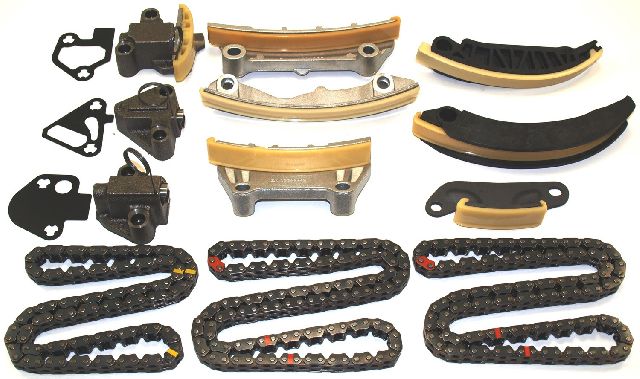
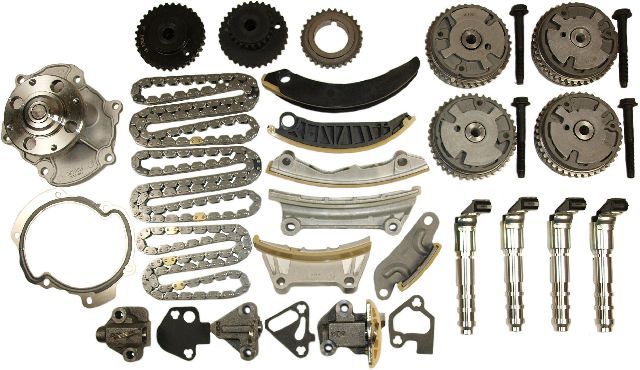
Typical fix: Replace all three timing chains, all tensioners, and all guides using an updated OEM or high-quality aftermarket kit. This is a major repair that often requires removing or lowering the engine subframe. 🎬 See this walkthrough of an in-car timing chain replacement It is also recommended to replace the water pump and VVT solenoids at the same time.
Est. part cost: $250-$600 - Failed Timing Chain Tensioner(s) or Guide(s) 🔴 High Probability → Shop Engine Timing Chain The hydraulic tensioners rely on clean oil at the correct pressure. Sludge from old oil can cause them to stick or fail to extend properly. The plastic guides can become brittle with age and heat cycles, breaking apart and allowing the chain to slap.
How to confirm: This is diagnosed during a visual inspection when checking the timing chains. A failed tensioner will not keep the chain taut, and pieces of broken guides may be found in the oil pan. Manufacturer bulletin #PIP3423P explicitly instructs technicians to inspect for loose timing chains or tensioners when codes P0016-P0019 are set.
Typical fix: Tensioners and guides are always replaced as part of a complete timing chain service. They should never be replaced in isolation as the chains are almost certainly worn as well.
Est. part cost: $50-$150 (part of kit) - Low or Dirty Engine Oil 🟡 Medium Probability The entire variable valve timing (VVT) system, including the cam phasers and chain tensioners, is operated by oil pressure. The extended oil change intervals originally recommended by GM for these vehicles are a primary contributor to oil breakdown, sludge, and accelerated wear on all timing components.
How to confirm: Check the oil level on the dipstick and inspect its condition. If the level is low or the oil is dark, thick, or past its change interval, this is a likely contributing factor. An oil pressure test can also be performed.
Typical fix: Perform an oil and filter change using a high-quality full synthetic 5W-30 oil that meets GM's dexos1 specification. This is a critical first diagnostic step, but if the chains are already stretched, an oil change alone will not resolve the code.
Est. part cost: $50-$100 - Faulty Camshaft Position Actuator Solenoid (VVT Solenoid) ⚪ Low Probability → Shop Engine Camshaft These solenoids control oil flow to the cam phasers. They have fine mesh screens that can become clogged with debris from dirty or sludgy oil, or they can fail electronically.
How to confirm: Use a scan tool to command the solenoid on and off while watching cam angle data. A common DIY test is to swap the Bank 2 intake and exhaust solenoids. If the code changes to P0019 (exhaust cam correlation), the solenoid is confirmed as the fault. Resistance should be between 7-12 ohms for the LLT engine.
Typical fix: Replace the Bank 2 intake camshaft position actuator solenoid. It is located on the front valve cover and is relatively accessible for replacement as a diagnostic step. The OEM part number is 12655420 for many models.
Est. part cost: $25-$60
Rare But Worth Checking
- Slipped Crankshaft Reluctor Wheel: → Shop Engine Crankshaft Mentioned in multiple versions of GM TSB #PIP3423. The reluctor wheel on the crankshaft, which the crank sensor reads, is press-fit and can physically move or rotate. This will cause persistent P0016-P0019 codes even after a timing chain replacement. The fix requires crankshaft replacement, as GM does not recommend re-securing the old one.
- Faulty Camshaft or Crankshaft Position Sensor: → Shop Engine Crankshaft Position Sensor It is very rare for the sensor itself to be the cause of a correlation code on this platform. The sensor is usually accurately reporting a mechanical problem. Do not replace sensors unless all mechanical causes have been ruled out, as this is a common misdiagnosis.
- Failed Camshaft Phaser/Actuator: → Shop Engine Camshaft The gear assembly on the end of the camshaft can fail internally. One owner on a forum reported that a P0019 code persisted after a full timing job until the new aftermarket cam phaser was replaced with an OEM unit. This is a rare failure mode compared to chain stretch.
Diagnosis Steps
- Check Engine Oil Level and Condition: Verify the oil is full and clean. If low or dirty, perform an oil change with full synthetic 5W-30 oil meeting the GM dexos1 spec, clear codes, and re-test. This is a critical first step but unlikely to be a permanent fix.
- Scan for Codes: Use an OBD-II scanner to confirm P0018 and check for other related timing codes (P0008, P0009, P0016, P0017, P0019). Multiple codes strongly point to a chain issue.
- Analyze Live Data: Use an advanced scan tool to monitor 'Camshaft Position Variance' or 'Desired vs. Actual Camshaft Position' for Bank 2 Intake. A consistent deviation of more than 4-6 degrees at idle points to a mechanical timing issue.
- Test VVT Solenoid: As a preliminary check, swap the Bank 2 intake VVT solenoid with the Bank 2 exhaust solenoid. Clear codes and drive. If the code changes to P0019, the solenoid is faulty. If P0018 returns, the problem is mechanical.
- Mechanical Inspection: If scan tool data points to a mechanical fault, a physical inspection is required. This involves significant disassembly to access the timing cover and check for slack in the timing chains and the condition of the guides and tensioners.
Parts You'll Likely Need
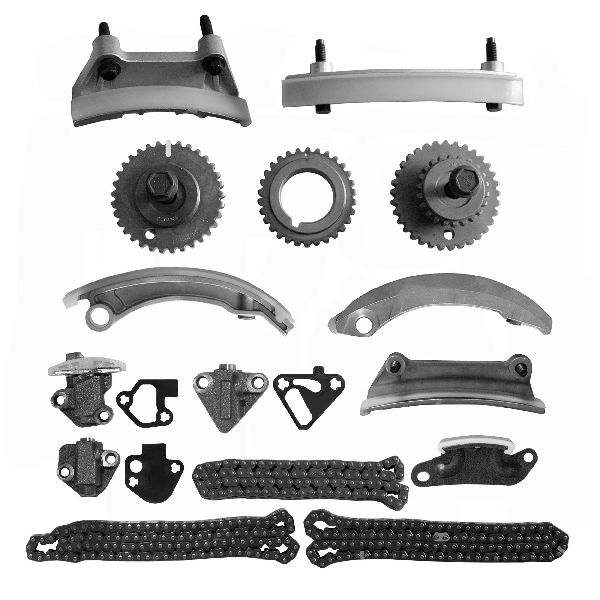
- Engine Timing Chain Kit
(OEM #12651450 (For 2009+ LLT engines), 12650230 (For 2007-2008 LY7 engines))— This is the definitive fix for the most common cause, a stretched timing chain. A complete kit ensures all wearable components are replaced with updated parts.
Related Codes That Often Appear With This One
- P0016 — This is the same correlation error but for Bank 1 (rear/firewall side). If both P0016 and P0018 are present, it strongly suggests an issue with the primary timing chain affecting both banks, or a slipped crank reluctor wheel.
- P0019 — This is a correlation error for the exhaust camshaft on Bank 2. Seeing it with P0018 points to a timing issue affecting the entire Bank 2 secondary chain, making a stretched chain highly probable.
- P0008 / P0009 — These are more general engine position performance codes for Bank 1 and Bank 2, respectively. They are very common precursors or companions to the more specific P0016-P0019 codes and are strong indicators of a stretched timing chain.
Technical Service Bulletins (TSBs) & Recalls
- GM #11340C: Special Coverage Adjustment - Timing Chain Wear. Extended warranty coverage to 10 years/120,000 miles for certain models due to premature timing chain wear. Also involved an ECM reprogram to change the oil life monitor calculation.
- GM #PIP3423 (multiple revisions): Diagnostic aid for DTCs P0008, P0009, and P0016-P0019. Points technicians to check for a slipped crankshaft reluctor wheel if timing chains are found to be okay or have already been replaced.
- Bulletin #PIP3423P: This communication provides guidance that codes P0016, P0017, P0018, P0019, P0008, or P0009 may be set, requiring technicians to inspect for loose timing chains or tensioners.
Platform-Specific Known Issues
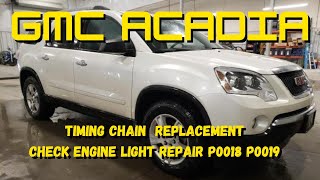
- Owner Experience: DIY Timing Chain Replacement: → Shop Engine Timing Chain A YouTube video from a user who purchased a 2012 GMC Acadia at auction with P0018 and P0019 codes documents the repair. Upon removing the front valve cover, the secondary timing chain for Bank 2 was visibly loose and rattling. The video shows the process of replacing the chains, guides, and tensioners. The owner also noted significant wear marks on the cam phaser sprockets due to the loose chain, prompting their replacement as well. The repair successfully resolved the codes and the rough running condition.
Mechanic-Grade Diagnostic Values
- Camshaft Position Actuator Solenoid Resistance (LLT Engine, 2009-2016) — expected: 8 to 12 Ohms at 68°F (20°C).. Failure: A reading outside this range, an open circuit (OL), or a short (near 0 Ohms) indicates a failed solenoid coil.
- Camshaft Position Actuator Solenoid Resistance (LY7 Engine, 2007-2008) — expected: 4.6-7.5 ohms. Failure: A reading outside this range indicates a failed solenoid.
- Scan Tool 'Camshaft Position Variance' PID — expected: < 4 degrees at idle.. Failure: A consistent deviation greater than 4-6 degrees indicates a mechanical timing problem (e.g., stretched chain).
- Crankshaft Reluctor Wheel Position (TSB #PIP3423P) — expected: 25 to 26 mm from the machined surface of the crankshaft throw to the edge of the open space in the reluctor wheel.. Failure: Significant deviation indicates the reluctor has slipped, requiring crankshaft replacement.
- Camshaft Position Sensor 5V Reference Circuit — expected: 4.8-5.2 Volts.. Failure: Voltage outside this range suggests a problem with the ECM or wiring, not the sensor itself.
Scan Tool Commands That Help
- GDS2 (GM Global Diagnostic System 2): Camshaft Position Actuator Solenoid Control / Test — This is a bidirectional control used to command the solenoid on and off to verify its mechanical and electrical function. A technician can observe the change (or lack thereof) in camshaft angle data to isolate a faulty solenoid from a stuck phaser or oil pressure issue.
- GDS2 (GM Global Diagnostic System 2): Camshaft Position Variation Learn — This procedure should be performed after replacing a camshaft, phaser, or the timing chains to allow the ECM to learn the new baseline positions of the valvetrain components.
Wiring & Ground Locations
- G103 — Left side of engine compartment, on the left inner fender panel.. This is a primary engine-related ground point. A poor connection here can cause erratic behavior from various engine sensors and the ECM, potentially leading to false codes or incorrect sensor readings.
- G112 — Rear of the engine, mounted to the rear of the cylinder head.. This ground is directly on the engine block, providing a critical ground path for components mounted on the engine itself, including sensors and ignition coils. A compromised G112 could affect the reference ground for the cam and crank sensors.
- ECM (Engine Control Module) — Left side of the engine.. The ECM is the central component that receives signals from the cam and crank sensors and controls the VVT solenoids. Its location and grounding are critical for proper operation.
- Bank 2 Camshaft Position Sensor Connector — Front of the left cylinder head (Bank 2 is the front/radiator side bank).. This is the direct electrical connection for the sensor in question. Verifying the 5V reference, ground, and signal wires at this connector is a key diagnostic step.
Real Owner Repair Stories
- NHTSA ODI #11394702 — An owner reported that a diagnostic test retrieved failure codes P0018 and P0021, showing that the timing chain and camshaft actuator were no longer performing properly.
- YouTube user @RepairsandReviews (2012 GMC Acadia) — Check engine light on, running rough, rattling noise.
❌ Tried (didn't work) Initial diagnosis only.
✅ What actually fixed it The user diagnosed P0018 and P0019, opened the valve cover, and found a very loose timing chain. The final fix was a complete timing chain kit replacement, which resolved the codes and symptoms. - Toyota Tundra Forum user (on a different vehicle, but illustrates a key concept) (Toyota Tundra 5.7L) — Check Engine Light with P0018 immediately after replacing timing chain tensioners.
❌ Tried (didn't work) Clearing the code (it returned)., Swapping bank 1 and bank 2 sensors to rule out a bad sensor.
✅ What actually fixed it The owner had to tear the engine down a second time and discovered the timing was off by one tooth. After correctly re-timing the engine, the code was resolved. This highlights the critical importance of perfect timing alignment during reassembly.
OEM Part Supersession History
12651450→12700436— Updated kit to address premature wear and stretching issues in the original chains.
Heads up: While 12651450 was the original kit for many LLT engines, using the latest superseded part number (e.g., 12700436 or a subsequent number like 12693218 mentioned by parts dealers) is critical to ensure the most durable, updated components are installed.N/A (Early OLM Calibration)→Updated ECM Software— The original Oil Life Monitor (OLM) algorithm allowed for excessively long oil change intervals, leading to oil degradation and accelerated timing chain wear.
Heads up: As part of the special coverage, GM instructed dealers to reprogram the ECM with a new calibration that shortened the oil change intervals to mitigate chain wear. Vehicles that did not receive this update may still be running the overly aggressive original OLM logic.
Model Year Variations Within This Range
- 2007-2008 (LY7) vs. 2009-2016 (LLT): The VVT solenoids use different resistance values; LY7 engines may have a spec of 4.6-7.5 ohms, while LLT engines use 7-12 ohms. The timing chain kits also have different part numbers (LY7: 12650230, LLT: 12651450 and successors).
- 2007-2009 (select models): These model years were the primary focus of GM's Special Coverage Adjustment 11340C, which extended the warranty for timing chain failure to 10 years/120,000 miles and included an ECM re-flash to adjust the Oil Life Monitor.
Diagnostic Flowchart
Real Owner Stories
Aggregated from forums and TSBs cited above. Mileages and costs reflect what owners reported in those sources.
2012 GMC Acadia SLT
Symptoms: The car had been vibrating and shuddering while in park, and making an unusual rumbling noise when driving, mainly during acceleration. The check engine light came on, and a visual inspection under the hood revealed a very loose, leaking hose connector.
What fixed it: Not specified in the initial report, but the owner was seeking diagnostic advice for the rough running and CEL.
Source hint: Reddit r/MechanicAdvice
2012 GMC Acadia 3.6L V6
Symptoms: Vehicle had a rough running condition and triggered both P0018 and P0019 codes. Upon removing the front valve cover, the secondary timing chain for Bank 2 was visibly loose and rattling.
What fixed it: Replaced all timing chains, guides, and tensioners. The owner also replaced the cam phaser sprockets due to significant wear marks caused by the loose chain.
Source hint: YouTube video from a user who purchased a 2012 GMC Acadia at auction
2009 GMC Acadia 3.6L V6
Symptoms: Code P0018 appeared after a recent repair.
What fixed it: An expert response detailed diagnosing multiple potential causes, ranging from sensors to the timing chains, and checking for the rare slipped crank reluctor wheel issue.
Source hint: 2CarPros - 'Code P0018 - 2009 gmc acadia'
Related OBD-II Codes
Frequently Asked Questions
Does GM have a recall or extended warranty for the timing chains on my Acadia?
Can I just replace the VVT solenoid to fix P0018 on my 3.6L V6?
What oil should I use to prevent timing chain issues in my Acadia?
My mechanic said the timing chains are fine, but I still have P0018. What else could it be?
How can I confirm if my Acadia's timing chains are actually stretched without taking the engine apart?
Helpful Videos


We Have This Part in Stock

The information in this article is provided for general reference and educational purposes only. Vehicle specifications, procedures, and part compatibility can vary by production date, trim level, and region. Always consult your vehicle's factory service manual and verify part numbers before purchasing or performing repairs. Safety-critical components such as airbags, seat belts, and braking systems should be installed by a qualified professional.
- GMC Acadia:
- 🧭 Diagnostic Flowchart
- 🎬 Helpful Videos
- 🛍️ Shop This Part
- What's Unique About the 2007-2016 GMC Acadia
- Symptoms You May Notice
- Most Likely Causes
- Rare But Worth Checking
- Diagnosis Steps
- Parts You'll Likely Need
- Related Codes That Often Appear With This One
- Technical Service Bulletins (TSBs) & Recalls
- Platform-Specific Known Issues
- Mechanic-Grade Diagnostic Values
- Scan Tool Commands That Help
- Wiring & Ground Locations
- Real Owner Repair Stories
- OEM Part Supersession History
- Model Year Variations Within This Range
- Real Owner Stories
- 2012 GMC Acadia SLT
- 2012 GMC Acadia 3.6L V6
- 2009 GMC Acadia 3.6L V6
- Related OBD-II Codes
- Frequently Asked Questions
- 🎟️ Get 5% Off