

P0018 on 2023 GMC Acadia 3.6L V6: Crankshaft Camshaft Correlation Causes and Fixes
On a 2023 GMC Acadia with the 3.6L V6 engine, code P0018 almost always indicates a stretched timing chain or related component failure. This is a serious, labor-intensive repair that should not be ignored, as it can lead to catastrophic engine damage. Expect shop costs to range from $1,800 to $3,500, with some estimates reaching over $4,000.
- P0018 on a 2023 Acadia 3.6L V6 is a critical code that almost always points to a stretched timing chain.
- Do not drive the vehicle extensively. Continued operation risks catastrophic, non-repairable engine damage.
- This is not a DIY repair. Timing chain replacement is a complex job that requires professional service.
- Do not waste money replacing sensors first; the problem is almost certainly mechanical.
- Ensure you use the correct OEM-specified engine oil and change it at regular intervals to maximize the life of the timing components.
What's Unique About the 2023-2023 Gmc ACADIA
The GM 3.6L V6 engine family (including the LY7, LLT, LFX, and LGX) has a well-documented history of premature timing chain issues. While the later LGX version in the 2023 Acadia is considered more reliable than its predecessors (LY7/LLT), the fundamental design of a three-chain system remains susceptible to wear, especially if oil maintenance is neglected. Factors contributing to wear in the broader engine family include chain design, long oil change intervals suggested by the Oil Life Monitor (OLM), and oil breakdown. Therefore, unlike on many other vehicles where a P0018 might be a simple sensor fault, on this platform it is a strong indicator of a mechanical timing problem.
🎬 Watch: Understanding GM 3.6L timing codes and warranty coverage.Diagnostic Flowchart
Tap your situation to follow the diagnostic path that matches what you're seeing on this vehicle.
Symptoms You May Notice
- Check Engine Light is on
- Engine running rough or unstable idle
- Rattling or chain-slap noise from the engine, especially on cold startup.
- Reduced engine power and poor acceleration
- Decreased fuel economy
- Engine stalling
- Bucking or surging during acceleration.
- Replacing only the camshaft position sensor or crankshaft position sensor. While a sensor can fail, it is very uncommon for it to be the root cause of P0018 on this engine. The problem is almost always mechanical (the timing chain) rather than electrical (the sensor). The sensor is typically doing its job correctly by reporting the timing deviation.
Most Likely Causes
- Stretched Timing Chain(s) 🔴 High Probability → Shop Engine Timing Chain The GM 3.6L V6 engine family has a known history of premature timing chain wear and stretch. While improved in the LGX engine, inadequate lubrication from degraded oil or extended oil change intervals remains the primary cause of accelerated wear.
How to confirm: A technician must measure the slack in the timing chains, which requires significant engine disassembly to access the timing cover. A scan tool showing a persistent, large deviation between desired and actual cam angles is also a strong indicator. A lab scope can be used to compare the crankshaft and camshaft sensor waveforms to a known-good pattern to confirm timing electronically.
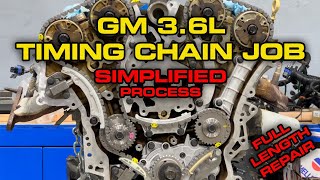
Typical fix: Replace all three timing chains, along with the tensioners, guides, and sprockets. This is typically done as a complete kit. It is also common to replace the water pump during this service due to accessibility.
Est. part cost: $300-$700 - Failed Timing Chain Tensioner(s) 🔴 High Probability → Shop Engine Timing Chain The tensioners are hydraulic and rely on clean, correct-viscosity oil pressure to keep the chains taut. If a tensioner seal fails or it becomes clogged with sludge, it can't maintain pressure, leading to chain slack and correlation codes.
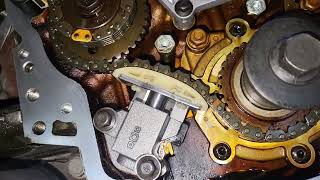
How to confirm: Inspected for failure, weakness, or excessive extension during timing chain service. A rattling noise on startup that goes away is a classic sign of a tensioner bleeding down. 🎬 See how to fix that VVT clattering noise on startup.
Typical fix: Replaced as part of a complete timing chain service kit. It is not recommended to replace only the tensioner if the chain is suspected to have been running loose.
Est. part cost: $50-$150 - Low or Degraded Engine Oil 🟡 Medium Probability The camshaft phasers and timing chain tensioners are hydraulically operated by engine oil. Low oil levels or oil that has lost its viscosity can cause them to function improperly, leading to timing correlation codes. Earlier generations of this engine had issues with oil life monitors allowing for excessively long change intervals, contributing to sludge and wear.
How to confirm: Check the oil level on the dipstick and inspect its condition. If the oil is very low, black, or sludgy, this could be the cause or a major contributing factor.
Typical fix: Perform an oil and filter change using the correct OEM-specified oil (full synthetic ACDelco dexos1). Clear codes and see if the problem returns. If the code comes back quickly, mechanical wear has already occurred.
Est. part cost: $50-$100 - Faulty Camshaft Actuator Solenoid (VVT Solenoid) ⚪ Low Probability → Shop Engine Camshaft These solenoids control oil flow to the camshaft phasers. They can become clogged with sludge or fail electronically. TSB PIP5730B specifically points to a related 'Intake Camshaft Position Actuator Park Lock Solenoid Valve' sticking or coming apart as a possible cause for P0018 on the LGX engine.
How to confirm: A technician can command the solenoid on and off with a scan tool while monitoring cam position data. They can also be swapped from bank to bank to see if the code follows. Resistance can be checked with a multimeter and should be between 6.9 and 7.9 Ohms.
Typical fix: Replace the Bank 2 intake camshaft actuator solenoid and/or the park lock solenoid valve.
Est. part cost: $40-$90
Rare But Worth Checking
- Failed Camshaft Phaser: → Shop Engine Camshaft The phaser (actuator) is the gear on the end of the camshaft that adjusts timing. It can get stuck, fail internally, or have issues with its locking pin. In some cases, even a new aftermarket phaser can be faulty and cause codes to persist after a timing job.
- Slipped Crankshaft Reluctor Wheel: → Shop Engine Crankshaft The reluctor wheel is what the crankshaft sensor reads. In rare cases, it can slip on the crankshaft, causing a mismatch with the cam signals even if the timing chain is perfect. This was noted in TSB PIP3423P for older models and remains a possibility, though less common than chain stretch.
- Swapped Electrical Connectors After Repair: According to GM TSB #23-NA-091, the connectors for the intake camshaft actuator solenoid and the intake actuator park lock solenoid are identical. If these are swapped during reassembly after a repair, it will cause P0016 and/or P0018 to set immediately with a rough idle.
Diagnosis Steps
- Verify Engine Oil Level and Condition: Ensure the engine oil is full and clean. If low or dirty, perform an oil change with the manufacturer-specified grade (e.g., full synthetic 5W-30 dexos1 approved) and a quality filter, clear the codes, and re-test.
- Scan Tool Analysis: Use an advanced scan tool to monitor desired vs. actual camshaft angles for Bank 2. A significant and persistent deviation confirms the correlation error is real and not intermittent. For some GM vehicles, a deviation of more than 9-11 degrees will set the code.
- Inspect and Test Camshaft Actuator Solenoids: Per TSB PIP5730B, inspect the Intake Camshaft Position Actuator Park Lock Solenoid Valves for damage or sticking. Swap the VVT solenoids between banks (e.g., swap Bank 2 intake with Bank 1 intake) and see if the code changes to P0016. If it does, the solenoid is faulty. Also, if recent engine work was performed, verify the correct connectors are plugged into the actuator and park lock solenoid per TSB #23-NA-091.
- Mechanical Timing Inspection: If the above steps do not resolve the issue, the next step is mechanical inspection. This is a labor-intensive process that involves removing the engine mount and timing cover to physically inspect the timing chains for slack, and check the tensioners and guides for wear or damage. This step is best left to a professional.
- Inspect Crankshaft Reluctor Wheel: During timing chain service, a technician should also verify the crankshaft reluctor wheel has not slipped, as mentioned in GM preliminary bulletins for older models.
Parts You'll Likely Need
- Timing Chain Kit
(OEM #ACDelco 12713649 (Kit for 2017-2023 Acadia 3.6L LGX))— This is the most common cause of P0018. A kit ensures all wearable components (chains, tensioners, guides, sprockets) are replaced at once for a complete repair.
Trusted brands: ACDelco (GM Genuine), Cloyes, Melling
OEM price range: $400-$600
Aftermarket price range: $250-$450 - Camshaft Position Actuator Solenoid
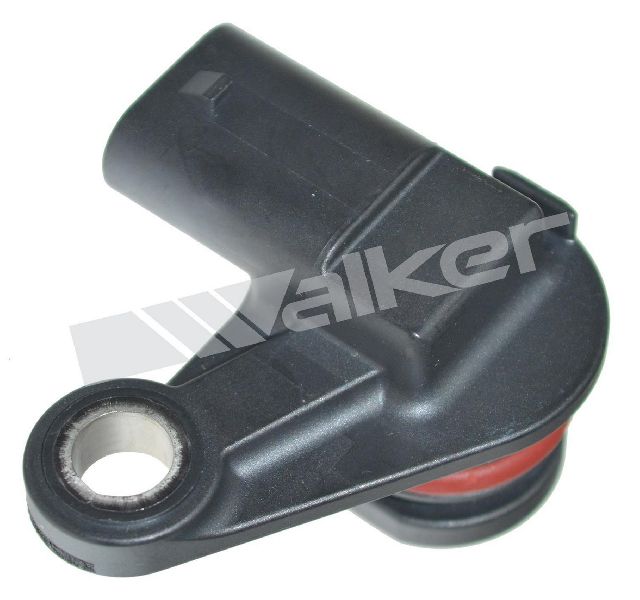
(OEM #ACDelco 12681018 (Intake, Bank 2))— A less common but possible cause, and a relatively inexpensive part to replace as a diagnostic step before committing to a timing chain job.
Trusted brands: ACDelco, Delphi
OEM price range: $60-$90
Aftermarket price range: $30-$60
Related Codes That Often Appear With This One
- P0016 — This is the same correlation error but for Bank 1 (the rear bank). If both P0016 and P0018 are present, it strongly points to a problem with the primary timing chain affecting both banks.
- P0019 — This is a correlation error for the exhaust camshaft on Bank 2. Seeing it with P0018 points to a significant timing issue on the entire Bank 2 secondary chain or the primary chain.
- P0008 / P0009 — These are more general engine position system performance codes for Bank 1 and Bank 2, respectively. They are often the first codes to appear as a timing chain begins to stretch and indicate a timing deviation on the respective bank.
Technical Service Bulletins (TSBs) & Recalls
- 23-NA-091: Notes that P0016 and/or P0018 can appear after engine repairs, indicating potential issues with timing procedures during reassembly.
- PIP5730B: Specifically for the Gen 2 HFV6 (LGX), this bulletin suggests that codes P0016 and P0018 can be caused by a sticking or damaged Intake Camshaft Position Actuator Park Lock Solenoid Valve, and advises inspection and swapping them between banks for diagnosis.
- PIP3423P: An older preliminary bulletin that instructs technicians to inspect for loose timing chains or tensioners when codes like P0018 are present, and also mentions the possibility of a slipped crankshaft reluctor wheel.
Platform-Specific Known Issues
- A complaint filed with the NHTSA for a 2014 Acadia with codes P0018 and P0021 resulted in a diagnosis of a failed timing chain and camshaft actuator. [ODI #11394702]
- A 2017 Acadia owner reported codes P0010, P0016, and P0018, leading to a mechanic's recommendation to replace the engine. [ODI #11569314]
Mechanic-Grade Diagnostic Values
- Camshaft Position Actuator Solenoid Resistance — expected: 6.9 to 7.9 Ohms at 68°F (20°C). Failure: A reading of 0 Ohms (short), infinite/OL (open), or a value significantly outside the expected range.
- Known-Good Cam/Crank Waveform (Bank 2) — expected: Using a lab scope, the intake camshaft signal transition should occur within the missing tooth gap of the crankshaft signal. The exhaust camshaft signal transition should occur approximately three crankshaft teeth after the gap.. Failure: A shift of the camshaft signal to the right (retarded) on the scope relative to the crankshaft signal indicates a potential stretched timing chain.
Scan Tool Commands That Help
- GDS2 / Professional Scan Tool: Camshaft Position Actuator Solenoid Control — To functionally test the VVT solenoid. A technician can command the solenoid on and off while monitoring the camshaft sensor for changes in timing to see if the solenoid is physically responding to commands.
Wiring & Ground Locations
- Camshaft/Park Lock Solenoid Connectors — On the 3.6L LGX, the Bank 1 intake camshaft actuator solenoid is on top of the engine, while the intake actuator park lock solenoid is on the front of the engine. The connectors are identical.. TSB #23-NA-091 warns that these two identical connectors can be swapped during engine repairs. This will immediately set a P0016 and/or P0018 code. Verifying the wire colors in the connectors against a schematic is the only way to confirm they are in the correct locations.
OEM Part Supersession History
12633123→12681018, 12734067— Part has been updated by the manufacturer.
Heads up: Part number 12681018 is listed as being superseded by 12734067 by some sources, while other sources show 12681018 replacing 12734067. Always verify the correct, most current part number with a GM dealer using the vehicle's VIN.
Helpful Videos
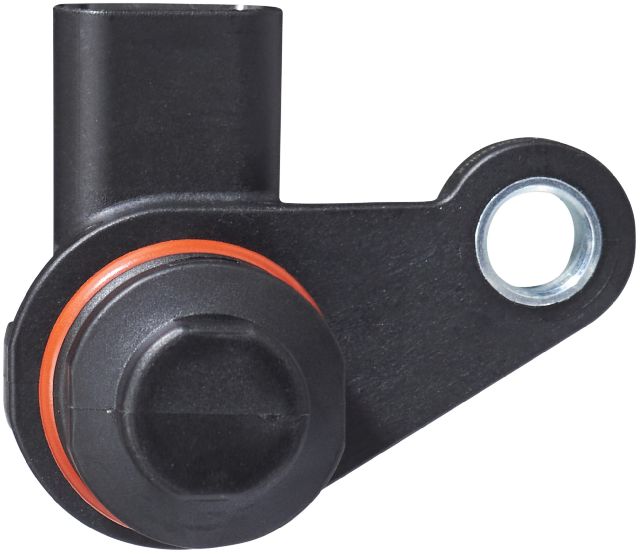
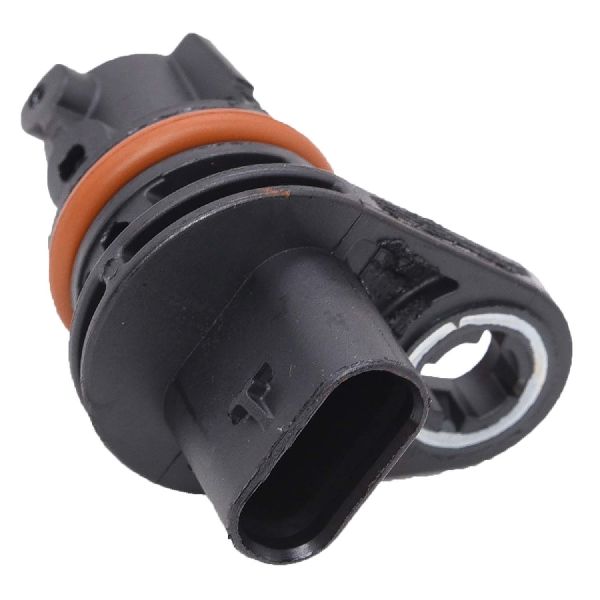
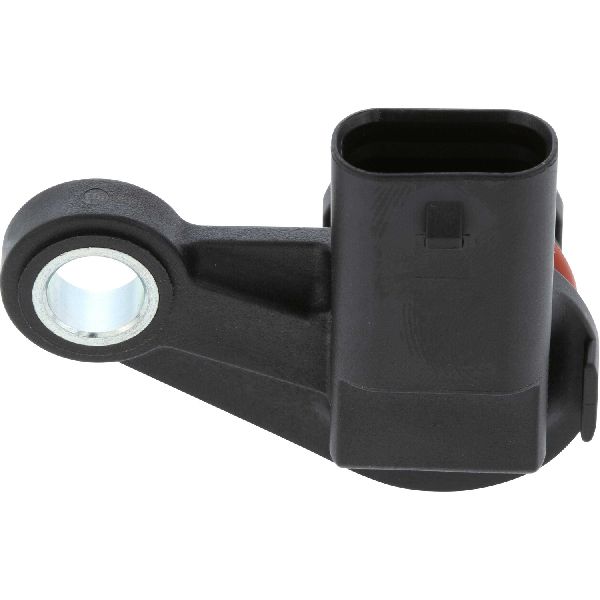
We Have This Part in Stock


The information in this article is provided for general reference and educational purposes only. Vehicle specifications, procedures, and part compatibility can vary by production date, trim level, and region. Always consult your vehicle's factory service manual and verify part numbers before purchasing or performing repairs. Safety-critical components such as airbags, seat belts, and braking systems should be installed by a qualified professional.
- Gmc ACADIA:
- 🧭 Diagnostic Flowchart
- 🎬 Helpful Videos
- 🛍️ Shop This Part
- What's Unique About the 2023-2023 Gmc ACADIA
- Symptoms You May Notice
- Most Likely Causes
- Rare But Worth Checking
- Diagnosis Steps
- Parts You'll Likely Need
- Related Codes That Often Appear With This One
- Technical Service Bulletins (TSBs) & Recalls
- Platform-Specific Known Issues
- Mechanic-Grade Diagnostic Values
- Scan Tool Commands That Help
- Wiring & Ground Locations
- OEM Part Supersession History
- 🎟️ Get 5% Off