

P0018 on 2015-2021 GMC Canyon: Crank-Cam Correlation Causes and Fixes
On a 2015-2021 GMC Canyon with the 3.6L V6, code P0018 almost always points to a stretched timing chain. This is a well-documented issue with this engine family, confirmed by numerous owner reports and GM Technical Service Bulletins (TSBs). The repair is complex and costly, often requiring replacement of the chains, tensioners, and guides, with costs potentially exceeding $2,500.
- P0018 on a 2015-2021 GMC Canyon with the 3.6L V6 is a serious code that most often indicates a stretched timing chain.
- Always check the engine oil level and condition first, as low or dirty oil can cause this code.
- Do not ignore this code. A stretched timing chain can lead to severe engine damage if it fails completely.
- Due to the complexity of a timing chain replacement, this repair is best left to a professional service center.
- While sensors or solenoids can be the cause, they are much less likely culprits than the timing chains on this specific engine.
What's Unique About the 2015-2021 Gmc CANYON
The GMC Canyon in this year range, particularly those equipped with the 3.6L V6 engine (LFX and LGZ variants), is highly susceptible to premature timing chain wear. This is a widely recognized issue across many GM vehicles that use this engine family. The problem is so prevalent that GM has issued multiple Technical Service Bulletins (TSBs) like PIP3423P, which directly link this code to stretched chains. While the updated LGZ engine (2017+) has an improved timing chain design over the earlier LFX (2015-2016), it is not immune to the problem, though failures may occur at higher mileage. The root cause is 🎬 Check: GM's extended warranty info for 3.6L timing issues. often attributed to wear in the chain's pins and links, exacerbated by extended oil change intervals and low oil levels. TSB PIP5730B also notes that on 2017-2021 models with the LGZ engine, a sticking or failing Intake Camshaft Position Actuator Park Lock Solenoid Valve can cause this code, sometimes without any other drivability issues.
Diagnostic Flowchart
Tap your situation to follow the diagnostic path that matches what you're seeing on this vehicle.
Symptoms You May Notice
- Check Engine Light is on
- Rough or unstable idle.
- Engine rattling noise, especially on a cold start or during initial acceleration.
- Reduced engine power and sluggish acceleration.
- Poor fuel economy.
- Engine may hesitate or stall, particularly at low RPM.
- A surging sensation during steady-speed driving.
- Replacing only the camshaft and crankshaft sensors without checking the mechanical timing. The sensors are often blamed first, but on this engine, the root cause is frequently the timing chain itself.
- Replacing just one VVT solenoid when the issue is oil pressure/quality or a stretched chain.
- Mistaking a torque converter shudder for an engine timing issue. Some GM 8-speed transmissions have a known shudder issue that can feel like an engine hesitation.
Most Likely Causes
- Stretched Timing Chain(s) 🔴 High Probability → Shop Engine Timing Chain The GM 3.6L V6 engine family has a documented history of premature timing chain wear due to the design and material of the chains. This wear is an elongation caused by friction in the chain's joints, not a literal stretching of the metal. It is often exacerbated by extended oil change intervals (following the oil life monitor too strictly) or running the engine with low oil. TSBs like PIP3423P directly point to inspecting for loose timing chains for this code.
How to confirm: A technician can use a scan tool to monitor camshaft/crankshaft correlation data; a deviation consistently over 8-10 degrees under various loads strongly suggests a stretched chain. An oscilloscope analysis provides definitive proof by comparing sensor waveforms. A physical inspection is the final confirmation but is highly labor-intensive.
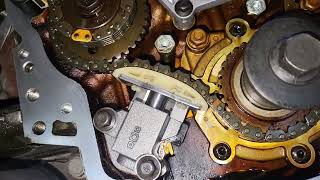
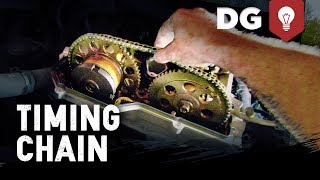
Typical fix: Replace all three timing chains, along with the tensioners and guides. It is highly recommended to replace the water pump (which is driven by the timing chain) and camshaft actuators (phasers) at the same time to avoid future failures.
Est. part cost: $300-$700 for a complete timing chain kit. - Low or Dirty Engine Oil 🟡 Medium Probability The camshaft phasing system (Variable Valve Timing or VVT) is hydraulically operated by engine oil pressure. If the oil is low, dirty, or the wrong viscosity, it can't properly operate the phasers, leading to slow response and a correlation error. Many owners in forums report that ignoring the Oil Life Monitor and sticking to a 5,000-mile oil change interval is critical for chain longevity.
How to confirm: Check the oil level on the dipstick and inspect its condition. Review vehicle service records for the last oil change. An oil change can be a cheap first diagnostic step.
Typical fix: Perform an oil and filter change using the correct OEM-specified oil (ACDelco dexos Full Synthetic 5W-30). Clear codes and see if they return.
Est. part cost: $50-$100 - Faulty Camshaft Actuator Solenoid (VVT Solenoid) ⚪ Low Probability → Shop Engine Camshaft These solenoids control oil flow to the cam phasers. They can become clogged with sludge from infrequent oil changes or fail electronically, causing them to stick. On the LGZ engine, this is a more common failure point than the chains themselves. TSB PIP5730B specifically calls out the Intake Camshaft Position Actuator Park Lock Solenoid as a potential cause for P0018 on 2017-2021 models.
How to confirm: A technician can command the solenoid on and off with a scan tool while monitoring cam angle. The solenoid can also be removed, cleaned, and tested for resistance and operation. Swapping the intake and exhaust solenoids (if they are the same part number) can see if the code follows the solenoid.
Typical fix: Replace the Bank 2 intake camshaft actuator solenoid. It's a relatively inexpensive and accessible part.
Est. part cost: $30-$80 - Faulty Camshaft or Crankshaft Position Sensor ⚪ Low Probability → Shop Engine Crankshaft Position Sensor While less common than chain issues, a sensor can fail and send incorrect data to the ECM, causing a false correlation code. This should be considered after ruling out oil and solenoid issues.
How to confirm: Use an oscilloscope to analyze the sensor's waveform pattern. A scan tool may also show erratic readings or a complete loss of signal.
Typical fix: Replace the faulty sensor (Bank 2 intake camshaft position sensor or the crankshaft position sensor).
Est. part cost: $25-$70
Rare But Worth Checking
- Failed Camshaft Phaser (Actuator): → Shop Engine Camshaft The gear on the end of the camshaft, known as a phaser or actuator, can fail mechanically. It may get stuck in one position or have a broken locking pin, which can trigger the code even with new chains and solenoids. They are typically replaced during a timing chain job as a preventative measure.
- Damaged Crankshaft Reluctor Wheel: → Shop Engine Crankshaft The tone ring on the crankshaft, which the crank sensor reads, can become damaged or shift its position, leading to incorrect timing signals. TSB PIP3423P specifically mentions inspecting the reluctor wheel, sometimes possible with a borescope through the crank sensor hole, and states that if it has moved, the entire crankshaft must be replaced.
Diagnosis Steps
- Verify engine oil level and condition. If low or dirty, perform an oil change with the correct viscosity oil (Dexos 5W-30) and filter, clear the code, and drive to see if it returns.
- Use a professional scan tool to check for other related trouble codes (P0016, P0019, P0008, P0009) which strengthen the timing chain diagnosis.
- Monitor live data for the desired vs. actual camshaft angles for Bank 2 Intake. A persistent deviation that exceeds 8-10 degrees under load is a strong indicator of a stretched chain.
- Command the Bank 2 intake VVT solenoid on and off with the scan tool to check for a response in cam angle. If there is no change, inspect the solenoid and its circuit. Consider swapping with the exhaust solenoid to see if the code changes.
- If a recent engine repair was performed, check for swapped connectors per TSB 23-NA-091.
- If sensors and solenoids appear to be working, use an oscilloscope to compare the crankshaft and camshaft sensor patterns against a known-good waveform. This can reveal a timing misalignment without tearing down the engine.
- As per TSB PIP3423P, consider using a borescope inserted into the crankshaft position sensor hole to visually inspect the reluctor wheel for any signs of slippage or movement relative to the crankshaft.
- If waveform analysis or live data confirms a timing discrepancy, perform a physical inspection of the timing chains, guides, and tensioners. This involves significant engine disassembly.
Parts You'll Likely Need
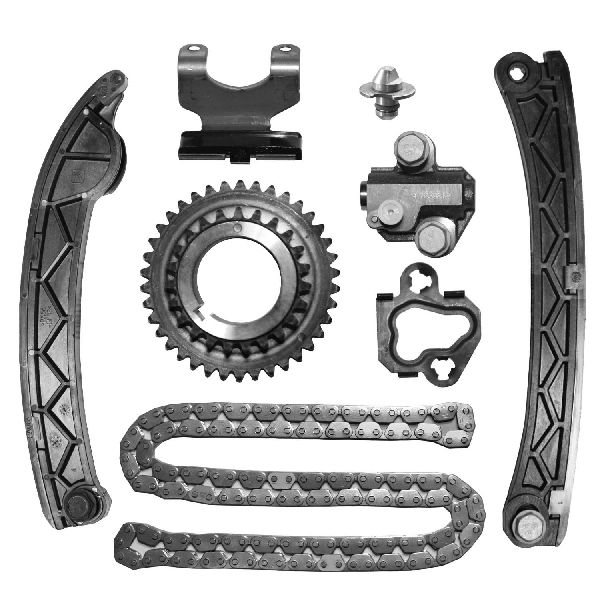
- Timing Chain Kit
(OEM #ACDelco 12713649 (for LGZ 2017+))— This is the most common failure point for the P0018 code on the 3.6L V6. A complete kit ensures all worn components (chains, tensioners, guides) are replaced.
Trusted brands: ACDelco, Cloyes
OEM price range: $300-$500
Aftermarket price range: $250-$600 - Camshaft Position Actuator Solenoid
(OEM #12655420 (Intake))— This solenoid can get clogged or fail, preventing proper cam phasing. It's a common and relatively easy part to replace as a diagnostic step, especially on the LGZ engine.
Trusted brands: ACDelco, Delphi, Dorman
OEM price range: $40-$70
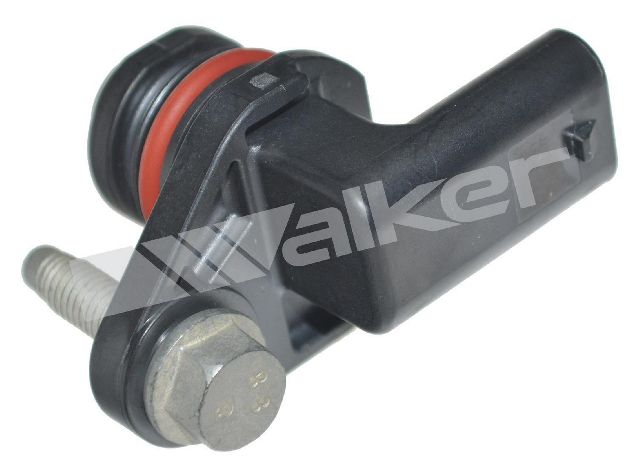
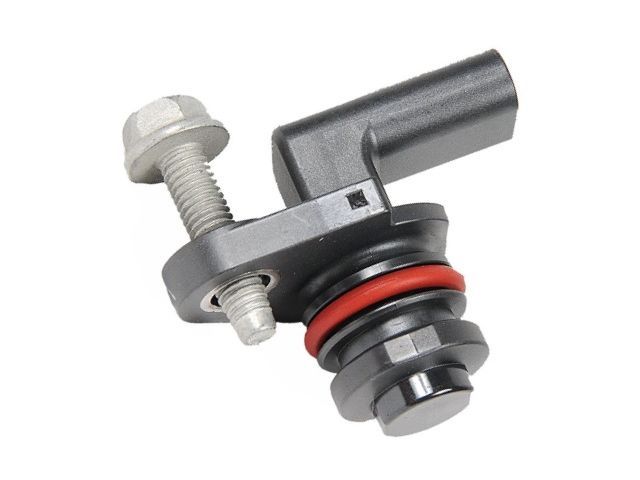
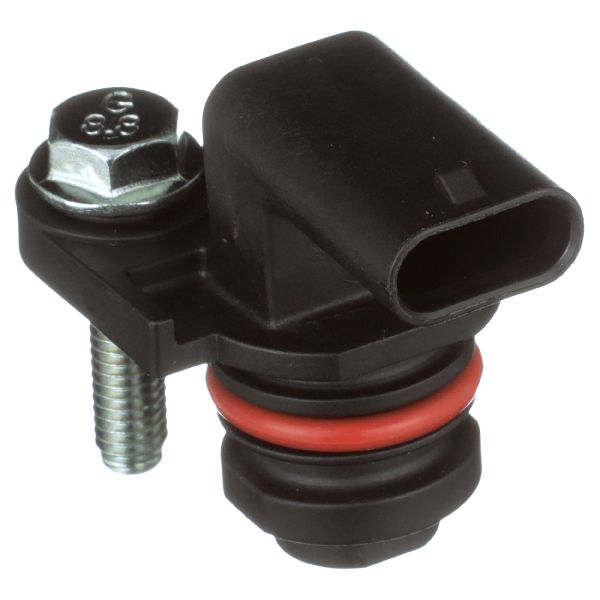
Aftermarket price range: $25-$50 - Camshaft Position Sensor
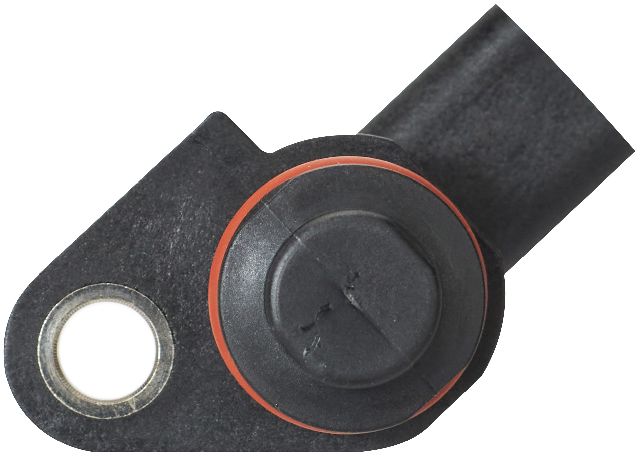
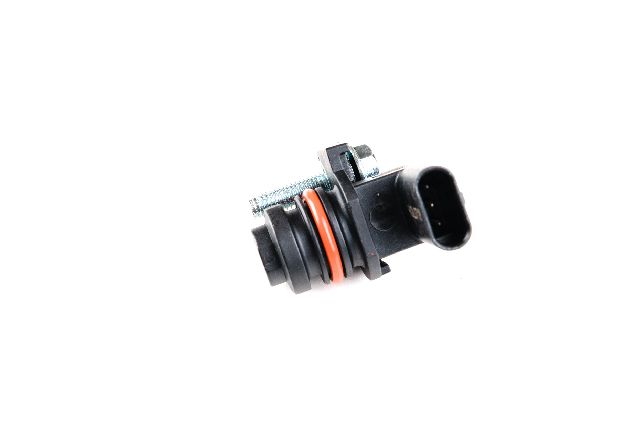
(OEM #12674702)— Though less common, a sensor failure can cause this code. It's responsible for reporting the camshaft's position to the ECM.
Trusted brands: ACDelco, Bosch, NTK
OEM price range: $35-$60
Aftermarket price range: $20-$40
Related Codes That Often Appear With This One
- P0016 — This is the same correlation error but for Bank 1 (passenger side). If both P0016 and P0018 are present, it strongly suggests an issue with the primary timing chain that serves both banks.
- P0019 — This is a correlation error for the exhaust camshaft on Bank 2. Seeing it with P0018 points to a timing issue affecting the entire Bank 2 chain, reinforcing the diagnosis of a stretched chain.
- P0008 — This is a more general Engine Position System Performance code for Bank 1. It often appears with other timing codes when chains are significantly stretched.
- P0009 — This is the same general engine position error but for Bank 2. Its presence reinforces the likelihood of a significant timing chain problem affecting the entire engine.
Technical Service Bulletins (TSBs) & Recalls
- PIP3423P: Instructs technicians to inspect for loose timing chains and tensioners for codes P0008, P0009, and P0016-P0019. Crucially, it also points to inspecting the crankshaft reluctor wheel for movement, which can cause the same codes and requires crankshaft replacement if found.
- 23-NA-091: Addresses a specific scenario where P0016 or P0018 appears immediately after an engine repair. The cause is often swapped electrical connectors for the Bank 1 intake camshaft actuator solenoid and the park lock solenoid, which are identical.
- PIP5730B: Provides additional diagnostic information for DTCs P0016 and P0018, indicating ongoing manufacturer attention to this issue.
- GM Special Policy 11340C: While primarily for older models, this document references a warranty extension to 10 years/120,000 miles for timing chain issues on the 3.6L engine, highlighting GM's acknowledgment of the problem.
Platform-Specific Known Issues
- The 3.6L V6 engine used in the Canyon is known for stretched timing chains, which is the primary cause of P0018. Owners on forums like 'BobIsTheOilGuy' frequently advise that the factory Oil Life Monitor allows for excessively long oil change intervals, which contributes to chain wear. A preventative 5,000-mile interval is highly recommended.
- While the 2017+ LGZ engine features a redesigned and more durable timing system compared to the 2015-2016 LFX, it is not immune. Failures still occur, though often at higher mileage (over 100k miles).
- A video diagnosis of a 2020 Canyon with P0018 showed a cam/crank deviation of over 10 degrees, confirming a stretched chain even on a later model year vehicle.
Mechanic-Grade Diagnostic Values
- Camshaft Actuator Solenoid (VVT Solenoid) Resistance — expected: 6-12 Ohms. Some sources state 5-15 Ohms, with new-out-of-the-box parts measuring around 11-12.8 Ohms.. Failure: A reading of 0 Ohms (short circuit) or infinite/OL (open circuit). A reading outside the specified range (e.g., 15 Ohms) also indicates a fault.
- Camshaft Position Sensor (3-wire Hall Effect) Signal Voltage — expected: The signal wire should switch between approximately 0V and 5V (or 4.8V) as the engine is rotated.. Failure: Voltage that is stuck high, stuck low, or does not switch cleanly indicates a faulty sensor.
- Crankshaft Position Sensor (2-wire magnetic) Resistance — expected: 200 to 1000 Ohms.. Failure: A reading of zero indicates a short circuit.
- Timing Chain Component Bolt Torque — expected: 18 ft-lbs (25 Nm) for timing chain guides and tensioners.. Failure: Improper torque can lead to loose components or damage.
Scan Tool Commands That Help
- GDS2 / Professional Scan Tool: Actuator Test: Bank 2 Intake Camshaft Position Actuator Solenoid — Use this bidirectional control to command the solenoid on and off while the engine is running. A healthy system will cause the engine to hesitate or stall. If there is no change in engine operation, it points to a faulty solenoid, clogged oil passage, or wiring issue.
- GDS2 / Professional Scan Tool: Crankshaft Position Variation Learn — This procedure should be performed after replacing a crankshaft, crankshaft position sensor, or ECM. It allows the ECM to learn the minor variations in the crankshaft reluctor wheel to ensure accurate misfire detection, though it is not directly for fixing a P0018 correlation code.
Wiring & Ground Locations
- ECM Connector X3 (J3) — The Engine Control Module (ECM) is located in the engine bay. It has multiple large connectors, often marked on the PCM body.. For diagnosing sensor circuits, you may need to test for continuity or voltage at the ECM connector. For Bank 2 Cam/Crank signals, relevant pins on connector X3 include Pin 4, Pin 7, and Pin 20. Always use a schematic for your specific year/model to confirm pinouts.
- SP105 / SP106 — SP105 is a major ground pack located on the driver's side near the battery. SP106 is on the passenger side behind the engine airbox (on 1st gen, but similar locations on 2nd gen).. Poor grounds at these locations can cause a wide range of seemingly unrelated electrical issues, including sensor data problems. While not a direct cause of P0018, verifying these grounds are clean and tight is a good practice during any electrical diagnosis.
- Engine Harness Chafe Points — The engine wiring harness can rub against various components. Common chafe points on GM trucks include the front corner of the left-hand (driver's side) cylinder head, brackets for pulleys, and the oil dipstick tube bracket.. A short-to-ground in the wiring for the camshaft position sensor or actuator solenoid due to a chafed harness can trigger a P0018 code. A visual and physical inspection of the harness in these areas is warranted if electrical faults are suspected.
Real Owner Repair Stories
- Reddit user in r/MechanicAdvice (Vehicle with GM 3.6L engine) — Persistent P0017 code (Bank 1 equivalent of P0018) after a timing job.
❌ Tried (didn't work) Replacing timing chain, tensioners, and both CVVT sprockets., Testing oil control valves (solenoids), which were confirmed to be working.
✅ What actually fixed it The user discovered the dowel pin on the exhaust camshaft had broken off, preventing the phaser from locking in its correct position relative to the camshaft. Replacing the affected camshaft resolved the code.
OEM Part Supersession History
Various (e.g., 12633452, 12612838)→Various updated kits (e.g., 9-0753S is a common aftermarket kit number)— GM updated the timing chain design to improve longevity and reduce stretching issues common on the early LFX engines. Later kits feature chains with improved pin and link construction.
Heads up: When replacing timing components, it is critical to replace chains, guides, and tensioners as a complete set from a single manufacturer to ensure compatibility. The intake cam phasers (actuators) for the left and right banks are different part numbers and are side-specific, often marked with an 'L' and 'R'.
Model Year Variations Within This Range
- 2017-2021: Models with the 3.6L LGZ engine have an 'Intake Camshaft Position Actuator Park Lock Solenoid' which can stick or fail, causing P0018. This part and failure mode are specifically called out in TSB PIP5730B and are a key diagnostic consideration for these later model years.
- 2015-2016: Models with the 3.6L LFX engine are considered more prone to premature timing chain stretching than the later LGZ engines. While the failure is the same, it may occur at lower mileage on these earlier models.
Helpful Videos
We Have This Part in Stock

The information in this article is provided for general reference and educational purposes only. Vehicle specifications, procedures, and part compatibility can vary by production date, trim level, and region. Always consult your vehicle's factory service manual and verify part numbers before purchasing or performing repairs. Safety-critical components such as airbags, seat belts, and braking systems should be installed by a qualified professional.
- Gmc CANYON:
- 🧭 Diagnostic Flowchart
- 🎬 Helpful Videos
- 🛍️ Shop This Part
- What's Unique About the 2015-2021 Gmc CANYON
- Symptoms You May Notice
- Most Likely Causes
- Rare But Worth Checking
- Diagnosis Steps
- Parts You'll Likely Need
- Related Codes That Often Appear With This One
- Technical Service Bulletins (TSBs) & Recalls
- Platform-Specific Known Issues
- Mechanic-Grade Diagnostic Values
- Scan Tool Commands That Help
- Wiring & Ground Locations
- Real Owner Repair Stories
- OEM Part Supersession History
- Model Year Variations Within This Range
- 🎟️ Get 5% Off