

P0018 on 2012-2017 Hyundai Azera 3.3L V6: Crank-Cam Correlation Causes and Fixes
For the 2012-2017 Hyundai Azera, code P0018 is most often caused by low or dirty engine oil, or a failing Bank 2 (front/radiator side) intake Oil Control Valve (OCV), OEM part number 24355-3CAA2. A rattling noise on cold startups is a major red flag for a failing timing chain tensioner. Start by checking your oil; if the level and quality are good, the OCV is the next likely culprit, costing around $60-$120 for the part.
- Always check your engine oil level and condition first. A simple oil change with a quality filter can sometimes fix P0018.
- The most likely failed part is the Bank 2 (front) intake Oil Control Valve (OCV). On this car, it's relatively easy to access and replace.
- A rattling noise from the engine on cold starts is a major red flag for a stretched timing chain, which is a much more serious and expensive repair.
- Do not replace the cam or crank sensors as a first step; they are rarely the cause of this correlation code.
What's Unique About the 2012-2017 Hyundai Azera
The Hyundai Lambda 3.3L GDI V6 engine family is known for being sensitive to oil level and quality, as the entire CVVT system is operated by oil pressure. These engines can also suffer from oil consumption, making regular oil level checks critical to prevent issues. On the 2012-2017 Azera, Bank 2 is located at the front of the engine bay, making the associated Oil Control Valves (OCVs) and sensors much more accessible for diagnosis and replacement than those on Bank 1, which is tucked against the firewall. A distinct rattling noise for 2-5 seconds on a cold startup is a very common precursor to this code, as confirmed by many owners, and points directly to failing timing chain tensioners that are bleeding down oil pressure overnight.
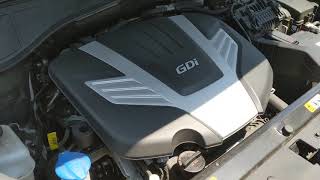
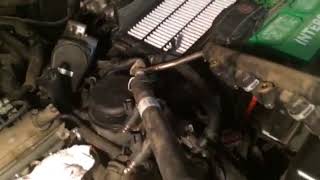
🎬 Watch: Hear the specific startup rattle caused by failing tensioners.Symptoms You May Notice
- Check Engine Light is on
- Rough or uneven idle
- Engine stalling, especially at low speeds
- Reduced engine power and poor acceleration
- Worse than normal fuel economy
- Rattling noise from the engine, especially on cold startups
- Engine hard to start or won't start
- Replacing the camshaft position sensor or crankshaft position sensor without proper diagnosis. The code indicates a *correlation* problem, which is more often mechanical or hydraulic (oil pressure) than electrical.
- Replacing only the timing chain tensioners without replacing the stretched chain. If the chain is already elongated, new tensioners may not be enough to restore correct timing.
Most Likely Causes
- Low, Dirty, or Incorrect Viscosity Engine Oil 🔴 High Probability The CVVT system uses hydraulic pressure to adjust cam timing. The 3.3L GDI engine is known to consume oil, and low levels will starve the CVVT system. Sludge from infrequent oil changes or the wrong oil type can clog passages in the Oil Control Valves (OCVs) or cam phasers. Some owners report issues when using non-OEM oil filters, which may cause oil pressure discrepancies.
How to confirm: Check the engine oil dipstick for low level or a dark, sludgy consistency. Verify the vehicle's service history for regular changes with full synthetic oil.
Typical fix: Perform an oil and filter change using a high-quality OEM filter and the manufacturer-specified oil (typically 5W-30 full synthetic). Clear the code and see if it returns.
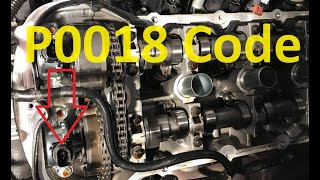
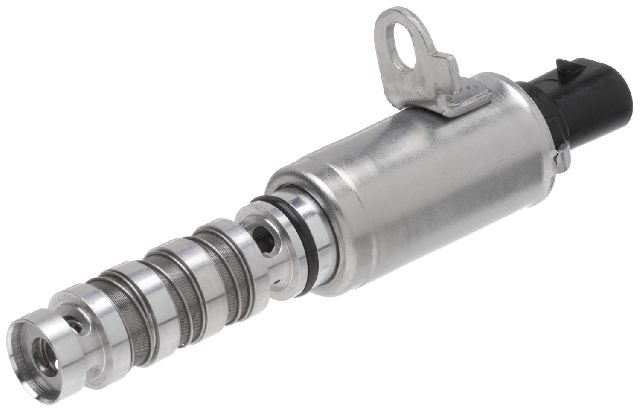
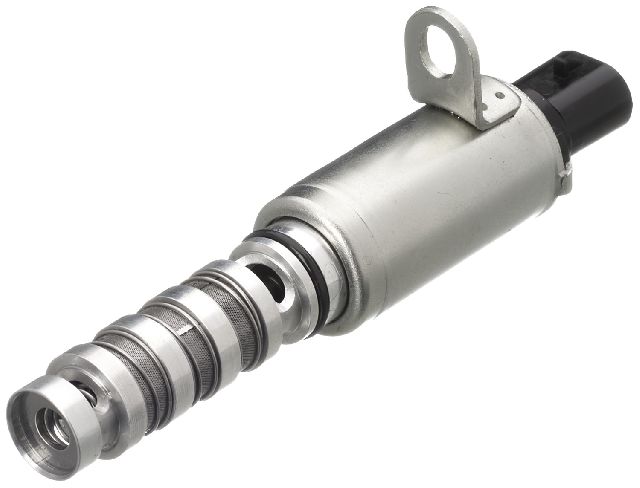
Est. part cost: $40-$80 - Failing Bank 2 Intake Oil Control Valve (OCV) 🔴 High Probability → Shop Engine Variable Valve Timing (VVT) Solenoid The OCV is an electronic solenoid that can fail electrically or become clogged with oil sludge. In some cases, the small metal filter screen on the OCV itself can break and cause the valve to jam internally.
How to confirm: Scan tool data can show if the commanded vs. actual cam angle for Bank 2 Intake are different. A common diagnostic step is to swap the Bank 2 intake OCV with the Bank 1 intake OCV. If the code changes to P0016 (Bank 1), the OCV is confirmed faulty. The OCV should have a resistance between 6.7-7.9 ohms per TSB 09-EM-002.
Typical fix: Replace the Bank 2 intake Oil Control Valve. On this vehicle, it is located on the front (radiator side) of the engine and is relatively accessible.
Est. part cost: $60-$120 - Stretched Timing Chain or Failed Tensioner 🟡 Medium Probability → Shop Engine Timing Chain This is a known issue on higher-mileage Lambda V6 engines. The oil-pressure-fed tensioners can bleed down when the engine is off, allowing chain slack on startup. This repeated slack causes a startup rattle and eventually leads to a stretched chain.
How to confirm: A distinct rattling sound from the engine for 2-5 seconds on a cold start is a strong indicator. Confirmation requires removing the timing cover to physically inspect the chain for slack and check the tensioner extension. If the timing has jumped a tooth, the code will be persistent.
Typical fix: Replace the timing chain, tensioners, and guides. This is a labor-intensive job, often costing over $1500.
Est. part cost: $300-$600
Rare But Worth Checking
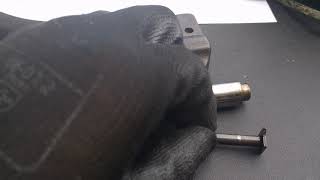
- Failed CVVT Cam Phaser (Sheared Alignment Pin): → Shop Engine Timing Gear A video of a 2008 Sorento with this exact code showed the alignment pin on the CVVT phaser had broken or migrated into the camshaft, causing the timing error. A Reddit user with a 3.3L Santa Fe reported paying a dealer $3,500 for the same camshaft replacement due to a sheared pin from a low oil condition. This is a catastrophic mechanical failure requiring camshaft and phaser replacement.
- Faulty Camshaft or Crankshaft Position Sensor: → Shop Engine Crankshaft Position Sensor While possible, it's less common for the sensor itself to fail than the hydraulic or mechanical components. A common diagnostic trick is to swap the Bank 2 intake sensor with the Bank 1 intake sensor. If the fault code changes from P0018 to P0016, the sensor is confirmed to be faulty. This should only be suspected if other codes for sensor circuits (like P0345) are present or if OCV/timing chain issues are ruled out.
Diagnosis Steps
- Check Engine Oil: Verify the oil level is full and the oil is clean. This engine is prone to oil consumption. If it's low, dirty, or long overdue for a change, perform an oil and filter change with the correct viscosity full synthetic oil and an OEM filter. Clear the code and see if it returns.
- Scan Tool Analysis: Use a capable scanner to view live data. Compare the 'Commanded' vs. 'Actual' camshaft position for the Bank 2 Intake Cam. A significant, lagging difference suggests a problem.
- Listen for Noise: On a cold start, listen carefully for any rattling or chain slap noises coming from the front of the engine that last for 2-5 seconds. This is a classic sign of a timing chain tensioner issue.
- Test the Oil Control Valve (OCV): The easiest test is to swap the Bank 2 intake OCV with the Bank 1 intake OCV (on the rear bank). Clear the codes and drive the vehicle. If the code returns as P0016, the OCV you moved is faulty and needs to be replaced. You can also test the OCV's resistance, which should be 6.7-7.9 ohms. Visually inspect the OCV's filter screen for tears or debris.
- Inspect Wiring: Check the wiring and connector for the Bank 2 intake camshaft position sensor and the Bank 2 intake oil control valve for any damage, corrosion, or loose connections.
- Mechanical Timing Inspection: If all the above steps do not resolve the issue, the problem is likely mechanical. This requires removing the valve cover and timing cover to inspect the timing chain, guides, tensioners, and CVVT phasers for wear, damage, or misalignment. This step is best left to a professional.
Parts You'll Likely Need
- Engine Oil Control Valve (VVT Solenoid)
(OEM #24355-3CAA2)— This solenoid controls the oil flow that adjusts cam timing and is a very common failure point due to clogging or electrical malfunction.
Trusted brands: Hyundai (OEM), Bosch, Dorman
OEM price range: $90-$150
Aftermarket price range: $40-$90 - Timing Chain Kit — If a startup rattle is present, the chain has likely stretched due to a faulty tensioner. A full kit including chains, guides, and tensioners is required for a proper repair, as a new tensioner cannot compensate for a physically longer chain.
Trusted brands: Hyundai (OEM), Melling, Cloyes
OEM price range: $400-$600
Aftermarket price range: $250-$400 - Camshaft Position Sensor
(OEM #39318-3C100)— A less common cause, this sensor provides the camshaft position signal to the ECM. It should only be replaced after being tested and confirmed faulty, as the P0018 code is more often a mechanical or hydraulic issue.
Related Codes That Often Appear With This One
- P0019 — This is the correlation code for the exhaust camshaft on the same bank (Bank 2). If both P0018 and P0019 are present, it strongly points to a problem affecting the entire bank, such as a stretched timing chain or a major oil delivery issue to that cylinder head.
- P0016 — This is the equivalent code for Bank 1 (rear bank). It may appear after swapping a faulty OCV from Bank 2 to Bank 1 as a diagnostic step. If seen with P0018 from the start, it suggests a major engine-wide timing issue.
- P0300, P0302, P0304, P0306 — These are codes for random or specific cylinder misfires on Bank 2. Incorrect valve timing on one bank can lead to poor combustion and misfires in those cylinders.
- P0524 — Engine Oil Pressure Too Low. This code is critically related, as the entire CVVT system relies on correct oil pressure. It reinforces that low/dirty oil is a primary cause of P0018.
Platform-Specific Known Issues
- A documented failure on a 2012 Azera 3.3L involved the alignment pin on the CVVT cam phaser breaking or migrating into the camshaft, requiring replacement of the entire camshaft assembly.
- The original timing chain tensioners on the Lambda V6 are a known weak point that can fail to hold pressure, leading to startup rattle and eventual chain stretch.
Mechanic-Grade Diagnostic Values
- Oil Control Valve (OCV) Coil Resistance — expected: 6.7-7.9 Ohms at 68°F (20°C), depending on supplier (Delphi or Denso).. Failure: A reading outside this range, or an open/short circuit, indicates a failed solenoid coil.
- PCM DTC Threshold (Camshaft Installation Diagnosis) — expected: The deviation between the adapted Camshaft Position (CMP) and the set value must be less than 7 degrees.. Failure: If the deviation is greater than 7 degrees, the PCM may set the DTC.
- PCM DTC Threshold (Crankshaft Alignment Check) — expected: The deviation between the adapted CMP, set value, and the adapted CMP during installation diagnosis must be less than 13 degrees.. Failure: If the deviation is greater than 13 degrees for 6 camshaft rotations, the PCM will set the DTC.
- CKPS/CMPS Waveform Synchronization — expected: At idle, the PCM expects the rising edge (high signal) of the Bank 2 intake CMPS to align with the 17th tooth of the CKPS reluctor wheel after the missing tooth section.. Failure: Misalignment of these two signals on an oscilloscope indicates a base timing issue.
Scan Tool Commands That Help
- Hyundai GDS (Global Diagnostic System) or equivalent advanced scanner: Actuation Test: 'OIL CONTROL VALVE' — This command allows a technician to manually activate the OCV solenoid to see if it clicks and if the engine RPM changes or stumbles. A lack of response helps confirm a faulty OCV or a wiring issue, distinguishing it from a mechanical phaser or chain problem.
- Hyundai GDS (Global Diagnostic System) or equivalent advanced scanner: Live Data: 'CVVT Angle - Desired' vs 'CVVT Angle - Actual' — Monitor these two parameters (PIDs) while driving or using the actuation test. If the 'Actual' angle does not closely follow the 'Desired' angle, it confirms a fault within the CVVT system (stuck phaser, bad OCV, or oil pressure problem).
- Hyundai GDS (Global Diagnostic System): Flight Record / Data Analysis — For intermittent faults, this function records live data during a drive cycle. The recording can be reviewed after the fault occurs to analyze sensor readings at the exact moment of failure, which is invaluable for diagnosing tricky issues.
Wiring & Ground Locations
- Engine Wiring Harness — Routed across the top and front of the engine, connecting to the sensors and OCVs.. The harness for the Bank 2 (front) Camshaft Position Sensor and Oil Control Valve is relatively exposed. Check for chafing, damage from heat, or oil contamination on the connectors, which can cause signal errors.
- GE03 (Engine Ground) — On the left front of the engine compartment.. A poor engine ground can cause erratic voltage and incorrect readings from the crankshaft and camshaft position sensors, potentially leading to a false correlation code. Ensure this ground is clean and tight.
Real Owner Repair Stories
- YouTube channel 'My Mechanic of TC' (Kia Sorento with 3.3L V6 (similar Lambda architecture)) — Persistent P0018 code, engine runs fine at idle but correlation error appears under load.
❌ Tried (didn't work) Replaced Oil Control Valves (OCVs), Replaced Camshaft Position Sensors, Verified wiring was good, Checked timing marks by manually rotating engine (they appeared correct)
✅ What actually fixed it The alignment dowel pin for the Bank 2 intake CVVT phaser had sheared off. The pin was found lodged in the end of the camshaft. This allowed the phaser to have rotational play relative to the camshaft, causing the timing correlation error only when under load. The final fix was replacing the damaged camshaft and the CVVT phaser assembly. - 2CarPros Forum User (2014 Hyundai Genesis Coupe (Lambda 3.8L V6)) — P0018 and P0019 codes present simultaneously.
❌ Tried (didn't work) Replaced the Bank 2 Oil Control Valves (both intake and exhaust).
✅ What actually fixed it The user's final update indicated the codes remained after OCV replacement. The certified expert advised that with both codes present after new OCVs, the next step is to suspect a base timing issue, pointing towards a stretched timing chain affecting the entire bank.
OEM Part Supersession History
Unknown→24355-3CAA2— Part revision for improved reliability or manufacturing process change.
Heads up: 24355-3CAA2 is the specified part for the Bank 2 (Left/Driver side on longitudinal, Front on transverse) Intake OCV for this vehicle range.
Model Year Variations Within This Range
- 2012-2017: While the core 3.3L Lambda II GDI engine is used, there have been ongoing concerns and class-action lawsuits regarding engine reliability, oil consumption, and premature failure. Hyundai has issued extended warranties (up to 15 years/150,000 miles) for certain VINs related to engine issues. It is critical for an owner to check with a Hyundai dealer to see if their specific vehicle is covered under any campaigns, as this could cover repairs for P0018 if it's related to a warrantied component failure like the timing chain or phasers.
Diagnostic Flowchart
Other Known Issues on This Vehicle
Issues unrelated to this code that are worth knowing about as an owner of this generation:
- Flexible Steering Coupler Failure 🟠 Medium — Very common. Causes a distinct clicking or clunking noise from the steering column when turning. Typically occurs after 60,000 miles. (Ref: TSB 17-ST-001 describes the replacement procedure. Not a recall for the Azera, though other Hyundai models were recalled for the same part.)
- Excessive Oil Consumption 🔴 High — Frequently reported by owners of the 3.3L GDI engine, with some consuming over a quart per 1,000 miles. Can lead to low oil levels that trigger P0018 or cause catastrophic engine damage. (Ref: Hyundai has issued general TSBs for oil consumption inspection, such as 21-EM-003H.)
- No Sound from Speakers 🟡 Low — A commonly reported electrical issue where the audio system fails to produce sound. (Ref: No specific TSB, but it is a frequent complaint on owner forums and repair sites.)
Used vs. New Parts: Buying Guide for This Vehicle
When a used part is the smart pick: For this repair, sourcing used parts is generally not recommended for the primary failure components. However, if a confirmed wiring issue is found, a used engine harness pigtail from a junkyard can be a cost-effective solution for repairing a damaged connector.
Donor-vehicle mileage cap: roughly under 80000 miles for the part to have meaningful remaining life.
What to inspect on the donor part:
- For any used part, verify the donor vehicle had low mileage and no signs of a front-end collision.
- If considering a used sensor, check for corrosion on the pins and cracks in the plastic housing.
- Avoid any parts from an engine that shows signs of heavy oil sludge or varnish when the oil cap is removed.
OEM-only on this vehicle (don't cheap out):
- Timing Chain Kit (Chain, Guides, Tensioners): The labor cost is too high to risk using non-OEM parts. A failed aftermarket tensioner or guide can cause catastrophic engine damage.
- CVVT Cam Phasers: These are precision components. Aftermarket versions may not perform to OEM specifications, leading to persistent codes. Given the labor to access them, OEM is the only safe choice.
Aftermarket brands forum-validated for this vehicle:
- Bosch (for Oil Control Valves)
- Cloyes (for Timing Chain Kits)
- Melling (for Timing Chain Kits)
Brands owners have reported issues with on this vehicle:
- Unbranded, 'white-box' OCVs and sensors from online marketplaces. These often have high failure rates and incorrect internal resistance, causing the code to return immediately.
Real Owner Stories
Aggregated from forums and TSBs cited above. Mileages and costs reflect what owners reported in those sources.
2014 Hyundai Santa Fe 3.3L V6
Symptoms: The owner experienced a P0018 code caused by low oil levels which led to a sheared CVVT pin. After a major repair, the code returned 15 months later.
What fixed it: The initial fix required replacing the camshaft due to the sheared pin; the second occurrence was resolved by replacing a faulty OCV.
Cost: $3500-$3500
Source hint: Reddit r/MechanicAdvice: Santa Fe 3.3L V6 P0018 - Sheared Cam Pin & OCV Failure
2012 Hyundai Azera 3.3L V6
Symptoms: Timing rattle and a persistent P0018 code.
What fixed it: Replacement of the timing chain tensioner and the CVVT phaser due to a broken/migrated alignment pin.
Source hint: YouTube: 2012 Hyundai Azera 3.3L Timing Rattle and P0018
2016 Hyundai Azera 3.3L V6 — 119000 miles
Symptoms: A classic 2-second rattle heard specifically during a cold start.
What fixed it: Identified as timing chain tensioners bleeding down oil pressure, requiring tensioner/timing service.
Source hint: Reddit r/Hyundai: Azera 2016 noise on start
2012 Hyundai Azera 3.3L V6
Symptoms: Engine shakes and a P0018 code that will not go away after basic troubleshooting.
What fixed it: The mechanical timing had jumped a tooth, requiring an intensive mechanical timing reset/repair.
Source hint: Hyundai-Forums.com: P0018 won't go away
Documented NHTSA Reports
NHTSA ODI #11606626
Symptoms: An owner reported that their vehicle displayed codes P0018, P0300, P0302, P0304, and P0306 after being towed to a dealership for diagnostics.
What fixed it: The dealership technician stated the necessary repairs included replacing the left intake camshaft, CVVT, and timing chain.
NHTSA ODI #11434884
Symptoms: A report describes the presence of exhaust fumes and initial codes P0018, P2A03, and P0088, with misfires on cylinders 2, 4, and 6.
What fixed it: The dealer diagnosed the CVVT timing chain and tensioners as being bad.
NHTSA ODI #11618527
Symptoms: An owner noted a "minor timing issue code P0018" that prevented the vehicle from passing emissions testing.
NHTSA ODI #11572245
Symptoms: While driving at 35 mph, the engine lost power and entered limp mode with a flashing check engine light and code P0018.
What fixed it: The failure was described as catastrophic engine failure with no compression in bank 2 cylinders, requiring a full engine replacement at 113,000 miles.
Related OBD-II Codes
Frequently Asked Questions
Is there a specific TSB for the oil consumption issues on my 3.3L Azera?
Can I use any oil filter for my 2012-2017 Azera to prevent CVVT issues?
What is the correct resistance for the Oil Control Valve (OCV) on the Lambda 3.3L V6?
My 2016 Azera makes a rattling noise for 2 seconds on cold starts; is this related to P0018?
Is the steering clunk I hear related to the P0018 engine code?
Where is the Bank 2 Intake Oil Control Valve located on the Azera 3.3L?
Helpful Videos
![How to Fix P0018 Engine Code in 6 Minutes [4 DIY Methods / Only $6.99]](https://img.youtube.com/vi/Q5hH0fs65Y8/mqdefault.jpg)
We Have This Part in Stock


The information in this article is provided for general reference and educational purposes only. Vehicle specifications, procedures, and part compatibility can vary by production date, trim level, and region. Always consult your vehicle's factory service manual and verify part numbers before purchasing or performing repairs. Safety-critical components such as airbags, seat belts, and braking systems should be installed by a qualified professional.
- Hyundai Azera:
- 🧭 Diagnostic Flowchart
- 🎬 Helpful Videos
- 🛍️ Shop This Part
- What's Unique About the 2012-2017 Hyundai Azera
- Symptoms You May Notice
- Most Likely Causes
- Rare But Worth Checking
- Diagnosis Steps
- Parts You'll Likely Need
- Related Codes That Often Appear With This One
- Platform-Specific Known Issues
- Mechanic-Grade Diagnostic Values
- Scan Tool Commands That Help
- Wiring & Ground Locations
- Real Owner Repair Stories
- OEM Part Supersession History
- Model Year Variations Within This Range
- Other Known Issues on This Vehicle
- Used vs. New Parts: Buying Guide for This Vehicle
- Real Owner Stories
- 2014 Hyundai Santa Fe 3.3L V6
- 2012 Hyundai Azera 3.3L V6
- 2016 Hyundai Azera 3.3L V6 — 119000 miles
- 2012 Hyundai Azera 3.3L V6
- Documented NHTSA Reports
- NHTSA ODI #11606626
- NHTSA ODI #11434884
- NHTSA ODI #11618527
- NHTSA ODI #11572245
- Related OBD-II Codes
- Frequently Asked Questions
- 🎟️ Get 5% Off