

P0018 on 2007-2012 Hyundai Santa Fe 3.3L: Cam/Crank Correlation Causes and Fixes
On the 2007-2012 Santa Fe 3.3L, P0018 is most often caused by a failing Bank 2 Oil Control Valve (OCV), part number 24355-3C200. This is a labor-intensive fix (~$500-$800) as the intake manifold must be removed for access. If you also hear a distinct rattling noise on startup, suspect a stretched timing chain or failed tensioner, which is a more serious and expensive repair.
- Always check your engine oil level and condition first; it's the easiest and cheapest potential fix.
- A rattling noise on startup strongly suggests a timing chain issue, which is a major repair.
- If there is no startup noise, the most likely culprit is the Bank 2 Oil Control Valve (OCV).
- Replacing the Bank 2 OCV is labor-intensive due to the need to remove the intake manifold.
- Because of the labor involved, it is wise to replace both OCVs, the intake manifold gaskets, and potentially the rear spark plugs at the same time.
What's Unique About the 2007-2012 Hyundai Santa Fe
The 3.3L V6 Lambda engine in this generation of Santa Fe has two well-documented issues that directly lead to code P0018. First, the Oil Control Valve (OCV) for Bank 2 is located underneath the intake manifold, making a relatively simple part swap a significant labor effort. Second, these engines are known for premature timing chain tensioner wear. The tensioners are oil-pressure-activated and can fail to hold pressure when the engine is off, allowing the chain to become slack. This causes a distinct startup rattle and can lead to a permanent timing misalignment or stretched chain, a more serious mechanical problem.
Symptoms You May Notice
- Check Engine Light is on
- Engine may run rough, idle poorly, or hesitate on acceleration
- Stalling at low speeds or when coming to a stop
- Rattling or ticking noise from the engine for a few seconds on a cold start
- Reduced fuel economy
- Engine enters 'limp mode' with significantly reduced power
- In some cases, no noticeable symptoms other than the Check Engine Light
- Replacing the camshaft or crankshaft position sensors before checking the oil level and condition.
- Replacing the timing chain when the actual fault is a much cheaper, albeit hard-to-access, Oil Control Valve. The presence or absence of a startup rattle is a key differentiator.
- Assuming an OCV is good because it passes an electrical resistance test. The failure is often mechanical (stuck spool valve or broken screen) and requires visual inspection or live data analysis.
Most Likely Causes
- Failing Bank 2 Oil Control Valve (OCV/VVT Solenoid) 🔴 High Probability → Shop Engine Variable Valve Timing (VVT) Solenoid The Bank 2 OCV is located in a high-heat area under the intake manifold. The small filter screens on the valve can become brittle with age and heat cycles, breaking apart. Debris from the screen can then jam the valve's internal spool mechanism, causing it to stick.
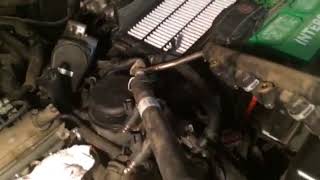
How to confirm: After checking oil, this is the next logical step, especially if no startup rattle is present. 🎬 Watch: A mechanic's walkthrough of diagnosing the P0018 code A mechanic can command the solenoid with a scan tool and monitor the Bank 2 intake cam angle PID; if it's stuck at 0, the OCV or phaser is not responding. A definitive DIY diagnosis requires removing the intake manifold to access and visually inspect the valve for a broken screen. Testing resistance with a multimeter may not identify a mechanical jam, as the coil can still be electrically sound. The specified resistance for the Delphi-made OCV used in this engine is 6.7-7.7 Ohms at 68°F (20°C).
Typical fix: Replace the Bank 2 Oil Control Valve (P/N: 24355-3C200). Since accessing it requires removing the intake manifold, it is highly recommended to replace the Bank 1 OCV (P/N: 24355-3C100), the intake plenum gaskets, and clean the throttle body at the same time. 🎬 See how to remove the intake and inspect the valves
Est. part cost: $50-$120 - Stretched Timing Chain or Failed Tensioner 🟡 Medium Probability → Shop Engine Timing Chain The original timing chain tensioners on the 3.3L Lambda engine have a ratcheting mechanism that relies on oil pressure. These can wear out prematurely, failing to hold the chain taut on startup before oil pressure builds. This repeated slack causes a startup rattle and can accelerate chain stretch, leading to a permanent timing misalignment.
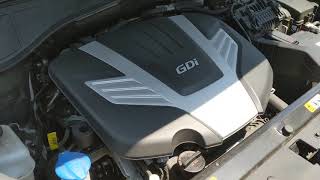
How to confirm: A persistent rattling noise from the front of the engine on cold startups, lasting 2-5 seconds, is a very strong indicator. 🎬 Listen: What the 3.3L Lambda timing chain rattle sounds like Definitive diagnosis requires removing the timing cover to physically inspect the chain for slack against the guides and to verify the alignment of all timing marks. NHTSA ODI #11434884 confirms cases where P0018 was diagnosed alongside bad CVVT timing chains and tensioners.
Typical fix: Replace the timing chains, all tensioners, and all guides. This is a major repair (8-10+ labor hours). It is often recommended to replace the water pump at the same time since it is driven by the timing chain.
Est. part cost: $250-$550 for a full kit - Low or Dirty Engine Oil 🟡 Medium Probability The entire CVVT system is hydraulic and relies on clean oil at the correct pressure. These engines are known to consume oil between changes, so the level can drop unexpectedly, starving the system. Sludge from infrequent oil changes can clog the tiny passages in the OCVs and cam phasers, causing them to malfunction.
How to confirm: Check the engine oil level on the dipstick and inspect its condition. If it is low or very dark and dirty, this is a likely contributor and should be addressed first.
Typical fix: Top off the oil to the correct level or perform a complete oil and filter change using a quality synthetic oil of the manufacturer-specified viscosity (typically 5W-20 or 5W-30).
Est. part cost: $40-$80 - Failing Bank 2 Camshaft Position Sensor (CMP) ⚪ Low Probability → Shop Engine Camshaft Position Sensor
How to confirm: The sensor's output can be monitored with an advanced scan tool or oscilloscope. A common diagnostic trick is to swap the Bank 2 intake sensor with the Bank 1 intake sensor; if the code changes to P0016 (Bank 1 correlation), the sensor is confirmed faulty. The sensor is a three-wire Hall effect type; with the key on, you should find 5V power, a good ground, and a 5V signal wire.
Typical fix: Replace the Bank 2 intake camshaft position sensor.
Est. part cost: $30-$70
Rare But Worth Checking
- Damaged CVVT Cam Phaser/Actuator (Sheared Dowel Pin): → Shop Engine Timing Gear The gear on the end of the camshaft can fail internally. A known, though uncommon, failure is for the steel dowel pin that locks the phaser to the camshaft to shear off. This causes a complete loss of timing control on that cam. This is a very expensive repair and is usually diagnosed after all other causes are ruled out. NHTSA ODI #11606626 describes a situation where a technician pulled code P0018 and determined the vehicle required a replacement of the intake camshaft, CVVT, and timing chain.
- Failing Crankshaft Position Sensor (CKP): → Shop Engine Crankshaft Position Sensor A faulty CKP sensor can cause a variety of timing-related codes and no-start conditions. It's a possible but unlikely cause for P0018 by itself without other codes present.
- PCM (Engine Computer) Issue: In very rare cases, the engine computer itself can be the source of the fault. This should only be considered after every other possibility has been exhausted by a professional.
Diagnosis Steps
- Check Engine Oil: Verify the oil level is full and the oil is clean. This is the first and most important step, as low or dirty oil is a common cause. If low, top off; if dirty, perform an oil change, clear the code, and drive.
- Scan for Other Codes: Use an OBD-II scanner to check for any other pending or active codes that could provide more clues (e.g., misfire codes on Bank 2).
- Listen for Noise: On a cold start, listen carefully for a distinct rattling or chain-slap noise from the engine lasting 2-5 seconds. If present, a timing chain/tensioner issue is highly likely. If absent, suspect the OCV.
- Analyze Live Data: With an advanced scan tool, monitor the PIDs for 'Camshaft Angle Intake Bank 2'. Command the OCV on and off. If the angle does not change from 0 degrees, it confirms a lack of control, pointing to the OCV, phaser, or oil pressure.
- Inspect/Test the Oil Control Valve (OCV): If there is no startup rattle, the OCV is the most probable cause. This requires removing the intake manifold for access. Once removed, visually inspect the OCV screens for damage or missing pieces. Test the coil resistance; it should be 6.7-7.7 Ohms.
- Test the Camshaft Position Sensor (CMP): If the OCV appears fine, test the Bank 2 intake CMP sensor. Check its wiring and connector, and consider swapping it with the Bank 1 sensor to see if the fault code follows to P0016.
- Inspect Mechanical Timing: If all else fails, the final step is to remove the timing cover and inspect the timing chain, guides, and tensioners for wear, damage, or misalignment of timing marks. This is a labor-intensive step.
Parts You'll Likely Need
- Engine Oil Control Valve (Bank 2, RH, Radiator Side)
(OEM #24355-3C200)— This is the most common failure point for P0018 on this engine. The internal mechanism can get stuck or the filter screen can break.
Trusted brands: Hyundai (Genuine), Dorman, Standard Motor Products (SMP)
OEM price range: $80-$120
Aftermarket price range: $40-$75 - Engine Oil Control Valve (Bank 1, LH, Firewall Side)
(OEM #24355-3C100)— While not the cause of P0018, it is highly recommended to replace this OCV at the same time as the Bank 2 valve, as it is also under the intake manifold and of the same age.
Trusted brands: Hyundai (Genuine), Dorman, Standard Motor Products (SMP)
OEM price range: $80-$120
Aftermarket price range: $40-$75 - Engine Timing Chain Kit — If a startup rattle is present, the chain, guides, and tensioners are likely worn and require replacement as a set.
Trusted brands: Melling, Cloyes, Hyundai (Genuine)
OEM price range: $450-$600
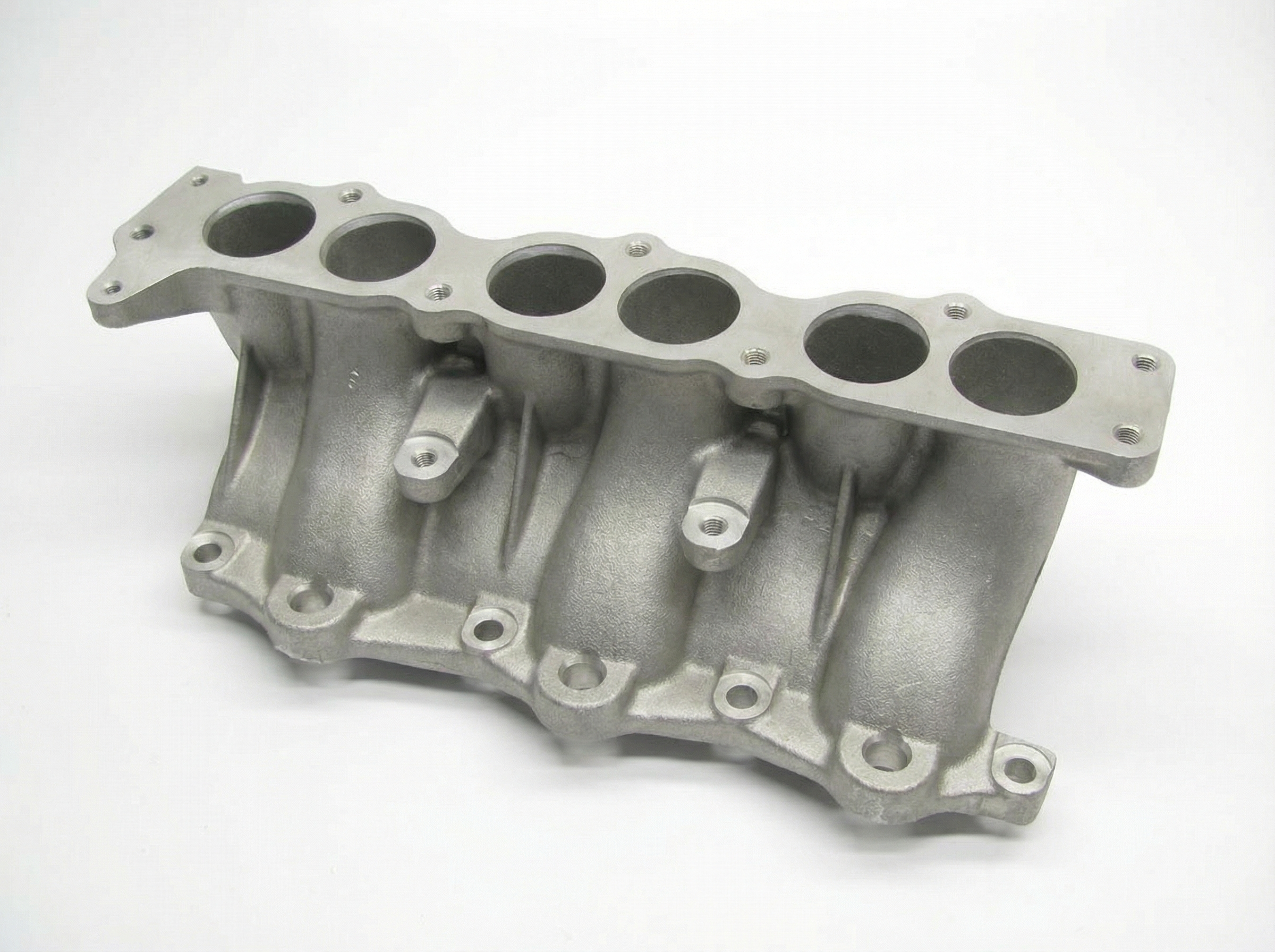
Aftermarket price range: $250-$400 - Intake Manifold Gasket Set — Required when removing the intake manifold to access the Oil Control Valves. These are one-time use and must be replaced.
Trusted brands: Fel-Pro, Mahle, Hyundai (Genuine)
OEM price range: $40-$60
Aftermarket price range: $20-$35
Related Codes That Often Appear With This One
- P0016 — If there are issues with the Bank 1 camshaft timing as well, often pointing to a more severe base timing issue like a stretched chain affecting both banks.
- P0300, P0302, P0304, P0306 — Misfire codes for the cylinders on Bank 2 (2, 4, 6) can occur if the incorrect cam timing is severe enough to affect combustion and engine stability.
Platform-Specific Known Issues
- The Bank 2 (front) Oil Control Valve is located under the upper and lower intake manifolds, turning a simple part replacement into a 3-5 hour job.
- The original timing chain tensioners are a known weak point and a common source of startup rattle, which can eventually lead to this timing correlation code.
Mechanic-Grade Diagnostic Values
- Oil Control Valve (OCV) Coil Resistance — expected: 6.7 - 7.7 Ohms at 68°F (20°C) for the Delphi-supplied part.. Failure: Resistance outside this range, or infinite/zero resistance, indicates a failed coil. However, a good resistance reading does not rule out a mechanical jam.
- Camshaft Position Sensor (CMP) Circuit Voltage — expected: With key on, engine off: Power wire = ~5V, Ground wire = ~0V, Signal wire = ~5V.. Failure: While cranking, the signal wire voltage should pulse or drop to near 0V as the camshaft rotates. A static or absent signal points to a bad sensor or wiring issue.
- PCM Fault Logic Threshold — expected: The PCM expects the 17th signal of the CKP sensor (after the missing tooth) to align with the high signal of the CMPS at idle.. Failure: The PCM will set code P0018 if it detects a misalignment of 1 tooth when oil temp is between 80-90°C, or a misalignment of 2 teeth if the oil is colder or hotter than that range.
Scan Tool Commands That Help
- Hyundai GDS (Global Diagnostic System): Actuation Test for CVVT Solenoid — This command allows a technician to manually activate the Bank 2 OCV. While monitoring the 'Camshaft Actual Position' and 'Camshaft Desired Position' PIDs, activating the solenoid should cause the actual angle to change and match the desired angle. If the actual angle remains at 0, it confirms a fault in the OCV, its circuit, or oil delivery.
- Hyundai GDS (Global Diagnostic System): Vehicle S/W Management - Resetting Adaptive Values — After replacing a major component like an OCV or timing components, it is good practice to reset the engine's adaptive memory. This forces the PCM to relearn the new component's characteristics and CVVT system performance from a baseline state.
Wiring & Ground Locations
- Engine Bay Ground Points — On the driver's side inner fender wall, near and under the main engine compartment fuse box. There are several ground wires bolted directly to the chassis in this area.. Corrosion at these main ground points can cause a host of intermittent electrical issues and sensor reading errors. A poor ground for the PCM or its sensors (CMP, CKP, OCV) can lead to incorrect voltage readings and trigger correlation codes like P0018. Cleaning these grounds is a crucial step when diagnosing elusive electrical faults.
- Engine Control (EC) Relay — Located in the engine compartment fuse/relay box on the driver's side.. This relay supplies power to the PCM and multiple engine sensors. A faulty or intermittent relay can cause a loss of power to the sensors or PCM, potentially leading to spurious fault codes, including timing correlation errors.
Real Owner Repair Stories
- YouTube user 'Berning Man' (2007 Hyundai Santa Fe 3.3L V6) — Check Engine Light with code P0018.
❌ Tried (didn't work) The owner did not report trying other fixes first.
✅ What actually fixed it The owner removed the intake manifold and inspected the Bank 2 OCV. Although the electrical resistance tested good, a close visual inspection revealed a small piece of the metal filter screen had broken off. The assumption was this piece of debris jammed the solenoid internally. Replacing the OCV resolved the issue. - Reddit user 'Thiccaca' (2014 Hyundai Santa Fe 3.3L V6 (~124k miles)) — Check Engine Light with code P0018, previously had misfire codes.
❌ Tried (didn't work) The user was currently diagnosing a repeat P0018 after a major repair 15 months prior.
✅ What actually fixed it The initial, major repair that cost ~$3500 was replacing the Bank 2 intake camshaft because the CVVT phaser's dowel pin had sheared off, caused by a low oil condition. This is a confirmed, though rare, mechanical failure that directly causes P0018. - NHTSA ODI #11572245 — An owner reported that while driving at 35 mph, the engine lost power and entered limp mode with a flashing check engine light showing code P0018. The diagnosis was catastrophic engine failure with no compression in bank 2 cylinders, requiring a full engine replacement.
- NHTSA ODI #11618527 — An owner seeking a third opinion for a persistent P0018 code noted that the vehicle struggled to pass emissions due to what was described as a "minor timing issue."
Model Year Variations Within This Range
- 2007-2009: These model years were equipped with the 3.3L Lambda V6 engine, which is the primary focus of this article.
- 2010-2012: For the 2010 model year refresh, Hyundai replaced the 3.3L V6 with a new 3.5L V6 engine. While the general causes of P0018 (OCV, timing chain) are similar, specific part numbers for the OCVs and other components are different.
Diagnostic Flowchart
Real Owner Stories
Aggregated from forums and TSBs cited above. Mileages and costs reflect what owners reported in those sources.
2014 Hyundai Santa Fe 3.3L
Symptoms: Recurring P0018 code.
What fixed it: The first instance was fixed by repairing a sheared camshaft pin. The second time the code appeared, the dealer diagnosed a faulty VVT solenoid (OCV).
Cost: $800
Source hint: Reddit r/HyundaiSantaFe: Had major engine repair about 15 months ago, same code showed up
2007 Hyundai Santa Fe 3.3L
Symptoms: P0018 error code.
What fixed it: Replaced the Bank 2 OCV, which required removing the upper and lower intake manifolds to access the part.
Source hint: YouTube: Hyundai Santa Fe 2007, 3.3, P0018 error code (OCV Change)
Hyundai Sonata 3.3L
Symptoms: Persistent P0018 code, engine shaking, and a startup rattle.
What fixed it: Replacing the OCV and sensor did not resolve the issue; the persistent startup rattle strongly indicated the underlying problem was a stretched timing chain or jumped timing.
Source hint: Hyundai Forums: Code p0018 won't go away, engine shakes
Related OBD-II Codes
Frequently Asked Questions
Why is replacing the Bank 2 Oil Control Valve on my 3.3L Santa Fe so expensive?
I hear a rattling noise for a few seconds when I start my Santa Fe cold. Is this related to P0018?
What is the correct part number for the Bank 2 OCV on the 3.3L Lambda engine?
How can I test if the Bank 2 Camshaft Position Sensor is causing the P0018 code?
Can low oil cause the P0018 code on my Santa Fe?
How can a mechanic confirm the OCV is stuck without taking the engine apart?
Helpful Videos
Used OEM Parts in Stock
New Aftermarket Parts Available


The information in this article is provided for general reference and educational purposes only. Vehicle specifications, procedures, and part compatibility can vary by production date, trim level, and region. Always consult your vehicle's factory service manual and verify part numbers before purchasing or performing repairs. Safety-critical components such as airbags, seat belts, and braking systems should be installed by a qualified professional.
- Hyundai Santa Fe:
- 🧭 Diagnostic Flowchart
- 🎬 Helpful Videos
- 🛍️ Shop This Part
- What's Unique About the 2007-2012 Hyundai Santa Fe
- Symptoms You May Notice
- Most Likely Causes
- Rare But Worth Checking
- Diagnosis Steps
- Parts You'll Likely Need
- Related Codes That Often Appear With This One
- Platform-Specific Known Issues
- Mechanic-Grade Diagnostic Values
- Scan Tool Commands That Help
- Wiring & Ground Locations
- Real Owner Repair Stories
- Model Year Variations Within This Range
- Real Owner Stories
- 2014 Hyundai Santa Fe 3.3L
- 2007 Hyundai Santa Fe 3.3L
- Hyundai Sonata 3.3L
- Related OBD-II Codes
- Frequently Asked Questions
- 🎟️ Get 5% Off