

P0018 on 2020-2021 Lincoln Aviator: Crank/Cam Correlation Causes and Fixes
On a 2020-2021 Lincoln Aviator, P0018 is most often caused by low/dirty engine oil or a sticking Variable Camshaft Timing (VCT) solenoid on Bank 2 (driver's side). An oil change and replacing the Bank 2 intake VCT solenoid is the most common fix, with the part costing around $40-$100. Ford TSBs SSM 50067 and SSM 54366 directly address this code, noting that debris in the oil is a primary cause for the VCT solenoid sticking.
- Always check your engine oil level and condition first. A simple oil change with the correct 5W-30 synthetic oil can often fix this code.
- The most likely failed part is the Bank 2 (driver's side) intake VCT solenoid, which gets clogged with oil debris.
- Do not immediately assume a major mechanical failure like a stretched timing chain unless you also hear a distinct rattling noise on cold starts.
- Replacing the VCT solenoid is a manageable DIY task for many, but a timing chain replacement is a complex job for a professional.
What's Unique About the 2020-2021 Lincoln AVIATOR
The 3.0L Twin-Turbo V6 in the Aviator relies heavily on a clean and steady supply of engine oil to operate its Variable Camshaft Timing (VCT) system. Lincoln has issued Technical Service Bulletins (TSBs), including SSM 50067, which directly state that small debris in the oil can cause the VCT solenoids to stick, leading to codes like P0018. This makes regular, high-quality oil changes especially critical on this platform. Unlike some engines where timing issues immediately suggest a major mechanical failure, on the Aviator, the problem is very often a less severe and more accessible component like the VCT solenoid. TSB SSM 50067 even recommends using a scan tool to cycle the affected solenoid 10 times to attempt to clear debris before replacing it.
Diagnostic Flowchart
Tap your situation to follow the diagnostic path that matches what you're seeing on this vehicle.
Symptoms You May Notice
- Check Engine Light is on
- Rough or erratic idle
- Reduced engine power and hesitation on acceleration
- Decreased fuel economy
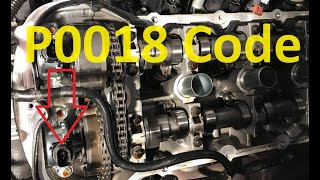
- Engine may stall, especially when coming to a stop 🎬 Watch: A breakdown of common causes and fixes for P0018
- Rattling noise from the engine, especially on a cold start, which may indicate a more serious timing chain or cam phaser issue
- Replacing the crankshaft position sensor. While it's part of the correlation check, it is far less likely to fail than the VCT solenoid or camshaft sensor for this specific code.
- Immediately assuming a stretched timing chain without first checking oil quality and VCT solenoid operation. This can lead to a very expensive and unnecessary repair.
- Replacing a VCT solenoid but not changing the oil, allowing the same debris to damage the new part.
Most Likely Causes
- Low, Dirty, or Incorrect Viscosity Engine Oil 🔴 High Probability The VCT system is hydraulic and highly sensitive to oil quality and pressure. Manufacturer TSBs (SSM 50067) directly link oil debris to sticking VCT solenoids, which causes this code. Using an incorrect oil filter can also cause oil pressure issues.
How to confirm: Check the oil level on the dipstick and examine the oil's color and consistency. If it is dark, below the 'add' line, or past its service interval, this is the likely cause. A Reddit user with P0018 noted their dipstick was completely dry, and the code temporarily cleared after an oil change.
Typical fix: Perform an engine oil and filter change using the manufacturer-specified full synthetic 5W-30 oil and a high-quality filter (Motorcraft is recommended). Clear the codes and drive to see if the issue returns.
Est. part cost: $50-$100 - Sticking or Failed VCT Solenoid (Oil Control Valve) 🔴 High Probability → Shop Engine Variable Valve Timing (VVT) Solenoid As noted in TSB SSM 50067, these solenoids are susceptible to clogging from small particles and sludge in the engine oil, causing them to stick. This is the most common point of failure for VCT-related codes on modern Ford/Lincoln engines.
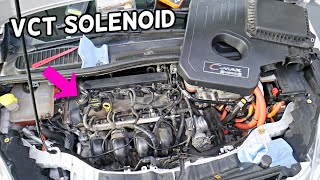
How to confirm: Use a capable scan tool to monitor desired vs. actual cam angle for Bank 2 Intake. You can also command the solenoid on and off to check for a response or an audible click. A highly effective DIY method is to swap the Bank 2 intake solenoid with the Bank 1 intake solenoid. Clear the codes; if the code changes to P0016 (Bank 1 correlation), the solenoid is confirmed faulty. 🎬 See how to test and fix Bank 2 intake correlation issues
Typical fix: Replace the Bank 2 (driver's side) intake VCT solenoid. It is highly recommended to change the engine oil and filter at the same time to remove the debris that caused the failure. The OEM part number FT4Z-6M280-B has superseded FT4Z-6M280-A.
Est. part cost: $40-$100 - Failed Camshaft Position Sensor ⚪ Low Probability → Shop Engine Camshaft Position Sensor
How to confirm: After confirming oil level and VCT solenoid function, test the sensor. Use a multimeter to check for proper resistance according to the service manual, or use an oscilloscope to check for a clean square wave signal while the engine is running. The sensors for the 3.0L V6 are located near the front of the valve covers on each cylinder head.
Typical fix: Replace the Bank 2 intake camshaft position sensor. It is often recommended to replace them in pairs (both on Bank 2, or all four) on higher mileage vehicles.
Est. part cost: $30-$80 - Stretched Timing Chain or Failed Tensioner/Phaser ⚪ Low Probability → Shop Engine Timing Chain While less common than oil-related issues for a single code, the broader Ford EcoBoost engine family has known issues with timing chain stretch and phaser failures over time. A persistent rattling noise on cold starts is a strong indicator of this issue.
How to confirm: A persistent rattling noise from the front of the engine on cold startups is a strong indicator. A definitive diagnosis requires removing the valve cover and timing cover to physically inspect the chain for slack and verify the timing marks align correctly. This is a labor-intensive job.
Typical fix: This is a major repair that involves replacing the timing chain, guides, tensioners, and often the cam phasers as a complete kit. This job requires specialized tools and is best left to a professional. The cost can range from $1,500 to over $3,000.
Est. part cost: $400-$1000
Rare But Worth Checking
- Damaged Wiring or Connectors: Before replacing any sensors or solenoids, always perform a quick visual inspection of the wiring harness and connectors for any signs of damage, corrosion, or loose connections.
- Faulty Powertrain Control Module (PCM): → Shop Engine Control Module (ECM) This is extremely rare and should only be considered after all other possibilities, including mechanical timing, have been exhaustively ruled out by a professional.
Diagnosis Steps
- Verify the code with a quality OBD-II scanner.
- Check the engine oil level and condition. If low, dirty, or overdue for a change, perform an oil and filter change with the correct 5W-30 synthetic oil and a Motorcraft filter. Clear the code and test drive.
- If the code returns, inspect the wiring and connector for the Bank 2 (driver's side) intake camshaft position sensor and VCT solenoid for any visible damage.
- Using a bidirectional scan tool, monitor the desired vs. actual camshaft angle for the Bank 2 intake cam. A significant deviation or a value that doesn't change indicates a problem.
- Use the scan tool's actuator test to command the Bank 2 intake VCT solenoid on and off 10 times, as recommended by TSB SSM 50067, to try and dislodge debris. Listen for a click and watch for a change in engine RPM.
- If the solenoid is still suspect, perform a 'swap test'. Exchange the Bank 2 intake VCT solenoid with the Bank 1 intake solenoid. Clear codes and drive. If the code changes to P0016, the solenoid is bad and needs replacement.
- If the solenoid and oil are good, test the camshaft position sensor's signal with a multimeter or oscilloscope.
- If all electronic and hydraulic tests pass, the final step is to perform a mechanical inspection of the timing chain, tensioners, and phasers, which requires significant engine disassembly and specialized tools.
Parts You'll Likely Need
- Engine Variable Valve Timing (VVT) Solenoid
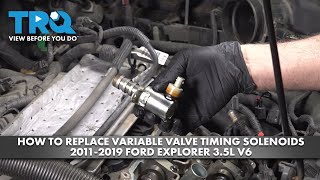
(OEM #FT4Z-6M280-B)— This is the most common failure point for P0018 on this engine, often getting stuck due to oil debris, as noted in manufacturer TSBs. The part number FT4Z-6M280-B supersedes the older FT4Z-6M280-A. 🎬 Watch: VCT solenoid location and replacement explained for Lincoln engines
Trusted brands: Motorcraft, Dorman
OEM price range: $55-$90
Aftermarket price range: $40-$80 - Engine Oil and Filter
(OEM #Motorcraft FL-500S (Filter))— Crucial for the proper function of the VCT system. An oil change is a required first step and is necessary when replacing a VCT solenoid to clear out debris.
Trusted brands: Motorcraft, Mobil 1, Castrol
OEM price range: $60-$110
Related Codes That Often Appear With This One
- P0016 — Crankshaft/Camshaft correlation error for Bank 1 Intake. If both P0016 and P0018 are present, it points more strongly toward a common cause like low/dirty oil or a base timing issue (stretched chain).
- P0021 — 'Intake Camshaft Position Timing - Over-Advanced (Bank 2)'. This code is very specific to the Bank 2 intake cam and often appears with P0018, pointing directly at a problem with the VCT solenoid or cam phaser for that bank.
- P0019 — Crankshaft/Camshaft correlation error for the Bank 2 exhaust camshaft. If P0018 and P0019 are present together, it strongly suggests a problem with the entire Bank 2 cylinder head, such as a phaser failure or oil supply issue to that bank.
Technical Service Bulletins (TSBs) & Recalls
- Illuminated MIL with various VCT DTCs (including P0018) may be due to small debris causing the VCT solenoid to stick. Recommends cycling the solenoid with a scan tool before replacement.
- Updated diagnostic information for various VCT DTCs (including P0018). Points technicians to updated pinpoint tests in the workshop manual.
Platform-Specific Known Issues
- TSB SSM 49449 notes that some 2020-2021 Aviators with the 3.0L EcoBoost may appear to have a low engine oil level if the checking procedure in the owner's manual is not followed correctly, which could lead to an incorrect diagnosis.
- TSB 21B18 was issued for certain 2021 Aviators with the 3.0L engine due to an oversized right-hand exhaust camshaft journal being installed during assembly, which required engine replacement. While this is an exhaust cam issue, it highlights manufacturing variances in the timing system for this model year.
Mechanic-Grade Diagnostic Values
- VCT Solenoid (Oil Control Valve) Internal Resistance — expected: 6 to 12 Ohms. Failure: A reading of 0 Ohms (short circuit) or infinite resistance/OL (open circuit) indicates a failed solenoid coil.
- Camshaft Position Sensor (CMP) Power Wire Voltage — expected: ~5 Volts DC with Key On, Engine Off (KOEO). Failure: Significantly lower voltage or no voltage points to a problem in the wiring harness or the PCM's 5V reference circuit.
- Camshaft Position Sensor (CMP) Signal Wire Voltage — expected: A square wave signal that switches between approximately 0V and 5V as the engine is cranked or running.. Failure: A signal that is stuck high (5V), stuck low (0V), or shows a distorted/noisy waveform indicates a faulty sensor or a problem with the reluctor wheel.
Hidden / Shadow Codes Worth Checking
- Mode 6, Test ID $82: This is Ford's specific on-board monitor for VCT position. It tracks the statistical performance of the camshaft timing adjustments. Reviewing this data can show if the cam/crank correlation is drifting towards its failure threshold, even before a persistent DTC like P0018 is triggered. (see via A professional-level scan tool or software like FORScan that can access and interpret Ford-specific Mode 6 data.)
Scan Tool Commands That Help
- Ford IDS (or FORScan): VCT Solenoid On/Off State Control (Bidirectional Test) — This is a primary diagnostic step to determine if a VCT solenoid is mechanically stuck. The command manually cycles the solenoid, and the technician should listen for an audible click and observe a change in engine operation. TSBs recommend cycling it 10 times to attempt to dislodge debris before replacement.
- Ford IDS (or equivalent): Datalogger with PIDs: VCT_ADV_ERR, RCAM, RCAM_ACT — Monitor these Parameter IDs (PIDs) to see the VCT error in degrees, the Requested Cam Angle (RCAM), and the Actual Cam Angle (RCAM_ACT) in real-time. A large, persistent value for VCT_ADV_ERR or a significant lag between the requested and actual angles confirms a control problem.
Wiring & Ground Locations
- Under-Hood Fuse Box — Located in the engine compartment.. This fuse box contains fuses for the Powertrain Control Module (PCM) and potentially the VCT solenoid circuits. For example, on a 2020 Aviator, fuse F22 (20A) and F23 (15A) are listed for 'Powertrain control module,' and F34 is for 'Port fuel injectors.' A loss of power from a blown fuse could cause multiple DTCs, including timing correlation faults.
- Passenger Compartment Fuse Panel — Located in the passenger cabin, often behind a kick panel.. This panel contains fuses for the Body Control Module (BCM) and other systems that communicate with the PCM. For example, fuse F77 (5A) is for 'Body control module voltage quality monitor feed.' While less direct, electrical issues here can sometimes cause communication errors across the vehicle's network.
Real Owner Repair Stories
- Reddit user in r/lincolnmotorco (2007 Lincoln Mark LT, 109k miles (Note: Different engine, 5.4L V8, but illustrates a common P0018 diagnostic path)) — Rough idle on startup. Clearing the code temporarily resolves the idle issue until the vehicle is driven again.
❌ Tried (didn't work) Replacing the VCT solenoids, Replacing the camshaft position sensors
✅ What actually fixed it The owner did not perform the final fix due to cost, but a dealership diagnosis concluded the root cause was mechanical, requiring replacement of the camshafts, timing chain, and solenoids for a quoted price of $12,000. This highlights how sensor and solenoid replacement often fails to fix a deeper mechanical timing issue.
Helpful Videos


The information in this article is provided for general reference and educational purposes only. Vehicle specifications, procedures, and part compatibility can vary by production date, trim level, and region. Always consult your vehicle's factory service manual and verify part numbers before purchasing or performing repairs. Safety-critical components such as airbags, seat belts, and braking systems should be installed by a qualified professional.
- Lincoln AVIATOR:
- 🧭 Diagnostic Flowchart
- 🎬 Helpful Videos
- What's Unique About the 2020-2021 Lincoln AVIATOR
- Symptoms You May Notice
- Most Likely Causes
- Rare But Worth Checking
- Diagnosis Steps
- Parts You'll Likely Need
- Related Codes That Often Appear With This One
- Technical Service Bulletins (TSBs) & Recalls
- Platform-Specific Known Issues
- Mechanic-Grade Diagnostic Values
- Hidden / Shadow Codes Worth Checking
- Scan Tool Commands That Help
- Wiring & Ground Locations
- Real Owner Repair Stories
- 🎟️ Get 5% Off