

P0018 on 2020-2024 Lincoln Aviator 3.0L: Crank-Cam Correlation Causes and Fixes
On the 3.0L V6 Aviator, P0018 is almost always caused by low/dirty engine oil or a sticking VCT solenoid on the driver's side of the engine. Start by checking your oil; if it's good, the fix is likely a new Bank 2 intake VCT solenoid, which costs about $40-$100 for the part. A key diagnostic step per Ford TSBs is to try cycling the solenoid with a scan tool to clear debris before replacing it.
- First, check your engine oil. Low, old, or dirty oil is the #1 cause of P0018 on this engine.
- The most likely failed part is the Bank 2 (driver's side) intake VCT solenoid, which is relatively inexpensive and accessible.
- Do not immediately assume a catastrophic timing chain failure unless you hear a distinct rattling noise on cold starts.
- A simple diagnostic test is to swap the intake and exhaust VCT solenoids on the driver's side bank to see if the code changes from P0018 to P0019.
- Using the manufacturer-specified 5W-30 full synthetic oil and changing it on schedule is critical for preventing this code from returning.
What's Unique About the 2020-2024 Lincoln Aviator
The 3.0L EcoBoost V6 engine in the Aviator uses a Variable Camshaft Timing (VCT) system that is highly dependent on clean, correct-viscosity engine oil to function. Lincoln has issued multiple Technical Service Bulletins (TSBs) acknowledging that small debris in the oil can cause the VCT solenoids to stick, triggering codes like P0018. Unlike on some other vehicles where this code might immediately suggest a major timing chain failure, on the Aviator, the most probable cause is a much simpler and less expensive oil quality issue or a sticking VCT solenoid. TSB SSM 50067 specifically advises technicians to use a scan tool to cycle the affected solenoid 10 times to attempt to clear debris before replacing the part.
Symptoms You May Notice
- Check Engine Light is on
- Rough or unstable idle
- Reduced engine power and acceleration
- Poor fuel economy
- Engine stalling
- Rattling noise from the engine, especially on a cold start that lasts for 2-5 seconds (indicates possible timing chain or cam phaser issue).
- Replacing the camshaft position sensor without first checking the oil and VCT solenoid.
- Assuming a stretched timing chain without performing proper diagnostics on the VCT system first, especially in the absence of a cold-start rattle.
Most Likely Causes
- Low, Dirty, or Incorrect Viscosity Engine Oil 🔴 High Probability The VCT system uses oil pressure to adjust cam timing. Ford/Lincoln TSBs (SSM 50067) directly link oil debris to VCT solenoid failure on this engine family.
How to confirm: Check the oil dipstick for level and inspect the oil's color and consistency. If it's low, very dark, or sludgy, this is the likely cause.
Typical fix: Perform an engine oil and filter change using the manufacturer-specified full synthetic oil (e.g., Motorcraft 5W-30).
Est. part cost: $50-$100 - Sticking or Failed VCT Solenoid (Bank 2, Intake) 🔴 High Probability → Shop Engine Variable Valve Timing (VVT) Solenoid This is the component that oil issues directly affect. Debris can clog its internal passages, causing it to stick open or closed. TSBs confirm this is the most common point of failure.
How to confirm: After confirming oil is good, use a bidirectional scan tool to command the solenoid on and off to see if it clears the issue, per TSB SSM 50067. A common DIY test is to swap the Bank 2 intake 🎬 Watch: How to test and fix the P0018 correlation code VCT solenoid with the Bank 2 exhaust solenoid. Clear the codes and drive. If the code changes to P0019 (Bank 2, Sensor B), the solenoid is confirmed bad.
Typical fix: Replace the Bank 2 (driver's side) intake VCT solenoid. An oil change is highly recommended at the same time.
Est. part cost: $40-$100 - Failed Camshaft Position Sensor (Bank 2, Intake) ⚪ Low Probability → Shop Engine Camshaft Position Sensor
How to confirm: Use a scan tool to monitor the sensor's live data. If the signal is erratic or absent while the engine is running, the sensor is likely faulty. You can also test its resistance with a multimeter.
Typical fix: Replace the Bank 2 (driver's side) intake camshaft position sensor.
Est. part cost: $30-$70
Rare But Worth Checking
- Stretched Timing Chain or Failed Tensioner: → Shop Engine Timing Chain This is a major mechanical issue and a known, albeit less common, problem on EcoBoost engines. A key symptom is a distinct rattling sound from the front of the engine during a cold start that lasts for a few seconds. This sound is caused by lack of oil pressure in the tensioners upon startup, allowing the loose chain to slap against its guides. If you hear this, professional diagnosis is required immediately.
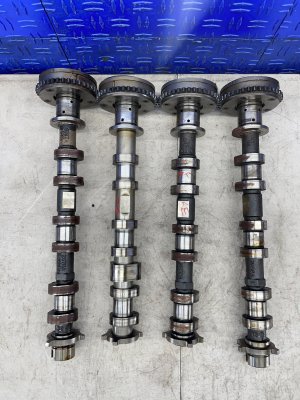
- Damaged Camshaft Phaser: → Shop Engine Camshaft The phaser is the gear on the end of the camshaft that is controlled by the VCT solenoid. It can fail mechanically, often in conjunction with a stretched timing chain. The 'cold start rattle' is also the primary symptom for a failing phaser. Replacing phasers is a very involved job that often requires engine removal and can cost thousands of dollars.
Diagnosis Steps
- Check Engine Oil: Verify the oil level is correct and the oil is clean. If low or dirty, perform an oil and filter change with the correct grade oil, clear the codes, and see if P0018 returns. This is the most common fix.
- Scan for Codes: Check for any other related codes that could provide more clues (e.g., P0016, P0021, P0019).
- Inspect Wiring: Visually inspect the wiring harnesses and connectors for the Bank 2 (driver's side) intake camshaft position sensor and VCT solenoid. Look for any signs of damage, oil contamination, or loose connections.
- (Recommended) Cycle the VCT Solenoid: If you have a capable bidirectional scan tool, follow the procedure in TSB SSM 50067. Command the Bank 2 intake VCT solenoid on and off 10 times to attempt to dislodge debris. Clear codes and re-test.
- Test the VCT Solenoid: If step 4 is not possible or doesn't work, swap the intake and exhaust VCT solenoids on Bank 2. They are identical. Clear the codes and drive the vehicle. If the code changes to P0019, you have a confirmed bad intake VCT solenoid.
- Test the Camshaft Position Sensor: If the solenoid swap doesn't isolate the issue, the sensor itself may be faulty. Use a scan tool to check its live data feed or test its internal resistance with a multimeter.
- Mechanical Inspection: If all of the above check out, especially if you hear a cold-start rattle, the problem is likely mechanical. This involves checking for a stretched timing chain, bad tensioners, or a failed cam phaser. This step typically requires a professional mechanic.
Parts You'll Likely Need
- Variable Camshaft Timing (VCT) Solenoid
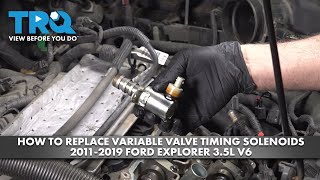
(OEM #FT4Z-6M280-B (supersedes FT4Z-6M280-A))— This part is the most common point of failure for P0018, often sticking due to oil contamination. The 3.0L engine uses four identical solenoids. 🎬 See this walkthrough for replacing the VVT solenoids
Trusted brands: Motorcraft, Standard Motor Products (SMP)
OEM price range: $40-$65
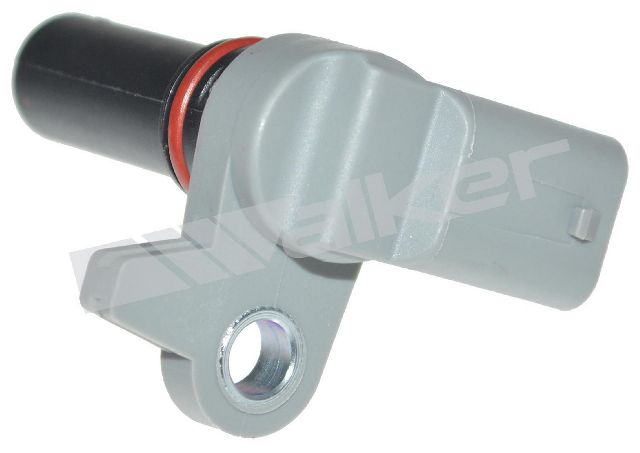
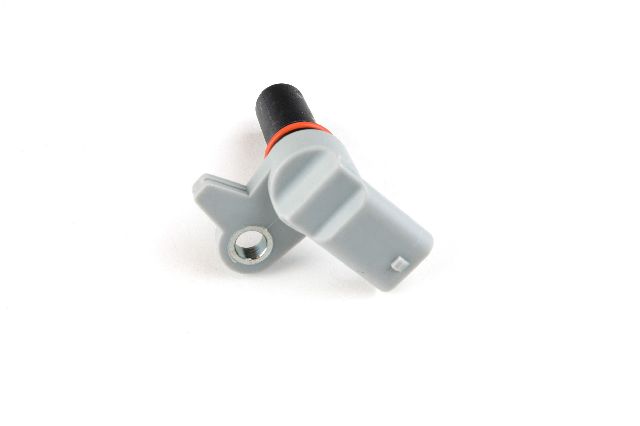
Aftermarket price range: $25-$50 - Camshaft Position Sensor — This sensor provides the data to the PCM. While less likely to fail than the solenoid, it can cause the code if it sends an incorrect signal.
Trusted brands: Motorcraft, Bosch, Delphi
OEM price range: $40-$70
Aftermarket price range: $25-$50
Related Codes That Often Appear With This One
- P0016 — This is the same correlation code but for Bank 1 (passenger side). If P0016 and P0018 appear together, it strongly suggests a systemic problem like low oil pressure or a stretched primary timing chain affecting both banks.
- P0021 — This code means 'Intake Camshaft Position Timing - Over-Advanced (Bank 2)'. It often appears with P0018 and points directly to a problem with the Bank 2 intake VCT solenoid or phaser failing to control the cam's position.
- P0019 — This is the correlation code for the exhaust camshaft on Bank 2. Seeing it with P0018 could indicate a wider timing issue on the driver's side bank or could be induced by a diagnostic swap of the VCT solenoids.
Technical Service Bulletins (TSBs) & Recalls
- SSM 50067: Notes that various 2015-2021 Ford and Lincoln vehicles may exhibit P0018 and other VCT codes due to a sticking VCT solenoid caused by debris. Recommends cycling the solenoid with a scan tool 10 times to attempt to clear debris before replacement.
- SSM 54366: Covers 2015-2021 vehicles and directs technicians to specific diagnostic tests for VCT codes like P0018.
Platform-Specific Known Issues
- The VCT system on the 3.0L EcoBoost is known to be sensitive to oil quality and maintenance intervals. Per TSB SSM 50067, debris in the oil is a primary cause for VCT solenoids sticking and triggering correlation codes like P0018.
Mechanic-Grade Diagnostic Values
- VCT Solenoid Internal Resistance — expected: 6.9 to 7.9 Ohms at 68°F (20°C). Failure: A reading of 0 ohms (short circuit) or OL/infinite (open circuit).
- VCT Solenoid Connector Voltage (Key On, Engine Off) — expected: Approximately 12V (Battery Voltage) at Pin 1 (power supply).. Failure: Voltage below 10.5V suggests a wiring, fuse, or PCM power relay issue.
- Camshaft Position Sensor (3-wire) Power Voltage (Key On, Engine Off) — expected: ~5 Volts reference from PCM on the power wire.. Failure: No voltage or significantly lower voltage points to a wiring or PCM problem.
- Scan Tool PID: VCT_ERR2 (VCT Error Bank 2) — expected: Should be near 0° at warm idle.. Failure: A consistent deviation greater than +/- 5° suggests a mechanical timing, phaser, or solenoid control issue.
Hidden / Shadow Codes Worth Checking
- Mode 6, Test ID $81 or $53: This is a non-continuous monitor test result, not a DTC. It tracks camshaft angle deviation. A consistent failure of this monitor can be an early warning of a developing VCT system problem before a hard code like P0018 is triggered. (see via A professional scan tool (like Ford IDS) or an advanced consumer scanner (like FORScan) with Mode 6 capabilities.)
Scan Tool Commands That Help
- Ford IDS / FORScan: VCT Solenoid On/Off State Control / Pinpoint Test HK — This is a primary diagnostic step. It manually commands the solenoid to cycle, which can dislodge debris (per TSBs) and confirms if the solenoid is mechanically stuck or electrically unresponsive. A working solenoid should cause a noticeable change in idle quality or stall the engine.
- Ford IDS / FORScan: Datalogger for VCT PIDs (VCT_INT_ADV_DES2, VCT_INT_ACT2, VCT_ERR2) — Use this to graph the PCM's desired cam angle vs. the actual cam angle in real-time. This helps differentiate between a slow/sticking solenoid (intermittent error) and a base timing issue (constant error).
Wiring & Ground Locations
- Bank 2 Intake VCT Solenoid Connector — On the front of the Bank 2 (driver's side) valve cover, plugging directly into the top of the solenoid.. This 2-pin connector is the primary test point for power and control signals to the most likely failed component. Pin 1 is the ~12V power supply (KOEO) and Pin 2 is the ground signal modulated by the PCM. Oil contamination or corrosion here is common.
- G105 (Example Ground) — On similar Ford platforms, this is a major engine compartment ground located on the driver's side frame rail or inner fender.. The PCM controls the VCT solenoids by modulating the ground signal. A poor main engine ground can introduce electrical noise and cause erratic VCT operation, leading to intermittent timing codes.
Real Owner Repair Stories
- YouTube channel 'Truck Lab' (2019 Ford F-150 3.5L EcoBoost (related engine family)) — Check engine light with codes P0018 and P0021, occasional loss of power, and a cold-start rattle.
❌ Tried (didn't work) Initial diagnosis pointed towards cam phasers due to the cold-start rattle, which would be a very expensive repair.
✅ What actually fixed it Replacement of the faulty Bank 2 intake VCT solenoid resolved both the trouble codes and the cold-start rattle, indicating the solenoid was failing to build oil pressure in the phaser on startup. - Reddit user on r/AskMechanics (2013 Ford Taurus 3.5L V6 (related engine family)) — P0018 code appeared immediately after a major service.
❌ Tried (didn't work) Changing the oil twice., Replacing VCT solenoids and cam sensors was considered but deemed unlikely to fix the issue given the context.
✅ What actually fixed it The code appeared right after a timing chain and water pump replacement. The root cause was determined to be an error during the installation, where the Bank 2 camshaft was set incorrectly. The final fix was to re-time the engine correctly.
When the Usual Fixes Don't Work
- While a cold-start rattle almost always points to a stretched timing chain or failing cam phasers, there are documented cases on related Ford engines where replacing only a faulty VCT solenoid fixed both the P0018 code and the rattle. This is because a stuck solenoid can fail to supply the necessary oil pressure to the phaser upon startup, mimicking the symptoms of a larger mechanical failure.
OEM Part Supersession History
FT4Z-6M280-A→FT4Z-6M280-B— Minor revision for improved reliability or change in supplier. This is a common practice for Ford parts.
Heads up: The -A and -B versions are functionally interchangeable, but it is always best practice to install the latest available revision (-B) when performing a repair.
Model Year Variations Within This Range
- 2021: A small number of 2021 Aviators with the 3.0L engine were subject to TSB 21B18, which identified an oversized right-hand exhaust camshaft journal installed during manufacturing. This could cause persistent timing codes and required engine replacement.
Diagnostic Flowchart
Other Known Issues on This Vehicle
Issues unrelated to this code that are worth knowing about as an owner of this generation:
- 360-Degree Camera Malfunction 🟠 Medium — Very common across all 2020-2024 models. Can occur at any mileage. Symptoms include a blue screen, flickering, or total failure of the camera display. (Ref: Multiple recalls issued, including NHTSA 23V598, 23S02, and 24S35. The fix often involves software updates and/or adding electromagnetic shielding to the Accessory Protocol Image Module (APIM).)
- 10-Speed Automatic Transmission Issues 🟠 Medium — Common complaints include erratic or harsh shifting, hesitation, and transmission fluid leaks. Problems can appear early in the vehicle's life. (Ref: TSB SSM 50748 notes erratic shifting. TSB 20-2354 addresses harsh shifting on PHEV models. TSB SSM 51032 points to potential transmission fluid contamination in the engine coolant.)
- EcoBoost Cam Phaser Rattle (Cold Start) 🔴 High → Shop Engine Timing Gear — A well-known issue on the broader EcoBoost engine family. Presents as a loud rattling or tapping noise from the engine for 2-5 seconds immediately after a cold start. If left unaddressed, it can lead to timing chain failure. (Ref: While not a recall for the Aviator specifically, this issue is widely documented. TSB 20-2315 for the related 3.5L EcoBoost describes the exact symptom. Repair is very expensive, often requiring engine removal.)
Used vs. New Parts: Buying Guide for This Vehicle
When a used part is the smart pick: A used camshaft position sensor from a reputable salvage yard could be a cost-effective option, provided it's from a low-mileage, accident-damaged vehicle where the engine was not the cause of failure.
Donor-vehicle mileage cap: roughly under 60000 miles for the part to have meaningful remaining life.
What to inspect on the donor part:
- No visible corrosion on electrical pins.
- Plastic housing is not cracked or showing signs of extreme heat stress.
- Verify the donor vehicle's VIN to ensure it did not have a history of timing-related trouble codes.
OEM-only on this vehicle (don't cheap out):
- Timing Chain
- Timing Chain Tensioners
- Camshaft Phasers
Aftermarket brands forum-validated for this vehicle:
- Standard Motor Products (SMP)
- Dorman (for solenoids and sensors)
Brands owners have reported issues with on this vehicle:
- No-name, unbranded parts from online marketplaces are a significant risk due to poor quality control and high failure rates.
Real Owner Stories
Aggregated from forums and TSBs cited above. Mileages and costs reflect what owners reported in those sources.
2015 Ford Explorer 3.7L V6 (Related Engine Family)
Symptoms: The owner experienced a persistent P0018 code and rough engine operation even after replacing the VVT solenoid and testing the camshaft sensor.
What fixed it: The issue was determined to be related to the base mechanical timing (chain position) being disturbed during prior repairs, requiring professional mechanical timing correction.
Source hint: Reddit r/AskMechanics thread titled 'Hi, I have an issue with my 2015 Ford Explorer 3.7L'
2020-2024 Lincoln Aviator 3.0L EcoBoost
Symptoms: General reports of sporadic electrical issues and unrefined transmission behavior.
What fixed it: Staying current with software updates for the PCM to address potential glitches in the VCT system.
Source hint: Reddit r/lincolnmotorco
Related OBD-II Codes
Frequently Asked Questions
My 2020 Lincoln Aviator has a rattling noise for a few seconds on cold starts. Is this related to P0018?
Does TSB SSM 50067 apply to the 3.0L EcoBoost engine in my Aviator?
Can I swap parts to test if the VCT solenoid is bad on my Bank 2 intake?
What specific oil should I use to prevent VCT issues in my 3.0L Aviator?
Is there a TSB for the harsh shifting I'm experiencing alongside the check engine light?
What is the part number for the VCT solenoid if I need to replace it?
Helpful Videos

Used OEM Parts in Stock
New Aftermarket Parts Available


The information in this article is provided for general reference and educational purposes only. Vehicle specifications, procedures, and part compatibility can vary by production date, trim level, and region. Always consult your vehicle's factory service manual and verify part numbers before purchasing or performing repairs. Safety-critical components such as airbags, seat belts, and braking systems should be installed by a qualified professional.
- Lincoln Aviator:
- 🧭 Diagnostic Flowchart
- 🎬 Helpful Videos
- 🛍️ Shop This Part
- What's Unique About the 2020-2024 Lincoln Aviator
- Symptoms You May Notice
- Most Likely Causes
- Rare But Worth Checking
- Diagnosis Steps
- Parts You'll Likely Need
- Related Codes That Often Appear With This One
- Technical Service Bulletins (TSBs) & Recalls
- Platform-Specific Known Issues
- Mechanic-Grade Diagnostic Values
- Hidden / Shadow Codes Worth Checking
- Scan Tool Commands That Help
- Wiring & Ground Locations
- Real Owner Repair Stories
- When the Usual Fixes Don't Work
- OEM Part Supersession History
- Model Year Variations Within This Range
- Other Known Issues on This Vehicle
- Used vs. New Parts: Buying Guide for This Vehicle
- Real Owner Stories
- 2015 Ford Explorer 3.7L V6 (Related Engine Family)
- 2020-2024 Lincoln Aviator 3.0L EcoBoost
- Related OBD-II Codes
- Frequently Asked Questions
- 🎟️ Get 5% Off