

P0018 on 2017-2020 Lincoln Continental: Crank/Cam Correlation Causes and Fixes
On a 2017-2020 Lincoln Continental, P0018 is most often caused by a sticking Variable Camshaft Timing (VCT) solenoid on Bank 2, usually due to dirty or low engine oil. Start by checking your oil level and condition; an oil change and a new VCT solenoid often fixes the issue. If a cold-start rattle is present, suspect a stretched timing chain.
- P0018 means the intake camshaft on the front-facing engine bank (Bank 2) is out of sync with the crankshaft.
- Before buying any parts, check your engine oil. Low or dirty oil is the number one cause of this code.
- The most likely failed part is the Bank 2 intake VCT solenoid, which is relatively inexpensive and accessible to replace.
- If you hear a brief rattling noise when starting the engine cold, you may have a more serious issue with a stretched timing chain that requires professional diagnosis.
What's Unique About the 2017-2020 Lincoln CONTINENTAL
Across all three V6 engines available in the 2017-2020 Continental, the Variable Camshaft Timing (VCT) system is sensitive to oil quality and condition. Multiple Technical Service Bulletins (TSBs) issued by Ford/Lincoln for this period explicitly state that codes like P0018 are often due to small debris causing the VCT solenoids to stick. This makes an oil level/condition check and VCT solenoid inspection the most critical first steps before suspecting more severe mechanical issues like a stretched timing chain, which is a known but less frequent issue on the EcoBoost and Cyclone engine families.
Diagnostic Flowchart
Tap your situation to follow the diagnostic path that matches what you're seeing on this vehicle.
Symptoms You May Notice
- Check Engine Light is on
- Rough or erratic idle
- Reduced engine power and poor acceleration
- Engine stalling, especially when coming to a stop
- Decreased fuel efficiency
- Rattling noise from the engine, particularly on startup, that may last 2-5 seconds
- Replacing the camshaft position sensor when the actual problem is a sticking VCT solenoid or low oil level.
- Assuming a stretched timing chain without first diagnosing the much more common and cheaper-to-fix VCT solenoid.
- Replacing cam phasers without also replacing a stretched timing chain, leading to the code returning immediately after the repair.
Most Likely Causes
- Sticking or Failed VCT Solenoid 🔴 High Probability → Shop Engine Variable Valve Timing (VVT) Solenoid Multiple manufacturer TSBs (SSM 50067, 48423, 47170) identify sticking VCT solenoids due to debris as a common cause for this code on Ford/Lincoln vehicles of this era. The VCT system is highly sensitive to oil contamination, and these solenoids contain fine screens that can become clogged.
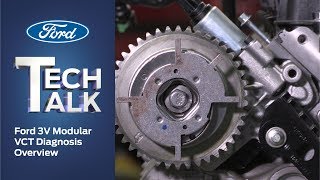
How to confirm: A mechanic can command the solenoid on and off with a scan tool to check its response; if the engine hesitates 🎬 Watch: Ford Tech Talk's official VCT diagnosis and testing overview. or stalls, the solenoid is likely working. A DIY method is to swap the Bank 2 intake and exhaust solenoids to see if the code changes to P0019 (exhaust cam correlation error). You can also test the solenoid's internal resistance with a multimeter, which should typically be between 6.9 and 7.9 ohms.
Typical fix: Replace the VCT solenoid for the Bank 2 intake camshaft. An oil and filter change should be performed at the same time using the correct oil viscosity (e.g., SAE 5W-30 for EcoBoost engines).
Est. part cost: $40-$100 - Low, Dirty, or Incorrect Engine Oil 🔴 High Probability The VCT system uses oil pressure to adjust cam timing. If the oil is low, dirty, or the wrong viscosity, the system cannot operate correctly, leading to correlation faults. Using an incorrect aftermarket oil filter has also been reported to cause similar issues.
How to confirm: Check the oil dipstick for level and inspect the oil for darkness, sludge, or a gritty texture. Ensure the oil level is at the full mark.
Typical fix: Perform an engine oil and filter change using the manufacturer-specified grade of oil and a quality filter.
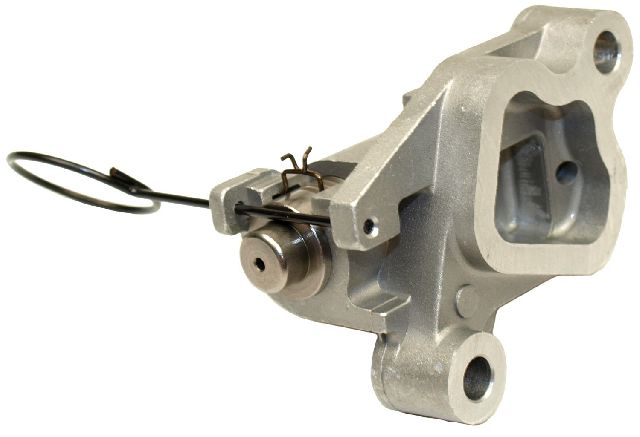
Est. part cost: $50-$100 - Stretched Timing Chain 🟡 Medium Probability → Shop Engine Timing Chain Timing chains can stretch over time with high mileage, causing the mechanical timing between the crank and cams to be off. This is a known issue on some Ford/Lincoln V6 engines, particularly the 3.5L and 2.7L EcoBoost variants.
How to confirm: Listen for a rattling noise on cold starts that lasts for a few seconds. A definitive diagnosis requires inspecting the timing chain tensioner and checking for slack, which is a labor-intensive job that involves removing the timing cover. A scan tool may show a significant degree of timing deviation.
Typical fix: Replace the timing chain, tensioners, and guides. This is a complex and expensive repair, often costing over $2,500. It is highly recommended to replace the cam phasers at the same time.
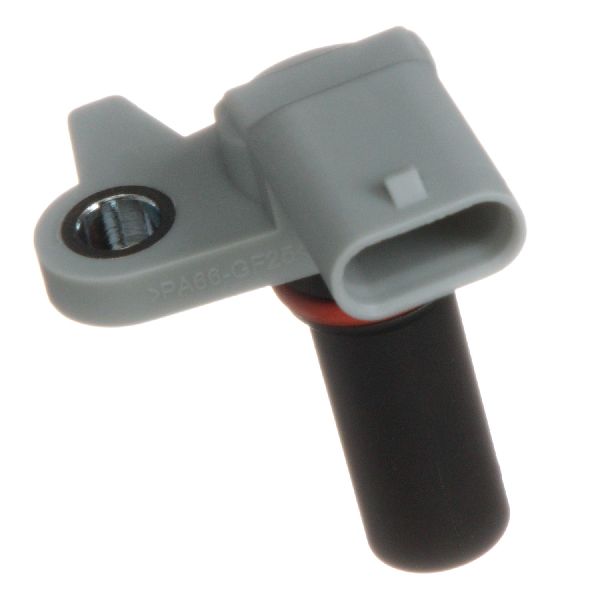
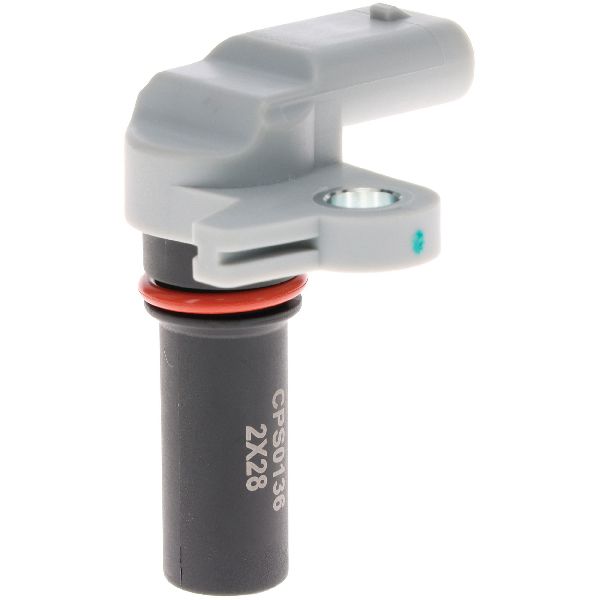
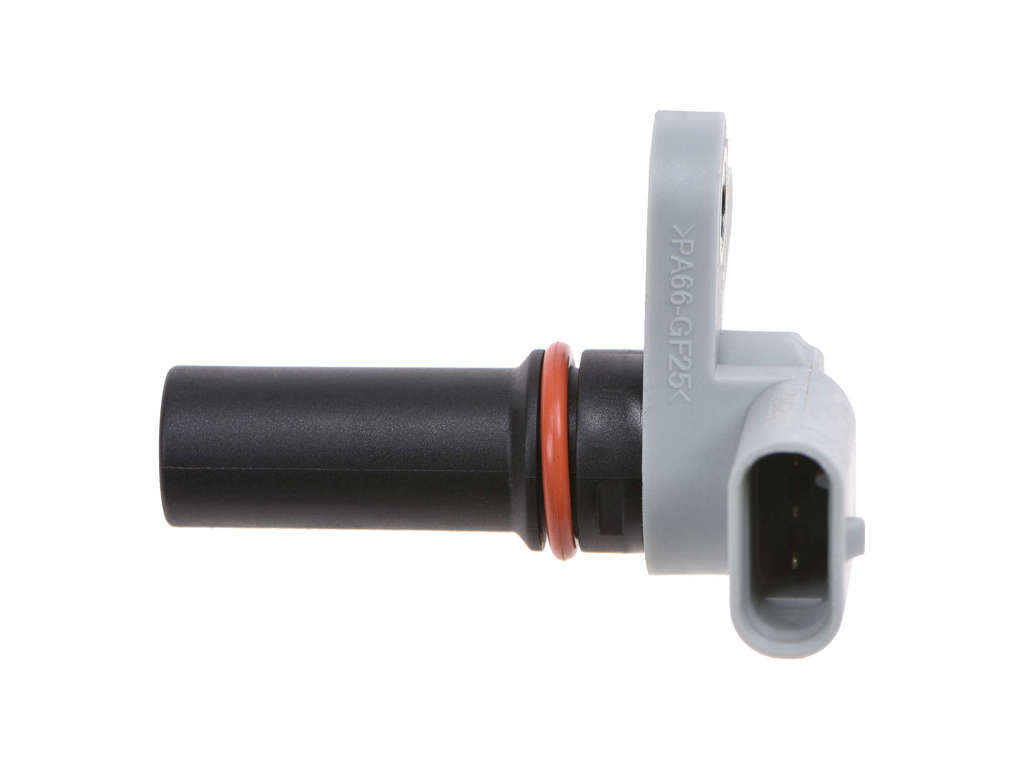
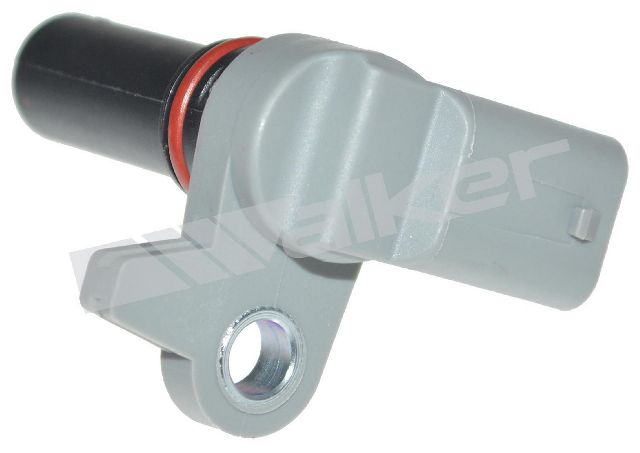
Est. part cost: $400-$800 - Failed Camshaft Position Sensor ⚪ Low Probability → Shop Engine Camshaft Position Sensor
How to confirm: Test the sensor's output with a multimeter or oscilloscope. Often, the easiest way to confirm is to swap it with the sensor from the exhaust camshaft (if identical) or the intake sensor from Bank 1 and see if the code changes (e.g., to P0019 or P0016).
Typical fix: Replace the Bank 2 intake camshaft position sensor.
Est. part cost: $30-$70
Rare But Worth Checking
- Failed Camshaft Phaser: → Shop Engine Camshaft The phaser is the gear on the end of the camshaft that actually rotates to change timing. It can fail mechanically or get clogged with debris, but this is less common than a solenoid failure. Often replaced along with the timing chain.
- Damaged Wiring or Connectors: Check the wiring harness and connectors for the camshaft position sensor and VCT solenoid for any signs of damage, corrosion, or loose connections.
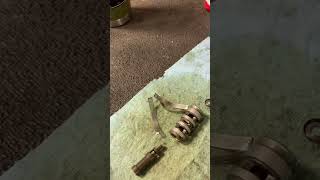
- Faulty Powertrain Control Module (PCM): → Shop Engine Control Module (ECM) This is extremely rare and should only be considered after all other possibilities have been exhaustively ruled out. 🎬 See this walkthrough on how to test and fix P0018.
Diagnosis Steps
- Check the engine oil level and condition. Top off or change the oil if it is low, old, or dirty. Use a high-quality filter and the manufacturer-specified oil. Clear the code and see if it returns.
- Use an OBD-II scanner to check for any other related trouble codes, such as P0016, P0019, or P0021.
- Visually inspect the wiring and connectors for the Bank 2 intake camshaft position sensor and VCT solenoid for damage or corrosion.
- Using a capable scan tool, monitor the commanded vs. actual camshaft position for Bank 2. Command the VCT solenoid on and off to verify its operation. A working solenoid should cause the engine to stumble or stall.
- If a solenoid fault is suspected, swap the intake and exhaust VCT solenoids on Bank 2. Clear the codes and see if the fault code changes to P0019. If it does, the solenoid is bad.
- If the solenoid and wiring are good, test the camshaft position sensor itself, potentially by swapping it with another known-good sensor.
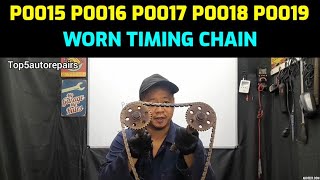
- If all electronic and hydraulic components test good, the final step is to perform a mechanical inspection of the timing chain, guides, and phasers for wear, damage, or misalignment. This is a labor-intensive step. 🎬 Watch: How to determine if your timing chain is stretched.
Parts You'll Likely Need
- Variable Camshaft Timing (VCT) Solenoid
(OEM #FT4Z-6M280-B (For 2.7L/3.0L), AT4Z-6M280-A / AT4Z-6M280-B (For 3.7L))— This is the most frequent cause of P0018 on this vehicle, as identified by multiple TSBs. It gets stuck from oil debris.
Trusted brands: Motorcraft, Dorman, Standard Motor Products
OEM price range: $60-$120
Aftermarket price range: $40-$80 - Camshaft Position Sensor — While less common than the solenoid, a failing sensor can send incorrect data to the PCM, triggering the code.
Trusted brands: Motorcraft, Bosch, NTK
OEM price range: $50-$90
Aftermarket price range: $30-$70 - Timing Chain Kit
(OEM #JT4Z-6268-A (2.7L/3.0L Chain Example))— Required if diagnosis points to a stretched timing chain, which is a significant mechanical failure.
Trusted brands: Motorcraft, Cloyes
OEM price range: $500-$900
Aftermarket price range: $300-$600
Related Codes That Often Appear With This One
- P0016 — This is the same correlation error but for Bank 1 (passenger side). Seeing both P0016 and P0018 together strongly suggests a base timing issue affecting the entire engine, like a stretched timing chain.
- P0019 — This is a correlation error for the exhaust camshaft on Bank 2. If you have P0018 and P0019 together, it points to a problem affecting the entire driver's side bank, such as issues with both VCT solenoids or phasers.
- P0021 — This code indicates the Bank 2 intake cam is over-advanced. It often appears with P0018 as it's related to the same VCT components (solenoid, phaser) failing to control cam position correctly.
Technical Service Bulletins (TSBs) & Recalls
- SSM 50067: Notes that various P00xx timing codes can be caused by small debris causing the VCT solenoid to stick. Advises cycling the solenoid with a scan tool before replac
Platform-Specific Known Issues
- The VCT system on these engines is known to be sensitive to oil contamination. Multiple TSBs (SSM 50067, SSM 48423, SSM 47170) confirm that small debris can cause VCT solenoids to stick, triggering this and other related timing codes.
- On the 3.7L Cyclone V6, the water pump is driven internally by the timing chain. A water pump failure can contaminate the engine oil with coolant, leading to sludge and causing VCT system and timing chain failures.
Mechanic-Grade Diagnostic Values
- VCT Solenoid Resistance — expected: 6.9 to 7.9 Ohms at 68°F (20°C), though a broader range of 5-15 Ohms is sometimes cited.. Failure: A reading of 0 Ohms (short), OL/infinity (open), or being significantly outside the expected range.
- Camshaft Position Sensor (3-wire Hall Effect) Signal Voltage — expected: With key on, engine off, the signal wire should show approximately 4-5V.. Failure: Missing reference voltage (~5V) or ground points to a wiring issue, not a sensor failure.
- Scan Tool VCT Advance Error PID (e.g., VCT_ADV_ERR, VCT2ERR, VCT_INT_DIF2) — expected: Should hover close to 0° at idle and under steady load, with an acceptable variance of +/- 5 degrees.. Failure: A large, persistent deviation, or a slow/lagging response to changes in commanded position (RCAM), points to a sticking solenoid, phaser, or low oil pressure.
- Scan Tool VCT Solenoid Duty Cycle PID (e.g., VCT2DC, CAMDCR) — expected: The duty cycle for both banks should be similar under the same conditions.. Failure: If one bank requires a significantly higher duty cycle than the other to achieve the same commanded cam angle, the PCM is compensating for a problem like a sticking solenoid or a restriction on that bank.
Hidden / Shadow Codes Worth Checking
- Mode $06, Test ID $53: On many Ford vehicles, this test ID in Mode 6 corresponds to misfire monitoring. While not a direct correlation code, excessive counts on cylinders in Bank 2 could be a symptom of the timing issue. Some advanced scan tools may also show specific component test results for the VCT system under Mode 6. (see via Generic OBD-II scanner with Mode 6 functionality, or professional tools like Ford IDS.)
Scan Tool Commands That Help
- Ford IDS / FORScan: VCT Solenoid Output State Control (On/Off Test) — This is a primary bidirectional test to determine if a VCT solenoid is electrically functional and mechanically stuck. When commanded on/off at idle, a healthy solenoid will cause a noticeable change in engine idle, often causing it to stumble or stall. No change indicates a stuck or failed solenoid.
- Ford IDS / FORScan: Monitor PIDs: VCT_ADV_CMD (Commanded Angle), VCT_ADV (Actual Angle), and VCT_ADV_ERR (Error in degrees) — These PIDs are essential for live diagnosis. Watching the 'Error' PID is the fastest way to see if the camshaft is not where the PCM wants it to be. A consistently high error value confirms a correlation fault is actively occurring.
Wiring & Ground Locations
- Bank 2 VCT Solenoid & CMP Sensor Connectors — On the transverse mounted V6 engines (2.7L, 3.0L, 3.7L) in the Continental, Bank 2 is the cylinder head located towards the front of the vehicle (radiator side). The VCT solenoids and Camshaft Position (CMP) sensors are located on the front of this cylinder head, accessible after removing the engine cover.. These are the primary electrical components for this code. Damage to the wiring or connectors from heat, oil, or improper repairs can cause an identical code to a failed component. Tracing the harness from these connectors is a key diagnostic step.
- CMP Sensor Pinout (Typical 3-wire) — At the camshaft position sensor connector.. Testing requires knowing the function of each pin: one is a 5V reference from the PCM, one is a ground, and one is the signal wire that sends the cam's position back to the PCM. Verifying power and ground at the connector is critical before condemning the sensor.
Real Owner Repair Stories
- Ford F150 Forum (2013 3.5L EcoBoost) — P0018 and P0019 codes appeared immediately after a timing chain replacement job.
❌ Tried (didn't work) Initial assumption was faulty new VCT solenoids.
✅ What actually fixed it The bottom crankshaft gear had jumped a tooth on the initial startup after the repair. The user had not manually rotated the engine with a torque wrench to verify timing before starting it. The fix required a complete teardown to re-time the engine correctly. - Ford F150 Forum (2018 F-150 3.5L EcoBoost, 48k miles) — Cold start rattle and tapping at idle. After replacing all 4 cam phasers (but not the timing chain), the truck immediately threw a P0018 code and ran rough at idle.
❌ Tried (didn't work) Replacing cam phasers only.
✅ What actually fixed it The forum consensus was that the original timing chain was likely stretched, even at only 48k miles. Replacing the phasers without the chain meant the new components were being timed by a stretched, out-of-spec chain, causing the immediate correlation code. The implied fix is to replace the timing chain as well.
OEM Part Supersession History
FT4Z-6M280-A→FT4Z-6M280-B— Standard part revision, likely for improved durability or material changes.
Heads up: The new part (B) replaces the old part (A). They are interchangeable, but using the newest revision is always recommended. This applies to the 2.7L and 3.0L EcoBoost engines.AT4Z-6M280-A→AT4Z-6M280-B— Standard part revision.
Heads up: Part 'B' is the updated version for the 3.7L V6 engine. Some sources also list 7T4Z-6M280-C as a compatible part for the 3.7L.
Model Year Variations Within This Range
- 2017 vs 2018-2020 (2.7L EcoBoost): The 2017 Lincoln Continental with the 2.7L engine uses the first-generation EcoBoost. Starting in 2018, Ford introduced the second-generation 2.7L EcoBoost. Key improvements include the addition of port fuel injection (alongside direct injection) to reduce carbon buildup, a stronger dual-chain camshaft drive system, and an electronic variable-displacement oil pump. While the P0018 code can occur on both, the underlying causes or related issues might differ slightly due to these architectural changes.
Helpful Videos

We Have This Part in Stock


The information in this article is provided for general reference and educational purposes only. Vehicle specifications, procedures, and part compatibility can vary by production date, trim level, and region. Always consult your vehicle's factory service manual and verify part numbers before purchasing or performing repairs. Safety-critical components such as airbags, seat belts, and braking systems should be installed by a qualified professional.
- Lincoln CONTINENTAL:
- 🧭 Diagnostic Flowchart
- 🎬 Helpful Videos
- 🛍️ Shop This Part
- What's Unique About the 2017-2020 Lincoln CONTINENTAL
- Symptoms You May Notice
- Most Likely Causes
- Rare But Worth Checking
- Diagnosis Steps
- Parts You'll Likely Need
- Related Codes That Often Appear With This One
- Technical Service Bulletins (TSBs) & Recalls
- Platform-Specific Known Issues
- Mechanic-Grade Diagnostic Values
- Hidden / Shadow Codes Worth Checking
- Scan Tool Commands That Help
- Wiring & Ground Locations
- Real Owner Repair Stories
- OEM Part Supersession History
- Model Year Variations Within This Range
- 🎟️ Get 5% Off