

P0018 on 2015-2019 Lincoln MKC: Crankshaft Position Correlation Causes and Fixes
On a 2015-2019 Lincoln MKC, code P0018 is most often caused by a sticking Variable Camshaft Timing (VCT) solenoid due to small debris or dirty oil. This is confirmed by multiple Ford TSBs. Replacing the VCT solenoids for Bank 2 is a common fix and costs around $40-$80 for the parts. An oil change with the correct 5W-30 synthetic oil is a critical first step.
- P0018 on your Lincoln MKC means the timing between the crankshaft and the Bank 2 intake camshaft is out of sync.
- Before attempting any expensive repairs, check your engine oil. Low or dirty oil is a common cause of VCT system problems.
- The most likely part to have failed is the VCT solenoid for the Bank 2 intake camshaft, which often gets stuck. This is a relatively inexpensive and accessible part to replace.
- If you hear a rattling noise from the engine, especially on cold starts, it could indicate a more serious issue with a stretched timing chain, which requires immediate attention.
What's Unique About the 2015-2019 Lincoln MKC
The 2.0L and 2.3L EcoBoost engines in the Lincoln MKC rely on a precise Variable Camshaft Timing (VCT) system that uses oil pressure to adjust camshaft timing for performance and efficiency. These engines are known to be sensitive to oil quality and condition. Ford and Lincoln have issued multiple Technical Service Bulletins (TSBs) stating that P0018 and related codes can be caused by small debris in the oil causing the VCT solenoids to stick. TSB SSM 50067 specifically advises technicians to try cycling the solenoid with a scan tool 10 times to clear debris before replacing it. This makes a sticking solenoid a much more common cause on this platform than on many other vehicles.
Diagnostic Flowchart
Tap your situation to follow the diagnostic path that matches what you're seeing on this vehicle.
Symptoms You May Notice
- Check Engine Light is on
- Rough or erratic idle
- Reduced engine power and poor acceleration
- Engine may hesitate or stall
- Decreased fuel efficiency
- Rattling noise from the engine, especially on startup or at idle
- Replacing the camshaft or crankshaft position sensors when the root cause is actually a sticking VCT solenoid or an oil quality/pressure issue.
- Performing a costly timing chain replacement when the issue could have been resolved by replacing an inexpensive VCT solenoid and changing the oil.
- Replacing the VCT phaser when only the solenoid was faulty.
Most Likely Causes
- Sticking or Failed VCT Oil Control Solenoid 🔴 High Probability → Shop Engine Camshaft Multiple manufacturer TSBs (SSM 50067, SSM 48423, SSM 47170) specifically state this code can be caused by small debris causing the VCT solenoid to stick. The VCT system is highly dependent on clean oil, and sludge can clog the fine mesh screens on the solenoids.
How to confirm: Use a bidirectional scan tool to command the Bank 2 intake VCT solenoid on and off (per TSB SSM 50067, this is test HK12). Listen for a clicking sound and watch for a change in engine idle. If there's no response, the solenoid is likely stuck or failed. You can also remove the solenoid, clean it, and test its resistance (typically 5-15 ohms) and function with a 12V power source. 🎬 See this guide on how to test a VVT solenoid.
Typical fix: Replace the VCT solenoid for Bank 2 (intake). It is highly recommended to replace both the intake and exhaust solenoids for Bank 2 at the same time, as they have been exposed to the same conditions. Always perform an oil and filter change when replacing solenoids.
Est. part cost: $35-$75 per solenoid - Low, Dirty, or Incorrect Viscosity Engine Oil 🟡 Medium Probability The VCT system is hydraulic and highly dependent on clean oil at the correct pressure to function. Sludge or the wrong oil thickness can impede the operation of the VCT solenoids and phasers. Many forum users report that an oil flush and change is the first step recommended by dealers.
How to confirm: Check the oil level on the dipstick and inspect its condition. If it's low, dark, or sludgy, it needs to be changed. Verify the oil viscosity used matches the manufacturer's specification (typically 5W-30 for EcoBoost engines).
Typical fix: Perform an engine oil and filter change using the correct OEM-specified grade of full synthetic oil and a quality filter. Some owners use an engine flush product like Liqui Moly before the oil change to help clear passages.
Est. part cost: $50-$100 - Stretched Timing Chain or Failed Tensioner ⚪ Low Probability → Shop Engine Timing Chain While less common than solenoids, the long timing chains on EcoBoost engines can stretch over time, especially with extended oil change intervals, causing a correlation error. This is a known issue on higher mileage engines.
How to confirm: This is a more involved diagnosis. It often starts with a characteristic rattling noise on startup. Confirmation requires removing the valve cover or timing cover to physically inspect the chain tensioner and timing marks. A Reddit user with a similar engine noted their mechanic had to do the job three times to get the timing perfect, highlighting the difficulty.
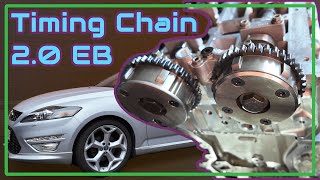
Typical fix: Replace the timing chain, guides, and tensioners. This is a significant labor-intensive repair. It is often recommended to replace the water pump at the same time, as it is driven by the timing chain. 🎬 Watch: Step-by-step guide for replacing the EcoBoost timing chain.
Est. part cost: $400-$800 for a full kit - Failed Camshaft Position Sensor ⚪ Low Probability → Shop Engine Camshaft Position Sensor
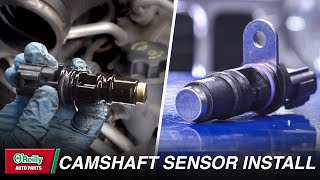
How to confirm: Check for a signal from the sensor using an oscilloscope or a capable scan tool. A common diagnostic trick is to swap the Bank 2 intake sensor with the Bank 1 intake sensor. Clear the codes and run the engine. If the code changes to P0016 (Bank 1 correlation error), the sensor you moved is faulty. You can also test the sensor with a multimeter.
Typical fix: Replace the Bank 2 intake camshaft position sensor.
Est. part cost: $25-$60
Rare But Worth Checking
- Failed VCT Cam Phaser: → Shop Engine Timing Gear The VCT phaser (the gear on the end of the camshaft) can fail mechanically or become clogged with sludge, but this is less common than a solenoid failure. It often produces a noticeable rattling or knocking sound and may be suspected if new solenoids and correct timing don't resolve the code.
- Damaged Wiring or Connectors: Check the wiring harness and connectors for the camshaft position sensor and VCT solenoid for any signs of damage, corrosion, or oil contamination. Oil leaking into the connector can disrupt the signal.
- Failed Crankshaft Position Sensor: → Shop Engine Crankshaft Position Sensor While possible, a failure of the crankshaft position sensor usually causes more severe running issues, a no-start condition, or sets codes for both banks (e.g., P0016 and P0018) and is less likely to isolate as a P0018 code.
Diagnosis Steps
- Check Engine Oil: Verify the oil level is correct and the oil is clean. If the oil is old, low, or the wrong viscosity, an oil change using OEM-spec 5W-30 full synthetic oil is the first and cheapest step.
- Scan for Codes: Use an OBD-II scanner to confirm P0018 and check for 🎬 Watch: How to test and fix the P0018 correlation code. any other related codes. Note any accompanying codes like P0019 or P0016.
- Inspect Wiring: Visually inspect the wiring and connectors for the Bank 2 intake camshaft position sensor and the Bank 2 VCT solenoid. Look for damage, loose connections, or oil saturation.
- Test the VCT Solenoid: Using a bidirectional scan tool, command the Bank 2 intake VCT solenoid on and off (Pinpoint Test HK12). Listen for a click and watch for a change in engine idle.
- Test the Camshaft Sensor: Swap the Bank 2 intake camshaft sensor with the identical sensor from Bank 1. Clear the codes and run the engine. If the code changes to P0016 (Bank 1 correlation error), the sensor you moved is faulty.
- Check Mechanical Timing: If sensors and solenoids test good, the next step is to suspect a mechanical timing issue. This involves a more in-depth inspection of the timing chain, tensioners, and phasers, which may require professional help.
Parts You'll Likely Need
- Engine Variable Valve Timing (VVT) Solenoid
(OEM #CJ5Z-6M280-A)— This is the most common cause of P0018 on this platform, as documented by multiple Ford/Lincoln TSBs. It gets stuck due to oil debris.
Trusted brands: Motorcraft, Dorman, Standard Motor Products (SMP)
OEM price range: $35-$50
Aftermarket price range: $20-$40 - Camshaft Position Sensor
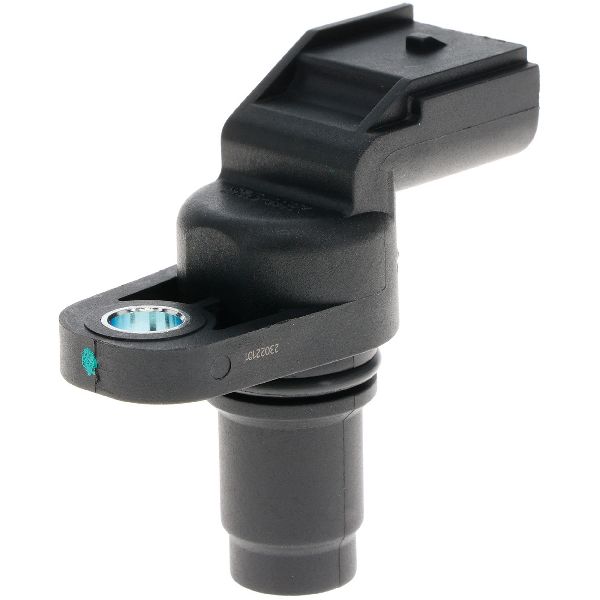
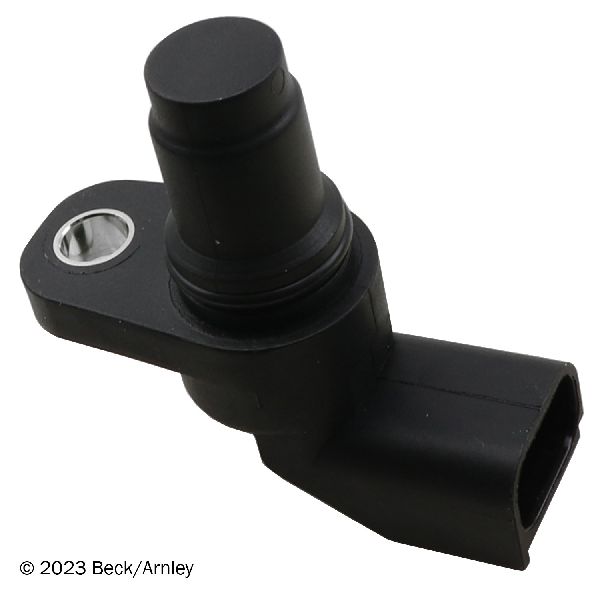
(OEM #DU-103)— A less common but possible cause. A faulty sensor can send incorrect data to the PCM, causing a correlation code. The Motorcraft part DU-103 fits many Ford/Lincoln 2.0L and 2.3L engines.
Trusted brands: Motorcraft, Bosch, NGK
OEM price range: $35-$60
Aftermarket price range: $25-$45 - Timing Chain Kit — If the chain has stretched, a full kit including the chain, tensioner, and guides is required to restore proper timing. This is a major repair for higher mileage vehicles or those with poor maintenance history.
Related Codes That Often Appear With This One
- P0016 — Crankshaft/Camshaft correlation error for Bank 1. If both appear, it could point to a systemic issue like low oil pressure, a stretched timing chain affecting the whole engine, or a faulty crankshaft position sensor.
- P0019 — Crankshaft/Camshaft correlation error for Bank 2, Exhaust Camshaft ('B' sensor). This often appears with P0018 and points strongly to an issue on Bank 2, such as a faulty pair of VCT solenoids, a bad phaser, or a timing issue on that bank.
- P0011, P0012, P0014, P0015, P0021, P0022, P0024, P0025 — These are all VCT-related timing codes. The provided TSBs (SSM 50067, SSM 48423, etc.) list all these codes together, indicating a common cause, often related to sticking VCT solenoids due to oil debris.
Technical Service Bulletins (TSBs) & Recalls
- SSM 50067: Notes that various 2015-2021 Ford and Lincoln vehicles may exhibit P0018 and other VCT codes due to a sticking VCT solenoid caused by debris.
- SSM 48423: Similar to the above, covering 2015-2020 vehicles, citing debris causing a stuck VCT solenoid as the cause for P0018 and other codes.
- SSM 54366: Covers 2015-2021 vehicles and directs technicians to specific diagnostic tests for VCT codes like P0018.
- SSM 47170: An earlier bulletin for various vehicles that also identifies a sticking VCT solenoid from debris as a potential cause for P0018.
Platform-Specific Known Issues
- The 2.0L and 2.3L EcoBoost engines are well-known for VCT solenoid issues across multiple platforms, not just the MKC. The official Ford repair procedure documented in TSB SSM 50067 advises attempting to clear debris by cycling the solenoid with a scan tool before replacement, confirming this is a widespread and recognized issue.
- Bank 2, being at the front of the engine bay (near the radiator), makes the VCT solenoids and camshaft sensor relatively accessible compared to Bank 1, which is against the firewall. This makes diagnosis and repair of P0018 (Bank 2) easier than P0016 (Bank 1).
Mechanic-Grade Diagnostic Values
- VCT Solenoid Resistance — expected: 5-15 Ω (Ohms). Failure: A reading outside of this range, or an open/short circuit, indicates a failed solenoid coil.
- 3-Wire Camshaft Position Sensor Signal Voltage (Key On, Engine Off) — expected: Approx. 5.0V DC on the signal wire. Failure: A reading significantly higher or lower than 5.0V suggests a wiring or PCM issue. No voltage could be a bad sensor or wiring fault.
- 3-Wire Camshaft Position Sensor Reference Voltage (Key On, Engine Off) — expected: Approx. 5.0V DC on the reference wire. Failure: If reference voltage is missing, the problem is likely in the wiring or the PCM, not the sensor itself.
- Ford IDS Scan Tool VCT_ADV_ERR PID (VCT Advance Error) — expected: Should hover around 0° with no more than +/- 5° deviation for an extended time.. Failure: Excessive variation while a drivability concern is present suggests the symptoms are related to the VCT system.
- Crankshaft-Camshaft Signal Correlation Deviation (Live Data) — expected: Under 5 degrees. Failure: A deviation greater than 5 degrees, such as 15 degrees, points to a significant timing issue.
Hidden / Shadow Codes Worth Checking
- Mode 6, Test ID $53 (on some models) or specific Misfire Data PIDs (e.g., $A2-$A9): Mode 6 data can show misfire counts per cylinder even before a P030x code is set. For VCT issues, technicians can also monitor VCT statistical data in Mode 6 to supplement diagnosis. (see via A capable generic OBD-II scanner with Mode 6 functionality or the Ford IDS (Integrated Diagnostic System).)
Scan Tool Commands That Help
- Ford IDS (Integrated Diagnostic System): Monitor VCT PIDs (VCT_ADV_ERR, VCT_DUTY_CYCLE) — To observe the real-time error between commanded and actual cam timing, and to see how hard the PCM is working the solenoid (duty cycle) to correct timing. A high duty cycle with a large error points to a mechanical or hydraulic issue.
- Ford IDS (Integrated Diagnostic System) or other high-level bidirectional scanner: VCT Solenoid State Control / On-Off Test — This is the 'Pinpoint Test HK' mentioned in TSBs. It directly commands the solenoid on and off at idle to verify its mechanical function. A lack of clicking sound or change in idle quality indicates a stuck or failed solenoid.
- Ford IDS (Integrated Diagnostic System): Datalogger with Histogram mode — Useful for capturing intermittent VCT anomalies during a test drive. It can graph VCT error over time to pinpoint when the fault occurs under specific driving conditions.
Wiring & Ground Locations
- G104 — Right front of the engine compartment.. This is a primary ground point for the engine block. A poor or corroded ground at this location can cause erratic behavior from engine sensors, including the camshaft and crankshaft position sensors, leading to false correlation codes. Ensuring this ground is clean and tight is a critical electrical diagnostic step.
Real Owner Repair Stories
- Ford F150 Forum (2019 Ford F-150 3.5L EcoBoost (mechanically similar VCT system)) — Slight engine noise, hard shift under acceleration, flashing check engine light, and codes P0018 and P0021.
❌ Tried (didn't work) An oil change was performed, but the codes returned after 500 miles.
✅ What actually fixed it The user was still in the diagnostic phase, suspecting Bank 2 cam phasers or VCT solenoids. The key takeaway is that even on a well-maintained, high-mileage engine, these codes point directly to the VCT system (solenoids/phasers) as the primary suspects. The user noted their next step was a PCM update related to a Customer Satisfaction Program for cam phasers, which is a dealer-level fix.
OEM Part Supersession History
CJ5Z-6M280-A→HL3Z-6M280-A— Part number HL3Z-6M280-A is listed for newer applications and some 2.0L engines, indicating a potential design update or consolidation. However, CJ5Z-6M280-A remains the primary specified part for many 2.0L/2.3L EcoBoost engines in the 2015-2019 range.
Heads up: While potentially interchangeable, it is critical to verify the correct part number by VIN with a dealer. Using the wrong solenoid, even if it fits, can cause incorrect VCT operation. CJ5Z-6M280-A is the most cited number for this specific vehicle range.
Model Year Variations Within This Range
- 2019: The 2019 model year received a significant facelift with a new corporate grille and front fascia, but the underlying powertrain (2.0L/2.3L engines and 6-speed transmission) remained largely the same as the 2015-2018 models. The all-new Lincoln Corsair replaced the MKC for the 2020 model year, which was based on a new platform with a new 8-speed transmission.
- 2017-2019: For 2017, SYNC 3 with Apple CarPlay and Android Auto was added. For 2018, Lincoln Connect 4G Wi-Fi was made standard. These changes are electronic and do not affect the diagnosis of powertrain code P0018.
Helpful Videos


We Have This Part in Stock


The information in this article is provided for general reference and educational purposes only. Vehicle specifications, procedures, and part compatibility can vary by production date, trim level, and region. Always consult your vehicle's factory service manual and verify part numbers before purchasing or performing repairs. Safety-critical components such as airbags, seat belts, and braking systems should be installed by a qualified professional.
- Lincoln MKC:
- 🧭 Diagnostic Flowchart
- 🎬 Helpful Videos
- 🛍️ Shop This Part
- What's Unique About the 2015-2019 Lincoln MKC
- Symptoms You May Notice
- Most Likely Causes
- Rare But Worth Checking
- Diagnosis Steps
- Parts You'll Likely Need
- Related Codes That Often Appear With This One
- Technical Service Bulletins (TSBs) & Recalls
- Platform-Specific Known Issues
- Mechanic-Grade Diagnostic Values
- Hidden / Shadow Codes Worth Checking
- Scan Tool Commands That Help
- Wiring & Ground Locations
- Real Owner Repair Stories
- OEM Part Supersession History
- Model Year Variations Within This Range
- 🎟️ Get 5% Off