

P0018 on 2017-2024 Mazda CX-5 2.5L: Understanding a 'Ghost Code'
P0018 is a confusing 'ghost code' for a Mazda CX-5 as it refers to 'Bank 2', which this inline-4 engine doesn't have. Its appearance almost always indicates a problem that should have triggered P0016 (Intake Cam Correlation) or P0017 (Exhaust Cam Correlation). The root cause is likely a serious timing chain issue, a VVT system fault due to old oil, or a scan tool error. Do not ignore it; a professional diagnosis is critical to prevent engine damage.
- P0018 should not appear on a 4-cylinder Mazda CX-5. Its presence indicates a confusing situation that requires careful diagnosis.
- Do not immediately replace sensors. The most likely causes are related to oil condition/pressure or mechanical timing chain wear.
- This is not a DIY-friendly code. The ambiguity of the code and the potential for a labor-intensive timing chain repair mean professional diagnosis is essential.
- Always start by checking the simplest thing: ensure the engine oil is clean, full, and of the correct 0W-20 viscosity.
- If this code is present, it should be treated as serious. Do not continue driving the vehicle, as you risk severe engine damage.
What's Unique About the 2017-2024 Mazda CX-5
The core issue is that an inline engine like the Skyactiv-G 2.5L does not have a 'Bank 2'. V-type engines (V6, V8) have two banks of cylinders, but inline engines have only one. While some manufacturers might use P0018 to refer to the exhaust camshaft, Mazda's system typically uses P0016 for the Bank 1 intake cam and P0017 for the Bank 1 exhaust cam. The presence of P0018 is an anomaly and should be approached as a symptom of a P0016/P0017 fault, as it does not fit the standard diagnostic logic for this engine layout.
Symptoms You May Notice
- Check Engine Light illuminated
- Engine is hard to start or requires a longer crank time
- Rough or unstable idle
- Hesitation or lack of power during acceleration
- Decreased fuel economy
- Engine stalling unexpectedly
- Audible rattling or buzzing noise from the engine, especially on a cold start, which may indicate a stretched timing chain or failing tensioner. 🎬 Watch: Hear what a failing timing chain sounds like
- Replacing camshaft or crankshaft sensors without proper diagnosis. Sensors are often blamed, but the root cause for correlation codes is frequently mechanical (timing chain) or hydraulic (oil pressure/VVT).
- Assuming the code's generic definition is correct and searching for a 'Bank 2' that does not exist on this engine.
- Replacing a single VVT solenoid when the actual problem is a stretched timing chain or widespread oil sludge.
Most Likely Causes
- Stretched Timing Chain or Failed Tensioner 🔴 High Probability → Shop Engine Timing Chain While generally reliable, timing chain stretch is the most common cause for persistent correlation codes (like P0016/P0017) on Skyactiv engines, especially over 100,000 miles. The hydraulic tensioner can also weaken, allowing slack in the chain, which causes the cam/crank correlation to deviate.
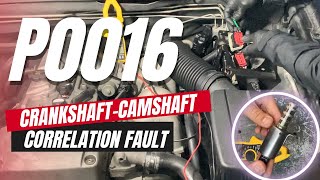
How to confirm: A mechanic can use an oscilloscope to compare camshaft and crankshaft sensor signals to identify a deviation from the known-good waveform. 🎬 See how to test and fix P0016 correlation codes Physical inspection after removing the timing cover is the definitive confirmation.
Typical fix: Replacement of the timing chain, tensioner, and all related guides. This is a labor-intensive job often costing over $1,500.
Est. part cost: $250-$600 for a full timing kit - Low, Dirty, or Incorrect Viscosity Engine Oil 🟡 Medium Probability The Variable Valve Timing (VVT) system and the hydraulic timing chain tensioner are entirely dependent on clean oil at the correct pressure to function. Sludgy, old, or incorrect viscosity oil can clog passages in the VVT solenoids and actuators (phasers), preventing them from adjusting cam timing correctly and starving the tensioner of pressure.
How to confirm: Check the oil level and condition on the dipstick. Review vehicle service records for the last oil change and the type of oil used. Mazda specifies 0W-20 full synthetic oil for this engine. An oil pressure test can also be performed.
Typical fix: Perform an oil and filter change with the correct OEM-specified oil. If sludge is severe, an engine flush may be recommended by a professional. In some cases, this may resolve the issue if it was caught early.
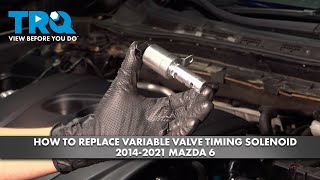
Est. part cost: $50-$100 - Faulty VVT Oil Control Valve (Solenoid) 🟡 Medium Probability → Shop Engine Variable Valve Timing (VVT) Solenoid The solenoid can become clogged with debris from dirty oil or fail electrically, causing it to get stuck in one position. This prevents the ECM from controlling the camshaft timing, leading to a correlation fault.
How to confirm: A mechanic can command the solenoid on and off with a bi-directional scan tool while monitoring cam angle data. The solenoid can also be removed, cleaned, and tested for resistance and operation by applying 12v power.
Typical fix: Replacement of the faulty Oil Control Valve. Sometimes cleaning the solenoid can temporarily resolve the issue.
Est. part cost: $150-$350 - Faulty Camshaft or Crankshaft Position Sensor ⚪ Low Probability → Shop Engine Crankshaft Position Sensor While sensors can fail, it's much less common than mechanical or oil-related issues for timing correlation codes. A failing sensor can send an erratic or incorrect signal to the ECM. Often, a sensor is replaced when the true fault is mechanical.
How to confirm: Review live sensor data on a scan tool. A mechanic can use an oscilloscope to check for a clean, consistent square wave signal pattern from the sensor.
Typical fix: Replacement of the specific sensor that is failing.
Est. part cost: $80-$120
Rare But Worth Checking
- Failing VVT Actuator (Cam Phaser): The mechanical actuator on the camshaft itself can fail, getting stuck, developing an internal oil leak, or breaking its locking pin. This is a more complex and expensive repair than the control solenoid and is usually done during a timing chain job.
- Slipped Crankshaft Reluctor Wheel: → Shop Engine Crankshaft The toothed wheel that the crankshaft position sensor reads can physically shear its key and move on the crankshaft, causing the ECM to receive incorrect timing information. This is a major mechanical failure and is very rare on this platform.
- Faulty Powertrain Control Module (PCM): → Shop Engine Control Module (ECM) In very rare cases, the PCM itself can be the source of the problem, incorrectly interpreting sensor data. This should only be considered after all other possibilities, including wiring harness checks, have been exhaustively ruled out.
Diagnosis Steps
- Verify the code with a professional-grade scan tool (preferably Mazda's MDARS) to see if P0018 is a ghost code for the actual P0016 or P0017.
- Check the engine oil level and condition. If low, dirty, or the wrong type, correct this first, clear the codes, and re-test. This is the easiest and cheapest first step.
- Using a scan tool, observe live data for desired vs. actual camshaft angle for Bank 1. A significant, persistent deviation points to a problem.
- Command the VVT solenoids (Oil Control Valves) on and off with the scan tool to verify their operation and monitor the change in camshaft angle. A slow or non-responsive change indicates a faulty solenoid or clogged oil passage.
- If oil and solenoids appear correct, the next step is to analyze the timing correlation with a dual-channel oscilloscope, comparing the CKP and CMP sensor signals. This will definitively show if the mechanical timing has jumped or if a chain is stretched.
- If an oscilloscope shows a timing discrepancy, perform a physical inspection of the timing chain, guides, and tensioner. This requires significant disassembly, including removing the valve cover and timing cover.
- While the timing cover is off, inspect the reluctor rings on the camshafts and crankshaft for any damage or movement.
Parts You'll Likely Need
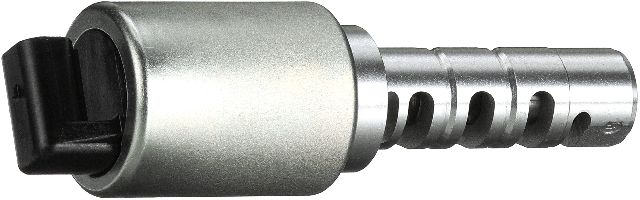
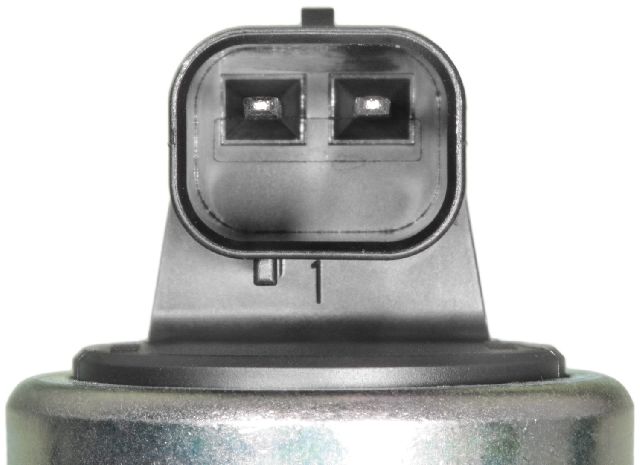
- Engine Oil Control Valve (VVT Solenoid)
(OEM #PE01-14-420A)— This solenoid controls oil flow to the VVT system and is a common failure point that can get clogged or fail electrically, causing timing correlation issues.
Trusted brands: Mazda (OEM), Dorman, Standard Motor Products
OEM price range: $250-$400
Aftermarket price range: $80-$150
Related Codes That Often Appear With This One
- P0016 — This is the correct code for a Crankshaft-Camshaft correlation error on Bank 1 (Intake). If P0018 is displayed by a generic scanner, P0016 is almost certainly the true underlying code stored in the PCM.
- P0017 — This is the correct code for a Crankshaft-Camshaft correlation error on Bank 1 (Exhaust). A stretched timing chain would affect both camshafts and could potentially trigger this code alongside P0016.
- P0011 — Indicates 'Intake Camshaft Position Timing - Over-Advanced'. This can be caused by a stuck VVT solenoid or a faulty phaser, which are root causes shared with correlation codes.
- P0524 — Indicates 'Engine Oil Pressure Too Low'. This is a critical code that directly points to a root cause. Low oil pressure will disable the VVT system and starve the timing chain tensioner, leading to correlation faults.
Technical Service Bulletins (TSBs) & Recalls
- TSB 01-002/21: Addresses a tapping noise from the engine on 2018+ models with cylinder deactivation, caused by air in the hydraulic lash adjusters.
- TSB 01-012/22: Pertains to excessive oil consumption on some models (primarily 2.5T but relevant) due to faulty exhaust valve stem seals.
- MC-10246127-0001: A Mazda communication related to a 'chirp noise' from the automatic transmission during 3-4 shifts on vehicles with cylinder deactivation, caused by torque converter clutch wear.
Platform-Specific Known Issues
- Cylinder Deactivation (CD) System Complications: Models from 2018 onward equipped with cylinder deactivation are prone to a unique set of issues not present in the 2017 model. These include a tapping noise from special Hydraulic Lash Adjusters (TSB 01-002/21), a higher incidence of cracked cylinder heads, and related transmission wear issues. When diagnosing engine problems on a 2018+ model, the CD system and its components should be considered a potential source of the fault.
Mechanic-Grade Diagnostic Values
- VVT Oil Control Valve (Solenoid) Coil Resistance — expected: 6.9—7.5 Ohms at 20°C (68°F). Failure: A reading outside this range indicates a faulty solenoid coil.
- Engine Oil Pressure at Idle (Minimum) — expected: At least 25 PSI. Failure: Pressure below this threshold indicates an oil delivery problem that will starve the VVT system and timing chain tensioner, leading to correlation codes.
Scan Tool Commands That Help
- FORScan / MDARS (Mazda Modular Diagnostic System): VVT Solenoid Duty Cycle Command — This bidirectional test allows a technician to command the intake and exhaust VVT solenoids to specific duty cycles (e.g., 0%, 50%, 100%) while monitoring the actual camshaft angle PID. A failure of the actual angle to match the commanded angle points to a stuck solenoid, clogged oil passage, or faulty phaser.
- FORScan / MDARS: KOER (Key On, Engine Running) Self-Test — Running this self-test can help confirm if the correlation fault is intermittent or hard-set. The PCM will cycle various actuators, including the VVT solenoids, to check for response and may trigger more specific codes that were not present initially.
Real Owner Repair Stories
- Reddit user leonpinneaple in r/mazda (2012 Mazda CX-9 with 3.7L engine at 177k miles (Note: Different engine, but illustrates a related failure path for P0016)) — P0016 code appeared about a week after a routine oil change. The car ran fine with no weird noises initially.
❌ Tried (didn't work) Replacing VVT solenoids made the check engine light go away temporarily, but it returned the next day with the same P0016 code.
✅ What actually fixed it The ultimate cause was a catastrophic water pump failure where all the coolant dumped into the crankcase. The user sold the car, but the recommendation was to replace the water pump, timing chain, tensioners, and guides. Another user confirmed water pumps are a common issue leading to this code.
OEM Part Supersession History
PE0114420→PE01-14-420A— Standard part revision and update by the manufacturer.
Heads up: PE01-14-420A is the current correct part for the specified vehicle range and is backward compatible, replacing the older number.
Model Year Variations Within This Range
- 2018-2024: Starting in the 2018 model year, Mazda introduced a cylinder deactivation system on the 2.5L Skyactiv-G engine. This system adds complexity to the valvetrain, using eight oil control solenoids to manage the valves. While the primary causes of P0016/P0017/P0018 remain the same (timing chain, oil pressure), this more complex system introduces additional potential failure points within the valvetrain's hydraulic control system.
- 2017 vs 2018+: The 2017 model has the standard 2.5L Skyactiv-G engine with 187 hp. The 2018 model introduced cylinder deactivation to this engine, and later years (2019+) offered an optional 2.5L turbocharged engine which has different components and potential failure modes. This guide is specific to the naturally aspirated PY-VPS engine.
Diagnostic Flowchart
Other Known Issues on This Vehicle
Issues unrelated to this code that are worth knowing about as an owner of this generation:
- Intake Valve Carbon Buildup 🟠 Medium — Common on most direct-injection engines. Becomes noticeable after 60,000-80,000 miles, potentially causing misfires (e.g., P0302) and rough idle.
- Cracked Cylinder Head (Models with Cylinder Deactivation) 🔴 High — A known, but not universal, failure on 2018+ models equipped with cylinder deactivation. Can lead to internal coolant leaks. (Ref: No recall, but dealer goodwill repairs have been reported by some owners.)
- Tapping Noise from Hydraulic Lash Adjusters (HLA) 🟠 Medium — Affects 2018+ non-turbo models with cylinder deactivation. Caused by air bubbles in the switchable HLA oil passages, leading to a tapping noise at idle. (Ref: TSB 01-002/21)
- Excessive Oil Consumption 🔴 High — Primarily documented for 2021 2.5T engines, but some non-turbo models can also be affected. Caused by faulty exhaust valve stem seals leading to oil burning. (Ref: TSB 01-012/22 (and previous versions))
- Thin/Chipping Paint 🟡 Low — A common complaint across many modern Mazda models, especially Soul Red Crystal. The paint is reportedly thin and prone to rock chips.
Used vs. New Parts: Buying Guide for This Vehicle
When a used part is the smart pick: For external, easily accessible electronic components like Camshaft Position Sensors (CMP) or Crankshaft Position Sensors (CKP), a used OEM part from a low-mileage donor vehicle can be a cost-effective alternative to a new aftermarket part.
Donor-vehicle mileage cap: roughly under 60000 miles for the part to have meaningful remaining life.
What to inspect on the donor part:
- Check for a clean donor vehicle without signs of front-end collision or engine fire.
- For sensors, ensure the plastic housing is not cracked and the connector pins are not corroded or bent.
- For a VVT solenoid, ask for the donor vehicle's mileage. Avoid parts from high-mileage engines as they are prone to internal wear and sludge contamination.
OEM-only on this vehicle (don't cheap out):
- Timing Chain Kit (Chain, Guides, Tensioner): The timing chain is a critical wear item. Installing a used chain is never recommended as it will have indeterminate stretch and wear, defeating the purpose of the repair.
- VVT Actuator (Phaser): These are complex mechanical parts that wear internally. A used actuator carries a high risk of failure. Given the labor involved to access it, only a new OEM part should be used.
Aftermarket brands forum-validated for this vehicle:
- Standard Motor Products (for VVT solenoids and sensors)
- Gates (often included in timing kits)
- DNJ Engine Components (offers a wide range of replacement parts)
Brands owners have reported issues with on this vehicle:
- Unbranded, no-name VVT solenoids from online marketplaces. Forum and repair data suggest these have a high failure rate, often due to inferior materials like ferrite magnets instead of OEM-style neodymium magnets, leading to slow response times.
Real Owner Stories
Aggregated from forums and TSBs cited above. Mileages and costs reflect what owners reported in those sources.
2014-2024 Mazda 3/6 or CX-5 2.5L Skyactiv-G — ~100000 miles
Symptoms: Persistent correlation codes (like P0016/P0017) occurring after high mileage.
What fixed it: Replacement of the timing chain, tensioner, and all related guides.
Cost: $1,500+
Source hint: Common Causes section
2018-2024 Mazda CX-5 2.5L Skyactiv-G
Symptoms: Tapping noise from the engine caused by air in the hydraulic lash adjusters.
What fixed it: Procedures outlined in TSB 01-002/21 regarding the Cylinder Deactivation system.
Source hint: TSB 01-002/21
2018-2024 Mazda CX-5 2.5L Skyactiv-G
Symptoms: Excessive oil consumption, primarily noted on 2.5T models but relevant to the platform.
What fixed it: Addressing faulty exhaust valve stem seals as per TSB 01-012/22.
Source hint: TSB 01-012/22
2018-2024 Mazda CX-5 2.5L Skyactiv-G
Symptoms: Chirp noise from the automatic transmission during 3-4 shifts.
What fixed it: Addressing torque converter clutch wear linked to the cylinder deactivation system.
Source hint: MC-10246127-0001
Related OBD-II Codes
Frequently Asked Questions
Does TSB 01-002/21 apply to my 2017 Mazda CX-5?
What type of oil should I use in my 2.5L Skyactiv-G to prevent VVT and timing issues?
I have a 2018+ CX-5 and hear a tapping noise; could this be related to P0018?
Is it true that the timing chain can stretch on these engines?
Could a 'chirp' from my transmission be related to my engine timing code?
Can I just clean the VVT Oil Control Valve instead of replacing it?
Helpful Videos

We Have This Part in Stock

The information in this article is provided for general reference and educational purposes only. Vehicle specifications, procedures, and part compatibility can vary by production date, trim level, and region. Always consult your vehicle's factory service manual and verify part numbers before purchasing or performing repairs. Safety-critical components such as airbags, seat belts, and braking systems should be installed by a qualified professional.
- Mazda CX-5:
- 🧭 Diagnostic Flowchart
- 🎬 Helpful Videos
- 🛍️ Shop This Part
- What's Unique About the 2017-2024 Mazda CX-5
- Symptoms You May Notice
- Most Likely Causes
- Rare But Worth Checking
- Diagnosis Steps
- Parts You'll Likely Need
- Related Codes That Often Appear With This One
- Technical Service Bulletins (TSBs) & Recalls
- Platform-Specific Known Issues
- Mechanic-Grade Diagnostic Values
- Scan Tool Commands That Help
- Real Owner Repair Stories
- OEM Part Supersession History
- Model Year Variations Within This Range
- Other Known Issues on This Vehicle
- Used vs. New Parts: Buying Guide for This Vehicle
- Real Owner Stories
- 2014-2024 Mazda 3/6 or CX-5 2.5L Skyactiv-G — ~100000 miles
- 2018-2024 Mazda CX-5 2.5L Skyactiv-G
- 2018-2024 Mazda CX-5 2.5L Skyactiv-G
- 2018-2024 Mazda CX-5 2.5L Skyactiv-G
- Related OBD-II Codes
- Frequently Asked Questions
- 🎟️ Get 5% Off