

P0018 on 2008-2009 Pontiac G8: Timing Chain and Sensor Guide
On a 2008-2009 Pontiac G8 with the 3.6L V6 engine, code P0018 almost always points to a stretched timing chain. This is a serious, labor-intensive repair costing $1,500-$2,800+. A primary contributing factor to the chain stretch was the original GM Oil Life Monitor (OLM) calibration, which allowed for excessively long oil change intervals. Less common causes include faulty sensors or VVT solenoids.
- For a 2008-2009 Pontiac G8 with the 3.6L V6, P0018 is a strong indicator of stretched timing chains.
- Do not replace sensors or solenoids without first ruling out the much more likely mechanical timing issue.
- This is a serious issue that can lead to catastrophic engine failure if ignored.
- Repair is expensive and complex, requiring a full timing chain service with updated parts.
- Maintaining clean engine oil at the proper level is critical for the health of the timing system on this engine.
What's Unique About the 2008-2009 Pontiac G8
The Pontiac G8's base engine, the 3.6L LY7 V6, is a member of GM's High Feature V6 family, which is widely known for premature timing chain stretching. This isn't a random part failure; it's a well-documented pattern for this specific engine design, confirmed by multiple GM Technical Service Bulletins (TSBs). A major contributing factor was the original Oil Life Monitor (OLM) system, which could recommend oil change intervals over 10,000 miles, leading to oil degradation and accelerated wear on the chains and tensioners. While sensor or solenoid failures can cause this code on other cars, on the G8 V6, the timing chains are the primary suspect by a large margin.
Diagnostic Flowchart
Tap your situation to follow the diagnostic path that matches what you're seeing on this vehicle.
Symptoms You May Notice
- Check Engine Light is on
- Rattling or scraping noise from the front of the engine, especially on cold starts
- Reduced engine power and poor acceleration
- Rough or unstable idle
- Engine stalling or difficulty starting
- Decreased fuel economy
- Engine struggles to accelerate when the code is active, but may run fine when the light is off
- Replacing only the camshaft or crankshaft position sensors without checking the mechanical timing. On the 3.6L V6, this code is almost always a mechanical issue with the timing chains. Many owners waste money on sensors first.
- Replacing only one or two of the three timing chains. The complete set of chains, guides, and tensioners should always be replaced at the same time to ensure a lasting repair.
Most Likely Causes
- Stretched Timing Chains 🔴 High Probability → Shop Engine Timing Chain The 3.6L LY7 V6 engine has a known design issue with its three timing chains, leading to premature wear and stretching. This was exacerbated by GM's original Oil Life Monitor (OLM) calibration allowing for long oil change intervals, which led to oil breakdown and poor lubrication. This is confirmed by GM TSBs #PIP3423P and #12-06-01-009F.
How to confirm: A technician can use a scan tool to monitor desired vs. actual camshaft position angles. A consistent deviation of more than 4-5 degrees confirms a timing issue. A lab scope can also be used to electronically graph the cam and crank sensor signals to definitively confirm timing without engine disassembly. Physical inspection is the ultimate confirmation but requires significant labor. A user on a Reddit forum noted that after replacing the chains, there was a noticeable improvement in torque and idle.
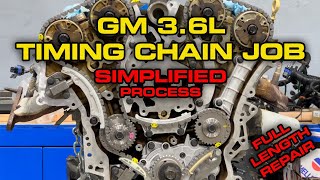
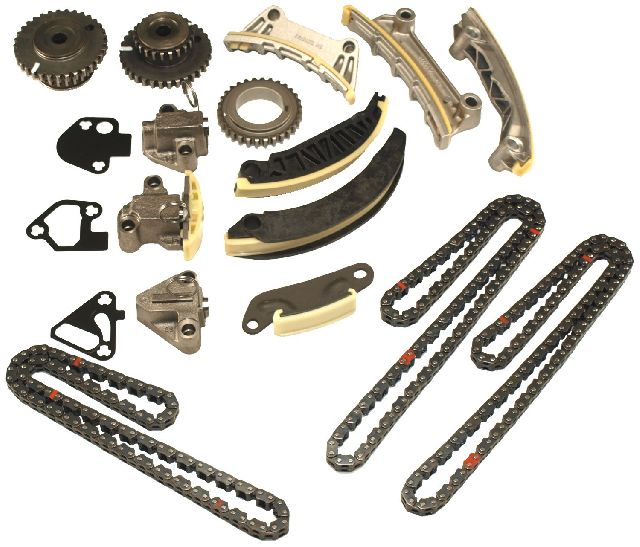
Typical fix: Replace all three timing chains, the tensioners, and the guides using an updated parts kit. 🎬 Watch: A mechanic demonstrates the timing chain job on a Pontiac G8. It is critical to use the updated parts specified by GM in TSB #12-06-01-009F.
Est. part cost: $300-$600 - Worn Timing Chain Tensioners and Guides 🔴 High Probability → Shop Engine Timing Chain These components wear along with the chains. The original tensioners are hydraulic and can fail or get clogged with sludge from dirty oil, allowing the chains to go slack. TSB #PIP3423P directly mentions inspecting for loose tensioners.
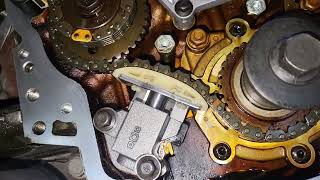
How to confirm: Confirmed during physical inspection when replacing the timing chains. A rattling noise on startup is a strong indicator of worn guides and slack tensioners. 🎬 See how to identify and fix that common VVT clattering noise.
Typical fix: Always replace tensioners and guides when replacing the timing chains. They are included in quality timing chain kits like the Cloyes 9-0753S.
Est. part cost: $0 (Included in timing kit) - Low or Dirty Engine Oil 🟡 Medium Probability The camshaft phasers (VVT system) and timing chain tensioners are hydraulically operated by engine oil pressure. Low or degraded oil, often a result of following the original extended OLM intervals, starves these components, preventing them from working correctly and dramatically accelerating chain wear.
How to confirm: Check the oil level on the dipstick and inspect its condition. If it's low or looks like sludge, this is a likely contributor. One owner on Reddit noted their P0008 code would set on cold mornings and then clear after driving, a potential symptom of oil-related timing issues.
Typical fix: Perform an engine oil and filter change using full synthetic 5W-30 oil. If the code returns, the damage to the timing components is likely already permanent and requires mechanical replacement.
Est. part cost: $40-$80 - Faulty Camshaft Position Actuator Solenoid (VVT Solenoid) ⚪ Low Probability → Shop Engine Camshaft These solenoids control oil flow to the cam phasers. They can get clogged with sludge from dirty oil or fail electrically. While a possible cause, it is far less common than chain stretch on the LY7 engine.
How to confirm: Swap the Bank 2 intake solenoid with the Bank 2 exhaust solenoid. If the code changes to P0019 (Camshaft Position B), the solenoid is bad. They can also be tested with a scan tool or by applying 12v to check for operation. Resistance should be between 8 and 12 Ohms.
Typical fix: Replace the faulty solenoid. They are relatively easy to access on top of the valve cover.
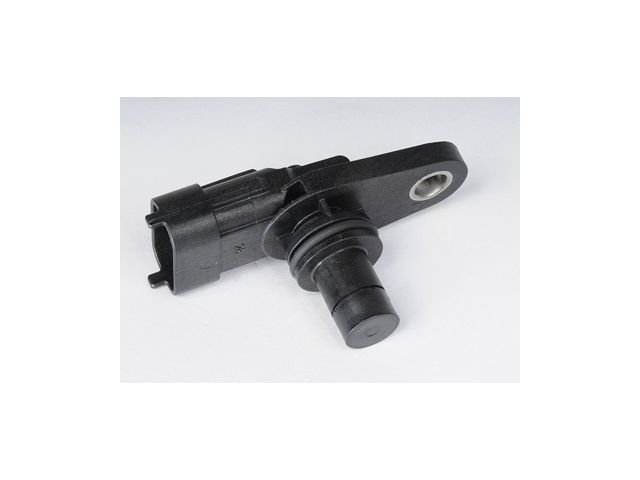
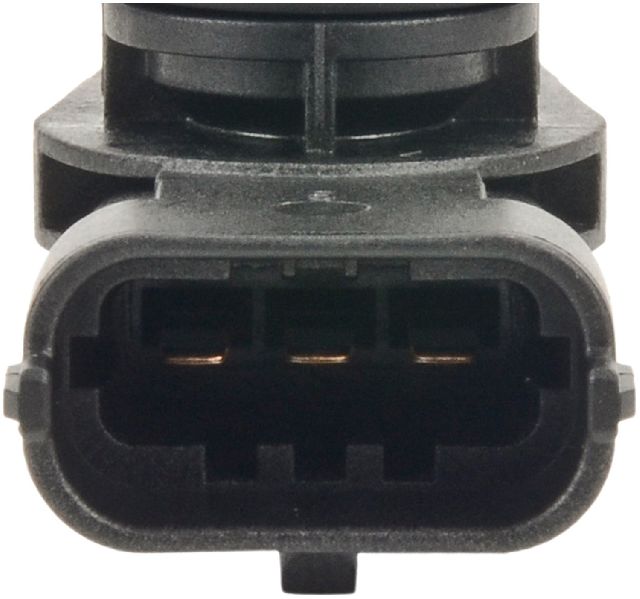
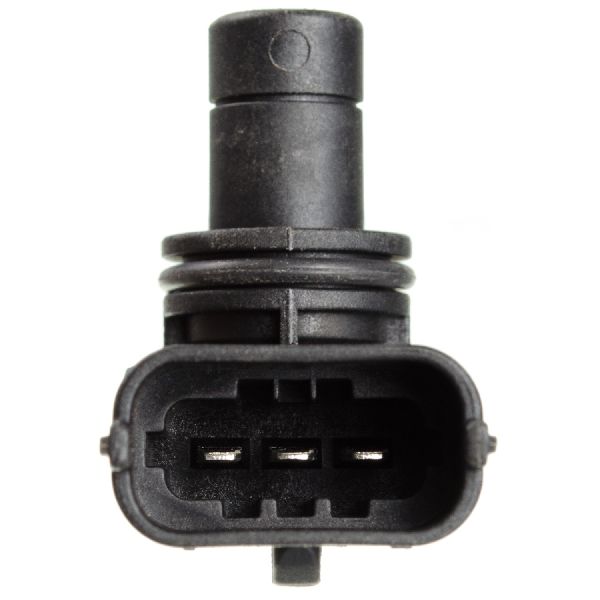
Est. part cost: $30-$70 - Faulty Camshaft Position (CMP) Sensor ⚪ Low Probability → Shop Engine Camshaft Position Sensor While less common than chain issues, a sensor can fail and send incorrect data to the ECM. Many owners mistakenly replace sensors when the sensor is accurately reporting a real mechanical problem.
How to confirm: Swap the Bank 2 intake CMP sensor with the Bank 1 intake sensor. Clear the codes and drive the vehicle. If the code changes to P0016, the sensor is faulty. A user on a forum noted their sensors were grimy, but cleaning them did not resolve the underlying chain issue. With the key on and engine off, the sensor's power supply wire should have approximately 5 Volts.
Typical fix: Replace the failed camshaft position sensor.
Est. part cost: $25-$60
Rare But Worth Checking
- Slipped Crankshaft Reluctor Wheel: → Shop Engine Crankshaft TSB #PIP3423P mentions that in rare cases where timing chains are confirmed to be good, the reluctor wheel pressed onto the crankshaft may have moved, sending incorrect position data to the crank sensor. This is a major repair requiring crankshaft replacement. A borescope can be used through the crank sensor hole to measure the wheel's position relative to the crankshaft throw; for the 3.6L, it should be 25 to 26 mm from the machined surface edge to the edge of the reluctor's open space.
- Faulty Engine Control Module (ECM): → Shop Engine Control Module (ECM) This is extremely rare. The ECM should only be considered after all other mechanical and electrical possibilities have been exhaustively ruled out.
Diagnosis Steps
- Check the engine oil level and condition. Top up or change the oil if necessary, using full synthetic 5W-30 oil. An owner on Reddit noted that even with full and clean oil, the code can still be present if the chains are already stretched.
- Use a professional scan tool to check for other related DTCs (P0008, P0016, P0017, P0019). The presence of multiple codes strongly suggests a timing chain issue.
- Use the scan tool to monitor live data for the desired vs. actual camshaft position angles for Bank 2 Intake. A consistent deviation greater than 4-5 degrees at idle strongly points to a mechanical timing problem. Some sources indicate a deviation of 6-9 degrees is the threshold.
- As a simple diagnostic step, swap the Bank 2 intake camshaft position sensor with another one (e.g., Bank 1 intake). If the trouble code moves to the other bank (P0016), the sensor is bad.
- Swap the Bank 2 intake VVT solenoid with the exhaust solenoid on the same bank. If the code changes to P0019, the solenoid is faulty.
- If sensors and solenoids are ruled out, the next step is to assume a stretched timing chain, as per TSBs #PIP3423P and #12-06-01-009F. This requires engine disassembly for visual inspection and replacement.
Parts You'll Likely Need
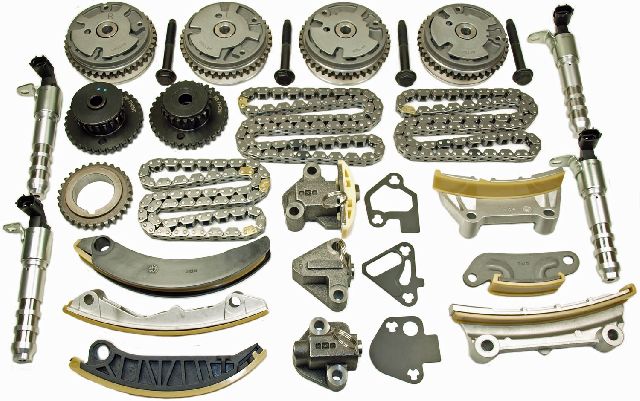
- Timing Chain Kit
(OEM #12651450 (superseded by 12700436 and 12693218))— This is the most common failure. A complete kit ensures all worn components (chains, tensioners, guides) are replaced with updated parts to prevent a repeat failure. TSB #12-06-01-009F advises using these kits.
Trusted brands: ACDelco (GM Genuine), Cloyes
OEM price range: $400-$600
Aftermarket price range: $250-$450 - Camshaft Position Actuator Solenoid
(OEM #12655420 (Intake))— A much less common but possible cause. Can become clogged or fail electrically, causing timing correlation issues.
Trusted brands: ACDelco (GM Genuine), Dorman
OEM price range: $40-$70
Aftermarket price range: $25-$50
Related Codes That Often Appear With This One
- P0008 — This is a more general Engine Position System Performance code for Bank 1. It often appears with other correlation codes when timing chains are stretched, sometimes setting intermittently on cold starts before staying on permanently.
- P0016 — This is the same correlation error but for Bank 1 (passenger side). Seeing both P0016 and P0018 strongly indicates a problem with the primary timing chain affecting both banks, or a slipped crankshaft reluctor wheel.
- P0017 — This is a correlation error for the exhaust camshaft on Bank 1. Its presence with P0018 points to a widespread timing issue affecting multiple components.
- P0019 — This is a correlation error for the exhaust camshaft on Bank 2. If it appears with P0018, it means both camshafts on Bank 2 are out of sync, reinforcing the likelihood of a stretched secondary chain on that bank.
Technical Service Bulletins (TSBs) & Recalls
- PIP3423P: Diagnostic aid for DTCs P0008, P0009, P0016, P0017, P0018, or P0019, pointing to loose timing chains or a rare slipped crankshaft reluctor wheel.
- 12-06-01-009F: Announces the availability of comprehensive timing chain service kits and instructs technicians to use them for repairs related to these DTCs.
Platform-Specific Known Issues
- The 3.6L LY7 V6 engine is notorious for premature timing chain stretch. This is a widely documented issue across many GM vehicles that use this engine, including the Pontiac G8.
- GM released several Technical Service Bulletins (TSBs) acknowledging the issue. TSB #12-06-01-009F details the updated timing chain kits to be used for the repair.
- A Reddit user with a 2008 G8 at 165k miles was quoted $2,500 for the timing chain job, highlighting the significant cost of the repair.
- Another user reported a repeat timing chain failure after only 35k miles, suggesting that if the underlying oiling or PCV issues aren't addressed, the problem can recur.
Mechanic-Grade Diagnostic Values
- Camshaft Position Actuator (VVT) Solenoid Resistance — expected: 8 to 12 Ohms at 68°F (20°C).. Failure: A reading of 0 Ohms (short), infinite/OL (open circuit), or in the kilo-ohm/mega-ohm range indicates a failed solenoid.
- Camshaft Position Sensor (CMP) Power Supply Voltage — expected: Approximately 5 Volts at the sensor connector with key on, engine off.. Failure: Significantly lower or no voltage points to a problem in the wiring or the ECM, not the sensor itself.
- Camshaft Position Sensor (CMP) Low Reference Circuit Resistance — expected: Less than 5 Ohms between the low reference circuit terminal and ground.. Failure: A reading higher than 5 Ohms indicates high resistance in the ground circuit, which can cause sensor signal issues.
- Lab Scope Cam/Crank Correlation (Bank 2) — expected: On a known-good LY7, the intake cam signal should cross the crankshaft's missing tooth reference point, while the exhaust cam signal transitions three teeth after.. Failure: If the camshaft signal waveforms are shifted to the right (retarded) relative to the crankshaft signal, it indicates a stretched timing chain.
Scan Tool Commands That Help
- GDS2 (GM Global Diagnostic System 2): Camshaft Position Actuator Solenoid Test — This bidirectional control allows a technician to command the Bank 2 intake VVT solenoid on and off while the engine is running. Monitoring the desired vs. actual camshaft angle on the scan tool during this test confirms if the phaser is physically responding to the solenoid's commands, helping to distinguish between a faulty solenoid, a clogged oil passage, or a stuck phaser.
Wiring & Ground Locations
- G103 — Located at the left rear of the engine compartment on the cowl, above the brake booster.. This is a major ground point for the Body Control Module (BCM) and Instrument Panel Cluster (IPC), which communicate with the ECM. A poor connection here can cause various electrical issues.
- G105 — Located at the left front of the engine compartment, often behind the cooling fan relays.. This ground serves various components in the front of the engine bay. While not directly tied to the cam/crank sensors, ensuring all engine bay grounds are clean and tight is a critical step in diagnosing electrical faults.
- G106 — Located on the front center of the frame cross rail, under the crank pulley. It is often jumpered to G101 (engine block ground).. This is a primary frame and engine ground. A corroded or loose G106 can cause erratic behavior from the ECM and its sensors, including the crankshaft position sensor which is located nearby.
- Bank 2 CMP Sensor Connector — On the driver's side of the engine, on the front of the cylinder head, behind the power steering pump reservoir.. This is the direct connection point for the sensor in question ('Bank 2, Sensor A'). GM issued bulletins (e.g., PI0090D) regarding intermittent poor connections and backed-out terminals in these connectors causing similar codes.
Real Owner Repair Stories
- Ross-Tech Forums user (Audi B8 S4 (similar VVT system principles)) — Intermittent P0018 code.
❌ Tried (didn't work) Initial diagnosis assumed timing chain stretch, but timing was confirmed to be correct.
✅ What actually fixed it The issue was a faulty camshaft phaser (intake cam sprocket) on Bank 2. The phaser was physically sticky and did not rotate freely, causing a lazy response to the VVT solenoid's commands. Replacing the phaser resolved the P0018 code.
OEM Part Supersession History
12651450→12693218 (as part of a comprehensive kit)— The original timing chains were prone to premature stretching. The updated kits contain more durable chains and redesigned components to address the wear issue noted in TSB #12-06-01-009F.
Heads up: While older stock of 12651450 may exist, it is critical to use the latest superseded kit (like 12693218) to get the benefit of the improved chain design and ensure a long-lasting repair.
Model Year Variations Within This Range
- 2008-2009: The base 3.6L LY7 V6 engine and 5-speed automatic transmission were consistent for both model years of the base G8. No significant variations affecting the P0018 diagnosis are documented between the 2008 and 2009 models.
Helpful Videos
We Have This Part in Stock


The information in this article is provided for general reference and educational purposes only. Vehicle specifications, procedures, and part compatibility can vary by production date, trim level, and region. Always consult your vehicle's factory service manual and verify part numbers before purchasing or performing repairs. Safety-critical components such as airbags, seat belts, and braking systems should be installed by a qualified professional.
- Pontiac G8:
- 🧭 Diagnostic Flowchart
- 🎬 Helpful Videos
- 🛍️ Shop This Part
- What's Unique About the 2008-2009 Pontiac G8
- Symptoms You May Notice
- Most Likely Causes
- Rare But Worth Checking
- Diagnosis Steps
- Parts You'll Likely Need
- Related Codes That Often Appear With This One
- Technical Service Bulletins (TSBs) & Recalls
- Platform-Specific Known Issues
- Mechanic-Grade Diagnostic Values
- Scan Tool Commands That Help
- Wiring & Ground Locations
- Real Owner Repair Stories
- OEM Part Supersession History
- Model Year Variations Within This Range
- 🎟️ Get 5% Off