

P0018 on 2008-2009 Pontiac Torrent 3.6L: Stretched Timing Chain Causes and Fixes
On a 2008-2009 Pontiac Torrent with the 3.6L V6, code P0018 almost always means the timing chains have stretched. This is a well-documented factory defect. It is a major, labor-intensive repair costing $1,800-$3,000 and should not be ignored to prevent catastrophic engine failure.
- P0018 on a 2008-2009 Torrent 3.6L is a very strong indicator of stretched timing chains, not a simple sensor issue.
- This is a serious problem that requires immediate attention to prevent catastrophic, and often irreparable, engine failure. Do not continue to drive the vehicle.
- Do not waste money replacing sensors or solenoids as a first step; the issue is almost certainly mechanical.
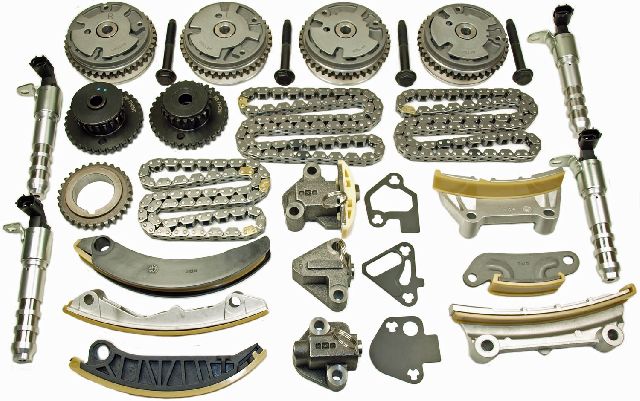
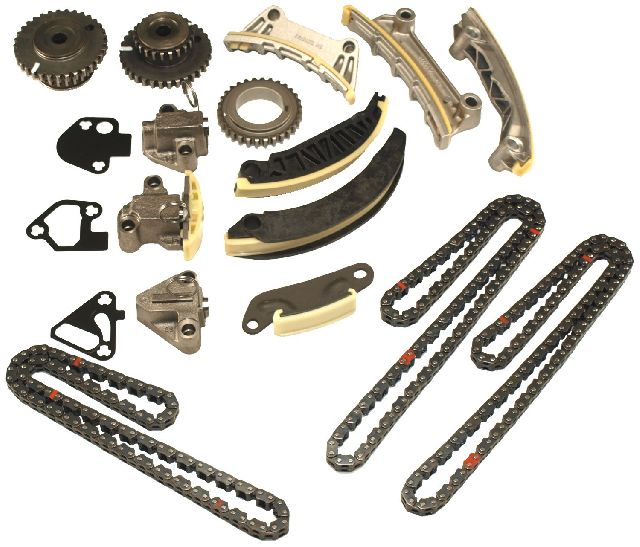
- The correct fix is a complex and expensive repair involving the replacement of all timing chains, tensioners, and guides with updated parts.
- Using the correct full synthetic 5W-30 oil and adhering to strict 5,000-mile oil change intervals is critical for the longevity of the replacement timing components.
What's Unique About the 2008-2009 Pontiac Torrent
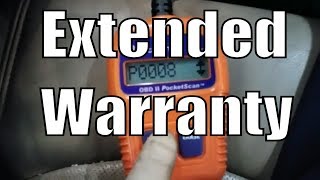
The GM 3.6L V6 (LY7) engine from this era is infamous for premature timing chain failure. The original timing chains were prone to stretching, a problem made worse by the factory's optimistic oil life monitoring system, which often led to overly long oil change intervals and oil degradation. The issue was so widespread that GM issued Special Coverage Adjustment #11340C for many affected vehicles, extending the warranty for this specific failure to 10 years/120,000 miles, though this program has now expired. As a result, 🎬 Watch: Learn more about the GM extended warranty for timing chains. for this specific vehicle, P0018 is rarely a simple sensor fault and almost always points directly to the need for a complete timing chain replacement.
Symptoms You May Notice
- Check Engine Light is on
- Rattling noise from the engine, especially on a cold start, sometimes called a 'death rattle'.
- Reduced engine power and poor acceleration
- Rough or unstable idle, engine may surge.
- Engine may hesitate or stall
- Decreased fuel economy
- Replacing the camshaft position sensor
- Replacing the crankshaft position sensor
- Replacing only the VVT solenoid without checking the timing chains
Most Likely Causes
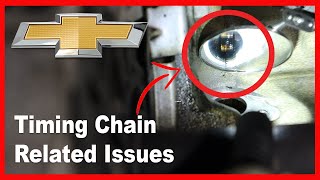
- Stretched Timing Chains 🔴 High Probability → Shop Engine Timing Chain The original timing chains used in the 2007-2009 LY7 engine were made from a material that was prone to premature stretching. This was exacerbated by long oil change intervals recommended by the original Oil Life Monitor, leading to accelerated wear from degraded oil. GM acknowledged this with updated parts and TSBs.
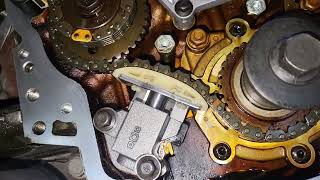
How to confirm: A rattling noise on startup is a strong indicator. A mechanic 🎬 Hear the 'death rattle' and see how to fix it. can use a scan tool to view cam/crank deviation data; a deviation greater than 4-6 degrees at idle confirms the issue. The definitive diagnosis is a physical inspection of chain slack, which requires significant labor. The presence of codes P0008, P0016, or P0017 alongside P0018 makes this cause almost certain. Manufacturer Bulletin #12-06-01-009F specifically notes the availability of kits to repair stretched timing chains that set this code.
Typical fix: Replace all three timing chains, all tensioners, and all guides with a modern, updated timing chain kit. It is also recommended to have the ECM reprogrammed with the updated Oil Life Monitor calibration to shorten oil change intervals.
Est. part cost: $300-$600 - Low or Dirty Engine Oil 🟡 Medium Probability The camshaft phasers and chain tensioners are hydraulically operated by engine oil. Low or degraded oil can't provide the necessary pressure to correctly adjust cam timing or tension the chains, which can trigger a correlation code. While this can be a cause, it's more often a contributing factor to the primary issue of chain stretch by accelerating wear.
How to confirm: Check the oil level on the dipstick and inspect its condition. If the oil is very low, black, or sludgy, this is a likely contributor. An oil change may temporarily quiet the engine or clear the code, but if the chains are already stretched, the code will return.
Typical fix: Perform an engine oil and filter change using a quality full synthetic 5W-30 dexos-approved oil. If the code returns, the chains have likely already been damaged from poor lubrication and require replacement.
Est. part cost: $50-$100 - Failed Camshaft Actuator Solenoid (VVT Solenoid) ⚪ Low Probability → Shop Engine Camshaft The solenoids can become clogged with oil sludge, a common byproduct of the extended oil change intervals and oil degradation issues that plague this engine.
How to confirm: A mechanic can command the solenoid on and off with a scan tool to check its response. A simpler DIY test is to swap the Bank 2 intake solenoid with the Bank 1 intake solenoid and see if the code changes to P0016. If it does, the solenoid is bad. If P0018 returns, the problem is mechanical.
Typical fix: Replace the faulty solenoid for Bank 2 (intake).
Est. part cost: $30-$70
Rare But Worth Checking
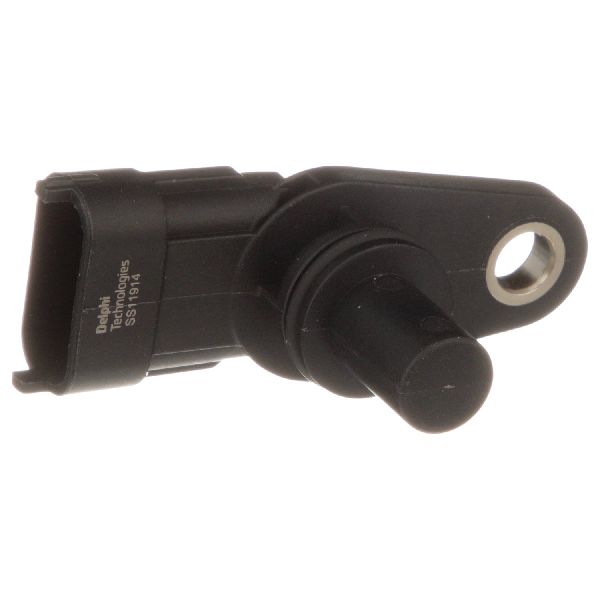
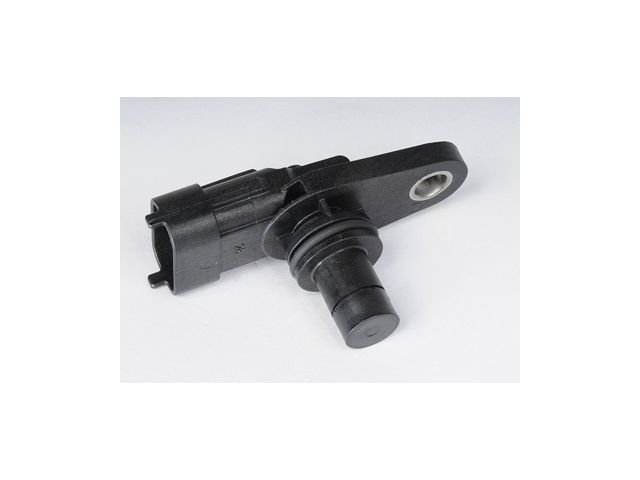
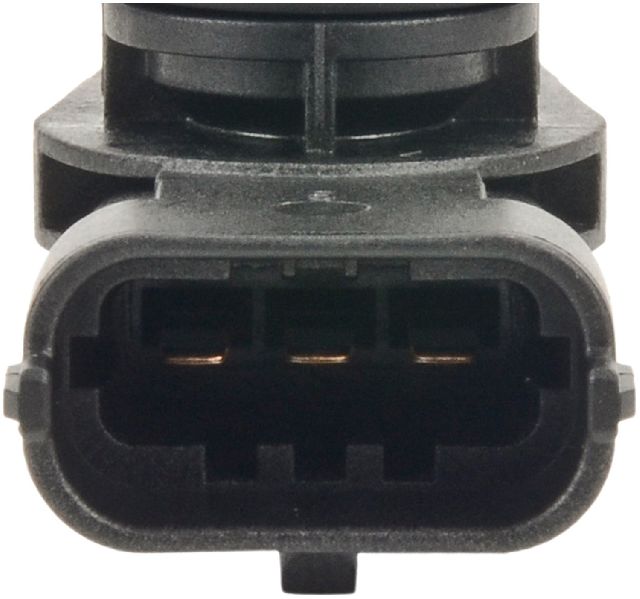
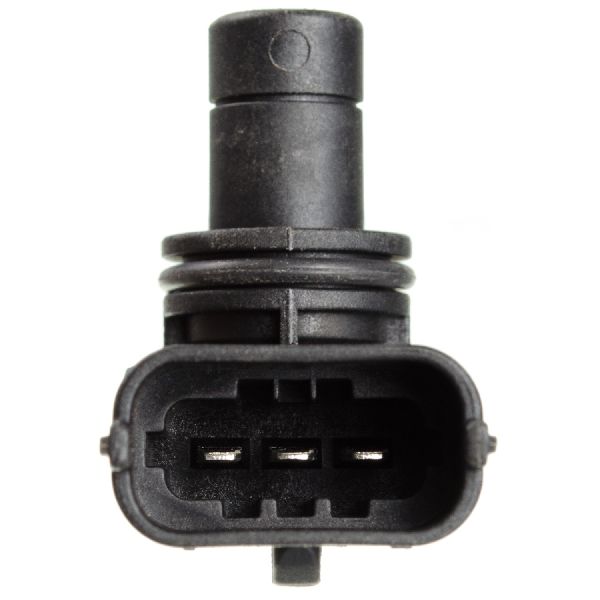
- Failed Camshaft Position Sensor: → Shop Engine Camshaft Position Sensor While a possible cause for the code in general, it is very rarely the root cause on this specific engine. The sensor is usually doing its job correctly by reporting a real mechanical fault. Do not replace this part without ruling out timing chains first.
- Failed Crankshaft Position Sensor: → Shop Engine Crankshaft Position Sensor Extremely unlikely to be the cause. A failing CKP sensor typically causes more severe issues like no-start conditions or stalling, often with other codes.
- Damaged or Slipped Crankshaft Reluctor Wheel: → Shop Engine Crankshaft This is a rare but possible cause mentioned specifically in GM service bulletin PIP3423P. The wheel, which the crank sensor reads, can physically move on the crankshaft, causing a correlation code even if the chains are tight. The fix typically requires crankshaft replacement.
Diagnosis Steps
- Verify engine oil level and condition. If low or dirty, perform an oil and filter change with 5W-30 full synthetic oil and clear the code to see if it returns.
- Scan for all stored DTCs. The presence of P0008, P0016, P0017, or P0019 strongly indicates a mechanical timing chain issue. Bulletin #PIP3423P advises technicians to specifically inspect for loose timing chains or tensioners when these codes are present.
- Listen for a distinct rattling sound from the front (radiator side) of the engine during a cold start. This noise is a classic symptom of loose timing chains or bad tensioners.
- Use an advanced scan tool to monitor the desired vs. actual camshaft position angles for Bank 2. A significant and persistent deviation (greater than 4-6 degrees) confirms the correlation error is real and mechanical.
- As a low-probability check, you can swap the Bank 2 intake VVT solenoid with the one from Bank 1. If the code changes to P0016, the solenoid is faulty. If the P0018 code remains, the issue is mechanical.
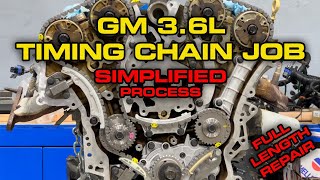
- If all other steps fail to resolve the issue, prepare for a mechanical inspection and replacement of the timing chains, tensioners, and guides. This is a labor-intensive job. 🎬 See this full-length timing chain removal and installation walkthrough.
Parts You'll Likely Need
- Timing Chain Kit
(OEM #12650230)— This is the definitive fix for the common stretched timing chain issue on the LY7 engine. A complete kit ensures all worn components (chains, guides, tensioners) are replaced with updated, more durable parts. TSB 12-06-01-009F announced these comprehensive kits.
Trusted brands: ACDelco (OEM), Cloyes (e.g., 9-0753S)
OEM price range: $350-$500
Aftermarket price range: $250-$400 - Camshaft Position Actuator Solenoid
(OEM #12655420 (may be superseded by 12679099, verify by VIN))— This part can get clogged with dirty oil or fail electronically, causing timing correlation issues. It's a possible, but much less likely, cause than stretched chains.
Trusted brands: ACDelco, Delphi, Standard Motor Products
OEM price range: $40-$70
Aftermarket price range: $25-$50
Related Codes That Often Appear With This One
- P0008 — This is a general engine position system performance code and is often the first to appear when the timing chains begin to stretch. Its presence is a very strong indicator of a mechanical timing problem.
- P0016 — This is the same correlation error but for Bank 1 (firewall side). Seeing both P0016 and P0018 together strongly suggests a stretched primary timing chain is affecting both banks.
- P0017 — This is a correlation error for the exhaust camshaft on Bank 1. Its presence with P0018 points to a widespread timing issue affecting the entire engine.
- P0019 — This is the companion code for the exhaust camshaft on Bank 2. If it appears with P0018, it confirms both camshafts on Bank 2 are out of sync, reinforcing the diagnosis of a stretched secondary chain for that bank.
Technical Service Bulletins (TSBs) & Recalls
- PIP3423P: Diagnostic aid for DTCs P0008, P0009, P0016, P0017, P0018, or P0019. Instructs technicians to first check for loose timing chains/tensioners, and if chains are tight, to then inspect for a slipped crankshaft reluctor wheel.
- 12-06-01-009F: Announces the availability of comprehensive timing chain service kits with updated components to address wear issues. It lists the 2008-2009 Pontiac Torrent as an affected vehicle.
Platform-Specific Known Issues
- A well-documented issue of premature timing chain stretch on the 3.6L LY7 V6 engine, often linked to the original oil life monitor calibration encouraging excessive oil change intervals.
- GM issued multiple Technical Service Bulletins (TSBs), like #12-06-01-009F, acknowledging the timing chain issues and providing updated part numbers and repair procedures.
- GM also issued Special Coverage Adjustment #11340C for many vehicles with this engine, extending the timing chain warranty to 10 years/120,000 miles, confirming the widespread nature of the defect. This program has now expired for all vehicles due to age.
Mechanic-Grade Diagnostic Values
- Cam/Crank Correlation Data PID — expected: Less than +/- 4 degrees of deviation at idle.. Failure: A consistent deviation of more than 4-6 degrees, with the code often setting above 9-10 degrees, strongly indicates a mechanical timing issue.
- Camshaft Position Actuator Solenoid (VVT Solenoid) Resistance — expected: 4.6-7.5 Ohms for the LY7 engine.. Failure: A reading of 0 Ohms (short circuit), OL/infinite (open circuit), or a value significantly outside the expected range.
- Engine Oil Pressure (Warm Idle) — expected: Minimum of 24 PSI at 1,000 RPM when warm. Some sources state 25-30 PSI is a healthy range at idle.. Failure: Pressure below the minimum specification confirms a low oil pressure condition that can cause VVT system faults and accelerate chain wear.
- Crankshaft Reluctor Wheel Position Measurement — expected: 25mm to 26mm.. Failure: A measurement outside this range indicates the reluctor wheel has physically slipped on the crankshaft. This measurement is taken from the end of the machined surface of the crankshaft throw to the edge of the open space in the reluctor.
Scan Tool Commands That Help
- GM Tech 2 / GDS2: Camshaft Position Actuator Solenoid Test / Bidirectional Control — This command allows a technician to manually cycle the VVT solenoid (e.g., from 0 to 40 degrees) while monitoring the 'Camshaft Position Variance' PID. If the solenoid is commanded but the camshaft angle does not change or changes slowly, it points to a faulty solenoid, a clogged oil passage, or a faulty phaser.
Wiring & Ground Locations
- ECM Location — Mounted on top of the battery cover in the engine compartment.. The ECM receives signals from the cam/crank sensors and controls the VVT solenoids. Verifying clean, tight connections at the ECM is a crucial step if electrical issues are suspected.
- G103 — On the left side of the engine compartment, sometimes specified as on the cowl above the brake booster.. This is a major ground point for the Body Control Module (BCM) and Data Link Connector (DLC). A poor ground here can cause communication issues and other electrical gremlins that could complicate diagnosis.
- G107 / G108 / G109 / G111 — These are key engine grounds. G107 (on upper left front side of engine), G108 (on upper right rear side of engine), G109 (on upper left rear side of engine), and G111 (rear of engine, near crankshaft sensor).. The ECM and its sensors (including Cam and Crank sensors) rely on solid engine grounds. GM V6 and V8 engines often use studs on the rear of the cylinder heads for critical powertrain grounds, which can be hard to see and access. A loose or corroded ground at these locations can cause erratic sensor signals, leading to false codes.
- BCM Location — Located in the center console, behind/under the radio.. The BCM communicates with the ECM over the GMLAN data bus. While not a direct cause of P0018, a fault in the BCM or its connections can sometimes cause network-wide issues that affect diagnostics.
Real Owner Repair Stories
- YouTube video from 'Super Auto's and More' (2009 Chevrolet Traverse 3.6L V6 with 145k miles (same engine family and issue)) — P0018 code present.
❌ Tried (didn't work) The owner had preventatively replaced the timing chains a few months prior, before any codes were set., The shop then replaced the VVT solenoids with new AC Delco parts, which did not fix the code.
✅ What actually fixed it The problem was intermittent and would appear after about 30 minutes of driving. Using an oscilloscope, the technician found that the Bank 2 intake camshaft sensor signal was dropping out when the engine warmed up. Even though the timing chains and solenoids were new, the root cause was a failing camshaft position sensor that only acted up when hot. Replacing the Bank 2 intake camshaft position sensor resolved the P0018 code.
OEM Part Supersession History
12586722, 12588943, 12615613, 12626012→12636175— Updated design for the Camshaft Position Actuator Solenoid (VVT Solenoid) for the LY7 engine.
Model Year Variations Within This Range
- 2008-2009: The 3.6L LY7 V6 was only available on the Torrent GXP trim level. Base models used a 3.4L V6 with a different engine architecture and do not share this specific P0018 failure pattern. There were no significant engine-related changes between the 2008 and 2009 model years for the 3.6L GXP model.
Diagnostic Flowchart
Real Owner Stories
Aggregated from forums and TSBs cited above. Mileages and costs reflect what owners reported in those sources.
2008 Chevrolet Equinox Sport 3.6L V6 — 100000 miles
Symptoms: Received a P0008 code, which is a companion timing chain code to P0018.
What fixed it: Paid a dealership to replace the stretched timing chain.
Cost: $1900-$1900
Source hint: Chevrolet Forum thread titled '08 Equinox sport timing chain problem'
2009 Chevrolet Equinox Sport 3.6L V6 — 160000 miles
Symptoms: Vehicle threw codes P0017, P0008, P0016, and P0018.
What fixed it: Owner initially replaced all camshaft sensors, which proved to be a misdiagnosis that did not resolve the codes.
Source hint: Chevy Equinox Forum thread titled 'Engine problems'
2010 Buick Enclave 3.6L V6
Symptoms: Vehicle presented with P0017 and P0008 timing chain codes.
What fixed it: A professional technician performed a 14.6-hour labor job to replace the timing chains using 100% GM OE updated parts.
Source hint: BobIsTheOilGuy Forum thread titled 'LLT 3.6L Timing Chains'
Related OBD-II Codes
Frequently Asked Questions
Does GM's Special Coverage Adjustment #11340C still cover the timing chain on my 2008-2009 Pontiac Torrent?
Is there a specific TSB for the P0018 code on the 3.6L V6 Torrent?
I heard the Oil Life Monitor caused the timing chain stretch on my Torrent. Is this true?
Can I just replace the camshaft sensors to fix P0018 on my 3.6L V6?
How can a mechanic confirm my Torrent's timing chain is stretched without tearing apart the engine?
What is the 'death rattle' on the 2008-2009 Pontiac Torrent?
Helpful Videos
We Have This Part in Stock

The information in this article is provided for general reference and educational purposes only. Vehicle specifications, procedures, and part compatibility can vary by production date, trim level, and region. Always consult your vehicle's factory service manual and verify part numbers before purchasing or performing repairs. Safety-critical components such as airbags, seat belts, and braking systems should be installed by a qualified professional.
- Pontiac Torrent:
- 🧭 Diagnostic Flowchart
- 🎬 Helpful Videos
- 🛍️ Shop This Part
- What's Unique About the 2008-2009 Pontiac Torrent
- Symptoms You May Notice
- Most Likely Causes
- Rare But Worth Checking
- Diagnosis Steps
- Parts You'll Likely Need
- Related Codes That Often Appear With This One
- Technical Service Bulletins (TSBs) & Recalls
- Platform-Specific Known Issues
- Mechanic-Grade Diagnostic Values
- Scan Tool Commands That Help
- Wiring & Ground Locations
- Real Owner Repair Stories
- OEM Part Supersession History
- Model Year Variations Within This Range
- Real Owner Stories
- 2008 Chevrolet Equinox Sport 3.6L V6 — 100000 miles
- 2009 Chevrolet Equinox Sport 3.6L V6 — 160000 miles
- 2010 Buick Enclave 3.6L V6
- Related OBD-II Codes
- Frequently Asked Questions
- 🎟️ Get 5% Off