

P0018 on 2010-2011 Saab 9-5 2.8L V6: Stretched Timing Chain Causes and Fixes
On the 2010-2011 Saab 9-5 with the 2.8L V6 Turbo, code P0018 almost always indicates a stretched timing chain. This is a known, serious issue with this GM-based engine. Do not simply replace sensors; the most likely fix is a complete timing chain kit replacement, which is a complex and expensive professional repair. The issue was common enough that GM issued TSBs and improved the chain design in later model years.
- P0018 on a 2010-2011 Saab 9-5 2.8L V6 is a serious code that almost always points to stretched timing chains.
- Do not attempt to fix this code by only replacing the camshaft or crankshaft sensors; this is a common misdiagnosis that will not solve the underlying mechanical problem.
- The repair requires replacing the complete timing chain kit (all chains, guides, and tensioners) and is a very complex job best left to a professional mechanic experienced with these GM engines.
- Continued driving is not recommended, as a complete timing chain failure can lead to catastrophic engine damage.
- There is no recall for this issue; the repair cost is the owner's responsibility.
What's Unique About the 2010-2011 Saab 9-5
The 2010-2011 Saab 9-5 uses a 2.8L V6 Turbo engine (A28NER) from General Motors, which is part of the GM High Feature V6 family. These engines are notoriously prone to premature timing chain stretching. The engine uses a complex system of three separate timing chains, and the materials of the original chains are a known weak point. As a result, a P0018 code on this specific vehicle is a very strong indicator of a significant mechanical problem rather than a simple sensor failure. GM implicitly acknowledged the issue by releasing updated timing chain kits and TSBs (like 12-06-01-009) for this engine family, and the problem is reported to be less common on models produced after 2012.
Symptoms You May Notice
- Check Engine Light is on
- Engine rattling noise, especially on a cold start
- Rough or unstable idle
- Reduced engine power and poor acceleration
- Engine stalling
- Increased fuel consumption
- Difficulty starting the engine
- Replacing only the camshaft position sensor. While a sensor can fail, it is rarely the root cause of P0018 on this specific engine. Owners often replace the sensor only to have the code return, because the underlying mechanical timing issue (stretched chain) remains.
Most Likely Causes
- Stretched Timing Chains 🔴 High Probability → Shop Engine Timing Chain The GM-sourced 2.8L V6 engine is widely known for using timing chains that are prone to premature stretching due to their design and material composition. The complex three-chain system exacerbates this issue. This was a known issue across multiple GM brands using this engine.
How to confirm: A mechanic can use a scan tool to observe the camshaft angle deviation; a persistent deviation greater than 5-8 degrees at idle is a strong indicator. Definitive confirmation requires physical inspection of the chains for slack by removing the timing cover, which is labor-intensive.
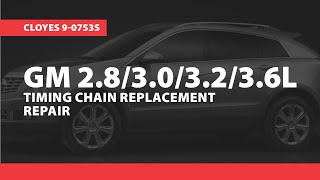
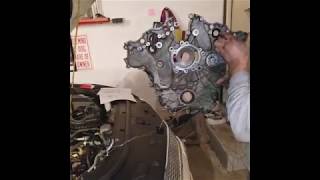
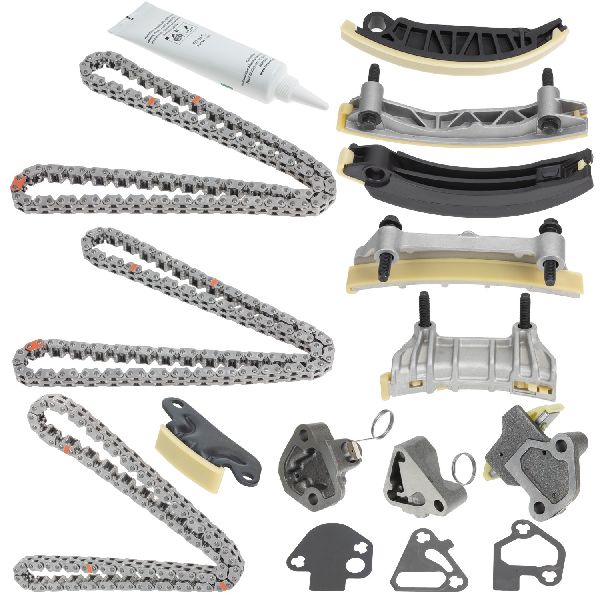
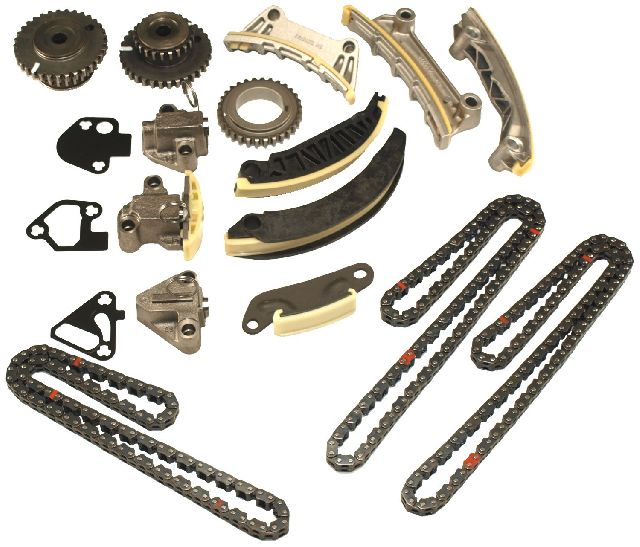
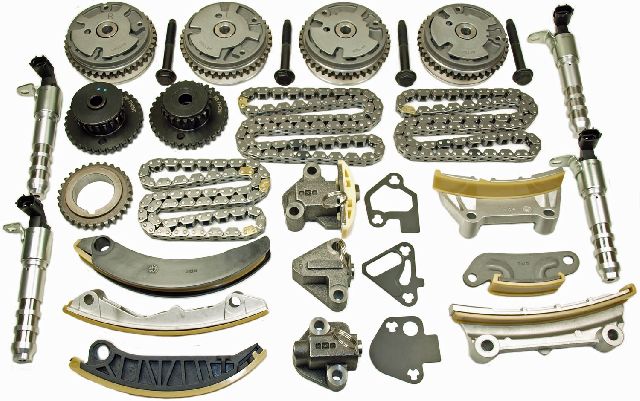
Typical fix: Replacement of all three timing chains, along with all related tensioners and guides. It is critical to replace everything as a complete kit using updated parts. 🎬 Watch: A complete walkthrough of the timing chain replacement process. GM TSB 12-06-01-009 notes that guides should only be replaced if visibly worn.
Est. part cost: $400-$800 for a high-quality complete kit - Failed Timing Chain Tensioner(s) or Guide(s) 🟡 Medium Probability → Shop Engine Timing Chain The hydraulic tensioners and plastic guides wear out over time, and their failure can cause slack in the chain, leading to the same correlation error. This is often accelerated by infrequent oil changes or low oil pressure.
How to confirm: Visual inspection after removing the timing cover. A rattling noise from the engine that subsides after a few seconds from a cold start is a strong indicator of a failing tensioner.
Typical fix: This is almost always addressed during a full timing chain kit replacement. It is not recommended to replace only a failed tensioner or guide.
Est. part cost: $400-$800 (as part of a full kit) - Low or Dirty Engine Oil ⚪ Low Probability The camshaft phasing system (VVT) is hydraulic and relies on clean oil at the correct pressure to function. Neglected oil changes can lead to sludge that clogs passages in the VVT solenoids or phasers, preventing them from operating correctly and potentially accelerating chain/guide wear.
How to confirm: Check the oil level on the dipstick and inspect its condition. If it's low or very dirty, this could be a contributing factor.
Typical fix: Perform an oil and filter change using the correct specification oil (Dexos-approved). However, if the chain has already stretched, this will not solve the P0018 code.
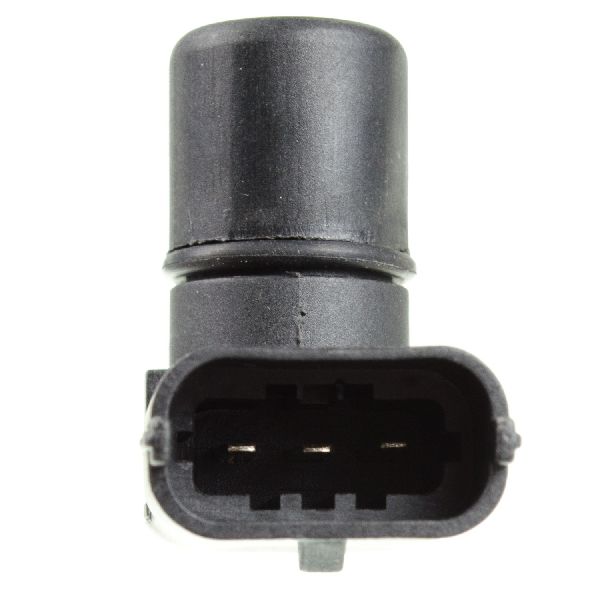
Est. part cost: $50-$100 - Faulty Camshaft Position Sensor ⚪ Low Probability → Shop Engine Camshaft Position Sensor
How to confirm: Swap the Bank 2 intake camshaft sensor with the Bank 1 intake sensor. If the code changes to P0016 (the Bank 1 equivalent), the sensor is bad. If the P0018 code returns, the sensor is not the cause.
Typical fix: Replace the faulty sensor.
Est. part cost: $40-$90
Rare But Worth Checking
- Faulty Camshaft Phaser / Actuator: → Shop Engine Camshaft The VVT actuator on the camshaft can become stuck due to debris or internal failure. This is less common than chain stretch but can cause the same code. Diagnosis involves scan tool data analysis and potentially manual inspection.
- Faulty VVT Solenoid (Oil Control Valve): The solenoid that directs oil to the phaser can fail or become clogged. It can be tested for resistance (typically 6.9-7.9 ohms) and function, and is easier to replace than a phaser or timing chain.
- Slipped Camshaft Reluctor Ring: → Shop Engine Camshaft In some rare cases on the High Feature V6 family, the embossed reluctor ring that the camshaft position sensor reads can physically move or slip on the camshaft itself, causing a correlation error even with perfect mechanical timing. This is difficult to diagnose and often requires camshaft replacement.
Diagnosis Steps
- Verify Oil Level and Condition: Ensure the engine oil is full and clean. If not, perform an oil change and clear the code to see if it returns.
- Scan for All Codes: Check for other related codes (like P0016, P0008, P0009) that can help confirm a systemic timing issue.
- Analyze Live Data: Use a professional scan tool to monitor the desired vs. actual camshaft position angles for Bank 2. A significant, persistent deviation (often >5 degrees) indicates a timing problem.
- Test the Camshaft Position Sensor: As a simple check, swap the Bank 2 intake cam sensor with the Bank 1 intake cam sensor. Clear codes and see if the fault moves to Bank 1 (P0016). If it does, the sensor is faulty. If P0018 returns, the problem is mechanical.
- Inspect VVT Solenoids: The oil control solenoids can be removed and tested for mechanical binding and correct electrical resistance (approx. 7 ohms).
- Perform Mechanical Timing Inspection: This is the definitive step. A technician will need to remove the engine timing cover to physically inspect the timing chains for slack, check the tensioners for proper operation, and verify that all timing marks align correctly. This is a labor-intensive process.
Parts You'll Likely Need
- Engine Timing Chain Kit
(OEM #GM 12651450 (Reference kit for 2008-2012 HFV6, confirm application))— This is the most common cause of P0018 on the 2.8L V6. A complete kit ensures all worn components (chains, guides, tensioners) are replaced for a lasting repair.
Trusted brands: Cloyes, INA, HEPU
OEM price range: $600-$1000
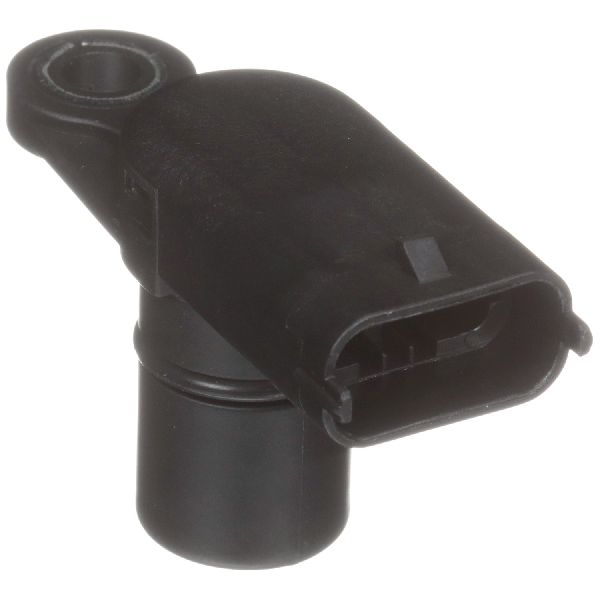
Aftermarket price range: $400-$800 - Camshaft Position Sensor — While rarely the root cause, a sensor can fail. It's a common misdiagnosis but should be ruled out.
Trusted brands: Delphi, Bosch, Hitachi
OEM price range: $70-$120
Aftermarket price range: $40-$90
Related Codes That Often Appear With This One
- P0016 — Crankshaft/Camshaft correlation error for Bank 1. If both P0016 and P0018 are present, it strongly points to an issue with the primary timing chain that serves both banks.
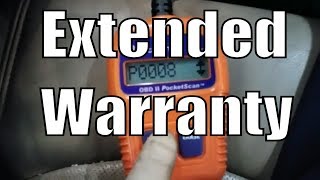
- P0008 — Engine Positions System Performance Bank 1. This is a more general timing code that, when seen with P0018, reinforces the diagnosis of a major timing system failure, likely a stretched primary chain. This code is specifically mentioned in GM TSB 12-06-01-009. 🎬 See: How these specific codes relate to GM's extended warranty.
- P0009 — Engine Positions System Performance Bank 2. Similar to P0008, its presence points to a significant timing misalignment and is also covered by GM TSB 12-06-01-009.
Technical Service Bulletins (TSBs) & Recalls
- GM TSB 12-06-01-009: Titled 'Information on High Feature V6 Timing Chain Kits and Chain Guide Replacements, DTCs P0008, P0009, P0016, P0017, P0018 and/or P0019'. This is the primary GM document acknowledging the stretched chain issue and providing the official repair procedure and parts list for technicians.
Platform-Specific Known Issues
- The 2.8L V6 Turbo (A28NER/LP9) engine has a well-documented history of premature timing chain failure. The issue is not a matter of 'if' but 'when' for many owners, sometimes occurring at surprisingly low mileage.
- There has never been a safety recall issued for this timing chain problem, meaning the owner is fully responsible for the expensive repair costs.
- GM issued Technical Service Bulletin 12-06-01-009 covering multiple DTCs including P0018, acknowledging stretched chains as the cause and providing repair guidance for technicians.
Mechanic-Grade Diagnostic Values
- Camshaft Actuator (VVT) Solenoid Resistance — expected: 6.9-7.9 Ohms. Failure: A reading outside this range indicates a faulty solenoid coil.
- Scan Tool Cam/Crank Correlation Angle — expected: Less than 5 degrees of deviation at idle.. Failure: A persistent deviation greater than 9 degrees is a common threshold for setting the P0018 code on GM vehicles.
Scan Tool Commands That Help
- GM Tech2 / GDS2 or equivalent: VVT Actuator Test / OCV Control — Use this bidirectional command with the engine idling to manually activate the Bank 2 intake VVT solenoid. A functional solenoid and clear oil passages will cause the engine to stumble or run rough. If there is no change in engine operation, it points to a stuck solenoid, a clogged oil passage, or a wiring issue.
- GM Tech2 / GDS2 or equivalent: Crankshaft Position Variation Learn — This procedure is mandatory after replacing a crankshaft, crankshaft position sensor, or ECM. It calibrates the fine variations of the crankshaft reluctor wheel to the ECM to prevent false timing codes like P0315, which can sometimes appear after major timing work.
Wiring & Ground Locations
- G7 — On a bracket at the front of the left-hand side of the engine.. This is a primary engine sensor ground point. Corrosion or a loose connection here can cause erratic signals from the camshaft and crankshaft position sensors, potentially leading to a false correlation code.
- G25 — Main battery ground cable connection point on the gearbox.. A poor main ground connection at the transmission can affect the entire engine management system, causing unpredictable electrical issues and sensor faults.
- Engine Control Module (ECM) — Located in the right rear of the engine compartment.. Knowing the physical location is critical for inspecting the main harness connector for corrosion, damage, or loose pins, which could interrupt the signals from the cam/crank sensors.
OEM Part Supersession History
GM 12651450→12700436 / 12693218— GM updated the timing chain kits multiple times to improve the durability of the chains and address the premature stretching issue. The newer kits contain the improved design.
Heads up: While all kits are for the HFV6 family, it is critical to use the latest available part number (e.g., 12693218 or 12700436) to get the most durable, updated chains. Using old stock or an incorrect early-design kit will likely lead to a repeat failure.
Model Year Variations Within This Range
- 2010-2011: Aero models with the 2.8T V6 were equipped with GM's 'HiPer Strut' front suspension, whereas the 2.0T models used a conventional MacPherson strut design. This does not affect the P0018 code but is a notable platform difference.
Diagnostic Flowchart
Real Owner Stories
Aggregated from forums and TSBs cited above. Mileages and costs reflect what owners reported in those sources.
2008 Saab 9-3 2.8t Aero XWD
Symptoms: Check engine light with code P0018, rattling from the chain on a cold engine, and occasional 'limited performance' message.
What fixed it: Anticipating a full timing chain replacement.
Source hint: Saabclub.fi 2.8 v6 jakoketju
Saab 9-3 Turbo X
Symptoms: Check engine light with fault code P0018.
What fixed it: Addressed as a timing chain issue by the shop.
Source hint: Lammertse Techniek PROJECTEN Saab 9-3 Turbo X TJ-587-L
Saab 9-3 2.8 V6
Symptoms: Code P0018, car drives fine until it gets up to temp.
What fixed it: Diagnosed as a stretched timing chain.
Source hint: JustAnswer
2010 Saab 9-3 (9440)
Symptoms: P0018 code present.
What fixed it: WIS diagnosis confirmed a jumped tooth, indicating a stretched timing chain requiring replacement.
Source hint: saabcentral.com thread 'P0018 00 9-3 (9440) 2010'
Related OBD-II Codes
Frequently Asked Questions
Does GM TSB 12-06-01-009 apply to my 2010-2011 Saab 9-5 2.8L V6?
Is there a safety recall for the stretched timing chain issue on the 2.8L V6 Turbo?
Can I just replace the Bank 2 camshaft position sensor to fix P0018 on my Saab 9-5?
Should I replace just the failed tensioner or guide if that's causing the P0018 code?
Are other vehicles with this 2.8L engine prone to the same P0018 timing chain failure?
Helpful Videos

We Have This Part in Stock


The information in this article is provided for general reference and educational purposes only. Vehicle specifications, procedures, and part compatibility can vary by production date, trim level, and region. Always consult your vehicle's factory service manual and verify part numbers before purchasing or performing repairs. Safety-critical components such as airbags, seat belts, and braking systems should be installed by a qualified professional.
- Saab 9-5:
- 🧭 Diagnostic Flowchart
- 🎬 Helpful Videos
- 🛍️ Shop This Part
- What's Unique About the 2010-2011 Saab 9-5
- Symptoms You May Notice
- Most Likely Causes
- Rare But Worth Checking
- Diagnosis Steps
- Parts You'll Likely Need
- Related Codes That Often Appear With This One
- Technical Service Bulletins (TSBs) & Recalls
- Platform-Specific Known Issues
- Mechanic-Grade Diagnostic Values
- Scan Tool Commands That Help
- Wiring & Ground Locations
- OEM Part Supersession History
- Model Year Variations Within This Range
- Real Owner Stories
- 2008 Saab 9-3 2.8t Aero XWD
- Saab 9-3 Turbo X
- Saab 9-3 2.8 V6
- 2010 Saab 9-3 (9440)
- Related OBD-II Codes
- Frequently Asked Questions
- 🎟️ Get 5% Off