

P0018 on 2007-2010 Saturn Outlook 3.6L: Stretched Timing Chain Causes and Fixes
On a 2007-2010 Saturn Outlook, P0018 almost always means the timing chains have stretched. This is a major, expensive repair costing $1,800-$3,500+. Do not replace sensors first; the problem is almost certainly mechanical. This was a widespread issue leading to GM Special Coverage programs.
- P0018 on a 2007-2010 Saturn Outlook is a serious code that almost always indicates stretched timing chains.
- Do not waste money replacing sensors first. The problem is overwhelmingly mechanical.
- The first and easiest check is the engine oil level and condition. Low or dirty oil can cause or worsen this issue.
- Repair involves a full timing chain kit replacement, which is a complex and expensive job (typically $1800+) that should be left to a professional.
- Driving with this code is risky and can lead to catastrophic engine failure if the chain breaks.
What's Unique About the 2007-2010 Saturn Outlook
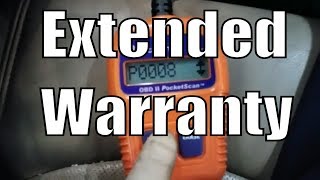
The Saturn Outlook and its GM Lambda platform siblings (GMC Acadia, Buick Enclave, Chevrolet Traverse) equipped with the 3.6L V6 are notorious for premature timing chain failure. This issue was so widespread in the LY7 (2007-2008) and to a lesser extent the LLT (2009-2010) engines that GM issued Special Coverage Adjustment #11340A, extending the warranty to 10 years 🎬 Learn more about the GM extended warranty for these engine codes. or 120,000 miles for this specific repair on certain model years. The problem is widely blamed on the original timing chain design combined with extended oil change intervals promoted by the factory Oil Life Monitor (OLM), which could lead to oil degradation and poor lubrication of the chains and tensioners. Unlike many vehicles where P0018 might be a simple sensor fix, on this platform, it's a very strong indicator of a deep mechanical issue.
Symptoms You May Notice
- Check Engine Light is on
- Engine rattling noise, especially on startup
- Rough or unstable idle
- Reduced engine power and poor acceleration
- Engine stalling
- Worse than normal fuel economy
- Engine is hard to start
- Replacing only the camshaft position sensor. This is the most common incorrect fix. The sensor is simply reporting the timing error; it is rarely the cause of it on this engine. The code will return.
- Replacing only the crankshaft position sensor. Similar to the camshaft sensor, this part is usually not the root cause.
- Replacing only the VVT solenoids. While a clogged solenoid can cause this code, it's often attempted as a cheaper fix when the real issue is the mechanical slack in the timing chains.
Most Likely Causes
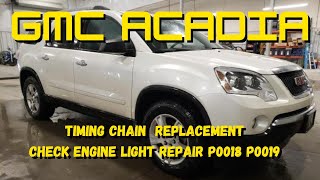
- Stretched Timing Chains 🔴 High Probability → Shop Engine Timing Chain The original timing chains used on the 3.6L V6 engines were prone to premature wear and stretching. This was exacerbated by long oil change intervals recommended by the Oil Life Monitor. GM later released updated parts to address this well-documented issue, covered under TSBs like #12-06-01-009F and Special Coverage Adjustment #11340A. Manufacturer TSB Bulletin #12-06-01-009F specifically highlights the availability of high feature V6 timing chain kits and guide replacements to repair stretched chains that set DTC P0018.
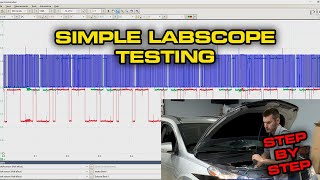
How to confirm: A technician can use a scan tool to monitor camshaft position deviation data 🎬 Watch: How to use a labscope to test for timing issues. ('Camshaft Position Variance'). A consistent deviation greater than 4-6 degrees strongly indicates a stretched chain. The ultimate confirmation is a physical inspection, which requires significant labor to access the timing cover. A visibly loose chain upon removing the valve cover is also a clear indicator.
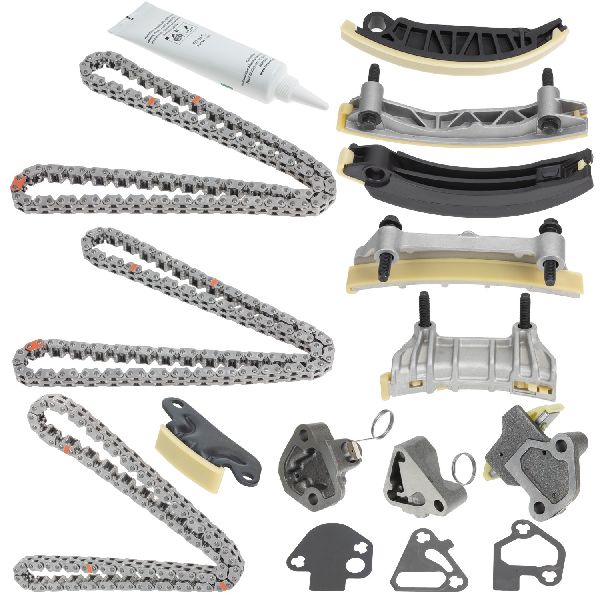
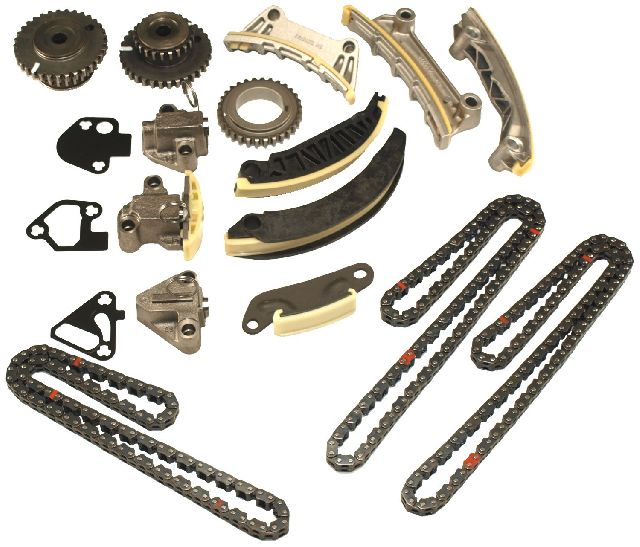
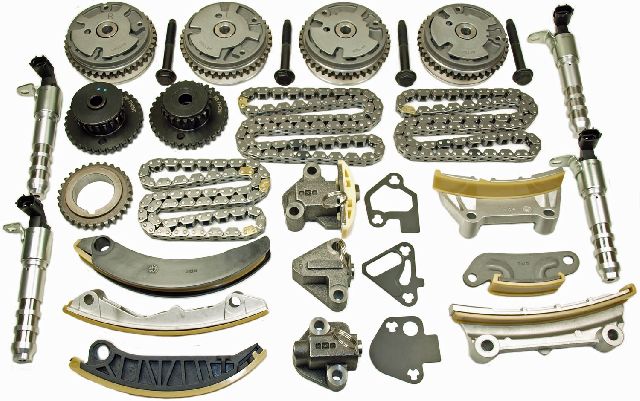
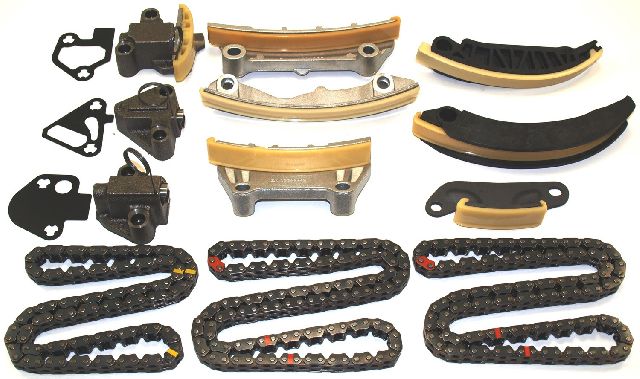
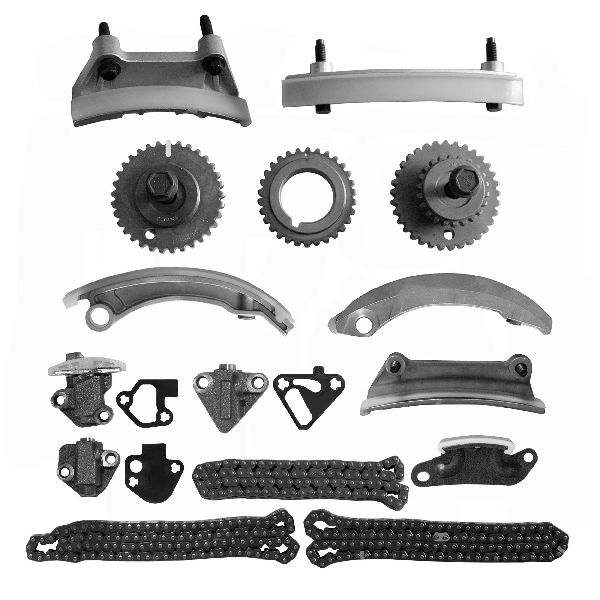
Typical fix: Replace all three timing chains (one primary, two secondary), along with the tensioners, guides, and sprockets. It is critical to use a complete, updated timing chain kit from a reputable brand like ACDelco or Cloyes. Many technicians also recommend replacing the water pump, as it is driven by the timing chain.
Est. part cost: $300-$700 - Low or Dirty Engine Oil 🟡 Medium Probability The timing chain tensioners and camshaft phasers (VVT system) are hydraulically operated by engine oil pressure. The original Oil Life Monitor calibration often allowed for excessively long oil change intervals, leading to oil breakdown, sludge, and reduced lubrication, which accelerates chain wear and can cause VVT system malfunctions.
How to confirm: Check the oil level on the dipstick and inspect its condition. If it's low, black, or sludgy, it needs to be addressed. This is a contributing factor and a critical first check.
Typical fix: Perform an oil and filter change using a high-quality full synthetic oil that meets GM's dexos1 specification. This is a critical first step and good maintenance practice, but it will not fix an already stretched chain.
Est. part cost: $50-$100 - Faulty Camshaft Actuator Solenoid (VVT Solenoid) ⚪ Low Probability → Shop Engine Camshaft
How to confirm: The Bank 2 intake solenoid can be tested for resistance with a multimeter or swapped with a known good solenoid (e.g., the exhaust solenoid on the same bank) to see if the code changes to P0019 or resolves. They can become clogged with sludge from old oil.
Typical fix: Replace the faulty solenoid. They are located on the front of the valve covers and are relatively easy to access. The part number for the intake solenoid is typically 12655420.
Est. part cost: $30-$80
Rare But Worth Checking
- Slipped Crankshaft Reluctor Wheel: → Shop Engine Crankshaft GM Technical Service Bulletin PIP3423P (and its later revisions like K, L) notes that if timing chains are confirmed to be good, the reluctor ring pressed onto the crankshaft may have moved. This is a rare failure mode but is possible. Confirming this requires inspecting the reluctor through the crankshaft position sensor hole with a borescope or by removing the oil pan. The fix requires crankshaft replacement.
- Faulty Camshaft or Crankshaft Position Sensor: → Shop Engine Crankshaft Position Sensor While these sensors are often replaced in error, they can fail. A true sensor failure is much less common than the timing chain issue on this specific vehicle. A good diagnostic step is to swap sensors between banks (e.g., Bank 1 intake with Bank 2 intake) to see if the fault code follows the sensor to P0016.
Diagnosis Steps
- Check Engine Oil: Verify the engine oil level is correct and the oil is clean and meets GM dexos1 specs. If low or dirty, perform an oil and filter change. Clear codes and see if the fault returns.
- Scan Tool Data: Use a capable scan tool to monitor the 'Camshaft Position Variance' for Bank 2 Intake. A large, persistent deviation (e.g., >4-6 degrees) under various RPMs strongly suggests a mechanical timing issue.
- Inspect VVT Solenoids: Inspect the wiring and connectors for the Bank 2 intake VVT solenoid. You can test its resistance or swap it with the exhaust solenoid on the same bank to see if the code changes to P0019.
- Test Sensors: While unlikely to be the cause, you can test the camshaft position sensor by swapping it with the sensor from Bank 1 to see if the code changes to P0016.
- Mechanical Inspection: If the steps above do not resolve the issue, the front engine cover must be removed for a direct physical inspection of the timing chains, guides, and tensioners for slack and wear. This is a labor-intensive step.
- Check Crank Reluctor: In the rare case that the timing chains are in good condition, follow TSB PIP3423P to inspect the crankshaft reluctor wheel for movement, possibly using a borescope through the crank sensor hole.
Parts You'll Likely Need
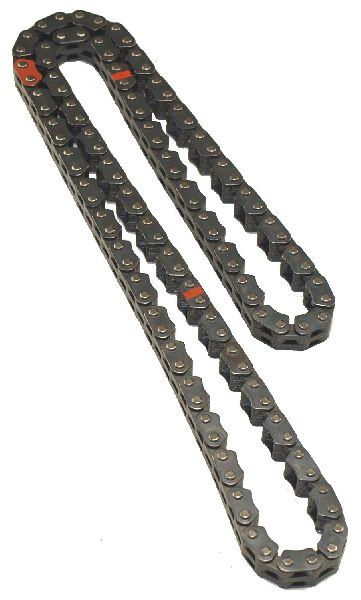
- Engine Timing Chain Kit
(OEM #12651450 (superseded by 12700436))— This is the most common cause of P0018 on this engine. A complete kit should include all three chains, all three tensioners, and all guides/rails. Using the latest revised part number is crucial.
Trusted brands: ACDelco (OEM), Cloyes
OEM price range: $400-$600
Aftermarket price range: $250-$450 - Camshaft Position Actuator Solenoid (Intake)
(OEM #12655420)— A potential, though less common, cause of the code, often due to clogging from dirty oil. It's a relatively inexpensive part to replace as a diagnostic step before committing to the timing chain job.
Trusted brands: ACDelco, Delphi, Dorman
OEM price range: $40-$70
Aftermarket price range: $25-$50
Related Codes That Often Appear With This One
- P0008 — This is a general engine position performance code for Bank 1. It's often the first code to appear when the primary timing chain begins to stretch.
- P0016 — This is the same correlation fault as P0018, but for Bank 1 (the bank closer to the firewall). Seeing P0016 and P0018 together strongly indicates a stretched primary timing chain affecting both banks.
- P0017 — This is a correlation fault for the exhaust camshaft on Bank 1. Its presence with other timing codes points to a widespread timing issue.
- P0019 — This is a correlation fault for the exhaust camshaft on Bank 2. Seeing P0018 and P0019 together points to a problem with the secondary timing chain for Bank 2 or the primary chain.
Technical Service Bulletins (TSBs) & Recalls
- PIP3423P: Addresses DTCs P0016, P0017, P0018, P0019, P0008, P0009. Suggests checking for loose timing chains or a slipped crankshaft reluctor wheel if initial diagnostics don't find the cause.
- Bulletin #12-06-01-009F: Notes the availability of specific timing chain kits and guide replacements for repairing stretched chains that trigger P0018 and related correlation codes.
Platform-Specific Known Issues
- Widespread premature timing chain stretching on 2007-2012 GM 3.6L V6 engines (LY7 and LLT). GM issued Special Coverage Adjustment #11340A for certain 2007 and 2009 models, extending the warranty for timing chain replacement to 10 years/120,000 miles.
- GM TSB #PIP3423P (and subsequent revisions) directly addresses codes P0016-P0019, pointing technicians first to stretched timing chains and secondarily to a slipped crankshaft reluctor wheel.
Mechanic-Grade Diagnostic Values
- Camshaft Position Actuator (VVT) Solenoid Resistance — expected: 5.0 to 15.0 Ohms. Failure: A reading of infinite resistance (open circuit) or near-zero resistance (short circuit) indicates a failed solenoid. Some sources cite a tighter range of 6.9 to 7.9 Ohms at 68°F (20°C).
- Cam/Crank Correlation Deviation Threshold — expected: Less than 9 degrees. Failure: The ECM will set DTC P0018 when it detects a deviation greater than 9 degrees between the crankshaft and the Bank 2 intake camshaft.
- Camshaft Position Sensor Signal Circuit Voltage (Key On, Engine Off) — expected: 4.8 to 5.2 Volts. Failure: A voltage reading outside this range suggests a problem with the wiring or the Engine Control Module (ECM).
Scan Tool Commands That Help
- GDS2 / Tech2: Camshaft Position Actuator Solenoid Test — This bidirectional control allows a technician to command the Bank 2 intake VVT solenoid on and off. If the engine's idle stumbles or changes when the solenoid is activated, it confirms the solenoid is mechanically working and that oil pressure is reaching the phaser. No change in engine operation points to a stuck solenoid, clogged oil passage, or a failed phaser.
- GDS2 / Tech2: Crankshaft Position System Variation Learn — This procedure is required after replacing the crankshaft position sensor, the crankshaft itself, or the ECM. It allows the control module to learn the minor manufacturing variations in the crankshaft reluctor wheel to ensure accurate misfire detection and timing. Failure to perform this can lead to other running issues or codes.
Wiring & Ground Locations
- G110 — On the right front of the engine, mounted to the cylinder head (for a 2008 model).. A poor ground at this location can introduce electrical noise or incorrect reference voltages for sensors on the engine, potentially affecting the cam and crank sensor signals.
- G115 — On the left side of the engine compartment, on the left inner fender panel (for a 2008 model).. This is a major chassis ground. Corrosion or looseness here can cause a wide range of difficult-to-diagnose electrical issues, including problems with the ECM and its sensor inputs.
- ECM Connector — In the engine compartment, on the firewall side of the engine (Bank 1).. Technicians may need to back-probe the ECM connector to test for correct voltage and ground signals to and from the camshaft position sensor and VVT solenoid, verifying wiring integrity between the components and the control module.
OEM Part Supersession History
12650230→Not specified, but this kit was for 2007 MY only.— Initial design for the 2007 LY7 engine.
Heads up: This kit is specific to the 2007 model year according to GM Special Coverage documents.12650231→Unknown— Timing chain kit specified for 2008-2009 models with the LY7 engine.12651450→12700436 (as noted in Pass 2)— Timing chain kit specified for 2008-2009 models with the direct-injection LLT engine. Later superseded by an improved design.
Heads up: Using an older kit version will likely lead to a repeat failure. It is critical to install the latest available part number.
Model Year Variations Within This Range
- 2007-2008: These models use the port-injected LY7 3.6L V6. The 2007 XE trim made 270 hp, while the XR trim with dual exhaust made 275 hp. These earlier engines are considered the most susceptible to the timing chain stretching issue. The Special Coverage Adjustment #11340 specifically covered 2007 models.
- 2009-2010: These models use the direct-injected LLT 3.6L V6. This engine featured a higher compression ratio (11.3:1 vs 10.2:1) and increased power, with the XE model making 281 hp and the XR making 288 hp. While still affected by timing chain issues, they were somewhat less frequent than on the LY7. The Special Coverage Adjustment #11340C was revised to include 2009 models.
Diagnostic Flowchart
Real Owner Stories
Aggregated from forums and TSBs cited above. Mileages and costs reflect what owners reported in those sources.
2007 Saturn Outlook — 140000 miles
Symptoms: Engine will barely start, won't stay running, runs very rough, exhausting out of the intake. Check engine light with codes P0018 and P0019.
What fixed it: The owner replaced all 4 CMP sensors and the CKP sensor as a dead end. A mechanic advised that the timing needed to be physically checked by exposing the timing chain, indicating a mechanical timing issue rather than a sensor fault.
Source hint: 2CarPros: P0018 and P0019 After Work Done
2007 Saturn Aura XR 3.6L
Symptoms: Vehicle throwing codes P0016, P0017, P0018, and P0019 all at the same time.
What fixed it: Community consensus pointed to stretched timing chains as the root cause requiring replacement, rather than individual sensor failures.
Source hint: reddit.com/r/MechanicAdvice thread 'Saturn aura Xr 3.6 2007 throwing codes p0016 p0017 p0018 0019 what do I do?'
2008 Saturn Outlook
Symptoms: An owner reported that their vehicle threw code P0018, which was described as "crank to cam intake," while also experiencing a leaking rack and pinion (NHTSA ODI #10574027).
Related OBD-II Codes
Frequently Asked Questions
Is there a recall or extended warranty for the timing chain issue on my Saturn Outlook?
My mechanic mentioned TSB PIP3423P for my Outlook. What does this mean?
Can I just replace the camshaft position sensors to fix P0018 on my 3.6L V6?
Why did my timing chains stretch prematurely on my 3.6L engine?
How can a technician confirm my timing chains are stretched without taking the engine apart?
If I need to replace the VVT solenoid, what is the correct part number?
Helpful Videos
We Have This Part in Stock

The information in this article is provided for general reference and educational purposes only. Vehicle specifications, procedures, and part compatibility can vary by production date, trim level, and region. Always consult your vehicle's factory service manual and verify part numbers before purchasing or performing repairs. Safety-critical components such as airbags, seat belts, and braking systems should be installed by a qualified professional.
- Saturn Outlook:
- 🧭 Diagnostic Flowchart
- 🎬 Helpful Videos
- 🛍️ Shop This Part
- What's Unique About the 2007-2010 Saturn Outlook
- Symptoms You May Notice
- Most Likely Causes
- Rare But Worth Checking
- Diagnosis Steps
- Parts You'll Likely Need
- Related Codes That Often Appear With This One
- Technical Service Bulletins (TSBs) & Recalls
- Platform-Specific Known Issues
- Mechanic-Grade Diagnostic Values
- Scan Tool Commands That Help
- Wiring & Ground Locations
- OEM Part Supersession History
- Model Year Variations Within This Range
- Real Owner Stories
- 2007 Saturn Outlook — 140000 miles
- 2007 Saturn Aura XR 3.6L
- 2008 Saturn Outlook
- Related OBD-II Codes
- Frequently Asked Questions
- 🎟️ Get 5% Off