

P0019 on 2012-2017 Audi A7 3.0L: Crank-Cam Correlation Causes and Fixes
P0019 on an Audi A7 3.0T most often indicates a mechanical timing issue, such as a failing timing chain tensioner. A rattling noise on a cold start is a key symptom. This is a serious issue that can lead to engine failure and is not a simple sensor replacement. Immediate diagnosis is required.
- P0019 on your Audi A7 is a serious code that should be addressed immediately.
- A rattling sound from the engine when you start it cold is the key symptom of the most likely cause: failing timing chain tensioners.
- Do not assume it's just a bad sensor. On this engine, the problem is almost always mechanical.
- The first and easiest step is to check your engine oil. Low or dirty oil can cause this code.
- Repairing the root cause (timing components) is an expensive, labor-intensive job that is not recommended for most DIY mechanics.
What's Unique About the 2012-2017 Audi A7
On the Audi 3.0L TFSI V6 engine, a P0019 code is frequently a precursor to a significant mechanical failure. While simple sensor issues can cause this code on other vehicles, on this platform, it is very often linked to failing timing chain tensioners. These tensioners rely on hydraulic pressure, and when they fail or the plastic guides break, they can create slack in the timing chain, especially on cold starts. This slack leads to a correlation fault and a characteristic 'chain rattle' sound. Ignoring this can lead to the chain jumping time, causing pistons to collide with valves and resulting in catastrophic engine damage.
Symptoms You May Notice
- Check Engine Light is on.
- Rattling noise from the engine for 1-3 seconds on a cold start, often described as sounding like a can of marbles.
- Rough or erratic idle.
- Hesitation or loss of power during acceleration.
- Reduced fuel economy.
- In severe cases, the engine may stall or fail to start.
- On-screen message about 'Stop/Start Malfunction' may appear before the Check Engine Light.
- Replacing only the camshaft position sensor without checking for mechanical timing issues. On this engine, a correlation code is more likely to be mechanical than a simple sensor failure.
- Assuming an oil change will permanently fix the problem. If an oil change temporarily resolves the code, it's a strong sign that the hydraulic tensioners are failing and require replacement soon.
Most Likely Causes
- Failing Timing Chain Tensioners 🔴 High Probability → Shop Engine Timing Chain The hydraulic tensioners in the 3.0T engine are a known failure point. The plastic guides can also become brittle and break, with pieces falling into the oil pan. This is a well-documented issue across the EA837 engine family.
How to confirm: A distinct rattling noise on cold starts is the primary indicator. A mechanic will use a diagnostic tool like VCDS to read camshaft adaptation values in specific measuring blocks. A deviation value greater than -8 degrees is a strong sign of chain stretch or tensioner failure. Physical inspection requires engine removal.
Typical fix: Replacement of all timing chains (there are four), all tensioners, and all plastic guides. This is a major repair that requires engine removal.
Est. part cost: $800-$1500 - Low or Dirty Engine Oil 🟡 Medium Probability The entire variable valve timing (VVT) system, including the tensioners and camshaft adjusters, is operated by oil pressure. Extended oil change intervals or using incorrect oil viscosity can accelerate wear on timing components and clog oil passages, leading to this fault.
How to confirm: Check the engine oil level and condition via the MMI system or dipstick. Review service history for consistent, on-time oil changes with manufacturer-specified oil (e.g., VW 502 00 or 504 00).
Typical fix: Perform an engine oil and filter change using the correct, high-quality synthetic oil. If this resolves the issue, it was likely a borderline problem and the timing system should still be considered suspect.
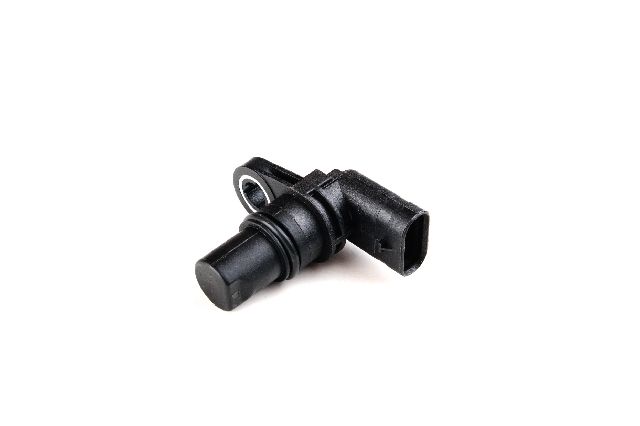
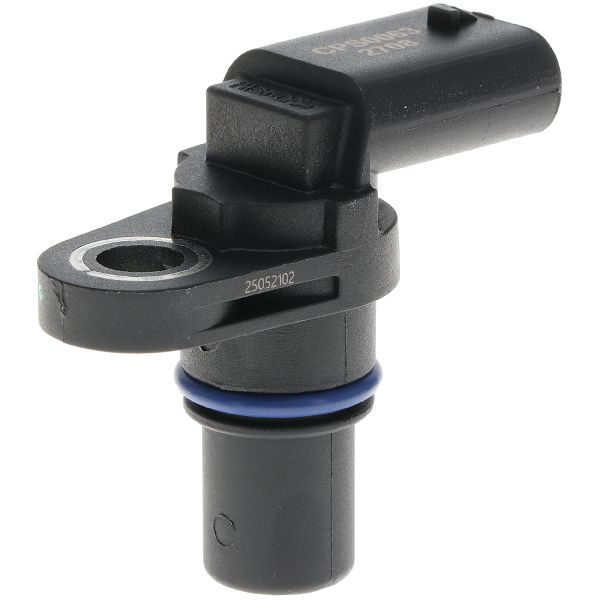
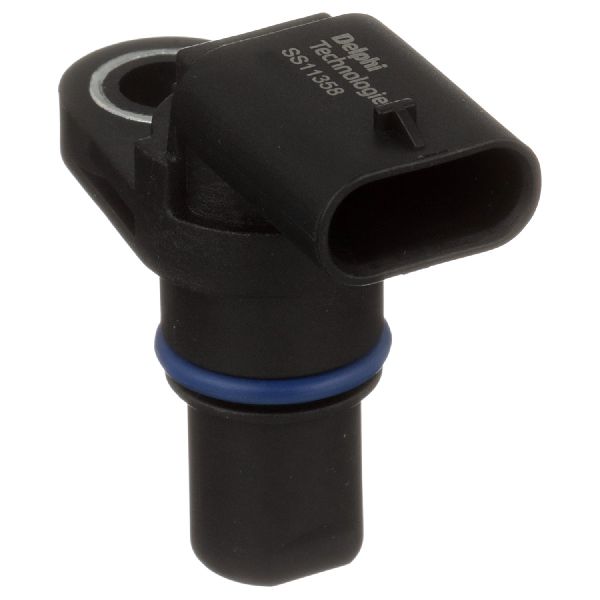
Est. part cost: $80-$150 - Faulty Camshaft Position Sensor (Bank 2 Exhaust) ⚪ Low Probability → Shop Engine Camshaft Position Sensor
How to confirm: Swap the Bank 2 exhaust camshaft sensor (G301) with the identical intake sensor on the same bank or the exhaust sensor from Bank 1. If the code changes (e.g., to P0017 for Bank 1 or P0018 for Bank 2 Intake), the sensor is faulty. The sensor is located on the rear of the driver's side cylinder head.
Typical fix: Replace the faulty camshaft position sensor. It is advisable to use an OEM or Bosch sensor.
Est. part cost: $40-$100 - Faulty Camshaft Adjuster Solenoid (Oil Control Valve) ⚪ Low Probability → Shop Engine Camshaft
How to confirm: Swap the Bank 2 exhaust solenoid with the Bank 1 exhaust solenoid. If the code follows the solenoid to the other bank (P0017), the solenoid is the cause. They can become clogged with sludge or fail electrically.
Typical fix: Replace the faulty solenoid and perform an oil change to remove any debris that may have caused the failure.
Est. part cost: $50-$120
Rare But Worth Checking
- Stretched Timing Chain: → Shop Engine Timing Chain While often occurring with bad tensioners, a chain can stretch on its own over high mileage, causing a correlation fault even if the tensioners appear functional. This is confirmed by checking camshaft phase deviation in VCDS.
- Failed Camshaft Adjuster (Phaser): → Shop Engine Camshaft The mechanical adjuster (phaser) on the end of the camshaft can fail or get stuck, preventing it from adjusting timing as commanded by the ECM. This is less common than tensioner or oil-related issues but can be tested with a VCDS-capable scan tool.
- Clogged Oil Passages / Sump Pickup: In cases of severe oil sludge or if pieces of a broken timing chain guide have fallen into the oil pan, the oil sump pickup can become clogged. This starves the engine of oil pressure, critically affecting the hydraulic tensioners and VVT system first.
Diagnosis Steps
- Check the engine oil level and condition. If low or dirty, correct this first, clear the codes, and see if the fault returns.
- Using an OBD-II scanner, confirm P0019 is the primary code. Note any other codes present.
- Listen for a rattling noise from the back of the engine during a cold start. This is a strong indicator of a timing tensioner issue.
- Inspect the wiring and connector for the Bank 2 exhaust camshaft position sensor (driver's side, rear of the cylinder head) for any damage or corrosion.
- As a diagnostic test, swap the Bank 2 exhaust camshaft position sensor with the one from Bank 1. Clear codes and run the engine. If the code changes to P0017, the sensor is bad.
- If the code remains P0019, the next step is to suspect a mechanical timing issue.
- A qualified technician should use a diagnostic tool like VCDS to check 'measuring blocks' for camshaft adaptation values (specifically, Camshaft adjustment, exhaust, bank 2, phase position). A significant deviation (typically more than -8 degrees) indicates a stretched chain or failed tensioner.
- If mechanical failure is confirmed via VCDS or by finding plastic guide material in the oil pan, the timing chains, guides, and tensioners must be replaced. This requires engine removal.
Parts You'll Likely Need
- Timing Chain Tensioner Kit
(OEM #06E109217H (Upper Tensioner Example), Full kit contains many parts)— This is the most probable cause of P0019 on the 3.0T engine, especially if accompanied by a startup rattle. A full kit includes all four chains, tensioners, and guides.
Trusted brands: Iwis, INA, Audi Genuine
OEM price range: $1000-$1800
Aftermarket price range: $600-$1200 - Camshaft Position Sensor
(OEM #06E905163C)— A possible but less likely cause. It's a relatively inexpensive part to replace as a diagnostic step.
Trusted brands: Bosch, NTK, Audi Genuine
OEM price range: $80-$120
Aftermarket price range: $40-$70 - Camshaft Adjuster Solenoid / Oil Control Valve
(OEM #06E109257P)— Can get clogged or fail, preventing proper camshaft adjustment. It's another part that is easier to replace than timing components.
Trusted brands: Audi Genuine, INA
OEM price range: $100-$150
Aftermarket price range: $50-$90
Related Codes That Often Appear With This One
- P0018 — This code is for Bank 2, Sensor 'A' (Intake Camshaft). If both intake and exhaust cams on the same bank are out of sync, it further points to a jumped or stretched primary chain for that bank.
- P0348 — This code indicates a circuit high issue for the Bank 2 camshaft position sensor. It can appear alongside P0019 if there is a wiring or sensor electrical fault.
- P0017 — Crankshaft Position - Camshaft Position Correlation Bank 1 Sensor 'B'. If this code appears after swapping sensors or solenoids from Bank 2, it confirms the swapped part was faulty.
Technical Service Bulletins (TSBs) & Recalls
- While no specific TSB for P0019 on this exact model was found, TSBs for similar engines and issues exist. For example, TSB 2045754/1 addresses a gearbox malfunction but highlights how software updates can fix certain OBD warnings. Other TSBs on related models address oil consumption and PCV issues which can contribute to the oil quality problems that cause timing faults.
Platform-Specific Known Issues
- The plastic timing chain guides are known to become brittle and break apart, with pieces falling into the oil pan, which can confirm a mechanical failure. Finding these pieces during an oil change is a definitive sign of impending doom.
- Audi TSB #2045754/10 (or similar TSBs for other models) addresses issues with gearbox malfunctions but is sometimes referenced in forums alongside engine codes, showing the complexity of vehicle diagnostics. A more relevant TSB would be related to timing chain noise or correlation faults.
Mechanic-Grade Diagnostic Values
- VCDS Camshaft Adaptation Phase Position (Intake or Exhaust) — expected: 0° to -4° on a healthy engine at warm idle.. Failure: A value approaching or exceeding -8° indicates significant timing chain stretch or tensioner failure, justifying a timing job. Some technicians consider anything beyond -5° a red flag.
- Camshaft Position Sensor (G301) Power Supply — expected: 5 volts at the connector with the ignition on.. Failure: No voltage or significantly lower voltage suggests a wiring or ECM fault, not a sensor failure.
- Camshaft Adjuster Solenoid (N319) Resistance — expected: Approximately 7-15 Ohms. One technician measured a new solenoid at 22.5 Ohms and a faulty one at 153 Ohms, though this was on a different VVT solenoid on a similar engine.. Failure: An open circuit (infinite resistance) or a reading far outside the typical range indicates a failed solenoid coil.
Scan Tool Commands That Help
- VCDS (VAG-COM): [01-Engine] -> [Basic Settings] -> Camshaft Adjuster Output Test — This function can be used to command the camshaft adjuster solenoid (N319 for Bank 2 Exhaust) to actuate. A technician can listen for an audible 'click' from the solenoid, which helps confirm if it is mechanically stuck or electrically dead, potentially avoiding a misdiagnosis of a larger timing issue.
- VCDS (VAG-COM): [01-Engine] -> [Adaptation - 10] -> Code new injectors — While not directly for P0019, if any work requires removing fuel injectors, their specific calibration codes must be re-entered into the ECM for the correct cylinder. This is a critical step often missed during reassembly after major engine work like a timing job.
Wiring & Ground Locations
- Engine Block Ground Strap — Typically runs from the engine block (often near the starter motor or an engine mount) to a point on the chassis frame rail.. A poor engine ground can cause erratic sensor readings and phantom electrical faults. The camshaft and crankshaft position sensors rely on a stable ground reference. Verifying this connection is clean and tight is a crucial early electrical check.
- G301 Sensor Connector — On the rear of the driver's side (Bank 2) cylinder head. The connector has three pins.. This is the direct connection to the sensor in question. Pin 1 is typically the 5V reference, Pin 2 is the signal, and Pin 3 is the ground. Testing for 5V between Pin 1 and Pin 3 is the primary electrical check for the sensor circuit.
- Right Engine Compartment Ground Lug — On the frame rail in the engine compartment, often near the alternator or passenger-side headlight.. This is a primary chassis grounding point for multiple engine components and sensors. Corrosion or looseness here can cause widespread, hard-to-diagnose electrical issues.
Real Owner Repair Stories
- AudiWorld Forums User 'Catamount90' (Audi A6 3.2L (similar V6 architecture)) — Camshaft position implausible signal DTC. VCDS showed specified cam adjustment at 0 degrees, but actual was 10 degrees.
❌ Tried (didn't work) Initial diagnosis pointed towards a major mechanical timing job.
✅ What actually fixed it The user identified a TSB for jammed camshaft adjustment solenoids due to contamination. Instead of replacing it, they created test leads and applied 12V directly to the solenoid pins, reversing polarity multiple times. This 'electroshock therapy' successfully unstuck the solenoid, resolving the fault without major disassembly. - Reddit user '_bakedziti' (2013-2014 Audi S4 3.0T (B8.5), ~102k miles) — No specific codes mentioned, but performed a preventative timing chain overhaul.
✅ What actually fixed it The user opted for a full preventative timing chain service while the engine was out for a clutch replacement. A key detail from the mechanic was that it is possible, though difficult, to change the timing components without fully removing the engine by dropping the subframe and using an engine support bar.
OEM Part Supersession History
06E109217AH (and earlier AB/AD versions)→06E109217AM— Updated design to improve longevity and prevent premature failure of the tensioning mechanism for the driver's side (Bank 2) upper timing chain.06E109218AJ (and earlier AC version)→06E109218AP— Updated design for the passenger side (Bank 1) upper timing chain tensioner.
Model Year Variations Within This Range
- 2015-2017 (CREC Engine): The later CREC engine has different part numbers for the camshaft adjusters (phasers) and some timing components compared to the earlier CGXB engine. For example, CREC engines may use camshaft adjusters like 06E109083P and 06E109084N. While the fundamental cause of P0019 (timing correlation) is the same, a technician must ensure they order parts specific to the CREC engine code.
- 2012-2013 (CGXB Engine): Early B8.5/C7 platform cars with the 3.0T are considered by some mechanics to be more prone to timing chain issues than later 2013+ models which received updated tensioner parts from the factory.
Diagnostic Flowchart
Other Known Issues on This Vehicle
Issues unrelated to this code that are worth knowing about as an owner of this generation:
- Water Pump & Thermostat Failure 🔴 High → Shop Engine Water Pump — Common, especially on pre-2013 models, but can occur at any mileage. Failure can cause overheating or coolant leaks. (Ref: Class action lawsuits have been filed regarding this issue on various Audi models with 3.0T engines.)
- PCV Valve Failure 🟠 Medium — Commonly fails between 60,000-80,000 miles. The diaphragm tears, causing high crankcase pressure, oil leaks, and a whistling noise. (Ref: A TSB exists for the related B9 platform (TSB: MC-10175308-0001) for a similar failure mode.)
- Intake Valve Carbon Buildup 🟠 Medium — A common issue on all direct-injection engines. More prevalent on pre-CREC (CGXB) engines. The CREC's dual-injection system helps mitigate this. Typically requires cleaning every 60k-80k miles to prevent misfires and loss of power.
- Leaking Upper Timing Chain Cover Gaskets 🟡 Low → Shop Engine Timing Chain — The gaskets for the upper timing chain covers (accessible without engine removal) can leak oil onto the exhaust manifolds. This is a common oil leak point.
- Active Engine Mount Failure 🟠 Medium — The fluid-filled active engine mounts can leak, causing a fault code and potentially vibrations. It's a known issue on the C7 platform.
Used vs. New Parts: Buying Guide for This Vehicle
When a used part is the smart pick: For this specific repair, using used parts is highly discouraged for any internal timing components like chains, tensioners, guides, or adjusters. The only scenario where a used part might be considered is for an external component like a camshaft position sensor or a wiring harness connector if a new one is unavailable.
Donor-vehicle mileage cap: roughly under 50000 miles for the part to have meaningful remaining life.
What to inspect on the donor part:
- For a sensor, ensure the connector is not cracked and the pins are not corroded.
- Avoid any parts from a vehicle that shows signs of oil sludge in the filler cap or has a known history of engine failure.
OEM-only on this vehicle (don't cheap out):
- Timing Chain Tensioners
- Timing Chains
- Timing Chain Guides
- Camshaft Adjusters (Phasers)
Aftermarket brands forum-validated for this vehicle:
- Iwis (often the OEM supplier for chains)
- INA (often the OEM supplier for tensioners and bearings)
- Bosch (for sensors)
- Elring (for gaskets)
Brands owners have reported issues with on this vehicle:
- No-name, unbranded timing kits sold on marketplaces like eBay or Amazon. These often use inferior materials for the plastic guides, which can fail much faster than OEM components.
Helpful Videos

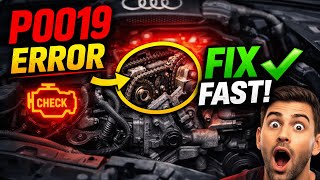
![3.0 T AUDI TFSI ENGINE TIMING CHAIN RATTLE (NOISE) COLD Start .... [PART 1] #audi #automotive #a7](https://img.youtube.com/vi/MlMCHpJmELo/mqdefault.jpg)
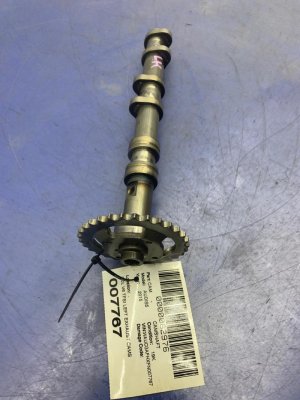
Used OEM Parts in Stock
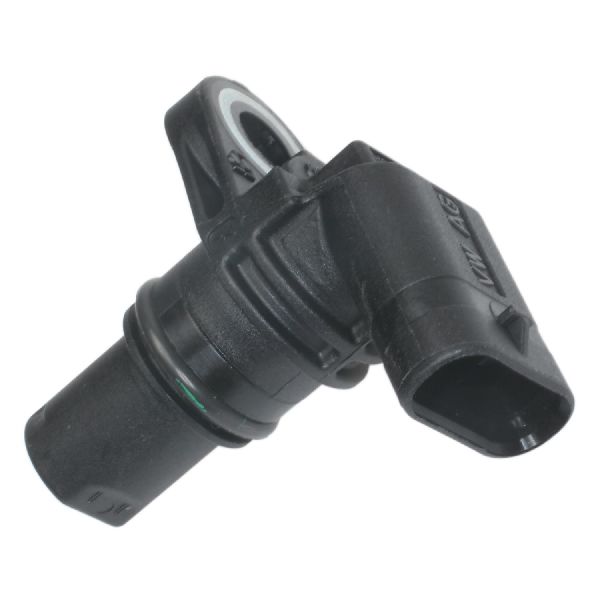
New Aftermarket Parts Available


The information in this article is provided for general reference and educational purposes only. Vehicle specifications, procedures, and part compatibility can vary by production date, trim level, and region. Always consult your vehicle's factory service manual and verify part numbers before purchasing or performing repairs. Safety-critical components such as airbags, seat belts, and braking systems should be installed by a qualified professional.
- Audi A7:
- 🧭 Diagnostic Flowchart
- 🎬 Helpful Videos
- 🛍️ Shop This Part
- What's Unique About the 2012-2017 Audi A7
- Symptoms You May Notice
- Most Likely Causes
- Rare But Worth Checking
- Diagnosis Steps
- Parts You'll Likely Need
- Related Codes That Often Appear With This One
- Technical Service Bulletins (TSBs) & Recalls
- Platform-Specific Known Issues
- Mechanic-Grade Diagnostic Values
- Scan Tool Commands That Help
- Wiring & Ground Locations
- Real Owner Repair Stories
- OEM Part Supersession History
- Model Year Variations Within This Range
- Other Known Issues on This Vehicle
- Used vs. New Parts: Buying Guide for This Vehicle
- 🎟️ Get 5% Off