

P0019 on 2008-2012 Audi S5 4.2L V8: Causes for Cam/Crank Correlation Error
P0019 on the Audi S5 4.2L V8 most often points to a problem with the timing chain system, indicated by a metallic rattle on cold starts. While it could be a simple camshaft adjuster solenoid (~$100), it is frequently a symptom of failing timing chain guides and tensioners, a major repair costing $5,000-$10,000+ that requires engine removal. Dirty oil is a major contributor to the failure of these hydraulic components.
- P0019 on this car is a serious code that should not be ignored.
- A metallic rattle from the engine on cold starts is the key symptom of the most common and most severe cause: timing chain system failure.
- Before committing to a major repair, always check the oil and perform simple diagnostic swaps of the Bank 2 exhaust camshaft position sensor and VVT solenoid.
- Due to the engine-out nature of the timing chain repair, the cost can easily exceed the value of the vehicle. Get a firm diagnosis and quote before proceeding.
- Using the correct, high-quality engine oil and adhering to regular change intervals is the best preventative measure against VVT and timing system issues.
What's Unique About the 2008-2012 Audi S5
The 4.2L FSI V8 engine (engine code: CAUA) in the S5 is infamous for issues related to its complex timing chain system, which is located at the rear of the engine against the firewall. The plastic timing chain guides can become brittle and break, and the hydraulic tensioners can fail. This leads to chain slack, causing a correlation fault like P0019. While many forum users and sources state the S5's 'CAUA' engine has improved guides and is more robust than the earlier 'BHF' V8 found in the B6/B7 S4, the startup rattle and potential for timing component failure remain a well-documented and extremely expensive problem. The repair is an engine-out job.
Symptoms You May Notice
- Check Engine Light is on.
- Loud metallic rattling or chattering noise from the back of the engine for 1-3 seconds on a cold start. This is the classic sign of failing tensioners.
- Rough, unstable, or hunting idle.
- Engine hesitation or stumbling on acceleration.
- Noticeable loss of engine power.
- Reduced fuel economy.
- In severe cases, the engine may stall, be hard to start, or enter limp mode.
- Replacing only the camshaft or crankshaft position sensors without investigating the timing system. The sensors are often reporting a real mechanical problem, they are not the cause themselves.
- Attributing the cold start rattle to a minor issue. On this engine, it is the primary warning sign of impending, expensive timing system failure and should be taken very seriously.
Most Likely Causes
- Worn/Failed Timing Chain Guides and Tensioners 🔴 High Probability → Shop Engine Timing Chain The 4.2L FSI V8 uses four timing chains with plastic guides that become brittle with heat cycles and age. The hydraulic tensioners, which rely on oil pressure, can fail or weaken, causing chain slack, especially on startup. While considered more reliable than the B6/B7 S4's V8, this failure is still a known, high-cost issue for the S5.
How to confirm: A persistent rattling noise on cold starts is the primary symptom. A definitive diagnosis requires checking camshaft adaptation values with a diagnostic tool (like VCDS) in measuring block 93. Values deviating beyond +/- 9 degrees strongly suggest a timing issue. Physical inspection requires engine removal.
Typical fix: Complete replacement of all four timing chains, all plastic guides, and all hydraulic tensioners. This is a very labor-intensive job often costing over $8,000.
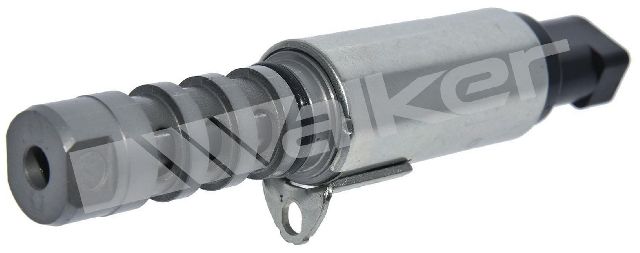
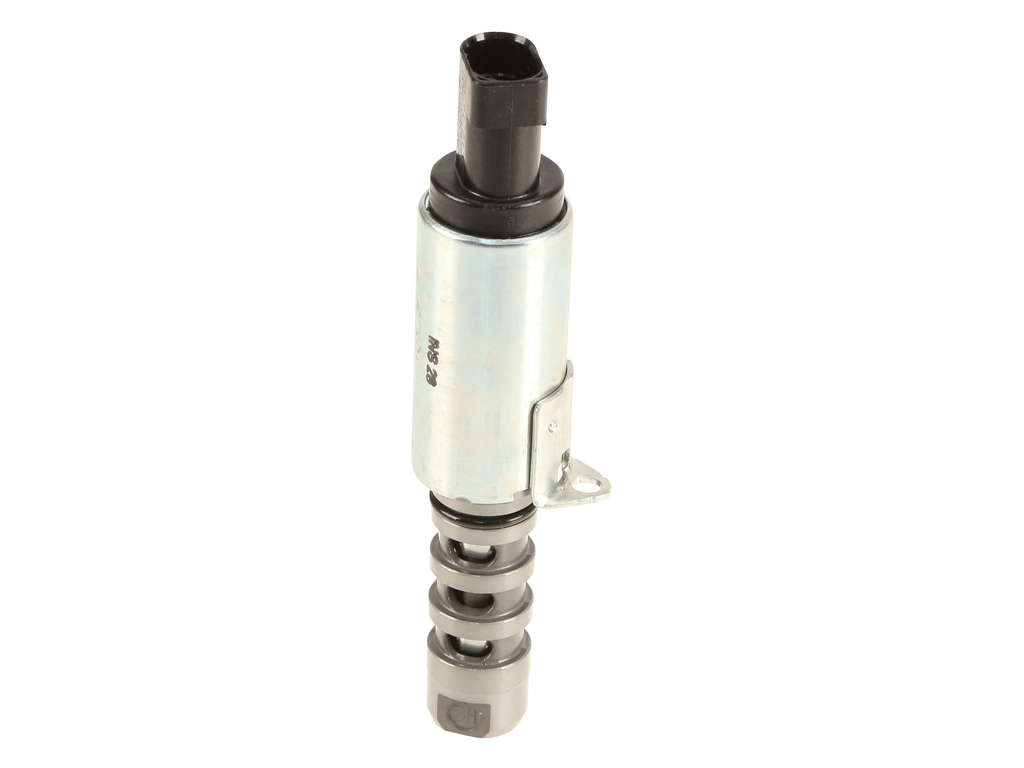
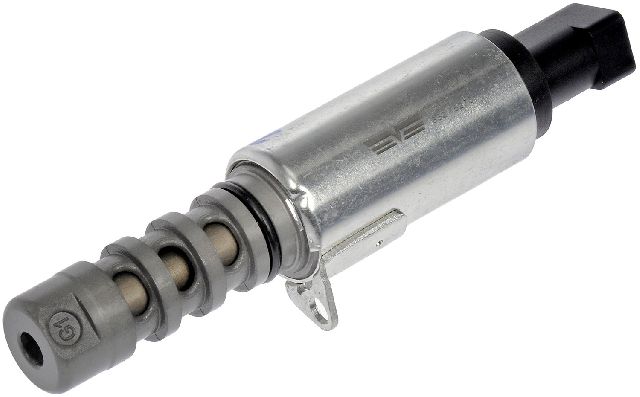
Est. part cost: $800-$1500 for a full kit - Failed Camshaft Adjuster Solenoid (VVT Solenoid) 🟡 Medium Probability → Shop Engine Camshaft These solenoids, also called 'camshaft adjuster magnets', control oil flow to the camshaft phasers. They can become clogged with oil sludge or fail electronically, preventing the exhaust cam from adjusting its timing correctly. Dirty oil is a primary cause of failure.
How to confirm: Swap the Bank 2 exhaust solenoid with the Bank 1 exhaust solenoid (they are identical). Clear the codes and run the engine. If the code changes to P0017 (Bank 1, Sensor B), the solenoid is faulty. A user on AudiWorld forums reported this exact fix was successful.
Typical fix: Replace the faulty solenoid. It is highly recommended to also perform an oil and filter change. Given they are the same age, some owners replace them in pairs or all four at once.
Est. part cost: $50-$180 - Low or Dirty Engine Oil 🟡 Medium Probability The entire variable valve timing system, including the chain tensioners and camshaft adjusters, is hydraulically operated. Low oil level, incorrect viscosity (must use VW 502.00 spec), or dirty/sludgy oil can impede their function and cause timing correlation codes.
How to confirm: Check the oil level via the dipstick and MMI. Inspect the oil's condition and service history. Low or dark, sludgy oil is a major red flag. This should always be the first check.
Typical fix: Perform an engine oil and filter change using a high-quality, manufacturer-specified oil (e.g., VW 502.00). Clear codes and see if the fault returns.
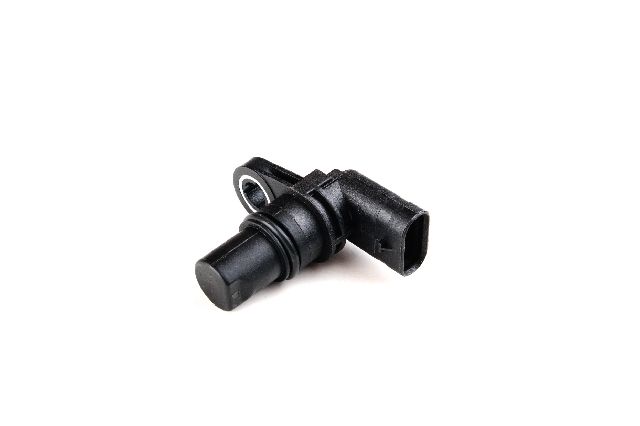
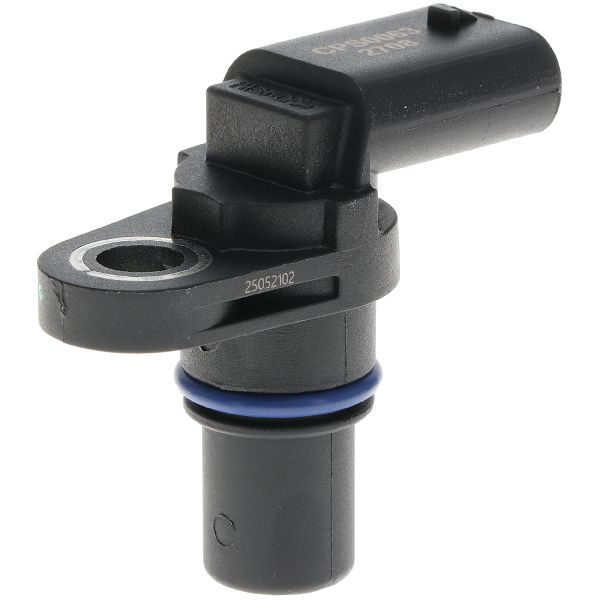
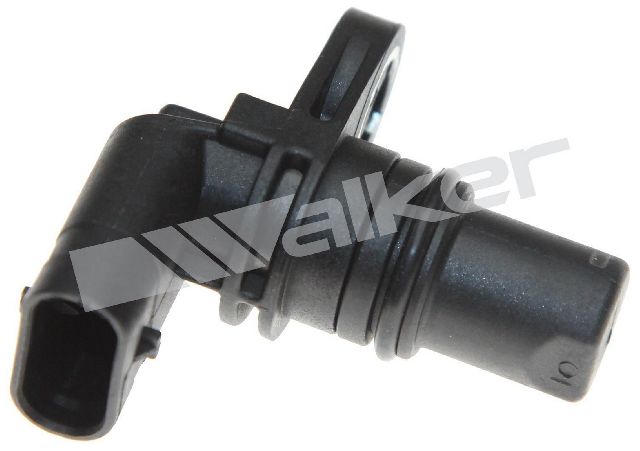
Est. part cost: $80-$150 - Failed Camshaft Position Sensor ⚪ Low Probability → Shop Engine Camshaft Position Sensor
How to confirm: Swap the Bank 2 exhaust camshaft position sensor (Sensor 'B') with the identical sensor from Bank 1. Clear codes and run the engine. If the fault moves to Bank 1 and throws code P0017, the sensor is bad.
Typical fix: Replace the faulty camshaft position sensor. Ensure the o-ring is also replaced and that the old one did not fall into the engine.
Est. part cost: $40-$100
Rare But Worth Checking
- Failed Camshaft Adjuster (Phaser): → Shop Engine Camshaft While less common than solenoid or chain failure, the mechanical gear (phaser) on the end of the camshaft can fail internally, getting stuck in one position. This is a more involved repair than a solenoid.
- Wiring or Connector Issue: Damage to the wiring harness or a poor connection at the camshaft position sensor or VVT solenoid can cause an intermittent signal and trigger this code. Check for corrosion or loose pins at the connectors.
- Clogged Oil Passages / Sludge: Severe oil sludge can block the small oil passages leading to the tensioners or camshaft adjusters, starving them of the hydraulic pressure needed to operate correctly, even if the oil level is full.
Diagnosis Steps
- Check Engine Oil: Verify the oil level is correct and the oil is clean and of the correct VW 502.00 specification. If low or overdue for a change, correct this first, clear the code, and see if it returns. This is the simplest and first step.
- Scan Tool Analysis: Use an Audi-specific scan tool (like VCDS) to read fault codes and check live data. Specifically, monitor 'Measuring Value Block 093' for camshaft adaptation phase position. A value deviating more than -8° or -9° at warm idle strongly indicates a significant timing deviation from stretched chains or failed tensioners.
- Listen for Noise: Pay close attention to any rattling or metallic chatter from the rear of the engine during a cold start. A 1-3 second rattle strongly points to failing timing chain tensioners losing hydraulic pressure.
- Swap the Camshaft Adjuster Solenoid: Locate the exhaust camshaft adjuster solenoid on Bank 2 (driver's side). Swap it with the exhaust solenoid from Bank 1 (passenger's side). They are held by one Torx bolt. Clear codes and drive. If the code returns as P0017, the solenoid is the culprit.
- Swap the Camshaft Position Sensor: If the solenoid swap has no effect, perform the same test with the camshaft position sensor, swapping the Bank 2 exhaust sensor with the Bank 1 exhaust sensor. If the code changes to P0017, replace the sensor.
- Mechanical Inspection: If all the above steps fail to resolve the issue, the cause is almost certainly a mechanical problem with the timing chains, guides, or tensioners. This requires engine removal for a full inspection and repair.
Parts You'll Likely Need
- Timing Chain Kit — This is the most probable, albeit most expensive, fix. A complete kit should be used to address worn guides, tensioners, and stretched chains all at once. Kits often include chains, guides, tensioners, and necessary gaskets.
Trusted brands: Iwis (OEM Chain Manufacturer), Febi Bilstein, INA, Europa Parts (Kit), UroTuning (Kit)
OEM price range: $1200-$2000
Aftermarket price range: $800-$1500 - Camshaft Adjuster Solenoid / VVT Solenoid
(OEM #06E109257P)— A common and relatively simple cause of incorrect cam phasing. It's a frequent point of failure due to oil contamination and is easily accessible on the front of the engine.
Trusted brands: Pierburg (OEM Supplier), Bosch, WSO, Dorman
OEM price range: $120-$180
Aftermarket price range: $50-$100
Related Codes That Often Appear With This One
- P0017 — Crankshaft Position - Camshaft Position Correlation Bank 1 Sensor B. If you swap a suspected bad sensor or solenoid from Bank 2 to Bank 1 for diagnosis, this code will appear, confirming the faulty component.
- P0300, P0305, P0306, P0307, P0308 — Random or specific misfire codes for Bank 2 (cylinders 5, 6, 7, 8). Incorrect camshaft timing can lead to poor combustion and misfires on the affected bank. Carbon buildup can also cause these misfires.
- P0018 — Crankshaft Position - Camshaft Position Correlation Bank 2 Sensor A. This code points to the intake camshaft on the same bank (Bank 2). It's possible to see both codes if there is a significant timing issue affecting the entire bank.
Technical Service Bulletins (TSBs) & Recalls
- A user on AudiWorld mentioned a TSB related to an 'inherent fault with the short engine of the 4.2' that led to a warranty repair for timing chain rattle, but the specific TSB number was not provided in the thread. General searches show TSBs like 2028204 / 15-12-02 exist for timing chain issues on other VAG engines, but a publicly available, specific TSB for the S5's P0019 was not found.
Platform-Specific Known Issues
- The timing chain system is located at the rear of the engine, which necessitates engine and transmission removal for a full service, dramatically increasing labor costs compared to engines with front-mounted timing components.
- Audi issued Technical Service Bulletin (TSB) 15-15-26 (2039995/1) for a rattling noise on cold starts, acknowledging an issue with the upper chain tensioners and providing updated part numbers for a fix.
Mechanic-Grade Diagnostic Values
- Camshaft Adaptation Phase Position (VCDS Measuring Block 93) — expected: The sum of intake and exhaust values for each bank should be close to 0 degrees. A tolerance up to +/- 6 degrees is often cited, but values approaching or exceeding +/- 8 degrees indicate a problem.. Failure: A total deviation for either bank exceeding +/- 8 or 9 degrees strongly suggests stretched timing chains or failing tensioners.
- Camshaft Adjuster Solenoid (VVT Solenoid) Resistance — expected: Between 6.9 and 8.3 ohms.. Failure: A reading significantly outside this range, or an open/short circuit, indicates a failed solenoid coil.
- Camshaft Position Sensor (Hall Effect) Voltage Check — expected: The sensor receives a supply voltage from the ECU and pulls a signal line to ground. An oscilloscope is required to view the square wave signal while the engine is running.. Failure: A missing or erratic square wave signal, or a signal that does not pull to ground, indicates a faulty sensor, especially if the failure is heat-related (occurs only when the engine is warm).
Scan Tool Commands That Help
- VCDS (VAG-COM): Engine -> Basic Settings -> Camshaft adjuster test (e.g., Group 094 or selectable from a list on UDS modules) — This function allows for actively testing the camshaft adjusters. It can help determine if the adjuster mechanism (phaser) or the control solenoid is responding to commands from the ECU, which is useful for differentiating between a hydraulic/mechanical issue and an electrical one.
Wiring & Ground Locations
- Engine Block Ground Strap — A primary ground strap typically connects from the engine block or cylinder head to the vehicle's chassis/firewall to provide a return path for the starter, alternator, and ignition system.. A poor engine ground can cause erratic behavior in sensors that rely on a stable ground reference, including the camshaft and crankshaft position sensors. This can lead to implausible signal faults and correlation codes.
- Ground Connection 600 — On the right cylinder head for some V8 FSI engines.. This is a specific ground point for components on the cylinder head. If Bank 2 (driver's side in the US) is the right side of the engine from a forward-facing perspective, this ground could be critical for the Bank 2 sensors.
Real Owner Repair Stories
- 2CarPros Forum User (2009 Audi Q5 3.2L V6 (similar FSI V-engine architecture)) — P0018 and P0019 codes appeared after a timing chain replacement was performed to fix the same codes.
❌ Tried (didn't work) Verified mechanical timing was correct with locking tools., Performed a leak-down test, which passed., Checked wiring to the ECM for resistance or shorts., Verified 5V reference and ground at the sensors.
✅ What actually fixed it The issue was partially resolved by swapping cam sensors from bank to bank. The P0018/P0019 codes disappeared and were replaced by a P0017 code, indicating the fault moved with the sensor. However, replacing the suspect sensor did not fully resolve the remaining P0017, suggesting a complex issue, potentially involving aftermarket part quality or multiple failure points. - AudiWorld Forum User (2008 Audi S5 4.2L V8) — Check Engine Light with codes P0018 and P0019.
❌ Tried (didn't work) Clearing codes.
✅ What actually fixed it The user swapped the camshaft position sensors and actuators (solenoids) between Bank 1 and Bank 2. The fault did not move, which led them to conclude the issue was likely mechanical (timing chains/guides/tensioners), not a simple sensor or solenoid failure.
When the Usual Fixes Don't Work
- In one documented case on a similar FSI engine, a user replaced the timing chains and tensioners to fix P0018/P0019, but the codes immediately returned. Despite verifying the mechanical timing was perfect, the codes persisted. Swapping sensors moved the fault, but new sensors did not fix it, pointing to the possibility of issues with aftermarket part quality, subtle wiring problems, or a faulty camshaft phaser that was not replaced during the timing job. This highlights that even the 'most common fix' is not guaranteed to solve the problem if other underlying issues exist.
OEM Part Supersession History
06E109257J→06E109257P— Part revision by the manufacturer, likely for improved reliability or material changes.
Diagnostic Flowchart
Other Known Issues on This Vehicle
Issues unrelated to this code that are worth knowing about as an owner of this generation:
- Intake Valve Carbon Buildup 🔴 High — Very common. Performance degradation is often noticeable by 60,000 miles. Requires cleaning every 40k-80k miles.
- Thermostat Failure 🟠 Medium — A relatively common failure item. Can occur at various mileages.
- Cracked Coolant Expansion Tank 🟡 Low — Common point for coolant leaks as the plastic ages.
- Control Arm Bushing Wear 🟠 Medium — Common wear item, especially on higher mileage cars or those driven on rough roads.
- Oil Leaks (Oil Cooler, Filter Housing) 🟠 Medium — Fairly common as the vehicle ages and gaskets harden.
Used vs. New Parts: Buying Guide for This Vehicle
When a used part is the smart pick: Used parts are generally not recommended for this repair due to the nature of the failures. However, a used Camshaft Position Sensor or VVT Solenoid could be a cost-effective diagnostic tool if you pull it yourself from a known-running, low-mileage donor car to test if the fault follows the part.
Donor-vehicle mileage cap: roughly under 80000 miles for the part to have meaningful remaining life.
What to inspect on the donor part:
- For solenoids, inspect the screen for any metallic debris or sludge, which indicates poor health of the donor engine.
- Check sensor and solenoid connectors for corrosion, cracks, or brittle wiring.
- Ask for the VIN of the donor car to verify it did not have existing timing-related fault codes.
OEM-only on this vehicle (don't cheap out):
- Timing Chain Kit (Chains, Guides, Tensioners): This is a high-labor, engine-out job. The risk of premature failure with unverified aftermarket kits is too high. Using OEM (like Iwis, INA) or a reputable all-in-one kit from a trusted VW/Audi specialist is critical.
- Camshaft Adjusters (Phasers): If these mechanical units are faulty, OEM is the safest choice to ensure correct operation and longevity.
Aftermarket brands forum-validated for this vehicle:
- Iwis (Often the OEM supplier for chains)
- INA (OEM supplier for tensioners and guides)
- Pierburg (OEM supplier for solenoids)
- Bosch (Sensors and solenoids)
- Vaico (Noted for having a strong reputation for European engine parts)
Brands owners have reported issues with on this vehicle:
- Unbranded, low-cost timing chain kits from online marketplaces. Forum discussions frequently warn against using no-name kits for this critical, high-labor repair, as guide or tensioner failure can lead to catastrophic engine damage.
Real Owner Stories
Aggregated from forums and TSBs cited above. Mileages and costs reflect what owners reported in those sources.
2008-2012 Audi S5 4.2L V8
Symptoms: A user reported a successful fix for timing-related issues by focusing on the camshaft adjuster magnets (solenoids) which control oil flow to the phasers.
What fixed it: Swapping the Bank 2 exhaust solenoid with the Bank 1 exhaust solenoid to confirm the fault moved, then replacing the faulty solenoid.
Source hint: AudiWorld forums
2008-2012 Audi S5 4.2L V8
Symptoms: Rattling noise on cold starts.
What fixed it: Warranty repair for timing chain rattle involving the 'short engine' components.
Source hint: AudiWorld forum thread mentioned in TSBs cited section
Related OBD-II Codes
Frequently Asked Questions
Is there an Audi TSB for the rattling noise I hear on cold starts in my S5?
How can I use VCDS to check if my 4.2L FSI timing chains are stretched?
Can I fix the P0019 code on my S5 by just swapping parts between engine banks?
What specific oil should I be using to prevent VVT and timing issues in the 4.2L V8?
Why is the labor cost so high for timing chain repairs on the 2008-2012 S5?
Is the 4.2L FSI engine in the S5 more or less reliable than the older B6/B7 S4 V8?
Helpful Videos
![How to Fix AUDI P0019 Engine Code in 6 Minutes [4 DIY Methods / Only $6.81]](https://img.youtube.com/vi/xwxFHK3Ho84/mqdefault.jpg)
Used OEM Parts in Stock
New Aftermarket Parts Available

The information in this article is provided for general reference and educational purposes only. Vehicle specifications, procedures, and part compatibility can vary by production date, trim level, and region. Always consult your vehicle's factory service manual and verify part numbers before purchasing or performing repairs. Safety-critical components such as airbags, seat belts, and braking systems should be installed by a qualified professional.
- Audi S5:
- 🧭 Diagnostic Flowchart
- 🎬 Helpful Videos
- 🛍️ Shop This Part
- What's Unique About the 2008-2012 Audi S5
- Symptoms You May Notice
- Most Likely Causes
- Rare But Worth Checking
- Diagnosis Steps
- Parts You'll Likely Need
- Related Codes That Often Appear With This One
- Technical Service Bulletins (TSBs) & Recalls
- Platform-Specific Known Issues
- Mechanic-Grade Diagnostic Values
- Scan Tool Commands That Help
- Wiring & Ground Locations
- Real Owner Repair Stories
- When the Usual Fixes Don't Work
- OEM Part Supersession History
- Other Known Issues on This Vehicle
- Used vs. New Parts: Buying Guide for This Vehicle
- Real Owner Stories
- 2008-2012 Audi S5 4.2L V8
- 2008-2012 Audi S5 4.2L V8
- Related OBD-II Codes
- Frequently Asked Questions
- 🎟️ Get 5% Off