

P0019 on 2012-2018 Audi S6 4.0T: Exhaust Cam Timing Fault Causes and Fixes
On the Audi S6 4.0T, P0019 is most often caused by oil flow issues affecting the variable valve timing (VVT) system. The primary suspect is a clogged turbocharger oil strainer, a known issue with a safety recall (21H7). A faulty camshaft adjuster solenoid on Bank 2 is the next most likely cause, often due to debris from the same oiling issues.
- P0019 on your S6 is a serious code that points to a timing discrepancy on the driver's side exhaust camshaft.
- The most likely cause is a known design flaw: a clogged turbo oil strainer starving the engine's variable valve timing system of oil. Check if Safety Recall 21H7 has been performed.
- A faulty VVT solenoid (camshaft adjuster magnet) is the second most common cause and is much easier to replace than internal timing components.
- Do not immediately assume the timing chain has failed. Due to the 4.0T's specific issues, oil pressure problems and faulty solenoids should be ruled out first.
- Continued driving with this fault is risky and can lead to reduced performance, stalling, and potentially severe engine damage.
What's Unique About the 2012-2018 Audi S6
The Audi 4.0L TFSI V8 is a 'hot-V' engine, with its turbochargers nestled between the cylinder banks. To protect the turbos, Audi placed a small oil strainer (screen) in the oil supply line deep within the engine valley. This strainer is notoriously prone to clogging with oil and carbon deposits, which restricts oil flow. While the primary concern of this design flaw is catastrophic turbocharger failure, the Variable Valve Timing (VVT) system also relies on clean, pressurized oil to function. A clogged strainer can starve the camshaft adjusters (phasers) of oil, leading directly to correlation faults like P0019.
Symptoms You May Notice
- Check Engine Light or EPC (Electronic Power Control) light is on
- Rough or unstable idle
- Hesitation or lack of power during acceleration
- Reduced fuel economy
- Engine may stall, especially at low speeds
- Extended cranking before the engine starts
- Unusual engine noise if timing components are damaged or rattling
- Replacing the camshaft position sensor first. The sensor is often just reporting the fault accurately. The root cause is more likely the hydraulic actuator (solenoid) or the oil pressure feeding it.
- Replacing the crankshaft position sensor. A failure of this sensor would typically cause more widespread issues, different fault codes, and potentially a no-start condition.
Most Likely Causes
- Clogged Turbocharger Oil Strainer 🔴 High Probability This is a well-documented design flaw in the 4.0T engine. A safety recall (NHTSA ID: 22V178000, Audi Code: 21H7) was issued because the screen can get blocked, restricting oil flow to the turbos and VVT system. This affects 2013-2017 models specifically.
How to confirm: Check with an Audi dealer using your VIN to see if recall 21H7 has been performed. A technician can also measure oil pressure to confirm a restriction. Visual inspection requires 8-12 hours of labor to access the part in the engine's 'hot V'.
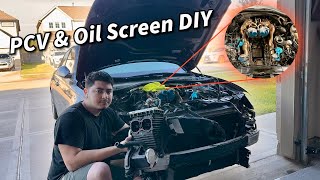
Typical fix: The recall procedure involves replacing the original oil strainer with an updated, less restrictive part (079115175G), along with associated seals and check valves, and performing an oil change. Some owners opt for an aftermarket oil line relocation kit from brands like JHM or SRM that moves the filter to a more easily serviceable location. 🎬 Watch: How to install the JHM oil line relocation kit
Est. part cost: $60-$90 for the OEM strainer and seals. Aftermarket relocation kits cost $400-$700. - Faulty Camshaft Adjuster Magnet (VVT Solenoid) 🟡 Medium Probability → Shop Engine Camshaft The solenoids that control oil flow to the cam phasers can become clogged with debris, especially if the main oil strainer issue is present, or they can fail electrically. Forum users report the small screens on these solenoids can blow out or get clogged, causing timing deviation codes.
How to confirm: A mechanic can use a diagnostic tool (like VCDS) to command the solenoid to activate and watch for a change in camshaft angle. The solenoid can also be removed and tested for resistance (typically 6.9-7.9 ohms). A common diagnostic step is swapping the Bank 2 exhaust solenoid with the Bank 2 intake solenoid; if the code changes to P0018 (Bank 2 Intake), the solenoid is confirmed as the fault.
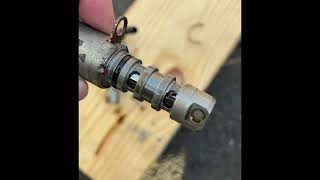
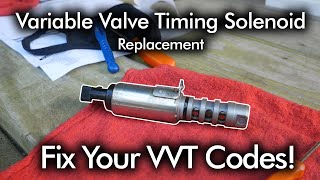
Typical fix: Replace the Bank 2 exhaust camshaft adjuster magnet. It is held in by a single bolt and is accessible on the front of the driver's side cylinder head after removing some covers. 🎬 See this walkthrough for replacing the VVT solenoid
Est. part cost: $50-$150 for an aftermarket solenoid (e.g., Bosch), $150-$250 for a Genuine Audi part. - Low or Dirty Engine Oil 🟡 Medium Probability The entire VVT system is critically dependent on oil pressure and cleanliness. Given the engine's sensitivity to oil contamination due to the strainer design, running on low or old, degraded oil significantly increases the risk of VVT-related codes like P0019.
How to confirm: Check the engine oil level using the MMI system (this engine does not have a physical dipstick). Check vehicle service records for the last oil change interval; intervals should not exceed 10,000 miles, with many owners recommending 5,000-7,500 miles due to the oiling system's sensitivity.
Typical fix: Perform an oil and filter change using a high-quality, Audi-approved synthetic oil (e.g., VW 502 00 or 504 00 spec).
Est. part cost: $80-$150 for oil and a filter.
Rare But Worth Checking
- Stretched Timing Chain or Failed Tensioner/Guides: → Shop Engine Timing Chain While not as common as oil-related issues on the 4.0T, mechanical timing failure is a possible cause for this code, especially on higher mileage (70k-90k+ miles) engines. It is a very expensive, engine-out repair. A distinct rattling noise from the rear of the engine on cold startup is a key symptom.
- Faulty Camshaft Position Sensor: → Shop Engine Camshaft Position Sensor It's possible for the sensor itself to fail, but it's less likely than a hydraulic or mechanical issue. The sensor's job is to report the position, and a correlation fault usually means the position is actually wrong, not that the report is bad. If other sensor-specific codes are present, the likelihood increases.
Diagnosis Steps
- Check Engine Oil Level & Condition: Use the MMI to ensure the oil is full and check service history for its age. If low, top it off. If old or dirty, perform an oil and filter change with VW 502/504 spec oil.
- Verify Recall Status: This is a critical step. Contact an Audi dealer with your VIN to determine if Safety Recall 21H7 (clogged oil strainer) is open or has been performed. This is the most common root cause.
- Scan Tool Analysis: Use an advanced scan tool (VCDS, ODIS) to monitor the 'specified' vs. 'actual' camshaft angle for Bank 2 Exhaust in the measuring blocks. A significant, persistent deviation confirms the fault in real-time.
- Test the VVT Solenoid: Use the scan tool's output tests to command the Bank 2 exhaust solenoid (N319) on and off. If the cam angle does not change, the solenoid is suspect. Consider swapping it with the intake solenoid (N318) on the same bank to see if the fault code follows (moves to P0018).
- Inspect Solenoid and Oil Passages: Remove the solenoid. Inspect its internal screens for debris or tears—a common failure point. Clean the solenoid and its mounting bore before reinstalling or replacing.
- Test the Camshaft Position Sensor: If the solenoid is confirmed to be working, the sensor's wiring and signal can be tested with a multimeter and oscilloscope. Check for a clean, consistent square wave signal as the engine runs.
- Mechanical Timing Inspection: If all hydraulic and electrical checks pass, a mechanical timing inspection is required. This is an intensive, engine-out job to check for timing chain stretch, guide wear, or a failed tensioner. This should be the last resort.
Parts You'll Likely Need
- Turbocharger Oil Strainer
(OEM #079115175G)— This is the updated part replaced under the 21H7 recall and is the most likely root cause of oil pressure-related VVT faults on the 4.0T engine.
Trusted brands: Genuine Audi
OEM price range: $60-$90
Aftermarket price range: N/A - Camshaft Adjuster Magnet (VVT Solenoid)
(OEM #06E109257T)— This solenoid controls oil flow to the cam phaser. It can become clogged or fail electrically, preventing proper cam adjustment. Verify part number with VIN.
Trusted brands: Bosch, Pierburg, Genuine Audi
OEM price range: $150-$250
Aftermarket price range: $50-$150 - Camshaft Position Sensor
(OEM #04C907601K)— While less common, a failed sensor can cause this code. It's responsible for reporting the camshaft's position to the ECM.
Trusted brands: Bosch, Genuine Audi
OEM price range: $70-$120
Aftermarket price range: $30-$60
Related Codes That Often Appear With This One
- P0018 — This code is for the intake camshaft on the same bank (Bank 2). If there's a widespread oil pressure issue on that side of the engine (e.g. from a clogged solenoid screen or general oil starvation), both intake and exhaust cams can be affected.
- P0300, P0304, P0305, P0306 — These are misfire codes for cylinders on Bank 2. Incorrect camshaft timing disrupts the combustion process, leading to misfires in the affected cylinders.
- P0016, P0017 — These are the equivalent camshaft correlation codes for Bank 1. Seeing them alongside P0019 could indicate a more severe, systemic problem like a stretched timing chain or major oil pressure loss affecting the entire engine.
Technical Service Bulletins (TSBs) & Recalls
- NHTSA ID: 22V178000 / Audi Recall 21H7 - Safety Recall for blocked turbocharger oil strainer.
- Audi TSB 2040644 / 17-16-70 - Whistling noise from crankcase breather module (PCV).
- Audi Warranty Extension U38 - Extended warranty (10yr/120k miles) for crankcase ventilation valve.
Platform-Specific Known Issues
- The 4.0T engine is subject to Safety Recall 21H7 (NHTSA ID: 22V178000) for a clogged turbocharger oil strainer that restricts oil flow, which is a primary cause of this code.
Mechanic-Grade Diagnostic Values
- Camshaft Adjuster Magnet (VVT Solenoid) internal resistance — expected: 6.9 to 7.9 ohms at 20°C (68°F). Failure: No reading (open circuit) or a reading significantly outside the specified range indicates a faulty solenoid.
- VCDS Freeze Frame Data for P0019 — expected: This is a snapshot of engine parameters when the fault occurred. Example values include: Engine RPM: 720/min, Coolant Temp: 100°C, Normed Load: 27.1%, Vehicle Speed: 0 km/h.. Failure: The data itself is not a failure but provides critical context. For example, a fault at idle (0 km/h, low RPM) points away from issues that only appear under load.
- Camshaft Adjuster to Camshaft Bolt Torque — expected: 80 Nm plus an additional 90° (¼ turn) rotation. These are torque-to-yield bolts and should be replaced.. Failure: This is a tightening specification for repair, not a diagnostic value. Incorrect torque can lead to catastrophic failure.
Scan Tool Commands That Help
- VCDS or ODIS: Output Test for Camshaft Adjustment Valve (e.g., N319 for Bank 2 Exhaust) — This command directly activates the solenoid, allowing a technician to verify its mechanical and electrical function. When activated at idle, a working solenoid should cause the engine to hesitate or stall, confirming the hydraulic circuit is being influenced.
- VCDS or ODIS: Measuring Value Blocks (MVB) for Camshaft Adjustment — This function allows for real-time monitoring of the 'specified' versus 'actual' camshaft position angle. A large and persistent discrepancy between these two values while the engine is running confirms the correlation fault and helps determine if the issue is constant or intermittent.
Wiring & Ground Locations
- Bulkhead Junction Box Grounds — Located in the electrical junction box on the engine bay bulkhead (firewall), near the base of the windshield.. This box contains two main ground connectors (one 10mm, one 13mm) for major engine and chassis harnesses. A loose or corroded ground here can cause erratic behavior in various engine sensors and actuators, including the VVT system.
- Front Right Wheel Well Ground — Located in the front corner of the passenger-side (in US) wheel well, accessible after removing the liner.. This is a primary chassis ground point. Poor connection here can lead to widespread electrical issues and phantom fault codes.
- Subframe Ground Wires — A nut securing ground wires to the front subframe, often accessed during engine mount or sway bar service.. This ground is critical for components mounted to the engine and subframe. It can be disturbed during other repairs and, if not properly re-secured, can cause intermittent electrical faults.
Real Owner Repair Stories
- AudiWorld Forum User 'lozts' (Audi A6 4.2L (C6 generation), but with a VVT solenoid part number family shared with the 4.0T.) — Check engine light with code P0019.
❌ Tried (didn't work) Initial diagnosis pointed towards a faulty sensor or a major timing issue.
✅ What actually fixed it The user discovered the Bank 2 exhaust VVT solenoid had failed. Critically, they noted the failed solenoid was causing the camshaft position sensor to only receive 5V instead of the required 12V, which was triggering the sensor-related code. Replacing the solenoid (Part # 06E 109 257 J, a predecessor to the 'T' version) resolved the voltage issue and cleared the P0019 code.
"I Checked Everything" — The Actual Cause
- A common scenario for P0019 on the 4.0T is not a failure of a single component that can be found with a simple electrical test, but a systemic oil pressure problem. Technicians may replace the camshaft position sensor and the VVT solenoid, clearing the code only for it to return. The standard diagnostic checks for these individual parts come back 'clean' because the parts themselves are often functional. The actual cause is the infamous clogged turbocharger oil strainer starving the entire VVT system on that bank of adequate oil pressure, causing a hydraulic failure, not an electrical one. The 'fix' is the recall service (21H7) to replace the strainer.
OEM Part Supersession History
06E109257J / 06E109257M / 06E109257N / 06E109257S / 06E109257T→06E109257AC— Incremental revisions by the manufacturer to improve reliability and performance of the VVT solenoid.
Heads up: While older versions may fit, it is always recommended to use the latest available part number to benefit from design improvements.Original Turbo Oil Strainer (pre-2017)→079115175G— The original strainer used a 30 µm mesh that was highly prone to clogging. The updated part (079115175G) uses a larger 90 µm mesh to improve oil flow and prevent starvation of the turbochargers and VVT system.
Heads up: Using the old-style strainer is the direct cause of the recall and should be avoided at all costs. Only the 'G' revision part should be used.
Model Year Variations Within This Range
- 2012-2017: Models built before March 30th, 2017, were fitted with the problematic, restrictive (30 µm) turbo oil strainer. These are the vehicles covered by recall 21H7. Models built after this date have the improved (90 µm) strainer from the factory.
- 2015-2018 (C7.5 Facelift): The S6 received a facelift for the 2015/2016 model year. This included a power increase for the 4.0T engine from 420 PS to 450 PS. While the underlying engine code (CEUC) and VVT system architecture remained the same, ECU software and calibrations may differ between pre-facelift and facelift models.
Diagnostic Flowchart
Other Known Issues on This Vehicle
Issues unrelated to this code that are worth knowing about as an owner of this generation:
- Turbocharger Failure 🔴 High — Common, especially on 2013-2017 models where recall 21H7 has not been performed. Directly caused by the clogging of the primary oil strainer. (Ref: Recall 21H7)
- PCV / Oil Separator Failure 🟠 Medium — Common across the 4.0T platform. The plastic components are baked by the 'hot-V' turbo layout, leading to cracks or diaphragm failure. Symptoms include a high-pitched whistle, high oil consumption, and idle issues. (Ref: TSB 2040644; Warranty Extension U38)
- Leaking Active Engine Mounts 🟠 Medium — Common failure item, often noticed between 50k-100k miles. The fluid-filled mounts leak, leading to increased vibration at idle and fault codes for the mount actuators.
- Control Arm Bushing Wear 🟡 Low — Common wear item due to vehicle weight. Leads to clunking noises over bumps or imprecise steering feel. Typically requires replacement around 60k-80k miles.
- Warped Front Brake Rotors 🟡 Low — Frequently reported by owners. The large, heavy vehicle puts significant stress on the front brakes, leading to premature warping and vibration under braking.
Used vs. New Parts: Buying Guide for This Vehicle
When a used part is the smart pick: For this specific P0019 fault, sourcing used parts is strongly discouraged. The primary causes are either an oil strainer, VVT solenoid, or sensor. These are wear items prone to clogging, electronic failure, or degradation from heat and oil. A used part carries an unknown history and a high risk of premature failure, making the significant labor costs of installation a poor investment.
What to inspect on the donor part:
- Not applicable, as used electronic or oil-system components are not recommended for this repair.
OEM-only on this vehicle (don't cheap out):
- Turbocharger Oil Strainer: Only the Genuine Audi updated part (079115175G) should be used. Using an aftermarket or old-stock part reintroduces the original design flaw that leads to catastrophic engine failure.
Aftermarket brands forum-validated for this vehicle:
- VVT Solenoid (Camshaft Adjuster Magnet): Bosch and Pierburg are often the original equipment manufacturers (OEMs) for Audi. Choosing these brands for a replacement solenoid is a reliable, cost-effective alternative to dealer-sourced Genuine parts.
Brands owners have reported issues with on this vehicle:
- Avoid unbranded, generic, or unusually cheap electronic sensors and solenoids. These parts have a high failure rate and can cause incorrect diagnostic readings, leading to wasted time and money.
Real Owner Stories
Aggregated from forums and TSBs cited above. Mileages and costs reflect what owners reported in those sources.
2013-2017 Audi A8/S6 4.0T
Symptoms: Owners reported concerns regarding a design flaw where the oil screen gets blocked, restricting flow to the turbos and VVT system, potentially leading to turbo failure.
What fixed it: Performing Audi Recall 21H7, which involves replacing the original oil strainer with an updated version (079115175G) and replacing associated seals and check valves.
Source hint: Audiworld.com thread titled 'Announcing 2013-2017 A8 oil screen recall'
2012-2018 Audi S6 4.0T — ~70000 miles
Symptoms: High-pitched whistling noise from the engine bay and issues with oil consumption and idle stability.
What fixed it: Replacement of the crankcase ventilation valve (PCV) under the U38 Warranty Extension.
Source hint: Audi Warranty Extension U38 / Audi TSB 2040644
Related OBD-II Codes
Frequently Asked Questions
Is my 2014 Audi S6 included in the safety recall for the oil strainer issue?
What is the updated part number for the oil strainer to prevent P0019 from returning?
Can I check my oil level with a dipstick to see if low oil is causing the P0019 code?
Is there a way to test if the Camshaft Adjuster Magnet is the problem without buying a new one?
Does the extended warranty for the PCV valve cover issues related to P0019?
Are there aftermarket options to avoid the 'hot V' oil strainer clogging again?
Helpful Videos
Used OEM Parts in Stock
New Aftermarket Parts Available


The information in this article is provided for general reference and educational purposes only. Vehicle specifications, procedures, and part compatibility can vary by production date, trim level, and region. Always consult your vehicle's factory service manual and verify part numbers before purchasing or performing repairs. Safety-critical components such as airbags, seat belts, and braking systems should be installed by a qualified professional.
- Audi S6:
- 🧭 Diagnostic Flowchart
- 🎬 Helpful Videos
- 🛍️ Shop This Part
- What's Unique About the 2012-2018 Audi S6
- Symptoms You May Notice
- Most Likely Causes
- Rare But Worth Checking
- Diagnosis Steps
- Parts You'll Likely Need
- Related Codes That Often Appear With This One
- Technical Service Bulletins (TSBs) & Recalls
- Platform-Specific Known Issues
- Mechanic-Grade Diagnostic Values
- Scan Tool Commands That Help
- Wiring & Ground Locations
- Real Owner Repair Stories
- "I Checked Everything" — The Actual Cause
- OEM Part Supersession History
- Model Year Variations Within This Range
- Other Known Issues on This Vehicle
- Used vs. New Parts: Buying Guide for This Vehicle
- Real Owner Stories
- 2013-2017 Audi A8/S6 4.0T
- 2012-2018 Audi S6 4.0T — ~70000 miles
- Related OBD-II Codes
- Frequently Asked Questions
- 🎟️ Get 5% Off