

P0019 on 2016-2018 Buick Enclave: Timing Chain and Sensor Guide
On a 2016-2018 Buick Enclave, code P0019 almost always indicates a stretched timing chain. This is a serious, labor-intensive repair costing $2,700-$3,600. Do not replace sensors first; the problem is almost certainly mechanical and requires immediate attention to prevent catastrophic engine failure.
- P0019 on a 2016-2018 Enclave is a serious code that almost always points to a stretched timing chain.
- Do not drive the vehicle, as a timing chain failure can destroy the engine.
- Do not waste money replacing sensors; the problem is almost certainly mechanical and requires professional diagnosis.
- The repair is very expensive ($2,000-$4,000) due to the high labor involved in replacing the timing chains.
- Maintaining clean, correct-spec engine oil at the proper level is the best way to prolong the life of the timing components.
What's Unique About the 2016-2018 Buick ENCLAVE
The GM 3.6L V6 engine family used in these Enclave models has a well-documented history of premature timing chain stretching. This issue was so prevalent in earlier model years (e.g., 2009 Enclave) that GM issued Special Coverage Adjustment #11340C, extending the warranty to 10 years/120,000 miles for the repair. While the 2016-2018 models have updated parts, the fundamental design of three long timing chains makes them susceptible to wear, especially if oil changes are delayed. As a result, unlike in many other vehicles where P0019 might be a simple sensor fault, on the Enclave it is a strong indicator of a significant mechanical timing system problem.
Diagnostic Flowchart
Tap your situation to follow the diagnostic path that matches what you're seeing on this vehicle.
Generation note: This range covers two Enclave generations. The 2016-2017 models are the first generation with the 3.6L LFX V6. The 2018 model is the first year of the second generation, featuring an updated 3.6L LFY V6 and a 9-speed transmission. However, both engines share the same fundamental V6 architecture and are known to be prone to timing chain issues that trigger this code, as confirmed by TSBs that cover both LFX and LFY engines.
Symptoms You May Notice
- Check Engine Light is on
- Engine running rough or unstable idle
- Hesitation or lack of power during acceleration
- Reduced fuel economy
- Rattling, slapping, or chain noise from the engine, especially on cold starts.
- Replacing only the camshaft or crankshaft position sensors. On this engine, P0019 is almost always a mechanical timing chain issue, and replacing sensors will not fix it.
Most Likely Causes
- Stretched Timing Chains and/or Worn Tensioners/Guides 🔴 High Probability → Shop Engine Timing Chain The GM 3.6L V6 uses a complex three-chain system that is notorious for premature wear and stretching, a fact acknowledged by GM through multiple TSBs and special coverage adjustments on earlier models. This is the most common cause for any timing correlation code on this engine.
How to confirm: A technician can use a high-end scan tool to view camshaft deviation data. If the deviation for Bank 2 Exhaust exceeds +/- 4-5 degrees at idle, it confirms a timing issue. The ultimate confirmation is visual inspection of the chains for slack by removing the engine's front cover.
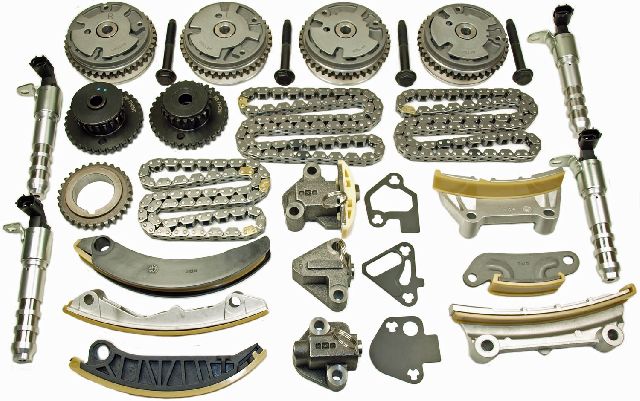
Typical fix: Replace all three timing chains, all tensioners, and all guides as a complete kit. GM has updated these kits several times to improve durability; using the latest available part number is crucial. 🎬 Watch: Expert tips and tricks for easier timing chain replacement This is a major, engine-out (or engine-cradled-down) service.
Est. part cost: $400-$800 - Low or Dirty Engine Oil 🟡 Medium Probability The camshaft phasers and timing chain tensioners are hydraulically operated by engine oil pressure. Degraded or low oil can't provide proper pressure, leading to chain slack and phaser response issues. Extended oil change intervals are a primary contributor to premature chain wear.
How to confirm: Check the oil level on the dipstick and inspect its condition. If it's low, black, or sludgy, this is a likely contributor.
Typical fix: Perform an engine oil and filter change using the correct specification oil (dexos1 SAE 5W-30). If the code returns, the damage to the timing components is likely already done and mechanical replacement is necessary.
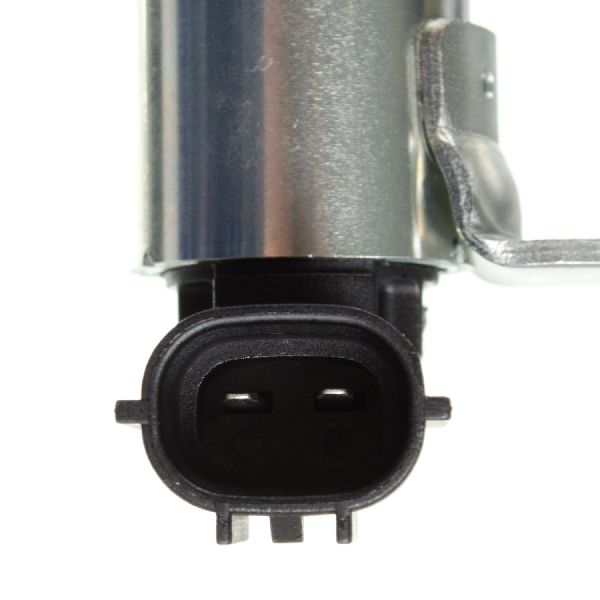
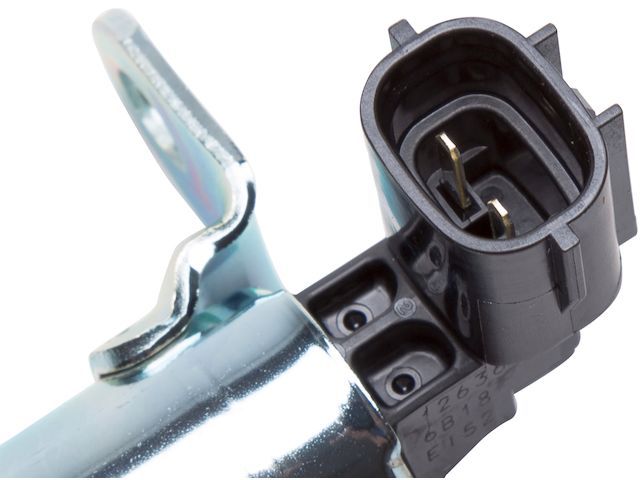
Est. part cost: $50-$100 - Failed Camshaft Position Actuator Solenoid (VVT Solenoid) ⚪ Low Probability → Shop Engine Camshaft These solenoids can become clogged with oil sludge or fail electrically, preventing the cam phaser from adjusting timing correctly. While possible, it's far less common than chain failure for this code on this engine.
How to confirm: Swap the Bank 2 exhaust solenoid with another one (e.g., the intake solenoid on the same bank). Clear the codes and run the engine. If the code changes to P0018 (Bank 2 Intake), the solenoid is faulty. 🎬 See how to diagnose and repair the VVT system
Typical fix: Replace the faulty solenoid. It is recommended to replace both solenoids on the affected bank at the same time.
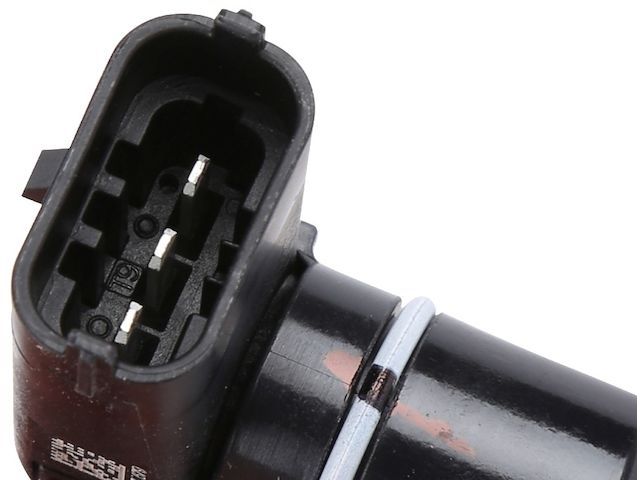
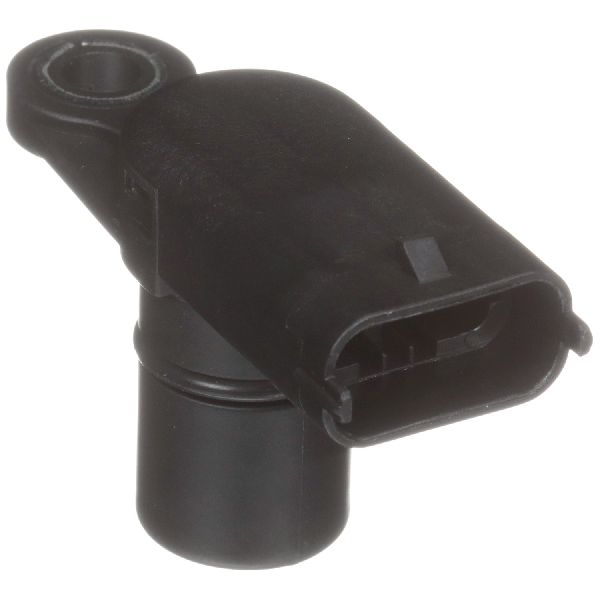
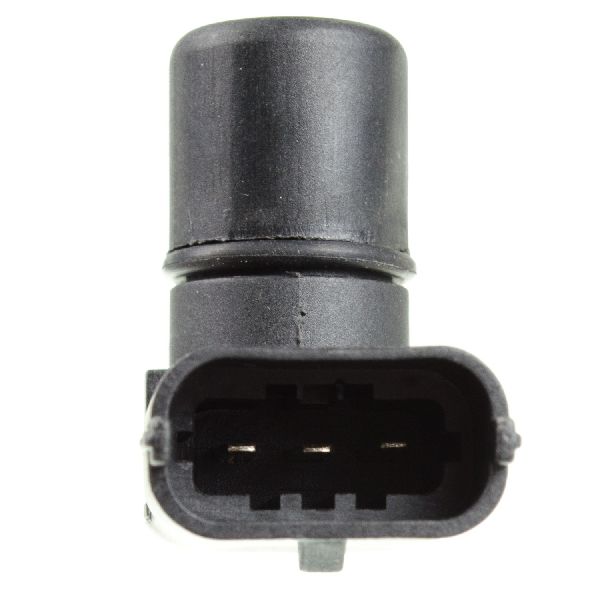
Est. part cost: $40-$90 - Failed Camshaft Position Sensor ⚪ Low Probability → Shop Engine Camshaft Position Sensor While possible, a sensor failure is much less common than the mechanical timing chain issue on this specific engine. The ECM is usually good at identifying a failed sensor with a specific sensor circuit code.
How to confirm: Swap the Bank 2 exhaust camshaft position sensor with the intake sensor on the same bank. Clear codes. If the code changes to P0018, the sensor is bad. If P0019 returns, the sensor is good.
Typical fix: Replace the faulty sensor.
Est. part cost: $30-$70
Rare But Worth Checking
- Slipped Crankshaft Reluctor Wheel: → Shop Engine Crankshaft TSB #PIP3423P explicitly details this rare but possible cause for codes P0016-P0019. The reluctor wheel, which is read by the crankshaft position sensor, can physically move on the crankshaft. This causes a persistent correlation error even with new timing chains. Diagnosis can sometimes be done with a borescope through the crank sensor hole to check its position relative to the crankshaft throw. If it has moved, the only fix is to replace the entire crankshaft.
Diagnosis Steps
- Verify engine oil level and condition. If low or dirty, change the oil and filter, clear the code, and re-test. This is a critical first step.
- Scan for other DTCs. Multiple correlation codes (P0008, P0016-P0019) make a timing chain issue extremely likely.
- If only P0019 is present, perform a diagnostic swap. Exchange the Bank 2 exhaust VVT solenoid with the Bank 2 intake VVT solenoid. Clear codes and see if the code changes to P0018. If it does, the solenoid is bad.
- If the solenoid swap has no effect, swap the Bank 2 exhaust camshaft position sensor with the Bank 2 intake sensor. Clear codes and see if the code changes to P0018. If it does, the sensor is bad.
- If sensors and solenoids test good, connect a professional scan tool and monitor the camshaft angle deviation data for Bank 2 Exhaust. If it consistently exceeds +/- 4-5 degrees from the desired angle at idle, this confirms a mechanical timing failure.
- As an advanced step before major disassembly, consider inspecting the crankshaft reluctor wheel for movement using a borescope through the crankshaft position sensor opening, as outlined in TSB PIP3423P.
- If a mechanical timing issue is confirmed, the definitive step is visual inspection of the timing chains, tensioners, and guides, which requires significant engine disassembly.
- After replacing timing components, perform a 'Crankshaft Position System Variation Learn' procedure with a capable scan tool. Failure to do so can result in the code returning even with new parts.
Parts You'll Likely Need
- Timing Chain Kit
(OEM #12700436 (Latest revision, verify with VIN))— This is the most probable cause of P0019 on the 3.6L V6. A complete kit ensures all worn components are replaced. GM has updated these kits multiple times; using the latest revision is critical for durability.
Trusted brands: ACDelco, GM Genuine
OEM price range: $400-$650
Aftermarket price range: $250-$450 - Exhaust Camshaft Position Actuator Solenoid (VVT Solenoid)
(OEM #12679100)— A much cheaper potential fix than timing chains. These can get clogged or fail, causing timing errors. It's a common first step in diagnosis if the oil level is correct.
Trusted brands: ACDelco
OEM price range: $50-$90
Aftermarket price range: $30-$60 - Camshaft Position Sensor — An unlikely but possible cause. If diagnostic swaps prove the sensor is faulty, it must be replaced.
Trusted brands: ACDelco, Bosch, Delphi
OEM price range: $40-$70
Aftermarket price range: $25-$50
Related Codes That Often Appear With This One
- P0008 — A general engine position system performance code, often the first to appear when the primary timing chain begins to stretch.
- P0018 — Crank/Cam correlation error for Bank 2 Intake. Seeing P0018 and P0019 together strongly points to a timing issue on Bank 2, likely a stretched secondary chain for that bank.
- P0016 — Crank/Cam correlation error for Bank 1 Intake. Seeing multiple correlation codes (P0016, P0017, P0018, P0019) strongly points to a base timing issue affecting all camshafts, likely a stretched primary chain.
- P0017 — Crank/Cam correlation error for Bank 1 Exhaust.
Technical Service Bulletins (TSBs) & Recalls
- PIP3423P: Instructs technicians to check for loose timing chains or a slipped crankshaft reluctor wheel when codes P0008, P0009, or P0016-P0019 are present.
- 11340C: A Special Coverage Adjustment for earlier models (including the 2009 Enclave) that extended the warranty to 10 years/120,000 miles to cover premature timing chain wear, demonstrating GM's long-standing awareness of the issue.
Platform-Specific Known Issues
- The GM 3.6L V6 engine family is notorious for premature timing chain wear, which is the primary cause for code P0019.
- Manufacturer TSB #PIP3423P directly addresses codes P0016, P0017, P0018, and P0019, instructing technicians to inspect for loose timing chains or a slipped crankshaft reluctor wheel.
- GM issued Special Coverage Adjustment #11340C for earlier models with this engine family (e.g., 2009 Enclave), acknowledging the timing chain wear issue and extending
Mechanic-Grade Diagnostic Values
- Camshaft Position Actuator Solenoid (VVT Solenoid) Resistance — expected: 5 to 15 Ohms, with 8-13 Ohms being a common range for GM solenoids.. Failure: A reading of infinite resistance (open circuit) or very high resistance indicates a failed solenoid.
- Engine Oil Pressure (3.6L LFX Engine at operating temperature) — expected: Approximately 20-25 psi at warm idle.. Failure: Consistently low oil pressure (below 20 psi at warm idle) can starve the VVT system and cause timing codes.
- Camshaft Position Sensor Reference Voltage (at sensor connector, key on) — expected: Approximately 5 volts.. Failure: Readings outside the expected range indicate a fault in the wiring or the ECM.
Scan Tool Commands That Help
- GDS2 / Tech2: Camshaft Position Actuator Solenoid Control — Used to command the VVT solenoid ON and OFF while observing live camshaft angle data. This directly tests if the solenoid is responding to ECM commands, helping to isolate a faulty solenoid from a mechanical phaser or oil pressure problem.
- GDS2 / Tech2: Crankshaft Position Variation Learn (CASE Relearn) — This procedure is mandatory after replacing timing chains, the crankshaft sensor, camshaft sensors, or the ECM. It allows the ECM to learn the new electronic signature of the components to prevent false timing or misfire codes from being set.
Wiring & Ground Locations
- G101 — Located at the lower front of the engine block.. This is a primary ground point for the Engine Control Module (ECM). A poor connection at G101 can cause erratic behavior and incorrect readings from various engine sensors, including the camshaft and crankshaft position sensors, potentially leading to false correlation codes.
- Bank 2 Camshaft Position Sensor Connector — Bank 2 is the cylinder bank closer to the radiator. The two camshaft position sensors are located on the front of the engine, on the top of the valve cover for that bank.. This is the direct connection point for the sensor related to code P0019. The three wires are typically a 5V reference, a low reference (ground), and a signal wire, all coming from the ECM. Checking for voltage and ground at this connector is a key diagnostic step.
Real Owner Repair Stories
- Reddit user unabromer (2018 Chevrolet Colorado ZR2 3.6L with 45k miles (sister vehicle with same engine family)) — Check Engine Light with code P0019.
❌ Tried (didn't work) The user took the vehicle directly to the dealer for diagnosis.
✅ What actually fixed it The dealer found excess play in the timing chain and replaced the timing components under warranty, which resolved the code.
OEM Part Supersession History
12651450, 12679117, 12693218→12700436— GM has revised the timing chain kits multiple times to improve durability and reduce premature stretching.12655421→12679100— The original VVT solenoids were identified in TSBs as being prone to sticking or failure, causing various timing codes. The updated part is from a different supplier to improve reliability.
Model Year Variations Within This Range
- 2016-2017 (LFX) vs 2018 (LFY): The 2018 Enclave introduced the newer LFY V6, a significant redesign of the LFX. While both are 3.6L, the LFY features an improved Variable Valve Timing (VVT) system with an 'intermediate park' feature and Active Fuel Management. Although the fundamental timing chain issue can still occur, the LFY was designed to be more durable. Parts like the timing chain kit may have different revisions or part numbers between the two engine designs, making VIN verification critical when ordering.
Helpful Videos
We Have This Part in Stock

The information in this article is provided for general reference and educational purposes only. Vehicle specifications, procedures, and part compatibility can vary by production date, trim level, and region. Always consult your vehicle's factory service manual and verify part numbers before purchasing or performing repairs. Safety-critical components such as airbags, seat belts, and braking systems should be installed by a qualified professional.
- Buick ENCLAVE:
- 🧭 Diagnostic Flowchart
- 🎬 Helpful Videos
- 🛍️ Shop This Part
- What's Unique About the 2016-2018 Buick ENCLAVE
- Symptoms You May Notice
- Most Likely Causes
- Rare But Worth Checking
- Diagnosis Steps
- Parts You'll Likely Need
- Related Codes That Often Appear With This One
- Technical Service Bulletins (TSBs) & Recalls
- Platform-Specific Known Issues
- Mechanic-Grade Diagnostic Values
- Scan Tool Commands That Help
- Wiring & Ground Locations
- Real Owner Repair Stories
- OEM Part Supersession History
- Model Year Variations Within This Range
- 🎟️ Get 5% Off