

P0019 on 2005-2012 Buick LaCrosse: A Deep Dive into Timing Chain and Sensor Issues
On 2005-2012 Buick LaCrosse models with the 3.0L or 3.6L V6 engine, code P0019 almost always indicates stretched timing chains. This is a major, labor-intensive repair often costing between $1,800 and $3,000+. Ignoring this can lead to catastrophic engine failure.
- P0019 on a V6 LaCrosse is a serious code that strongly suggests a stretched timing chain.
- Do not simply replace sensors; the root cause is almost always mechanical.
- This is an expensive repair ($1500-$2800) due to high labor costs.
- Maintaining clean, correct-spec engine oil is critical for the health of the timing system on these engines.
- Driving with this code is risky and can lead to catastrophic engine failure.
What's Unique About the 2005-2012 Buick LACROSSE

The GM High Feature V6 engines (3.0L LF1 and 3.6L LY7/LLT) used in this era of LaCrosse are notorious for premature timing chain stretching. This was acknowledged by GM in multiple Technical Service Bulletins (TSBs), including a special coverage program that extended the warranty to 10 years/120,000 miles for this specific issue, though this has now expired for most vehicles. The problem was exacerbated by the GM Oil Life Monitoring system, which could recommend oil change intervals that were too long. Degraded or low oil fails to provide adequate pressure to the hydraulic chain tensioners, accelerating wear. Therefore, unlike on many other vehicles where P0019 might point to a simple sensor failure, on the V6 LaCrosse it is a very strong indicator of a fundamental, and expensive, timing system problem.
Diagnostic Flowchart

Tap your situation to follow the diagnostic path that matches what you're seeing on this vehicle.
Generation note: This range covers two LaCrosse generations. The first generation (2005-2009) offered a 3.6L V6 (LY7) where this issue is common, specifically in the CXS trim. The more common 3.8L V6 in CX and CXL models is not affected. The second generation (2010-2012) offered both a 3.0L V6 (LF1) and an updated 3.6L V6 (LLT), both of which are highly prone to this timing chain issue.
Symptoms You May Notice

- Check Engine Light is on
- A distinct metallic rattling or clattering sound from the engine for 2-5 seconds on cold starts
- Reduced engine power and hesitation on acceleration
- Rough or unstable idle
- Engine whining noise that increases with RPM
- Increased fuel consumption
- In severe cases, the engine may be hard to start or may not start at all
- Replacing only the camshaft position sensor without verifying the mechanical timing. On these engines, the sensor is rarely the root cause of P0019.
- Replacing the VVT solenoid without checking for stretched chains. A solenoid can fail, but it's a much less common cause than chain issues.
- Performing an oil change and assuming the problem is fixed when the light goes out. This may provide temporary relief but does not fix a physically stretched chain.
Most Likely Causes

- Stretched Timing Chains 🔴 High Probability → Shop Engine Timing Chain As documented in GM TSBs like #12-06-01-009F, the original timing chains on the 3.0L and 3.6L V6 engines were susceptible to premature wear and stretching. This was a known design and materials issue, later addressed with updated parts.
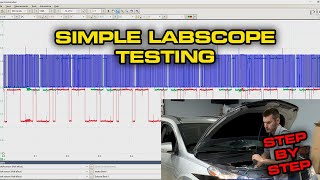
How to confirm: A mechanic can use a scan tool to observe camshaft angle deviation data 🎬 Watch: How to test for timing chain stretch using a labscope.; significant variance points to a mechanical issue. Physical confirmation requires removing the engine front cover to measure chain slack, which is a labor-intensive process that often requires engine removal.
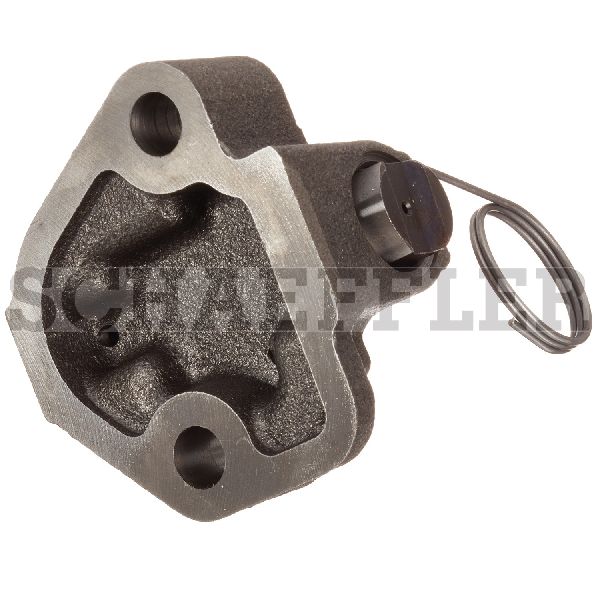
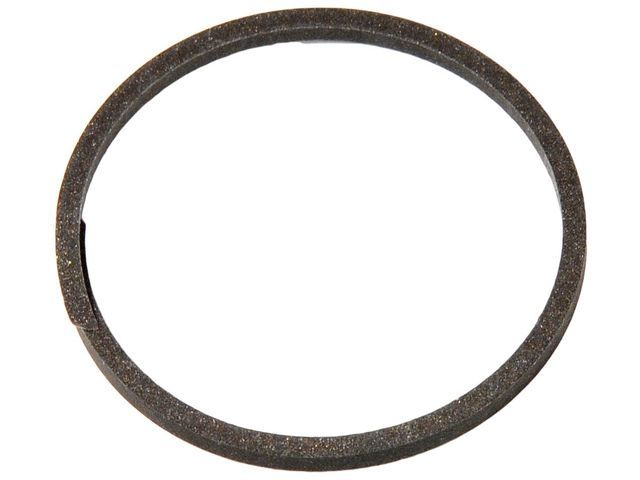
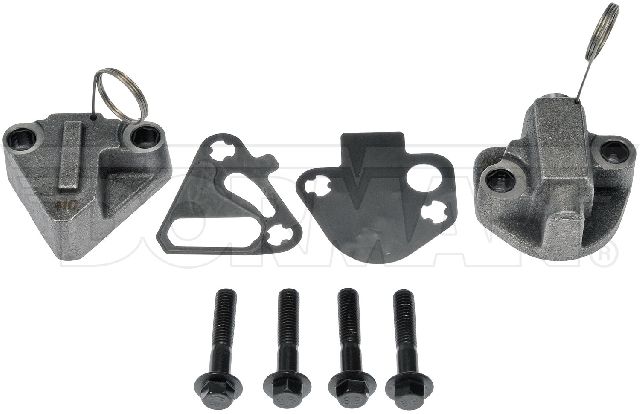
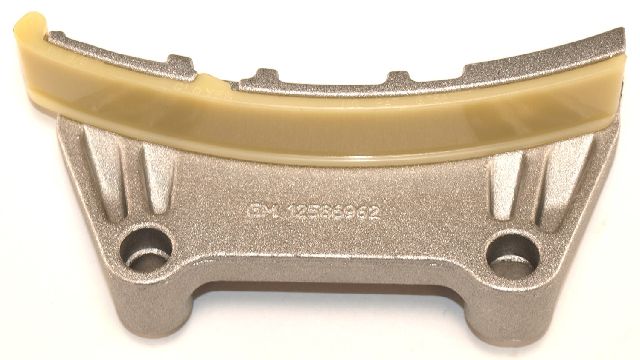
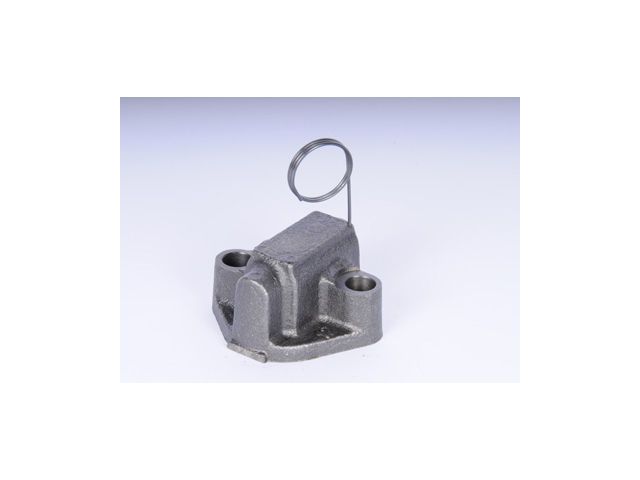
Typical fix: Replace all three timing chains, all tensioners, and all guides with an updated OEM or high-quality aftermarket kit (e.g., Cloyes). The water pump, oil pump, and VVT solenoids are often replaced at the same time as a preventative measure.
Est. part cost: $300-$700 for a complete kit - Failed Timing Chain Tensioners or Guides 🔴 High Probability → Shop Engine Timing Chain The tensioners, which use oil pressure to keep the chains tight, can weaken or fail. The original plastic guides can become brittle and break, with pieces sometimes falling into the oil pan, leading to chain slack and rattling noises.
How to confirm: Confirmed during physical inspection when replacing the timing chains. A rattling noise on startup is a strong indicator.
Typical fix: Always replaced as part of a complete timing chain service. Never replace just a single guide or tensioner.
Est. part cost: $0 (Included in timing chain kit) - Low or Dirty Engine Oil 🟡 Medium Probability The camshaft phasers (actuators) and chain tensioners are operated by oil pressure. Following the Oil Life Monitor too strictly can lead to oil degradation. Low or sludged oil can clog passages in the VVT solenoids and prevent tensioners from working correctly, directly causing or accelerating chain wear.
How to confirm: Check the oil level and condition. Many owners who experienced this failure report they were following the factory oil change schedule. The consensus in owner forums is to change full synthetic oil every 5,000 miles regardless of the monitor.
Typical fix: Perform an oil and filter change with a full synthetic Dexos-approved 5W-30 oil. This may temporarily quiet the engine or clear the code if the issue is minor (like a sticky solenoid), but it will not fix a stretched chain.
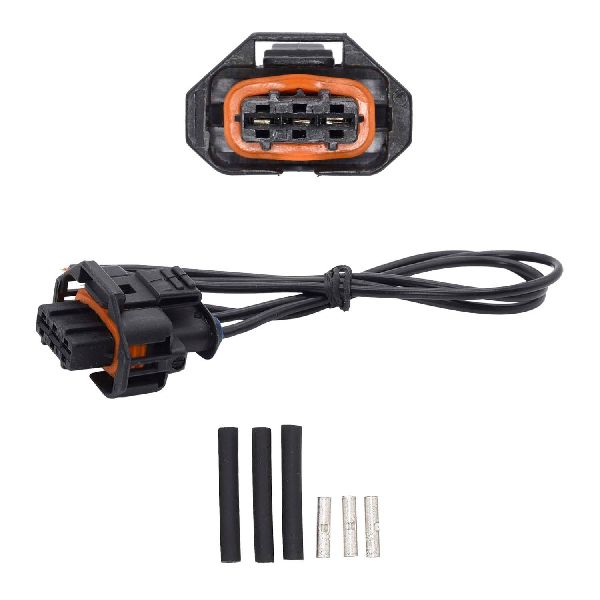
Est. part cost: $50-$100 - Faulty Camshaft Position Sensor (Bank 2 Exhaust) ⚪ Low Probability → Shop Engine Camshaft Position Sensor
How to confirm: Can be tested with a multimeter for resistance. A more effective test is to swap it with the corresponding intake sensor on the same bank (or with a sensor from Bank 1) and clear codes. If the code changes (e.g., to P0018), the sensor is bad. If P0019 returns, the problem is mechanical.
Typical fix: Replace the faulty sensor. The OEM part number is often 12615371 or similar.
Est. part cost: $30-$80 - Faulty Camshaft Actuator Solenoid (VVT Solenoid) ⚪ Low Probability → Shop Engine Camshaft Oil sludge can clog the small screens on these solenoids, impeding their function.
How to confirm: Can be commanded on/off with a bidirectional scan tool to check for response. Can also be removed, cleaned with brake cleaner, and inspected. They can be tested for resistance, which should typically be between 6-12 ohms.
Typical fix: First, try removing and cleaning the solenoid. If that fails, replace it. The OEM part number is often 12636175 or similar.
Est. part cost: $40-$90
Rare But Worth Checking
- Slipped Crankshaft Reluctor Wheel: → Shop Engine Crankshaft The tone ring on the crankshaft that the position sensor reads can physically move, causing a timing correlation error even if the chain is good. This is rare but documented in GM TSB #PIP3423P. It can sometimes be inspected with a borescope through the crank sensor hole. The fix requires crankshaft replacement.
- Faulty Engine Control Module (ECM): → Shop Engine Control Module (ECM) It is extremely rare for the ECM to be the cause. All other possibilities, especially the mechanical timing system, must be exhausted before considering ECM replacement.
Diagnosis Steps
- Verify engine oil level and condition. If low or dirty, perform an oil change with 5W-30 full synthetic oil and a new filter. Clear codes and see if the issue returns.
- Use a professional scan tool to read all stored DTCs. The presence of P0008, P0016, P0017, or P0018 strongly suggests a systemic timing chain issue.
- Monitor live data for camshaft angle desired vs. actual positions for all four camshafts. Any significant, persistent deviation on Bank 2 Exhaust (often more than +/- 4 degrees at idle) points to a problem.
- Command the Bank 2 exhaust camshaft actuator (VVT) solenoid using the scan tool. The engine idle should change or stumble; if not, the solenoid or its circuit is suspect.
- Swap the Bank 2 exhaust camshaft position sensor with the intake sensor on the same bank. Clear codes. If the code changes to P0018, the sensor is bad. If P0019 returns, the sensor is good and the problem is mechanical.
- Remove and inspect the Bank 2 exhaust VVT solenoid for clogged screens or debris. Clean or replace as necessary.
- If all sensor and solenoid tests pass, the issue is almost certainly a stretched timing chain, failed tensioner, or (rarely) a slipped reluctor wheel. Prepare for major mechanical repair.
Parts You'll Likely Need
- Engine Timing Chain Kit
(OEM #12700436 (ACDelco kit for many LLT/LF1 applications))— This is the most common cause of P0019 on the 3.0L/3.6L V6. A complete kit ensures all worn components (chains, guides, tensioners) are replaced with updated parts.
Trusted brands: ACDelco (OEM), Cloyes (High-quality aftermarket, often recommended by mechanics)
OEM price range: $400-$600
Aftermarket price range: $250-$450 - Camshaft Position Sensor
(OEM #12615371 (ACDelco))— Replaced only if diagnosis proves the sensor itself is faulty, which
Related Codes That Often Appear With This One
- P0008 — Indicates a general engine position system performance error for Bank 1. Often the first code to appear as the chains begin to stretch.
- P0016 — Crank/Cam correlation error for Bank 1 Intake Camshaft. Often set along with P0017, P0018, and P0019 when the primary timing chain is stretched.
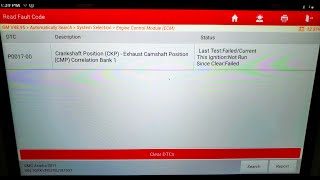
- P0017 — Crank/Cam correlation error for Bank 1 Exhaust Camshaft. Indicates the timing issue is affecting multiple camshafts.
- P0018 — Crank/Cam correlation error for Bank 2 Intake Camshaft. Seeing P0018 and P0019 together strongly points to a problem affecting all of Bank 2, likely the secondary chain for that bank or the primary chain.
Technical Service Bulletins (TSBs) & Recalls
- PIP3423P: Diagnostic aid for codes P0008/P0009 and P0016-P0019. Instructs technicians to check for loose timing chains but also points to the rare possibility of a slipped crankshaft reluctor wheel, which requires crankshaft replacement.
- 12-06-01-009F: Details the official timing chain service kits for the High Feature V6. It specifies which parts are included and explicitly states that components like sprockets and actuators should not be replaced for a simple stretched chain issue under warranty, confirming the chain itself is the primary failure point.
- 11340C (Special Coverage): Though now expired, this program extended the warranty for timing chain replacement to 10 years or 120,000 miles, acknowledging the widespread nature of the defect.
Platform-Specific Known Issues
- Owner Experience with Oil Change Intervals: Numerous owners on forums like buickforums.com and Camaro5.com report that strictly adhering to a 5,000-mile oil change interval with full synthetic oil is the best preventative measure against premature timing chain failure. Many who experienced the failure were following the longer intervals suggested by the vehicle's Oil Life Monitor.
- Repair Story: A Costly Fix: A common story involves the initial appearance of code P0008, followed by P0017, P0018, and P0019 over several weeks. The owner replaces a sensor with no luck, then a VVT solenoid. The rattling on startup gets worse until a mechanic confirms stretched chains. The repair bill is often quoted between $2,000 and $3,500 due to the labor-intensive nature of the job, which can require removing the engine.
Mechanic-Grade Diagnostic Values
- Camshaft Position Actuator Solenoid (VVT Solenoid) resistance — expected: 5-12 Ohms. Failure: A reading outside this range indicates a faulty solenoid coil.
- Camshaft Position Variance (Live Data) — expected: Less than 2 degrees at idle or when commanded to a specific angle.. Failure: A variance greater than 2 degrees indicates a mechanical timing issue or a problem with the camshaft phaser.
- Camshaft Position Sensor signal wire voltage (Key On, Engine Off) — expected: Approximately 4.8 to 5.0 Volts DC.. Failure: No voltage, or voltage that does not drop to 0V when a metal object is passed in front of the sensor, indicates a bad sensor or wiring issue.
Scan Tool Commands That Help
- GDS2 / Tech2: Camshaft Position Actuator Test — This bidirectional control allows a technician to command the VVT solenoid from 0-20 degrees to verify its mechanical operation and see if the camshaft phaser responds, helping to isolate a failed solenoid from a mechanical jam.
- GDS2 / Tech2: Crankshaft Position (CKP) Variation Learn — This reset procedure is mandatory after replacing the timing chains, crankshaft sensor, or ECM. It allows the ECM to learn the profile of the new components to ensure accurate timing and misfire detection.
Wiring & Ground Locations
- G123 — Located on the left front corner of the engine cylinder head, near the high-pressure fuel pump (on 3.0L/3.6L engines).. This is the primary ground for the ignition coils on Bank 2 (cylinders 2, 4, 6). A loose or corroded ground here can cause misfires and erratic engine behavior that may accompany or be confused with timing correlation faults. This is documented in GM TSB #PIP4744B.
Real Owner Repair Stories
- Reddit user on r/MechanicAdvice (2009 Pontiac G8 with 3.6L V6 (LLT engine)) — Intermittent P0008 code (often appears with P0019), car struggled to accelerate when light was on.
❌ Tried (didn't work) Initially just observed the issue and checked oil.
✅ What actually fixed it A full timing chain replacement job resolved the code and resulted in a 'definite difference in torque and idle'. - Reddit user on r/MechanicAdvice (GM 3.6L V6 (vehicle unspecified)) — Car started running badly, check engine light on with P0017 (related to P0019).
❌ Tried (didn't work) Topping off very low oil did not resolve the existing damage.
✅ What actually fixed it The timing had jumped two teeth. The fix required replacing the timing chain, tensioners, both CVVT sprockets (phasers), and the exhaust camshaft itself due to damage.
"I Checked Everything" — The Actual Cause
- For code P0019, the equivalent of a 'smoke test clean' scenario is when all electrical tests pass. A technician may find that the camshaft position sensor, crankshaft sensor, and VVT solenoid all test perfectly for resistance and voltage, and the wiring shows no faults. However, the code persists because the sensors are accurately reporting a real mechanical problem. The actual cause is the stretched timing chain itself, which the electrical tests cannot detect.
When the Usual Fixes Don't Work
- While a stretched timing chain is the cause in over 90% of cases for this vehicle, a small number of owners and technicians have been caught out by a much rarer issue: a slipped crankshaft reluctor wheel. As documented in GM TSBs, the tone ring that the crankshaft sensor reads can physically shift on the crankshaft. In this scenario, a mechanic could replace the entire timing system—a costly and labor-intensive job—only for the P0019 code to return immediately. This is because the timing isn't actually off at the chain, but the ECM *thinks* it is, because the crankshaft's position is being reported incorrectly from its source. This is the most significant counter-argument to assuming the fix is *always* a new set of chains.
OEM Part Supersession History
12651450→12700436 (via intermediate part number 12693218)— GM released multiple revisions of the timing chain kit to improve the durability of the chains and reduce the premature stretching issue.
Heads up: While older kits may physically fit, it is critical to use the latest revision (such as 12700436) to get the benefit of the improved, more durable design and avoid a repeat failure.
Model Year Variations Within This Range
- 2005-2009 (LY7) vs. 2010-2012 (LLT/LF1): The earlier 3.6L LY7 engine used standard multi-port fuel injection. The later 3.0L LF1 and 3.6L LLT engines introduced Spark Ignition Direct Injection (SIDI), which required different pistons and a higher compression ratio (11.3:1 vs 10.2:1). GM made improvements to the timing chain design around the 2011-2012 model years, so later vehicles in this range are somewhat less prone to the issue, though not immune.
Helpful Videos
We Have This Part in Stock

The information in this article is provided for general reference and educational purposes only. Vehicle specifications, procedures, and part compatibility can vary by production date, trim level, and region. Always consult your vehicle's factory service manual and verify part numbers before purchasing or performing repairs. Safety-critical components such as airbags, seat belts, and braking systems should be installed by a qualified professional.
- Buick LACROSSE:
- 🧭 Diagnostic Flowchart
- 🎬 Helpful Videos
- 🛍️ Shop This Part
- What's Unique About the 2005-2012 Buick LACROSSE
- Symptoms You May Notice
- Most Likely Causes
- Rare But Worth Checking
- Diagnosis Steps
- Parts You'll Likely Need
- Related Codes That Often Appear With This One
- Technical Service Bulletins (TSBs) & Recalls
- Platform-Specific Known Issues
- Mechanic-Grade Diagnostic Values
- Scan Tool Commands That Help
- Wiring & Ground Locations
- Real Owner Repair Stories
- "I Checked Everything" — The Actual Cause
- When the Usual Fixes Don't Work
- OEM Part Supersession History
- Model Year Variations Within This Range
- 🎟️ Get 5% Off