

P0019 on 2004-2011 Cadillac CTS: Causes and Fixes for Crank/Cam Correlation
On 2004-2011 Cadillac CTS models with a V6 engine, the P0019 code almost always indicates a stretched timing chain. This is a well-documented issue with GM's High Feature V6 engines of this era, often requiring a complex and costly repair that can exceed $2,000-$3,000 at a dealership. While low oil or a bad sensor are possibilities, the chain is the primary suspect.
- P0019 on a V6 Cadillac CTS is a strong indicator of a stretched timing chain, a known issue with these engines.
- Always check engine oil level and condition first, as low or dirty oil can cause VVT system problems.
- This is not a DIY-friendly repair for most home mechanics. The cost at a professional shop will likely be between $1,500 and $3,000.
- Do not replace sensors hoping for a fix; the problem is almost always mechanical (the timing chains).
- If you see this code, address it as soon as possible to avoid the risk of the chain failing completely and destroying the engine.
What's Unique About the 2004-2011 Cadillac CTS
The GM High Feature V6 engines (3.6L LY7, 3.0L LF1, 3.6L LLT) used in this era of Cadillac CTS are notorious for premature timing chain wear. The root cause is often attributed to a combination of factors: original timing chains made with softer materials, and a factory Oil Life Monitor (OLM) system that allowed for excessively long oil change intervals. This led to oil breakdown, sludge, and inadequate lubrication, accelerating wear on the chains. GM acknowledged this widespread issue by issuing multiple Technical Service Bulletins (TSBs) and a Special Coverage program (#11340) to address the problem, making this a very platform-specific failure.
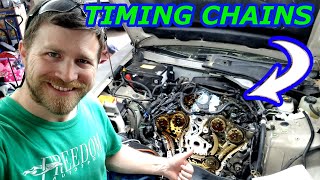
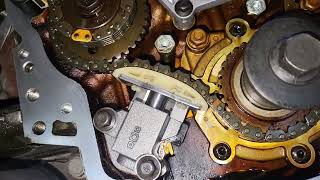
🎬 Watch: Why these GM 3.0 and 3.6 V6 timing chains fail.Diagnostic Flowchart
Tap your situation to follow the diagnostic path that matches what you're seeing on this vehicle.
Generation note: The 2004-2011 range covers the first (2004-2007) and second (2008-2011) generations of the Cadillac CTS. Both generations used V6 engines (primarily the 3.6L LY7 and the later 3.0L/3.6L direct injection engines) that are known to be affected by the timing chain issue that causes code P0019. The problem was most prevalent in the earlier LY7 and LLT engines.
Symptoms You May Notice
- Check Engine Light is on
- Engine rattling or whirring noise, especially on cold startups or at idle
- Rough or unstable idle
- Hesitation or loss of power during acceleration
- Reduced fuel economy
- Engine running rough, shaking at idle
- In severe cases, the engine may crank but not start
- Replacing only the camshaft position sensor without verifying the mechanical timing.
- Replacing only the crankshaft position sensor.
- Replacing only the VVT solenoid without checking for the more common stretched timing chain.
- Performing an oil change and assuming it will fix the problem after the chain has already stretched.
Most Likely Causes
- Stretched Timing Chains 🔴 High Probability → Shop Engine Timing Chain As documented in GM TSB #12-06-01-009F and Special Coverage #11340, the original timing chains on the 3.6L V6 engines were prone to premature wear and stretching, exacerbated by long oil change intervals. The chains physically elongate, causing slack and altering the cam/crank correlation.
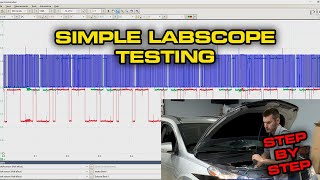
How to confirm: A technician can use a scan tool to view live data and check the camshaft position deviation; a value consistently greater than 4-6 degrees is a strong indicator. The ultimate confirmation is using an oscilloscope to compare crankshaft and camshaft sensor waveforms against a known-good pattern. 🎬 See how to test timing chain problems with a labscope. Physical inspection for chain slack is definitive but requires significant labor.
Typical fix: Replace all three timing chains (primary and both secondary), all tensioners, and all guides with an updated kit. This is a major repair often requiring 10+ hours of labor.
Est. part cost: $300-$600 for a complete timing chain kit. - Low or Dirty Engine Oil 🟡 Medium Probability The camshaft phasers (VVT system) are hydraulically operated by engine oil pressure. GM's Special Coverage bulletin #11340 directly cites that the original, long oil change intervals contributed to premature wear. Low or sludgy oil can starve the phasers and solenoids, preventing them from adjusting cam timing correctly and triggering the code.
How to confirm: Check the oil level on the dipstick and inspect its condition. If it's low or looks like dark sludge, this is a likely contributor. However, if the chain has already stretched, an oil change alone will not fix the P0019 code.
Typical fix: Perform an oil and filter change using the manufacturer-specified full-synthetic oil (e.g., ACDelco dexos1). If the code returns, the damage to the timing components is likely already done and they require replacement.
Est. part cost: $50-$100 - Worn Timing Chain Tensioners or Guides 🟡 Medium Probability → Shop Engine Timing Chain These plastic and hydraulic components wear along with the chains. A failing tensioner can lose hydraulic pressure or break, creating slack and causing the timing correlation error even if the chain isn't severely stretched. TSB #PIP3423P specifically calls for inspecting for loose chains or tensioners.
How to confirm: Usually diagnosed during a physical inspection when replacing the timing chains. A rattling noise is a common symptom.
Typical fix: Always replace tensioners and guides when replacing the timing chains. They are included in most quality timing chain kits like those from Cloyes or ACDelco.
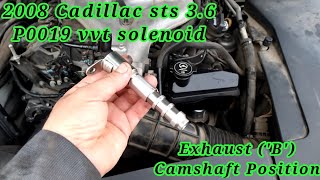
Est. part cost: $0 (Included in timing chain kit) - Failed Camshaft Position Actuator Solenoid (VVT Solenoid) ⚪ Low Probability → Shop Engine Camshaft These solenoids can get clogged with sludge from dirty oil or fail electrically. While less common than chain stretch for this code, it's a possible and much easier fix to attempt first.
How to confirm: The solenoid for the Bank 2 exhaust camshaft can be tested with a scan tool or by applying voltage. It can also be removed and inspected for sludge or debris on the screens. A multimeter can be used to check resistance; a reading outside of 6.9-7.9 ohms suggests failure.
Typical fix: Replace the faulty solenoid. They are relatively accessible on top of the engine's valve covers.
Est. part cost: $30-$80
Rare But Worth Checking
- Failed Camshaft Position Sensor: → Shop Engine Camshaft Position Sensor This is a rare cause for this specific code. Usually, a bad sensor will trigger its own specific circuit code (like P0348 or P0349), but it can occasionally send erroneous data that leads to a correlation code.
- Damaged Camshaft Phaser/Actuator: → Shop Engine Camshaft The mechanical gear on the end of the camshaft that actually adjusts the timing can fail internally or get stuck, but this is less common than chain stretch or solenoid failure on this platform. A failing phaser can sometimes cause a knocking or ticking sound.
- Powertrain Control Module (PCM) Issue: → Shop Engine Control Module (ECM) In very rare cases, the engine computer itself can be the source of the problem, but all other possibilities, especially mechanical timing, must be exhausted first.
Diagnosis Steps
- Verify the code with a quality OBD-II scanner.
- Check the engine oil level and condition. If low or dirty, perform an oil and filter change with the correct viscosity full-synthetic oil, clear the codes, and drive to see if the code returns.
- Using a scan tool with live data capability, monitor the camshaft and crankshaft position sensor readings. Specifically, look at the cam variance PIDs. If the deviation for Bank 2 Exhaust is consistently off by more than a few degrees at idle, it points to a mechanical timing issue.
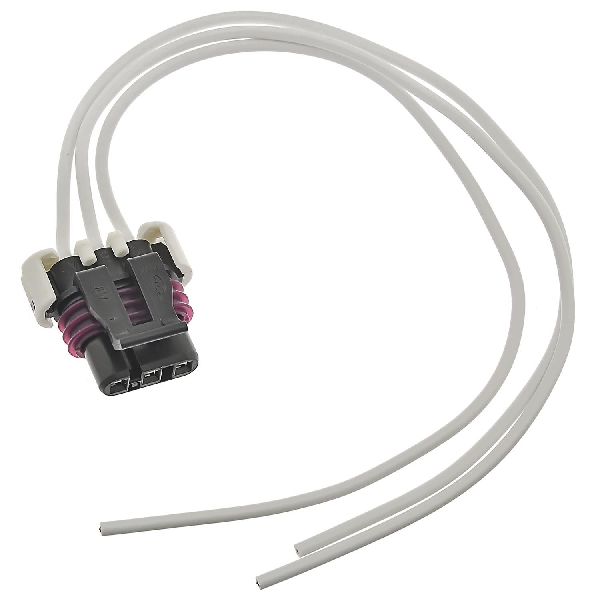
- Inspect the wiring and connectors for the Bank 2 exhaust camshaft position sensor and VVT solenoid for any damage.
- Test the Bank 2 exhaust VVT solenoid. You can command it on and off with a scan tool to see if engine performance changes. Alternatively, swap it with the intake solenoid on the same bank (if they are identical parts) and see if the code changes to P0018. If it does, the solenoid is bad.
- If the above steps do not resolve the issue, the next step is to assume a mechanical timing problem. This involves a significant amount of labor to remove the engine's front cover to physically inspect the timing chains, guides, and tensioners for slack or damage.
Parts You'll Likely Need
- Timing Chain Kit
(OEM #12650230)— This is the primary failure point for the P0019 code on these V6 engines, as confirmed by multiple TSBs. A complete kit ensures all worn components (chains, tensioners, guides) are replaced with updated parts.
Trusted brands: ACDelco (OEM), Cloyes (Popular high-quality aftermarket, e.g., 9-0753S)
OEM price range: $400-$600
Aftermarket price range: $250-$450 - Camshaft Position Actuator Solenoid
(OEM #12636175)— A much cheaper and easier potential fix. If clogged with sludge or failed electrically, it can cause this code and should be checked before committing to a timing chain job. For the GM 3.6L, all four solenoids (intake/exhaust for both banks) are often the same part number.
Trusted brands: ACDelco (OEM), INA, Dorman
OEM price range: $40-$90
Aftermarket price range: $25-$60
Related Codes That Often Appear With This One
- P0008 — Indicates a general engine position system performance error for Bank 1. It's often the first code to appear when timing chains begin to stretch.
- P0018 — Correlation error for Bank 2 Intake Camshaft. This is the partner code to P0019 for the other camshaft on the same bank and frequently appears alongside it.
- P0016 — Correlation error for Bank 1 Intake Camshaft. Often appears with other timing codes when the issue is systemic chain stretch.
- P0017 — Correlation error for Bank 1 Exhaust Camshaft. Often appears with other timing codes.
Technical Service Bulletins (TSBs) & Recalls
- 12-06-01-009F: Information on High Feature V6 Timing Chain Kits and Chain Guide Replacement for DTCs P0008, P0009, P0016, P0017, P0018 and/or P0019.
- PIP3423P: Instructs technicians to inspect for loose timing chains or tensioners for these codes.
- 11340C: Special Coverage Adjustment for Timing Chain Wear, extending warranty to 10 years/120,000 miles for affected models.
Platform-Specific Known Issues
- GM issued Technical Service Bulletin #12-06-01-009F, which directly mentions DTC P0019 as a result of stretched timing chains and lists the updated timing chain kits for the repair.
- Preliminary Information bulletin #PIP3423P instructs technicians to inspect for loose timing chains or tensioners when codes like P0019 are present.
- GM's Special Coverage program #11340 (and its revisions 11340A, 11340B, 11340C) extended the warranty for timing chain replacement on certain 2007-2009 CTS models to 10 years or 120,000 miles due to this known issue. This program acknowledged that extended oil change intervals contributed to the wear. It also sometimes included an ECM reprogram to adjust the oil life monitor.
- The original timing chains had a 9.5mm pitch, while updated chains use a finer 7.7mm pitch with an inverted tooth design to reduce noise and wear.
Mechanic-Grade Diagnostic Values
- Camshaft Position Actuator Solenoid (VVT Solenoid) Resistance — expected: 6.9 - 7.9 Ohms at 68°F (20°C). Failure: A reading outside this range, or an open/infinite reading, indicates a faulty solenoid coil.
- Camshaft Position Sensor (Hall-Effect Type) Signal Voltage — expected: Approx. 5V on the signal wire with the key on, engine off.. Failure: When a metal object (like a socket) is passed in front of the sensor, the voltage should drop to 0V. If the voltage does not switch, the sensor is bad.
- Cam/Crank Waveform Correlation via Oscilloscope — expected: On a known-good engine at idle, the rising or falling edge of the camshaft sensor pulse should align with a specific tooth on the crankshaft sensor's waveform after the missing tooth gap.. Failure: If the cam signal has shifted relative to the crank signal (is retarded or advanced) compared to a known-good waveform, it confirms a mechanical timing issue like a stretched chain.
Scan Tool Commands That Help
- GDS2 / Tech2 or equivalent professional scanner: VVT Solenoid Actuator Test / Output Control — This command allows the technician to manually activate the Bank 2 exhaust VVT solenoid while the engine is idling. If the solenoid is working, activating it should cause the engine to stumble or run rough. If there is no change in engine operation, the solenoid is likely stuck or clogged.
- GDS2 / Tech2win: Crankshaft Position Variation Learn — This procedure should be performed after replacing a crankshaft position sensor or the PCM. It allows the PCM to learn the minor variations in the crankshaft reluctor wheel to ensure accurate misfire detection and timing. While not a direct fix for P0019, it is a critical step after related repairs to prevent other codes (like P1336) from appearing.
Wiring & Ground Locations
- G103 / G104 — Typically located on the rear of the cylinder heads, near the bellhousing. One on the driver's side head, one on the passenger's side.. These are the primary grounds for the PCM and TAC (Throttle Actuator Control) module. A loose or corroded ground here can cause erratic sensor readings and phantom codes, including correlation faults.
- G101 / G102 — Typically located on or near the radiator support at the front of the engine bay.. These grounds serve various components in the front of the engine compartment. A poor connection can affect the ECM, which on some 3.6L applications is located below the left headlamp assembly.
- G130 / G131 / G132 — Located on the rear of the left and right cylinder banks.. Engine block grounds are critical for ensuring the camshaft and crankshaft position sensors have a stable reference. A poor ground can create a voltage offset, leading the PCM to misinterpret the sensor signals.
Real Owner Repair Stories
- Composite of common forum experiences (2008 Cadillac CTS 3.6L LY7, ~110,000 miles) — Check engine light on with code P0019 and sometimes P0018. Rattling noise from engine for a few seconds on cold start. Engine feels sluggish.
❌ Tried (didn't work) Performed an oil change; code returned immediately., Replaced the Bank 2 exhaust camshaft position sensor; code returned., Swapped the Bank 2 exhaust VVT solenoid with the intake solenoid; code did not change, remained P0019.
✅ What actually fixed it The owner took the car to a trusted independent shop. The mechanic confirmed via scan tool that cam/crank correlation was off by over 8 degrees. The mechanic diagnosed stretched timing chains based on the TSBs and common knowledge of this engine. A complete timing chain kit (chains, guides, tensioners) was installed. The repair took two days and cost approximately $2,800. The code did not return after the repair.
"I Checked Everything" — The Actual Cause
- A very common scenario for P0019 on this vehicle is that all electrical tests for the sensors and solenoids pass, but the code persists. A technician may test the VVT solenoid resistance and find it is within spec (e.g., 7.2 ohms), and confirm the camshaft sensor is switching correctly. However, the code is being set by a purely mechanical issue—the physical distance between cam and crank sprockets has changed due to chain stretch. The electronics are correctly reporting a mechanical failure, which is why replacing sensors or solenoids does not fix the root cause.
OEM Part Supersession History
Various early-production part numbers→Kits like ACDelco 12650230— The original timing chains were manufactured from a softer metal that was prone to premature stretching. The updated kits use chains made from a more durable steel alloy to prevent elongation.
Heads up: Using individual 'new old stock' (NOS) parts or aftermarket kits that do not use the updated chain design will likely result in a repeat failure in 30,000-50,000 miles.
Model Year Variations Within This Range
- 2004-2009 (LY7 Engine): This was the first generation of the High Feature V6 in the CTS. It used port fuel injection. These early models are the most susceptible to the timing chain stretch issue due to the original chain design and aggressive Oil Life Monitor (OLM) calibration.
- 2008-2011 (LLT Engine): The LLT engine introduced direct injection, higher compression pistons, and other changes. While still prone to timing chain issues, especially in early years (2008-2011), GM began phasing in improved chain designs during its production run. Failures are still common but may be slightly less prevalent than on the LY7.
- 2012+: By the 2012 model year, GM had implemented updated timing chain components from the factory, significantly reducing the frequency of premature failure for codes like P0019. While not impossible, a timing chain failure on a 2012+ model is much less likely to be the primary cause than on earlier models.
Helpful Videos
We Have This Part in Stock



The information in this article is provided for general reference and educational purposes only. Vehicle specifications, procedures, and part compatibility can vary by production date, trim level, and region. Always consult your vehicle's factory service manual and verify part numbers before purchasing or performing repairs. Safety-critical components such as airbags, seat belts, and braking systems should be installed by a qualified professional.
- Cadillac CTS:
- 🧭 Diagnostic Flowchart
- 🎬 Helpful Videos
- 🛍️ Shop This Part
- What's Unique About the 2004-2011 Cadillac CTS
- Symptoms You May Notice
- Most Likely Causes
- Rare But Worth Checking
- Diagnosis Steps
- Parts You'll Likely Need
- Related Codes That Often Appear With This One
- Technical Service Bulletins (TSBs) & Recalls
- Platform-Specific Known Issues
- Mechanic-Grade Diagnostic Values
- Scan Tool Commands That Help
- Wiring & Ground Locations
- Real Owner Repair Stories
- "I Checked Everything" — The Actual Cause
- OEM Part Supersession History
- Model Year Variations Within This Range
- 🎟️ Get 5% Off