

P0019 on 2012-2018 Cadillac CTS: Stretched Timing Chain Causes and Fixes
On a 2012-2018 Cadillac CTS with the 3.6L V6 engine, the P0019 code almost always indicates a stretched timing chain. This is a serious, complex, and expensive repair that should be addressed immediately to prevent further engine damage. While later LFX engines had improvements, the issue can still occur.
- P0019 on a 2012-2018 Cadillac CTS with the 3.6L V6 is a strong indicator of a stretched timing chain, a known issue with this engine.
- Do not ignore this code. A stretched timing chain can fail without warning, causing catastrophic engine damage.
- This is not a DIY-friendly repair for most home mechanics. It is complex, requires special tools, and has a high labor cost.
- Replacing sensors or solenoids is unlikely to be a permanent fix. The root cause is almost always the mechanical timing components.
- Regular oil changes with high-quality, correct-viscosity oil are critical to prolonging the life of the timing chains on this engine.
What's Unique About the 2012-2018 Cadillac CTS
The GM 3.6L V6 engine (LLT and LFX variants) used in this era of Cadillac CTS has a well-documented history of premature timing chain stretching. This issue was so prevalent that it led to manufacturer TSBs and special coverage programs. The problem is often linked to oil degradation from extended oil change intervals, sometimes encouraged by the factory Oil Life Monitor (OLM) system, which leads to increased wear on the timing chains and tensioners. Therefore, a P0019 code on this specific vehicle is much more likely to be a major mechanical issue (the chain itself) rather than a simple sensor failure, even on models with as low as 60,000 miles.
Diagnostic Flowchart
Tap your situation to follow the diagnostic path that matches what you're seeing on this vehicle.
Generation note: This year range covers the end of the second generation (2012-2014) and the entire third generation (2014-2019) of the Cadillac CTS. The 3.6L V6 engine, which is most prone to this issue, was a common option in both generations (as the LLT and later LFX engine codes). While GM made improvements to the timing chain design for the LFX engine starting in 2012, the problem is still known to occur, though less frequently than in earlier LLT engines.
Symptoms You May Notice
- Check Engine Light is on
- Rough or erratic idle
- Engine hesitation or stumbling on acceleration
- Reduced engine power
- Decreased fuel economy
- Rattling or clattering noise from the front of the engine, especially on cold startup 🎬 Listen: Hear what the VVT clattering noise sounds like at startup.
- Engine may fail to start in severe cases
- Replacing only the camshaft position sensor without checking timing chain stretch. The sensor is rarely the root cause on this vehicle.
- Replacing the VVT solenoid (camshaft actuator) without confirming the timing chain is in good condition. This may provide a temporary fix if the solenoid is sticky, but the code will almost certainly return if the chain is stretched.
- Replacing only one or two of the three timing chains. All three chains, guides, and tensioners should be replaced as a set for a lasting repair.
Most Likely Causes
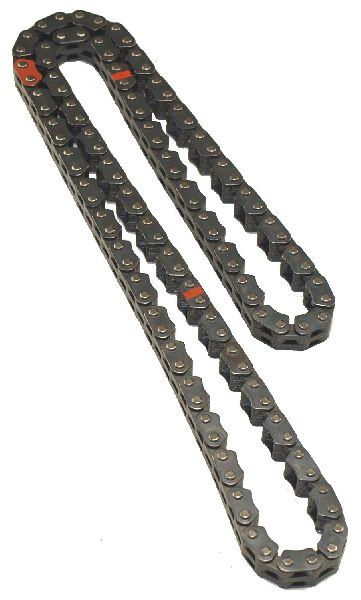
- Stretched Timing Chains 🔴 High Probability → Shop Engine Timing Chain The 3.6L V6 engines in these vehicles are known for premature timing chain wear and stretching, a fact acknowledged in manufacturer TSBs #PIP3423P and #12-06-01-009F. There are three chains in the system, and wear on any of them can cause timing correlation codes.
How to confirm: Diagnosis requires a scan tool to check cam/crank deviation values. Physical confirmation involves engine disassembly to measure chain slack, which is a significant job.
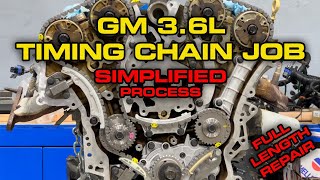
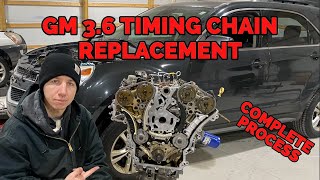
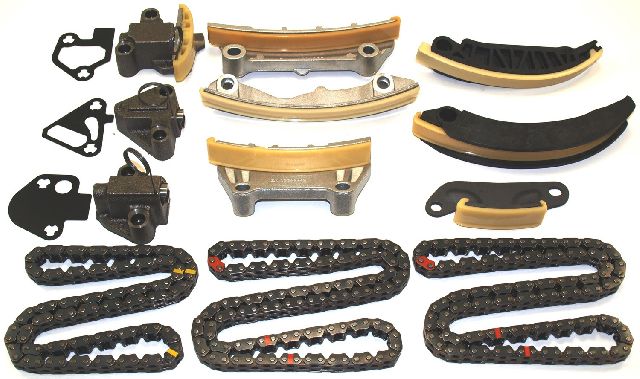
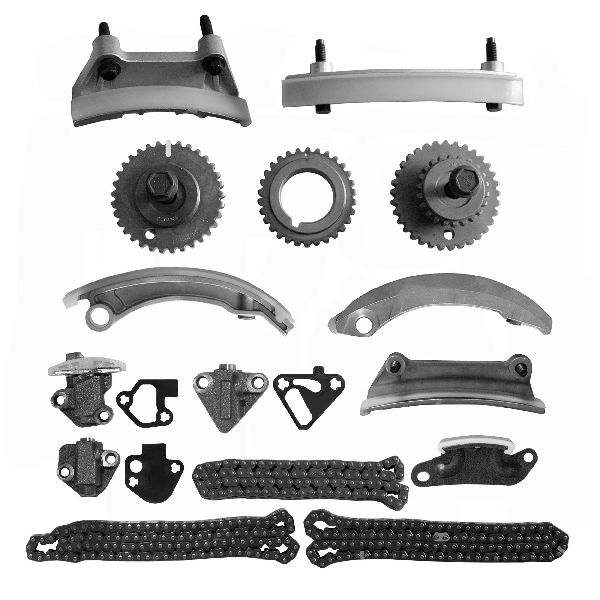
Typical fix: Replacement of all three timing chains, along with the tensioners, guides, and often the water pump. This is a major repair. 🎬 See this detailed guide on removing and installing the 3.6L chains.
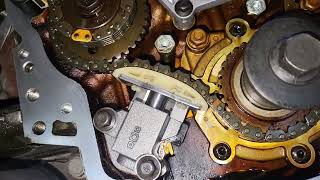
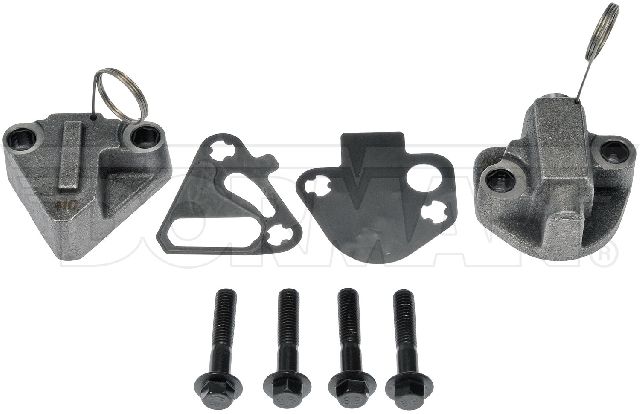
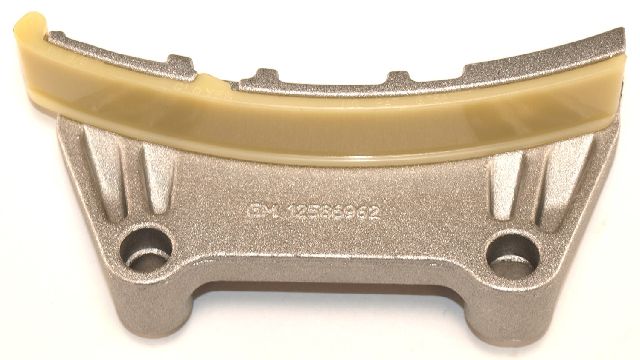
Est. part cost: $300-$700 for a complete kit. - Worn Timing Chain Tensioners or Guides 🔴 High Probability → Shop Engine Timing Chain The hydraulic tensioners can weaken or fail, and the plastic guides can wear down or break. This happens along with chain stretch. TSB #PIP3423P specifically calls for inspecting for loose tensioners. Failed tensioners allow the chain to slap against guides, causing noise and further wear.
How to confirm: Visual inspection after removing the engine's front timing cover. Broken guide pieces may be found in the oil pan.
Typical fix: Replaced as part of a complete timing chain service. It is not recommended to replace only the tensioners without the chains.
Est. part cost: Included in timing chain kits. - Low or Degraded Engine Oil 🟡 Medium Probability The variable valve timing (VVT) system, which controls the camshaft phasers, is hydraulically operated by engine oil. Low or dirty oil can cause the VVT phasers and solenoids to respond slowly or get stuck, triggering a correlation code. It is considered the number one cause of accelerated timing chain wear.
How to confirm: Check the oil level on the dipstick and inspect its condition. If it's low or looks like sludge, this is a likely contributor. An engine flush may be a low-cost first step, but if the chain is already stretched, it won't solve the problem.
Typical fix: Perform an oil and filter change with a full synthetic oil meeting GM's Dexos specification (typically 5W-30). However, this is often a contributing factor, not the sole cause, and the damage to the chains may already be done.
Est. part cost: $50-$120 - Faulty Camshaft Actuator Solenoid (VVT Solenoid) ⚪ Low Probability → Shop Engine Camshaft While solenoids can fail due to sludge or electrical issues, the timing chain is a much more common culprit for P0019 on this engine. However, it's a relatively easy part to access and test.
How to confirm: Can be tested with a scan tool by commanding it to activate. Resistance can be checked with a multimeter (typically 6.9-7.9 ohms). Swapping the suspect solenoid (Bank 2 Exhaust) with another one (e.g., Bank 2 Intake) and seeing if the code changes (e.g., to P0018) is a common diagnostic trick.
Typical fix: Replacement of the Bank 2 exhaust camshaft actuator solenoid. OEM part numbers include 12671336 and 12662737.
Est. part cost: $30-$90
Rare But Worth Checking
- Faulty Camshaft Position Sensor: → Shop Engine Camshaft Position Sensor It's rare for the sensor itself to fail in a way that causes a correlation code without setting a sensor-specific circuit code (like P0365-P0369). However, it's possible and relatively inexpensive to replace.
- Failed Camshaft Phaser (Actuator Gear): → Shop Engine Camshaft The phaser, the gear at the end of the camshaft that is controlled by the VVT solenoid, can get stuck or fail internally. This is usually replaced during a full timing chain job, but a faulty new phaser has been known to cause issues even after a repair.
- Slipped Crankshaft Reluctor Wheel: → Shop Engine Crankshaft TSB #PIP3423P notes a rare but possible cause where the reluctor wheel for the crankshaft position sensor, which is pressed onto the crankshaft, can move. Confirming this requires a borescope through the crank sensor hole or removing the oil pan. The fix requires crankshaft replacement.
- Damaged Wiring or Connectors: Frayed wires or a loose, oil-fouled connection to the camshaft sensor or VVT solenoid can cause intermittent signals, leading to this code.
Diagnosis Steps
- Verify engine oil level and condition. If low or dirty, perform an oil and filter change with full synthetic 5W-30 Dexos-approved oil and clear codes to see if the problem persists.
- Use a professional scan tool to view live data. Observe the desired vs. actual camshaft position angles for Bank 2 Exhaust. A significant and consistent deviation points to a mechanical timing issue.
- Swap the Bank 2 exhaust VVT solenoid with the Bank 2 intake solenoid. Clear codes and drive the vehicle. If the code changes to P0018, the solenoid is faulty.
- Test the resistance of the suspect VVT solenoid with a multimeter. A typical reading should be between 6.9 and 7.9 ohms. Also check for a solid 12V supply and ground signal at the connector.
- If sensors and solenoids test good but the correlation error persists, a physical inspection of the timing chains is necessary. This involves significant labor to remove the engine's front timing cover, valve covers, and oil pan.
- During physical inspection, check for excessive slack in the chains and look for broken plastic from the guides in the oil pan.
- If chains appear tight, consider the rare possibility of a slipped crankshaft reluctor wheel as described in TSB #PIP3423P.
Parts You'll Likely Need
- Timing Chain Kit
(OEM #12650230 (For earlier models), 12700436 (Later revision))— This is the most common cause of P0019 on the 3.6L V6. A complete kit ensures all worn components (chains, guides, tensioners, gaskets) are replaced at once.
Trusted brands: ACDelco (GM Genuine), Melling, Dayco
OEM price range: $400-$600
Related Codes That Often Appear With This One
- P0008 — Indicates a general engine position system performance error for Bank 1. Both codes are cited together in TSBs #PIP3423P and #12-06-01-009F as being caused by stretched timing chains.
- P0018 — Indicates a correlation issue on Bank 2, but for the intake camshaft ('Sensor A'). When both P0018 and P0019 are present, it's an even stronger indicator of a base timing issue from a stretched chain affecting the entire bank.
- P0016, P0017, P0009 — These are all various crank/cam correlation codes for different banks and sensors. Seeing any of them together points strongly towards a systemic timing chain problem affecting the entire engine, as noted in the provided TSBs.
Technical Service Bulletins (TSBs) & Recalls
- PIP3423P
- 12-06-01-009F
Platform-Specific Known Issues
- The GM 3.6L V6 (both LLT and LFX versions) used in the 2012-2018 CTS is widely known for premature timing chain failure.
- TSB #PIP3423P directly links codes P0016, P0017, P0018, P0019, P0008, or P0009 to loose timing chains, tensioners, or a rarely seen slipped crankshaft reluctor wheel.
- TSB #12-06-01-009F discusses updated timing chain kits for repairing stretched chains that cause these codes and lists the affected vehicles, including the CTS.
- GM issued a special coverage adjustment (#11340C) extending the warranty on timing chains to 10 years or 120,000 miles for many affected vehicles, though this may have expired for the model years in question.
Mechanic-Grade Diagnostic Values
- VVT (Camshaft Actuator) Solenoid Resistance — expected: 6.9 to 7.9 Ohms at 68°F (20°C).. Failure: A reading outside this range, or an open circuit (OL), indicates a faulty solenoid.
- Camshaft Position Sensor Circuit Voltage (Sensor Unplugged) — expected: Approximately 5V on the reference wire, 12V on the ground wire (when testing with red lead on battery positive), and 5V on the signal wire for a pull-down design.. Failure: Low or no voltage on the reference line, or a signal wire that is stuck at ground (around 0V), can indicate a wiring short or a faulty ECM.
- Wiring Harness Continuity to PCM — expected: Less than 5.0 Ohms.. Failure: Resistance greater than 5.0 Ohms indicates high resistance or an open circuit in the wiring between the component and the PCM.
Scan Tool Commands That Help
- GDS2 (GM Tech Tool): Actuate VVT Solenoid — Used to command the suspect VVT solenoid (Bank 2 Exhaust) ON and OFF to check for a response. A lack of change in engine sound or live data parameters suggests a stuck or failed solenoid.
- GDS2 (GM Tech Tool): Crankshaft Position Variation Learn — This procedure must be performed after replacing the crankshaft, crankshaft position sensor, or ECM. It compensates for minor variations in the crankshaft reluctor wheel to prevent misfire detection and correlation codes. Failure to perform this can cause codes to return even after a correct repair.
Wiring & Ground Locations
- G102 — Right front of the engine compartment.. This is a primary ground point for the underhood fuse block, which supplies power to critical engine components including the ECM.
- G130 — Rear of the right cylinder head (Bank 1).. A poor ground here can affect components on Bank 1, but checking all major engine grounds is crucial for eliminating electrical issues.
- G131 — Left rear of the engine (near Bank 2).. This is a critical ground for Bank 2 components. A loose or corroded connection at G131 could potentially cause erratic signals from the Bank 2 cam sensor or VVT solenoid, leading to a P0019 code.
- ECM Connector C2 — At the Engine Control Module, located on the left front of the engine compartment for the 3.6L.. This connector contains the signal wires for the camshaft and crankshaft position sensors. Probing for voltage and continuity at this connector is a key step to determine if a fault is in the wiring, the sensor, or the ECM itself.
Real Owner Repair Stories
- 2CarPros Forum User (Audi 3.2L (similar DOHC V6 architecture)) — P0018 and P0019 codes appeared immediately after a timing chain replacement.
❌ Tried (didn't work) Verified timing marks were correct., Performed leak-down and compression tests., Checked wiring for shorts and confirmed good voltage/ground at sensors.
✅ What actually fixed it The user swapped cam position sensors from one bank to the other, which caused the code to move (from P0018/P0019 to P0017). This indicated that even though the sensors were not the original cause, one of them had become faulty or was incompatible, and replacing the indicated sensor resolved the issue. This highlights that new problems can be introduced during a major repair.
OEM Part Supersession History
9-0753S (Cloyes Kit)→N/A - this is a common aftermarket kit number.— This kit number is a long-standing aftermarket equivalent for the OEM components. It's important to verify the specific OEM numbers it replaces for your exact model year.
Heads up: Some kits may or may not include the VVT sprockets (phasers) or solenoids. For a complete job, it is highly recommended to use a kit that includes all timing components, including sprockets.12636175 (VVT Solenoid)→12671336, 12662737 (among others)— Part numbers for VVT solenoids have been updated over time. It is critical to verify the correct part number for the specific year and VIN of the vehicle.
Heads up: While solenoids may look physically similar, using the wrong part can result in incorrect operation. The four VVT solenoids on the 3.6L LFX engine are typically identical, making swapping for diagnosis easier.
Model Year Variations Within This Range
- 2012-2018: The 2012 model year marked the introduction of the updated 3.6L LFX V6 engine, replacing the previous LLT. The LFX featured design improvements intended to address the premature timing chain wear seen in the LLT, including a stronger chain design. While the issue is less frequent on the LFX, it still occurs, particularly with poor oil maintenance.
Helpful Videos
We Have This Part in Stock


The information in this article is provided for general reference and educational purposes only. Vehicle specifications, procedures, and part compatibility can vary by production date, trim level, and region. Always consult your vehicle's factory service manual and verify part numbers before purchasing or performing repairs. Safety-critical components such as airbags, seat belts, and braking systems should be installed by a qualified professional.
- Cadillac CTS:
- 🧭 Diagnostic Flowchart
- 🎬 Helpful Videos
- 🛍️ Shop This Part
- What's Unique About the 2012-2018 Cadillac CTS
- Symptoms You May Notice
- Most Likely Causes
- Rare But Worth Checking
- Diagnosis Steps
- Parts You'll Likely Need
- Related Codes That Often Appear With This One
- Technical Service Bulletins (TSBs) & Recalls
- Platform-Specific Known Issues
- Mechanic-Grade Diagnostic Values
- Scan Tool Commands That Help
- Wiring & Ground Locations
- Real Owner Repair Stories
- OEM Part Supersession History
- Model Year Variations Within This Range
- 🎟️ Get 5% Off