

P0019 on 2010-2016 Cadillac SRX: Stretched Timing Chain Causes and Fixes
On a 2010-2016 Cadillac SRX with a V6 engine, code P0019 almost always means the timing chains have stretched. This is a serious issue requiring a complex and expensive repair. Expect a shop cost of $2,300-$3,000+ to replace the timing chains, guides, and tensioners. Ignoring the issue can lead to catastrophic engine failure.
- P0019 on a 2010-2016 SRX is a strong indicator of stretched timing chains, not a bad sensor.
- This is a serious issue that should be addressed promptly to avoid the risk of catastrophic engine failure.
- The correct repair is a full replacement of the timing chains, guides, and tensioners, which is an expensive, professional-level job.
- Maintaining a strict oil change schedule with high-quality oil is the best preventative measure to prolong the life of the timing components.
- Do not waste money replacing only the camshaft sensors in an attempt to fix this code.
What's Unique About the 2010-2016 Cadillac SRX
The 3.0L (LF1) and 3.6L (LFX) V6 engines used in this generation of the SRX are part of the GM High Feature V6 family, which is known for premature timing chain stretching. This issue is often attributed to a combination of factors, including extended oil change intervals recommended by the oil life monitor, low oil levels starving the chains of lubrication, and the design of the chains themselves. One technician suggests the added strain from the high-pressure fuel pump on these Gas Direct Injection (GDI) engines contributes to accelerated chain wear. 🎬 Watch: Why these GM V6 timing chains fail prematurely Manufacturer bulletins confirm that stretched timing chains are the primary cause for P0019 and a host of related codes (P0008, P0009, P0016, P0017, P0018). Unlike many vehicles where this code might point to a simple sensor failure, on the SRX it almost always signals this specific, well-documented, and serious mechanical issue.
Diagnostic Flowchart
Tap your situation to follow the diagnostic path that matches what you're seeing on this vehicle.
Symptoms You May Notice
- Check Engine Light is on
- Engine rattling noise, especially on a cold start, that may sound like a clattering or slapping sound.
- Rough or unstable idle
- Noticeable loss of engine power and sluggish acceleration.
- Reduced fuel economy.
- Engine misfires
- Replacing only the Bank 2 exhaust camshaft position sensor. This will not fix the code because the sensor is usually functioning correctly and reporting a true mechanical misalignment.
- Replacing only the VVT solenoid for Bank 2. While easier and cheaper, this rarely solves the underlying problem of a physically stretched chain. It's a valid diagnostic step but often not the final solution.
- Performing an oil change and expecting it to fix the code. If the chains are already stretched beyond the computer's tolerance, an oil change alone is not enough.
Most Likely Causes
- Stretched Timing Chains 🔴 High Probability → Shop Engine Timing Chain These GM V6 engines have a documented history of premature timing chain wear. The issue is so common that GM has issued multiple Technical Service Bulletins (TSBs) about it. The primary cause is often linked to inadequate lubrication from degraded oil due to extended change intervals or low oil levels, which causes the chains to wear and stretch. Some sources also point to the original chain design and the extra load from the GDI fuel pump as contributing factors.
How to confirm: A technician can use a scan tool to view live data and measure the cam/crank deviation in degrees; a deviation greater than 6-9 degrees typically confirms a stretched chain. The ultimate confirmation is a physical inspection of the chains for slack, which is labor-intensive and usually done at the start of the repair.
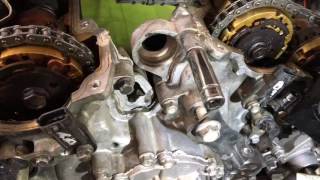
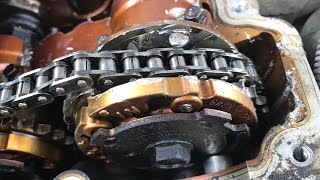
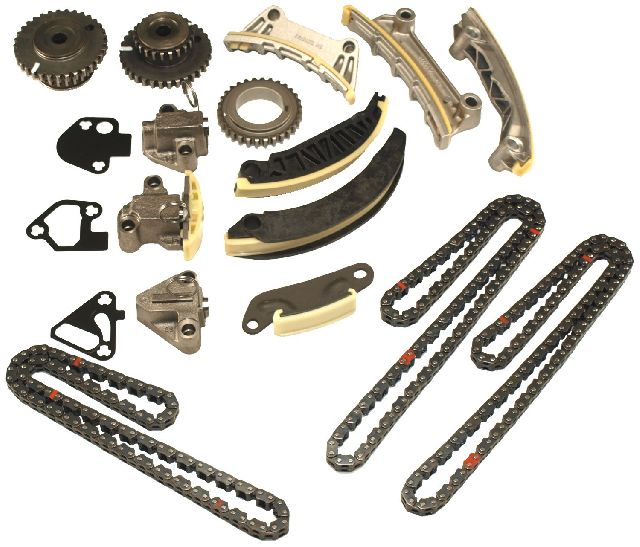
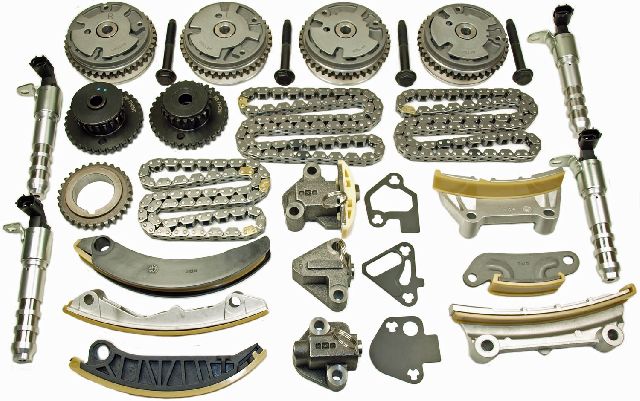
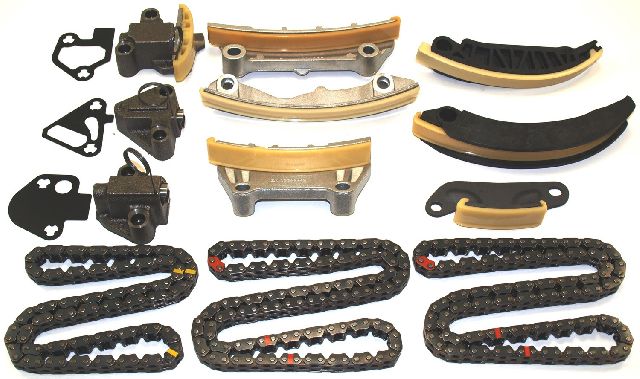
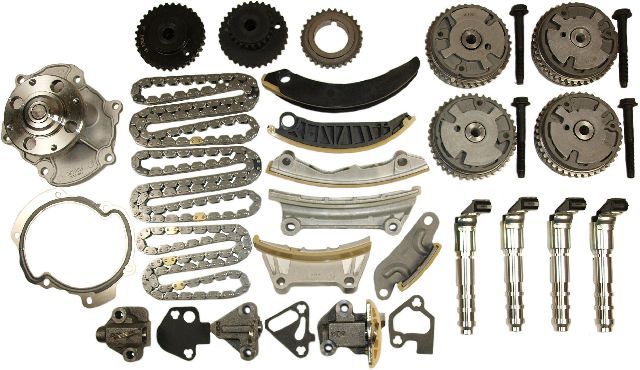
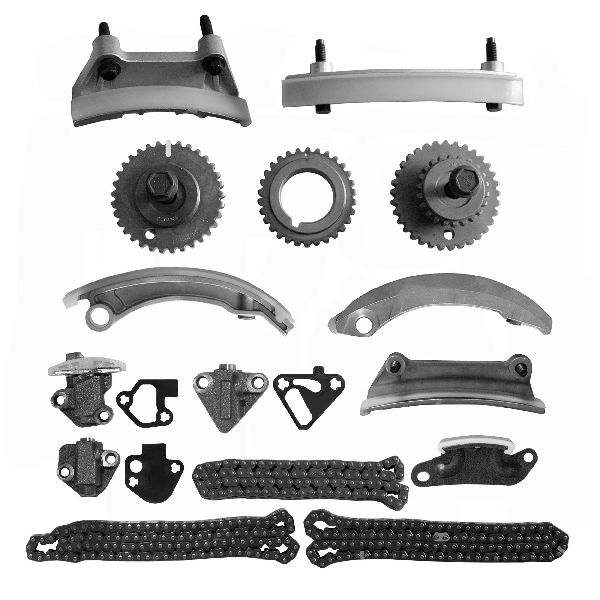
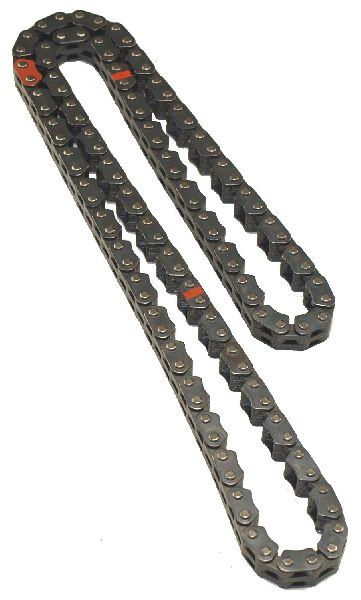
Typical fix: Replace all three timing chains, all tensioners, and all guides with an updated kit. 🎬 Watch: 3.6L engine timing chain repair and alignment It is critical to replace all components as a set.
Est. part cost: $300-$600 - Worn Timing Chain Tensioners and Guides 🔴 High Probability → Shop Engine Timing Chain The hydraulic tensioners and plastic guides wear out along with the chains. A failing tensioner can't keep the chain properly taut, which accelerates wear and leads to timing correlation errors. The tensioners are hydraulic and their performance degrades with low or dirty oil.
How to confirm: Diagnosed during a physical inspection when replacing the timing chains. They are considered a mandatory 'while you're in there' replacement and are included in all reputable timing kits.
Typical fix: Replace as part of a complete timing chain kit service.
Est. part cost: $0 (Included in timing chain kit) - Low or Dirty Engine Oil 🟡 Medium Probability The timing chain tensioners and VVT system are hydraulic and rely on clean oil at the proper pressure to function. GM's own oil life monitoring system in this era was often calibrated to allow for excessively long oil change intervals, leading to oil breakdown. Low oil levels, often due to owner neglect or oil consumption, starve the upper parts of the timing system of lubrication, drastically accelerating wear.
How to confirm: Check the oil level on the dipstick and inspect its condition. If the oil is very dark, gritty, or below the 'add' line, this is a likely contributor. This should be the very first check performed.
Typical fix: Perform an oil and filter change immediately. However, if the chains are already stretched, an oil change will not fix the P0019 code but is critical for the health of the new parts and may prevent a recurrence.
Est. part cost: $50-$100
Rare But Worth Checking
- Failing VVT Solenoid (Oil Control Valve): A solenoid can get stuck or clogged with sludge, causing incorrect camshaft phasing. While possible, it's far less common than chain stretch on this engine. A Reddit user noted a TSB about a bad run of solenoids, suggesting it's a possibility worth investigating, especially if the code is isolated and not accompanied by chain rattle. They are often replaced as a preventative measure during a timing chain job.
- Faulty Camshaft or Crankshaft Position Sensor: → Shop Engine Crankshaft It is rare for the sensor itself to fail in a way that causes this specific correlation code. The code is almost always triggered because the sensor is accurately reporting a real mechanical timing problem. Swapping sensors between banks is a valid diagnostic step, but it rarely resolves the issue on these engines.
Diagnosis Steps
- Verify the oil level and condition. If low or dirty, correct this first, clear codes, and see if the code returns. This is the first and most critical step.
- Use a professional scan tool to check for any other accompanying trouble codes (like P0008, P0009, P0017, P0018). The presence of multiple timing codes strongly suggests a stretched chain.
- Monitor live data from the camshaft and crankshaft position sensors. A persistent deviation between the desired and actual cam positions (over 6-9 degrees) points to a mechanical timing issue.
- If scan tool data is inconclusive, a mechanic may swap the Bank 2 exhaust cam sensor and/or VVT solenoid with their counterparts on Bank 1 to see if the code 'follows' the part. This can rule out a simple component failure.
- If all other steps fail to identify the issue, the final step is to physically inspect the timing chains for slack by removing the engine's front timing cover. This is a labor-intensive process and is usually the first step of the actual repair.
Parts You'll Likely Need
- Engine Timing Chain Kit
(OEM #ACDelco 12700436 (LFX), ACDelco 12650230 (LF1 - check specific model year))— This is the definitive fix. A complete kit includes all three chains, new design tensioners, and guides to address the root cause of the code. Using a complete kit with updated parts is crucial for a lasting repair.
Trusted brands: ACDelco (GM OE), Cloyes
OEM price range: $400-$600
Aftermarket price range: $250-$450
Related Codes That Often Appear With This One
- P0008 — Indicates a general engine position system performance error for Bank 1. This is often the first code to appear when chains begin to stretch.
- P0009 — Indicates an engine position system performance error for Bank 2, often appearing with P0019.
- P0017 — Indicates a correlation error between the crankshaft and the Bank 1 exhaust camshaft. When multiple chains are stretched, codes for both banks are common.
- P0018 — Indicates a correlation error between the crankshaft and the Bank 2 intake camshaft, pointing to a widespread timing issue on that bank.
Technical Service Bulletins (TSBs) & Recalls
- PIP3423P: Notes that codes P0016-P0019 may be set and directs technicians to inspect for loose timing chains or tensioners.
- 12-06-01-009F: Discusses the availability of V6 timing chain kits for repairing stretched chains that cause codes P0008, P0009, and P0016-P0019. It explicitly states that components like sprockets and actuators should not be replaced unnecessarily for this specific issue.
Platform-Specific Known Issues
- Premature timing chain stretch is a widely documented problem on the 2010-2016 SRX's 3.0L and 3.6L V6 engines.
- GM TSB #12-06-01-009F specifically calls out using complete timing chain kits to repair vehicles setting DTCs P0008, P0009, P0016, P0017, P0018 and/or P0019 due to stretched chains.
- TSB #PIP3423P instructs technicians to inspect for loose timing chains or tensioners when P0019 and related codes are present.
- An edge case documented in TSB #PIP3423M is a slipped crankshaft reluctor wheel, which can cause the same codes and symptoms but requires crankshaft replacement to fix.
Mechanic-Grade Diagnostic Values
- Camshaft Position Actuator Solenoid (VVT Solenoid) Resistance — expected: 6.9 to 7.9 Ohms at 68°F (20°C). Failure: A reading outside this range, or an open circuit (OL), indicates a faulty solenoid.
- Scan Tool Cam/Crank Correlation Data — expected: Below 6 degrees of variance after codes are cleared.. Failure: A persistent deviation greater than 6-9 degrees indicates a mechanical timing problem (stretched chain or slipped reluctor).
Scan Tool Commands That Help
- GDS2 / Professional Scan Tool: Camshaft Position Variance Live Data — This is the primary diagnostic function for P0019. The technician monitors the live data parameter for Bank 2 Exhaust Camshaft Variance (or similar PID). This value shows the difference in degrees between the ECM's commanded position and the sensor's reported actual position. A value consistently over 6-9 degrees confirms a correlation error and points towards a mechanical fault like a stretched chain.
Wiring & Ground Locations
- Bank 2 — The cylinder bank closer to the firewall (left side of the engine when viewed from the driver's seat).. P0019 specifically relates to Bank 2, so knowing which side of the V6 engine to inspect is the first step.
- B23C Camshaft Position Sensor — Bank 2 Exhaust Camshaft Position Sensor. Located on the Bank 2 (firewall side) cylinder head, monitoring the exhaust camshaft.. This is the specific sensor ('Sensor B') that reports the timing correlation error to the ECM. On the LFX engine, accessing the Bank 2 sensors can be difficult as they are partially obstructed by a motor mount bracket, potentially requiring the engine to be raised.
- G107 / G108 — On the front side of the left cylinder head (Bank 2).. These are primary engine ground points. A poor ground connection here could potentially cause erratic sensor readings for the components on that cylinder head, although it is a very unlikely cause for a persistent correlation code like P0019.
- ECM (Engine Control Module) — For the 3.6L engine, it is located on the right side of the engine.. All sensor data is sent to the ECM. In rare cases of chasing wiring faults, knowing the ECM location is necessary for checking pinout voltages and continuity from the sensors.
Real Owner Repair Stories
- Pete's Garage YouTube Channel (2010 Cadillac SRX with 3.0L V6 engine, 119,000 miles.) — Check Engine Light with codes P0016, P0017, P0018, and P0019. A rattle noise was also present on startup.
❌ Tried (didn't work) The diagnosis immediately pointed to timing chains due to the presence of all four correlation codes.
✅ What actually fixed it A full timing chain kit replacement was performed. During the repair, the mechanic discovered one of the camshaft actuators (phasers) was not locking as it should. The final repair consisted of replacing all timing chains, guides, tensioners, AND the faulty camshaft actuator.
When the Usual Fixes Don't Work
- While P0019 on a 2010-2016 SRX is overwhelmingly caused by stretched timing chains, there is a significant 'what if' scenario that can trap technicians. GM Technical Service Bulletin PIP3423M documents a rare but possible cause: the crankshaft reluctor wheel, which the crankshaft sensor reads, can physically slip or move on the crankshaft itself. This creates a timing correlation error that is indistinguishable from a stretched chain and will set the exact same codes (P0016, P0017, P0018, P0019). A shop could perform a complete, multi-thousand dollar timing chain replacement only to have the code return immediately. The fix for a slipped reluctor is crankshaft replacement, a far more invasive and expensive repair. This is the most critical counter-evidence to the 'it's always the chains' assumption.
OEM Part Supersession History
Individual timing components (chains, guides, tensioners)→Complete kits (e.g., ACDelco 12650230 for LF1, 12700436 for LFX)— GM released comprehensive kits in 2012 to ensure all related wear parts are replaced at once for a durable repair. TSB 12-06-01-009F advises using these kits and specifically warns against unnecessarily replacing non-wear items like sprockets and actuators unless a specific fault is found with them.
Heads up: While individual parts are available, using a complete, updated kit is the manufacturer-recommended procedure for a lasting repair on a warrantied vehicle.
Model Year Variations Within This Range
- 2010-2011 vs 2012-2016: The primary difference is the engine. The 2010-2011 SRX used the 3.0L V6 (LF1), while the 2012-2016 models used the more powerful 3.6L V6 (LFX). Both are GM High Feature V6 engines and both are susceptible to the same timing chain stretching issue that causes code P0019. The timing chain kits and some specific components differ between the two engines (e.g., kit 12650230 for LF1 vs. 12700436 for LFX).
Helpful Videos
We Have This Part in Stock

The information in this article is provided for general reference and educational purposes only. Vehicle specifications, procedures, and part compatibility can vary by production date, trim level, and region. Always consult your vehicle's factory service manual and verify part numbers before purchasing or performing repairs. Safety-critical components such as airbags, seat belts, and braking systems should be installed by a qualified professional.
- Cadillac SRX:
- 🧭 Diagnostic Flowchart
- 🎬 Helpful Videos
- 🛍️ Shop This Part
- What's Unique About the 2010-2016 Cadillac SRX
- Symptoms You May Notice
- Most Likely Causes
- Rare But Worth Checking
- Diagnosis Steps
- Parts You'll Likely Need
- Related Codes That Often Appear With This One
- Technical Service Bulletins (TSBs) & Recalls
- Platform-Specific Known Issues
- Mechanic-Grade Diagnostic Values
- Scan Tool Commands That Help
- Wiring & Ground Locations
- Real Owner Repair Stories
- When the Usual Fixes Don't Work
- OEM Part Supersession History
- Model Year Variations Within This Range
- 🎟️ Get 5% Off