

P0019 on 2005-2011 Cadillac STS: Stretched Timing Chain Causes and Fixes
P0019 on a Cadillac STS with the 3.6L V6 almost always means the timing chains have stretched. This is a well-documented issue requiring a major repair to replace the chains, guides, and tensioners. Expect a shop cost of $2,600-$3,400+ for this labor-intensive job. Ignoring it can lead to catastrophic engine failure.
- P0019 on a 2005-2011 Cadillac STS with the 3.6L V6 is almost certainly caused by stretched timing chains.
- Do not waste money replacing sensors first; the root cause is mechanical wear.
- This is a major, labor-intensive repair that should be performed by a professional shop.
- Using high-quality, full-synthetic oil and adhering to shorter oil change intervals (e.g., every 5,000 miles) may help prolong the life of the replacement chains.
- The repair should include replacing all chains, guides, and tensioners with a quality kit from a brand like ACDelco or Cloyes.
What's Unique About the 2005-2011 Cadillac STS
The 2005-2011 Cadillac STS, when equipped with the 3.6L LY7 V6 engine, is highly susceptible to premature timing chain wear. This isn't a random part failure; it's a known pattern for this specific engine family. Early versions of GM's oil life monitoring system (OLM) were calibrated to allow for excessively long oil change intervals, sometimes between 8,000 to 12,000 miles. This, combined with some level of normal oil consumption, could lead to low oil levels and degraded oil quality, causing insufficient lubrication and accelerated wear on the timing chains. As a result, P0019 and related timing codes (P0008, P0009, P0016, P0017, P0018) are very common on this platform and almost always point to this specific mechanical failure rather than a simple sensor issue.
Diagnostic Flowchart
Tap your situation to follow the diagnostic path that matches what you're seeing on this vehicle.
Symptoms You May Notice
- Check Engine Light is on
- Engine rattling noise, especially on a cold start, coming from the front of the engine. 🎬 Watch: Hear what a failing timing chain rattle sounds like.
- Rough or unstable idle.
- Reduced engine power and hesitation during acceleration.
- Decreased fuel economy.
- Engine is hard to start or cranks but won't start.
- In severe cases, the engine may not start at all.
- Replacing only the camshaft position sensor
- Replacing only the crankshaft position sensor
- Replacing the camshaft actuator solenoid without confirming it's faulty via scan tool testing.
- Performing an oil change and expecting it to fix the code after the chain has already stretched.
Most Likely Causes
- Stretched Timing Chains 🔴 High Probability → Shop Engine Timing Chain The GM 3.6L LY7 V6 engine has a documented history of premature timing chain wear due to a combination of chain design in early models and lubrication issues. This is confirmed by multiple GM Technical Service Bulletins (TSBs) that specifically address this issue for codes including P0019. The primary chain affects both banks, so its stretch is a common cause for these codes.
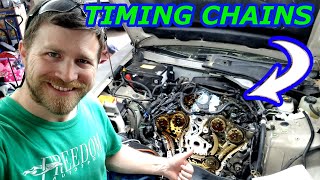
How to confirm: The definitive diagnosis is a physical inspection of the timing chains for slack, which requires removing the engine's front timing cover. A mechanic can also use a scan tool to observe the camshaft position deviation data; significant and persistent deviation is a strong indicator of chain stretch.
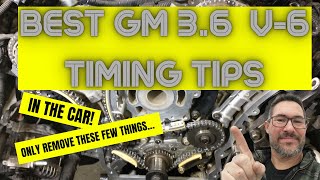
Typical fix: Replacement of all three timing chains, along with the tensioners, guides, and often the water pump (which is driven by the timing chain). This is typically done as a complete kit. 🎬 See this expert walkthrough for the easiest way to replace chains.
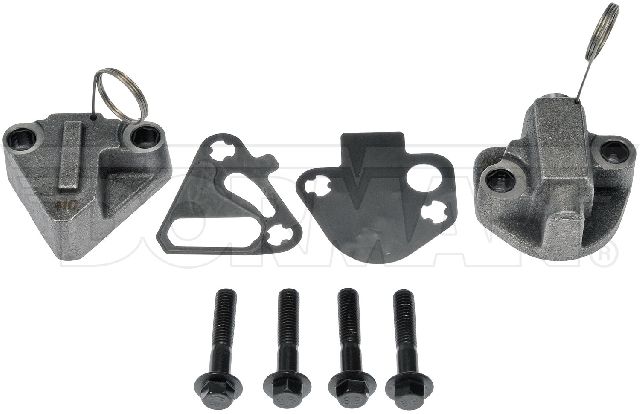
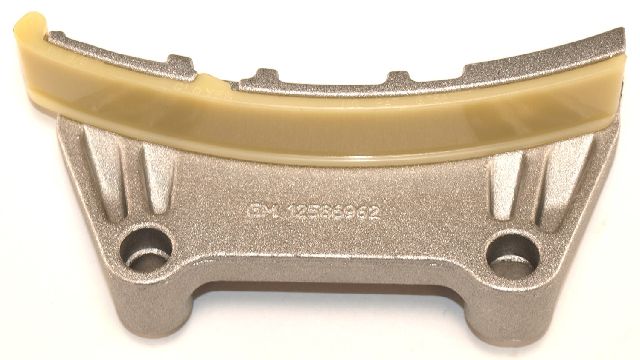
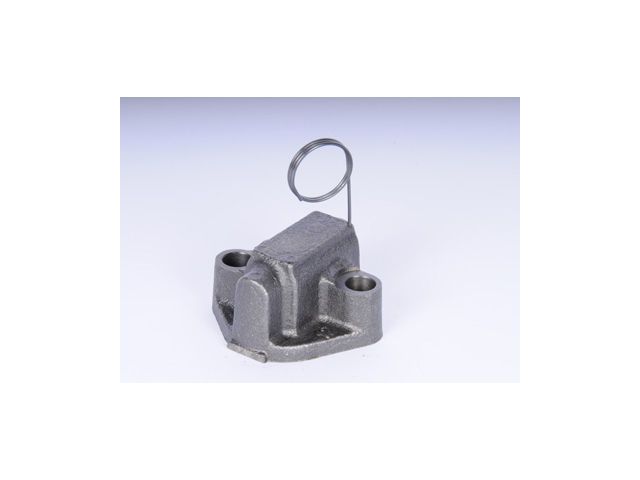
Est. part cost: $350-$600 - Worn Timing Chain Tensioners or Guides 🔴 High Probability → Shop Engine Timing Chain The tensioners and guides are plastic and composite parts that wear out concurrently with the chains. A failing hydraulic tensioner can't maintain proper chain tension, leading to slack, rattling noises, and timing correlation codes. TSB #12-06-01-009F specifically discusses when to replace guides based on wear.
How to confirm: This is confirmed during the physical inspection when the timing cover is removed for chain inspection. Worn guides will have visible grooves or damage.
Typical fix: Always replaced as part of a complete timing chain service. It is not recommended to replace only the tensioners or guides.
Est. part cost: $0 (Included in timing chain kit) - Low or Degraded Engine Oil 🟡 Medium Probability The camshaft phasers and timing chain tensioners are hydraulically operated by engine oil pressure. Infrequent oil changes, exacerbated by the original Oil Life Monitor (OLM) calibration, or low oil levels can lead to sludge buildup, blocked passages, and accelerated wear on all timing components.
How to confirm: Check the oil level on the dipstick and inspect its condition. If the oil is very dark, gritty, or below the 'add' line, this is a likely contributing factor. An oil change alone will not fix a chain that is already stretched.
Typical fix: Perform an oil and filter change with the correct specification oil (GM dexos-approved full synthetic). However, this is a preventative measure; if the chain is already stretched and P0019 is present, an oil change alone will not resolve the code.
Est. part cost: $50-$100
Rare But Worth Checking
- Faulty Camshaft Position Sensor (Bank 2 Exhaust): → Shop Engine Camshaft Position Sensor While possible, this is far less common than timing chain failure on this engine. People often replace sensors first, only to find the code returns. The sensor for Bank 2 (front bank) exhaust is located on the valve cover. Consider this only after ruling out the timing chain system.
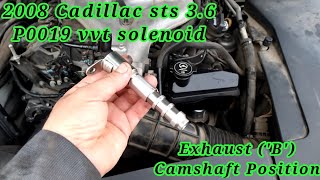
- Faulty Camshaft Phaser/Actuator Solenoid: → Shop Engine Camshaft The oil-driven actuator that advances or retards the camshaft timing can get stuck or fail, often due to dirty oil clogging its internal passages. Diagnosis involves commanding the phaser with a high-level scan tool and observing the response. These are also known as VVT solenoids.
- Slipped Crankshaft Reluctor Ring: → Shop Engine Crankshaft There are documented cases where the tone ring on the crankshaft, which the crankshaft position sensor reads, can move slightly. This is a rare but serious issue that perfectly mimics a timing chain problem. TSB #PIP3423P specifically instructs technicians to check for this if timing chains are found to be tight. 🎬 Watch: How to inspect the crankshaft tone ring for slippage. This requires significant labor to inspect and, if necessary, crankshaft replacement.
Diagnosis Steps
- Verify engine oil level and condition. An oil level that is low or oil that is dirty/sludgy is a major red flag for timing chain wear. Correct if low or dirty, but do not expect this to clear the code if the chain is already stretched.
- Use an OBD-II scanner to check for other related trouble codes, such as P0008, P0009, or P0018. The presence of multiple timing codes strongly suggests a stretched primary chain.
- With a professional scan tool, monitor the live data for Bank 2 Camshaft Position Variance. Observe if the desired vs. actual angles deviate significantly, especially during RPM changes. A consistent deviation points to a mechanical timing issue.
- Listen for a rattling or scraping noise from the front of the engine (timing cover area), particularly during a cold start for the first few seconds.
- If the above steps strongly suggest a timing issue, the next step is to get a quote for a timing chain replacement. Physical inspection requires removing the timing cover, which is a significant portion of the labor for the full repair.
- As a less likely step, inspect the wiring and connector for the Bank 2 exhaust camshaft position sensor for any damage or corrosion. The sensor is located on the front valve cover.
- Only after confirming the timing components are sound should you consider replacing the camshaft position sensor or actuator solenoid. TSB #PIP3423P even suggests checking for a slipped crankshaft reluctor ring before major disassembly if chains appear tight.
Parts You'll Likely Need
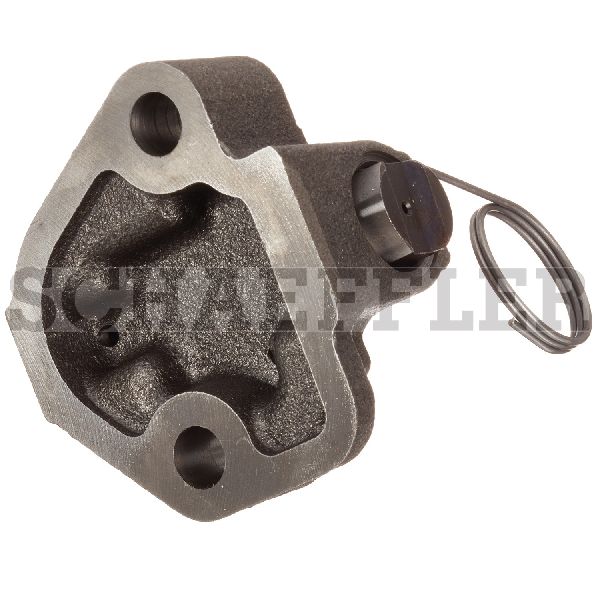
- Engine Timing Chain Kit
(OEM #12693218)— This is the primary failure point for code P0019 on the 3.6L V6. A complete kit ensures all worn components (chains, guides, tensioners) are replaced at once. TSB 12-06-01-009F recommends using these kits for the repair. The original part number 12700436 has been superseded by updated kits.
Trusted brands: ACDelco (GM Genuine), Cloyes, Melling
OEM price range: $350-$500
Aftermarket price range: $300-$560 - Camshaft Position Sensor (Bank 2, Exhaust)
(OEM #12588992)— This is sometimes replaced as a preliminary diagnostic step or if it is found to be faulty after testing. It is not the usual cause of the code on this engine. Bank 2 is the front bank, near the radiator.
Trusted brands: ACDelco, Delphi, Bosch
OEM price range: $40-$70
Aftermarket price range: $20
Related Codes That Often Appear With This One
- P0008 — Indicates a general engine position system performance error for Bank 1. It often appears with more specific codes like P0019 when the primary timing chain is stretched, as this affects the entire system.
- P0009 — Indicates a general engine position system performance error for Bank 2. This is the Bank 2 equivalent of P0008 and is very commonly seen with P0018 and P0019 when a timing chain has stretched.
- P0018 — This code is for Bank 2, Sensor 'A' (Intake Cam). Since a stretched primary or secondary timing chain affects both camshafts on a bank, it's common to see codes for both the intake (P0018) and exhaust (P0019) cams together.
Technical Service Bulletins (TSBs) & Recalls
- PIP3423P/M: Mentions that codes P0016, P0017, P0018, P0019, P0008, or P0009 may require inspection for loose timing chains or a slipped crankshaft reluctor ring.
- 12-06-01-009F: Announces the availability of comprehensive timing chain service kits and provides detailed information on the repair process for stretched timing chains causing codes like P0019.
Platform-Specific Known Issues
- The GM 3.6L LY7 V6 engine used in this vehicle is known for premature timing chain stretch, which is the subject of multiple Technical Service Bulletins (TSBs). Bulletin #12-06-01-009F details the official repair procedure using updated timing chain kits.
- Extended oil change intervals, as recommended by the original Oil Life Monitor (OLM) calibration, are a primary contributor to accelerated chain wear. GM later issued updates to the OLM calibration to recommend more frequent changes.
- In rare cases, a slipped crankshaft reluctor ring can cause P0019 and related codes, mimicking a timing chain failure. TSB #PIP3423M addresses this specific possibility.
Mechanic-Grade Diagnostic Values
- Camshaft Position Actuator Solenoid (VVT Solenoid) Resistance — expected: 6.9 to 7.9 ohms at 68°F (20°C). Failure: A reading outside this range, or an open/infinite reading, indicates a faulty solenoid.
- Camshaft Position Sensor (CMP) Signal Circuit Voltage — expected: 4.8-5.2 volts (Key On, Engine Off). Failure: Voltage greater than 5.2V suggests a short to voltage. Voltage less than 4.8V could indicate a short to ground or an open/high resistance in the signal circuit.
Scan Tool Commands That Help
- GDS2 / Tech2 or equivalent professional scan tool: VVT Solenoid Actuator Test / Variable Oil Pump Solenoid Command — This bidirectional command is used to manually activate the Bank 2 exhaust VVT solenoid while the engine is running. If the solenoid is functioning correctly, the engine should hesitate or stall. If there is no change in engine operation, it points to a faulty solenoid or a blockage in the oil passage.
Wiring & Ground Locations
- G103 — Top right side of the engine, fastened to the ECM case (for 2007 models).. The Engine Control Module (ECM) relies on a solid ground connection to accurately read sensor data. A poor ground at G103, where the ECM itself is grounded, could cause erratic readings from the camshaft and crankshaft sensors, potentially contributing to correlation codes.
- G105 — At the back of the underhood fuse block (for 2006 models).. This ground is a central point for various engine components. Corrosion or a loose connection here can affect multiple systems, including power to relays and modules that support the VVT and ignition systems.
- G106 — On the rear side of the right cylinder head (for 2006 models).. This is a primary engine block ground. Since the camshaft and crankshaft sensors reference engine ground, a poor connection here can create a voltage offset, leading the ECM to misinterpret the sensor signals and set false correlation codes.
- Bank 2 Camshaft Position Sensor Connector — On the front valve cover, near the radiator.. GM issued a service bulletin (PI0090D) regarding intermittent hesitation that could be caused by poor terminal connections in the camshaft position sensor harness connector itself. A visual inspection for backed-out terminals is recommended before replacement.
Real Owner Repair Stories
- YouTube user 'Julio's Mobile Mechanic' (2008 Cadillac CTS 3.6L) — Check Engine Light with code P0019, rough running, black smoke from exhaust, strong smell of raw fuel.
❌ Tried (didn't work) Initially, the owner cleaned all four VVT solenoids. This worked for about a week, but the light returned for the Bank 2 exhaust solenoid specifically.
✅ What actually fixed it Replacing the Bank 2 exhaust VVT solenoid with a new part resolved the code and the running issues. The initial cleaning confirmed a solenoid-related problem, but the part was failing and ultimately needed replacement. - Reddit user 'NBQuade' on r/Justrolledintotheshop (2008 Cadillac CTS 3.6L DI (LLT engine, but same timing chain issue)) — Check Engine Light with timing chain codes.
❌ Tried (didn't work) The user notes that another 2008 CTS with the same engine, which followed the long oil change intervals recommended by the oil life monitor, required timing chains at only 41,000 miles.
✅ What actually fixed it The user, who performed more frequent oil changes (5,000-6,000 miles), still had the code appear intermittently at 72,000 miles. The takeaway was that while frequent oil changes can extend the life of the chains, they do not prevent the eventual failure, which is covered under a GM special coverage program (10 years/120k miles).
OEM Part Supersession History
Various individual components→Timing Chain Kit (e.g., 12650230 for 2007 models)— GM consolidated the required parts into comprehensive kits to ensure all necessary components were replaced during a timing chain service. TSB 12-06-01-009F states these kits were designed to fulfill all parts requirements and were developed with the latest product enhancements.
Heads up: TSB 12-06-01-009F explicitly states that components like idler sprockets, camshaft actuator gears, and the crankshaft driven gear should NOT be replaced as part of a standard stretched chain repair, as they are not considered wear items in this context. Replacing them is unnecessary.
Model Year Variations Within This Range
- 2005-2007: Early build 2007 models may have different timing chain identification. TSB 12-06-01-009F directs technicians to refer to Corporate Bulletin 07-06-01-013 for these early models to ensure correct part identification.
- Post-2012 models: While not immune, timing chain issues became less common after the 2012 model year as GM implemented design changes to the timing components and updated the Oil Life Monitor (OLM) software to recommend more frequent oil changes.
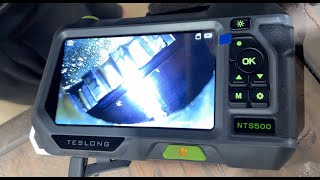
Helpful Videos
We Have This Part in Stock

The information in this article is provided for general reference and educational purposes only. Vehicle specifications, procedures, and part compatibility can vary by production date, trim level, and region. Always consult your vehicle's factory service manual and verify part numbers before purchasing or performing repairs. Safety-critical components such as airbags, seat belts, and braking systems should be installed by a qualified professional.
- Cadillac STS:
- 🧭 Diagnostic Flowchart
- 🎬 Helpful Videos
- 🛍️ Shop This Part
- What's Unique About the 2005-2011 Cadillac STS
- Symptoms You May Notice
- Most Likely Causes
- Rare But Worth Checking
- Diagnosis Steps
- Parts You'll Likely Need
- Related Codes That Often Appear With This One
- Technical Service Bulletins (TSBs) & Recalls
- Platform-Specific Known Issues
- Mechanic-Grade Diagnostic Values
- Scan Tool Commands That Help
- Wiring & Ground Locations
- Real Owner Repair Stories
- OEM Part Supersession History
- Model Year Variations Within This Range
- 🎟️ Get 5% Off