

P0019 on 2013-2019 Cadillac XTS: Crank-Cam Correlation Causes and Fixes
On a 2013-2019 Cadillac XTS with the 3.6L V6 LFX engine, code P0019 almost always indicates stretched timing chains. This is a well-known, widespread issue with this engine family, often exacerbated by extended oil change intervals. The repair is serious and labor-intensive, requiring replacement of the chains, tensioners, and guides. Expect professional repair costs to range from $2,500 to over $4,000. Ignoring this code is risky, as a chain failure can lead to catastrophic engine damage.
- P0019 on a 2013-2019 Cadillac XTS is a strong indicator of stretched timing chains, a known and widespread issue with the 3.6L V6 engine.
- Do not drive the vehicle. A timing chain failure can cause catastrophic engine damage, turning a costly repair into a complete engine replacement.
- The correct fix is a complete timing service, replacing all chains, tensioners, and guides. Replacing only a sensor or solenoid will not solve the problem.
- This is not a DIY-friendly repair. Due to its complexity, it should be handled by a professional mechanic with experience on GM engines.
- Always use high-quality engine oil and follow the recommended oil change intervals to maximize the life of the new timing components.
What's Unique About the 2013-2019 Cadillac XTS
The GM 3.6L V6 (LFX) engine used in the Cadillac XTS has a widely documented history of premature timing chain stretching. While the LFX was an improvement over its predecessor (the LLT), it can still suffer from this issue. The problem is often linked to the factory's oil life monitor (OLM) allowing for excessively long oil change intervals, which leads to oil degradation and accelerated wear on the chains and hydraulic tensioners. GM has issued multiple Technical Service Bulletins (TSBs), such as #PIP3423P and #12-06-01-009F, that directly link codes like P0019 to loose/stretched timing chains across the many vehicles that use this engine. The issue is so prevalent that it's the first and most probable diagnosis an experienced technician will consider.
Diagnostic Flowchart
Tap your situation to follow the diagnostic path that matches what you're seeing on this vehicle.
Symptoms You May Notice
- Check Engine Light is on
- Reduced engine power and hesitation on acceleration
- Rough or unstable idle
- Rattling, scraping, or whirring noise from the front (passenger side) of the engine, especially on a cold start for a few seconds.
- Decreased fuel economy
- Engine may crank but fail to start in severe cases.
- Replacing only the camshaft position sensor without verifying mechanical timing. The sensor is often correctly reporting a mechanical fault.
- Replacing only the VVT solenoid. While easier to access, it is rarely the root cause of this specific code on this engine when timing chain stretch is so common.
- Performing an oil change and expecting it to fix the code. If the chains have already stretched, fresh oil will not correct the mechanical slack.
Most Likely Causes
- Stretched Timing Chains 🔴 High Probability → Shop Engine Timing Chain The 3.6L LFX engine family is notorious for premature timing chain wear. This is the most common cause for P0019 and related timing codes like P0008 and P0009. The issue was particularly problematic on the predecessor LLT engine but still affects 2012+ LFX models, especially if oil changes are neglected.
How to confirm: The definitive method is to remove the engine's front timing cover and physically measure the chain's deflection. A professional scan tool can also show a significant and consistent variance between the desired and actual cam position angles for Bank 2, often exceeding 4-6 degrees at idle. Physical inspection is called for in TSB #PIP3423P.
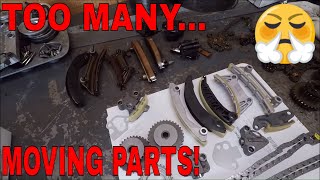
Typical fix: Replace all three timing chains, all tensioners, and all guides with an updated OEM or high-quality aftermarket kit. This is a major repair.
Est. part cost: $300-$600 - Failed Timing Chain Tensioner(s) 🔴 High Probability → Shop Engine Timing Chain The hydraulic tensioners can fail, weaken, or get clogged with oil sludge, allowing the chains to become slack. This is often a contributing factor or a direct result of the main timing chain problem, and is specifically mentioned as a check in TSB #PIP3423P.
How to confirm: Confirmed during physical inspection when the timing cover is removed. A failed tensioner will not hold adequate pressure on the chain guide.
Typical fix: Tensioners are always replaced as part of a complete timing chain service. It is not recommended to replace them in isolation.
Est. part cost: $50-$150 (if bought separately) - Low or Dirty Engine Oil 🟡 Medium Probability The variable valve timing (VVT) system and chain tensioners are hydraulically operated by engine oil. GM's own Oil Life Monitor (OLM) has been criticized for allowing intervals that are too long (8,000-12,000 miles), leading to oil breakdown, sludge, and accelerated wear on timing components. GM even issued bulletins to recalibrate the OLM to a shorter interval.
How to confirm: Check the oil level on the dipstick and inspect its condition. If it's very low or looks like sludge, this is a likely contributor. GM considers oil consumption of up to 1 quart per 2,000 miles to be 'normal' for this engine, making it easy for the level to become dangerously low between changes.
Typical fix: Correct the oil level and perform an oil change with full-synthetic oil meeting GM's dexos1 specification. However, if the chain is already stretched and the code is set, an oil change will not solve the P0019 code.
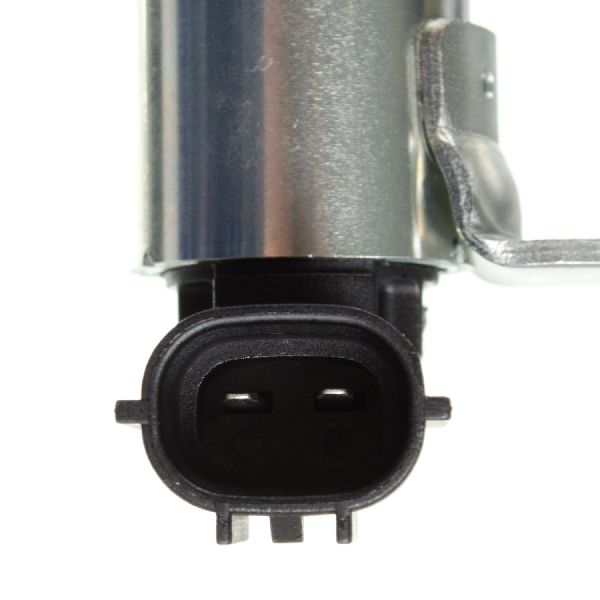
Est. part cost: $50-$100 - Faulty VVT Solenoid (Camshaft Actuator) ⚪ Low Probability
How to confirm: Command the solenoid on and off with a bidirectional scan tool to see if the engine RPM changes or stumbles. You can also swap the Bank 2 exhaust solenoid with the Bank 2 intake solenoid; if the code changes to P0018, the solenoid is faulty. Resistance should be between 6.9 and 7.9 ohms.
Typical fix: Replace the Bank 2 exhaust VVT solenoid. It's a relatively easy and inexpensive part to replace as a diagnostic step before committing 🎬 Watch: How to replace the VVT solenoid on an XTS to a timing chain job.
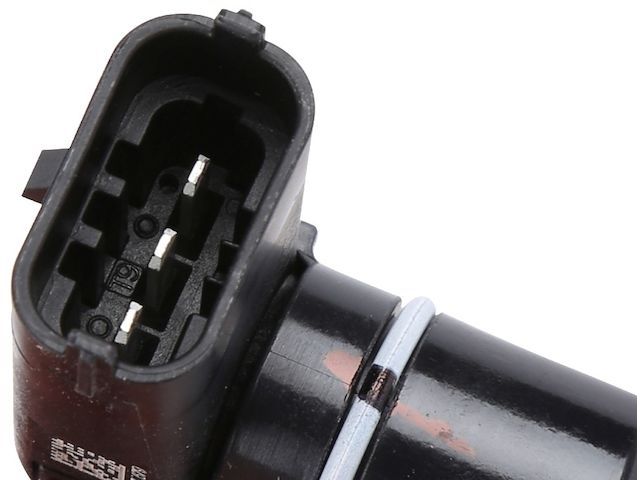
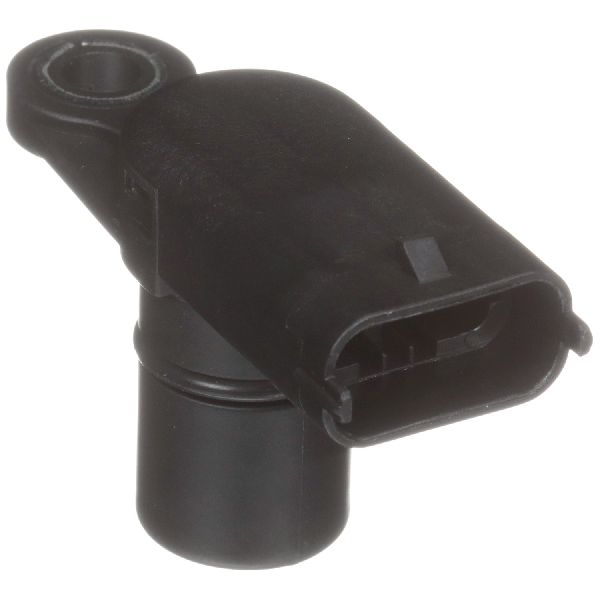
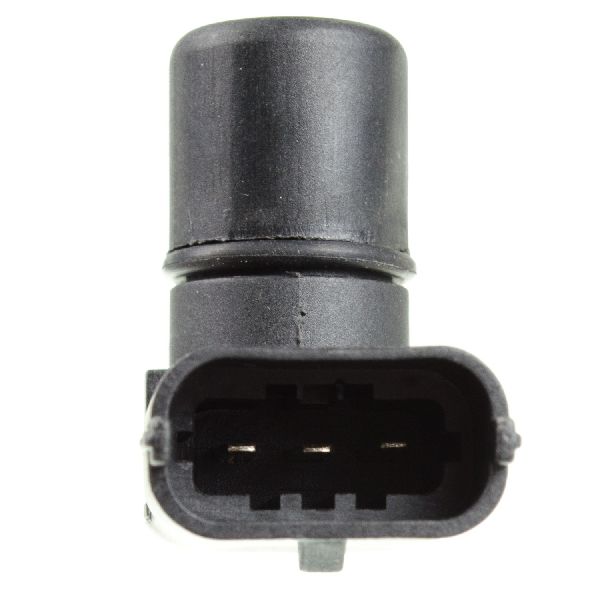
Est. part cost: $30-$80 - Faulty Camshaft Position (CMP) Sensor ⚪ Low Probability → Shop Engine Camshaft Position Sensor
How to confirm: Test the sensor's signal with an oscilloscope or swap the Bank 2 exhaust sensor with the intake sensor (if they are identical) to see if the code changes to P0018. The sensor is correctly reporting a mechanical fault in most cases.
Typical fix: Replace the Bank 2 exhaust camshaft position sensor. Labor costs are typically $73-$107.
Est. part cost: $25-$70
Rare But Worth Checking
- Damaged or Slipped Crankshaft Reluctor Wheel: → Shop Engine Crankshaft The tone ring on the crankshaft that the sensor reads can physically slip out of position. This is a rare but known issue documented in GM TSB #PIP3423P. It causes timing codes even with perfect chains. The fix requires crankshaft replacement.
- Wiring Harness Damage: A damaged wire or poor connection to the camshaft sensor or VVT solenoid can mimic a component failure. This should be checked before replacing expensive parts.
- Failed ECM: In extremely rare cases, the Engine Control Module itself can fail, but all other possibilities must be exhausted first.
Diagnosis Steps
- Read the code with an OBD-II scanner and document all other related timing codes (P0008, P0009, P0017, P0018).
- Check the engine oil level and condition. Low or sludgy oil is a major red flag for timing system health.
- Listen for a distinct rattling or chain-slap noise from the front (passenger side) of the engine, especially during a cold start.
- Using a scan tool with live data, monitor the desired vs. actual camshaft position angles for Bank 2 Exhaust. A large and persistent deviation (often over 4-6 degrees) strongly points to a mechanical timing issue.
- As a preliminary step, consider swapping the Bank 2 exhaust and intake VVT solenoids to see if the code changes from P0019 to P0018. This can rule out a faulty solenoid.
- The definitive step: Remove the engine's front timing cover to physically inspect the timing chains for slack, and check for broken guides or failed tensioners. This is a labor-intensive step that confirms the most common cause.
Parts You'll Likely Need
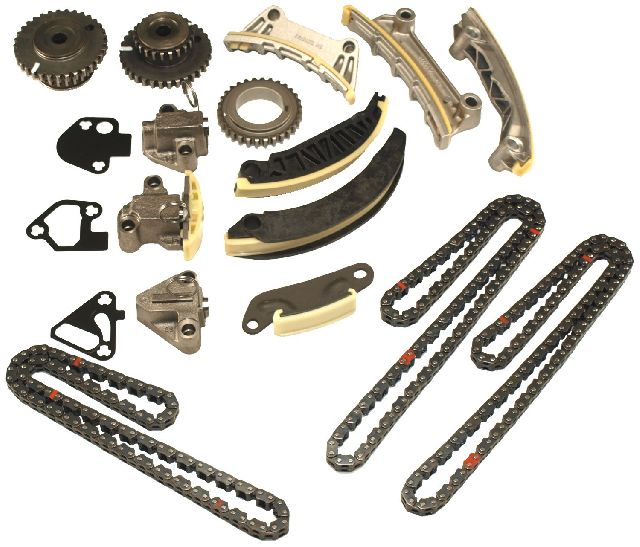
- Engine Timing Chain Kit
(OEM #12651450 (may be superseded by 12700436 or included in kit 12693218))— This is the definitive fix. A complete kit replaces all three chains, guides, and tensioners to fully resolve the known wear issue on the 3.6L engine. Using a complete kit with updated parts is critical.
Trusted brands: ACDelco (OEM), Cloyes
OEM price range: $350-$500
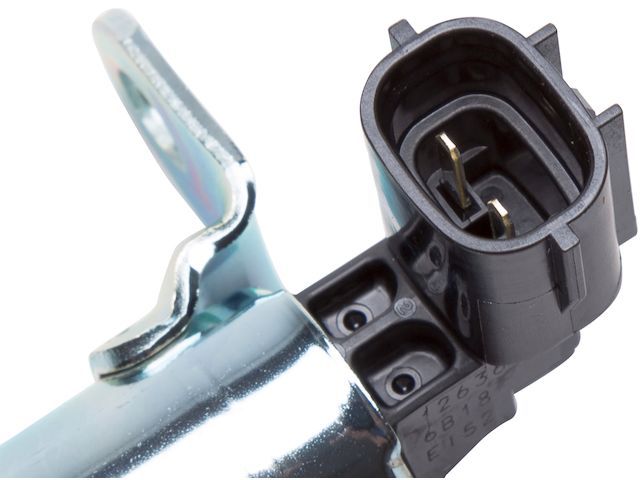
Aftermarket price range: $250-$400 - VVT Solenoid / Camshaft Position Actuator (Bank 2, Exhaust)
(OEM #12633613 (may be superseded by part numbers like 12679100 or 55512049))— Replaced if it fails diagnostic tests or as a 'while you're in there' part during a timing chain job. It is a less common failure point than the chains themselves.
Trusted brands: ACDelco (OEM), Dorman
OEM price range: $40-$80
Aftermarket price range: $30-$60
Related Codes That Often Appear With This One
- P0008 — Indicates a general engine position system performance error for Bank 1. Often appears when the primary timing chain is stretched, affecting the entire system.
- P0009 — The Bank 2 equivalent of P0008, indicating a general timing error on the front bank. Very common to see with P0019.
- P0017 — Crank/Cam correlation error for Bank 1 Exhaust Camshaft. Seeing both P0017 and P0019 strongly points to a stretched primary chain affecting both banks, or multiple stretched secondary chains.
- P0018 — Crank/Cam correlation error for Bank 2 Intake Camshaft. If seen with P0019, it's an almost certain indicator of a timing issue with the secondary chain on Bank 2.
Technical Service Bulletins (TSBs) & Recalls
- TSB #PIP3423P: A preliminary bulletin guiding technicians to check for loose timing chains or a rare shifted crankshaft reluctor wheel when multiple timing codes (P0008, P0009, P0016-P0019) are present.
- TSB #12-06-01-009F: Announces updated timing chain service kits for a wide range of GM vehicles with the 3.6L V6 and lists all related DTCs, including P0019, as being caused by stretched chains.
- TSB #10-06-01-008F: Discusses issues with the PCV system leading to oil in the intake manifold and the installation of an updated valve cover, which relates to the overall oil consumption and degradation issues affecting the engine.
- Customer Satisfaction Bulletin #12312: Related to reprogramming the ECM to adjust the engine oil life monitor to a maximum of 7,500 miles to combat premature oil breakdown.
Platform-Specific Known Issues
- The GM 3.6L High Feature V6 (LFX) engine is notorious for premature timing chain stretching. This is not an isolated issue but a well-documented pattern across many GM vehicles using this engine.
- The GM Oil Life Monitor (OLM) system often recommended oil change intervals that were too long, contributing to oil degradation and accelerated chain wear. TSBs were issued to recalibrate the OLM for shorter intervals.
- While the LFX engine (2012+) featured an improved timing chain design over the earlier LLT engine, the problem was not entirely eliminated and still occurs, particularly in the 2012-2013 model years.
Mechanic-Grade Diagnostic Values
- Camshaft Position Actuator Solenoid (VVT Solenoid) Resistance — expected: 6.9 - 7.9 Ohms at 68°F (20°C). Some service manuals may list 7-12 Ohms.. Failure: A reading outside the specified range, or an open (infinite) / short (zero) reading, indicates a faulty solenoid coil.
- VVT Solenoid Ignition Circuit Voltage — expected: Battery voltage (~12V) with ignition ON.. Failure: If a test lamp between the ignition circuit terminal and ground does not illuminate, the circuit has a short to ground or an open/high resistance.
- Mode $06 VVT Monitor Test Results — expected: The test results should show the degrees of error are within the specified tolerance.. Failure: A high degree of error reported in Mode $06 for the Bank 2 exhaust cam can confirm a correlation fault without needing to wait for the CEL to return.
Scan Tool Commands That Help
- GDS2 / Tech2: Camshaft Position Actuator Solenoid Test — This bidirectional control commands the Bank 2 exhaust solenoid ON and OFF while the engine is idling. A working solenoid will cause a change in engine RPM or an audible click. No change suggests a stuck solenoid, clogged oil passage, or wiring issue, helping to diagnose the solenoid before attempting a timing chain job.
- GDS2 / Tech2: Crankshaft Position Variation Learn — This procedure is mandatory after replacing timing chains, the crankshaft, the crankshaft sensor, or the ECM. It allows the ECM to learn the mechanical profile of the crankshaft reluctor wheel to ensure accurate timing and prevent future correlation codes from being set incorrectly.
Wiring & Ground Locations
- G108 — Right rear of the engine compartment on a 2014 XTS.. This is a primary engine ground. A loose or corroded connection at G108 can cause unstable voltage references for the ECM and its sensors, potentially leading to erroneous correlation codes like P0019.
- G109 — Left rear of the engine compartment on a 2014 XTS.. Another critical engine ground. Poor contact here can affect sensor signals and ECM operation, contributing to phantom timing codes.
- G120 — Left lower center of the engine block on a 2014 XTS 3.6L.. This engine block ground ensures that sensors mounted to the engine, like the crank and cam sensors, have a solid reference. A poor ground can create a voltage offset and cause the ECM to misinterpret their signals.
- Bank 2 Camshaft Position Sensor Connector — Front of the left cylinder head (Bank 2 is the bank closer to the radiator on the FWD XTS).. This is the direct connection point for the sensor in question. Checking for corrosion, backed-out pins, or wire damage here is a crucial step before replacing the sensor.
Real Owner Repair Stories
- YouTube user fixing a 2nd Gen Chevy Colorado (2015-2022 Chevrolet Colorado with 3.6L engine) — Check Engine Light with codes P0017 and P0019.
❌ Tried (didn't work) The user went straight to replacing the solenoids as the likely fix.
✅ What actually fixed it Replacing the Bank 1 and Bank 2 exhaust VVT solenoids resolved the codes. The user noted that for the Bank 2 solenoid (related to P0019), the throttle body had to be removed for access. - Composite of forum user experiences (GM vehicle with 3.6L V6 engine) — Persistent timing codes (P0018, P0019, etc.) after major repairs.
❌ Tried (didn't work) Complete timing chain kit replacement (chains, guides, tensioners)., Camshaft phaser replacement., VVT solenoid replacement.
✅ What actually fixed it The problem was suspected to be a slipped crankshaft reluctor wheel, as described in TSB #PIP3423P. This highlights an edge case where even a full timing job won't fix the codes if the crank reluctor itself has moved, which must be checked if codes return after a proper timing service.
"I Checked Everything" — The Actual Cause
- A smoke test would not be relevant for diagnosing the root cause of P0019. However, a similar pattern exists where all electrical and accessible parts (sensors, solenoids) test perfectly, yet the code persists. The actual cause in these cases is almost always internal mechanical wear (stretched chains) or a rare mechanical fault like a slipped crankshaft reluctor wheel, which requires engine disassembly to confirm.
OEM Part Supersession History
Original timing chain design for 3.6L LLT engine→Updated timing chain design for 3.6L LFX engine (e.g., in kit 12693218)— The original chain design used on the predecessor LLT engine was highly prone to premature stretching. The updated design for the LFX is more robust and durable.
Heads up: Some sources suggest the 2012 model year LFX engine may have still used the older, less reliable timing chain from the LLT. When sourcing parts, it is critical to get a kit specified for 2013+ models or an aftermarket kit confirmed to have the updated, more robust chain design.
Model Year Variations Within This Range
- 2013-2019: The 3.6L LFX engine was used throughout the 2013-2019 XTS model run. While the LFX featured improved timing chains over the earlier LLT engine, the fundamental design and risk of chain stretch still exist across all years, particularly if oil change intervals are extended. No major changes within this specific year range are noted that would alter the diagnosis for P0019.
Helpful Videos
We Have This Part in Stock

The information in this article is provided for general reference and educational purposes only. Vehicle specifications, procedures, and part compatibility can vary by production date, trim level, and region. Always consult your vehicle's factory service manual and verify part numbers before purchasing or performing repairs. Safety-critical components such as airbags, seat belts, and braking systems should be installed by a qualified professional.
- Cadillac XTS:
- 🧭 Diagnostic Flowchart
- 🎬 Helpful Videos
- 🛍️ Shop This Part
- What's Unique About the 2013-2019 Cadillac XTS
- Symptoms You May Notice
- Most Likely Causes
- Rare But Worth Checking
- Diagnosis Steps
- Parts You'll Likely Need
- Related Codes That Often Appear With This One
- Technical Service Bulletins (TSBs) & Recalls
- Platform-Specific Known Issues
- Mechanic-Grade Diagnostic Values
- Scan Tool Commands That Help
- Wiring & Ground Locations
- Real Owner Repair Stories
- "I Checked Everything" — The Actual Cause
- OEM Part Supersession History
- Model Year Variations Within This Range
- 🎟️ Get 5% Off