

P0019 on 2013-2019 Cadillac XTS 3.6L: Crank/Cam Correlation Causes and Fixes
On a 2013-2019 Cadillac XTS with the 3.6L V6, code P0019 almost always indicates stretched timing chains. This is a well-known and serious issue with this engine. The repair is complex and expensive, typically costing $2,500-$4,000, and involves replacing the chains, tensioners, and guides. Ignoring the code is dangerous as a chain failure can cause catastrophic engine damage.
- P0019 on a 2013-2019 Cadillac XTS is a serious code that almost certainly indicates stretched timing chains.
- Do not drive the vehicle. A timing chain failure can cause catastrophic engine damage, turning a very expensive repair into a complete engine replacement.
- Do not waste money replacing sensors or solenoids as a first step; this is almost always a major mechanical issue.
- The repair is complex and expensive, typically costing between $2,500 and $4,000.
- Frequent oil changes with high-quality full synthetic oil are the best preventative measure to prolong the life of the timing components.
What's Unique About the 2013-2019 Cadillac XTS
The GM 3.6L V6 engine family (including the LFX in your XTS) has a well-documented history of premature timing chain stretching. While GM introduced improved timing chain designs for the LFX engine, the problem persists, often accelerated by oil degradation from extended oil change intervals recommended by the factory Oil Life Monitor (OLM). Unlike on many other vehicles where this code might point to a simple sensor fault, on the 3.6L LFX, P0019 is a very strong indicator of this significant mechanical failure, making it a much more serious and expensive diagnosis from the outset.
Symptoms You May Notice
- Check Engine Light is on
- Rough or unstable idle
- Hesitation or stumbling during acceleration
- Reduced engine power or 'limp mode'
- Decreased fuel economy
- Engine may stall, especially at low speeds
- Rattling or whining noise from the front of the engine, especially on cold starts
- Replacing only the camshaft position sensor without confirming the timing chain is in good condition. This rarely fixes the issue on the 3.6L LFX.
- Replacing only the VVT solenoid (actuator) when the underlying cause is a stretched chain.
- Performing an oil change and expecting it to fix the code after the timing chain has already permanently stretched.
Most Likely Causes
- Stretched Timing Chains 🔴 High Probability → Shop Engine Timing Chain This is a notorious and widespread issue on the GM 3.6L V6 engine family, acknowledged by GM through multiple TSBs. Wear is often accelerated by extended oil change intervals which allow the oil to degrade and lose its lubricating properties, harming the hydraulic tensioners.
How to confirm: A technician can use a bidirectional scan tool to monitor the desired vs. actual camshaft angle deviation; a significant and persistent difference (e.g., over 4-6 degrees) confirms the issue. The definitive method is to remove the front timing cover and physically measure the chain deflection, which is the first step of the repair itself.
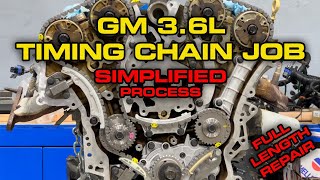
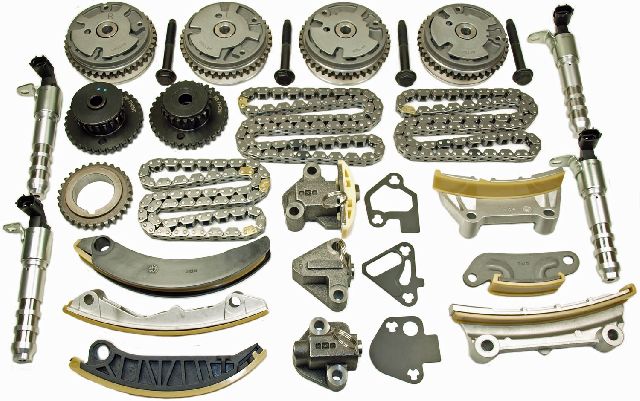
Typical fix: Replacement of all three timing chains, all guides, and all tensioners with an updated kit. This is a major repair requiring 10+ hours of labor. 🎬 Watch: Full-length timing chain removal and installation walkthrough
Est. part cost: $400-$800 - Low or Dirty Engine Oil 🟡 Medium Probability The camshaft phasers and timing chain tensioners are hydraulically operated by engine oil. If the oil is low, dirty, or the wrong viscosity, it can't operate the phasers or tensioners correctly, leading to correlation codes. This is the leading contributor to accelerated timing chain wear.
How to confirm: Check the oil level on the dipstick and inspect its condition and service history. An oil change is the first and cheapest diagnostic step, though it will not fix a chain that is already stretched.
Typical fix: Perform an oil and filter change using the correct full synthetic oil (ACDelco dexos-approved is recommended). If the code returns, the chains have likely already been damaged and require replacement.
Est. part cost: $50-$100 - Faulty Camshaft Phaser Solenoid (Actuator) ⚪ Low Probability → Shop Engine Camshaft The solenoid can get clogged with sludge or fail electronically, causing it to get stuck. While possible, it's far less common than chain stretch on this engine for setting P0019.
How to confirm: A technician can command the solenoid on and off with a scan tool while observing engine data for an RPM change. The solenoid can also be swapped with an adjacent one (e.g., the intake solenoid on the same bank); if the code changes to P0018, the solenoid is confirmed as the fault. Resistance should measure between 6.9 and 7.9 ohms. 🎬 See how to test a VVT solenoid yourself
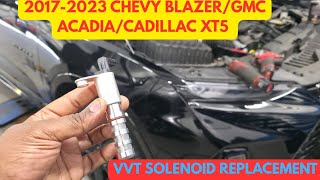
Typical fix: Replace the Bank 2 exhaust camshaft phaser solenoid. This is often done as a preventative measure during a timing chain job. 🎬 Watch: Step-by-step VVT solenoid replacement guide
Est. part cost: $40-$90 - Faulty Camshaft Position Sensor ⚪ Low Probability → Shop Engine Camshaft Position Sensor While sensors can fail, it is not a common cause for P0019 on this platform. Usually, a failing sensor would trigger other specific sensor circuit codes (e.g., P0348, P0349) rather than a correlation code.
How to confirm: Swap the suspect sensor with an identical one from another position (e.g., the intake sensor on the same bank) and see if the code follows the sensor. An oscilloscope can also be used to check for a clean signal pattern.
Typical fix: Replace the Bank 2 exhaust camshaft position sensor.
Est. part cost: $30-$70
Rare But Worth Checking
- Failed Camshaft Phaser: → Shop Engine Camshaft The phaser gear itself can fail mechanically or get stuck due to debris from dirty oil, but this is much less common than chain or solenoid issues.
- Slipped Crankshaft Reluctor Wheel: → Shop Engine Crankshaft A GM Technical Service Bulletin (PIP3423P) mentions this as a possible, though rare, cause for a group of timing codes including P0019, especially if the code returns after a timing chain replacement. This requires removing the oil pan to inspect and may necessitate crankshaft replacement.
Diagnosis Steps
- Verify the code with an OBD-II scanner.
- Check the engine oil level and condition. If low, dirty, or overdue for a change, perform an oil and filter change with the correct viscosity full synthetic oil (dexos-approved). Clear the codes and see if P0019 returns.
- Use a scan tool to monitor live data for 'Camshaft Angle Desired vs. Actual' or 'Camshaft Position Variance' for Bank 2 Exhaust. A deviation that grows with RPM and consistently exceeds 4-6 degrees points to a stretched chain.
- If the deviation is minimal, test the Bank 2 exhaust VVT solenoid (actuator). Command it with a scan tool or swap it with the intake solenoid to see if the code changes to P0018.
- Inspect the wiring and connector at the Bank 2 exhaust cam sensor and solenoid for damage or corrosion.
- If all previous steps fail to find a cause, the final step is to assume a stretched timing chain. This is confirmed by removing the timing cover for physical inspection, which is the start of the repair itself.
- If timing chains are confirmed to be in good condition or have been recently replaced, investigate the rare possibility of a slipped crankshaft reluctor wheel per TSB PIP3423P.
Parts You'll Likely Need
- Engine Timing Chain Kit
(OEM #12651450 (superseded by 12700436 or kit 12693218))— This is the most probable fix. A complete kit should include all three chains (primary and two secondary), all tensioners, all guides, and necessary seals/gaskets.
Trusted brands: ACDelco (OEM), Cloyes
OEM price range: $500-$800
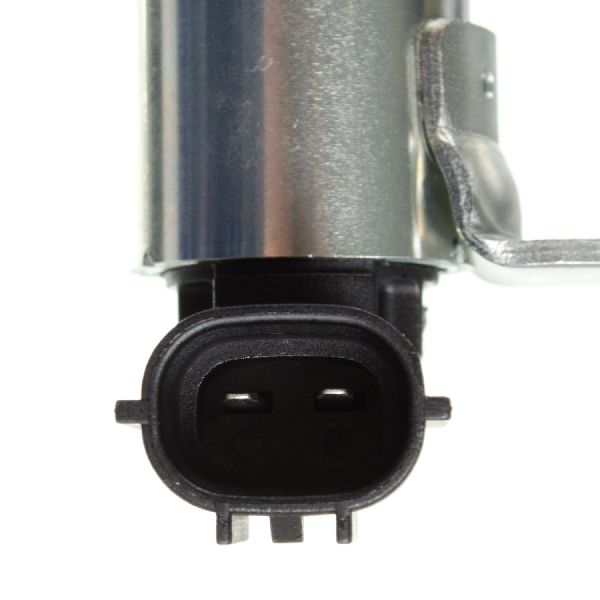
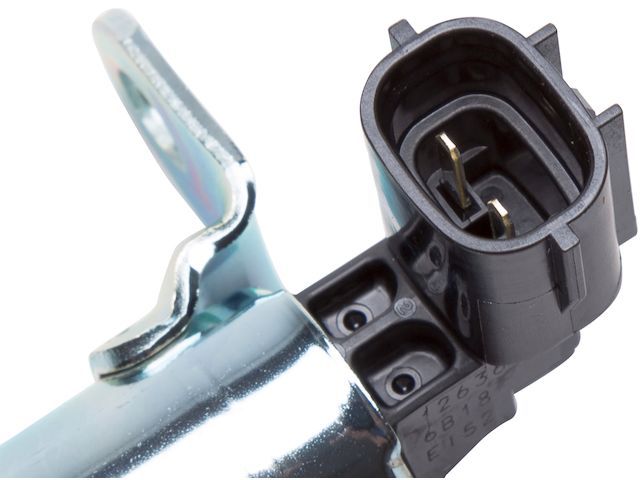
Aftermarket price range: $300-$500 - Camshaft Position Actuator Solenoid (VVT Solenoid)
(OEM #12655421)— A potential, but much less likely, cause. It can become clogged or fail electronically. Often replaced during a timing chain job as a preventative measure.
Trusted brands: ACDelco, Delphi
OEM price range: $60-$100
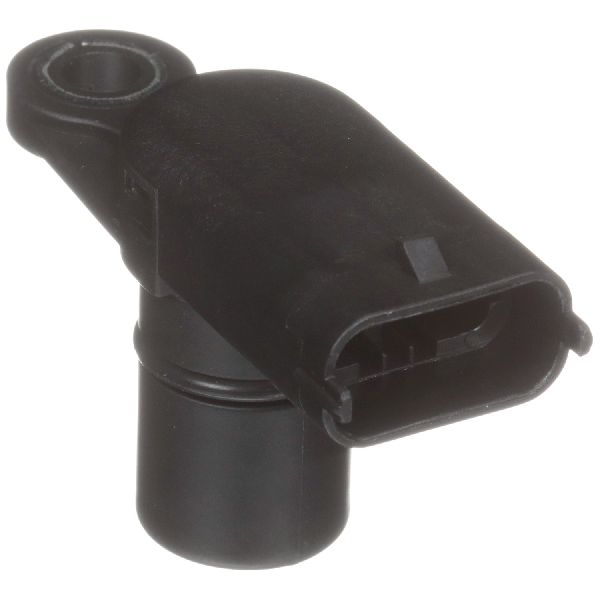
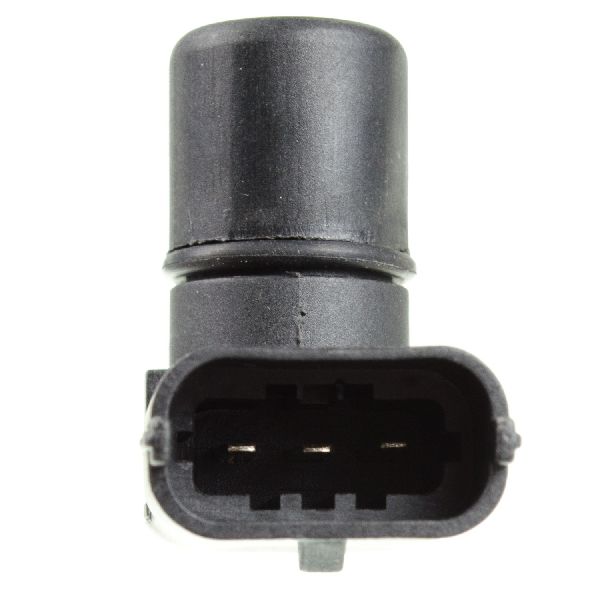
Aftermarket price range: $30-$60 - Camshaft Position Sensor
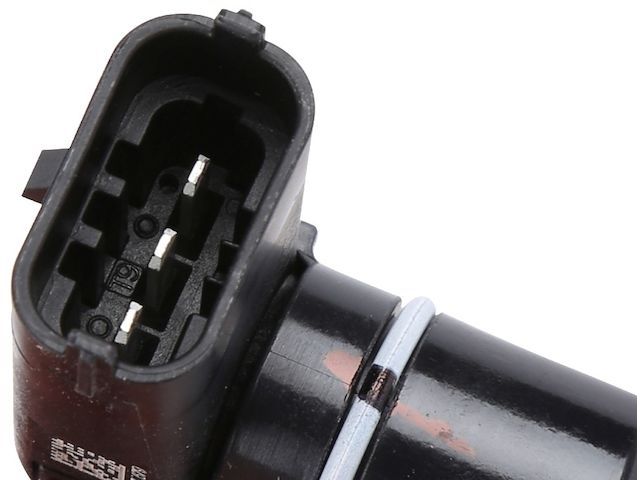
(OEM #12674702)— An unlikely cause for this code on this engine, but a possible point of failure. Easy to replace for diagnostics.
Trusted brands: ACDelco, Bosch
OEM price range: $50-$80
Aftermarket price range: $25-$50
Related Codes That Often Appear With This One
- P0008 — This is a general engine position system performance code for Bank 1. Seeing P0008 and/or P0009 with P0019 strongly indicates a systemic timing chain issue affecting the whole engine, usually a stretched primary chain.
- P0009 — This is the general engine position system performance code for Bank 2. It is a broader code that is often set alongside the more specific P0019, reinforcing a timing problem on Bank 2.
- P0016, P0017, P0018 — These are the other specific crank/cam correlation codes for the other camshafts. The presence of multiple codes from this group (e.g., P0017 and P0019) is near-certain proof of a stretched primary timing chain affecting both banks.
Technical Service Bulletins (TSBs) & Recalls
- TSB #PIP3423P: Directly links codes P0016, P0017, P0018, P0019, P0008, and P0009 to loose/stretched timing chains, worn tensioners, or a slipped crankshaft reluctor wheel.
- TSB #12-06-01-009F: Provides information on updated timing chain kits for High Feature V6 engines to address premature stretching that causes these codes.
Platform-Specific Known Issues
- The 3.6L LFX engine is widely known for premature timing chain stretching, which is the primary cause of code P0019. This issue was the subject of GM TSB #PIP3423P, which links codes P0016, P0017, P0018, and P0019 directly to loose timing chains.
- GM also released TSB #12-06-01-009F, which announced the availability of updated, more durable timing chain kits to address this specific failure mode.
- While the LFX engine received an improved chain design over its LLT predecessor, the problem was not completely eliminated.
Mechanic-Grade Diagnostic Values
- Camshaft Position Actuator Solenoid (VVT Solenoid) Resistance — expected: 6.9 - 7.9 Ohms at 68°F (20°C). Some sources state a wider range of 7-12 Ohms.. Failure: A reading outside the specified range, or an open (infinite) / short (zero) reading, indicates a faulty solenoid coil.
- Scan Tool 'Camshaft Position Variance' Live Data — expected: Stable and near 0 degrees at idle on a healthy engine.. Failure: A consistent deviation of more than 4-5 degrees at idle or under load strongly suggests a stretched timing chain. The DTC will often set when the deviation exceeds 7-9 degrees.
- Camshaft Position Sensor (CMP) 5V Reference Circuit — expected: 4.8 - 5.2 Volts between the 5V reference circuit pin and ground.. Failure: Voltage outside this range points to a wiring or ECM issue, not necessarily a bad sensor.
- Camshaft Position Sensor (CMP) Low Reference Circuit to Ground — expected: Less than 5.0 Ohms.. Failure: Resistance higher than 5.0 Ohms indicates a poor ground connection for the sensor, which can cause erratic signals.
- Crankshaft Reluctor Wheel Position Inspection — expected: A measurement of 25 to 26 mm from the machined surface of the crankshaft throw to the edge of the open space in the reluctor wheel.. Failure: A significant deviation from this measurement indicates the reluctor has slipped, which requires crankshaft replacement.
Scan Tool Commands That Help
- GDS2 / Tech2: Camshaft Position Actuator Solenoid Test / Control — This bidirectional control commands the Bank 2 exhaust solenoid ON and OFF while the engine is idling. A change in engine RPM or an audible click confirms the solenoid, wiring, and oil passages are likely functional. No change points to a failure in that system and helps isolate the solenoid before condemning the timing chains.
- GDS2 / Tech2: Crankshaft Position Variation Learn (CASE Relearn) — This procedure is mandatory after replacing the crankshaft, crankshaft position sensor, or ECM. It allows the ECM to learn the minor mechanical variations of the reluctor wheel. Failure to perform this can cause other running issues or codes after a major repair.
Wiring & Ground Locations
- G120 — Left lower center of the engine block (on a 2014 XTS 3.6L).. This is a primary engine block ground. A poor connection here can create a voltage offset for sensors mounted to the engine, like the cam and crank sensors, causing the ECM to misinterpret their signals and potentially set a false correlation code.
- G108 / G109 — Right rear (G108) and Left rear (G109) of the engine compartment on a 2014 XTS.. These are critical engine-to-chassis grounds. A loose or corroded connection at these points can cause unstable voltage references for the ECM and its sensors, contributing to phantom timing codes and other electrical gremlins.
- Bank 2 Exhaust Camshaft Position Sensor Connector — On the front of the left cylinder head (Bank 2 is the bank closer to the radiator).. This is the direct connection point for the sensor related to P0019. Checking for backed-out pins, corrosion, or wire damage here is a fundamental step before replacing any parts.
Real Owner Repair Stories
- cadillacforums.com user (2014 Cadillac XTS 3.6L LFX) — Check engine light with codes P0019, P0009, and P0018.
❌ Tried (didn't work) Replaced all four camshaft position sensors., Replaced all four VVT solenoids (camshaft actuators).
✅ What actually fixed it The codes remained until a full timing chain service was performed. The mechanic replaced all three timing chains, guides, and tensioners, which resolved all the codes.
OEM Part Supersession History
Various older timing chain kits→12651450 (for 2008-2012 models), later superseded by kits like 12693218 or 12700436 for broader LFX applications.— GM released updated timing chain kits to address premature stretching and wear. These kits incorporated more durable chains and improved tensioner designs.
Heads up: TSB #12-06-01-009F explicitly states that for a stretched chain failure, only the chains, tensioners, and guides should be replaced. The idler sprockets and camshaft actuator gears are not considered wear items in this scenario and replacing them is unnecessary.
Model Year Variations Within This Range
- 2013-2016 vs 2017+: While the LFX was used throughout the XTS run, GM continued to make minor revisions. A GM mechanic noted that the 2017+ 3.6L engines (a newer generation LGX in some platforms, but LFX continued in XTS) have a different timing chain setup that has shown fewer issues. However, the 2013-2016 XTS with the LFX remains highly susceptible to the original timing chain problems.
Diagnostic Flowchart
Real Owner Stories
Aggregated from forums and TSBs cited above. Mileages and costs reflect what owners reported in those sources.
2013 Cadillac SRX 3.6L V6
Symptoms: Owner experienced codes P0019 and P0024 and was advised by the community not to drive the vehicle due to the severity of the potential mechanical failure.
What fixed it: Community consensus pointed to checking the oil level and VVT solenoids first, but ultimately diagnosed the issue as a stretched timing chain or failed phaser requiring major repair.
Source hint: Reddit r/MechanicAdvice: My son-in-law's 2013 Cadillac SRX. P0019 and P0024
Chevrolet Camaro 3.6L V6 (LLT)
Symptoms: Codes P0008 and P0009 returned immediately after a full timing chain replacement was performed.
What fixed it: The ultimate cause was a slipped crankshaft reluctor wheel (as described in TSB PIP3423P). The fix involved tack-welding the wheel back into its proper position.
Source hint: Camaro5 Forum: P0008 and P0009 after timing chain replacement
Related OBD-II Codes
Frequently Asked Questions
Is the P0019 code on my 2013-2019 Cadillac XTS 3.6L LFX related to the known GM timing chain issues?
Can low engine oil cause the P0019 code on my XTS?
What oil should I use in my 2013-2019 Cadillac XTS to prevent timing chain stretch?
How can a mechanic confirm if my XTS needs a new timing chain for code P0019?
I replaced the timing chains on my 3.6L V6, but the correlation codes came back. What else could it be?
Is replacing the timing chain on the Cadillac XTS 3.6L a major repair?
Helpful Videos

We Have This Part in Stock

The information in this article is provided for general reference and educational purposes only. Vehicle specifications, procedures, and part compatibility can vary by production date, trim level, and region. Always consult your vehicle's factory service manual and verify part numbers before purchasing or performing repairs. Safety-critical components such as airbags, seat belts, and braking systems should be installed by a qualified professional.
- Cadillac XTS:
- 🧭 Diagnostic Flowchart
- 🎬 Helpful Videos
- 🛍️ Shop This Part
- What's Unique About the 2013-2019 Cadillac XTS
- Symptoms You May Notice
- Most Likely Causes
- Rare But Worth Checking
- Diagnosis Steps
- Parts You'll Likely Need
- Related Codes That Often Appear With This One
- Technical Service Bulletins (TSBs) & Recalls
- Platform-Specific Known Issues
- Mechanic-Grade Diagnostic Values
- Scan Tool Commands That Help
- Wiring & Ground Locations
- Real Owner Repair Stories
- OEM Part Supersession History
- Model Year Variations Within This Range
- Real Owner Stories
- 2013 Cadillac SRX 3.6L V6
- Chevrolet Camaro 3.6L V6 (LLT)
- Related OBD-II Codes
- Frequently Asked Questions
- 🎟️ Get 5% Off