

P0019 on 2017-2018 Chevrolet Traverse: Timing Chain and Sensor Guide
On a 2017-2018 Traverse, especially with the 3.6L V6, P0019 almost always indicates stretched timing chains. This is a serious and expensive repair costing $2,000-$4,000+. Do not simply replace the sensors without confirming the timing is correct. Continued driving risks catastrophic engine failure.
- P0019 on a 2017-2018 Traverse with the 3.6L V6 is a strong indicator of a stretched timing chain, not just a bad sensor.
- This is a serious issue that can lead to severe engine damage. Do not continue driving for an extended period.
- The correct fix is almost always a complete timing chain kit replacement, which is a costly, professional-level job.
- Start diagnosis by checking oil level and quality, but do not expect an oil change to solve the problem if the chain is already worn.
- Do not waste money replacing sensors unless they have been properly tested and confirmed to be faulty.
What's Unique About the 2017-2018 Chevrolet TRAVERSE
The 2017-2018 Traverse spans two different vehicle generations with different versions of the 3.6L V6 engine (LFX and LFY), but both are part of a GM engine family with a well-documented history of premature timing chain stretching. This issue is so prevalent that for these engines, a P0019 code is more likely to be a mechanical failure of the timing chain system than a simple sensor fault. The provided NHTSA Technical Service Bulletin (TSB) #PIP3423P for the 2017 model specifically directs technicians to inspect for loose timing chains when this and related codes are present.
Diagnostic Flowchart
Tap your situation to follow the diagnostic path that matches what you're seeing on this vehicle.
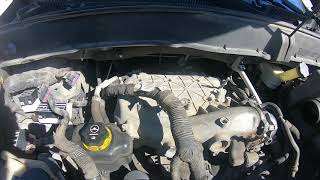
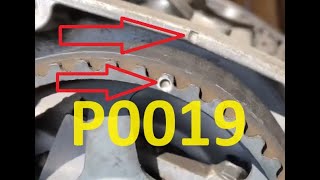
Generation note: Yes, this range covers two generations. The 2017 model is the final year of the first generation and uses the 3.6L LFX V6 engine. The 2018 model is the first year of the second generation, offering a redesigned 3.6L LFY V6 and a 2.0L LTG turbo I4. While the engines differ, the P0019 code points to similar timing system issues, particularly on the V6 models. The timing chain issue is a pattern failure recognized across the entire GM High Feature V6 engine family. 🎬 Watch: A breakdown of common timing issues on these engines. The newer LFY/LGX engines were redesigned to improve timing system durability, but are not immune to failure.
Symptoms You May Notice
- Check Engine Light is on
- Reduced engine power or "limp mode"
- Rough or unstable idle
- Engine stalling, sometimes at stops
- Hesitation or stumbling during acceleration
- Rattling noise from the engine, especially on startup
- Increased fuel consumption
- Replacing only the camshaft position sensor. Owner complaint #11280545 shows that replacing sensors did not fix the P0019 code, which points to the deeper mechanical issue. This is a very common mistake that wastes money.
- Replacing only the crankshaft position sensor.
- Performing an oil change without addressing the underlying mechanical wear. While important, an oil change alone will not fix a stretched chain.
- Replacing only the VVT solenoids without confirming the mechanical timing is correct. While easier to access, they are not the primary cause of this code on the 3.6L V6.
Most Likely Causes
- Stretched Timing Chains 🔴 High Probability → Shop Engine Timing Chain The GM 3.6L V6 engine family has a widely documented history of premature timing chain wear, often linked to oil degradation from extended change intervals recommended by the factory Oil Life Monitor (OLM). TSB #PIP3423P directly points to this as a primary cause.
How to confirm: Use a scan tool to check desired vs. actual cam/crank correlation PIDs. A deviation of more than 4-6 degrees at idle strongly indicates a mechanical timing issue. Physical inspection, watching for a tensioner plunger that is far extended or visible slack in the chain, is the ultimate confirmation but is labor-intensive.
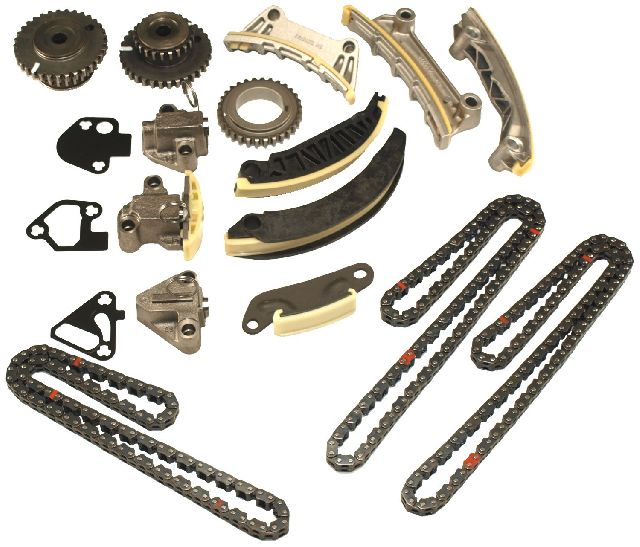
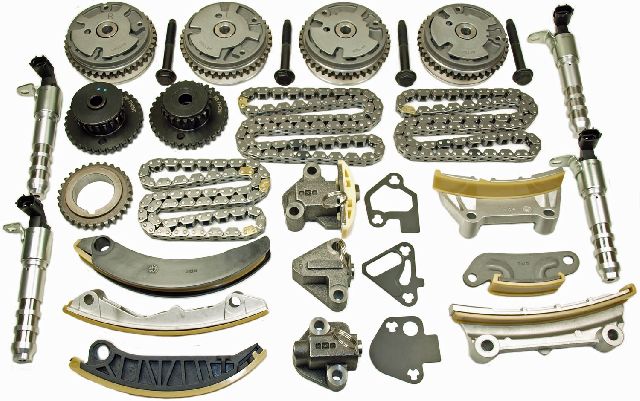
Typical fix: Replace all three timing chains, all tensioners, and all guides with an updated kit. This is an engine-out or front-cover-off job. 🎬 See how to replace the timing chain without removing the engine.
Est. part cost: $400-$950 - Failed Timing Chain Tensioner(s) 🔴 High Probability → Shop Engine Timing Chain The hydraulic tensioners can fail, get stuck, or lose pressure due to clogged oil passages, allowing the chain to become slack. They are considered a wear item and are always replaced during a timing chain service.
How to confirm: A rattling noise on startup is a strong indicator. Confirmed during physical inspection for a stretched chain.
Typical fix: Replace tensioners as part of a complete timing chain kit service.
Est. part cost: $100-$200 (if bought separately) - Low or Dirty Engine Oil 🟡 Medium Probability The camshaft phasers (VVT system) are hydraulically operated by engine oil. Low oil level or sludgy, degraded oil can cause the phasers to respond slowly or get stuck, creating a correlation error. This is a primary contributor to accelerated chain wear.
How to confirm: Check the oil level and condition on the dipstick. If it's low or very dirty, this is a likely contributor. An engine oil flush may be attempted as a last-ditch effort before major repairs.
Typical fix: Perform an oil and filter change using the correct viscosity full synthetic oil. If the code returns, the chain has likely already stretched and requires replacement.
Est. part cost: $50-$100 - Faulty Camshaft Actuator Solenoid (VVT Solenoid) 🟡 Medium Probability → Shop Engine Camshaft These solenoids can get clogged with debris from dirty oil or fail electronically, preventing proper adjustment of the cam phaser.
How to confirm: Swap the Bank 2 exhaust solenoid with another one (e.g., the intake solenoid on the same bank). Clear codes and run the engine. If the code changes (e.g., to P0018 for the intake), the solenoid is bad.
Typical fix: Replace the faulty solenoid. OEM Part Number for the 3.6L is often 12687954.
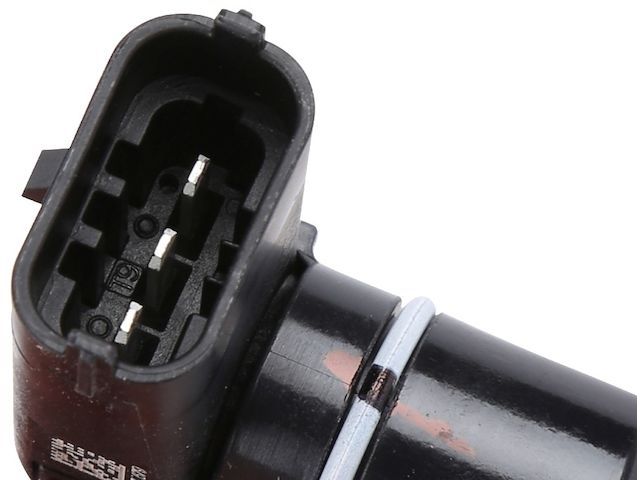
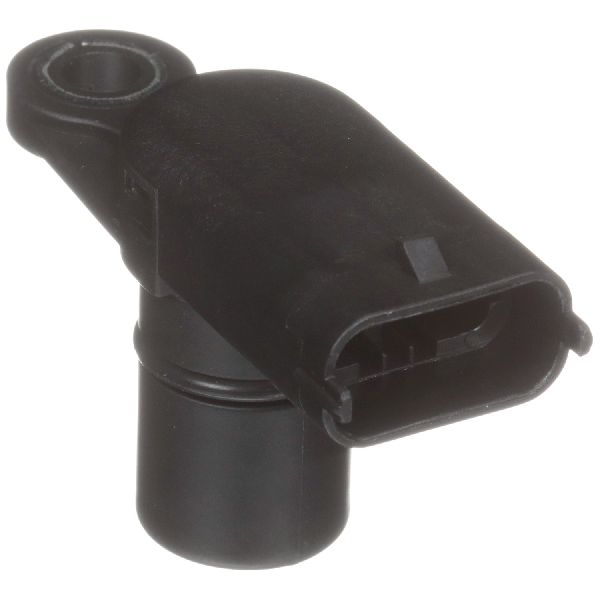
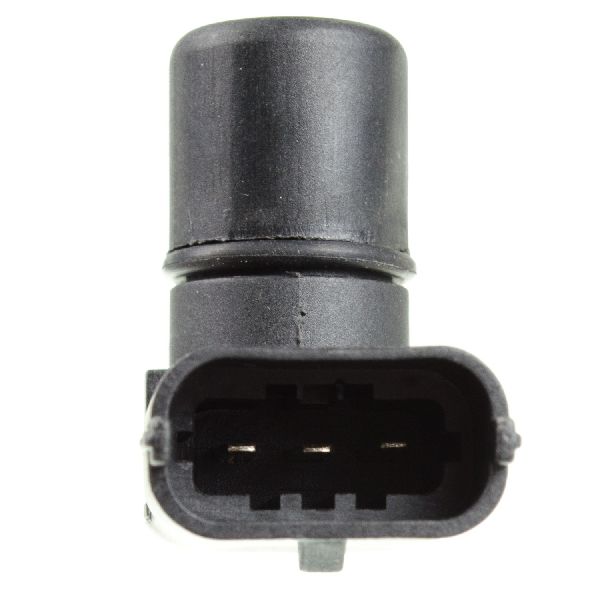
Est. part cost: $30-$80 - Faulty Camshaft Position Sensor ⚪ Low Probability → Shop Engine Camshaft Position Sensor While possible, a sensor failure is much less common than a mechanical timing issue on this engine for this specific code. It is a common misdiagnosis.
How to confirm: Test the sensor's output with an oscilloscope or multimeter. Replacing the sensor is often done as a guess, which usually fails to fix the problem on the 3.6L V6.
Typical fix: Replace the Bank 2 exhaust camshaft position sensor.
Est. part cost: $25-$70
Rare But Worth Checking
- Slipped Crankshaft Reluctor Wheel: → Shop Engine Crankshaft The tone ring that the crankshaft sensor reads can physically move on the crankshaft, causing a persistent correlation code even with new chains. TSB #PIP3423P mentions this as a possibility to check after confirming chains are good, which requires crankshaft replacement if found.
- Failed Camshaft Phaser/Actuator: → Shop Engine Camshaft The mechanical part of the VVT system at the end of the camshaft can fail or get stuck, often due to oil contamination. A technician noted a delayed response from the phasers when commanded by a scan tool, recommending replacement with the chains.
- Wiring or Connector Issue: Damage to the wiring for the camshaft sensor, crankshaft sensor, or VVT solenoid can cause a loss of signal and trigger the code. Check for damaged wires or loose connections before replacing parts.
- Faulty Engine Control Module (ECM): → Shop Engine Control Module (ECM) This is extremely rare. The ECM should only be considered after all other mechanical and electrical possibilities have been exhaustively ruled out.
Diagnosis Steps
- Check engine oil level and condition. Top off or change if low or dirty. An engine flush may be attempted but is unlikely to fix a stretched chain.
- Use a professional scan tool to read all stored DTCs. Note any other timing codes (P0008, P0016, P0017, P0018).
- View live data: monitor the desired vs. actual camshaft position for Bank 2 Exhaust. A consistent deviation of more than 4-6 degrees at idle strongly suggests a mechanical timing problem.
- Test the Bank 2 Exhaust VVT solenoid. Command it on and off with the scan tool to check for response, or swap it with a known-good solenoid (like the intake one on the same bank) and see if the code changes to P0018.
- If solenoids and oil level are good, suspect a mechanical timing issue. The next step is a physical inspection of the timing chains, tensioners, and guides, which requires significant engine disassembly (e.g., removing the front engine cover).
- During disassembly, inspect the crankshaft reluctor wheel for any signs of movement, as noted in TSB #PIP3423P. This can sometimes be done with a borescope through the crankshaft position sensor hole before disassembly.
Parts You'll Likely Need
- Engine Timing Chain Kit
(OEM #12700436 (LFX), 12680750 (LFY))— This is the most common cause of P0019. A complete kit replaces all chains, guides, and tensioners to fully resolve the issue. Using an updated GM Genuine or ACDelco kit is highly recommended.
Trusted brands: ACDelco, GM Genuine, Cloyes
OEM price range: $500-$950
Aftermarket price range: $350-$600 - Camshaft Position Actuator Solenoid
(OEM #12687954)— A common and relatively inexpensive part to fail, often due to oil contamination. It's a frequent diagnostic step to swap or replace these before committing to a timing chain job.
Related Codes That Often Appear With This One
- P0008 — A general engine position system performance code. Often the first code to appear when timing chains begin to stretch, strongly indicating a primary chain issue.
- P0016 — Crank/Cam correlation error on Bank 1 (Intake). Seeing codes for both banks strongly suggests a primary timing chain issue affecting the whole system.
- P0017 — Crank/Cam correlation error on Bank 1 (Exhaust). Indicates widespread timing issues.
- P0018 — Crank/Cam correlation error on Bank 2 (Intake). When seen with P0019, it confirms the timing problem affects all of Bank 2, making a stretched secondary chain for that bank or a stretched primary chain the likely cause.
Technical Service Bulletins (TSBs) & Recalls
- Advises technicians that DTCs P0016, P0017, P0018, P0019, P0008, or P0009 may be set due to loose timing chains or tensioners. It also mentions the rare possibility of a slipped crankshaft reluctor wheel as an alternative cause if the chains are found to be in good condition.
- A diagnostic strategy for various engine noises (ticking, rattle) that may be accompanied by misfire codes or timing correlation codes like P0016-P0019.
- Provides instructions and updated part numbers for timing chain kits to address premature wear on the GM 3.6L High Feature V6 engine family.
Platform-Specific Known Issues
- TSB #PIP3423P: This official GM bulletin for the 2017 Traverse explicitly states that codes P0016, P0017, P0018, P0019, P0008, or P0009 may be set due to loose timing chains or tensioners, confirming this is a known issue requiring mechanical inspection. [⭐]
- Owner Complaints: Multiple NHTSA complaints on Traverse models with this engine family report experiencing P0019 along with reduced engine power and stalling. [, ] One owner specifically notes that replacing the sensors did not fix the issue, which is a common misdiagnosis. []
Mechanic-Grade Diagnostic Values
- Camshaft Position Actuator Solenoid (VVT Solenoid) Coil Resistance — expected: 6.9 - 13 Ohms at 68°F (20°C). Some sources cite a tighter 6.9-7.9 Ohm range.. Failure: A reading of 0 Ω (short), infinite/OL (open), or significantly outside the expected range indicates a faulty solenoid.
- Camshaft Position Sensor (CMP) 3-wire Connector Voltage (Key On, Engine Off) — expected: Pin 1 (Low Reference): ~0V, Pin 2 (Signal): 5V, Pin 3 (5V Reference): 5V.. Failure: Absence of 5V reference or signal voltage points to a wiring or ECM issue. A signal that doesn't switch when the engine is running indicates a bad sensor.
- Camshaft vs. Crankshaft Correlation Deviation Angle (Live Data) — expected: Less than 9° retarded or 12° advanced at idle.. Failure: A consistent deviation greater than this threshold, especially if it's a steady 4-6 degrees or more, points to a mechanical timing issue like a stretched chain.
Scan Tool Commands That Help
- GDS2 / Tech2: Camshaft Position Actuator Solenoid Test — Use this bidirectional command to manually activate the Bank 2 exhaust VVT solenoid. A change in engine idle (stumbling) or a change in the 'Actual Camshaft Position' PID confirms the solenoid is mechanically responding and the oil passage is not completely blocked.
- GDS2 / Tech2: Crankshaft Position Variation Learn (CASE Relearn) — This procedure is mandatory after replacing timing components, the crankshaft position sensor, or the ECM. It allows the ECM to learn the minor variations in the reluctor wheel to ensure accurate timing and misfire detection. Failure to perform this can cause other codes to set.
Wiring & Ground Locations
- Bank 2 Camshaft Position Sensor Connector — On the 3.6L V6, Bank 2 is the front bank (near the radiator). There are two sensors on the top of the valve cover; the exhaust sensor ('B') is one of them. The power steering reservoir may need to be unbolted and moved aside for access.. This is the primary sensor connector to inspect for damage, corrosion, or loose pins when diagnosing P0019. It is a 3-wire connector.
- G103 (Engine Ground) — On some 3.6L applications, a primary ground for the ECM (G103) is located on the top right side of the engine, sometimes fastened to the ECM case itself.. A poor ground connection at this point can cause erratic behavior from the ECM and its sensors, potentially leading to false correlation codes. Verifying this ground is tight and clean is a crucial electrical check.
Real Owner Repair Stories
- Reddit user, r/MechanicAdvice (2010 Chevrolet Traverse 3.6L LLT V6) — P0019 code present immediately after a complete timing chain kit overhaul.
❌ Tried (didn't work) Replacing the timing kit (chains, guides, tensioners)., Replacing the exhaust camshaft for Bank 2., Disassembling and re-verifying timing marks three separate times.
✅ What actually fixed it The aftermarket (non-OEM) VVT camshaft phaser/actuator was faulty. Replacing the aftermarket phaser with a new one from the dealership finally resolved the code. - YouTube channel 'PS Automotive' (2012 GMC Acadia 3.6L V6 (shared platform/engine)) — Engine running rough, rattling noise, Check Engine Light with codes P0018 and P0019.
❌ Tried (didn't work) Initial diagnosis only.
✅ What actually fixed it A physical inspection after removing the valve cover revealed an extremely loose timing chain on Bank 2. The mechanic replaced the entire timing chain kit (chains, guides, tensioners, sprockets), which resolved the codes and rough running condition. The video also showed visible damage on the inside of the timing cover where the loose chain had been slapping against it.
OEM Part Supersession History
12651450, 12679117, 12693218→12700436— The original timing chains were prone to premature stretching. The updated kit contains chains of a more durable design to address the high failure rate causing codes like P0008, P0018, and P0019.
Model Year Variations Within This Range
- 2017 vs 2018: The 2017 Traverse (first generation) uses the 3.6L LFX V6, which has a front-mounted timing chain system that was an evolution of the earlier, more problematic LLT engine. The 2018 Traverse (second generation) introduced the redesigned 3.6L LFY V6 (a variant of the LGX family), which features significant architectural changes including a different cylinder head design, improved Variable Valve Timing (VVT), and a relocated oil pump. While both are known for timing chain issues, the parts are not interchangeable, and the LFY/LGX was designed for better durability.
Helpful Videos
We Have This Part in Stock


The information in this article is provided for general reference and educational purposes only. Vehicle specifications, procedures, and part compatibility can vary by production date, trim level, and region. Always consult your vehicle's factory service manual and verify part numbers before purchasing or performing repairs. Safety-critical components such as airbags, seat belts, and braking systems should be installed by a qualified professional.
- Chevrolet TRAVERSE:
- 🧭 Diagnostic Flowchart
- 🎬 Helpful Videos
- 🛍️ Shop This Part
- What's Unique About the 2017-2018 Chevrolet TRAVERSE
- Symptoms You May Notice
- Most Likely Causes
- Rare But Worth Checking
- Diagnosis Steps
- Parts You'll Likely Need
- Related Codes That Often Appear With This One
- Technical Service Bulletins (TSBs) & Recalls
- Platform-Specific Known Issues
- Mechanic-Grade Diagnostic Values
- Scan Tool Commands That Help
- Wiring & Ground Locations
- Real Owner Repair Stories
- OEM Part Supersession History
- Model Year Variations Within This Range
- 🎟️ Get 5% Off