

P0019 on 2015-2021 Ford Escape: An In-Depth Guide to a Confusing Code
P0019 should not appear on a Ford Escape, as this code is for engines with two cylinder banks (V6/V8) and the Escape uses inline engines (one bank). If you see P0019, double-check if the code is actually P0017. The underlying cause for these timing codes is often a faulty Variable Camshaft Timing (VCT) solenoid, a fix that costs around $50-$150 for the part. Ford TSBs advise that debris in the oil is a primary cause and recommend cycling the solenoid with a scan tool before replacement.
- P0019 is for a 'Bank 2' and should not appear on an inline-engine Ford Escape. The correct code is likely P0017.
- The most probable cause for this type of timing code on your Escape is a sticking VCT solenoid, as noted in multiple Ford TSBs.
- Always check your engine oil level and condition first; low or dirty oil is a common cause of VCT system problems.
- Do not replace any parts for 'Bank 2' as they do not exist on your vehicle. All work should be focused on the 'Bank 1' exhaust camshaft components.
What's Unique About the 2015-2021 Ford ESCAPE
The key confusion for the Ford Escape platform regarding P0019 is a simple matter of engine geometry. The code is for a 'Bank 2' that does not exist on this vehicle. Ford issued several Technical Service Bulletins (TSBs) that list P0019 alongside a dozen other timing-related codes for a wide range of Ford and Lincoln vehicles. The Escape is included in these bulletins because it is prone to the Bank 1 codes (like P0016 and P0017) caused by the same issue: sticking VCT solenoids due to oil debris. An owner or technician seeing P0019 on an Escape should immediately suspect a diagnostic error or a tool-specific misinterpretation and proceed with diagnosing for P0017.
Diagnostic Flowchart
Tap your situation to follow the diagnostic path that matches what you're seeing on this vehicle.
Generation note: This range covers the end of the third generation (2015-2019) and the beginning of the fourth generation (2020-2021) Ford Escape. While engine options changed (e.g., 1.6L/2.5L/2.0L I4s in early years vs. 1.5L I3/2.0L I4/2.5L Hybrid in later years), the fundamental Variable Camshaft Timing (VCT) system that causes these faults is similar. The common causes and fixes apply to both generations.
Symptoms You May Notice
- Check Engine Light is on
- Rough, uneven idle
- Hesitation or stumbling during acceleration
- Reduced engine power
- Decreased fuel economy
- Engine may be difficult to start
- In some cases, rattling noises from the engine bay, especially at idle or low RPM.
- Searching for 'Bank 2' components on the vehicle. Since the Escape has an inline engine, there is no Bank 2. All diagnosis must focus on Bank 1.
- Replacing the Crankshaft Position Sensor. While possible, it is much less likely to be the cause than the camshaft sensor or VCT solenoid for this specific code family.
- Replacing the PCM. This is very rarely the cause and should only be considered after all other possibilities have been exhausted.
- Immediately replacing the VCT solenoid without first changing the oil or attempting to clear debris as suggested by Ford's TSBs.
Most Likely Causes
- Sticking or Failed VCT Solenoid (Oil Control Valve) 🔴 High Probability Multiple Ford TSBs (#SSM 54366, #SSM 50067, #SSM 47170, #SSM 48423) state this is a common issue caused by small debris in the engine oil, making the solenoid stick. The VCT system is hydraulic and highly sensitive to oil pressure and cleanliness.
How to confirm: Use a scan tool to command the solenoid on and off while monitoring camshaft position. TSB #SSM 50067 specifically advises using the scan tool to cycle the affected solenoid 10 times to attempt to clear debris before replacement. You can also remove and test it with a 12V source, listening for an audible click. A lack of response indicates a faulty solenoid. The internal resistance should be between 7 and 14 ohms.
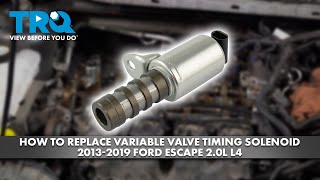
Typical fix: Replace the VCT solenoid for the exhaust camshaft (Bank 1). 🎬 Watch: Step-by-step guide to replacing the VCT solenoid on 2.0L engines. It is highly recommended to change the engine oil and filter at the same time to remove the debris that caused the failure.
Est. part cost: $40-$120 - Low or Dirty Engine Oil 🟡 Medium Probability The VCT system is hydraulic and highly sensitive to oil pressure and cleanliness. Neglecting oil changes can lead to sludge and debris that clog the VCT solenoid passages and phasers. This is often the root cause of the VCT solenoid failure.
How to confirm: Check the oil level on the dipstick and inspect its color and consistency. If it's low, black, or sludgy, it needs to be changed. This should be the first check for any VCT-related code.
Typical fix: Perform an engine oil and filter change using the correct grade of oil specified by Ford. In some cases, an engine flush may be recommended to clear out sludge.
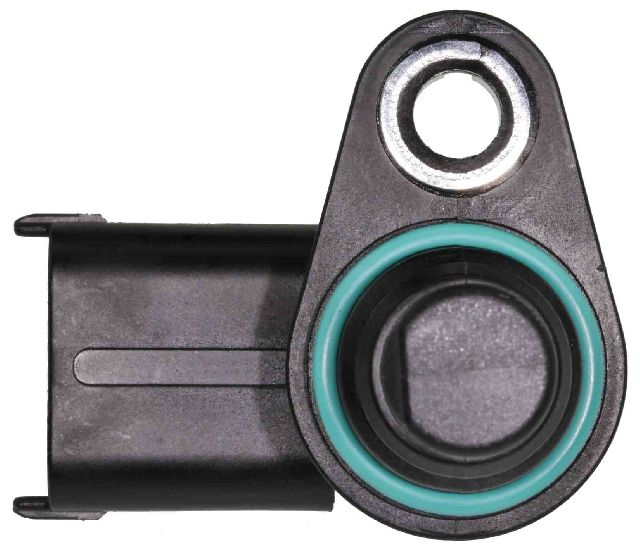
Est. part cost: $40-$80 - Faulty Camshaft Position Sensor ⚪ Low Probability → Shop Engine Camshaft Position Sensor
How to confirm: Monitor the sensor's output with a scan tool for erratic readings or dropouts. A resistance test with a multimeter can also identify a failed sensor; typical resistance is between 200 and 1000 ohms, though some can be higher. For a three-wire Hall effect sensor, check for a 5V or 12V power supply and a good ground, then watch the signal wire switch between high and low voltage as the engine is cranked.
Typical fix: Replace the 'Bank 1, Sensor B' (Exhaust) camshaft position sensor.
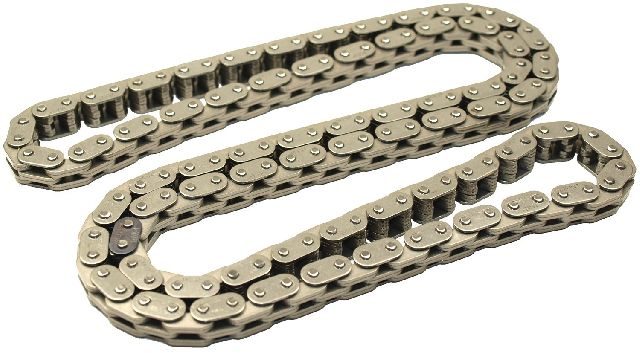
Est. part cost: $30-$90 - Stretched Timing Chain or Worn Timing Components ⚪ Low Probability → Shop Engine Timing Chain This is more common on higher-mileage vehicles (typically over 100,000 miles). Over time, the chain can stretch, and plastic guides or the hydraulic tensioner can wear out, creating slack and altering mechanical timing. The 1.5L I3 engine (2020+) uses a timing belt, which can also stretch or slip.
How to confirm: This is an advanced diagnosis. It involves removing the valve cover to physically inspect the chain for slack. A rattling noise on startup is a common symptom. A mechanic can also use an oscilloscope to compare cam and crank sensor waveforms to detect a timing deviation.
Typical fix: Replace the timing chain/belt, guides, and tensioner. This is a labor-intensive job.
Est. part cost: $200-$500 for a kit
Rare But Worth Checking
- Failed Camshaft Phaser/Actuator: → Shop Engine Camshaft The mechanical gear on the camshaft that actually adjusts the timing can fail or get stuck due to internal wear or oil contamination. This is a more complex and expensive repair than the VCT solenoid that controls it.
- Damaged Wiring or Connectors: Frayed wires or corrosion on the connectors for the camshaft sensor or VCT solenoid can cause an intermittent or lost signal and trigger the code. A visual inspection and wiggle test of the harness is recommended.
- Damaged or Slipped Reluctor Ring: The tone or reluctor ring on the camshaft or crankshaft, which the sensor reads, can become damaged or slip out of position, causing incorrect readings even if the mechanical timing is perfect.
Diagnosis Steps
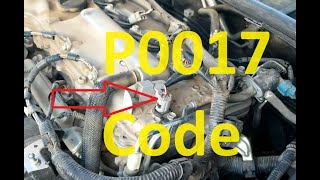
- Re-scan the vehicle's computer to confirm the code. Use a high-quality scanner to verify it is P0019 and not P0017. If it is P0019, proceed assuming the actual fault is P0017. 🎬 Watch: Understanding the causes and fixes for the P0017 code.
- Check Engine Oil First: Before any other step, check the engine oil level and condition. If it is low, dirty, or past its service interval, perform an oil and filter change with the manufacturer-specified oil. This alone can sometimes resolve the issue.
- Follow TSB Guidance: Per Ford TSB #SSM 50067, use a capable scan tool to access the PCM and run the VCT solenoid diagnostic routine, which cycles the solenoid 10 times to dislodge any small debris. Clear the codes and test drive to see if the fault returns.
- Inspect the wiring harness and electrical connector for the Bank 1 exhaust VCT solenoid and the Bank 1 exhaust camshaft position sensor. Look for any signs of damage, corrosion, or loose connections.
- Using a scan tool like FORScan or Ford's IDS, monitor the live data for the desired vs. actual camshaft position (PIDs like VCT_EXH_CAM_ERR for Bank 1). Command the VCT solenoid on and off to see if the timing angle changes. If it does not, the solenoid or its circuit is faulty.
- If the solenoid does not respond, remove and test it. Check its internal resistance (should be 7-14 ohms) and apply 12V power to listen for a click.
- If the solenoid and wiring are good, test the camshaft position sensor itself using a multimeter or by observing its signal on a scan tool.
- If all electronic components test good, the problem is likely mechanical. Inspect the timing chain, tensioners, and camshaft phaser for wear or damage. This is an advanced step and may require a professional mechanic.
Parts You'll Likely Need
- Variable Camshaft Timing (VCT) Solenoid / Oil Control Valve (Bank 1 Exhaust)
(OEM #For 2.0L/2.5L Engines: CJ5Z-6M280-A. For 1.5L/1.6L Engines: HX7Z-6M280-A or CN1G-6L713-AD (verify by VIN). Newer 1.5L/2.0L engines may use P2GZ-6M280-A.)— This is the most common point of failure according to Ford's own Technical Service Bulletins.
Trusted brands: Motorcraft, Dorman, Delphi
OEM price range: $80-$150
Aftermarket price range: $40-$90 - Camshaft Position Sensor (Bank 1 Exhaust)
(OEM #Verify by VIN, but a common part number is 7L5Z-6B288-A or similar. Aftermarket example: TRQ CPS00147.)— If the VCT solenoid is working correctly, the sensor providing the position data may be at fault.
Trusted brands: Motorcraft, Bosch, NGK/NTK
OEM price range: $60-$110
Aftermarket price range: $30-$70 - Timing Chain Kit — For higher mileage vehicles with a stretched chain or failed guides/tensioner.
Trusted brands: Motorcraft, Cloyes
OEM price range: $300-$600
Aftermarket price range: $200-$500
Related Codes That Often Appear With This One
- P0017 — This is the correct code for this exact problem on a Ford Escape. P0017 refers to 'Crankshaft Position - Camshaft Position Correlation (Bank 1, Sensor B)'.
- P0014 — This code ('B' Camshaft Position - Timing Over-Advanced - Bank 1) indicates a problem with the exhaust camshaft timing on Bank 1 and often points to the same root causes, like a stuck VCT solenoid.
- P0016 — This is the companion code to P0017, but for the intake camshaft ('Bank 1, Sensor A'). If both are present, it could point to a more serious base timing issue, like a jumped timing chain.
Technical Service Bulletins (TSBs) & Recalls
- SSM 54366: Notes that various 2015-2021 Ford vehicles may exhibit a group of VCT codes, including P0019.
- SSM 50067: States that a sticking VCT solenoid due to small debris may be the cause for these codes.
- SSM 47170: An earlier bulletin with the same guidance regarding debris in the VCT solenoid.
- SSM 48423: Reinforces the diagnosis of sticking VCT solenoids before replacing other parts.
Platform-Specific Known Issues
- A series of Ford Technical Service Bulletins (TSBs) including SSM 54366, SSM 50067, SSM 47170, and SSM 48423 directly address a family of VCT-related codes on 2015-2021 Ford vehicles. The bulletins state that 'small debris causing the VCT solenoid to stick' is a primary cause. Crucially, TSB SSM 50067 advises technicians to perform pinpoint test HK12 to cycle the solenoid 10 times with a scan tool to clear debris *before* replacing any parts.
Mechanic-Grade Diagnostic Values
- VCT Solenoid Internal Resistance — expected: 7 to 14 Ohms. Failure: A reading of 0 ohms indicates a short, while an infinite (O.L.) reading indicates an open circuit.
- Inductive Camshaft Position Sensor Resistance — expected: 200 to 2,000 Ohms (varies by specific part). Failure: A reading of zero suggests a short circuit, while an open circuit (infinite resistance) indicates a broken internal coil.
- VCT Advanced Error PID (Live Scan Tool Data) — expected: Should hover around 0° (plus or minus 5° is acceptable for short periods). Failure: Excessive, sustained variation from 0° while the VCT system is in closed loop indicates a control problem.
Scan Tool Commands That Help
- FORScan / Ford IDS: Clear Transmission Adaptive Tables — While not directly for this engine code, this function is often performed after major engine or transmission work to reset the PCM's learned values, which can be beneficial if the timing issue caused erratic shifting behavior.
- FORScan / Ford IDS: VCT Solenoid On/Off Command (Bi-directional Control) — This is a primary diagnostic step to actively test if the VCT solenoid is mechanically responding to electrical commands from the PCM, helping to isolate a stuck solenoid from a wiring or PCM driver issue.
- Autel MaxiSys: Programmable Module Installation (PMI) — This function is used to configure a replacement PCM (new or used) by copying data from the old module. It is a critical step if the PCM is condemned after all other causes are ruled out.
Wiring & Ground Locations
- C175B — This is a major engine harness connector, often located near the Powertrain Control Module (PCM) on the left side of the engine compartment.. Wiring for the VCT solenoids and camshaft position sensors passes through this connector. A poor connection or corrosion at these pins can cause intermittent signals and trigger timing codes.
- PCM (Powertrain Control Module) — Typically located on the left side of the engine compartment on the 2017 Ford Escape.. The PCM is the source of the 5V/12V reference voltage for the sensors and provides the ground-side control for the VCT solenoids. All diagnostic tests of the wiring will ultimately lead back to the PCM connector pins.
Real Owner Repair Stories
- Reddit user in r/MechanicAdvice (Vehicle with oil consumption problem, likely similar to Ford EcoBoost engines.) — Car started running badly, P0017 code present.
❌ Tried (didn't work) Replaced crankshaft position sensor, but the code remained. Cleaned and tested VCT (OCV) solenoids, which were actuating correctly.
✅ What actually fixed it The root cause was the timing chain having jumped two teeth due to low oil level. The fix required replacing the timing chain, tensioners, both CVVT sprockets (phasers), and the exhaust camshaft because a dowel pin had broken off. After the mechanical timing was corrected, the P0017 code was resolved. - Reddit user in r/fordexpedition (2015 Ford Expedition EcoBoost, 135k miles) — Chain rattle on startup, multiple codes initially. After timing job, only P0017 remained.
❌ Tried (didn't work) The user performed a full timing job, including chain and phasers, and was confident the timing marks were aligned. They tested the VCT solenoids (they clicked with voltage) and confirmed voltage at the camshaft position sensor.
✅ What actually fixed it The issue was unresolved in the thread, but the user's experience highlights a critical scenario: P0017 appearing *after* a timing job. This strongly suggests a mechanical timing error (off by one tooth) despite careful work, or a faulty new cam phaser.
OEM Part Supersession History
Not specified→CJ5Z-6M280-A— Standard part for many 2.0L, 2.3L, and 2.5L Ford engines.
Heads up: This part is specific to certain engine families. It is not interchangeable with VCT solenoids for the 1.5L/1.6L engines, which use different part numbers like HX7Z-6M280-A.
Model Year Variations Within This Range
- 2015-2019: Third-generation Escapes primarily used 1.5L, 1.6L, 2.0L EcoBoost I4 engines or a 2.5L i-VCT I4. These all use timing chains.
- 2020-2021: The fourth-generation Escape introduced a new 1.5L EcoBoost *I3* (3-cylinder) 'Dragon' engine. A key difference is that this engine uses a timing *belt* instead of a chain. While the P0017 fault can still occur, diagnosis might also include checking for a stretched or slipped timing belt, which has different wear characteristics than a chain.
Helpful Videos
We Have This Part in Stock


The information in this article is provided for general reference and educational purposes only. Vehicle specifications, procedures, and part compatibility can vary by production date, trim level, and region. Always consult your vehicle's factory service manual and verify part numbers before purchasing or performing repairs. Safety-critical components such as airbags, seat belts, and braking systems should be installed by a qualified professional.
- Ford ESCAPE:
- 🧭 Diagnostic Flowchart
- 🎬 Helpful Videos
- 🛍️ Shop This Part
- What's Unique About the 2015-2021 Ford ESCAPE
- Symptoms You May Notice
- Most Likely Causes
- Rare But Worth Checking
- Diagnosis Steps
- Parts You'll Likely Need
- Related Codes That Often Appear With This One
- Technical Service Bulletins (TSBs) & Recalls
- Platform-Specific Known Issues
- Mechanic-Grade Diagnostic Values
- Scan Tool Commands That Help
- Wiring & Ground Locations
- Real Owner Repair Stories
- OEM Part Supersession History
- Model Year Variations Within This Range
- 🎟️ Get 5% Off