

P0019 on 2009-2019 Ford Flex: Crank/Cam Correlation Causes and Fixes
On a 2009-2019 Ford Flex with a 3.5L V6, P0019 is most often caused by low/dirty engine oil or a sticking Variable Camshaft Timing (VCT) solenoid on the front (Bank 2) exhaust camshaft. An oil change and/or replacing the VCT solenoid (a ~$30-$90 part) is the most likely fix. On higher mileage EcoBoost models, a stretched timing chain is also a strong possibility, often indicated by a startup rattle.
- Always check the engine oil level and condition first; a simple oil change can sometimes fix this code.
- A faulty VCT solenoid is the most common part failure for P0019 on the Ford Flex 3.5L. Use the 'swap test' to diagnose it before buying parts.
- A rattling noise from the engine on cold starts is a major red flag for a stretched timing chain, a much more serious and expensive repair.
- Do not immediately assume the worst-case scenario (timing chain). Follow the diagnostic steps from simplest to most complex to avoid misdiagnosis and unnecessary expense.
What's Unique About the 2009-2019 Ford Flex
The Ford 3.5L V6 engine family (both Cyclone and EcoBoost) relies on a hydraulic Variable Camshaft Timing (VCT) system that is highly sensitive to oil quality. These engines are well-documented to have issues with VCT solenoids sticking due to small debris in the engine oil, a fact confirmed by multiple Ford Technical Service Bulletins. Additionally, higher-mileage 3.5L EcoBoost engines, particularly pre-2016 models, are known to suffer from stretched timing chains, which can also trigger this code. A critical design feature of this engine is the internal, timing-chain-driven water pump; a failure of this pump can leak coolant directly into the engine oil, creating sludge that quickly clogs VCT components and can lead to catastrophic engine failure.
Generation note: The Ford Flex spans one generation (2009-2019) but had a major facelift for the 2013 model year. The 3.5L Cyclone and 3.5L EcoBoost engines were available across this range. The causes for P0019 are largely the same, but the timing chain stretch issue is considered more common on pre-2016 3.5L EcoBoost engines, as acknowledged in Ford TSBs like 15-0131.
Symptoms You May Notice
- Check Engine Light is on
- Rough or uneven idle
- Hesitation or stumbling during acceleration
- Reduced engine power
- Decreased fuel economy
- Engine may be hard to start or fail to start.
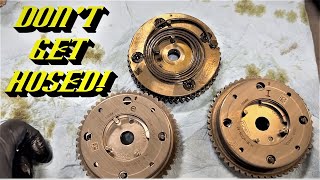
- Rattling noise from the front of the engine on cold startups, typically lasting 2-5 seconds 🎬 Hear what a failing cam phaser startup rattle sounds like. (a classic indicator of a stretched timing chain or failing tensioners).
- Replacing the camshaft position sensor when the actual problem is a sticking VCT solenoid or a stretched timing chain.
- Assuming a stretched timing chain before properly diagnosing the VCT solenoid and checking engine oil condition.
- Replacing only the timing chain without also replacing the problematic cam phasers and the internal water pump, leading to repeat failures.
Most Likely Causes
- Low, Dirty, or Incorrect Viscosity Engine Oil 🔴 High Probability The VCT system is hydraulic and extremely sensitive to oil pressure and cleanliness. Sludge or debris can easily clog the small passages in the VCT solenoids, a fact noted in Ford TSBs SSM 47170, 48423, and 50067.
How to confirm: Check the oil level on the dipstick and inspect its color and consistency. If the level is low or the oil is dark, gritty, or has a milky/chocolate-milk appearance (indicating coolant contamination from a failing water pump), it needs immediate attention.
Typical fix: Perform an engine oil and filter change using the manufacturer-recommended oil viscosity (typically 5W-20 for the naturally aspirated 3.5L and 5W-30 for the EcoBoost).
Est. part cost: $40-$90 - Failed Variable Camshaft Timing (VCT) Solenoid 🔴 High Probability → Shop Engine Camshaft This is a widely documented failure point on the 3.5L engine platform, with multiple Ford TSBs issued for sticking solenoids caused by oil debris. TSB SSM 50067 even suggests attempting to cycle the solenoid with a scan tool to dislodge debris before replacement.
How to confirm: Swap the Bank 2 exhaust VCT solenoid with the adjacent Bank 2 intake solenoid on the front valve cover. Clear the codes and drive. If the trouble code changes to P0018 (Bank 2, Sensor A), the solenoid is confirmed to be faulty.
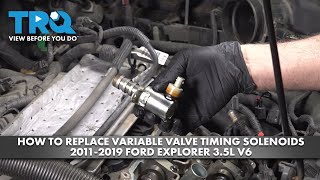
Typical fix: Replace the Bank 2 exhaust VCT solenoid. The retaining bolt should be torqued to approximately 89 lb-in (10 Nm). 🎬 Watch this step-by-step guide to replacing your VCT solenoids.
Est. part cost: $30-$90 - Stretched Timing Chain 🟡 Medium Probability → Shop Engine Timing Chain This is a known issue on higher-mileage 3.5L engines (over 100,000 miles), especially the EcoBoost version. Ford addressed this with TSBs like 15-0131 and 18-2305, which often recommend replacing phasers along with the chain. Wear on the chain, guides, and tensioners causes timing to become retarded.
How to confirm: This is typically diagnosed after ruling out oil and VCT solenoid issues. A prominent rattling or scraping noise from the front of the engine on cold startups is a strong indicator. A mechanic can also use a scan tool to check timing deviation PIDs.
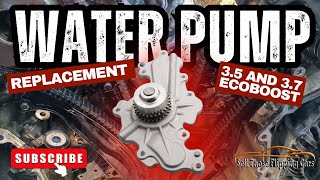
Typical fix: Replace the timing chain, tensioners, guides, and often the camshaft phasers and internal water pump as a complete kit. This is a labor-intensive job, often exceeding 10 hours. 🎬 See how to tackle the water pump and timing chain.
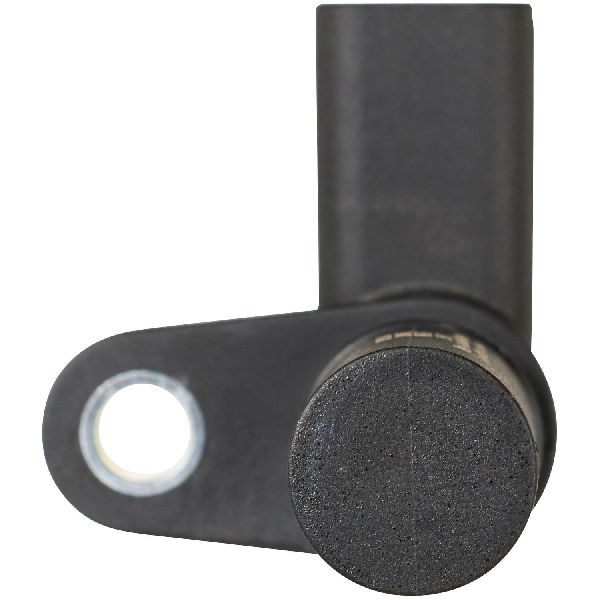
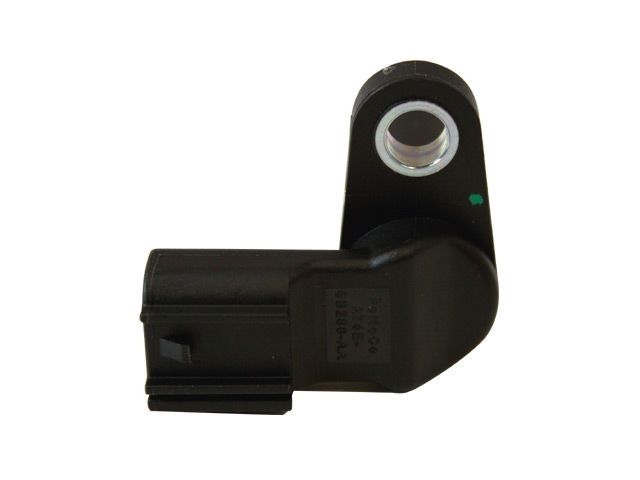
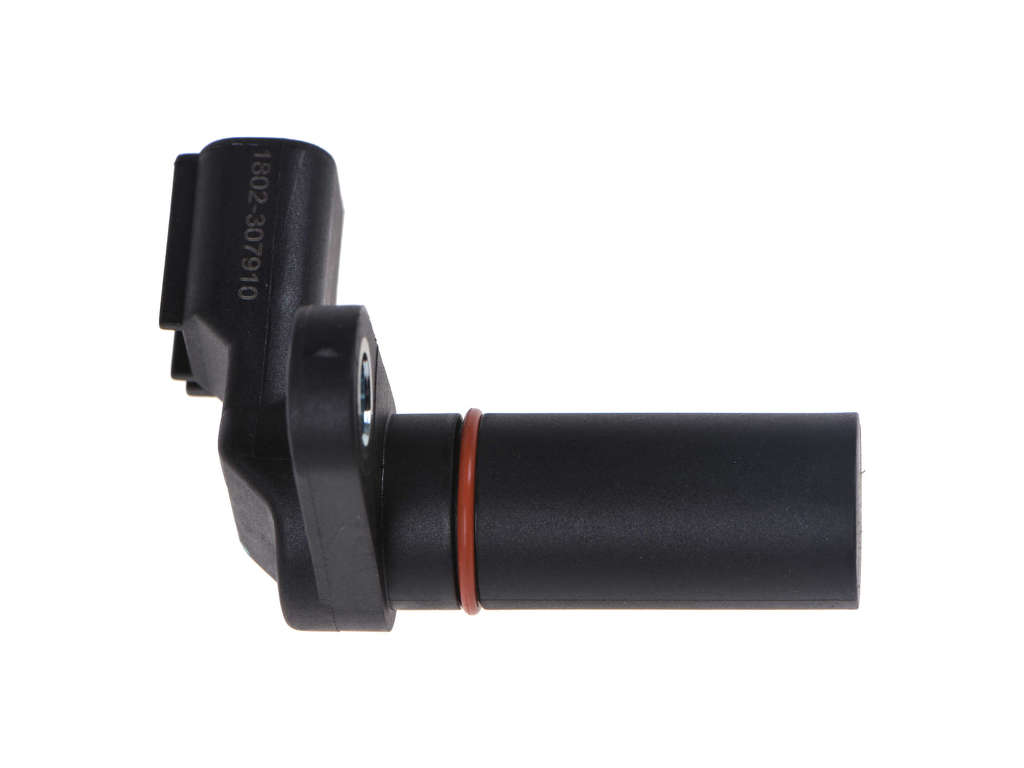
Est. part cost: $400-$800 - Failed Camshaft Position Sensor ⚪ Low Probability → Shop Engine Camshaft Position Sensor
How to confirm: This is rarely the cause. The sensor is usually correctly reporting a mechanical timing fault. However, after confirming the VCT solenoid is good, you can test the sensor's signal with a multimeter or swap it with an identical sensor on the same bank to see if the code changes.
Typical fix: Replace the Bank 2 exhaust camshaft position sensor.
Est. part cost: $25-$70
Rare But Worth Checking
- Failed Camshaft Phaser: → Shop Engine Camshaft The phaser is the gear on the end of the camshaft that actually adjusts the timing. It can get stuck or fail internally, but this is less common than a solenoid failure. It is often replaced as part of a full timing chain service per Ford TSBs.
- Damaged Tone Ring: The reluctor wheel (tone ring) on the camshaft or crankshaft that the sensor reads can become damaged or slip, but this is rare without other major engine work or trauma.
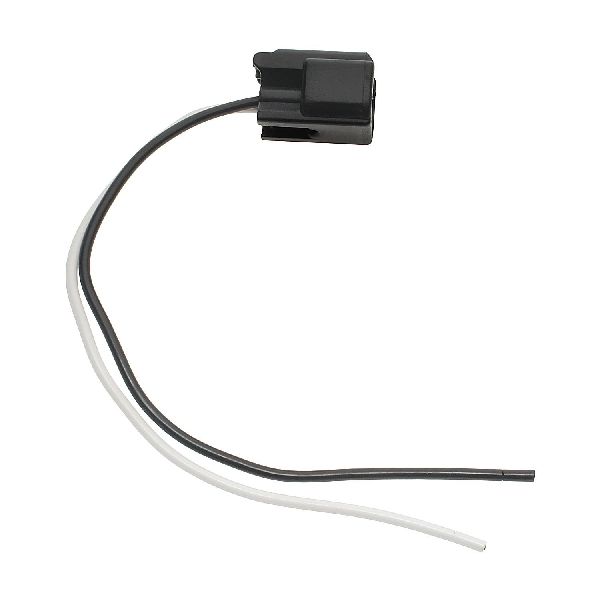
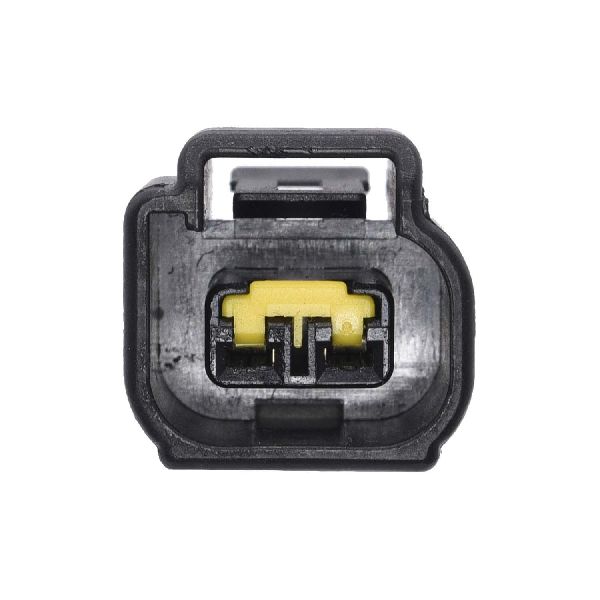
- Wiring or Connector Issue: Damage to the wiring harness or corrosion in the connector for the camshaft sensor or VCT solenoid can cause a loss of signal. Owners have reported pinching wires during valve cover reinstallation, causing this code.
Diagnosis Steps
- Check the engine oil level and condition. If low, dirty, or overdue for a change, perform an oil and filter change, clear the code, and re-test. Check for a milky appearance, which indicates a failed water pump.
- Use an OBD-II scanner to confirm P0019 and look for other pending or stored codes.
- Listen for any rattling or unusual noises from the engine, especially on a cold start (2-5 seconds).
- Using a capable scan tool, try commanding the Bank 2 exhaust VCT solenoid on and off multiple times to see if it can be cleared of debris, as suggested by TSB SSM 50067.
- Locate the VCT solenoids on Bank 2 (front valve cover). Swap the exhaust solenoid with the intake solenoid.
- Clear the DTCs and drive the vehicle to see if the code returns. If code P0018 appears, the solenoid you moved is faulty and must be replaced.
- If P0019 returns, inspect the wiring and connector for the Bank 2 exhaust camshaft sensor and VCT solenoid for any damage or corrosion. Check for pinched wires near the valve cover.
- If wiring is okay, test the camshaft position sensor itself. If the sensor tests good, the problem is likely mechanical.
- At this point, professional diagnosis is recommended to check for a stretched timing chain, faulty phaser, or internal engine oil pressure issues. A borescope can sometimes be used to inspect the timing chain tensioner without full disassembly.
Parts You'll Likely Need
- Engine Variable Valve Timing (VVT) Solenoid
(OEM #7T4Z-6M280-C)— This is the most common point of failure for P0019 on this engine, often sticking due to oil debris. This part number supersedes 7T4Z-6M280-A, 7T4Z-6M280-AA, and 7T4Z-6M280-B. The single retaining bolt is torqued to 89 lb-in (10 Nm).
Trusted brands: Motorcraft, Dorman, Standard Motor Products (SMP)
OEM price range: $50-$90
Aftermarket price range: $30-$60 - Timing Chain Kit — If the timing chain is stretched, a complete kit including the primary chain, guides, tensioners, and often all four VCT phasers is required for a proper, long-lasting repair per TSBs like 18-2305.
Trusted brands: Motorcraft, Cloyes
OEM price range: $500-$800
Aftermarket price range: $300-$500 - Camshaft Position Sensor — Rarely the cause, but may be replaced during diagnosis. It is located on the rear of the left cylinder head for the Bank 2 exhaust cam.
Trusted brands: Motorcraft, Bosch
OEM price range: $30-$50
Aftermarket price range: $20-$40
Related Codes That Often Appear With This One
- P0018 — This code is for the intake camshaft on the same bank (Bank 2). Seeing them together points to a problem affecting the entire bank, like a secondary timing chain or oil supply issue. It will also appear if you swap a bad exhaust VCT solenoid to the intake position during diagnosis.
- P0016 / P0017 — These are correlation codes for Bank 1 (the firewall side). Seeing codes for both banks simultaneously strongly suggests a base timing issue affecting the whole engine, such as a stretched primary timing chain or a major oil pressure problem.
Technical Service Bulletins (TSBs) & Recalls
- SSM 47170, SSM 48423, SSM 50067: These bulletins from Ford note that P0019 and other VCT codes may be set due to small debris causing the VCT solenoid to stick.
- TSB-16-0093: Mentions that even low-mileage vehicles can exhibit this code, possibly due to factory debris.
Platform-Specific Known Issues
- Post-Timing Job Complication: An owner of a 2013 F-150 3.5L EcoBoost reported on a forum that after completing a full timing chain and phaser replacement to fix a P0016 code, they immediately started getting a persistent P0019 code. Their suspicion was that the wiring pigtail for the Bank 2 exhaust cam sensor was pinched or damaged during the reinstallation of the valve cover, which is a plausible scenario given the tight working space.
- Misleading VCT Solenoid Test: In a repair story on a Ford Truck Enthusiasts forum for an F-150 with the same engine family, a user with a P0019 code replaced the Bank 2 exhaust VVT solenoid. The old solenoid failed a 12V bench test, but the new solenoid did not fix the code, indicating the problem was further downstream in the timing system (likely the chain or phaser), even though the solenoid itself was also faulty.
Mechanic-Grade Diagnostic Values
- VCT Solenoid Internal Resistance — expected: 5 - 14 Ohms. Failure: A reading outside this range, or infinite resistance (open circuit), points to a failed solenoid.
- Camshaft Position Sensor (3-wire Hall-effect) Voltage — expected: With Key On, Engine Off (KOEO), the reference wire should have ~5V, and the signal wire should also have ~5V. When cranking the engine, the signal wire voltage should rapidly switch between ~0V and ~5V.. Failure: If the signal voltage is stuck at 0V or 5V during cranking, or if the reference voltage is missing, the sensor or its circuit is faulty.
- Engine Oil Pressure — expected: Minimum of 25 PSI at hot idle and a minimum of 30 PSI at 1500 RPM when hot.. Failure: Pressure below these thresholds indicates an oil delivery problem (e.g., failing pump, internal leak, severe sludge) that will starve the VCT system and trigger correlation codes.
- VCT Solenoid Connector Voltage — expected: Greater than 10.5 Volts with Key On, Engine Off (KOEO).. Failure: Voltage below 10.5V indicates a problem in the power supply circuit to the solenoid, such as a wiring break or fuse issue.
Scan Tool Commands That Help
- Ford IDS, FORScan, or other professional bidirectional scanner: VCT Solenoid ON/OFF Command (or VCT Duty Cycle Control) — This command is used during diagnosis with the engine idling. A technician can command the Bank 2 exhaust solenoid (VCT22) to activate. A healthy system will cause a noticeable change in engine idle, often making it stumble or run rough. If commanding the solenoid has no effect, it confirms the solenoid is stuck, its oil passages are clogged, or the phaser itself is seized. This is a primary step to confirm a VCT component failure before disassembly.
Wiring & Ground Locations
- Bank 2 Camshaft Position Sensor (CMP22) & VCT Solenoid (VCT22) — On the transverse 3.5L engine, Bank 2 is the cylinder head near the radiator. The exhaust camshaft is at the rear of that head (towards the firewall). The CMP sensor is on the rear of the head, and the VCT solenoid is on the top of the valve cover controlling that camshaft.. Correctly identifying Bank 2 and the 'B' (exhaust) sensor/solenoid is the first step. Misidentifying the bank or sensor leads to replacing the wrong parts.
- G100 / G101 — G100 is a primary engine ground located on the right (passenger) side of the engine compartment. G101 is on the left (driver) side of the engine compartment.. A poor engine ground can cause erratic behavior and incorrect readings from any engine sensor, including the camshaft and crankshaft position sensors. While not a common cause for a single correlation code, checking that these grounds are clean and tight is a fundamental step in diagnosing any electronic engine fault.
Real Owner Repair Stories
- Reddit user master_chef_24 in r/f150 (Ford F-150 with 3.5L engine (specific year not mentioned, but behavior is identical to Flex)) — Check engine light for VCT solenoid.
❌ Tried (didn't work) Replaced VCT solenoids with aftermarket brands including Gates, Dorman, Wells, Standard Motor Products (SMP), and NTK.
✅ What actually fixed it All aftermarket solenoids failed within a year. The user states that only OEM (Motorcraft or Ford Performance) solenoids are reliable. The root cause of the repeat failures was suspected to be a clogged oil screen behind the cam phaser, which starves the new solenoids of clean oil. The ultimate advice was to use OEM solenoids and consider the phaser screen if issues persist. - Reddit user in r/f150 (2019 Ford F-150 3.5L EcoBoost with 90,000 miles) — Initial cam phaser rattle noise, which was ignored.
❌ Tried (didn't work) Ignoring the initial startup rattle noise.
✅ What actually fixed it The issue escalated to a catastrophic engine failure while driving at 70 mph. The cam phaser locking pin sheared off, allowing the engine to jump time. This caused the pistons and valves to collide, destroying the engine. The metal locking pin was found circulating in the oil pan. The fix was a complete engine replacement costing ~$16,000. This is a worst-case scenario of what can happen if phaser-related noises are not addressed.
When the Usual Fixes Don't Work
- While a faulty VCT solenoid is a very common cause for P0019, especially on the naturally aspirated 3.5L Cyclone engine, it can be a red herring on the 3.5L EcoBoost. Many owners have replaced the Bank 2 exhaust solenoid only to have the code and symptoms (especially a startup rattle) return. In these cases, the solenoid is correctly reporting a timing error, but the root cause is mechanical wear in the timing chain system or a faulty cam phaser. The solenoid is the messenger, and replacing it doesn't fix the underlying problem.
OEM Part Supersession History
Various older phaser designs (pre-2020)→ML3Z-6256-A (Intake Phaser), ML3Z-6C525-A (Exhaust Phaser)— The original cam phaser design in 2017-2020 3.5L EcoBoost engines was prone to failure of the internal locking pin, causing the infamous 'cold start rattle'. Ford redesigned the phaser to resolve this issue.
Heads up: When replacing phasers on a 2017+ EcoBoost, it is critical to use the latest updated part numbers (e.g., ML3Z-*) to permanently fix the rattle issue. Using old stock or non-updated parts will lead to a repeat failure.
Model Year Variations Within This Range
- 2009-2016 (Primarily EcoBoost): These earlier models are more susceptible to the primary timing chain stretching over time, especially with extended oil change intervals. The P0019 code is often a direct result of this chain slack, accompanied by a startup rattle. The fix is a full timing chain replacement.
- 2017-2019 (Primarily EcoBoost): While chain stretch can still occur, these models are famous for a different issue: cam phaser failure. A rattle on startup is more likely due to a faulty phaser locking pin rather than a stretched chain. Ford issued customer satisfaction program 21N03 for this issue. The fix is replacing the phasers with an updated design.
Diagnostic Flowchart
Other Known Issues on This Vehicle
Issues unrelated to this code that are worth knowing about as an owner of this generation:
- Internal Water Pump Failure 🔴 High → Shop Engine Water Pump — Common on engines over 80,000-100,000 miles. Failure can be sudden. (Ref: No recall, but it is a widely known design flaw. When the pump fails, it leaks coolant directly into the engine oil.)
- Power Transfer Unit (PTU) Failure (AWD Models) 🔴 High — Common from 60,000 to 150,000 miles, caused by overheating of the non-serviceable 'lifetime' fluid. (Ref: TSB 19-2017 addresses fluid leaks from the PTU seals. Preventative fluid changes every 30,000 miles are highly recommended.)
- Door Ajar Light Stays On 🟡 Low — Common across many model years. Can cause battery drain if not addressed. (Ref: No TSB, but the common cause is a faulty switch inside the door latch mechanism.)
- Swollen/Capped Lug Nuts 🟡 Low — Extremely common. The chrome caps swell and deform, making the factory lug wrench unusable. (Ref: No TSB. The fix is to replace the two-piece OEM lug nuts with solid, one-piece aftermarket ones.)
Used vs. New Parts: Buying Guide for This Vehicle
When a used part is the smart pick: For this specific repair, used parts are not recommended for any of the core components. The only potentially acceptable used parts would be external items like a valve cover, wiring harness pigtail, or mounting brackets, provided they are in excellent physical condition.
Donor-vehicle mileage cap: roughly under 50000 miles for the part to have meaningful remaining life.
What to inspect on the donor part:
- For a wiring pigtail, ensure the plastic is not brittle and the locking tab is intact.
- For a valve cover, inspect for cracks or warping.
- Never buy internal timing components (chains, guides, tensioners, phasers, solenoids) from a junkyard.
OEM-only on this vehicle (don't cheap out):
- VCT Solenoid (Oil Control Valve)
- Camshaft Phaser
- Timing Chain
- Timing Chain Tensioners and Guides
Aftermarket brands forum-validated for this vehicle:
- Cloyes is a generally respected brand for timing components, but for the problematic 3.5L V6, forum consensus overwhelmingly recommends sticking to Motorcraft to ensure longevity and avoid repeat repairs.
Brands owners have reported issues with on this vehicle:
- Dorman is frequently cited by owners for having a high failure rate for VCT solenoids and phasers on this platform.
- General consensus from owner forums suggests avoiding all non-OEM VCT solenoids, as many have reported failures in under one year.
Real Owner Stories
Aggregated from forums and TSBs cited above. Mileages and costs reflect what owners reported in those sources.
2013 Ford F-150 3.5L EcoBoost
Symptoms: After completing a full timing chain and phaser replacement to fix a P0016 code, the vehicle immediately developed a persistent P0019 code.
What fixed it: The owner suspected a pinched or damaged wiring pigtail for the Bank 2 exhaust cam sensor occurred during the reinstallation of the valve cover.
Source hint: Ford F150 Forum - 'Which Cam position sensor is Bank 2 Sensor B???'
Ford F-150 3.5L V6
Symptoms: The vehicle threw a P0019 code. The owner performed a 12V bench test on the Bank 2 exhaust VVT solenoid and it failed.
What fixed it: Replacing the solenoid did not fix the code, indicating the problem was further downstream in the timing system, such as the chain or phaser.
Source hint: Ford Truck Enthusiasts Forums - 'Misleading VCT Solenoid Test' story
2015 Ford F-150 3.5L EcoBoost — ~100000 miles
Symptoms: Chronic cold-start rattle caused by timing components.
What fixed it: Replacement of the timing chain and phasers as per TSB 15-0131.
Source hint: Ford Truck Enthusiasts Forums - 'TSB 15-0131 Timing Belt & Phasers'
Related OBD-II Codes
Frequently Asked Questions
My 2013 Ford Flex has a rattle for about 2-5 seconds when I first start it in the morning. Is this related to P0019?
Does Ford have any Technical Service Bulletins for VCT solenoid issues on the 3.5L engine?
Can I try to fix a sticking VCT solenoid without replacing it immediately?
Is there a specific TSB for timing chain stretch and phaser issues on the 3.5L EcoBoost?
What oil should I use in my Ford Flex to prevent VCT-related codes like P0019?
Could a failing water pump cause a P0019 code on my 3.5L Flex?
Helpful Videos
We Have This Part in Stock


The information in this article is provided for general reference and educational purposes only. Vehicle specifications, procedures, and part compatibility can vary by production date, trim level, and region. Always consult your vehicle's factory service manual and verify part numbers before purchasing or performing repairs. Safety-critical components such as airbags, seat belts, and braking systems should be installed by a qualified professional.
- Ford Flex:
- 🧭 Diagnostic Flowchart
- 🎬 Helpful Videos
- 🛍️ Shop This Part
- What's Unique About the 2009-2019 Ford Flex
- Symptoms You May Notice
- Most Likely Causes
- Rare But Worth Checking
- Diagnosis Steps
- Parts You'll Likely Need
- Related Codes That Often Appear With This One
- Technical Service Bulletins (TSBs) & Recalls
- Platform-Specific Known Issues
- Mechanic-Grade Diagnostic Values
- Scan Tool Commands That Help
- Wiring & Ground Locations
- Real Owner Repair Stories
- When the Usual Fixes Don't Work
- OEM Part Supersession History
- Model Year Variations Within This Range
- Other Known Issues on This Vehicle
- Used vs. New Parts: Buying Guide for This Vehicle
- Real Owner Stories
- 2013 Ford F-150 3.5L EcoBoost
- Ford F-150 3.5L V6
- 2015 Ford F-150 3.5L EcoBoost — ~100000 miles
- Related OBD-II Codes
- Frequently Asked Questions
- 🎟️ Get 5% Off