

P0019 on 2015-2019 Ford Flex: Crankshaft Camshaft Correlation Causes and Fixes
P0019 on a Ford Flex most often points to a faulty Variable Camshaft Timing (VCT) solenoid on Bank 2, often caused by low or dirty engine oil. Start by checking your oil; if the level and quality are good, the next step is usually replacing the Bank 2 exhaust VCT solenoid, which costs around $30-$80 for the part. This is a common issue across many Ford vehicles using the 3.5L engine.
- P0019 on a 2015-2019 Ford Flex means the exhaust camshaft on Bank 2 (front of the vehicle) is out of sync with the crankshaft.
- The most likely cause is a sticking VCT solenoid or dirty/low engine oil. Always check your oil first.
- Replacing the Bank 2 (front) exhaust VCT solenoid is a common, relatively easy, and affordable DIY fix.
- Do not assume you have a major timing chain issue until you have ruled out oil problems and a faulty VCT solenoid.
- Multiple Ford Technical Service Bulletins confirm that VCT solenoids sticking due to oil debris is a known issue on this engine.
What's Unique About the 2015-2019 Ford FLEX
The Ford 3.5L V6 engine, part of the 'Cyclone' family, relies heavily on its Twin Independent Variable Camshaft Timing (Ti-VCT) system. This system is hydraulically operated and extremely sensitive to oil pressure and cleanliness. Multiple Technical Service Bulletins (TSBs) from Ford indicate that this system is prone to issues where small debris in the oil can cause the VCT solenoids to stick or respond slowly. A particularly critical design flaw in many 3.5L engines is the internal, timing-chain-driven water pump; a failure of this pump can leak coolant directly into the oil, creating sludge that quickly damages timing components. Therefore, before suspecting more severe issues like a stretched timing chain, the most common starting point for a P0019 code on a Flex is addressing oil condition and the VCT solenoids themselves.
Diagnostic Flowchart
Tap your situation to follow the diagnostic path that matches what you're seeing on this vehicle.
Symptoms You May Notice
- Check Engine Light is on
- Rough or uneven idle
- Hesitation or lack of power during acceleration
- Reduced fuel economy
- Engine may run rough or stall in some cases
- Rattling noise from the engine on startup, which may indicate a loose timing chain
- Replacing the camshaft position sensor when the actual problem is a sticking VCT solenoid or dirty oil.
- Immediately assuming a stretched timing chain before properly diagnosing the much more common and cheaper-to-fix VCT solenoids.
- Replacing timing components without also replacing the internal water pump, which is often the root cause of the chain failure.
Most Likely Causes
- Low or Dirty Engine Oil 🔴 High Probability The VCT system is hydraulic and highly sensitive to oil pressure and cleanliness. Ford TSBs repeatedly cite debris in oil as a cause for VCT solenoid issues. Neglecting oil changes can lead to sludge that clogs solenoid passages.
How to confirm: Check the engine oil dipstick for level and inspect the oil's color and consistency. If it's low, dark, or sludgy, it needs to be changed.
Typical fix: Perform an oil and filter change using the manufacturer-recommended oil viscosity (typically 5W-20 or 5W-30 synthetic blend) and a high-quality filter.
Est. part cost: $40-$80 - Failed Variable Camshaft Timing (VCT) Solenoid 🔴 High Probability → Shop Engine Camshaft As documented in multiple Ford TSBs (SSM 47170, SSM 48423, SSM 50067), the VCT solenoids on these engines are prone to sticking due to small debris. They are a very common failure point.
How to confirm: An advanced scan tool can command the solenoid to actuate. A common diagnostic trick is to swap the suspect solenoid (Bank 2 exhaust) with another one (like the Bank 2 intake) and see if the trouble code follows the part (e.g., changes to P0018). The Bank 2 solenoids are on the front-facing valve cover near the radiator, making them accessible.
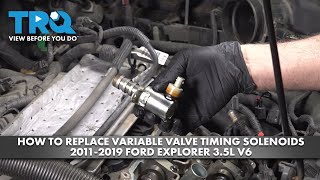
Typical fix: Replace the Bank 2 exhaust VCT solenoid. It is held in by a single bolt and can be replaced in under an hour. 🎬 Watch: Step-by-step guide to replacing the VCT solenoids.
Est. part cost: $30-$80 - Stretched Timing Chain 🟡 Medium Probability → Shop Engine Timing Chain On higher mileage 3.5L engines (typically over 100,000 miles), the timing chain can stretch, causing a persistent correlation fault that VCT solenoid replacement won't fix. This issue is often accelerated by the failure of the internal water pump, which contaminates the oil with coolant.
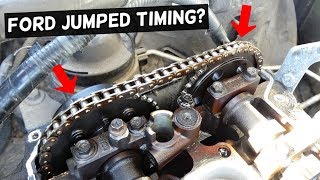
How to confirm: This is a complex diagnosis that usually follows the elimination of oil and solenoid issues. A key symptom is a rattling noise on startup. 🎬 See what happens when the timing chain jumps or stretches. Confirmation requires partial engine disassembly to physically inspect the chain for slack.
Typical fix: Replace the timing chain, tensioners, guides, and crucially, the water pump at the same time. This is a labor-intensive job often costing over $2,000 at a shop.
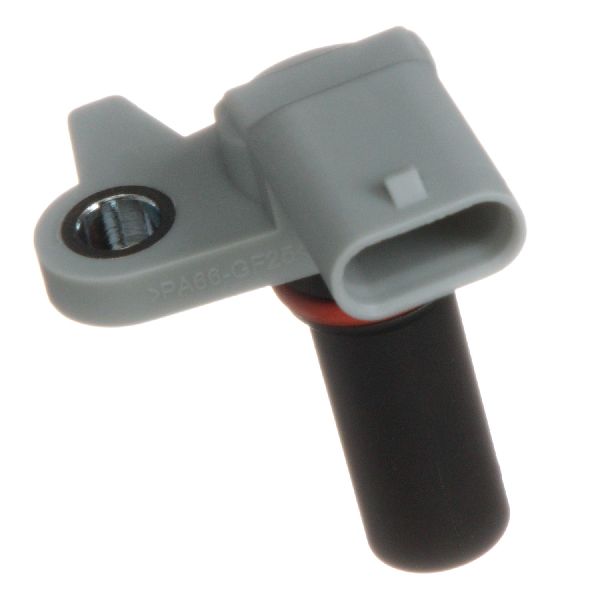
Est. part cost: $400-$800 - Failed Camshaft Position Sensor ⚪ Low Probability → Shop Engine Camshaft Position Sensor
How to confirm: Test the sensor's output with a multimeter or oscilloscope to ensure it's sending a correct signal to the PCM. It's less likely to fail than the VCT solenoid but can happen.
Typical fix: Replace the Bank 2 exhaust camshaft position sensor. On the 3.5L, the Bank 2 sensors are located on the rear of the cylinder head (firewall side).
Est. part cost: $25-$60
Rare But Worth Checking
- Failed VCT Phaser (Camshaft Sprocket): The phaser is the gear on the end of the camshaft that actually adjusts the timing. While less common than a solenoid failure, the phaser itself can become clogged with sludge or fail mechanically, requiring a full timing chain service to replace.
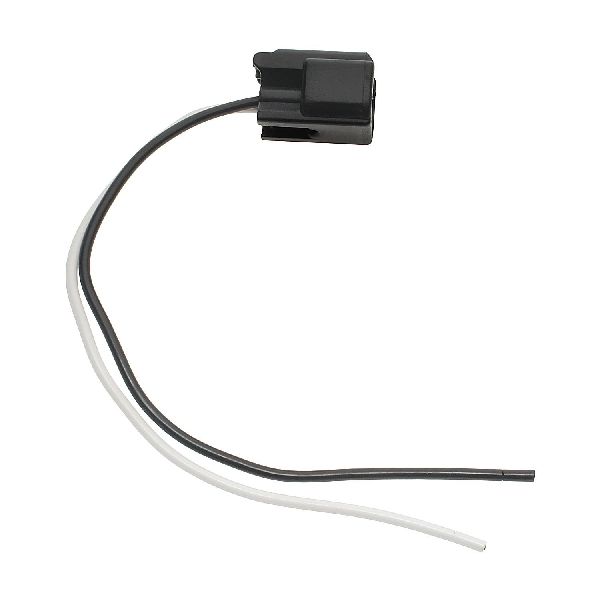
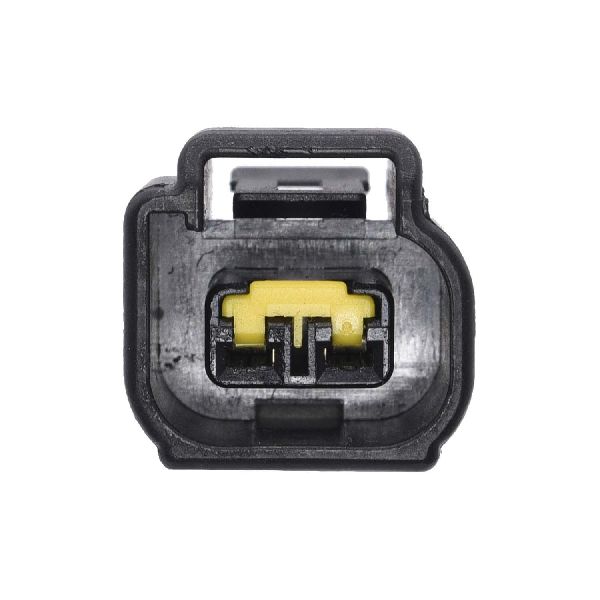
- Wiring or Connector Issue: Damage to the wiring harness or corrosion in the connector for the VCT solenoid or camshaft position sensor can interrupt the signal, causing the code. A visual inspection is always a good idea.
- Slipped or Damaged Tone Ring: The tone ring is a notched wheel that the camshaft or crankshaft sensor reads. In rare cases, this ring can slip on its shaft or become damaged, sending incorrect position data to the PCM.
Diagnosis Steps
- Read the code with an OBD-II scanner to confirm P0019 is present. Note any other codes.
- Check the engine oil level and condition. If low or dirty, perform an oil and filter change with the correct viscosity oil, clear the code, and see if it returns.
- Visually inspect the wiring and connector for the Bank 2 exhaust VCT solenoid (front valve cover, radiator side). Look for damage or oil contamination.
- Using a scan tool with live data, monitor the desired vs. actual camshaft angle for the Bank 2 exhaust cam to see if it is responding to commands. 🎬 Watch: How a failed VCT solenoid behaves during diagnosis.
- Swap the Bank 2 exhaust VCT solenoid with the Bank 2 intake VCT solenoid (they are identical and next to each other). Clear the codes and drive the vehicle. If the code changes to P0018, the solenoid is faulty and needs replacement.
- If the solenoid is confirmed bad, replace it. The OEM part number is 7T4Z-6M280-C.
- If the problem persists, the issue may be mechanical. Listen for a startup rattle, which strongly suggests a timing chain issue.
- Further diagnosis involves testing the camshaft position sensor signal and checking engine oil pressure.
- If all electronic components and oil pressure are good, the final step is a mechanical inspection of the timing chain, guides, and phasers, which is a complex job best left to a professional.
Parts You'll Likely Need
- Engine Variable Valve Timing (VVT) Solenoid
(OEM #7T4Z-6M280-C)— This is the most common cause of P0019 on this platform, as documented by multiple Ford TSBs.
Trusted brands: Motorcraft, Dorman, Standard Motor Products (SMP)
OEM price range: $50-$90
Aftermarket price range: $30-$60 - Engine Oil and Filter — Dirty or low oil is a primary contributor to VCT solenoid failure. An oil change is a critical first step.
Trusted brands: Motorcraft, Mobil 1, Castrol
OEM price range: $50-$90
Aftermarket price range: $40-$80 - Camshaft Position Sensor
(OEM #BL3Z-6B288-C)— While less common, the sensor that reads the camshaft's position can fail, causing this code.
Trusted brands: Motorcraft, Bosch, NGK/NTK
OEM price range: $40-$70
Aftermarket price range: $25-$60
Related Codes That Often Appear With This One
- P0017 — Crankshaft Position - Camshaft Position Correlation (Bank 1 Sensor B). This is the same fault but for the exhaust cam on the opposite engine bank (firewall side). Seeing both together could point to a systemic issue like low oil pressure or a stretched timing chain.
- P0018 — Crankshaft Position - Camshaft Position Correlation (Bank 2 Sensor A). This is for the intake camshaft on the same bank (radiator side). If this appears with P0019, it could indicate a problem affecting the entire bank, such as a timing chain guide issue or a problem with the VCT phasers on that bank.
- P0016 — Crankshaft Position - Camshaft Position Correlation (Bank 1 Sensor A). This is the intake cam on the firewall side. Seeing all four codes (P0016, P0017, P0018, P0019) almost certainly points to a base timing issue like a stretched chain or a major oil pressure problem.
Technical Service Bulletins (TSBs) & Recalls
- SSM 54366: Mentions P0019 among a list of VCT-related DTCs and refers to specific diagnostic tests.
- SSM 47170: Notes that P0019 may be due to small debris causing the VCT solenoid to stick.
- TSB-16-0093: States that low-mileage vehicles can exhibit P0019.
- SSM 48423: Reiteration of the VCT solenoid issue for 2015-2020 vehicles.
- SSM 50067: Reiteration of the VCT solenoid issue for 2015-2021 vehicles.
Platform-Specific Known Issues
- TSB SSM 47170, SSM 48423, and SSM 50067: These bulletins note that various 2015-2021 Ford vehicles with the 3.5L engine may set P0019 (and other related codes) due to small debris causing the VCT solenoid to stick. The recommended first step is diagnosis before replacing any components, implying that cleaning or an oil change might resolve the issue.
- TSB-16-0093: This bulletin specifically mentions that low-mileage vehicles (under 2000 miles) can exhibit this code, suggesting it could be a problem from factory debris or an early component failure.
- Internal Water Pump Failure: A widely discussed issue in owner forums for the 3.5L engine is the internal water pump. When its seal fails, it leaks coolant directly into the oil pan, compromising lubrication and leading to rapid wear of the timing chain and guides. This is a major cause of timing-related codes on higher-mileage vehicles.
Mechanic-Grade Diagnostic Values
- VCT Solenoid Coil Resistance — expected: 5-20 Ohms (general), with some sources citing 10-15 Ohms for OEM parts.. Failure: A reading of infinite resistance (OL) indicates an open coil, while a very low reading (under 2 Ohms) indicates a short. Readings outside the specified range, such as 22 Ohms, can also indicate an internally degrading coil.
- Camshaft Position Sensor (3-wire Hall effect) Voltage Test — expected: With the ignition on (engine off) and sensor connected: Power wire = ~5V, Ground wire = good ground (reads ~12V when testing between it and the positive battery terminal), Signal wire = ~5V or 4.8V.. Failure: When a metal object (like a wrench) is passed in front of the sensor tip, the signal wire voltage should drop to zero momentarily. If the voltage does not change, the sensor is likely faulty.
- VCT Solenoid Connector Voltage — expected: With the ignition on, one pin should show battery voltage (~12V) from the main engine relay. The other pin is the control wire to the PCM.. Failure: Absence of ~12V power indicates a problem in the supply circuit (fuse, relay, wiring) before the solenoid.
Scan Tool Commands That Help
- Ford IDS (or equivalent advanced scan tool): VCT Solenoid Actuator Test / Bi-Directional Control — This command allows the technician to directly activate and deactivate the Bank 2 exhaust VCT solenoid while the engine is running. If the engine hesitates or stalls when the solenoid is commanded on, it confirms the solenoid is mechanically functioning and oil is flowing. If there is no change in engine operation, the solenoid is stuck, clogged, or there's an oil pressure issue. This tests the entire circuit, including the PCM's ability to control the solenoid.
- Ford IDS (or equivalent advanced scan tool): Power Balance Test — While not a direct test for P0019, if the timing issue is causing misfires, the power balance graph can help identify which cylinders are affected. This can help confirm that the issue is isolated to Bank 2.
Wiring & Ground Locations
- G106 — Top front of the left cylinder head (which is Bank 2, the front bank, on a transverse Flex).. This is a primary ground point for components on the front cylinder head. A poor connection here could potentially affect sensor readings or solenoid operation for Bank 2.
- G107 — On non-turbo models, right rear of the engine compartment. On turbo (EcoBoost) models, rear of the right cylinder head.. While not on Bank 2, this ground is part of the overall engine ground scheme. Poor grounds anywhere can cause phantom electrical issues and incorrect sensor readings.
- G100 / G101 — Located at the front of the engine compartment, on the right and left sides respectively, often near the radiator support or frame rails.. These are main chassis-to-harness ground points. Corrosion or looseness here can affect the entire engine management system, including the PCM and its sensor inputs.
- PCM Connector (C175E/C1551) — The Powertrain Control Module (PCM) has large multi-pin connectors. The VCT solenoid and CMP sensor wires run directly to these connectors.. Testing for continuity, shorts, or correct voltage must often be done at the PCM connector pins to differentiate between a wiring fault and a faulty PCM.
Real Owner Repair Stories
- Ford Truck Enthusiasts Forums (2012 Ford F-150 3.5L EcoBoost (same engine family)) — P0019 code, nasty delay in acceleration, overheating.
❌ Tried (didn't work) Replaced the Bank 2 exhaust Camshaft Position Sensor (CPS)., Replaced the Bank 2 exhaust VVT solenoid (the old one failed a 12V bench test but replacement did not fix the code).
✅ What actually fixed it The user had just performed a timing chain replacement. The final diagnosis from a mechanic friend was that either the phaser gears were misplaced during the job or oil passages leading to the solenoid were blocked, preventing the new solenoid from functioning correctly. The resolution required re-investigating the mechanical timing and checking for blockages.
Model Year Variations Within This Range
- 2017-2019: For the 2017 model year, Ford began pairing the 3.5L EcoBoost V6 with the new 10-speed (10R80) automatic transmission in some applications, replacing the 6-speed (6F55). While this doesn't directly change the cause of a P0019 code, the PCM software and control strategies for the Ti-VCT system may differ between 6-speed and 10-speed equipped vehicles, potentially affecting diagnostic nuances.
- 2018-2019: For the 2018 model year, the base 3.5L naturally aspirated V6 was replaced in some Ford platforms (like the F-150) with a new 3.3L V6. However, the Flex retained the 3.5L NA V6 as its base engine through its final model year of 2019. The 3.5L EcoBoost also remained an option. Therefore, for the 2015-2019 Flex, the engine hardware related to P0019 is consistent.
Helpful Videos
We Have This Part in Stock


The information in this article is provided for general reference and educational purposes only. Vehicle specifications, procedures, and part compatibility can vary by production date, trim level, and region. Always consult your vehicle's factory service manual and verify part numbers before purchasing or performing repairs. Safety-critical components such as airbags, seat belts, and braking systems should be installed by a qualified professional.
- Ford FLEX:
- 🧭 Diagnostic Flowchart
- 🎬 Helpful Videos
- 🛍️ Shop This Part
- What's Unique About the 2015-2019 Ford FLEX
- Symptoms You May Notice
- Most Likely Causes
- Rare But Worth Checking
- Diagnosis Steps
- Parts You'll Likely Need
- Related Codes That Often Appear With This One
- Technical Service Bulletins (TSBs) & Recalls
- Platform-Specific Known Issues
- Mechanic-Grade Diagnostic Values
- Scan Tool Commands That Help
- Wiring & Ground Locations
- Real Owner Repair Stories
- Model Year Variations Within This Range
- 🎟️ Get 5% Off